Your lab report just landed in your inbox, and one line is flagged: MCH. Nobody explained it. Before you spiral into a search rabbit hole, here’s the short answer to what is MCH in blood test reports. It’s the average amount of hemoglobin inside a single red blood cell, measured from a small blood sample. Hemoglobin carries oxygen. So MCH tells your doctor how well-stocked each cell is.
A flagged MCH isn’t a diagnosis. It’s a clue. Let’s decode it.
What is MCH in blood test results?
MCH stands for mean corpuscular hemoglobin. It’s reported in picograms (pg), a trillionth of a gram, which gives you a sense of how tiny we’re talking.
Think of each red blood cell as a delivery truck. Hemoglobin is the cargo, the protein that grabs oxygen in your lungs and drops it off in your tissues. MCH measures the average cargo per truck. Too little, and tissues can run short on oxygen. Too much can point to a different set of problems.
You’ll find MCH on a complete blood count, usually shortened to CBC, in a block of numbers called red blood cell indices.
Why doctors check MCH
Doctors rarely order MCH on its own. It rides along with the complete blood count (CBC), one of the most common blood test panels in the US. Clinicians use it to help sort out anemia, a shortage of healthy red blood cells or hemoglobin, and to work out what kind of anemia they’re looking at.
It also turns up in routine checkups and in follow-up testing for people with chronic illness.
Normal MCH range
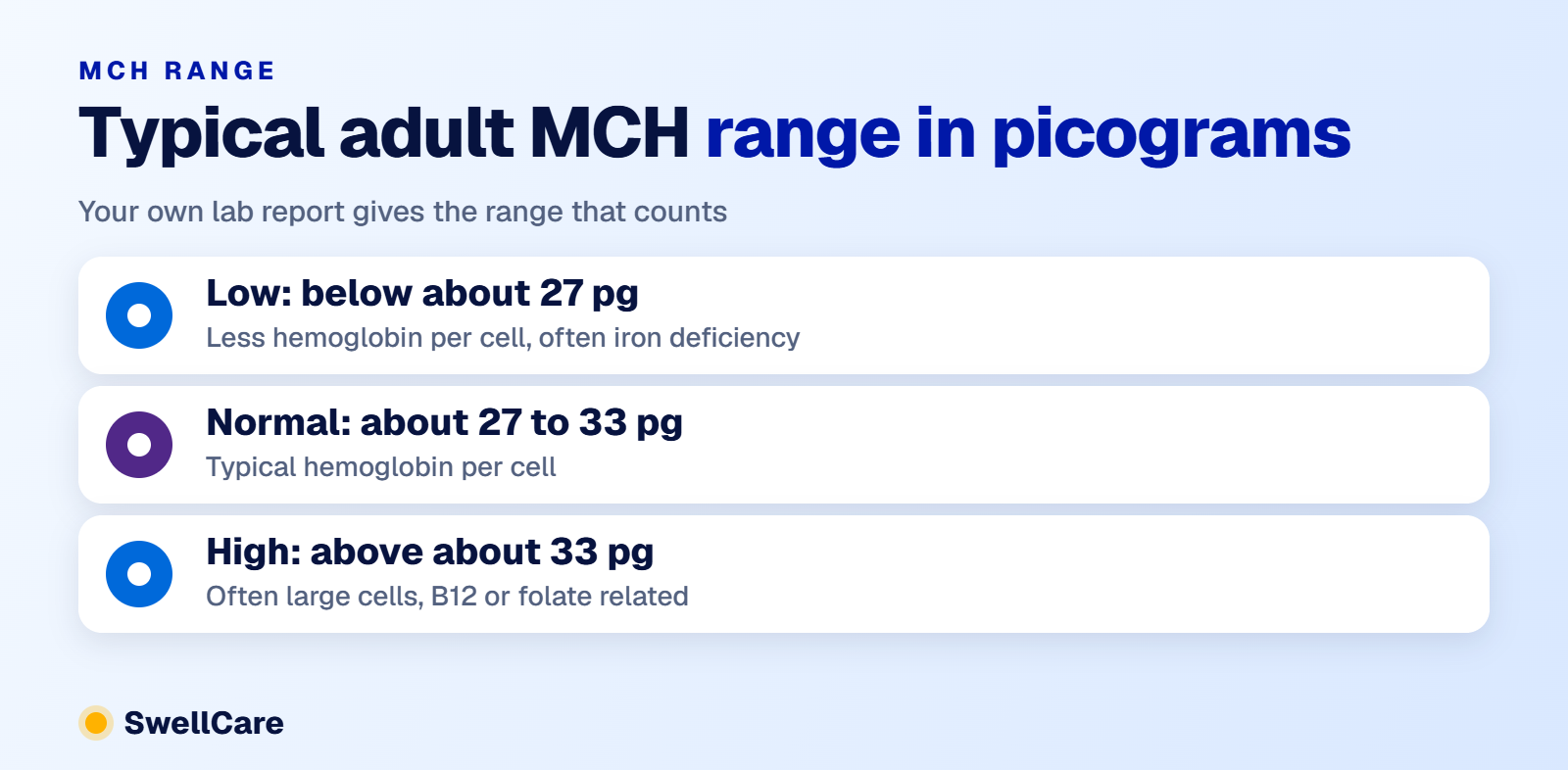
For adults, the typical range is about 27 to 33 pg per red blood cell, according to Cleveland Clinic. MedlinePlus lists 26 to 33 pg for women and 27 to 33 pg for men. Labs differ a bit, so trust the reference range printed on your own report.
| MCH result | What it’s called | What it may signal |
|---|---|---|
| Below about 27 pg | Low MCH | Hypochromic anemia pattern, often a nutrient shortage |
| About 27 to 33 pg | Normal | Typical hemoglobin per cell |
| Above about 33 pg | High MCH | Large cells, often B12 or folate-related |
Context matters. Your RBC count and hemoglobin matter just as much as this one line. So does the rest of the panel, which labs call the red blood cell indices.
What does a low MCH mean?
A low MCH means your red blood cells carry less hemoglobin than usual. Doctors may describe those red blood cells as hypochromic, meaning paler than normal, and often small too. Put together, that pattern is called hypochromic anemia or microcytic anemia.
Common causes of low MCH
Iron deficiency is the usual suspect, and iron deficiency anemia is the textbook result. Your body needs iron to build hemoglobin, so when stores run low, each cell gets less. Blood loss is the most common reason iron runs low, whether from heavy periods or a hidden internal bleed.
Inherited conditions that change hemoglobin, called hemoglobinopathies, are another cause. Thalassemia and sickle cell disease are the best known. Long-term inflammation from kidney disease, liver disease or cancer can do it too.
Symptoms to watch for
Low MCH on its own doesn’t cause symptoms. The anemia behind it, such as iron deficiency anemia, can. Fatigue is the big one. Weakness and pale skin are common too. Some people get headaches, a fast heartbeat or shortness of breath on stairs. If those sound familiar, mention them to your doctor.
What does a high MCH mean?
A high MCH means cells carry more hemoglobin than usual, usually because the red blood cells themselves are oversized. Lab reports may call an above-normal MCH hyperchromic, and it often travels with macrocytic anemia, where the cells are larger than normal.
Common causes of high MCH
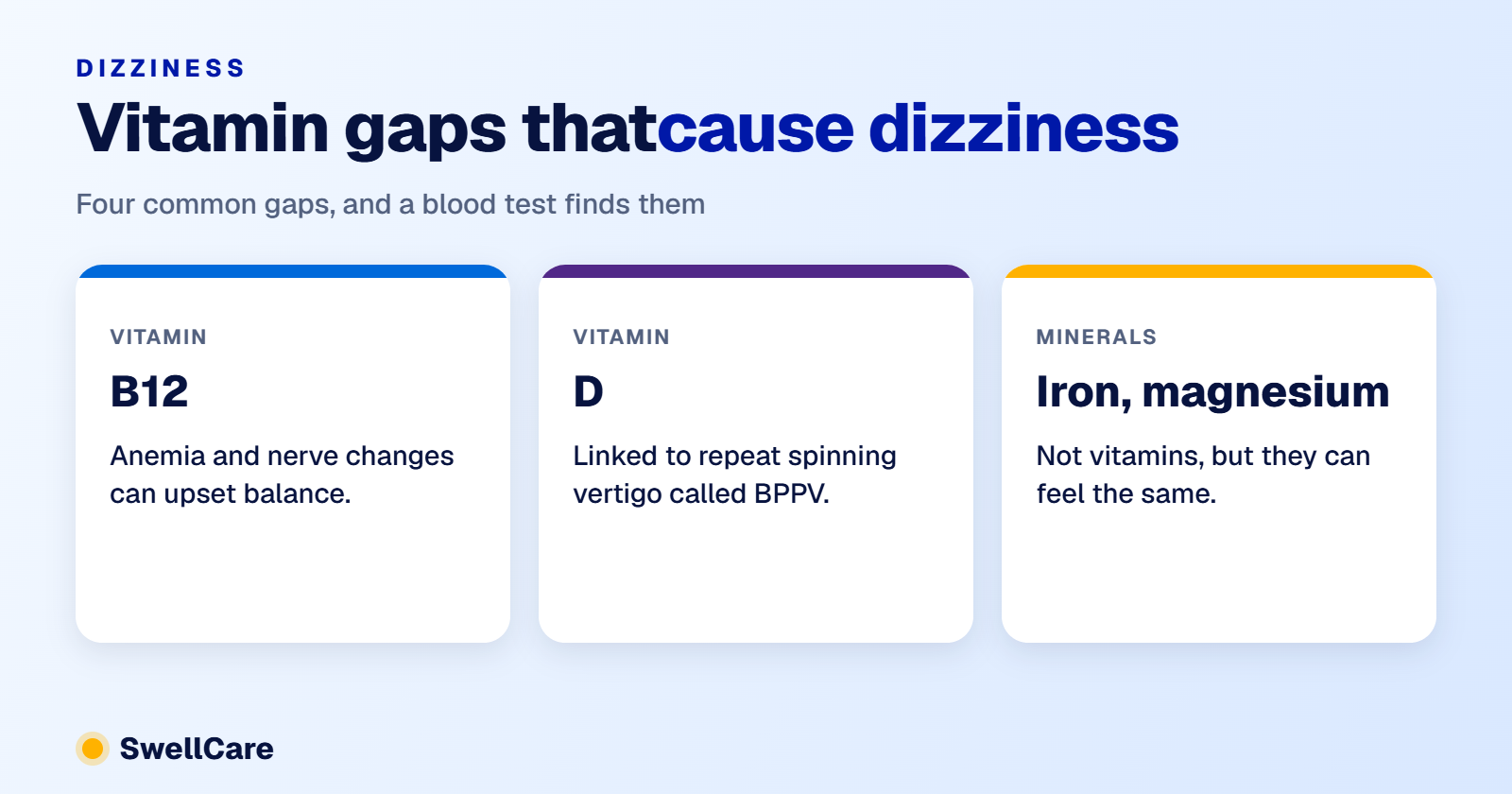
Low vitamin B12 or low folate is the classic pair. Both vitamins help red blood cells divide properly. Without enough, the cells grow big and stay big. Trouble absorbing vitamin B12, which can happen with certain stomach or gut conditions, can cause this even when you eat well.
Long-term heavy alcohol use and liver disease can also push MCH up. So can thyroid problems and some medications, including chemotherapy drugs.
Symptoms that can come with it
Many people feel nothing. When anemia is present you may notice fatigue, a sore or smooth tongue, tingling in the hands and feet, or trouble concentrating. Low vitamin B12 in particular can affect nerves, so don’t ignore tingling.
How MCH fits with MCV and MCHC
MCH has two siblings on your report, and doctors read all three together.
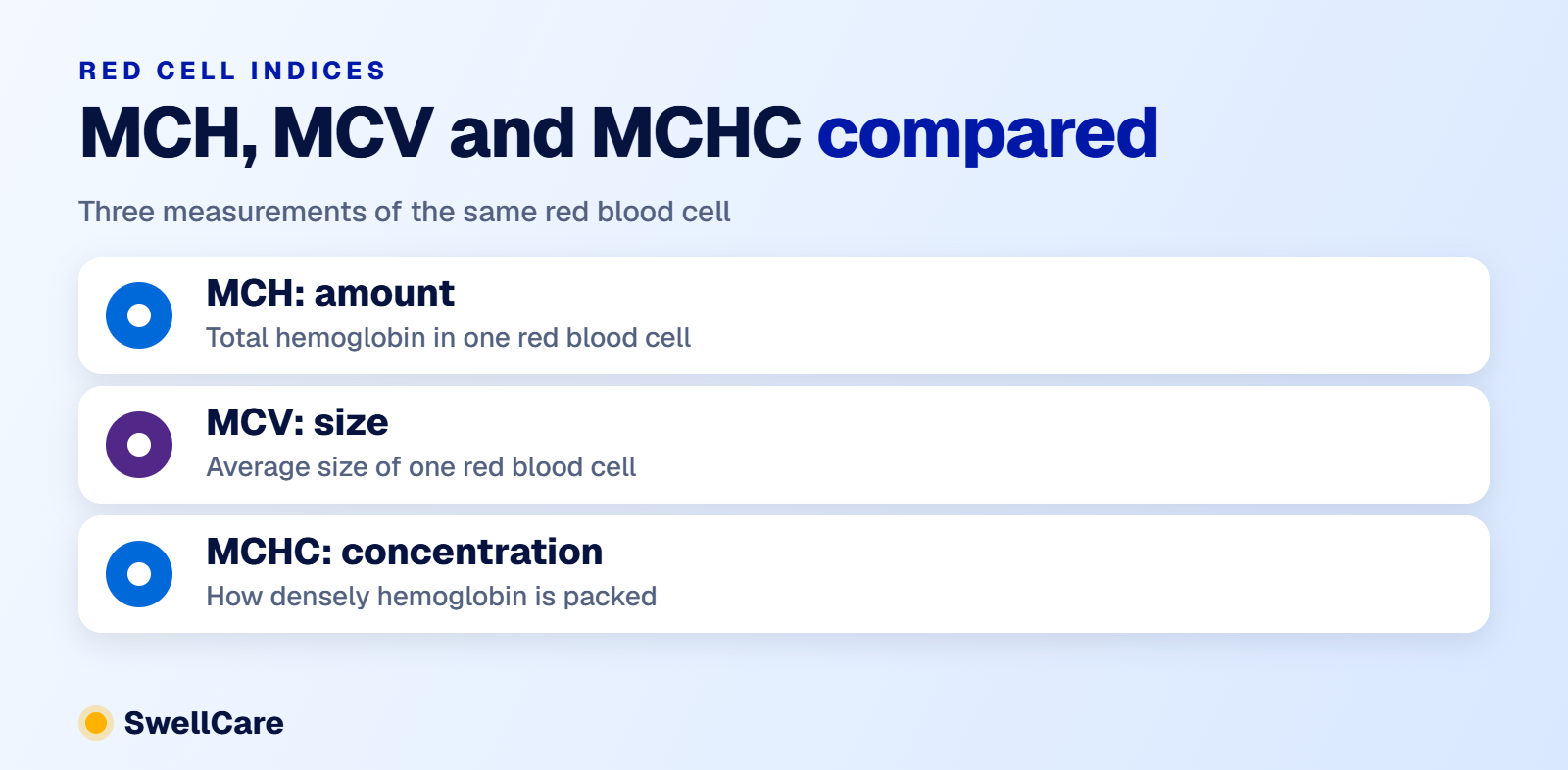
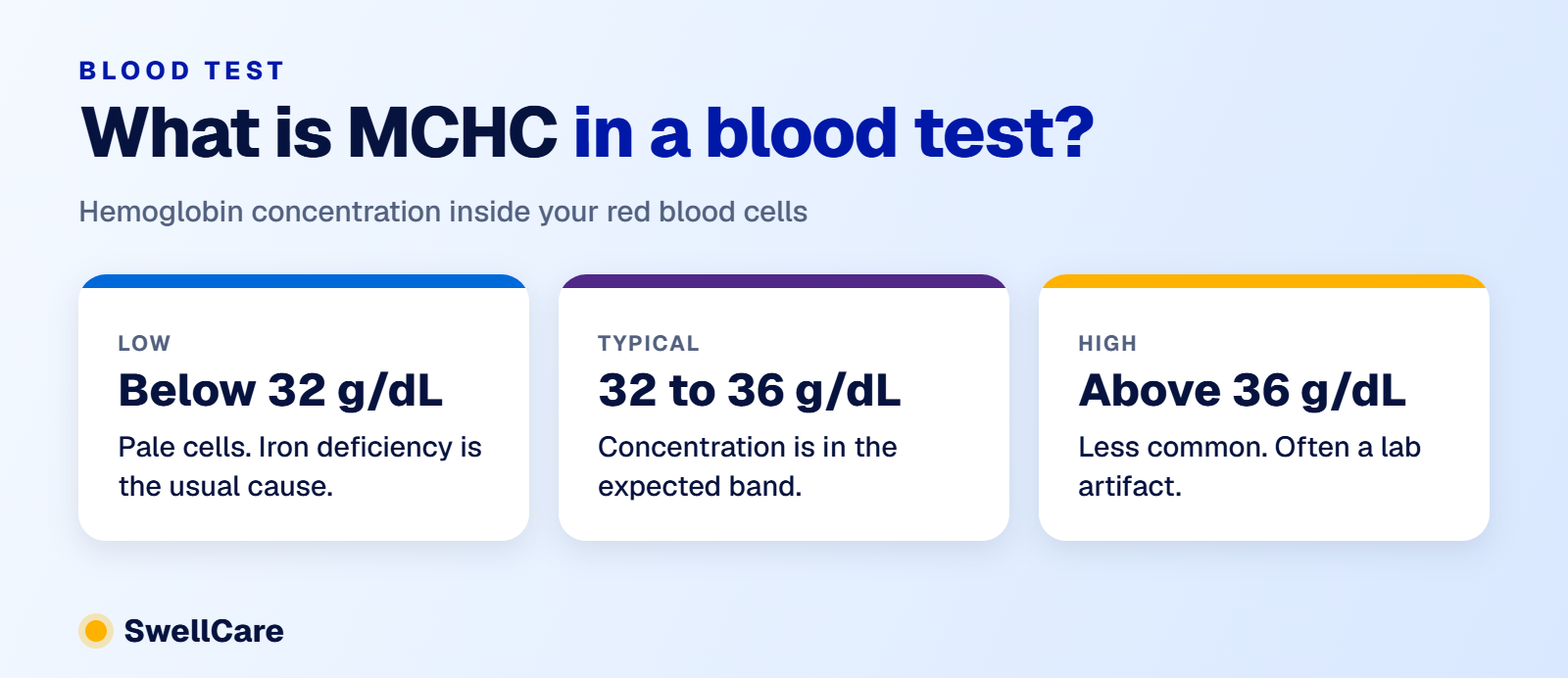
MCV (mean corpuscular volume) tells you how big the cells are. MCHC (mean corpuscular hemoglobin concentration) tells you how densely hemoglobin is packed inside. MCH is the total hemoglobin per cell. If MCV is low and MCH is low, small pale cells (microcytic anemia) point toward iron trouble. If both are high, B12 or folate comes into focus. Curious about the third number? Our guide explains what MCHC means on a blood test.
One flagged number in isolation rarely tells the story.
What can nudge your MCH result
Not every flag means disease. A few things can shift the number.
Lab method matters, since different analyzers can give slightly different results. Pregnancy and certain medications can play a part too. So can a vegan diet that’s low in B12. A borderline result, say 26.8 or 33.2, often just means “recheck later.”
What to do if your MCH is off
Here’s a simple plan, and you can start today.
- Look at the other red cell numbers on your report, especially hemoglobin and MCV.
- Write down any symptoms and how long you’ve had them.
- List your medications and supplements.
- Don’t start supplements on your own. Too much iron isn’t harmless, and the wrong one can hide the real cause.
- Ask your doctor which vitamin and iron tests make sense.
Treatment depends on the cause. Treatment for iron deficiency may include iron-rich foods or supplements and a search for the source of blood loss. B12 or folate shortages are usually corrected with diet changes, supplements or injections.
When to get care quickly: chest pain, severe shortness of breath, fainting or black stools need urgent attention. Call 911 or go to the ER.
Get your blood test results reviewed with SwellCare
Want a clinician to walk through your CBC with you? SwellCare’s online urgent care offers clinician-led, non-emergency care by video or chat, so someone can explain what your numbers may mean and help you decide on next steps. Prescriptions are never guaranteed, and SwellCare is not for emergencies.
Questions people ask about MCH
What does it mean if MCH is low?
It means your red blood cells hold less hemoglobin than average. Iron deficiency is the most common reason, but inherited blood conditions such as thalassemia and chronic illness can also cause it. Your doctor will look at your other numbers and symptoms before deciding what to do.
What does it mean if MCH is high?
Your cells are carrying more hemoglobin than average, usually because they’re larger, as in macrocytic anemia. Low vitamin B12 or folate is the most common reason. Liver disease can raise it too, along with thyroid problems and some medicines.
What level of MCH is concerning?
There’s no single scary number. Results well outside the 27 to 33 pg range, especially with symptoms or abnormal hemoglobin, deserve a conversation with a doctor. A value only slightly outside the normal range is often rechecked, because normal varies by lab.
Should I worry if my MCH is slightly off?
Usually not right away. Small shifts happen with lab variation, diet or hydration, and even how the blood sample was handled. Worry less about one number. Look at the pattern, your symptoms and what the rest of the results show.
How do you raise low MCH?
Treatment targets the cause, not the number. If iron is low, treatment may include iron-rich foods and supplements your doctor recommends, plus finding and fixing any ongoing blood loss.
Trusted references
Public-health, research, and medical-society resources related to this guide.