You open your patient portal and there it is: “CMP, pending.” Or maybe “BMP.” Two lookalike abbreviations and one needle, with no explanation of why your doctor picked one over the other.
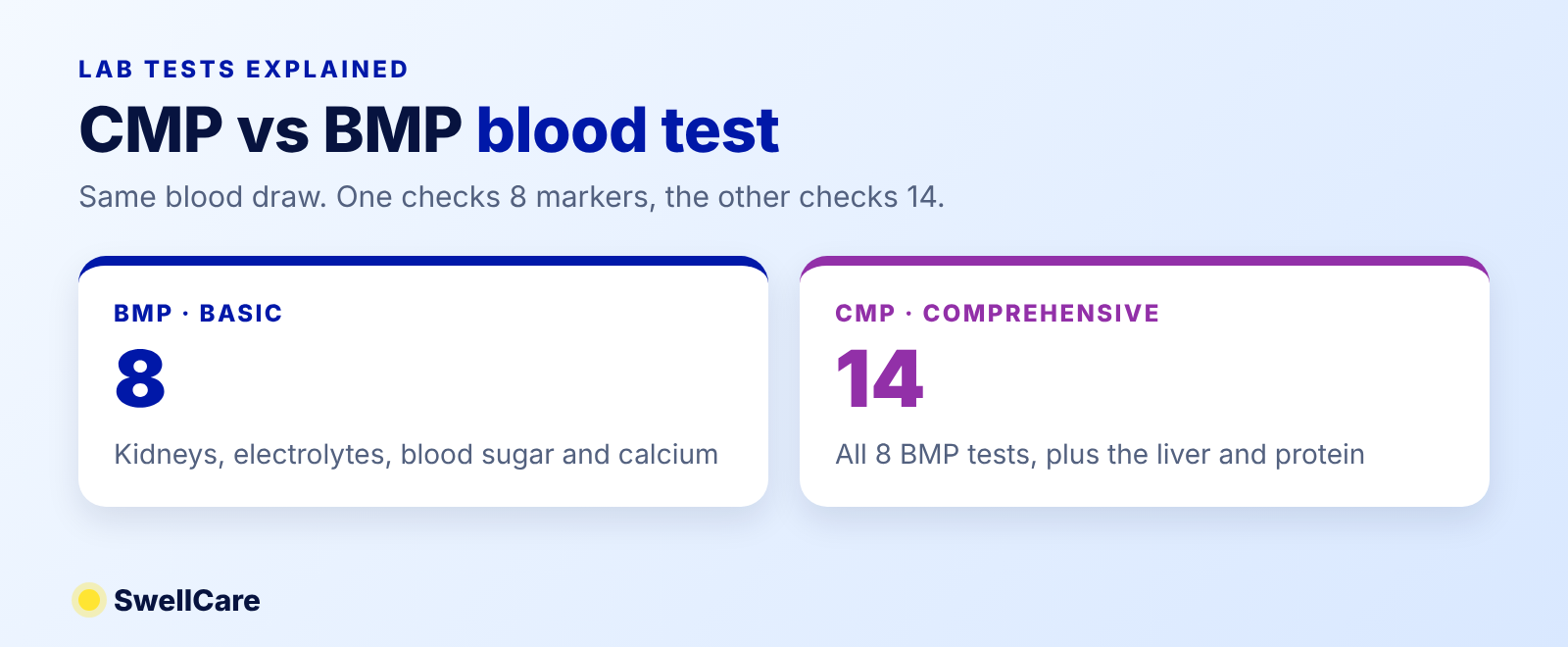
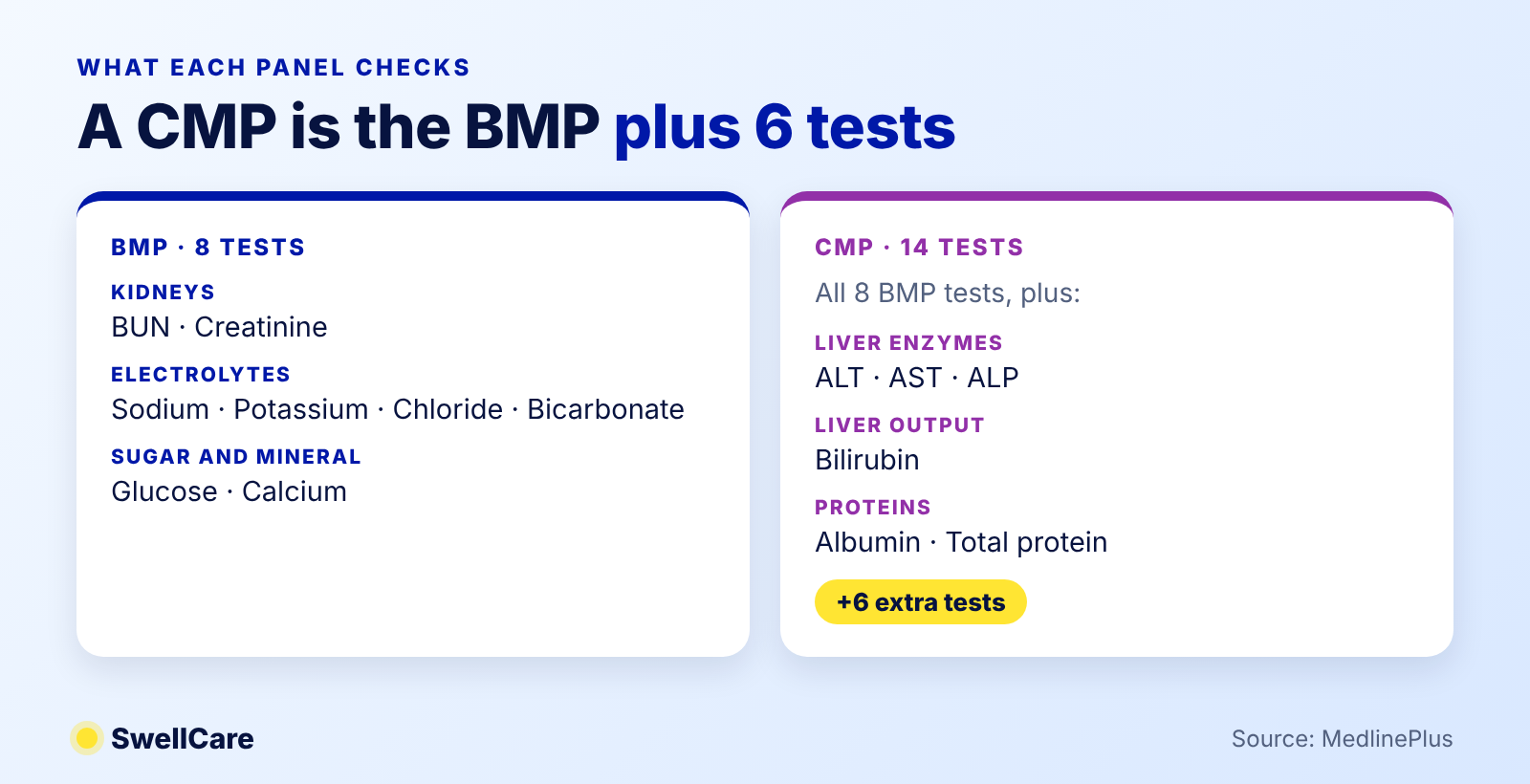
Here’s the cmp vs bmp blood test difference in a breath. A BMP checks 8 markers that mostly reflect your kidneys and your electrolytes, along with your blood sugar. A CMP checks those same 8, then adds 6 more that show how your liver is doing and how much protein is circulating in your blood.
That’s the core of it. The rest of this guide walks through what each marker means, which panel fits which situation, and what to do when a number comes back flagged.
The short answer: CMP vs BMP blood test
Both are routine metabolic panel blood tests, and both use a single draw from a vein in your arm. According to MedlinePlus, a basic metabolic panel includes 8 of the 14 tests in a comprehensive metabolic panel. What the BMP leaves out is the protein tests and bilirubin, along with the liver enzymes (ALP, ALT, AST).
So think of it as a layered test. The BMP is the base layer. The CMP is the BMP with a liver and protein layer on top. The BMP answers most kidney questions, while the CMP answers kidney and liver questions together.
Here’s a quick way to remember it:
- BMP: kidneys, electrolytes, sugar, calcium.
- CMP: everything in the BMP, plus liver function and protein markers.
Your doctor chooses between them based on your symptoms and history, plus the question they’re trying to answer. Neither is “the good one.” Each is the right tool for a different job.
What a BMP checks
A basic metabolic panel measures 8 substances in your blood. Cleveland Clinic lists them as glucose, calcium, BUN, creatinine, plus the four electrolytes (sodium, potassium, bicarbonate, chloride). They fall into three working groups.
Kidney markers: BUN and creatinine
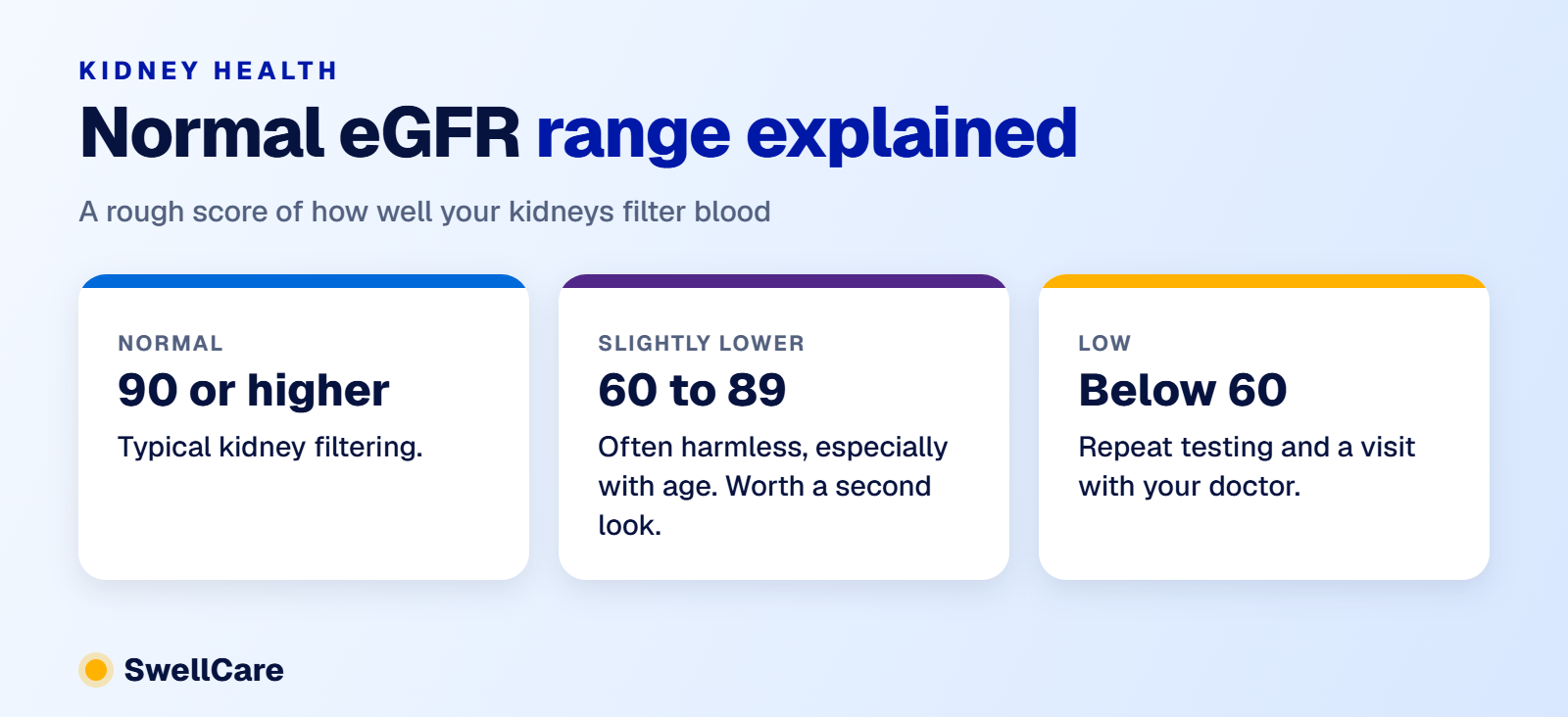
BUN (blood urea nitrogen) and creatinine are waste products. Your kidneys filter them out of your blood. When kidney function slips (see the normal eGFR range), these two tend to creep up because the waste isn’t leaving as efficiently as it should.
That’s why a BMP is a go-to first look at kidney function. It won’t tell your doctor everything about your kidneys. It does flag when something deserves a closer look. Your kidneys also help hold fluid balance steady, so these results often move together.
Electrolytes and acid-base balance
Sodium, potassium, chloride and bicarbonate are your electrolytes. They help control fluid balance, and they keep your nerves, muscles and heart working on schedule. The last of the four, listed as carbon dioxide on some reports, also reflects your acid-base balance.
Electrolyte levels can drift when you’re dehydrated, when you’re vomiting, or when a medication is changing how your body handles salt and water. A potassium that’s too high or too low is one of the results clinicians pay the most attention to, because it can affect the heartbeat.
Glucose and calcium
Glucose is your blood sugar. On a BMP it’s a snapshot of what’s in your blood at that moment, which is one reason fasting often matters. A high reading can point toward diabetes, though one number never settles that question alone.
Calcium supports your nerves and muscles, and your heart too, and your body works hard to keep it in a narrow range. Yes, calcium is on the BMP as well as the CMP. Both panels include it.
What a CMP adds
A comprehensive metabolic panel, per MedlinePlus, measures 14 substances. You already know eight of them. The six extra tests all circle back to one organ and one nutrient.
The liver enzymes: ALT, AST and ALP
ALT, AST and ALP are enzymes. They live mostly inside liver cells (AST and ALP also show up in other tissues), and small amounts leak into the blood all the time. When the liver is irritated or inflamed, more of them spill out and the numbers rise.
That’s why the CMP is the panel doctors reach for when they want to look at liver function. It’s also why it’s often ordered when you start a medication that can affect the liver. Liver enzymes can go up for plenty of ordinary reasons, so a mild bump is a reason for a follow-up, not for alarm.
Albumin, total protein and bilirubin
Albumin is the main protein in your blood, and your liver makes it. A low albumin level is one reason doctors read the whole panel together. Total protein counts all the protein in your blood, albumin included. Low levels can hint that your liver or kidneys aren’t working as they should, or that you’re not getting enough nutrition.
Bilirubin is a yellow waste product from the breakdown of old red blood cells. Your liver clears most of it. When bilirubin builds up, the skin and the whites of the eyes can turn yellow. Plenty of people with a slightly high bilirubin feel fine, and your doctor will read it alongside the other liver numbers.
CMP vs BMP side by side
Here’s the whole comparison in one place.
| BMP (basic metabolic panel) | CMP (comprehensive metabolic panel) | |
|---|---|---|
| Number of tests | 8 tests in total | 14 tests in total |
| Kidney markers | BUN, creatinine | BUN, creatinine |
| Electrolytes | Sodium · potassium · chloride · bicarbonate | Sodium · potassium · chloride · bicarbonate |
| Sugar and calcium | Glucose (blood sugar) · calcium | Glucose (blood sugar) · calcium |
| Liver enzymes | Not included | ALT · AST · ALP |
| Bilirubin | Not included | Included |
| Protein markers | Not included | Albumin · total protein |
| Best for | A fast read on your kidneys and electrolytes, plus sugar | A wider view that adds the liver and protein |
The takeaway is simple. If your question is about the liver, a BMP can’t answer it. If your question is only about kidneys or electrolytes, a CMP gives you more data than you strictly need, and that’s usually fine.
Which test will your doctor order?
Nobody should have to guess at this, so here’s how it usually shakes out.
A BMP is a common first-line metabolic panel. Doctors order it for routine checkups, in emergency care, when you have symptoms such as fatigue, confusion, breathing problems or vomiting, and to monitor kidney function alongside conditions like high blood pressure or kidney disease. It’s also used to recheck an earlier abnormal result and when you start a medication that could affect the kidneys.
A CMP is the wider metabolic panel. It covers that same ground and widens it. Doctors order it for screening and monitoring, when symptoms point toward the liver, kidneys or metabolism, and to check whether a treatment is working or causing side effects. It’s also the panel many clinicians choose when you start a medicine that can affect your liver.
Which one do you want to ask for? If you’re setting up a physical and aren’t sure, a CMP gives a broader snapshot. If your doctor has a narrower question about your kidneys, electrolytes or blood sugar, a BMP is built for exactly that.
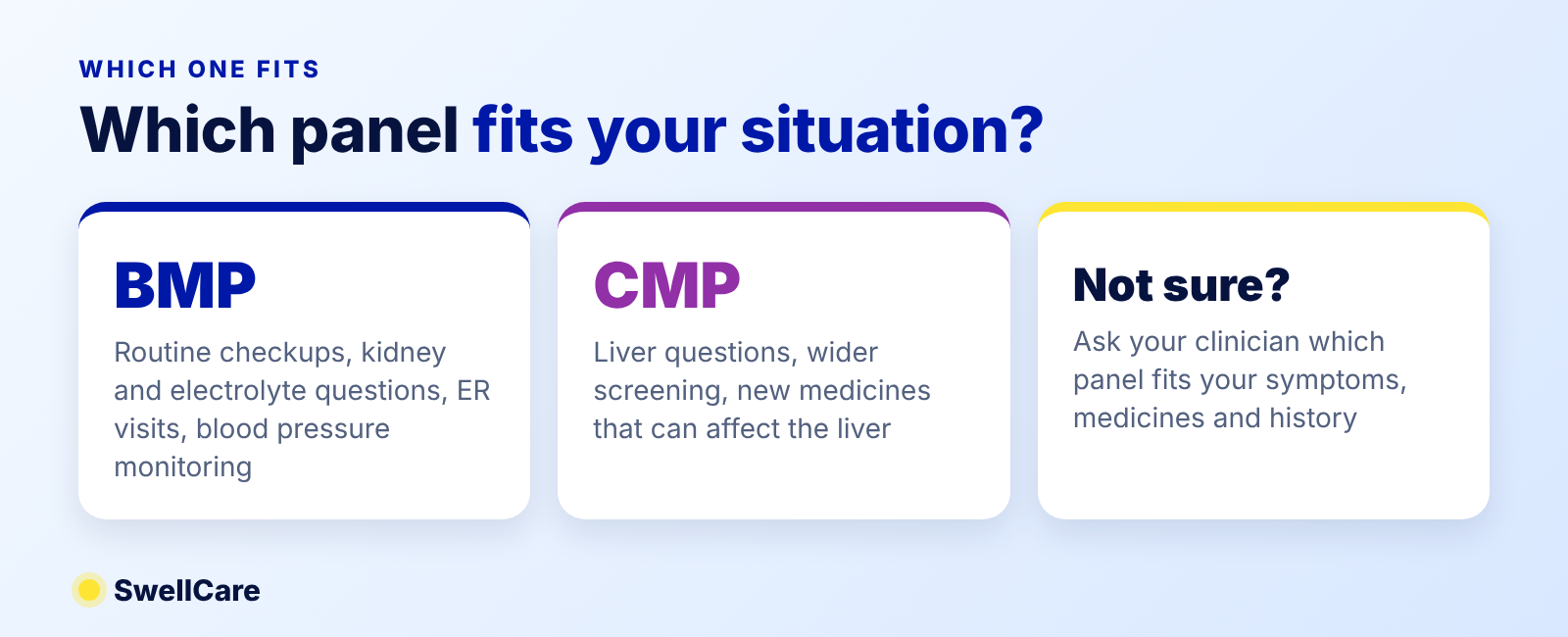
The honest answer is that the best panel depends on you. A licensed clinician looking at your symptoms, medications and history is the right person to make that call.
Do you need to fast, and what happens at the draw?
It depends on the metabolic panel and the lab, so follow the instructions you were given. As a rough guide, MedlinePlus says a BMP often calls for about 8 hours of fasting, meaning no food or drink before the test. For a CMP, it says you may need to fast for several hours. For a CMP, Cleveland Clinic notes some providers ask for 10 to 12 hours, which is why a morning appointment is a popular choice.
Why does fasting matter? Food can push your glucose up for a while after a meal, and that muddies the picture. Water is usually fine, and it’s often encouraged. Ask whether you should hold your usual medicines until after the draw, and don’t stop anything on your own.
The draw itself is quick. A technician takes blood from a vein in your arm, usually in under five minutes. You might feel a brief sting, and some people get a small bruise at the needle site that fades quickly. Cleveland Clinic says results typically arrive in one to two business days, and in an emergency room they can come back within hours.
What about cost? It varies a lot by lab, insurance plan and whether you order through a doctor or direct to consumer. Ask for the price before you book, and ask whether a BMP or a CMP is the one your clinician actually wants.
What abnormal results can (and can’t) tell you
Seeing a flagged value is unsettling. Take a breath.
An out-of-range number on a metabolic panel doesn’t confirm a diagnosis. Cleveland Clinic points out that diet, medications and even lab processing can nudge a result, and that about 1 in 20 healthy people have a value outside the normal range. Doctors often repeat a test or add a more specific one before drawing a conclusion.
Still, patterns matter. Out-of-range results can point toward kidney disease, liver disease, diabetes or high blood pressure, and in the short term toward problems like dehydration. Your clinician reads each value in the context of your symptoms, your medical history and what you take.
Two habits will help:
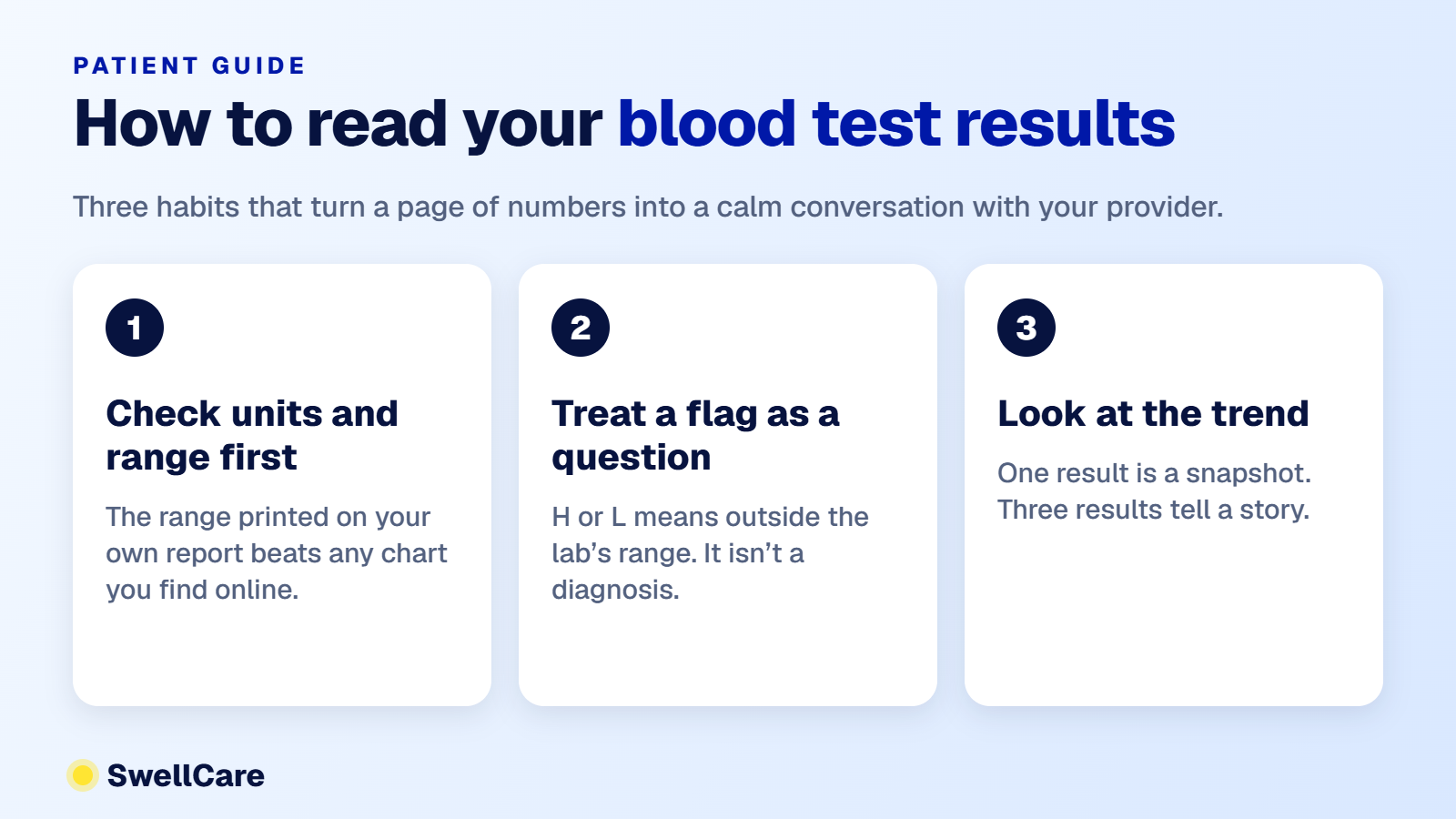
- Look at the reference range printed on your own lab report. It varies from lab to lab. Our guide on how to read blood test results walks through the layout.
- Don’t compare one number against a chart you found online and call it done.
If a result confuses you, that’s a normal reason to ask for a second pair of eyes.
When to call a doctor
Contact a clinician soon if a result is flagged and you don’t understand why, or if you have symptoms along with it, such as persistent fatigue, yellowing of the skin or eyes, swelling, unusual thirst, or frequent vomiting.
Call 911 or go to the ER for chest pain, severe trouble breathing, fainting, confusion or a rapid, irregular heartbeat. A blood panel is never a substitute for emergency care.
Get your results explained by a Swell clinician
Lab results are only useful if someone helps you turn them into a plan. That’s the gap Swell is built for. Swell offers online care with licensed clinicians, and its labs and follow-up service is for the moment you’re wondering whether you need a test or what a result means.
The first screening chat is free. If a visit makes sense, you’ll see the price and format before you continue, and a completed consultation is $45. Lab and medication costs are separate when they apply. If a screen isn’t enough and you need an exam or in-person care, the clinician will tell you plainly.
Start a free screening at Swell and bring your BMP or CMP results with you.
Questions people ask about CMP vs BMP blood tests
Is a CMP the same as a BMP?
No. A CMP has 14 tests and a BMP has 8. The CMP includes every BMP test and adds six more, among them albumin and the liver enzymes ALT and AST, so it gives a wider view of protein levels and the liver.
Does a BMP check liver function?
No. A BMP has no liver markers, so it can’t show how that organ is working. If your doctor wants to look at the liver, they’ll usually order a CMP or a separate liver panel instead.
Does a BMP check kidney function?
Yes. BUN and creatinine are both on the BMP, and they’re the standard markers doctors use to gauge kidney function. A CMP includes them too.
Is a CMP better than a BMP?
Not automatically. A CMP gives more data, but a BMP is the right fit when the question is about your kidneys, electrolytes or blood sugar. The better test is the one that answers your clinician’s question.
Do I need to fast for a BMP or CMP?
Often, yes. Fasting for several hours is common, and sometimes up to 8 to 12 hours depending on the lab and the panel. Water is usually allowed. Follow the specific instructions on your order, because they differ by provider.
Can a CMP or BMP diagnose diabetes, kidney disease or liver disease?
On their own, no. These panels can flag a value that points toward one of those conditions, such as high glucose for diabetes or raised waste markers for kidney problems. Follow-up tests are usually needed to confirm or rule out a diagnosis.
How long do BMP and CMP results take?
Typically one to two business days, though it can be longer. Results from an emergency room are usually back within hours. Your clinician will go over them with you.
Can I get a CMP or BMP without a doctor’s order?
In many US states you can order a metabolic panel directly through a lab or an online lab service, but rules and prices vary. Having a clinician review the results matters more than where the blood was drawn.
Trusted references
Public-health, research, and medical-society resources related to this guide.