You felt it go. A tug in the back of your thigh mid-stride, or a sharp catch in your lower back as you lifted a box. Now you want one straight answer: how long does a pulled muscle take to heal?
Most mild muscle strains settle in one to three weeks. A moderate one takes several weeks, sometimes a couple of months. A severe tear can take months, and some need surgery. Where yours lands depends on the grade of the strain, which muscle it is, and what you do over the next few days.
That’s the short version. Below you’ll find a week-by-week timeline, what really helps, and the signs that mean you shouldn’t wait it out. If you’d rather have a clinician look at it right now, Swell is open around the clock.
Why your pulled muscle still hurts on day five
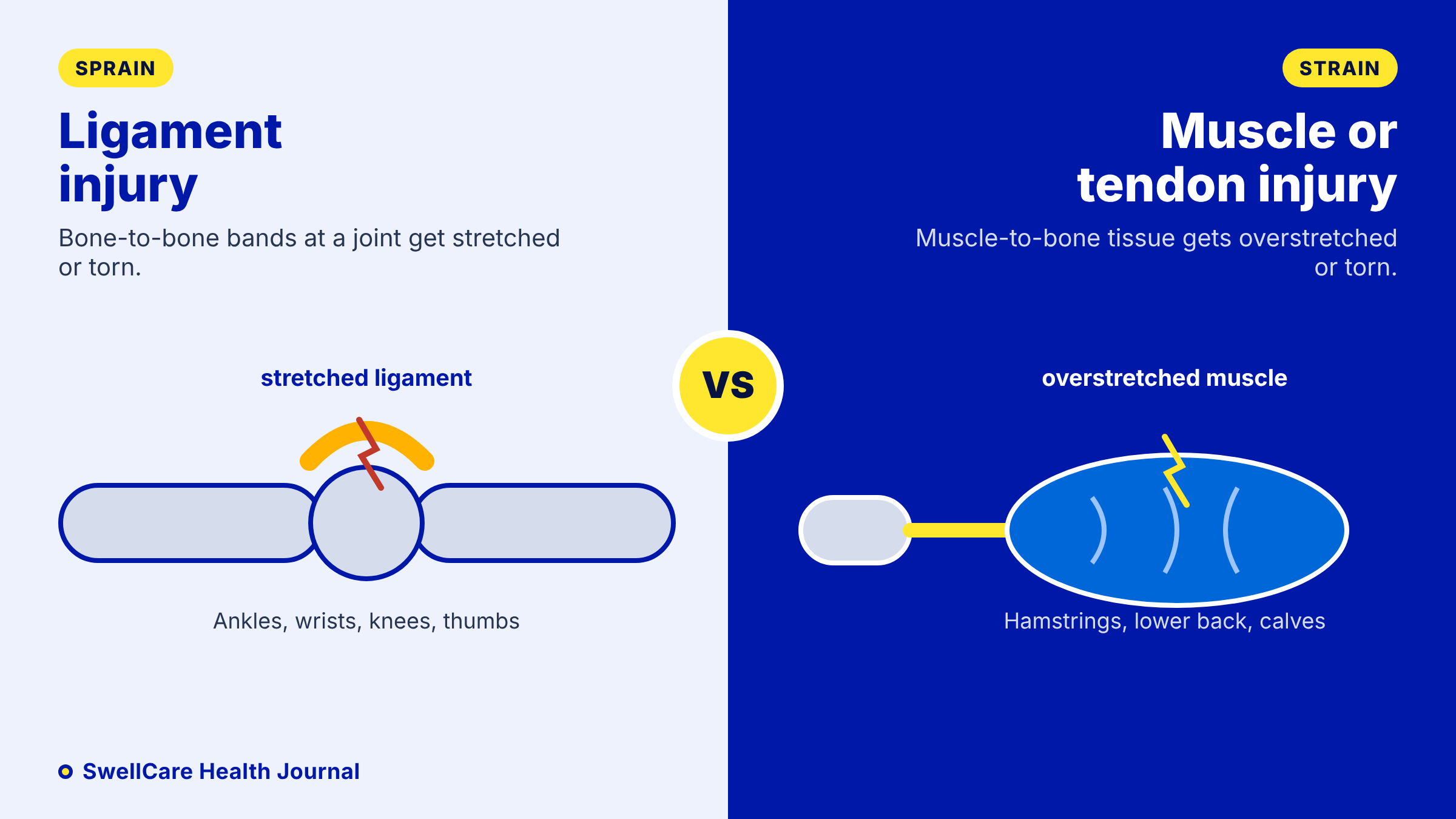
A pulled muscle, also called a muscle strain, is a stretch or tear in the muscle fibers. Your body answers with inflammation. Blood and fluid move into the damaged tissue, which is why swelling and discoloration show up so fast.
It looks alarming. It’s also the first stage of healing, and that purple patch is just blood from the injury showing through the skin. Nothing’s going wrong.
Typical symptoms include sudden pain, tenderness, swelling, bruising, stiffness and a muscle that feels weak when you use it. Pain with stretching is another common one. Symptoms like these usually point to a mild or moderate injury, but they don’t tell you the severity on their own. Pain usually peaks in the first two days. Then it plateaus, and that’s where people get frustrated. By day five the sharp pain has dulled, but the muscle still feels tight and a bit unreliable.
Here’s what’s happening underneath. New tissue is being laid down, and it’s weaker than the muscle it replaces. That repaired tissue strengthens over weeks as it remodels. Feeling better doesn’t mean the healing is finished, and that gap is where most re-injury happens. Recovery runs on tissue repair, not on how the pain feels.
Pulled muscle healing time by grade
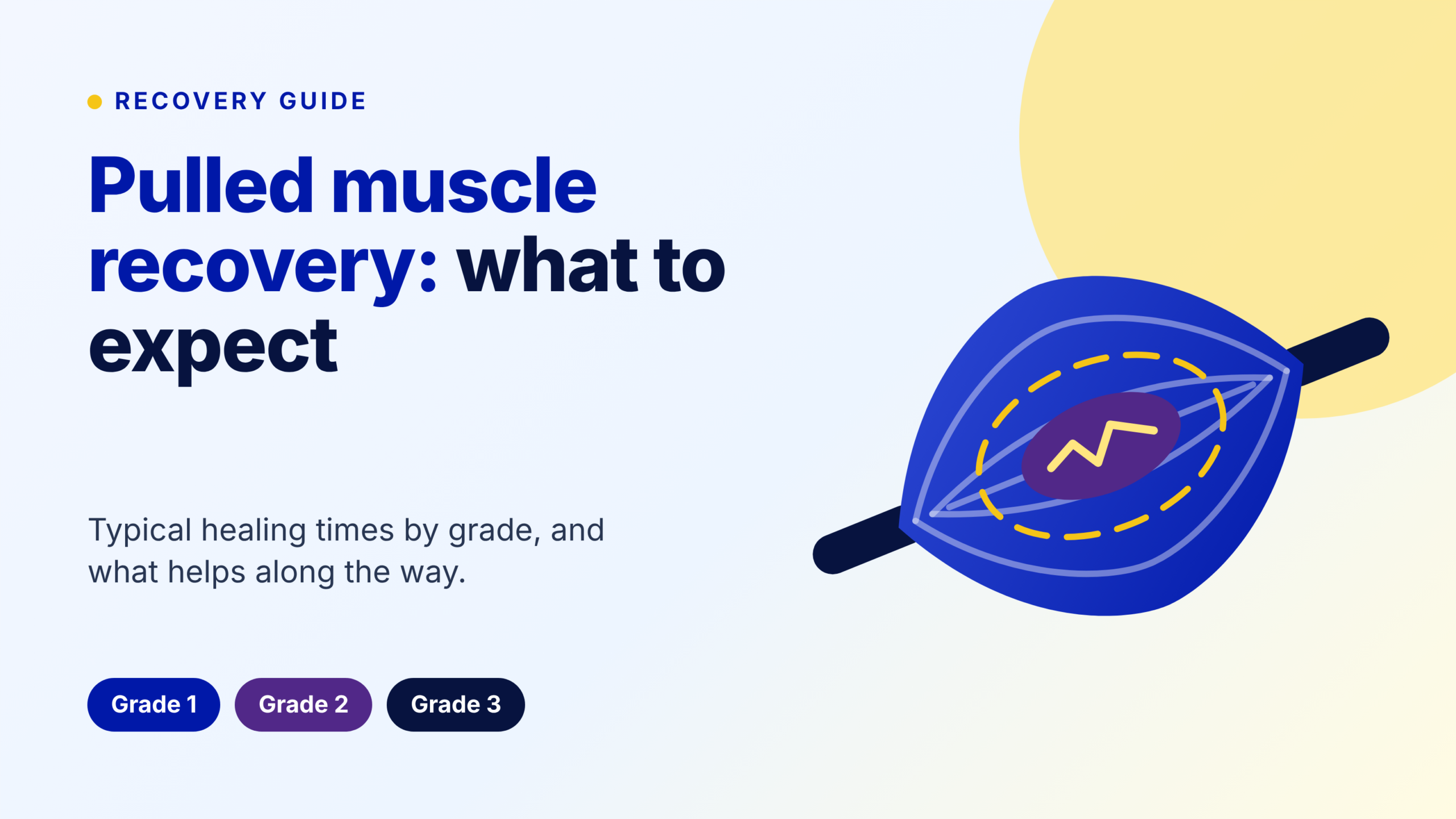
People search “how long does a pulled muscle take to heal” because the range is so wide. Clinicians narrow it by sorting every muscle strain into three grades of severity. The grade is the biggest single factor in your recovery time, so it’s worth knowing which one you’re probably dealing with. The timelines below come from Cleveland Clinic and the NHS, and they’re general ranges, not promises.
| Grade | What’s happened | Typical healing time |
|---|---|---|
| Grade 1 (mild) | A small number of muscle fibers are overstretched or slightly torn. You can still use the muscle. | A few weeks. Many improve within about 2 weeks. |
| Grade 2 (moderate) | A partial tear. Real pain, noticeable swelling and bruising, and weaker movement. | Several weeks to a few months. |
| Grade 3 (severe) | A complete tear, often with a “pop” and loss of function. | Months. Surgery may be needed, then about 4 to 6 months of rehab. |
A few things about that table. First, “healed” and “ready for hard exercise” aren’t the same date. The NHS suggests avoiding strenuous exercise such as running for up to 8 weeks after a strain, even when daily life feels normal again.
Second, the location matters. A calf or hamstring that you load with every step tends to take longer to trust than a small muscle you can rest completely. A partial tear in a big working muscle is the slow one. Even a mild strain involves some torn muscle fiber, so give it time. That’s a general pattern, not a rule, so ask a clinician if yours is slow.
What recovery looks like, week by week
Think of rehabilitation in stages. Real life is messier, but this is a fair map of the recovery time for a mild to moderate strain.
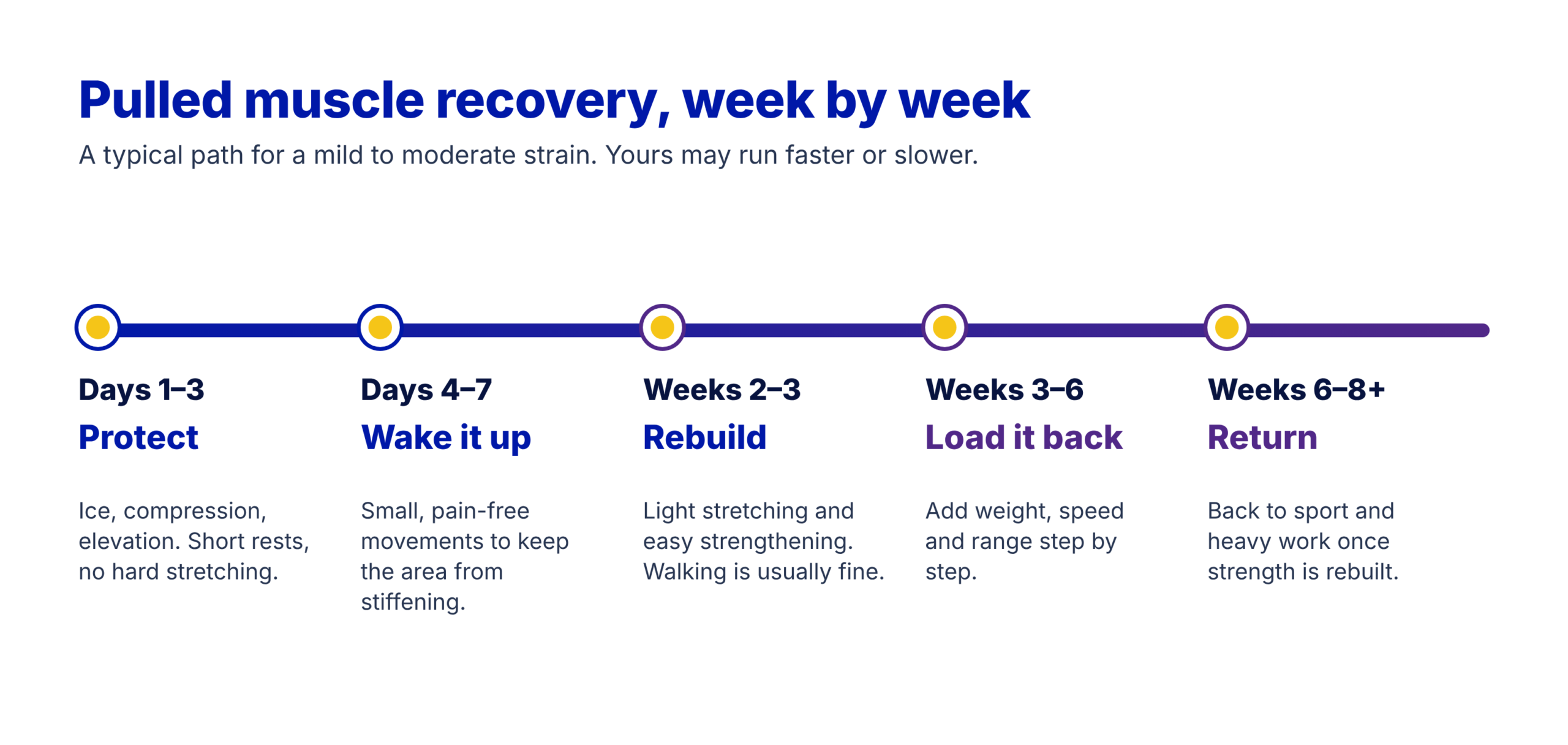
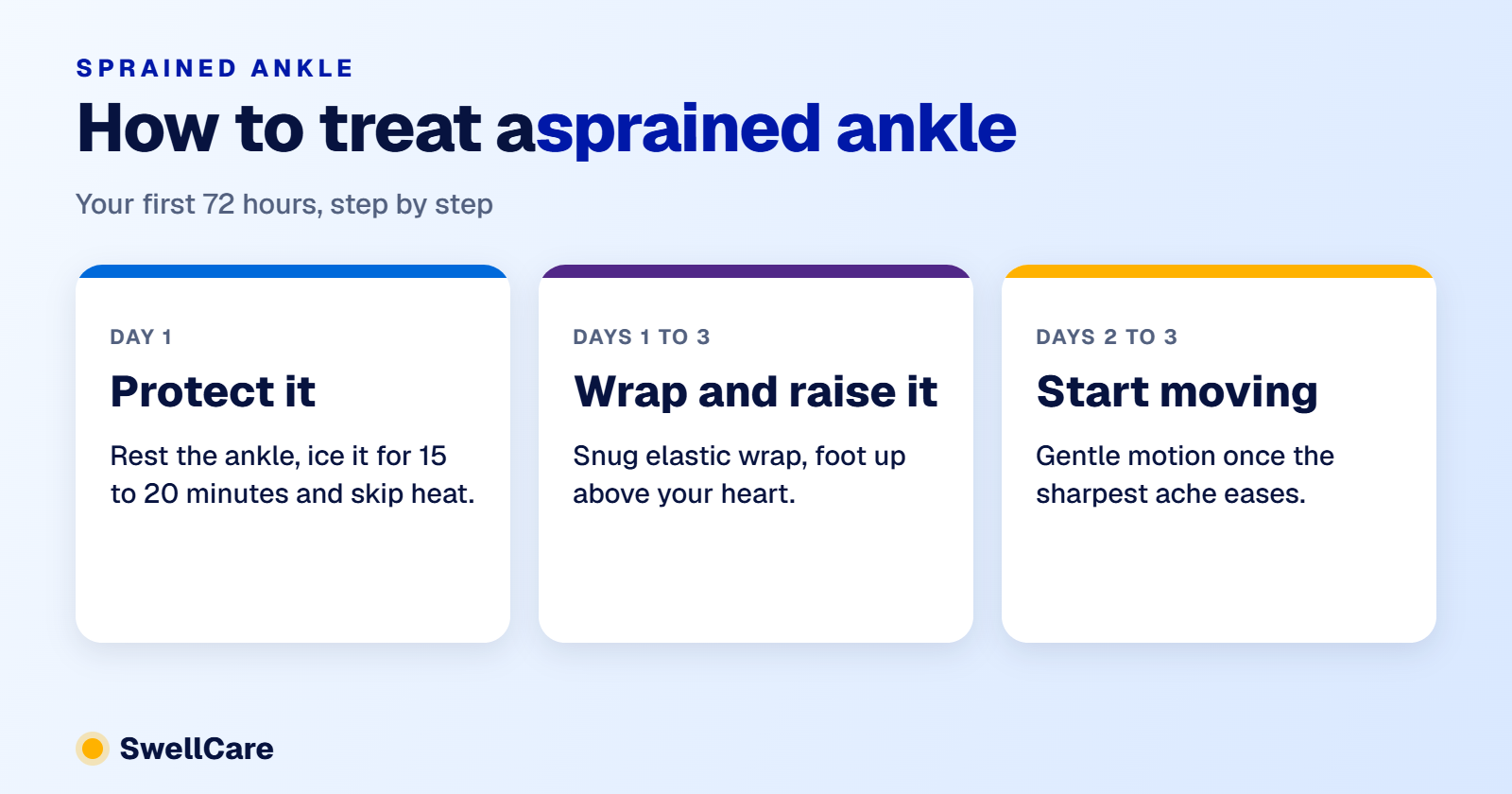
Days 1 to 3: protect it. Rest the muscle, but don’t go to bed for a week. Ice wrapped in a cloth, compression with a snug bandage and elevation all help. Gentle compression also makes the limb feel supported, which helps you move less guardedly. All three help with pain and swelling. Skip heat, alcohol and hard massage for the first couple of days, since they can make swelling worse, according to the NHS.
Days 4 to 7: wake it up gently. Once the worst pain eases, start moving within a comfortable range. Small, slow movements. You’re aiming to protect your range of motion and stop stiffness setting in, not to test the muscle. Pain that spikes means you’ve gone too far.
Weeks 2 to 3: rebuild. This is where a mild strain usually turns the corner. Add light stretching and easy strengthening. This is the real start of rehabilitation. Walking is usually fine. Sprinting, heavy lifting and sudden twisting are not, yet.
Weeks 3 to 6: load it back. Gradually add weight, speed and range. A physical therapy session or two can set the pace if you’ve been stuck, and good rehabilitation notes how the muscle responds to each step up in load. This is the stage where people feel 90 percent better and decide to prove it.
Weeks 6 to 8 and beyond: return to full activity. Recovery here is slow and steady, and for moderate strains you’ll be in this phase for a while. Severe injuries run much longer and need a plan from a clinician.
Notice that nothing in that list says “rest until it stops hurting.” Rest matters early, but total rest for weeks is a poor recovery plan, and it can leave you with a weaker, stiffer muscle.
What speeds healing, and what slows it down
The first few days are about controlling pain and swelling. After that, healing is mostly about the right amount of movement at the right time. Good treatment follows that order, and the healing speeds up when you respect it.
What helps. Ice for the first three days, wrapped in cloth and used for 10 to 20 minutes at a time. MedlinePlus says heat or ice can both be used after day three if pain lingers. Compression with an elastic bandage and elevation above heart level keep swelling down. Don’t wrap so tight that your toes or fingers tingle. Gentle stretching and strengthening come as pain allows. Good sleep and enough protein don’t hurt either, because they feed tissue repair. A physical therapist can also build you a rehabilitation plan if your recovery stalls.
A word on anti-inflammatories. NSAIDs such as ibuprofen can take the edge off in the first few days, and Cleveland Clinic lists them as an option. But the authors of the PEACE and LOVE protocol in the British Journal of Sports Medicine point out that anti-inflammatories may get in the way of optimal tissue repair. A reasonable approach: use them for a short stretch if pain stops you sleeping, and don’t lean on them for weeks. Acetaminophen is another way to ease pain without touching inflammation. Check with a pharmacist or clinician if you take other medicines.
What slows you down. Pushing through sharp pain. Stretching hard in the early days. Skipping the warm-up once you’re back. Returning to sport because you feel fine, not because you’ve rebuilt strength. Each of these raises the odds of re-injury, and a second muscle strain in the same spot often takes longer than the first.
What prevention looks like. Build strength and flexibility, warm up before activity, and use sound lifting form. Hamstrings in particular like a gradual build in speed work, and a regular strengthening and flexibility routine protects them best. Prevention is cheaper than a second injury. A short routine you’ll actually do beats a perfect one you won’t.
When to see a doctor for a pulled muscle
Most muscle strains are fine to manage at home. These symptoms aren’t, and treatment sometimes has to go beyond home care.
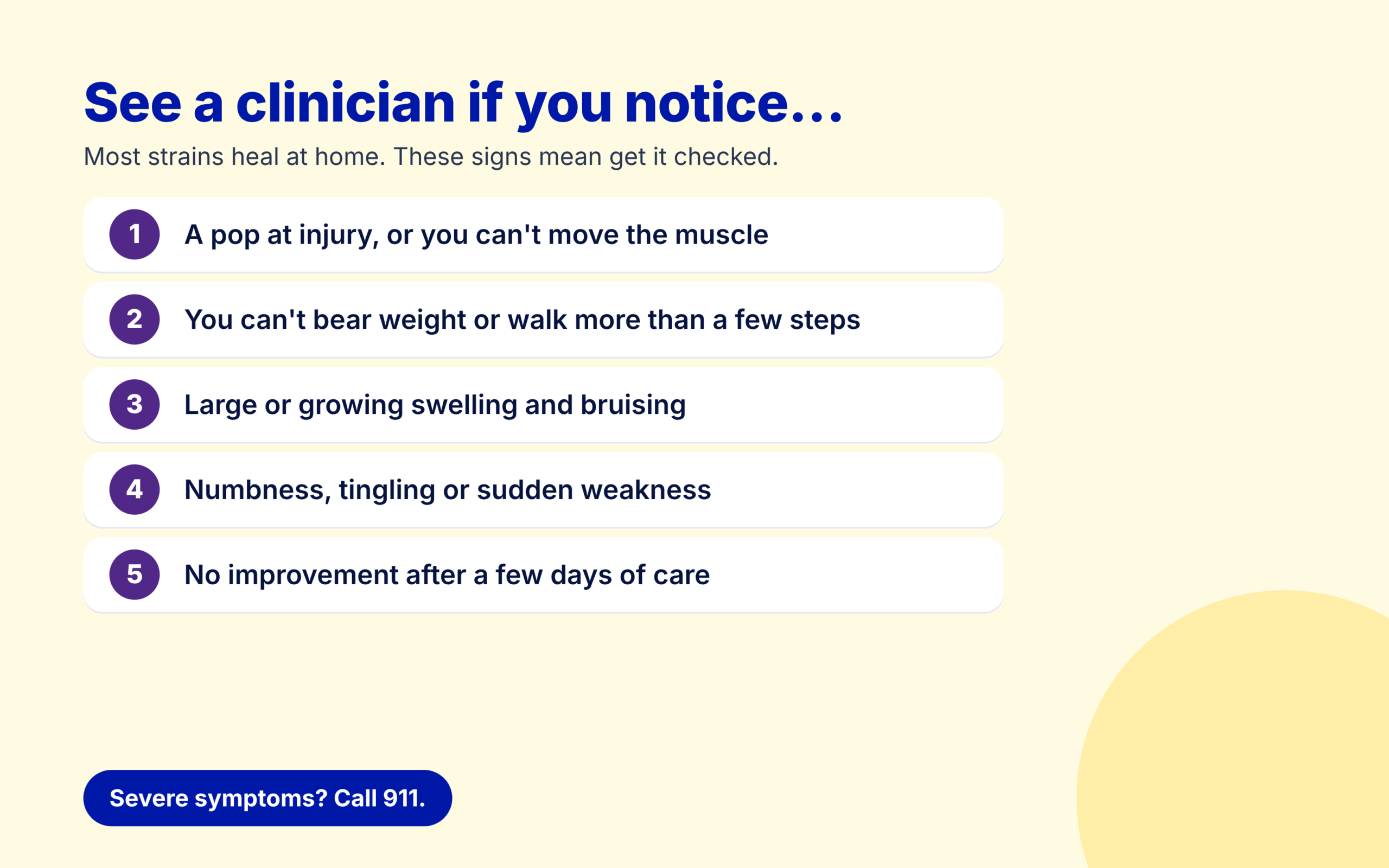
- You heard or felt a pop, or you can’t move the muscle at all.
- You can’t put weight on the leg or walk more than a few steps.
- Swelling or bruising is large, or getting bigger.
- You have numbness, tingling or sudden weakness.
- The pain isn’t improving after a few days, or it hasn’t gone after several weeks.
Call 911 if you can’t move the muscle, the area looks misshapen, or the skin turns blue, grey or cold. For a suspected complete tear, a clinician may order an MRI, or refer you to physical therapy, or other imaging to see what’s going on. This article is general information, not a diagnosis.
Get a clinician’s eyes on it today
You don’t need to guess whether it’s a grade 1 or a grade 2. A clinician can ask the right questions, check your range of motion and weakness on video, and tell you whether home care is enough or you need an in-person exam. Treatment is rarely complicated for a mild strain, but the right plan early saves weeks.
Healing is faster when the plan starts early, and a good recovery begins with knowing what you’re dealing with. Swell offers 24/7 clinician-led virtual care. That means you can get a treatment plan tonight, not after a week of wondering. If a visit shows you need imaging or a hands-on exam, the clinician will say so and point you to the right next step.
Talk to a Swell clinician now. It’s not for emergencies, so call 911 for severe symptoms.
Questions people ask about pulled muscle recovery
Can a pulled muscle heal in a week?
A very mild strain can feel much better in a week, yes. But “feels better” and “has healed” are different. Most people still need two to three weeks before the muscle handles real load, and the recovery time is longer for moderate strains.
Should I use heat or ice for a pulled muscle?
Use ice for the first three days to calm swelling, always wrapped in a cloth. After that, heat or ice can both be used if pain lingers. Avoid heat in the first couple of days. A light compression wrap helps keep swelling down.
Can I walk or exercise on a pulled muscle?
Gentle walking is fine for most mild strains if it doesn’t spike your pain. Skip running, lifting and sports until pain, stiffness and weakness have cleared. Light exercise like easy cycling or pool walking can fill the gap if your clinician agrees. If you can’t walk more than a few steps, get it checked.
How do I know if my muscle strain is a tear?
A pop at the moment of injury, a visible dent or gap, major discoloration and sudden weakness all point toward a significant tear. Severity is what a clinician judges when they press on the muscle and test your strength, so only an exam can confirm the grade.
How long does swelling last after a pulled muscle?
Swelling is heaviest early and usually eases over the first week or two in a mild strain. If it’s growing instead of shrinking, or you also have severe pain, see a clinician.
How do I avoid re-injury?
Prevention comes down to this: return gradually, rebuild strength before speed, and warm up first. Re-injury is common when someone jumps back to full activity the day the pain stops. Keep up your strengthening and flexibility work for a few weeks after you feel normal, since that’s when the muscle fiber is still catching up.
Trusted references
Public-health, research, and medical-society resources related to this guide.