You wake up and one ear sounds like it’s underwater. Your own voice booms. You yawn, swallow, tilt your head and tap the side of it like a vending machine. Nothing.
Here’s the short answer on how to unclog ears: match the fix to the cause. Pressure from a cold or flight usually responds to swallowing, yawning and steam. Wax responds to softening drops and patience. Trapped water usually drains by itself. And a few clogged ears, the ones that come with pain, drainage or sudden hearing loss, need a clinician, not a home remedy.
Why your ear feels clogged in the first place
Three things cause most plugged ears: wax, trapped fluid, and a Eustachian tube that won’t open.
Wax is the obvious one. Your ear canal makes it on purpose, and most of the time it works its way out unaided. Sometimes it packs down instead. Roughly 12 million people in the U.S. see a clinician for earwax trouble every year, according to the AAO-HNSF earwax guideline.
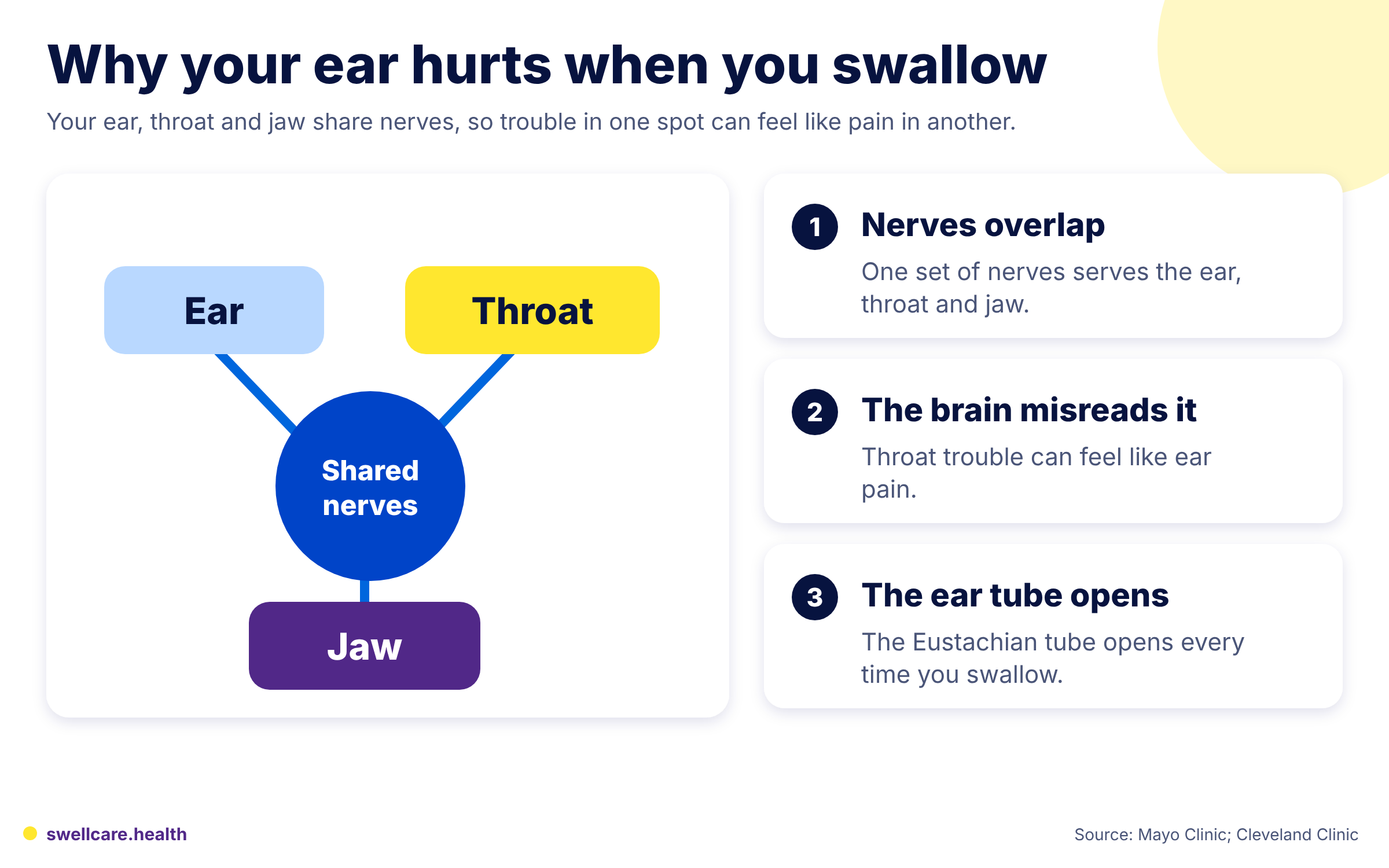
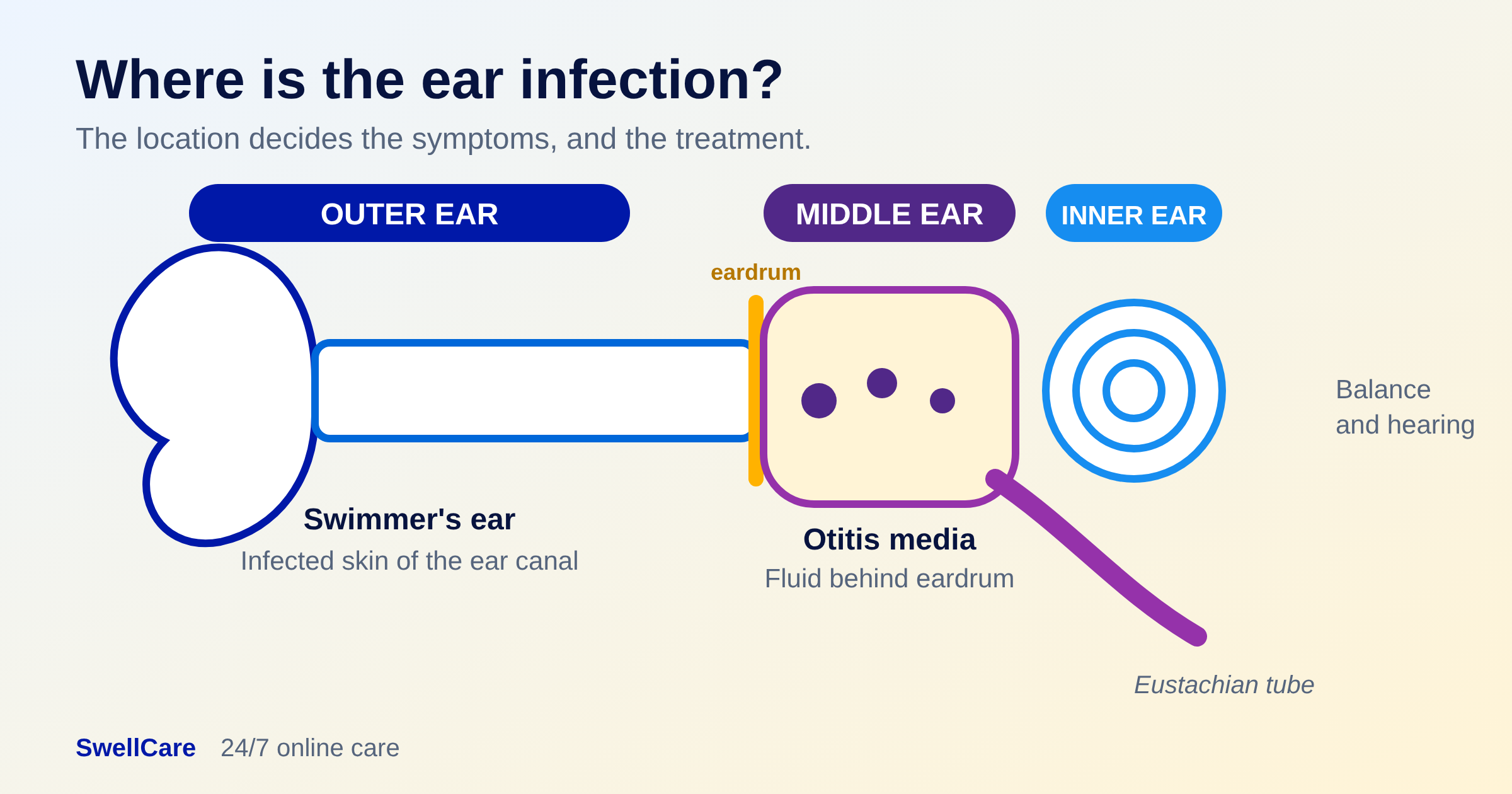
The second cause is your Eustachian tube, the narrow channel that links the middle ear to the back of your nose. It opens when you swallow to even out pressure. A cold, allergies or a sinus flare can swell it shut, and then the middle ear fills with fluid or sits under negative pressure. Fluid in the middle ear dulls sound the way a thumb over a speaker would, and it can’t drain until the tube works again. Mayo Clinic explains that this swelling is why ears can stay plugged after a cold has otherwise cleared.
The third cause is water. Shower water or pool water can sit in the outer ear and make everything sound muffled.
Find your type of clog before you try anything
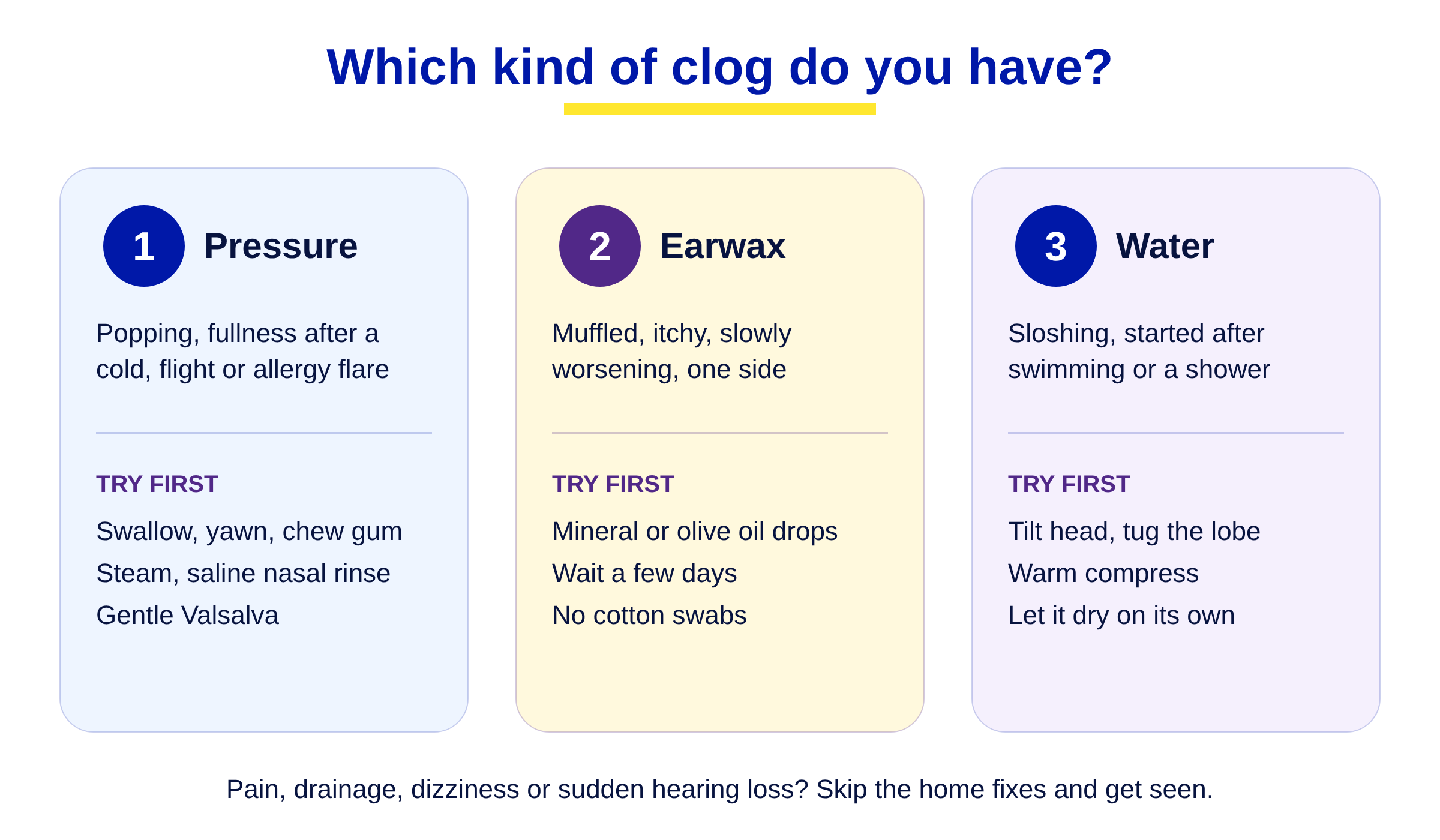
Ten seconds of sorting saves a lot of fiddling. Use this table, or the picture below it.
| What you notice | Likely cause | Start here |
|---|---|---|
| Popping, fullness after a cold, flight or allergy flare | Eustachian tube pressure | Swallow, yawn, steam |
| Muffled, slowly worse, maybe itchy, usually one side | Earwax | Softening drops, then wait |
| Sloshing right after swimming or a shower | Water in the outer ear | Tilt, tug, let it dry |
| Pain, drainage, fever or dizziness | Possible infection | Get checked |
How to unclog ears from pressure or congestion
If your plugged ears showed up with a cold, hay fever or a sinus infection, you’re dealing with swelling around the Eustachian tube. Sinus pressure and ear pressure often travel together, because the sinuses drain into the same corner of the nose. The goal is to shrink that swelling and give the tube a reason to open.
The gentle pop: swallow, yawn, chew
Start boring. Swallowing, yawning and chewing sugar-free gum all tug the Eustachian tube open. Do them for a few minutes, sipping water between rounds. Many people stop here.
Valsalva maneuver, done carefully
If that fails, try a soft Valsalva maneuver. Pinch your nostrils, close your mouth and blow out gently, as if inflating a small balloon. You’re after a quiet pop. Don’t blast it. Hard blowing can strain the eardrum, and it’s the most common way people turn a nuisance into an injury. A torn eardrum hurts, and it can leave the ear leaking or ringing.
Steam helps too. Stand in a hot shower or breathe over a bowl of hot water for ten minutes to loosen congestion. A saline nasal spray adds to the effect and helps clear the sinus passages. A short course of an oral or nasal decongestant can also shrink the swelling, though check with a pharmacist first if you have high blood pressure, and don’t use nasal decongestant sprays for more than a few days because they can rebound. When the sinus swelling is allergy-driven, clogs often respond better to a steroid nasal spray than to anything you put in the ear.
Pressure usually lets go within a few days to two weeks, once the middle ear can vent again. If it doesn’t, the Eustachian tube may be the long-term problem, and that’s worth a visit. StatPearls treats Eustachian tube dysfunction as chronic once it passes three months.
How to unclog ears from earwax
Earwax is stubborn but forgiving. The trick is to soften it and then leave it alone. A clogged ear from wax rarely needs more than a little oil and some patience.
Softening drops that are safe to try
Over-the-counter ear drops work. So does plain mineral oil, which is cheap and gentle, or olive oil: put a few drops in the affected ear, lie on your side for a few minutes, and repeat for several days. Plain mineral oil won’t hurt the ear canal if you use it sparingly. Saline works too. Store-bought ear drops with carbamide peroxide break wax up faster, but the stinging can surprise you, and mineral oil is the milder pick. The AAO-HNSF guideline found no single method clearly beats the others, and waiting is a reasonable plan because many plugs clear on their own.
Hydrogen peroxide solutions are sold for wax, but they can irritate the ear canal, so follow the label and don’t use them every day. Diluted hydrogen peroxide is also something clinicians use in the office, which is a different thing from pouring it in at home.
When flushing is a bad idea
Irrigation kits are everywhere. They’re also where things go wrong, with pain, skin injury and infection among the risks the guideline lists. Skip any flushing if you have ear tubes, a hole in the eardrum, diabetes, a weakened immune system or ear pain. Ask a clinician first. Professional removal with suction or a small curved tool is the safest route for a stubborn plug.
How to unclog ears after swimming or a shower
Water is the easy one. Tilt your head so the blocked ear faces down, then gently tug the earlobe in different directions. If this happens a lot, ear drops made for swimmers can help dry the ear canal. A warm compress held against the outer ear can help the water shift (a warm washcloth does the job), and a warm shower with the ear angled away from the stream often does it.
Then let it dry. If the ear turns itchy, tender or painful over the next day or two, that’s the start of swimmer’s ear, an outer ear infection, and it needs a clinician. An ear infection won’t improve with wax drops.
What not to do when your ears are plugged
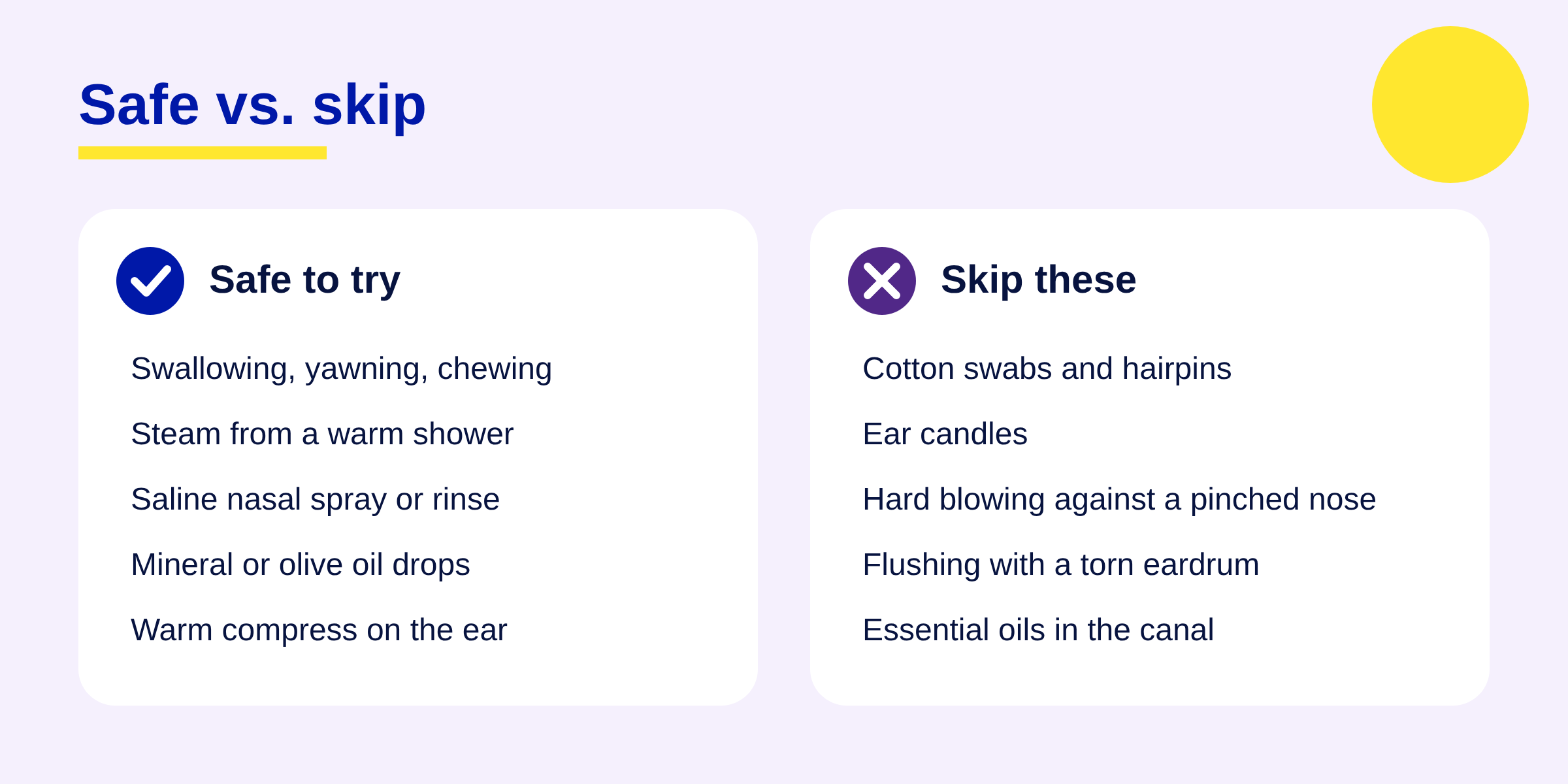
Some home fixes make things worse.
- Cotton swabs and hairpins. They pack wax deeper and can scratch the ear canal or puncture the eardrum.
- Ear candles. There’s no evidence they work, and they can burn you.
- Essential oils. Nobody has shown they’re safe inside the ear.
- Hard blowing against a pinched nose. Gentle is fine. Forceful isn’t.
When a clogged ear needs a clinician
Most clogged ears are harmless. A few aren’t.
Treat sudden hearing loss as urgent. The NIDCD calls it a medical emergency: if hearing drops over hours or a couple of days, especially in one ear, don’t assume wax or allergies. Quick treatment improves the odds of getting hearing back.
Get seen soon for any of these:
- Ear pain, fever, drainage or dizziness, which can point to an ear infection (a middle ear infection is the usual suspect in kids)
- A plugged or clogged ear that lasts longer than two weeks, or keeps coming back
- Hearing loss that doesn’t improve once wax or fluid is cleared
- Jaw pain or clicking along with ear fullness, since jaw trouble can mimic a blocked ear
Call 911 or go to the ER for severe symptoms such as a sudden loss of hearing with weakness, facial droop or severe dizziness.
Get your ears checked without waiting for an appointment
If you’re unsure which kind of clog you have, Swell can help you figure out the next step. A licensed clinician reviews what’s going on, talks through whether home care makes sense, and tells you if you need an in-person exam. It’s open 24/7.
One honest limit: no video visit can look inside your ear or remove stubborn wax. If you need that, we’ll say so and point you to the right in-person care. Start with Swell when your ear won’t quit.
Questions people ask about clogged ears
How long does a clogged ear last?
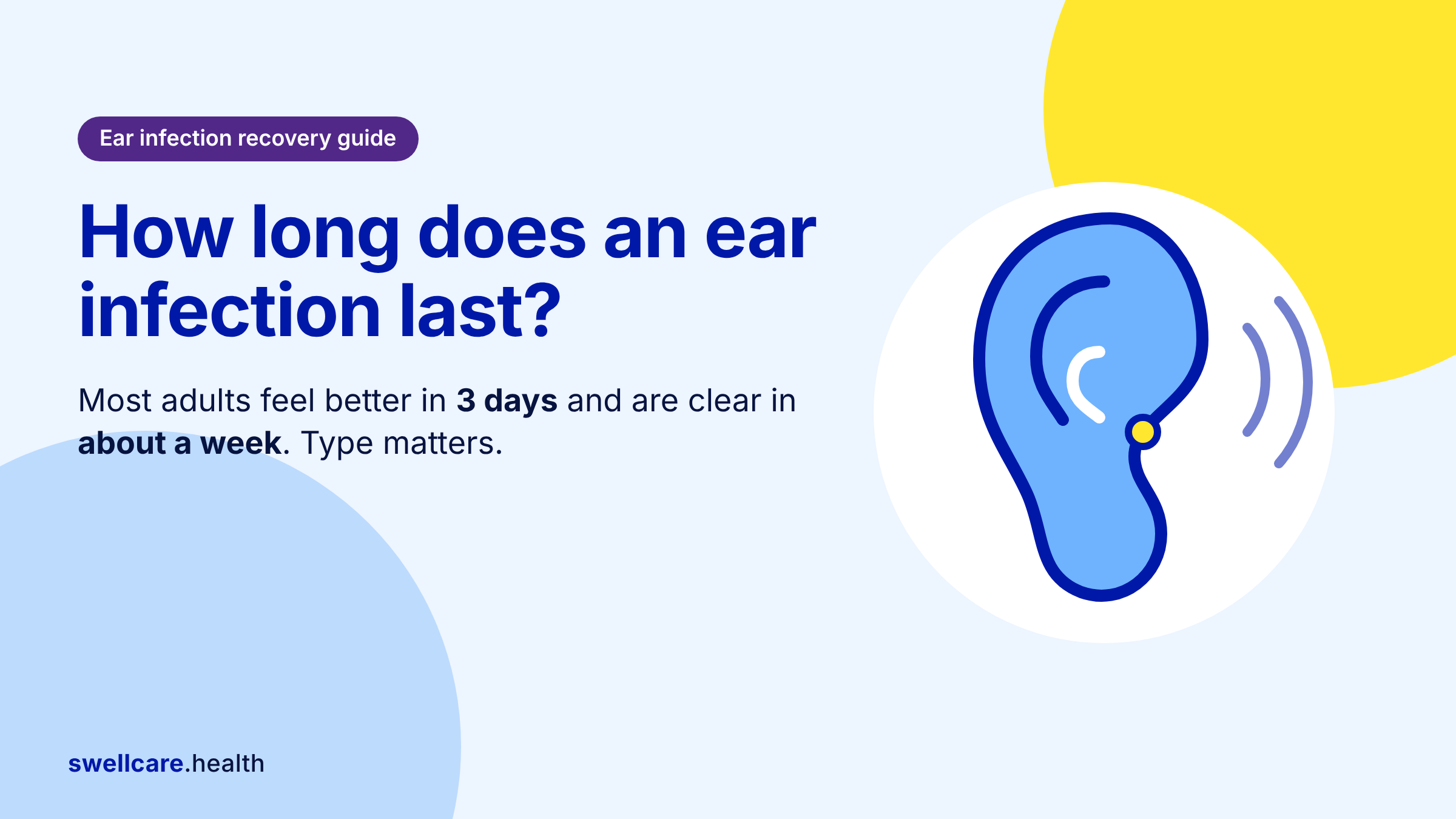
Pressure from a cold usually settles within a few days to two weeks. Wax can stay put for weeks until you soften it with drops. Trapped water drains within a day or so. If your ear is still blocked after two weeks, or the hearing loss is sudden, get it checked.
Will a clogged ear eventually unclog on its own?
Often, yes. Earwax can work itself out, and swelling around the Eustachian tube drops as a cold fades. Waiting is reasonable if you feel fine otherwise. Pain, drainage or a drop in hearing means don’t wait.
How do I unblock only one ear?
One-sided blockage is common because wax and swelling rarely hit both ears evenly. Use the same steps: swallow, yawn, try steam, or soften wax with drops. If only one ear stays blocked for more than a couple of weeks, have a clinician look.
What happens if my ears won’t unblock?
Persistent plugging can mean impacted earwax, fluid in the middle ear or a Eustachian tube that isn’t working. A clinician can check with an otoscope, remove wax, test hearing and, in stubborn cases, refer you to an ear, nose and throat specialist.
Can allergies cause a plugged ear?
Yes. Allergies inflame the nose and Eustachian tube, which traps pressure behind the eardrum. Treating the allergy, often with a steroid nasal spray or antihistamine, usually helps the ear more than any drops will.
Trusted references
Public-health, research, and medical-society resources related to this guide.