You stood up under the cabinet door. Or slipped on wet tile, or took an elbow in a pickup game. You saw stars for a second, laughed it off, and now you’re wondering why the room feels a little tilted.
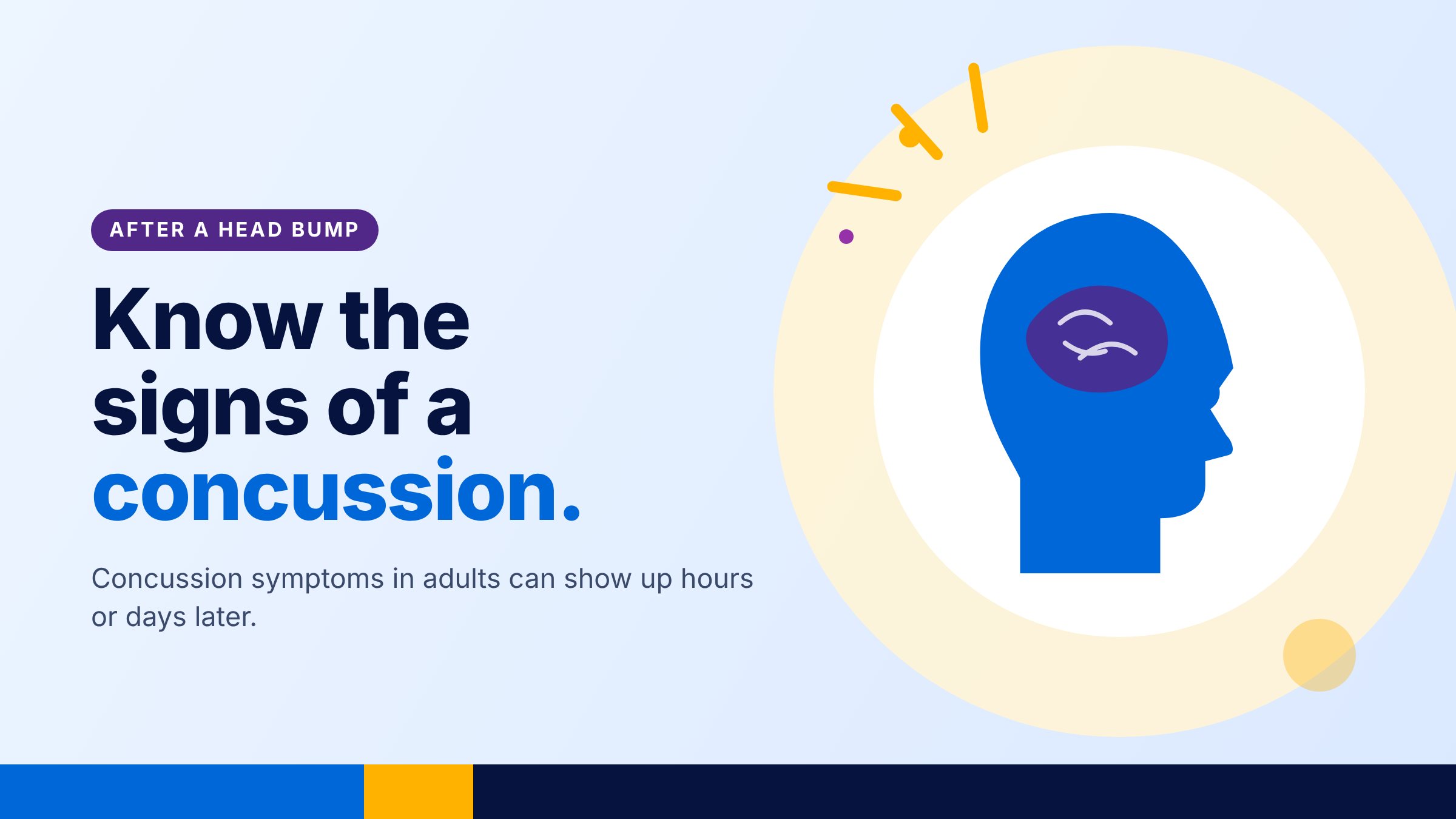
That “little tilted” feeling matters. A concussion is a mild traumatic brain injury caused by a bump, blow or jolt to the head or body. Concussion symptoms in adults often start within minutes, but some don’t show up until hours or even days later. And you don’t have to pass out to have one.
So here’s the short answer. If you’ve had a head injury and you now have a headache, dizziness, confusion, nausea or foggy thinking, treat it as a concussion until a clinician says otherwise. This guide shows you which signs are common, which ones mean “go to the emergency department now,” and what to do in between.
Did that head bump cause a concussion?
Think of your brain as floating in fluid inside a hard skull. A sharp hit, or a sudden stop that whips your head back and forth, can make the brain shift and stretch. That brief disruption is what changes how the brain works. Nothing has to show up on the outside. No bruise, no bump, no blood.
Falls are one of the most common causes in adults. Car crashes, sports, bike accidents and workplace mishaps follow close behind. A fall that looks silly can still be a real brain injury, particularly if you also hit your head on something hard.
Here’s a quick test. Ask yourself three things: Did I take a hit to the head, face, neck or upper body? Do I feel different now than I did an hour ago? Is someone near me noticing that I’m acting off? Two yeses are enough to take this seriously.
Common concussion symptoms in adults
Concussion symptoms usually fall into four groups. You might notice only a couple of them, and that’s fine. The mix is different for everyone.
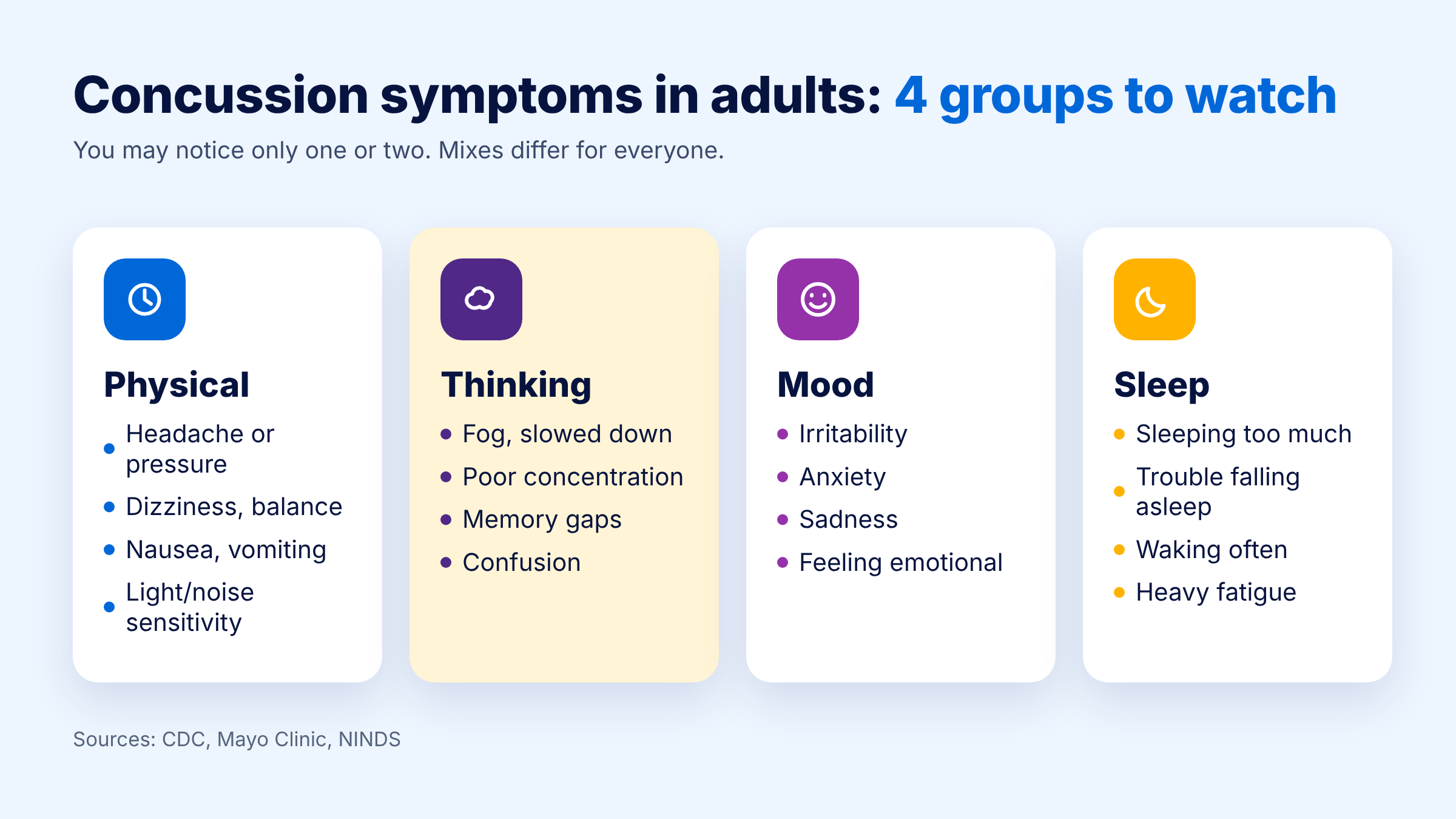
Physical signs
These are the ones people spot first.
- A feeling of pressure or pain in the skull
- A sense that your balance is off, or the room spins
- Nausea or vomiting, mostly in the first hours
- Blurry vision or seeing double
- Sensitivity to light or noise
- Fatigue that feels heavier than normal tiredness
- Ringing in the ears
Mayo Clinic and the CDC both list this group first.
Thinking and memory changes
This is where adults get tripped up, because the signs are easy to blame on a long week. Watch for confusion, trouble with concentration, feeling slowed down, and gaps in recall. Some people can’t recall the moment of impact, or the few minutes before or after it. Others reread the same email four times. People often call it “brain fog.”
Mood and sleep changes
These tend to be the ones that show up late, and they’re the ones people forget to connect to the injury. You might feel irritable for no reason, anxious, sad or unusually emotional. Rest can go sideways in both directions: sleeping far more than usual, or lying awake. The National Institute of Neurological Disorders and Stroke (NINDS) says emotional symptoms such as frustration and irritability tend to develop during recovery rather than right away.
| Symptom group | What it can look like | When it often appears |
|---|---|---|
| Physical | Pain in the skull, balance trouble, nausea, light sensitivity | Minutes to hours |
| Thinking | Fog, poor focus, forgotten details | Minutes to days |
| Mood | Irritability, anxiety, sadness | Days into recovery |
| Sleep | Sleeping too much or too little, trouble drifting off | Hours to days |
Can concussion symptoms show up hours or days later?
Yes. This surprises people more than anything else in this article.
Some symptoms hit right away. Others, called delayed symptoms, creep in over the next several hours or days. Mayo Clinic says problems with concentration and memory, irritability, light and noise sensitivity, sleep trouble and feeling down can appear only days after the injury. The CDC says the same thing in plainer words: some signs show up at once, and others take hours or days.
Here’s what that looks like in real life. You hit your head on Saturday and feel fine. By Monday you can’t focus in a meeting, the office lights feel harsh, and you’re snapping at your partner. You’d never link it to the weekend, but it’s likely connected.
So don’t clear yourself after one good hour. Watch yourself for at least the first two or three days, and ask someone you live with to watch too. They’ll often catch changes in your mood or speech before you do.
Danger signs: when to go to the emergency department
Most heal on their own. A small number of head injuries involve bleeding or swelling inside the skull, and those can get worse fast. That’s why you need a clear line between “monitor at home” and “go now.”
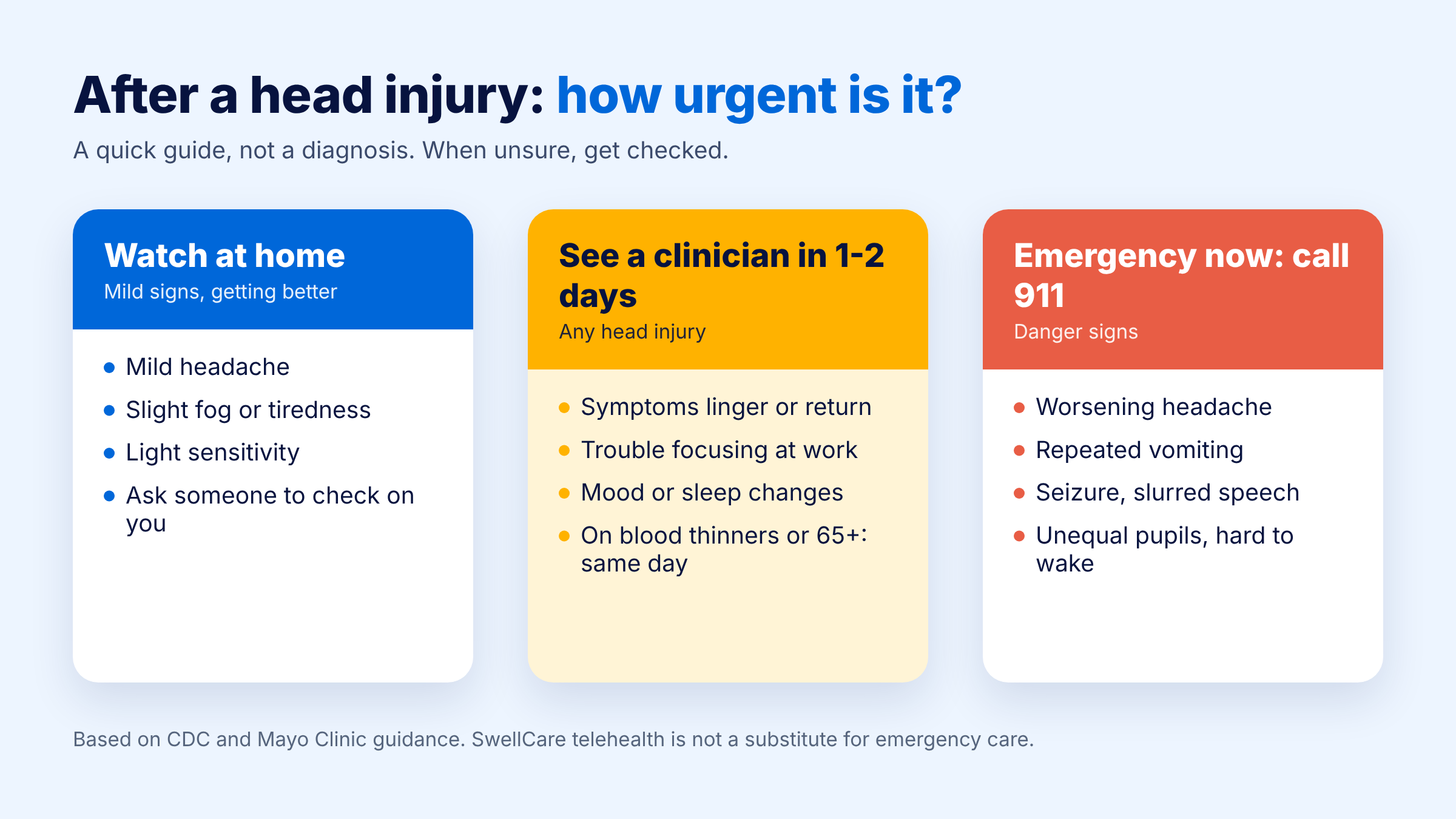
Call 911 or go to the nearest emergency department if you have a head injury and any of these:
- A headache that keeps getting worse and doesn’t ease up
- Repeated vomiting
- Loss of consciousness, even briefly (Mayo Clinic cites more than 30 seconds as a clear emergency sign)
- Seizures or convulsions
- Slurred speech
- Weakness, numbness or poor coordination in an arm or leg
- One pupil larger than the other
- Confusion that deepens, restlessness or agitation, or not recognizing people or places
- Extreme drowsiness, or being hard to wake
- Clear fluid or blood coming from the nose or ears
These come straight from CDC and Mayo Clinic guidance.
Extra caution if you take blood thinners or you’re 65 or older
Your risk is different if you take blood thinners such as warfarin or apixaban, or if you’re an older adult. A bleed can start slowly in these cases, and a headache or mild confusion that seems minor can be the first clue. NINDS also notes that older adults are more likely to have lasting symptoms. If that’s you, don’t wait to see how you feel. Get checked the same day, even after a “small” fall.
Mayo Clinic also recommends seeing a healthcare professional within one to two days for any head injury, even when emergency care isn’t needed.
What to do in the first 48 hours
Say you’ve ruled out the danger signs. Now what? The first two days are about protecting your brain while it settles. Good treatment at this stage is mostly patience.
- Stop what you’re doing. If you were playing sports, you’re done for the day. Mayo Clinic is firm that athletes shouldn’t return to play on the day of the injury, even if a concussion is only suspected.
- Rest, but don’t go dark. NINDS describes brain rest as avoiding activities that demand heavy concentration. A walk and a quiet afternoon are fine. A six-hour spreadsheet session isn’t.
- Ease pain carefully. Acetaminophen is the usual choice. Ask a clinician before taking aspirin or ibuprofen, because they can raise bleeding risk in some situations.
- Skip alcohol. It’s not a treatment for anything here. It clouds your judgment, hides symptoms and slows healing.
- Don’t drive until your thinking and reaction time feel normal.
- Keep someone nearby for the first day, if you can.
Is it safe to sleep? Yes, in most cases. You don’t need to be woken every hour. The exception is if you can’t be woken normally or you seem confused when you wake, which counts as a danger sign.
How long does concussion recovery take in adults?
Most adults feel better within a couple of weeks, according to the CDC. NINDS says most people recover fully from a first concussion within a few weeks, though healing can take anywhere from minutes to several months. A second or third concussion usually heals more slowly.
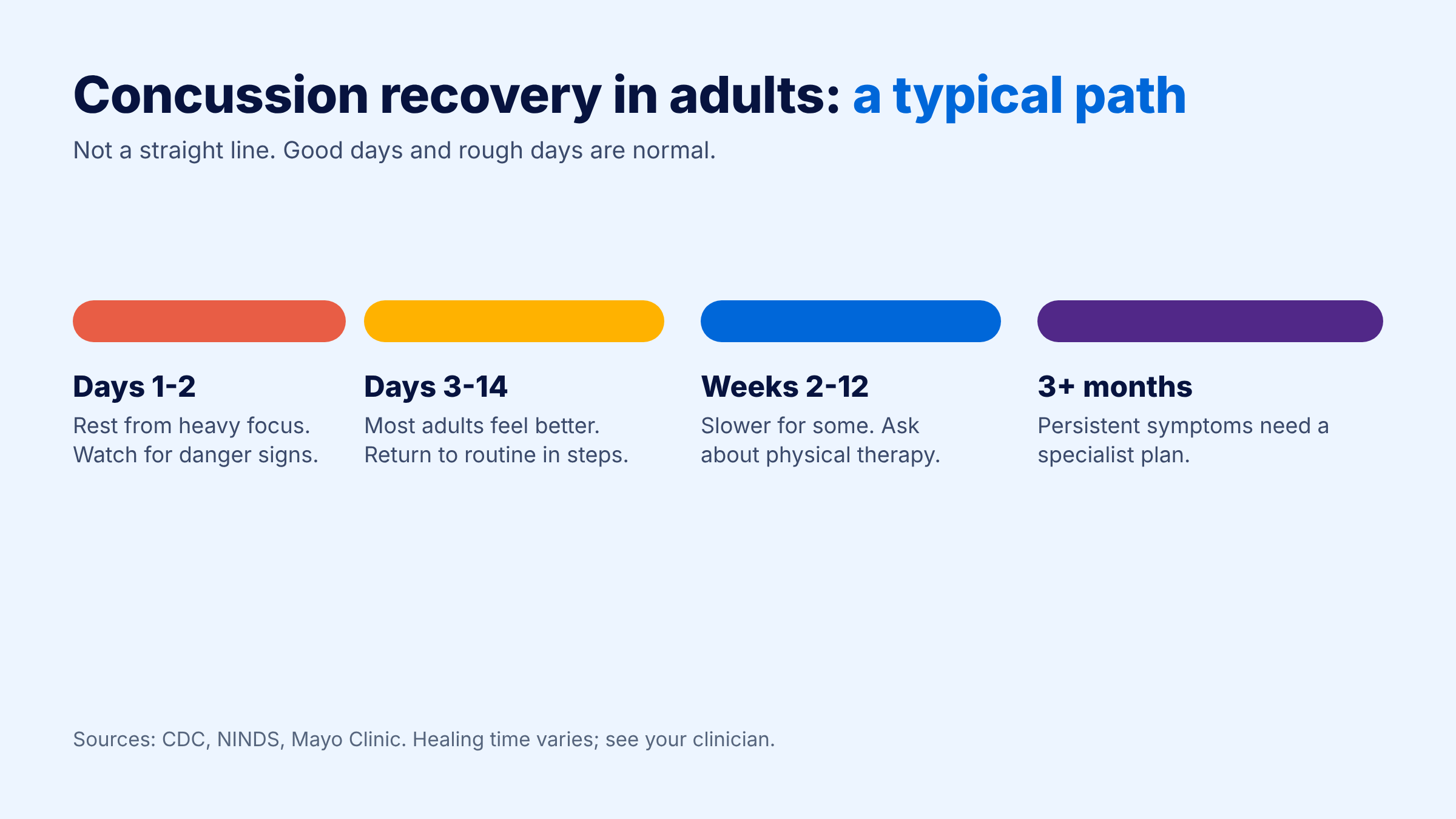
Recovery rarely runs in a straight line. You’ll have a good Tuesday and a rough Wednesday. That’s normal. What you want to see is the overall direction: fewer symptoms, shorter flare-ups, more clear-headed hours.
Return to daily life in steps, because rushing back is the treatment mistake that backfires most. Start with light routine tasks, then add work, exercise and screen time as you stay symptom-free, and get your clinician’s okay before going back to full activity. If symptoms flare when you push, drop back a step for a day.
When symptoms last beyond a few weeks, you may be dealing with post-concussion syndrome. Mayo Clinic uses the term persistent postconcussive symptoms for symptoms that last more than three months. Lingering head pain, unsteadiness, trouble thinking and mood changes are the usual culprits. Treatment options such as physical therapy, vestibular rehab and counseling can help, so don’t tough it out alone.
Prevention counts too. Wear a seat belt, use a helmet for biking, skiing and motorcycling, clear tripping hazards at home, and add grab bars if balance is a concern.
Get your head bump checked with Swell
You don’t have to guess. If you’ve had a head bump and you’re not sure what your symptoms mean, a telehealth visit can help you sort out what’s likely and what to do next. A Swell clinician can ask the right questions, tell you how urgent your situation looks, and point you to in-person care if you need it. Swell is open around the clock through 24/7 virtual urgent care.
One honest limit: a video visit can’t replace an emergency exam. If you have any of the danger signs above, go to the emergency department first.
Start with Swell urgent care when you’re not sure, or when symptoms are lingering and you want a plan.
Questions people ask about concussion symptoms in adults
What are the first signs of a concussion in adults?
Headache, dizziness, nausea, confusion, blurry vision and feeling “foggy” are the earliest signs. Some people also notice they can’t remember the hit. Others look dazed to the people around them. You can feel okay at first and notice changes later, so keep watching for a couple of days.
Can you have a concussion without hitting your head?
Yes. A hard blow to the body, such as a tackle or a car crash, can whip the head back and forth hard enough to injure the brain. The CDC describes concussion as caused by a bump, blow or jolt to the head or body, so impact to the skull itself isn’t required.
Is it safe to sleep after a concussion?
Generally yes. Sleep helps. You don’t need to stay awake or be woken all night. But if you can’t be woken, or you wake up confused, slurring words or vomiting repeatedly, get emergency care right away.
What are the treatment options for a delayed concussion?
Treatment for a delayed concussion matches the plan for an immediate one: rest from demanding tasks, a gradual return to normal activity, and symptom care such as over-the-counter pain relief approved by your clinician. See a healthcare professional within one to two days. Seek emergency care if things get worse.
What can you do at home for post-concussion syndrome?
Keep a steady bedtime, pace your day with short breaks, limit screen glare, stay hydrated and add light activity as tolerated. Jot your daily signs in a notebook so your clinician can see patterns. If they last beyond a few weeks, or you’re struggling with mood or focus, ask about physical therapy or a specialist referral.
Trusted references
Public-health, research, and medical-society resources related to this guide.