You opened your lab portal and one line is flagged. BUN creatinine ratio: high. Nobody explained it, and the internet is happy to offer worst-case answers.
Take a breath. A bun creatinine ratio high result most often means your body is short on fluid, or that less blood is reaching your kidneys than usual. It doesn’t automatically mean kidney failure. Your blood urea nitrogen climbed faster than your creatinine, and that gap is a clue, not a diagnosis.
Here’s how to read the number, what usually pushes it up, and what to do before your next appointment.
What a high BUN creatinine ratio actually tells you
Two waste products sit behind this number. BUN stands for blood urea nitrogen. Your liver makes urea when it breaks down protein, and your kidneys clear it from your blood. Creatinine is the other one. It comes from normal muscle wear and from the protein you eat, and the kidneys filter it out too, according to the National Kidney Foundation.
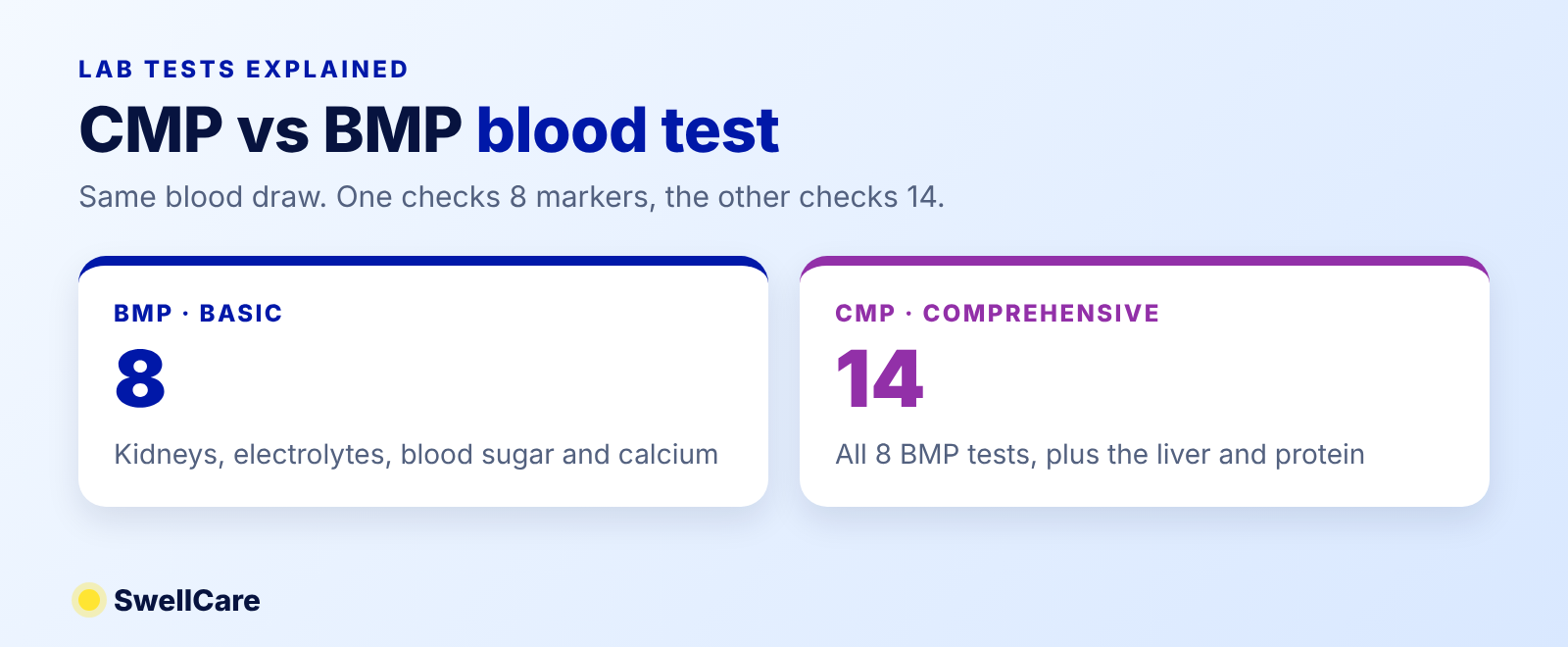
Divide BUN by creatinine and you get the BUN creatinine ratio, a quick screen doctors use alongside other kidney tests. Both numbers come from a basic or comprehensive metabolic panel (here’s CMP vs BMP).
Why bother? Because the two numbers don’t always move together. If your kidneys are damaged, both usually rise side by side and the ratio stays put. If your kidneys are simply getting less blood or less water to work with, they hold on to extra urea. BUN jumps. Creatinine barely moves. The ratio climbs.
That’s the clue doctors look for. It shows what’s happening around the kidney as well as inside it.
What counts as a high ratio?
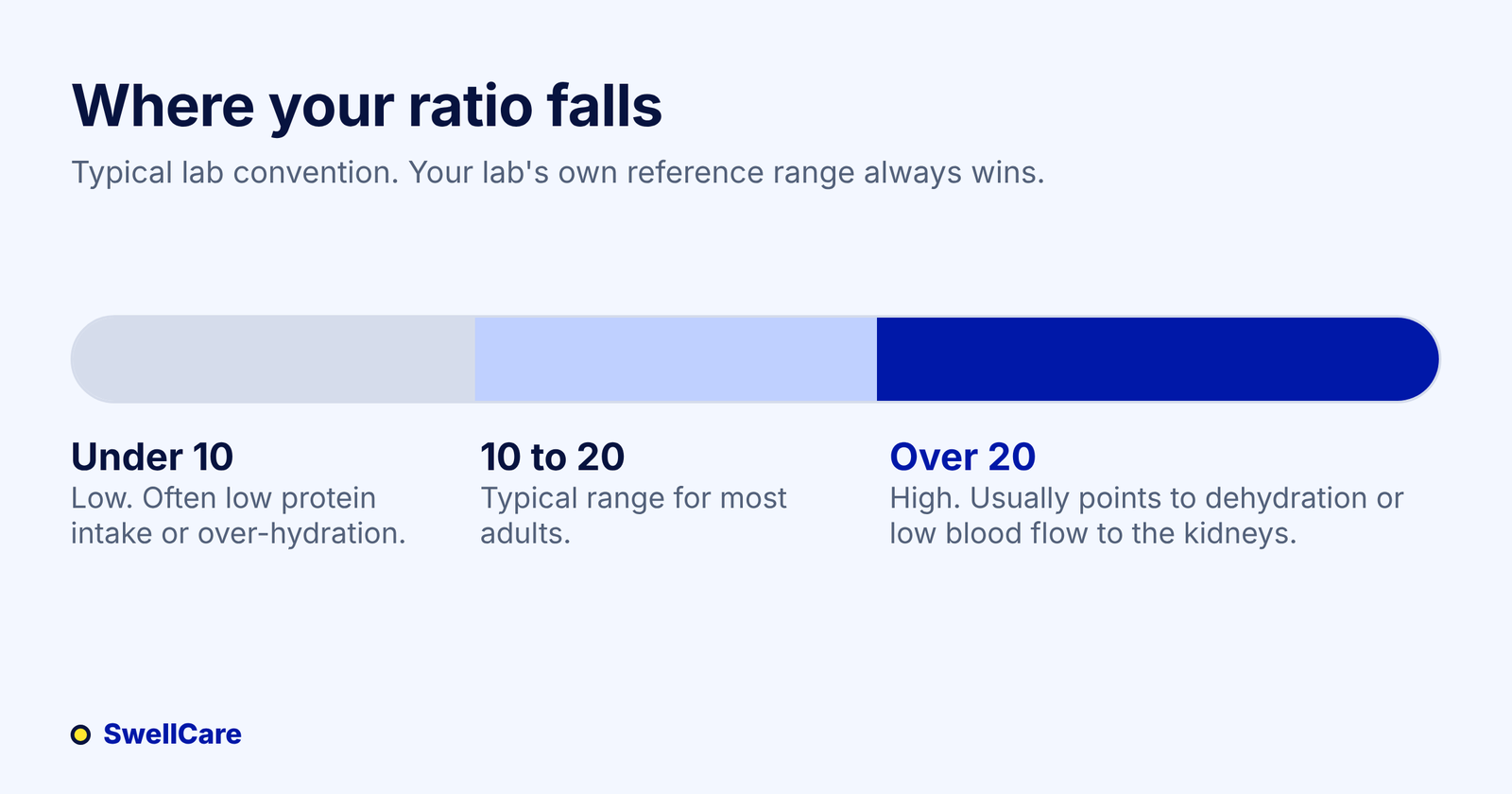
Labs set their own ranges for the BUN creatinine ratio, so your report is the final word. Still, a common convention looks like this:
| Ratio | What it often points to |
|---|---|
| Under 10 | Low protein intake, over-hydration or liver problems |
| 10 to 20 | Typical for most adults |
| Over 20 | A prerenal pattern, such as dehydration or low blood flow to the kidneys |
The Merck Manual lists a ratio above 20:1 as typical of prerenal azotemia. Its footnote warns the rule may not hold if you have chronic kidney disease or recently took a diuretic.
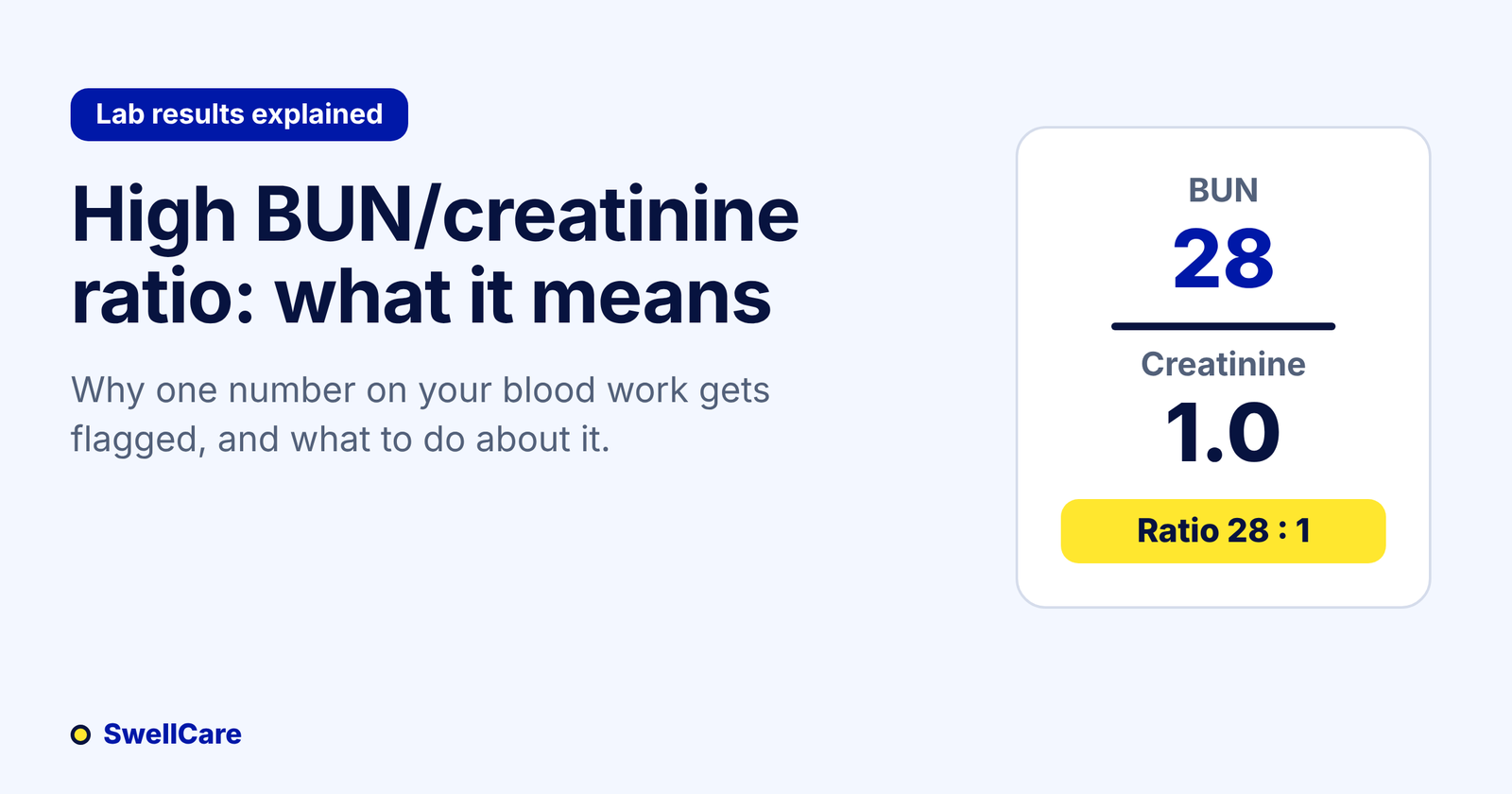
The BUN number matters on its own too. MedlinePlus puts the typical adult BUN at about 6 to 20 mg/dL, and says that varies by lab. Here’s a quick example. A BUN of 28 with a creatinine of 1.0 gives a ratio of 28. Elevated BUN, normal creatinine, high ratio. Your BUN can run mildly high because of the kidney, the gut or your diet, so ask what’s behind it before you panic.
BUN creatinine ratio high: the most common causes
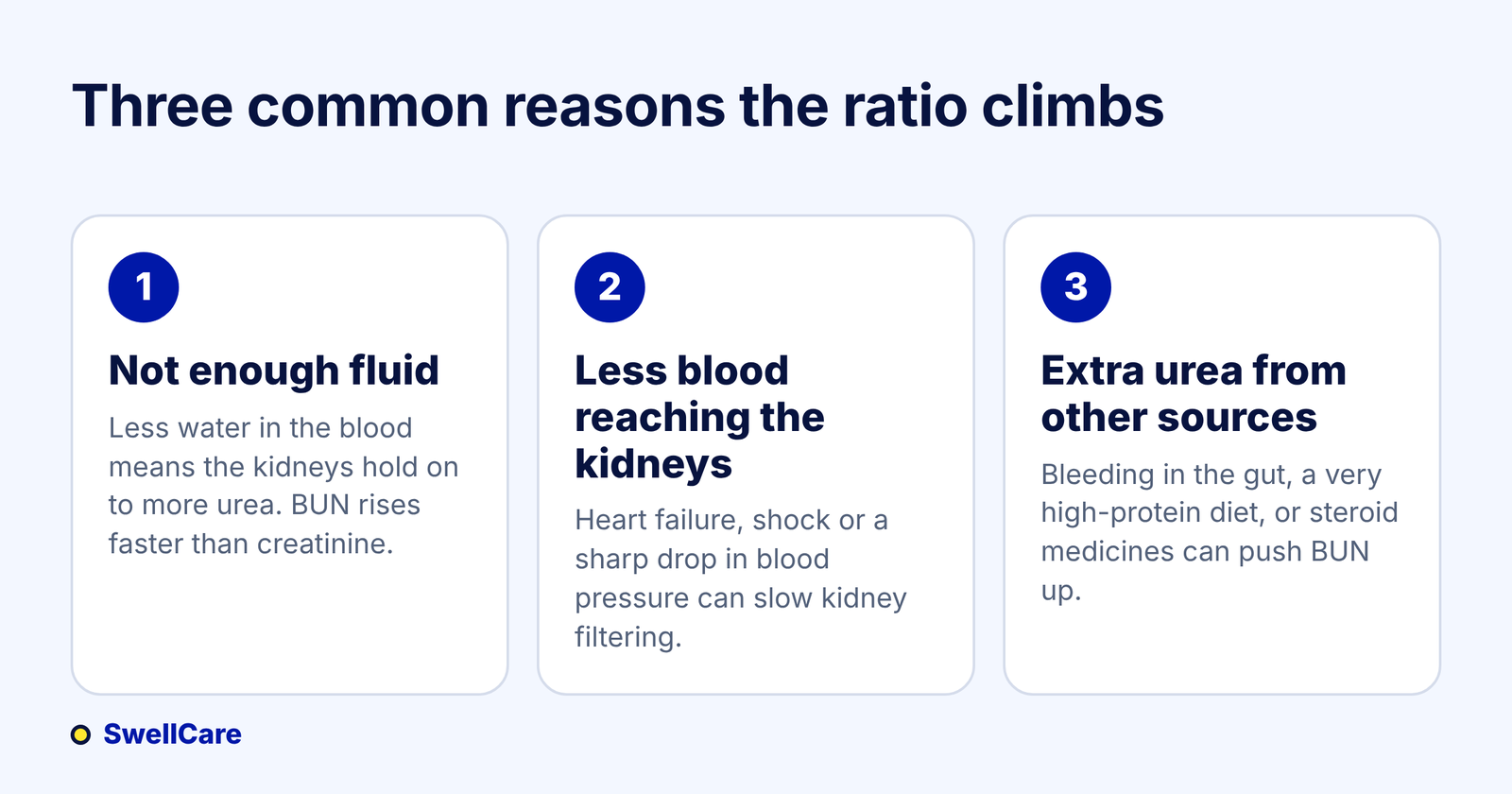
Most of the time, one of three things is going on.
Dehydration and low fluid intake
This is the leading suspect. When you’re low on fluid, your kidneys conserve water, and they pull more of it back into the blood along the way. BUN rises. Creatinine stays roughly where it was. So the BUN creatinine ratio goes up. Healthy kidneys do this automatically.
Dehydration doesn’t need a desert hike. A stomach bug, a few days of poor appetite, heavy sweating, or simply not drinking enough can do it, and prolonged dehydration can stress the kidney itself. Good hydration isn’t about forcing water. Hydration changes by the day, so a single flagged result often settles after you rehydrate.
Less blood flow to the kidneys
Your kidneys need steady blood flow to filter well. Heart failure, a heart attack, severe blood loss or a drop in blood pressure can all cut that supply. Doctors call this a prerenal cause, meaning the trouble starts before blood reaches the kidneys.
Some medications play a part here too, especially diuretics and drugs that lower blood pressure.
Bleeding, protein and muscle breakdown
Blood in the gut is digested like protein, and that adds to BUN. That’s why GI bleeding can raise BUN sharply while creatinine sits still. MedlinePlus lists GI bleeding and large amounts of dietary protein among the causes of an elevated BUN.
Other contributors include steroid medicines, a very high protein intake, and rhabdomyolysis, a condition where muscle tissue breaks down quickly. Hard workouts, creatine supplements and a lot of muscle can also lift creatinine, per the NKF. Muscle matters because creatinine comes from it. A blocked urinary tract or kidney disease itself can raise BUN too.
Can the ratio be high while your kidneys are fine?
Yes. It happens all the time.
Here’s the catch. The BUN creatinine ratio is only a comparison. Real kidney trouble would normally show up in creatinine too. If BUN is a bit high and creatinine is a bit low, the ratio can look alarming even when your kidney function is normal. Someone with low muscle mass, a vegetarian diet or pregnancy may run a lower creatinine, which pushes the ratio up.
The reverse matters too. Liver disease can lower BUN, because the liver makes the urea. In that case a “normal” ratio may be hiding a problem.
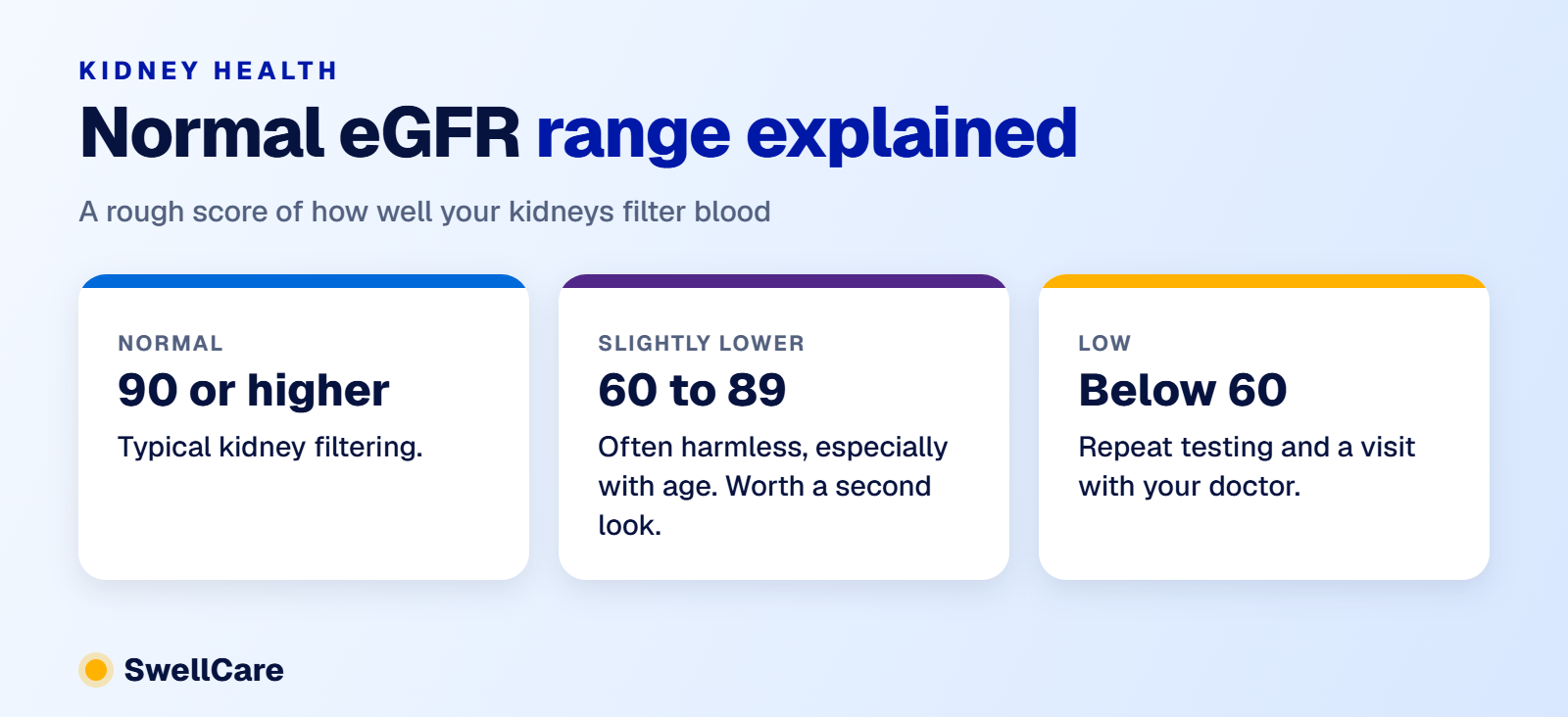
So don’t judge the ratio alone. Look at BUN, creatinine and your eGFR together (see the normal eGFR range). The NKF calls the estimated filtration rate, worked out from creatinine, age and sex, the better measure of how well your kidneys filter. Kidney function tests add the missing context.
What your doctor may check next
A high BUN creatinine ratio on one test usually triggers questions, not alarm. Expect some of these:
- A repeat blood test. One result is a snapshot. Retesting after a few days of normal drinking often tells the story.
- eGFR. It shows how well the kidney is filtering, and a cystatin C version is sometimes used when creatinine seems misleading.
- A urine test. It can show protein, blood or how concentrated your sample is.
- A medication review. Doctors check for diuretics, steroids and drugs that affect blood pressure.
- A look for other causes. Black stools, vomiting blood or heart symptoms prompt different tests.
If your creatinine is also rising, the picture changes. A rapid rise can signal acute kidney injury, which needs prompt attention.
How to bring a high ratio down
You treat the cause of the high BUN creatinine ratio, not the number. Here’s what that usually means.
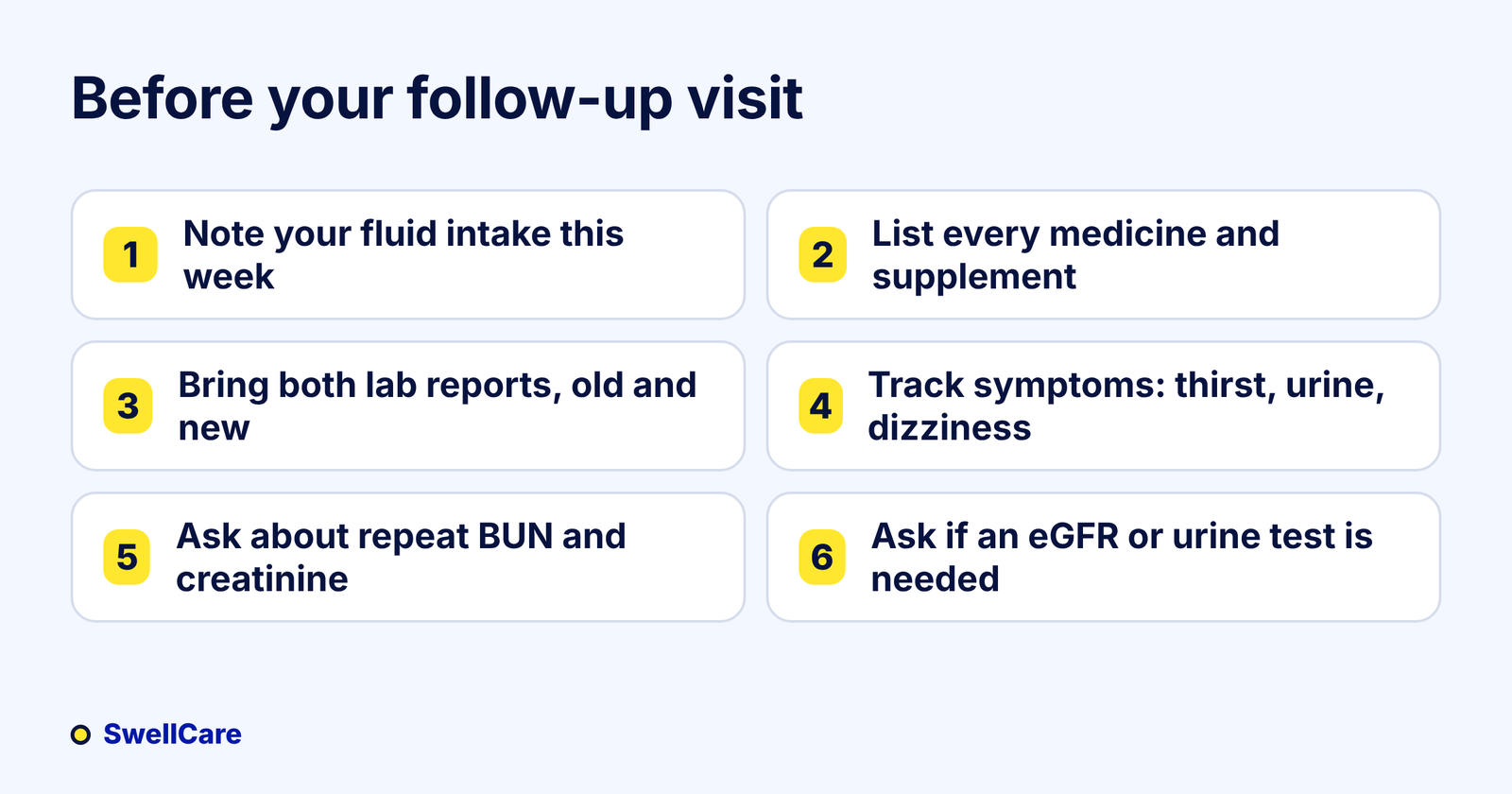
Rehydrate steadily. Hydration is the easiest lever for most people, and it’s gentle on the kidney. If dehydration is the cause, drink fluids through the day. Don’t force huge amounts at once. If you have heart failure or kidney disease, ask your doctor how much fluid is right for you first.
Look at your protein intake. Most healthy adults don’t need to cut back. A sudden jump in protein intake, say from a new high-protein plan or heavy supplement use, can raise BUN, so mention it.
Review your medications. Never stop a prescription on your own. Bring the full list of medications, including over-the-counter pain relievers and supplements, and let your clinician sort out what matters.
Treat the underlying problem. Bleeding, heart failure and infections need their own care. Once those are handled, the ratio usually follows.
Then retest. Ask when, because the timing depends on your situation.
When to see a doctor
Book a visit soon if your BUN creatinine ratio stays high on repeat tests, or if your creatinine or eGFR is also off. Same goes for ongoing thirst, very dark urine, dizziness, swelling in your legs that could point to a kidney problem, or a big change in how much you urinate.
Get emergency care right away for black or bloody stools, vomiting blood, chest pain, fainting, confusion, or very little urine. Those are not wait-and-see signs.
This article is general education. It can’t diagnose you.
Getting care with Swell
Reading lab numbers alone at 11 p.m. is stressful. Swell offers 24/7 clinician-led virtual care, including labs and follow-up, so a real clinician can look at your results and your kidney history together. You’ll leave with a clear next step instead of a search history.
Swell isn’t emergency care. If your symptoms feel urgent, call 911. Otherwise, you can start with Swell and bring your lab report along.
Questions people ask about a high BUN creatinine ratio
Is a high BUN creatinine ratio dangerous?
Not by itself. In many people the kidney is working fine. A mildly high ratio is often linked to dehydration and corrects once you rehydrate. It becomes more concerning when creatinine is rising too, when you have symptoms, or when a cause like bleeding or heart failure is involved. Your clinician will judge it alongside your other results.
Can dehydration alone cause a high ratio?
Yes. Dehydration is one of the most common reasons. When fluid is low, the kidneys reabsorb more urea, so BUN rises faster than creatinine. Many people see the ratio return to the typical range after a repeat test following normal drinking, though a persistent result deserves a closer look.
What is a dangerously high BUN creatinine ratio?
No single number is “dangerous” on its own. Context decides. A high ratio paired with a fast-rising creatinine, black stools, chest pain or very little urine needs urgent care. A ratio of 25 in an otherwise well, thirsty person is a very different story.
Can fasting or a high-protein diet raise the ratio?
They can. A high protein intake adds to the waste your body must clear, and fasting can push BUN up as the body breaks down its own tissue. Both can nudge the ratio over 20 without any kidney problem. Tell your clinician about recent diet changes.
How long does it take for the ratio to return to normal?
It depends on the cause. After simple dehydration, a repeat test within days to a couple of weeks may be back to typical. Bleeding, heart failure or medicine effects take longer, because the underlying problem has to be treated first. Your clinician will set the retest timing.
Trusted references
Public-health, research, and medical-society resources related to this guide.