It’s 2 a.m. You finally drifted off, and then the tickle starts. One cough, then ten, then you’re sitting upright, coughing into a pillow, with a throat that feels like sandpaper, wondering how to get rid of a cough.
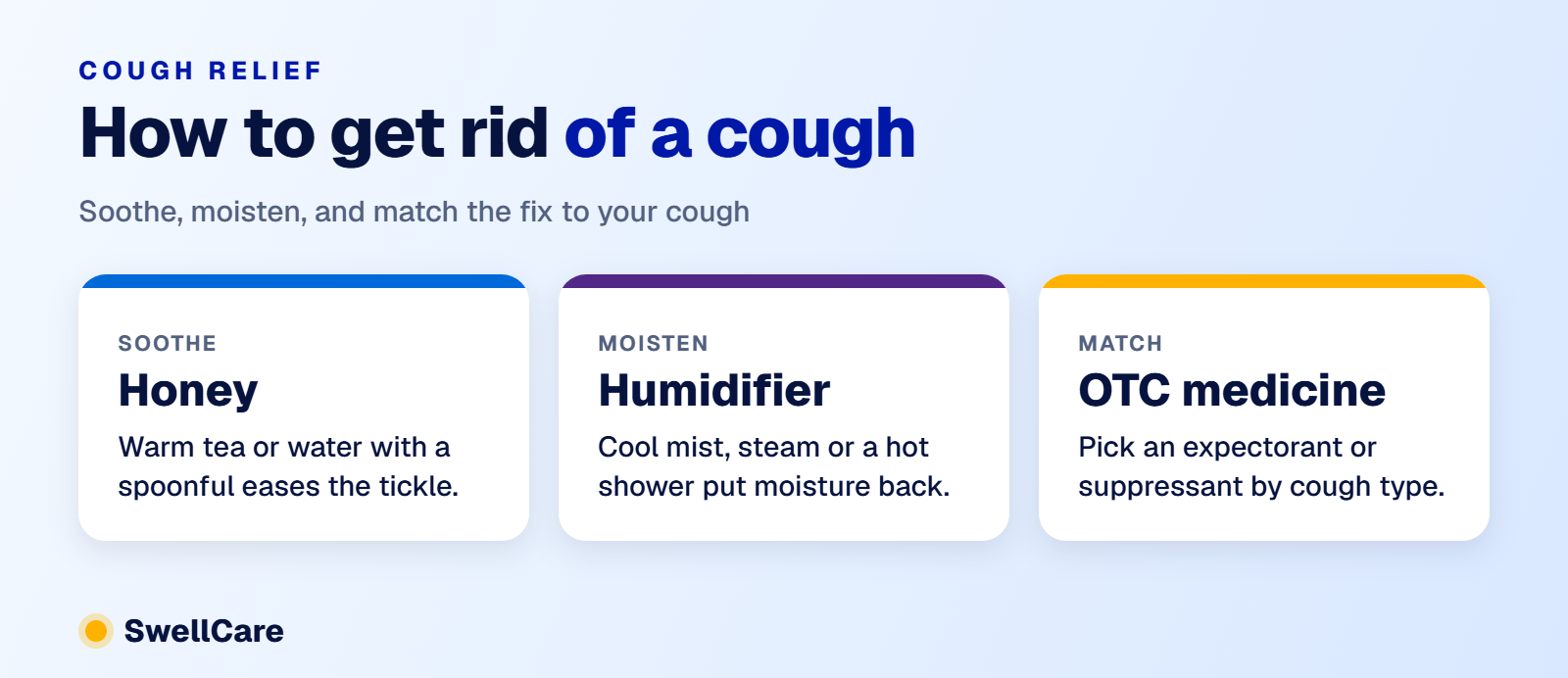
If you want to know how to get rid of a cough, here’s the short version. Most coughs clear on their own. The fastest relief comes from soothing your throat, thinning mucus and dealing with whatever is irritating your airways. Honey, warm fluids and a humidifier help more than most people expect. The right over-the-counter (OTC) medicine helps too, when it matches your type of cough.
This guide shows which fix to use, when to use it and which symptoms mean you shouldn’t wait.
Why your cough won’t quit
Think of a cough as a cleanup reflex. It pushes mucus, germs and irritants out of your airways, so stopping every cough isn’t the goal. The goal is to calm the one that’s keeping you awake or leaving your chest sore. Nonstop coughing wears out your lungs and your sleep.
Viral infections cause most of them. The CDC says a chest cold (acute bronchitis) typically runs less than three weeks, and antibiotics won’t help you get better.
Lingering coughs have a different cast of suspects. Cleveland Clinic names cough-variant asthma, postnasal drip and chronic acid reflux (GERD) among the common reasons a cough hangs on. Asthma can show up as nothing but a nagging cough, with no wheeze at all. Postnasal drip and reflux both irritate your airways, and ACE inhibitors, a class of blood pressure medications, cause a dry tickle in some people.
Is it a dry cough or a wet cough?
The answer changes what you should reach for.
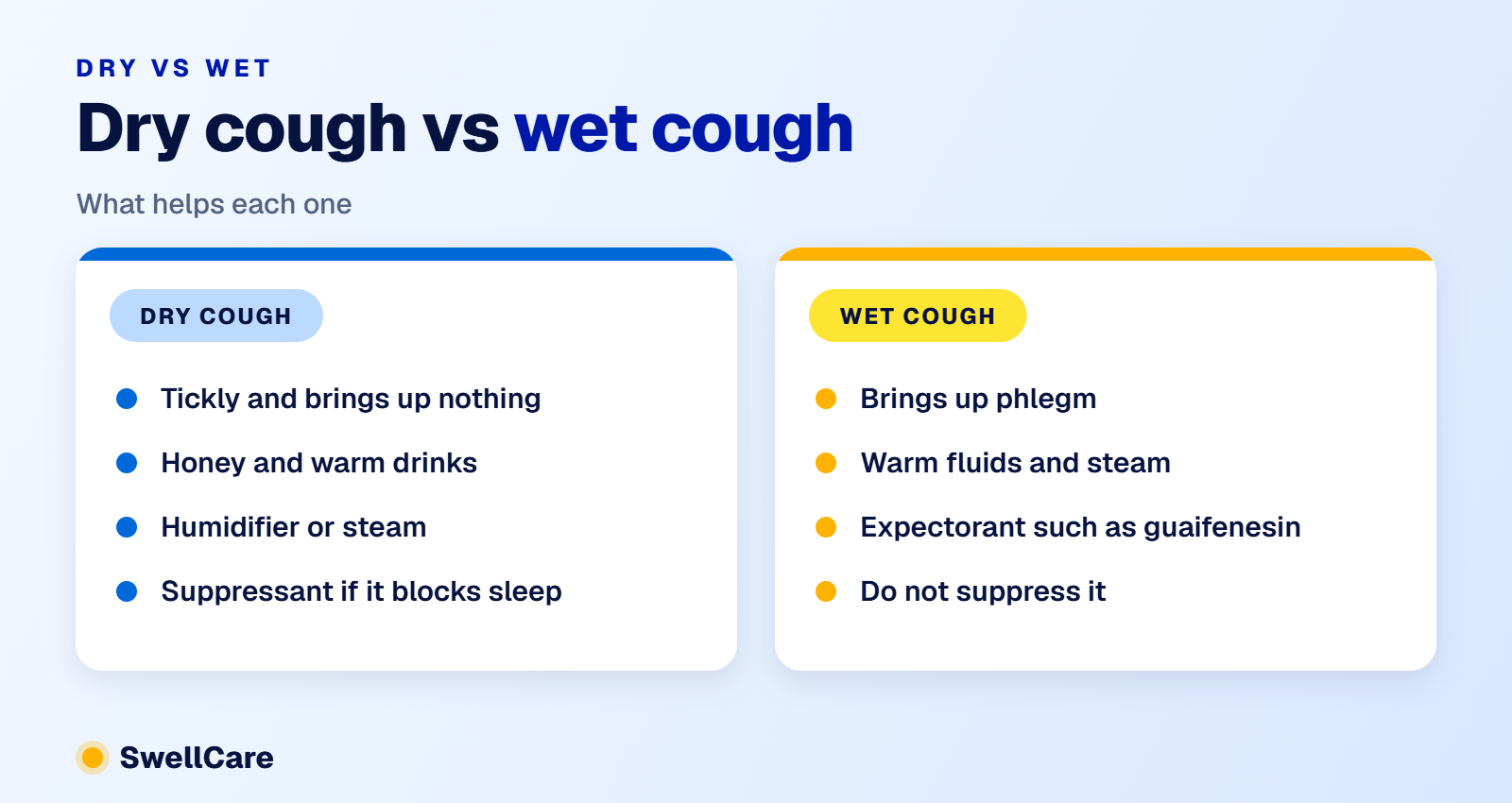
Dry coughs are tickly and bring up nothing. They usually come from throat irritation, dry air or the tail end of an infection, and you’ll feel it higher up than your chest. Wet coughs, also called productive coughs, bring up phlegm from your lungs and airways. That kind is doing real work, so you want to loosen the mucus rather than shut the reflex down.
Home remedies that help most
You don’t need a pantry full of supplements. These home remedies are cheap and low risk, and honey has some evidence behind it. Many mild coughs ease within days, though a chest cold can last up to three weeks.
Honey
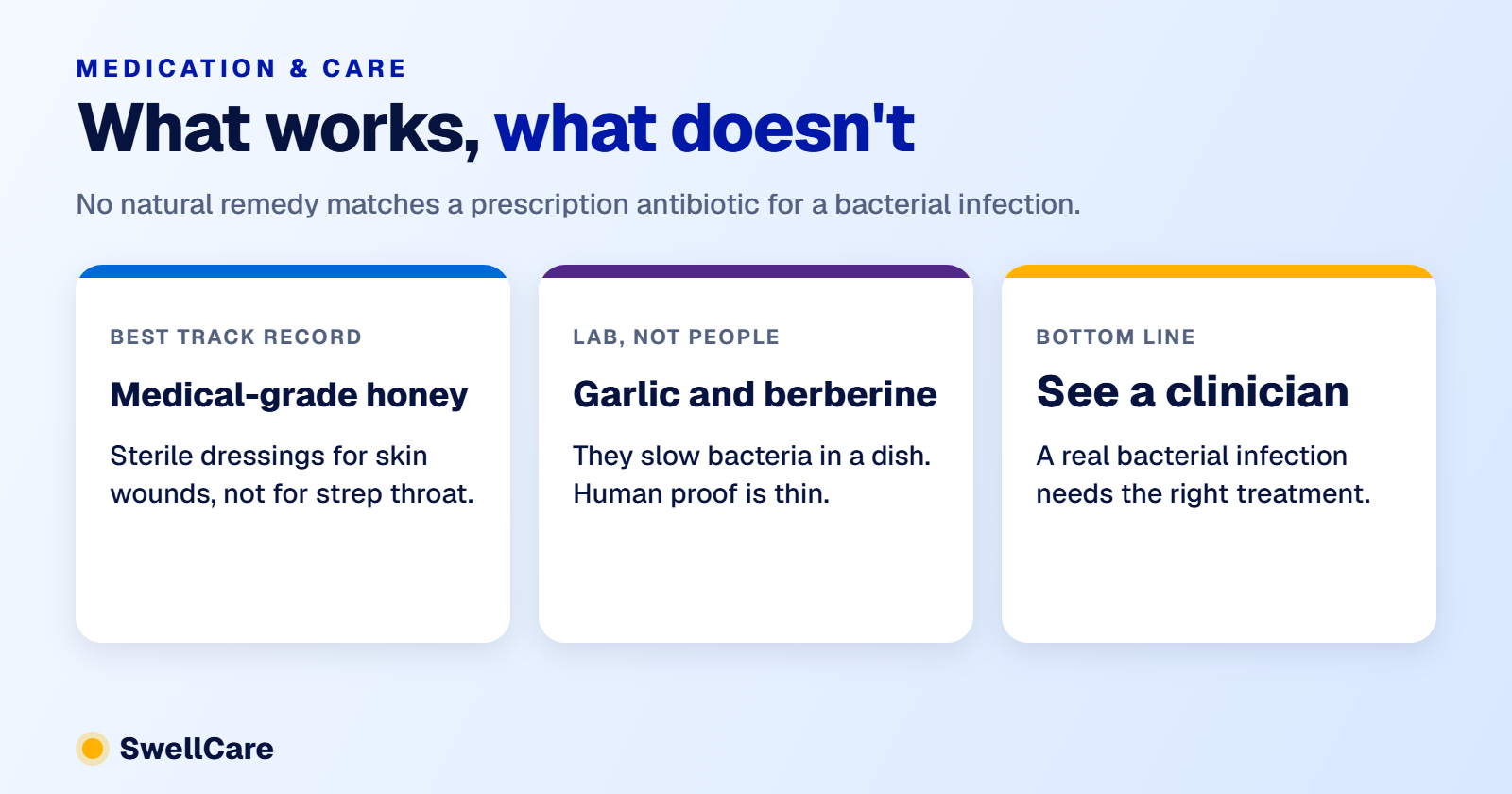
It has the best track record of the bunch. Mayo Clinic notes that in several studies of people with upper respiratory infections, honey appeared to ease coughing and improve sleep, working about as well as diphenhydramine, an antihistamine found in many OTC cough medicines. Higher-quality studies are still needed to confirm the results.
Stir a spoonful into warm tea or water. For children age 1 and older, Mayo suggests half a teaspoon to a teaspoon. Never give honey to a baby under 12 months because of infant botulism.
Warm fluids, steam and a humidifier
Dry air makes a raw throat worse. Moisture helps. The CDC lists a clean humidifier or cool mist vaporizer, and breathing in steam from a bowl of hot water or a shower, as home care for a chest cold, along with plenty of fluids. Sip warm drinks through the day, like broth, ginger tea or water with lemon. Warm fluids keep things moist and can help thin mucus.
Clean your humidifier often. A dirty one does more harm than good.
Saltwater gargles and lozenges
For a scratchy throat, gargle warm salt water a few times a day. Lozenges and cough drops keep saliva flowing and calm the irritation. Cough drops are fine for adults. Skip them for young children, since they’re a choking risk.
Over-the-counter cough medicines and what each one does
Over-the-counter medications only work if they match your cough. Read the Drug Facts label first, because many OTC cold products pack several active ingredients into one bottle.
For a wet cough, expectorants such as guaifenesin help thin mucus so you can clear it. For a dry cough that won’t let you sleep, cough suppressants such as dextromethorphan quiet the reflex. Decongestants can help when postnasal drip is feeding the cough, and antihistamines may help when allergies are the trigger. Never double up on medications that share an ingredient.
Kids need extra care with medications. The FDA says children under 2 shouldn’t get any cough or cold product with a decongestant or antihistamine, and manufacturers label these products “do not use in children under 4 years of age.” The CDC says over-the-counter cough and cold medicines aren’t recommended for children younger than 6, and advises talking with a healthcare professional first for ages 6 and up.
How to stop coughing at night
Lying flat lets mucus pool and drip down the back of your throat. That’s why coughing gets louder the minute your head hits the pillow, and why sleep is the first thing to go.
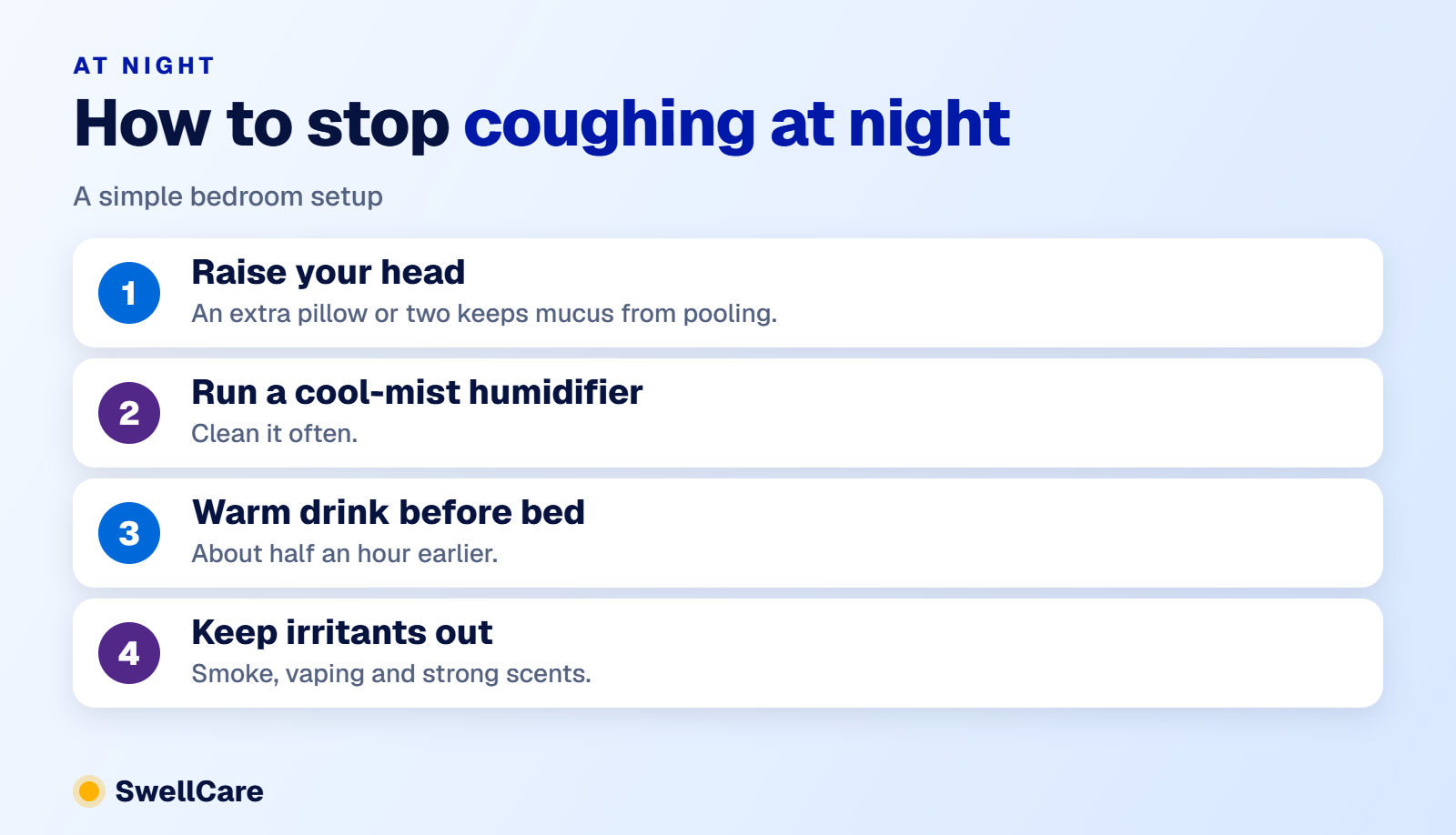
Prop yourself up with an extra pillow or two. Run a cool-mist humidifier in the bedroom. Have a warm drink about half an hour before bed, and keep smoke, vaping and strong scents out of the bedroom, since they irritate your airways. If a dry, tickly cough is wrecking your sleep, a nighttime suppressant can give you a few quiet hours.
When to see a doctor about your cough
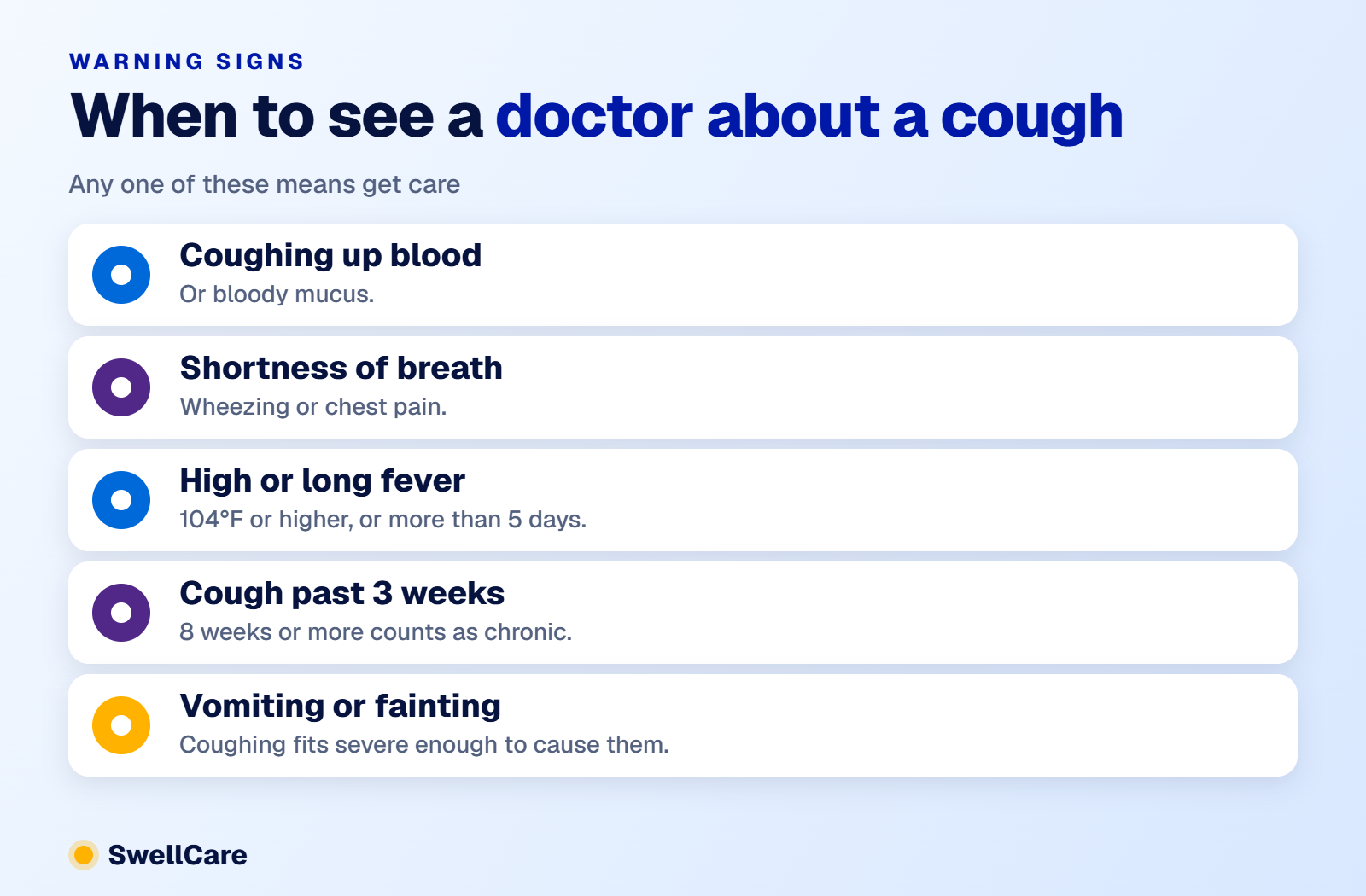
Most coughs don’t need a clinic visit. Some do. Get care if you notice any of these symptoms:
- Coughing up blood or bloody mucus
- Shortness of breath, wheezing or chest pain
- Temperature of 104°F or higher, or a fever lasting more than 5 days
- Cough or other symptoms lasting more than 3 weeks
- Coughing fits severe enough to cause vomiting or fainting
Babies under 3 months with a fever of 100.4°F or higher need medical care right away, according to the CDC. A cough that lasts 8 weeks or longer counts as a chronic cough, says Cleveland Clinic, and deserves a proper workup from your doctor. If you have asthma or COPD, don’t wait it out.
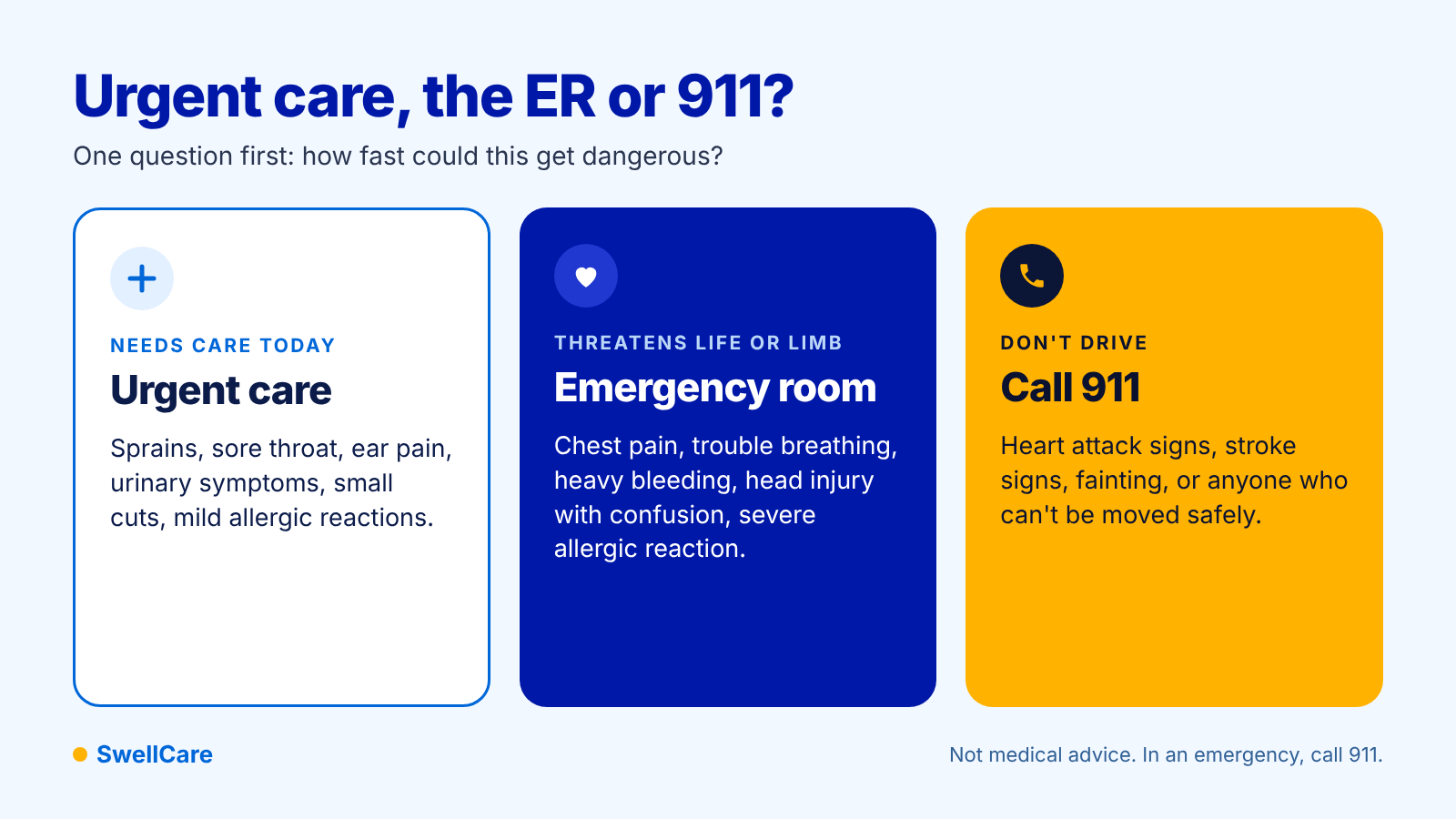
Not sure if it’s a cold, bronchitis or something that could become pneumonia? Your symptoms can tell a clinician a lot. SwellCare’s online urgent care offers clinician-led, non-emergency care around the clock by video or chat, so you can talk through your symptoms and decide the next step. A virtual visit can’t listen to your lungs or take a chest X-ray, and prescriptions are never guaranteed. See how it works. If you’re struggling to breathe, call 911.
Questions people ask about getting rid of a cough
What is the fastest way to get rid of a cough?
Sip warm tea, steam your throat in a hot shower and drink plenty of fluids. For a wet cough, reach for expectorants. For a dry cough, cough suppressants can help. No remedy works instantly, but many mild coughs ease within a few days.
How long does a cough usually last?
Coughs from a viral infection usually clear in under three weeks, per the CDC. One that lingers past three weeks deserves a check-in with a healthcare provider, and one lasting eight weeks or more is considered a chronic cough.
Should I take cough medicine for a wet cough?
Usually not a suppressant. A productive cough clears mucus from your lungs, so blocking it can backfire. Expectorants, warm fluids and steam are the better bets.
Can allergies or acid reflux cause a cough?
Yes. Allergies and postnasal drip irritate the throat, and GERD (chronic acid reflux) can send stomach acid up toward the airways. Both cause a stubborn cough that doesn’t respond to cold medicine. Treating the cause is what finally stops it.
Can I give honey to my child?
Yes, if your child is 1 or older. Mayo Clinic suggests half a teaspoon to a teaspoon for a cough. Never give it to a baby under 12 months. For younger children, use fluids and saline drops.
Trusted references
Public-health, research, and medical-society resources related to this guide.