You’ve got a throbbing tooth, a swollen gum and a prescription you hope will fix all of it. So will a tooth abscess go away with antibiotics? Usually, no. Antibiotics can calm a tooth infection and slow it down, but the abscess itself tends to come back until a dentist removes the source.
That answer surprises a lot of people. It’s also the one that keeps a bad week from turning into an emergency room visit. Read on and you’ll know what the pills actually do, when a dentist reaches for them, and what really clears a dental abscess for good.
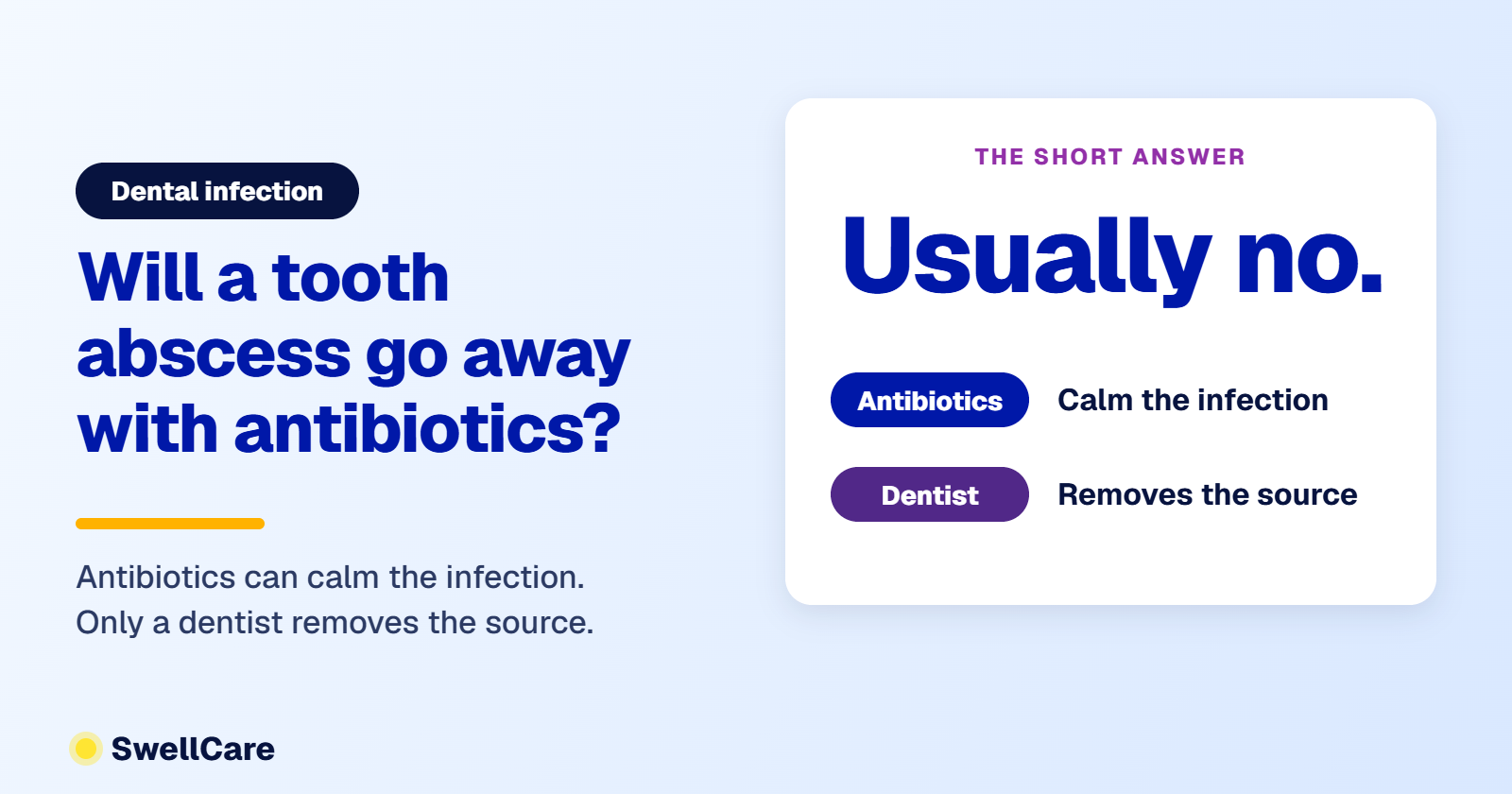
The short answer: will a tooth abscess go away with antibiotics? Rarely
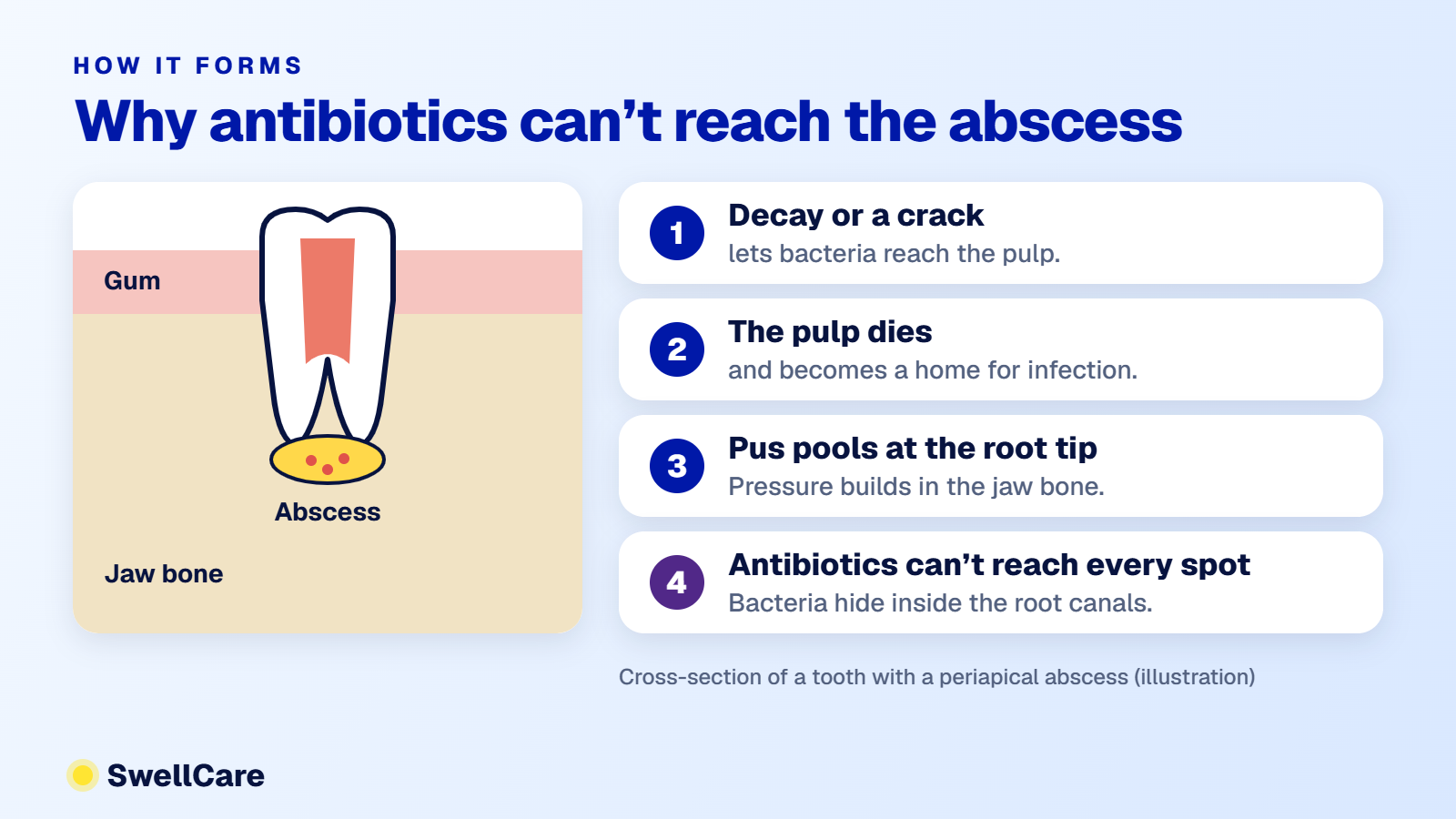
Think of an abscess as a sealed pocket of pus at the root of a tooth. Bacteria got in through a deep cavity, a crack or a failing filling, and the body walled the infection off. Antibiotics lower the number of bacteria in your body. They do not empty the pocket, and they do not clean the dead nerve inside the tooth. Treatment has to reach the source.
The American Dental Association (ADA) says as much. Its 2019 guideline on dental pain and swelling, as summarized by the National Elf Service, puts dental treatment first: a root canal, drainage or an extraction. Antibiotics come in mainly when there are signs the infection has spread, such as fever, or when treatment can’t happen right away. A 2026 ADA News report says dentists account for roughly 10% of outpatient antibiotic prescriptions, and calls for prescribing them only “when absolutely needed.”
So yes, you might feel better in a day or two. You still haven’t been treated.
What a tooth abscess feels like and where it forms
Most people describe a constant, deep ache that throbs, often with pain when chewing and a sharp reaction to hot or cold. Other symptoms include a bad taste in the mouth, swollen glands under the jaw, a small bump on the gum and sometimes a low fever. The pain can spread to the ear, jaw or neck, which is why people mistake a bad tooth for an earache.
There are two main types. A periapical abscess forms at the tip of the tooth root, usually after decay or a crack lets bacteria reach the pulp. A periodontal abscess forms in the gum beside the tooth, and it’s tied to gum disease. The symptoms overlap, and only a dentist can tell which one you have. Both are bacterial infections, and neither is a problem to ignore. Early symptoms are easy to miss, and treatment works best when the infection is caught before it travels.
Some people feel almost nothing. That’s a trap we’ll come back to below. Mild symptoms don’t mean a mild tooth infection, and severe symptoms like swelling or fever mean it’s time to act fast.
Why antibiotics alone can’t clear a tooth abscess
Three things get in the way. None of them are the fault of the medicine.
There’s no path for the pus to drain
An abscess is pressure. Pus builds up inside bone and gum with nowhere to go, and that pressure is what makes the swelling and pain so intense. Any dental abscess works this way, whether it formed in the root or beside the gum. A capsule swallowed with water doesn’t open that pocket. Only a dentist can create drainage, either through the tooth during a root canal or with a small cut into the gum. Cleveland Clinic describes the procedure as opening the abscess, flushing it with sterile saline and sometimes leaving a tiny rubber drain in place.
Facial swelling rarely shrinks on its own for the same reason. Tablets can slow the spread of the infection, but the fluid has to leave. Without drainage, treatment stalls and the symptoms keep coming back.
The source of the infection stays put
The pulp is the living center of your tooth, packed with nerves and blood vessels. Once bacteria kill it, the dead tissue becomes a permanent home for the infection. Decay or a crack keeps feeding it from above.
Antibiotics don’t repair a cavity. They don’t remove the dead pulp either. Stop the course and the tooth infection simply picks up where it left off, with the bacteria multiplying again inside the pulp chamber. Every tooth infection needs its source removed, and no pill does that.
Bacteria hide where medicine can’t reach
Here’s the part that surprises people most. Cleveland Clinic explains that antibiotics can’t reach all the places in the root canal system where bacteria can hide. Until the infected tissue is removed, the infection can hang on in those spots. That’s the real reason treatment is a procedure and not a prescription.
That’s why a root canal works. It goes in and cleans out what the pills can’t touch.
When a dentist will prescribe antibiotics for a tooth abscess
None of this means antibiotics are useless. In the right situation they’re a smart safety net. The ADA guideline suggests them in a narrow set of cases, and your dentist will weigh each one.
| Situation | What guidelines suggest |
|---|---|
| Fever, feeling unwell, or signs the infection is spreading | Antibiotics plus urgent dental care |
| Localized abscess and the dentist can’t treat the tooth right away | Antibiotics as a bridge, with urgent referral |
| Weakened immune system | Dentists often prescribe them earlier |
| Healthy adult, localized swelling, procedure available now | Procedure first, antibiotics usually not needed |
Signs of spread include a fever, swollen glands, swelling that creeps toward the eye or neck, and a general wiped-out feeling. Those symptoms mean the infection is leaving the tooth. They’re also the moment sepsis becomes a real concern, so don’t wait out a fever with a bad tooth.
Which antibiotics are used, and for how long
For most healthy adults the first choice is a penicillin-type medicine. The ADA guideline lists amoxicillin 500 mg three times a day, or penicillin V potassium 500 mg four times a day, typically for three to seven days. Amoxicillin is a form of penicillin, so the two work against the same mouth bacteria.
If you’re allergic to penicillin, your dentist will choose a different antibiotic, and each drug has its own side effects. Tell the prescriber about every allergy and every medicine you take.
Your prescriber picks the drug and the length. Don’t borrow leftovers from the medicine cabinet, and never save half a course for next time. Old tablets and a different tooth infection are a poor match.
How long until you feel better?
Many people notice less pain and swelling within 24 to 72 hours. That’s the medicine doing its job. It isn’t a sign the abscess has gone, and it’s the exact moment people cancel their appointment. Don’t.
Why the pain can stop while the abscess is still there
This is the trap. An abscess can stop hurting for reasons that have nothing to do with healing.
Sometimes the nerve inside the tooth finally dies, so it can’t send pain signals anymore. Sometimes the pus finds a route out, forming a small bump on the gum that drains with a salty, bitter taste. The pressure drops and the pain eases. MedlinePlus puts it plainly: the toothache may stop if the pressure is relieved, but the infection stays active and keeps spreading.
Cleveland Clinic adds that some people never develop pain at all, and that an abscess can form in a day or two or take weeks to months before symptoms show. That false relief is why a dental abscess so often gets worse quietly. The infection can spread into the jaw, the surrounding bone and soft tissue while you think you’re fine. Each time the pocket fills and drains, a little more tissue breaks down.
If a gum bump keeps coming and going, that’s a draining tooth infection, not a pimple. See a dentist. A dental abscess that drains is still a dental abscess, and the treatment it needs hasn’t changed.
What actually cures a tooth abscess
Only a procedure that removes the source will do it. There are three treatment options, and your dentist or an endodontist picks the one that fits your tooth. Each treatment aims at the same goal: clear the infection, stop the spread and protect the bone around your teeth.
| Antibiotics | Dental procedure | |
|---|---|---|
| Lowers bacteria in the body | Yes | Yes |
| Opens a path for pus | No | Yes |
| Removes dead pulp | No | Yes |
| Likely to cure the abscess | Rarely | Yes, in most cases |
| Risk it comes back | High | Low |
Drainage
When the swelling is large, the provider makes a small incision in the gum, lets the pus out and rinses the area. Incision and drainage brings fast relief. Cleveland Clinic reports the pain often eases within a day. It usually isn’t the final step, because the tooth still needs a root canal or extraction.
Root canal treatment
A root canal removes the infected pulp, disinfects the canals and seals them, and a crown usually follows. The goal is to save your natural tooth. For stubborn infections at the root tip, an endodontist may recommend an apicoectomy, a small surgery that removes the infected tip and seals the end of the root. A repeat procedure or apicoectomy is sometimes needed if the tooth infection returns after the first attempt, and an apicoectomy keeps the tooth in place. Ask your endodontist whether an apicoectomy makes sense for you.
Tooth extraction
If the tooth is cracked below the gumline or too damaged to rebuild, tooth extraction removes the source completely. It’s the right call sometimes, and a bridge or implant can fill the space later. A dentist may also recommend an extraction when a root canal has already failed. Waiting too long makes this option more likely. A long-running infection can cause bone loss around the root and eventually tooth loss, so quick treatment gives you more choices.
The risks of treating an abscess with antibiotics alone
So will a tooth abscess go away with antibiotics if you simply take them and hope? Rarely, and the gamble has a few costs.
First, the infection usually returns. Half-treated bacteria can come back more stubborn than before, and the second round of treatment is often harder. Second, antibiotic resistance is a real public health problem, and every unnecessary course adds to it. Resistant bacteria don’t respond to the drugs we rely on later, when we really need them. The ADA treats stewardship as a priority for this reason.
Third, the medicine has side effects. Stomach upset, diarrhea and rashes are common, and a few people have a serious allergic reaction. A more dangerous one is *Clostridioides difficile* (C. diff), a gut infection that can follow antibiotic use and can be fatal. The ADA’s scientific council flags it as a risk of systemic antibiotics.
Last, a quiet abscess can damage the bone around the tooth and strain your immune system. The longer the infection spreads, the harder it gets to treat. None of that happens if the source is dealt with early.
How to prevent another tooth abscess
Prevention is dull, and it works. Brush twice a day with fluoride toothpaste, floss daily and get a checkup and cleaning twice a year. Fix cavities while they’re small, and have a dentist look at any chipped or cracked tooth right away. Treat gum disease early, because a periodontal abscess usually grows out of it. Those habits protect your teeth, your jaw and your gums, and they lower the chance of tooth loss. Good prevention is the cheapest treatment there is.
Warning signs that mean go to the emergency room now
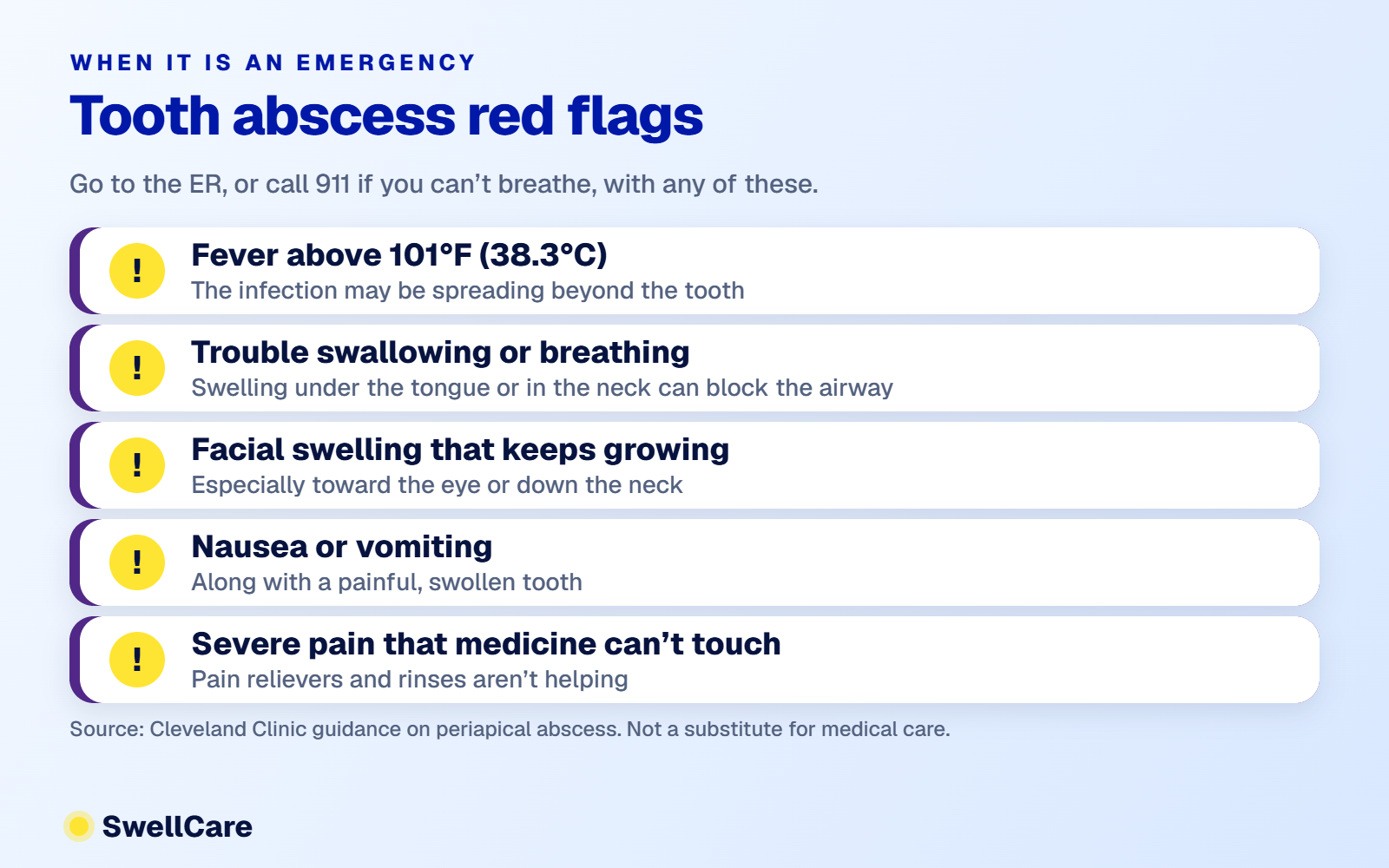
A tooth abscess becomes an emergency when the infection leaves the tooth. A severe, untreated tooth infection can spread to the jaw, the face and the neck, and in rare cases into the bloodstream, where it can cause sepsis. Cleveland Clinic lists the signs that mean you should head to the ER:
- A fever above 101°F (38.3°C)
- Trouble breathing or swallowing
- Facial swelling that’s spreading toward your eye or down your neck
- Nausea or vomiting
- Severe pain that medicine doesn’t touch
Swelling under the tongue or jaw that makes it hard to open your mouth is especially worrying. It can point to a deep infection such as Ludwig’s angina, which can block the airway. A spreading skin infection called cellulitis is another serious complication, and it can move quickly from the jaw into the soft tissue of the neck. Cellulitis needs prompt treatment, often in a hospital. Ada Health’s overview covers both. If you have trouble breathing, call 911.
What to do while you wait for your dental appointment
You can’t fix the abscess at home, but you can make the wait easier.
- Rinse gently with warm salt water several times a day.
- Take over-the-counter pain relief like ibuprofen or acetaminophen as the label directs, if it’s safe for you.
- Sleep with your head raised on an extra pillow.
- Skip very hot, cold and sugary foods.
- Don’t put aspirin on the gum. MedlinePlus warns it can irritate the tissue and cause mouth ulcers.
- Don’t squeeze, pop or poke the bump.
Home care eases the pain. It doesn’t treat the infection, so keep the appointment. Call the office back if the swelling grows.
Getting care for a tooth abscess in the US
Cost is the main reason people delay. Dental coverage varies a lot, and many adults have none. A few routes can help.
Start with a dentist who has same-day or emergency slots. Many offices keep openings for swelling and severe pain, so say those words when you call. If you don’t have a dentist, federally funded community health centers often offer dental care on a sliding fee scale, and dental schools can provide lower-cost treatment.
Emergency rooms can treat a dangerous spreading infection with IV antibiotics and sometimes drainage. Most can’t fix the tooth itself. You’ll often leave with a prescription and a referral, so the root problem is still waiting.
If you can’t tell how urgent your symptoms are, talk to a clinician first. SwellCare’s online urgent care lists toothache for short-term symptom support while you arrange definitive dental care, and a clinician can help you decide whether this is a same-day dental visit or a trip to the emergency room. A screen can’t drain or treat a tooth, and SwellCare isn’t emergency care. Start with SwellCare urgent care when you’re ready.
Questions people ask about tooth abscesses and antibiotics
Can a tooth abscess heal on its own?
No. Pain may fade if the pus drains, but the infection stays active inside the tooth and the surrounding bone. Without a root canal, drainage or extraction, a dental abscess keeps spreading and often returns more severely. Prompt treatment usually cures it and often saves the tooth.
How long do antibiotics take to work on a tooth infection?
Most people feel better within one to three days, and a typical course lasts three to seven days. Feeling better doesn’t mean the infection is gone. The source is still in the tooth, so you still need dental treatment.
Can I stop taking antibiotics once the pain is gone?
Take them exactly as prescribed unless your prescriber tells you to stop. Quitting early can let tougher bacteria survive. The bigger point is to keep your dental appointment, because the pain going away isn’t the same as the abscess going away.
Will a tooth abscess go away with antibiotics if I skip the root canal?
It usually won’t. Antibiotics can’t remove the dead pulp inside the tooth, so the tooth infection returns once the medicine ends. A root canal removes the source of the infection and gives the tooth its best chance of lasting. Skipping it saves you money for a few weeks, and often costs more later.
Is a tooth abscess an emergency?
It can be. Head to the ER for a fever above 101°F, trouble swallowing or breathing, or swelling that’s spreading to your eye or neck. Without those signs, call a dental office the same day. An untreated abscess can turn dangerous quickly.
What happens if a tooth abscess goes untreated?
The infection can spread to the jaw, face and neck, destroy the tooth and the bone around it, and in rare cases enter the bloodstream and cause sepsis. Treating it early is far easier, cheaper and safer than waiting.
Trusted references
Public-health, research, and medical-society resources related to this guide.