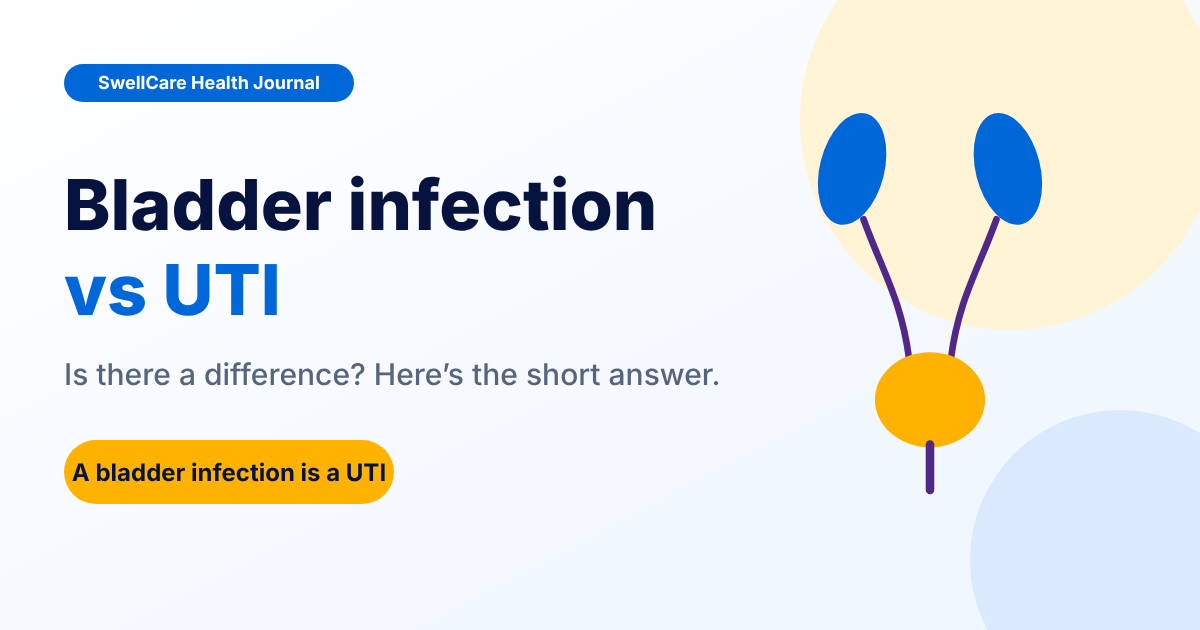
It’s 2 a.m. You’ve made your fourth trip to the bathroom, it burns, and you’re searching “bladder infection vs UTI” on your phone because you can’t sleep. Good news: you can stop wondering. A bladder infection is a UTI. It’s the most common kind. The real question isn’t the name. It’s how far the infection has traveled and how fast you need treatment.
Bladder infection vs UTI: the short answer
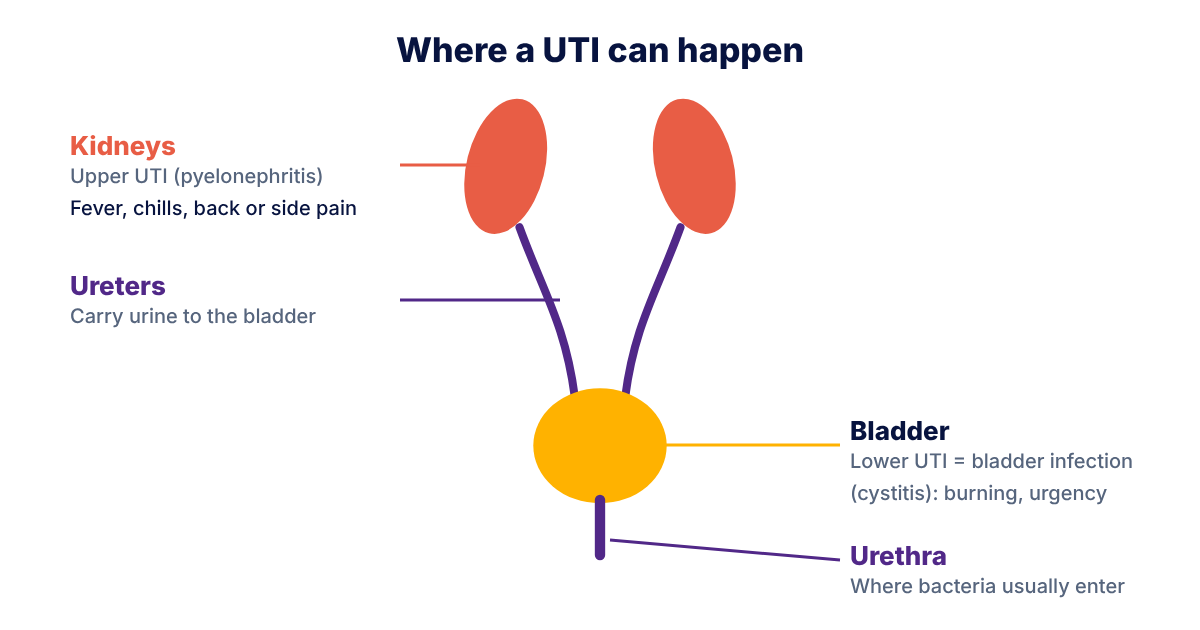
A urinary tract infection, or UTI, is any infection in the urinary system. That system includes your kidneys, the two ureters that carry urine down, your bladder and the urethra, the short tube that lets urine out. A bladder infection, which doctors call cystitis, is a UTI in the lower part of that system. So every bladder infection is a UTI, but not every UTI is a bladder infection.
The CDC lists bladder infections as the most common type of UTI and kidney infections as the less common but more serious type. Sometimes bacteria settle in the urethra alone, which is called urethritis.
Think of the urinary tract as one long plumbing line. An infection can start anywhere along it, and where it starts decides the name. Cystitis stays in the bladder. If it climbs, it becomes an upper urinary tract infection. The urinary system is built to flush bacteria out, which is why most UTIs stay small when they’re caught early.
| Feature | Bladder infection (cystitis) | Kidney infection (pyelonephritis) |
|---|---|---|
| Where it is | Bladder, a lower urinary tract infection | One or both kidneys, an upper UTI |
| Typical symptoms | Burning, urgency, pelvic pressure | Fever, chills, back or side pain, nausea |
| How urgent | See a doctor within a day or so | Same-day care |
| Usual treatment | Short course of antibiotics | Longer antibiotics, sometimes a hospital stay |
What a bladder infection feels like
Most people describe the same cluster of symptoms. Urine burning on the way out. A constant urge to go, even when only a few drops come. Pressure or cramping low in your belly, right behind the pubic bone. Many women describe pelvic pressure that sits just above it and eases for a moment after they go. Urine that looks cloudy, smells strong or has a pink tinge of blood.
These signs match what the NIDDK describes for a bladder infection. They usually build over a day or two, and they’re annoying enough that you’ll notice.
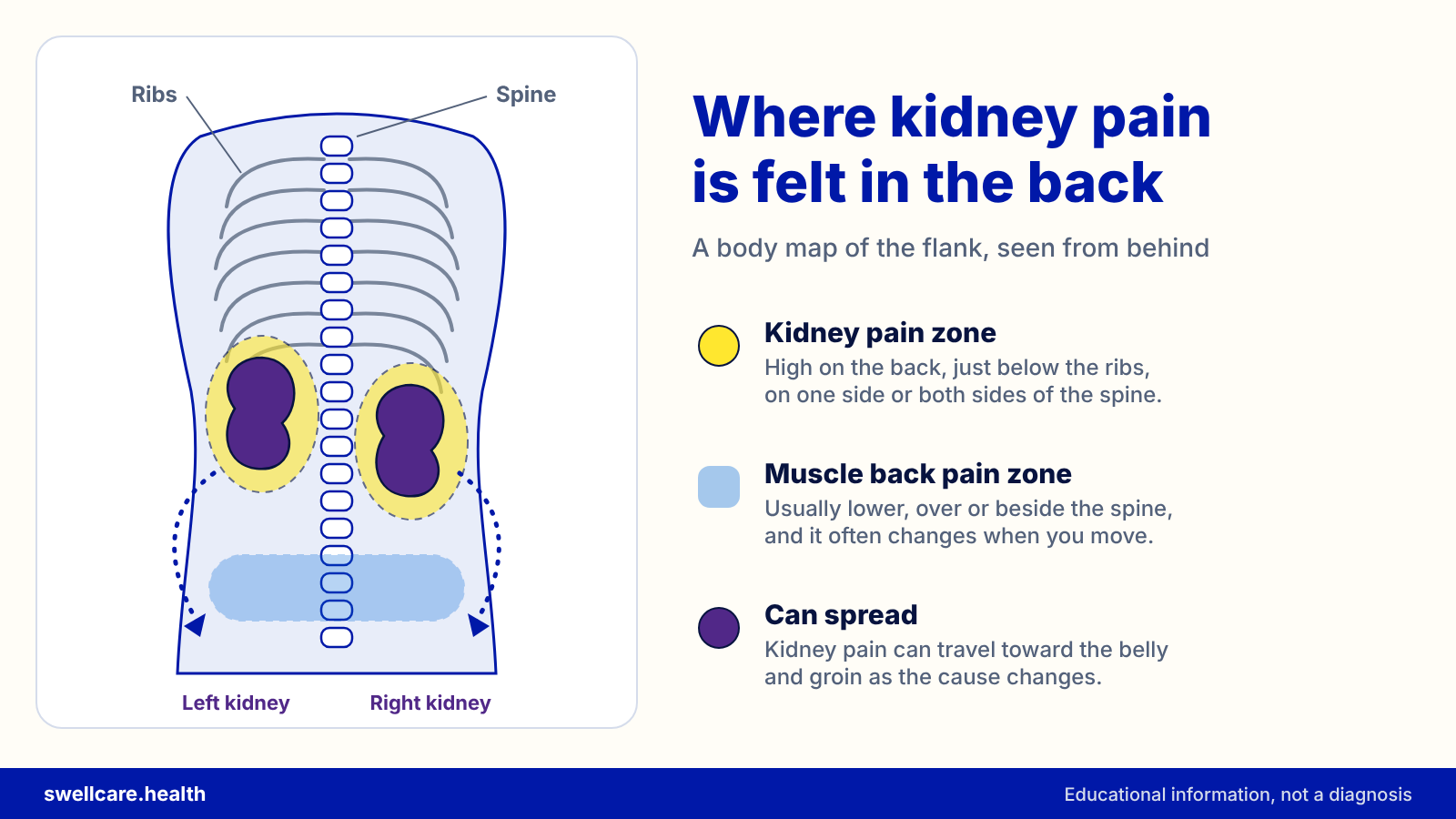
Now the part most guides gloss over. Once bacteria climb up the ureters into a kidney, the picture changes. You may spike a temperature, get chills, feel sick to your stomach and notice pain in your back or side. That’s an upper UTI, also called pyelonephritis. Flank pain with a high temperature isn’t a “wait and see” situation. Your kidney is involved, and your doctor will want to see you.
One more pattern worth knowing: older adults sometimes have no burning at all. Confusion, falls or a sudden change in behavior can be the only sign.
Why bladder infections are the UTI most people get
The cause is usually bacteria, most often from the gut, that reach the urethra and travel upward. Women get UTIs far more often than men because the female urethra is shorter and sits closer to the rectum. According to the Urology Care Foundation, about 60% of women will have a UTI in their lifetime.
Other risk factors add up. Recent sex, a new spermicide, pregnancy, menopause, an enlarged prostate and a previous UTI all raise the odds. Lower estrogen after menopause changes the protective bacteria around the urethra, which is one reason recurrent infections climb with age.
UTIs aren’t an STI, and they aren’t a hygiene failure. Plenty of careful people get them.
Every urinary tract infection starts the same way: bacteria get in, multiply, and either get flushed out or dig in. Women are diagnosed with a urinary tract infection far more often than men, and the urinary system’s own defenses, like regular flushing and a healthy balance of bacteria, tip the odds either way. A UTI that seems minor on Monday can feel serious by Thursday. Knowing the early signs helps: burning, pelvic pressure above the pubic bone and an urge you can’t ignore. Left alone, these UTIs can bring complications.
A single UTI in women is common enough that it rarely signals a deeper problem. Recurrent UTIs are different. Two in six months, or three in a year, is the point where a doctor looks harder at the urinary tract itself.
How doctors tell them apart
You can’t reliably tell a bladder infection from a kidney infection by symptoms alone, so a clinician looks at the whole picture. They ask where it hurts, whether you have a fever and how long it’s been going on. Then they order a urine test.
A basic urine test checks for white blood cells, blood and bacteria. If the infection is stubborn, comes back often or looks complicated, they may send a urine culture to grow the bacteria and see which antibiotic works. Imaging such as an ultrasound is saved for people whose temperature won’t come down, who keep getting infections or who may have kidney stones.
Most UTIs are diagnosed in a single visit, from your symptoms plus lab results. A positive test with no symptoms usually doesn’t need treatment. The CDC notes that bacteria found without symptoms generally don’t call for antibiotics, with exceptions such as pregnancy.
Treatment: what works and what doesn’t
Antibiotics cure a bacterial bladder infection. For an uncomplicated UTI in a healthy adult, the first-line options in the IDSA guideline include nitrofurantoin, trimethoprim-sulfamethoxazole and fosfomycin. Fluoroquinolones are second-line, because overuse has made them less reliable. Your clinician picks based on your history, allergies and local resistance patterns.
Courses are short, from a single dose of fosfomycin to about five days of nitrofurantoin. Finish the full course. Feeling better on day two doesn’t mean the bacteria are gone. Skipping antibiotics altogether is the bigger mistake, because untreated cystitis can turn into pyelonephritis.
For the pain, a heating pad and plenty of water help. A clinician may suggest a short course of a urinary pain reliever, which eases the burning but doesn’t cure anything. Drinking more fluids helps flush the bladder, though it won’t clear an established infection on its own.
What about cranberry? A Cochrane review of 26 trials found cranberry products cut symptomatic UTIs by about 30% overall. The benefit was smaller for women with recurrent infections and absent in older adults living in care homes and in pregnancy. So it’s a possible prevention aid. It is not a treatment, and cranberry juice won’t replace the antibiotics your doctor prescribes.
When to see a doctor
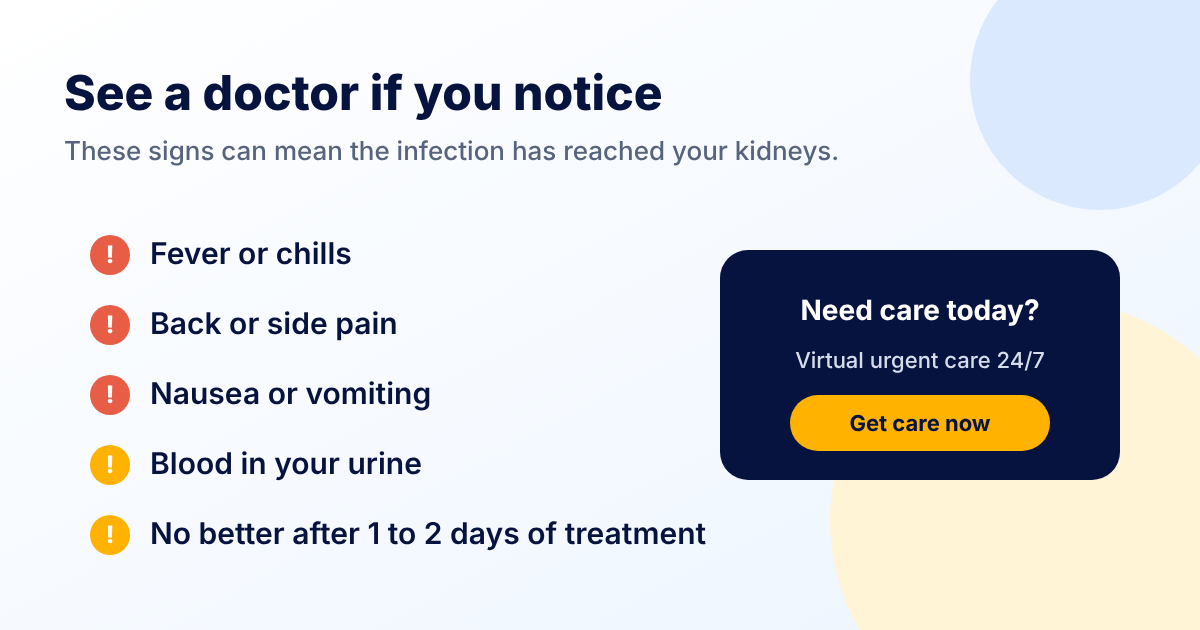
Don’t wait it out if you notice any of these:
- Fever or chills
- Pain in your back or side, near the kidneys
- Nausea or vomiting
- Blood in your urine
- Symptoms that don’t improve within a day or two of starting treatment
- Pregnancy, diabetes, a weakened immune system or a recent catheter
Untreated, a bladder infection can reach the kidneys. Complications are uncommon, but they include sepsis and kidney damage, which is why early treatment matters. Call 911 or go to the ER for a high temperature with uncontrollable shaking, confusion or severe pain.
For a first symptom with no red flags, same-day care is reasonable. That’s where telehealth comes in.
Getting UTI care from home
You shouldn’t have to sit in a waiting room feeling miserable. SwellCare offers virtual urgent care 24/7 in all 50 states and DC. You tell us what’s going on, a clinician reviews your symptoms and history, and they decide whether treatment is appropriate or whether you need an in-person urine test or ER care. A completed consultation is $45, and the screening step is free.
Start a SwellCare visit when symptoms start, not after three days of suffering. See how it works first if you’d like to know what to expect.
Questions people ask about bladder infections and UTIs
Is a bladder infection the same as a UTI?
Yes, with one catch. A bladder infection is a type of urinary tract infection, specifically a lower UTI. The term UTI also covers urethra and kidney infections, so “UTI” is the broader label. Both respond to the same basic approach.
Can a bladder infection go away on its own?
Sometimes mild ones clear without antibiotics, but you can’t predict which. Because bacteria can travel to the kidneys, most clinicians recommend treatment rather than waiting.
How do I know if my UTI has reached my kidneys?
Look for fever, nausea and pain in your back or side along with the usual bladder symptoms. Any of those means you should be seen the same day, because a kidney infection needs a doctor.
Can men get a bladder infection?
Yes. It’s less common, and it often points to something else, such as an enlarged prostate or a blockage. Men with UTI symptoms should see a doctor rather than self-treat.
How can I prevent a UTI?
Drink water through the day, urinate after sex and avoid holding urine for hours. Showers beat baths, and douches and scented sprays are best skipped, per the CDC. If you get recurrent infections, ask your clinician about prevention options, including vaginal estrogen after menopause.
Trusted references
Public-health, research, and medical-society resources related to this guide.