The alert buzzes at 9:41 on a Tuesday night. Your results are in the patient portal. Three numbers carry an “H,” one carries an “L,” and nobody has called.
Take a breath. That flag only means a number landed outside the lab’s usual range. It doesn’t mean something is wrong. Knowing how to read blood test results comes down to four things: the range printed on your own report, the units, the pattern over time, and what your provider knows about you that the lab doesn’t.
Since 2021, federal information-blocking rules have pushed providers to release nearly all lab results to patients right away. That’s good for access. It’s hard on the nerves, and it makes knowing how to read blood test results more useful than ever.
What’s actually on a blood test report
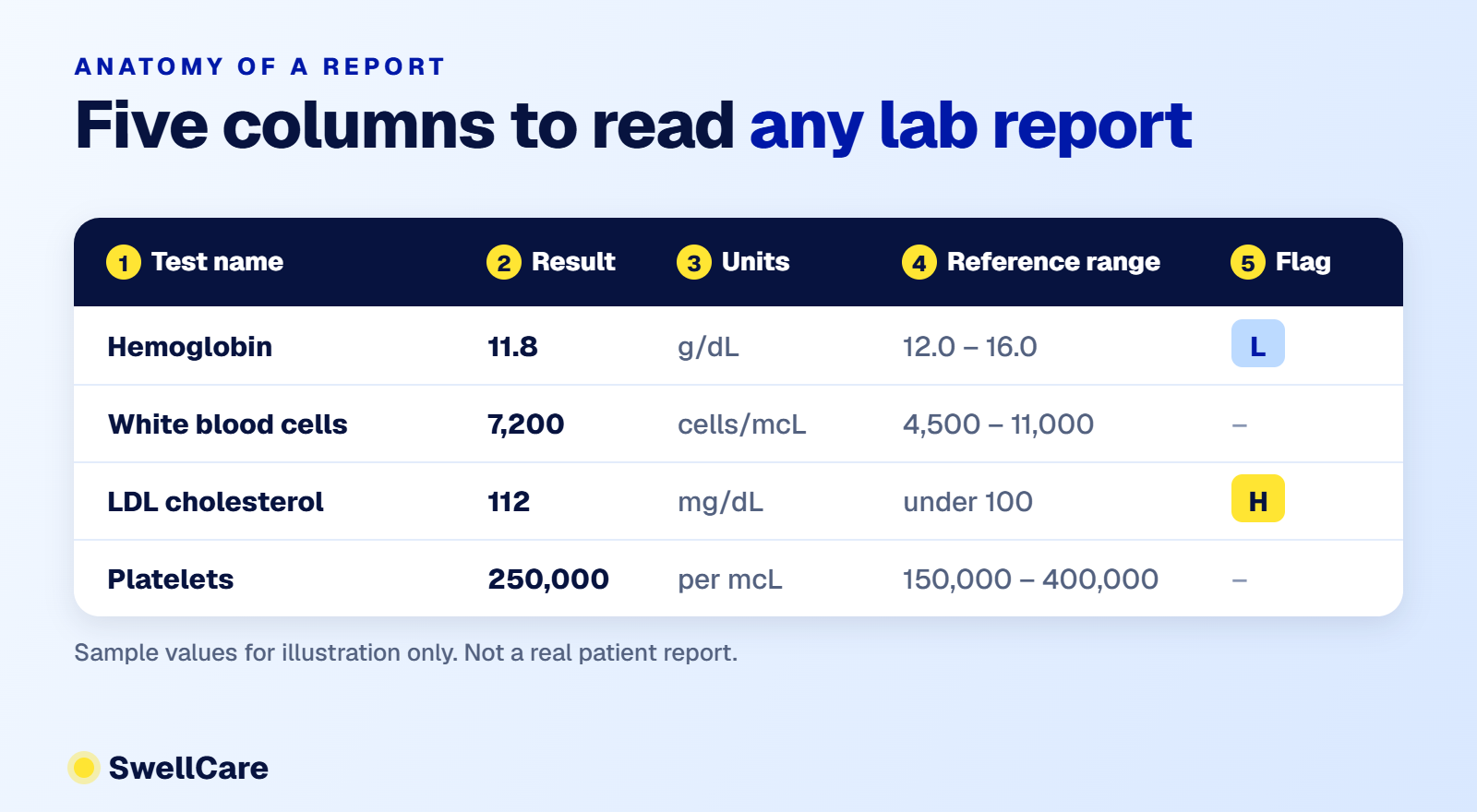
Every blood test report, whatever the lab, has the same five columns. Learn them once and you can read lab results from any lab.
The test name says what was measured, often as an abbreviation like CBC or A1C. Your result is the number the lab found. The units tell you what that number is counted in, and they matter more than people think, because the same substance can be reported in different units at different labs. Then comes the reference range, the span the lab treats as typical. Last is the flag, usually an H, an L or a bold font.
Start at the units and range, not the flag. A result of 5.9 means nothing until you know what it’s counted in and where the range starts and stops.
What the H, L and critical flags really mean
H means high. L means low. Both mean the same thing: your result fell outside the lab’s reference range. Neither one is a diagnosis.
Here’s why. A reference range is built from results in large groups of healthy people, so healthy people land outside it sometimes. Landing inside the range doesn’t guarantee good health either. Reports sometimes label these results abnormal, which sounds worse than it is. An abnormal result and a disease aren’t the same thing, and the flag is a prompt to ask a question, nothing more.
Critical flags are different. Labs generally set critical limits for values that could be dangerous right away, and a clinician is normally called, not left to find it in a portal. If you ever see “critical” on your own results and no one has contacted you, call your provider that same day.
Why the normal range changes from lab to lab
Two labs can look at the same blood and print different ranges, which is why lab results from different places aren’t directly comparable. Labs often use different testing methods, so the normal range on one report may not match the normal range on another, and it may also differ for children and adults.
The practical rule is simple. Compare your number to the range on your own report, never to a range you found online or on a friend’s printout. If you’re tracking a result over months, use the same lab each time when you can.
Things you did before the draw can nudge numbers too. Food and drink, medicines and supplements, hard exercise, a menstrual period and skipped fasting instructions can all change a result.
Reading a complete blood count (CBC)
The complete blood count, or CBC, is the most common blood test there is.
Three parts of a complete blood count do most of the talking. Red blood cells carry oxygen, and hemoglobin is the protein inside them that grabs oxygen in the lungs and delivers that oxygen to the rest of your body. White blood cells fight infection. Platelets help your blood clot. Here are the adult ranges MedlinePlus lists, though your lab’s range wins:
| Measure | Typical adult range |
|---|---|
| Hemoglobin | 13 to 18 g/dL (men), 12 to 16 g/dL (women) |
| White blood cells | 4,500 to 11,000 cells per microliter |
| Platelets | 150,000 to 400,000 per microliter |
A high count of red blood cells can come from dehydration, smoking or long-term low oxygen levels. Low red blood cells and low hemoglobin together usually mean anemia, and with less oxygen reaching your tissues you may feel tired or short of breath. The causes run from iron deficiency to blood loss to chronic illness, which is why the number alone never settles it. Platelets that run low or high both call for a look at the cause, since many things move them. A high white blood cell count often points to infection or stress, and some medicines, like steroids, push it up as well.
Metabolic panel results: glucose, kidneys, liver and electrolytes
A comprehensive metabolic panel, or CMP, measures 14 substances: glucose, calcium, the electrolytes sodium, potassium, bicarbonate and chloride, two proteins, three liver enzymes, bilirubin, and two kidney waste products, BUN and creatinine. The basic metabolic panel, or BMP, is the shorter panel with 8 of those 14.
Glucose on this panel is your blood sugar at the moment of the draw. A fasting glucose is a sample taken after several hours without food, so eating beforehand can change your blood sugar reading. Your provider will tell you whether to skip food before a glucose draw.
Creatinine is a waste product from muscle breakdown and diet, and the eGFR is calculated from it. That estimate shows how well your kidneys filter. The National Kidney Foundation says an eGFR of 90 or higher is in the normal range, 60 to 89 may point to early kidney changes, and 15 to 59 may mean kidney disease. One low reading isn’t a diagnosis. Kidney numbers get repeated before anyone draws conclusions.
Liver enzymes and electrolytes on the panel follow the same logic. Medicines and alcohol can move liver numbers, and so can illness, so a mildly high liver enzyme is usually repeated before anyone worries. Dehydration, a hard workout or a stomach bug can nudge calcium, electrolytes and kidney numbers for a day, too.
Cholesterol numbers on a lipid panel
A lipid panel reports total cholesterol, LDL, HDL and triglycerides. Too much of the “bad” kind is tied to heart disease, and HDL is the “good” cholesterol.
MedlinePlus gives healthy adult targets: total cholesterol under 200 mg/dL, LDL under 100 mg/dL, and non-HDL under 130 mg/dL. For HDL, 60 or higher is best, while under 40 is low for men and under 50 is low for women. Triglycerides are fat circulating in your blood, and high levels may raise heart disease risk, especially in women. They’re also the number a recent meal moves most, which is one reason the cholesterol panel sometimes calls for fasting.
Here’s the part many cholesterol guides skip. Your own target depends on your overall risk for heart disease, including age, family history, smoking, diabetes and blood pressure, and current heart-health guidelines stress personalized LDL goals. Someone who has already had a heart attack may be given a much lower target than someone at low risk. Same cholesterol report, different goal.
You may need to fast for 9 to 12 hours before a cholesterol test, so read your instructions.
A1C (HbA1c) and thyroid results
Two single numbers, two big questions: blood sugar and thyroid.
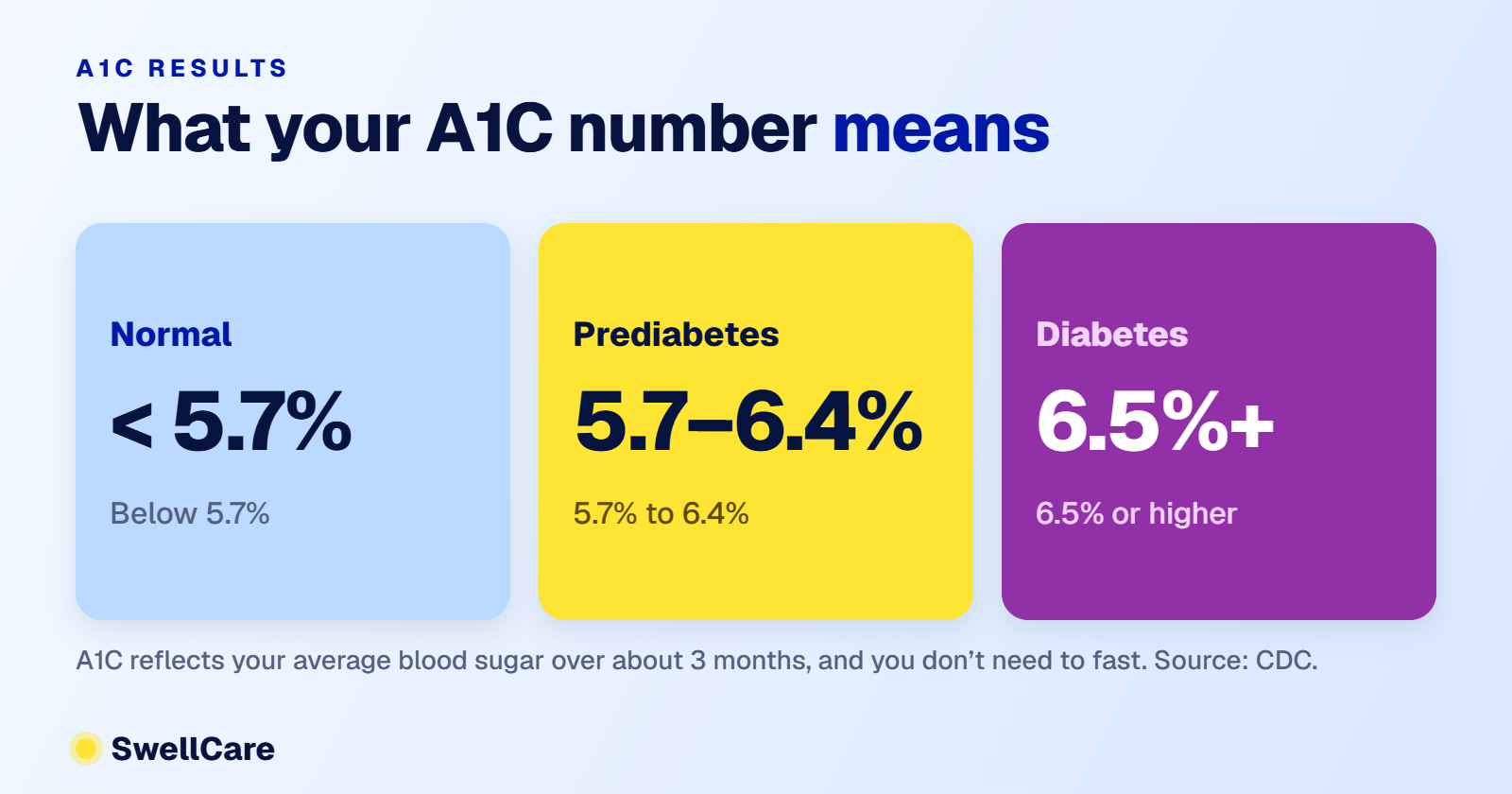
A1C, also written HbA1c, reflects your average blood sugar over roughly the past three months, and you don’t have to fast for it. Because HbA1c is an average, one rough week won’t swing it much. The CDC’s cutoffs are below 5.7% for normal, 5.7% to 6.4% for prediabetes, and 6.5% or higher for diabetes. If your HbA1c lands in the prediabetes band, that’s a signal worth acting on, not a sentence. People already living with diabetes usually get a personal goal, and the American Diabetes Association suggests under 7% for many adults.
TSH is thyroid-stimulating hormone, made by the pituitary gland to tell your thyroid how hard to work. Your thyroid sets the pace for your metabolism, so these numbers get checked when someone feels unusually tired or wired. It runs backward from what people expect. High TSH means the pituitary is pushing the thyroid because thyroid hormone is low, which can point to hypothyroidism. A low reading can point to an overactive thyroid. It can’t tell you why, so follow-up tests like T4 usually come next. Pregnancy often lowers it early on.
Normal versus optimal: what online ranges miss
Search for your results and you’ll find “optimal ranges” that are tighter than the lab’s. Some are reasonable goals. Many have no strong evidence behind them.
Our view: use the lab’s reference range as the starting line, then let your provider set a goal that fits your age and history. Targets printed on wellness websites know nothing about you, and anyone learning how to read blood test results should treat it that way. And chasing a cholesterol or vitamin number that’s technically inside the normal range can lead to extra testing and extra worry without any benefit.
How to read blood test results over time
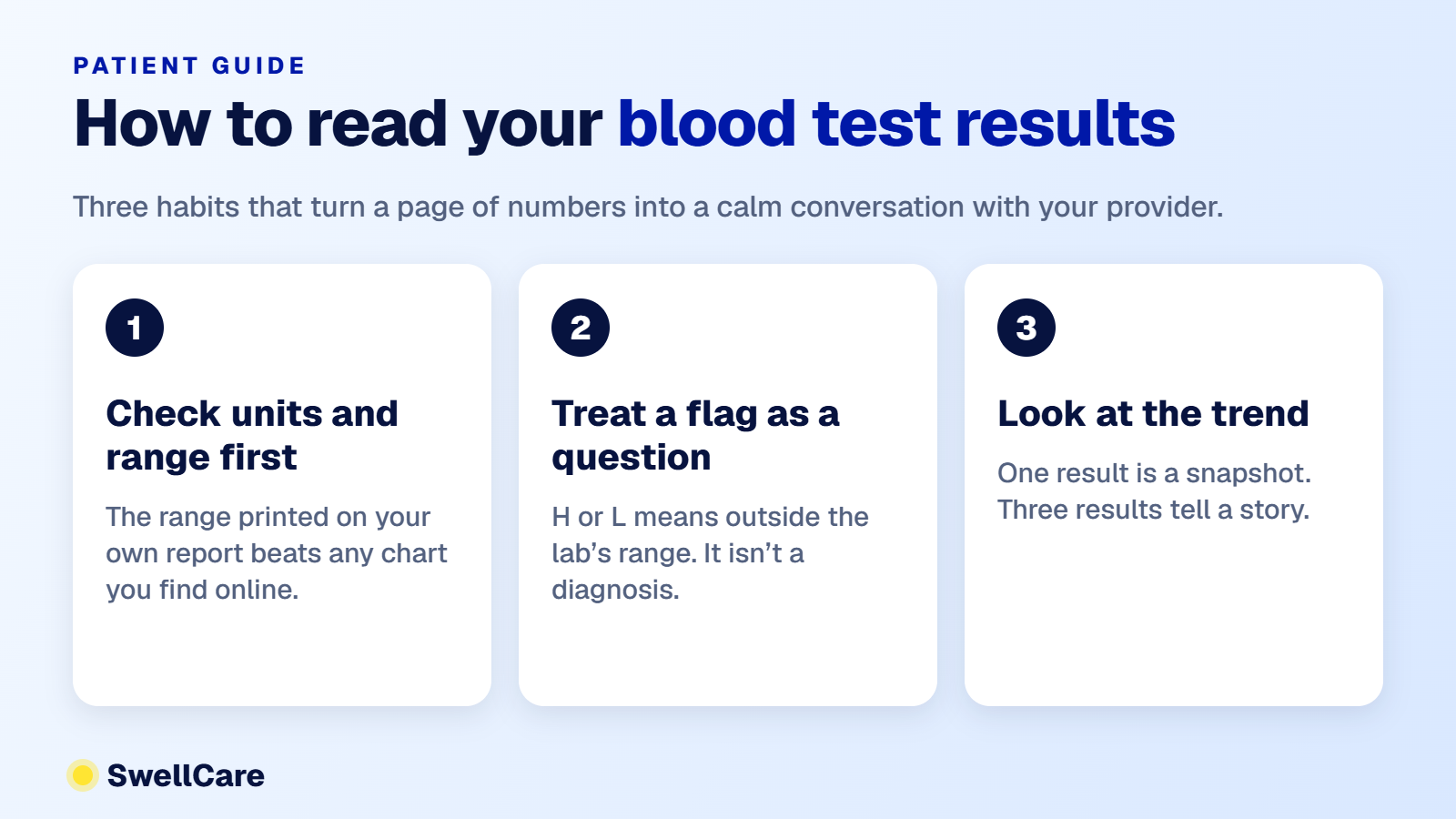
One result is a snapshot. Three results are a story.
Say your LDL reads 128, then 119, then 111. Each value is outside a strict goal, but the direction is the news. Now flip it. A result that’s still in the normal range but has climbed every year deserves a conversation, and a single high reading that comes back normal next time usually deserves a shrug.
Keep your own record of lab results. Most patient portals let you graph them, and saving a PDF of each report takes a minute. Note the lab and date, and whether you fasted, so you’re comparing like with like.
What to do when a result is out of range
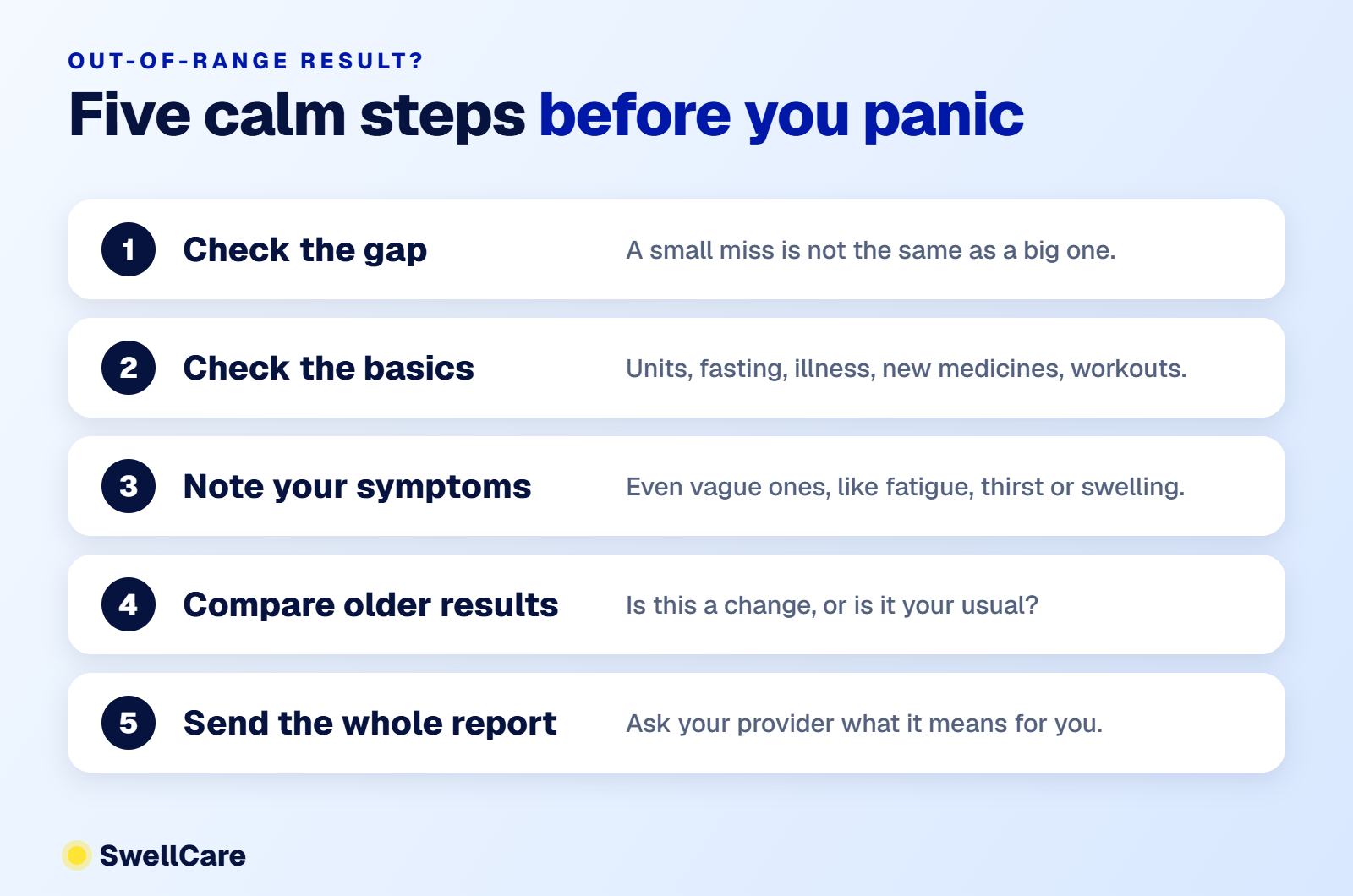
Don’t Google a blood test number at midnight. Do this instead.
- Look at the size of the gap. Something a hair outside the range is a different situation than one far outside it.
- Check the basics: your units, your fasting status, recent illness, new medicines or supplements, and hard exercise in the last day or two.
- Write down your symptoms, even vague ones like fatigue, thirst or swelling. Symptoms change how a number is read.
- Look at older results to see whether this abnormal one is a change or your usual.
- Send the whole report to your health care provider, not just the number that worried you, and ask what it means for you.
Many abnormal results get repeated, because a repeat is how a provider tells a blip from a trend.
When to call a doctor or get urgent care
Some results and symptoms shouldn’t wait for a portal reply.
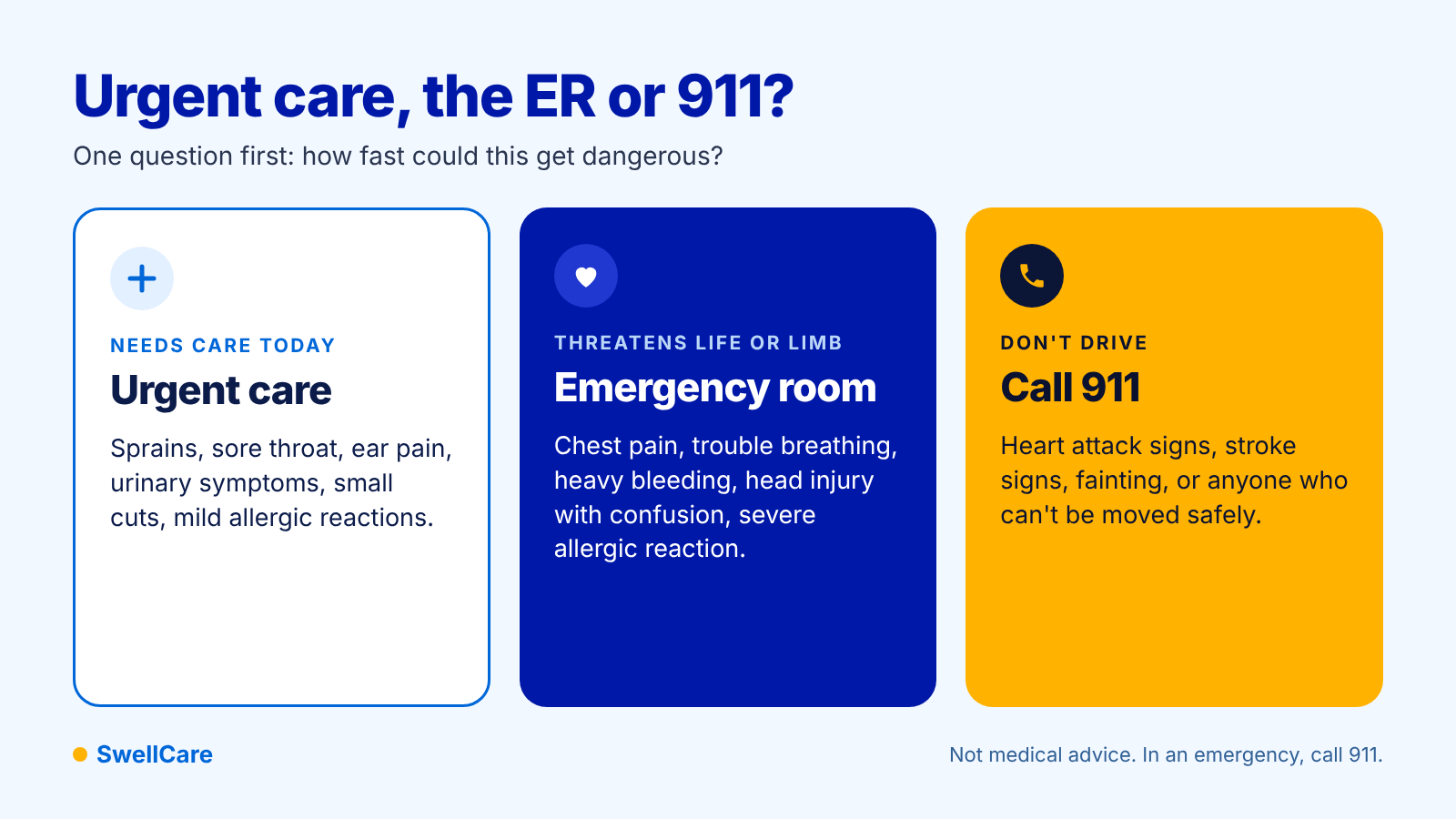
Call your provider the same day if a result is marked critical, if a number is far out of range, or if you have symptoms that fit the result, like unusual bleeding, severe weakness or fainting. Go to urgent care or an emergency room for chest pain, trouble breathing, confusion or signs of a stroke. Call 911 if it’s an emergency.
Blood work is one piece of the picture, and a normal blood test doesn’t cancel out symptoms that worry you, even when every number looks fine.
Get your results explained by a SwellCare clinician
Nobody should have to learn how to read blood test results alone, late at night, with a portal open. That’s the gap SwellCare’s Labs and follow-up care is built for.
Here’s how it works. Sign-up and the screening chat are free. A clinician reviews your question and decides whether routine testing makes sense. Then they go through any result alongside your history, so a flagged number gets read in context. You’ll hear what it may mean, what to do next and whether you need an in-person exam. A completed consultation is $45, and lab collection is billed separately by the testing facility.
SwellCare is virtual care, not emergency care, and it doesn’t replace a primary care relationship. Lab orders depend on clinician judgment. If you’re ready, start your intake and let’s make sense of your results.
Questions people ask about blood test results
Do I need to fast before blood work?
It depends on the test. Lipid panels and some metabolic panels often need several hours without food or drink, while an A1C (HbA1c) doesn’t. Your provider or the lab will give instructions. If you aren’t sure, ask before the appointment, because eating can shift blood sugar and triglycerides.
Can a normal result rule out a problem?
Not always. A result inside the range doesn’t guarantee good health, and a single test only checks one thing at one moment. Your provider combines results with your exam and history. If you still feel unwell with normal results, say so.
Why are my results different from last time?
Several things can move a number: a different lab with a different method, fasting versus not fasting, medicines, exercise, a menstrual period, or real change in your body. Compare lab results from the same lab when possible, and look at the trend, not one reading.
Can I get results before my doctor sees them?
Often, yes. Since 2021, federal rules push providers to release nearly all lab results to patients quickly, so they may appear in your patient portal first. That access is yours. Just remember the report isn’t an interpretation, and it’s fine to wait for context before drawing conclusions.
How often should I get blood work?
It depends on your age, health conditions and medicines. The American Heart Association says adults at normal risk should have cholesterol checked every four to six years, with more frequent testing for higher risk. Ask your provider what fits you.
Can I order my own blood tests?
Some labs sell direct-to-consumer tests, but MedlinePlus says at-home tests are not a replacement for guidance and treatment by your provider. A provider can review what you want to check and order what makes sense.
Trusted references
Public-health, research, and medical-society resources related to this guide.