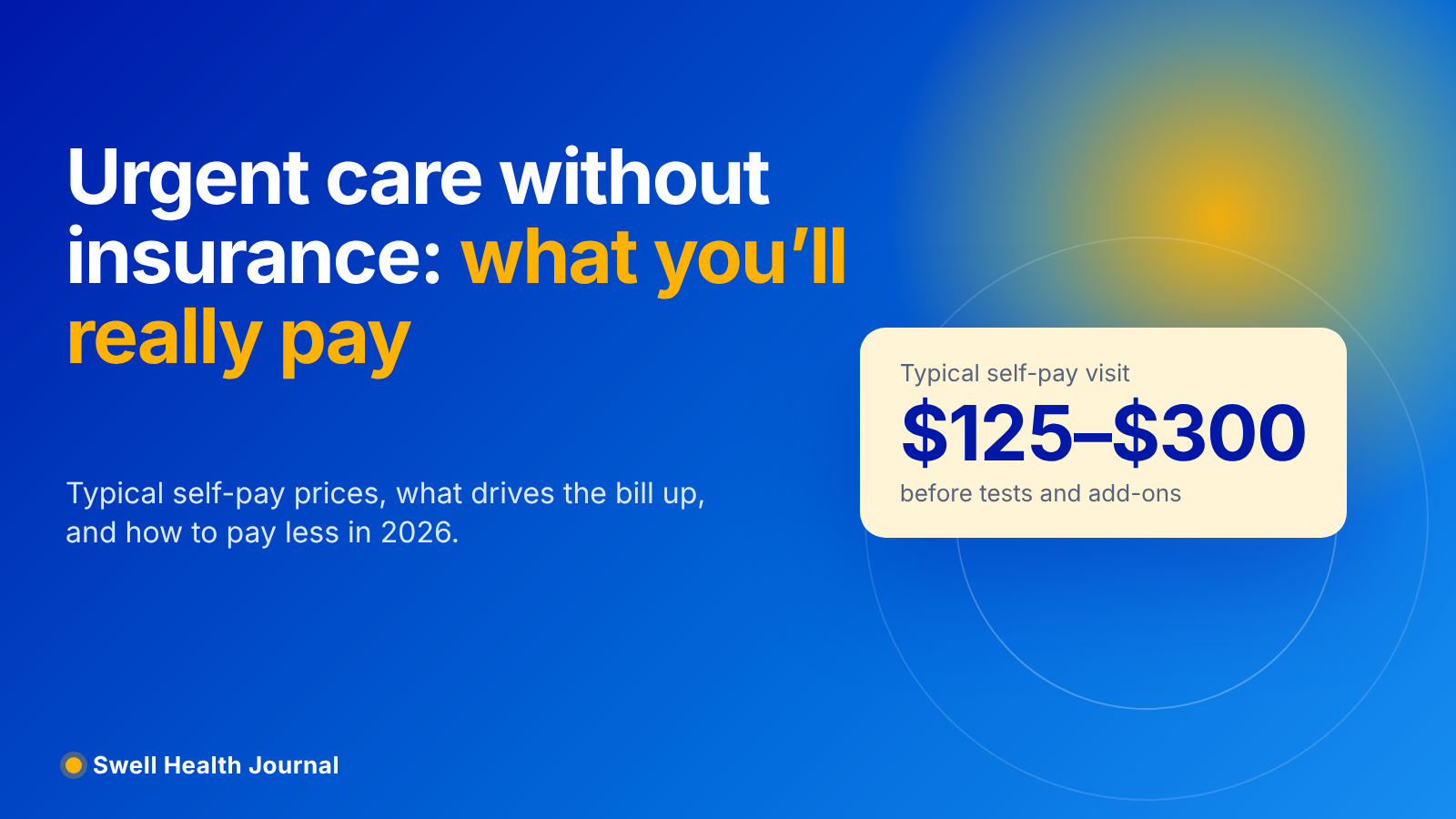
You twisted your ankle on the stairs, or your kid’s fever hit 103 at 8 p.m., and you don’t have health insurance. Before you grab your keys, you want one number. So, how much is urgent care without insurance? Most uninsured patients pay $125 to $300 for a basic urgent care visit, and the average for a minor problem sits near $180. Add an X-ray or stitches and the cost climbs fast, sometimes past $500.
That gap between the sticker price and the final bill is where uninsured people get burned. Urgent care without insurance can be affordable, but only if you know what drives the cost. It’s also where you have the most room to save.
How much is urgent care without insurance? The short answer
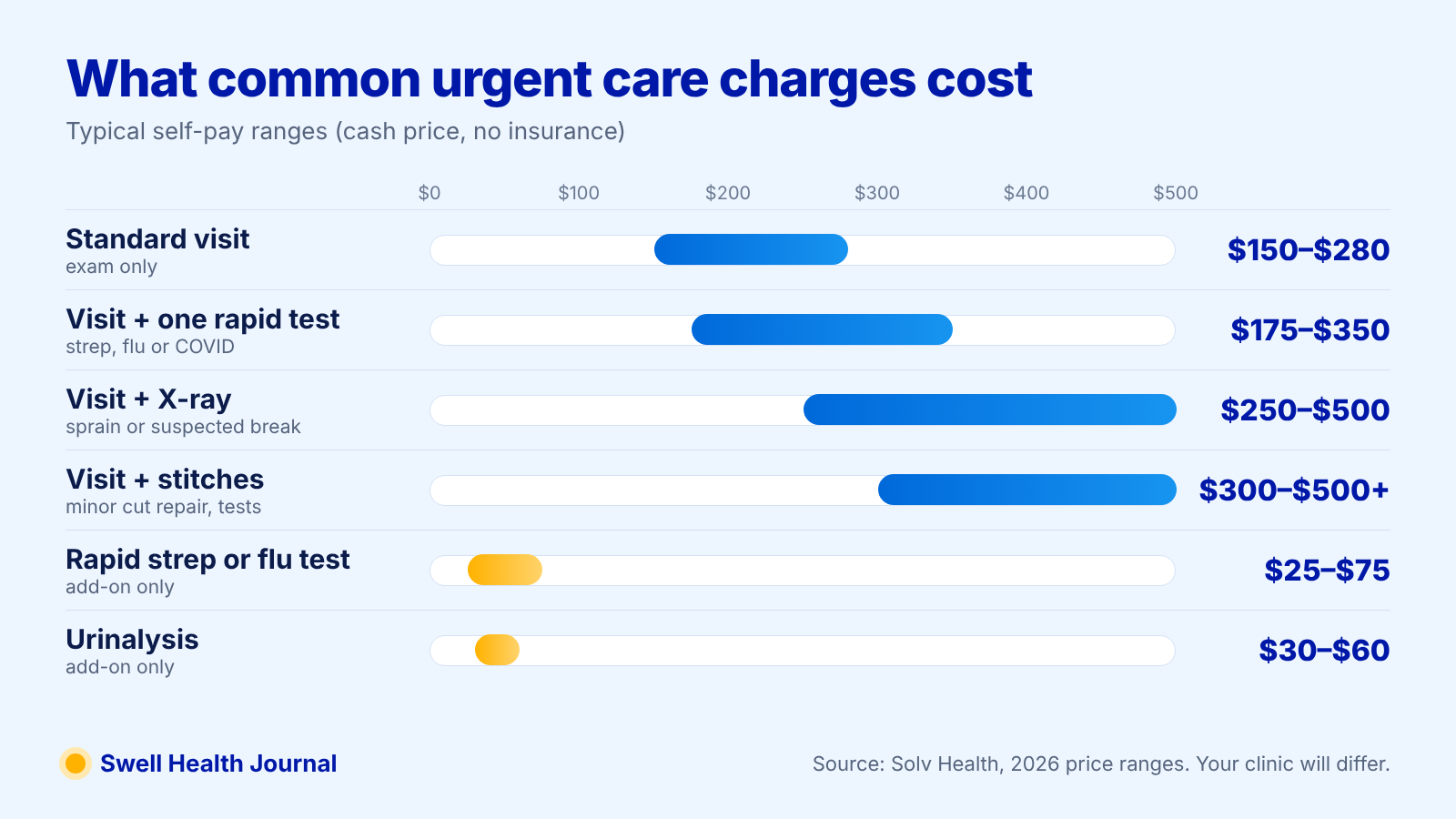
Here’s the plain version. A standard self-pay urgent care visit runs roughly $150 to $280, according to Solv Health’s 2026 price ranges. The national average lands around $180 to $220. In the Midwest and rural areas, you’ll often see $120 to $175. In pricey metros it can double.
Self-pay just means you’re paying out of your own pocket instead of billing a plan. Clinics set that price themselves, so two centers a mile apart can quote you very different numbers for the same visit.
Here’s what typical add-ons look like for a patient without insurance, on top of the base visit fee:
| What you got | Typical self-pay total |
|---|---|
| Basic visit (exam only) | $150 to $280 |
| Visit plus one rapid test (strep, flu, COVID) | $175 to $350 |
| Visit plus X-ray | $250 to $500 |
| Visit plus stitches or wound care and tests | $300 to $500+ |
These are ranges, not promises. Your price depends on the clinic, your city and what the clinician finds.
The good news? Urgent care is still one of the cheaper places to get same-day treatment. We’ll compare it with the emergency room and telehealth in a minute. First, let’s look at why your bill can land at $150 or $450.
What pushes your urgent care bill up
The headline price is the opening bid. Three things decide where your final urgent care cost ends up.
The base visit fee
Most urgent care clinics charge a flat fee for the exam, and they often sort each urgent care visit into levels, which sets your cost. A sore throat is a low level. Chest pain with a history of heart trouble is a high one. The more time and judgment the clinician needs, the higher the level and the visit fee.
You won’t always see the level before you’re seen. Ask.
Add-ons that cost extra
This is where a $180 visit becomes a $400 one. Each of these is billed on its own line:
- X-ray: roughly $100 to $250 on top of the visit
- Stitches or laceration repair: about $150 to $250, more for deep or complex cuts
- Rapid strep, flu or COVID test: $25 to $75 each
- Urinalysis: $30 to $60
- Blood draw and basic lab tests: $40 to $150
Some clinics send blood work to an outside lab. That lab can bill you separately, sometimes weeks later, so a bill can show up long after you’ve forgotten the visit.
Where you live changes the price
Geography matters more than most people expect when you pay for urgent care without insurance. Solv reports a Miami average near $565 and New York around $410, against a national average of about $180 to $220. If you live in a high-cost city, your clinic’s price list is worth reading before you walk in.
Ask for the number before you’re examined. Say, “I’m paying cash. What’s your self-pay price for a basic visit, and what would an X-ray add?” Most front desks can answer in under a minute.
What a real urgent care bill looks like
Numbers on a chart feel abstract until you add them up. So here are two common visits, built from the ranges above. They’re illustrations, not quotes from any one clinic.
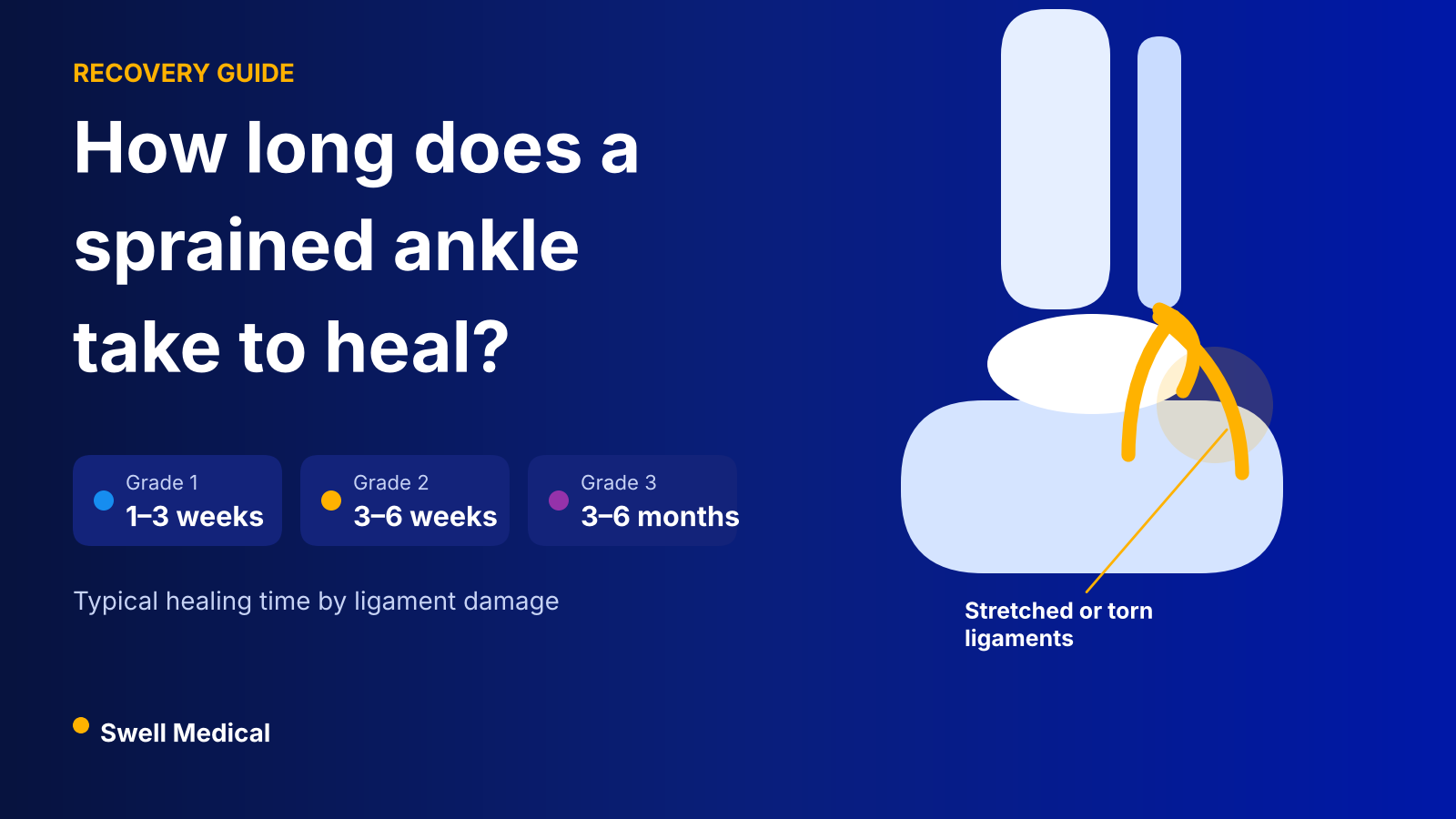
A sprained ankle. You pay a $150 to $280 base visit. The clinician suspects a fracture, so you get imaging, which adds $100 to $250. That’s $250 to $530 before a splint or crutches, all of it out-of-pocket. If the clinic takes 20% off for paying cash, a $400 bill drops to $320.
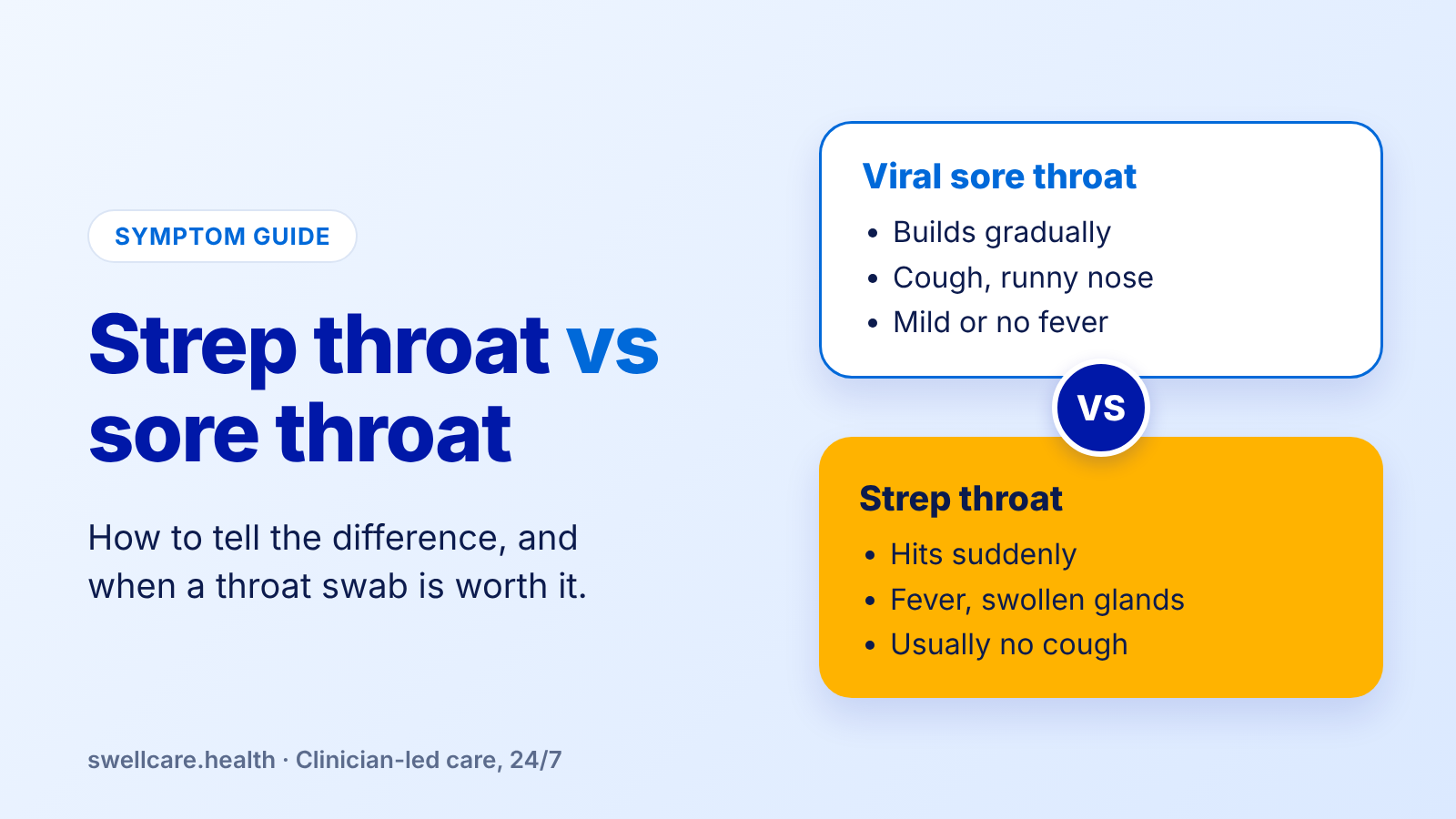
A sore throat that won’t quit. The visit runs $150 to $280, and a rapid strep test adds $25 to $75. Your total lands around $175 to $355. If the clinic sends a throat culture to an outside lab, those lab tests may bill separately, so ask before you agree.
Notice what these two share. The exam is the smaller part of the bill. Tests and procedures are what you should watch, and they’re also where you have the most say. So how much is urgent care without insurance in practice? It’s the base fee plus whatever you say yes to.
Urgent care vs. the emergency room vs. telehealth
If your problem isn’t life-threatening, the setting you pick can change your bill by more than a thousand dollars.
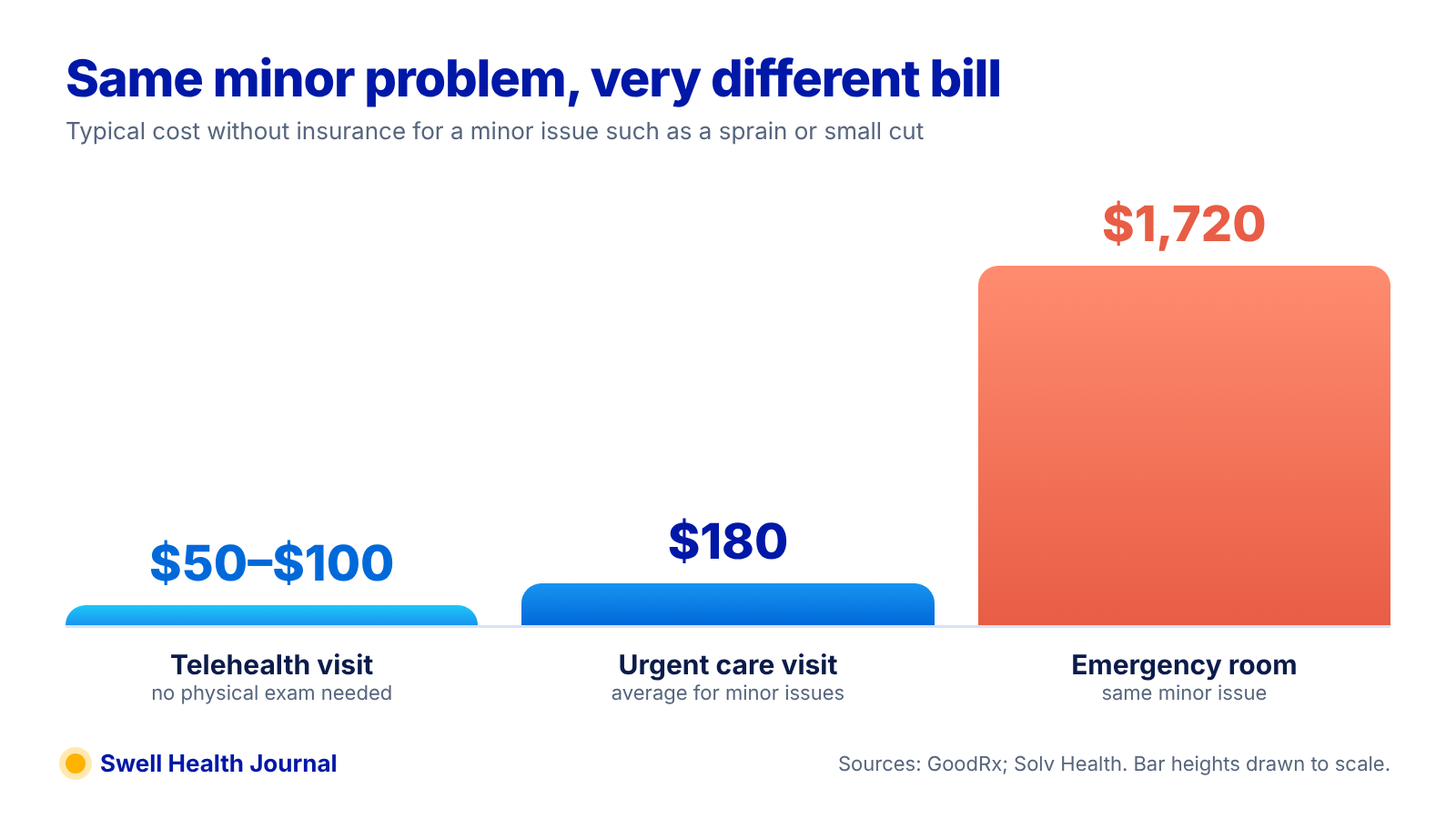
A 2017 study in Annals of Emergency Medicine, reported by Becker’s Hospital Review, found that prices at emergency departments were almost 10 times higher than at urgent care centers for the same diagnoses. It looked at Texas claims from one insurer, and the data is a few years old, but the pattern hasn’t gone away. GoodRx puts an emergency room visit for a similar minor issue near $1,720, and Solv says an uninsured ER visit for common conditions runs $1,000 to $2,500.
Telehealth sits at the other end. A virtual visit for something that doesn’t need a hands-on exam, like a rash, pink eye or a urinary tract infection, typically costs $50 to $100, per Solv.
So where does primary care fit? If you already see a doctor and pay cash, a same-day sick visit there can cost less than an urgent care visit. Call the office and ask what a primary care sick visit costs without insurance. Many uninsured patients never try it, and some offices keep a few slots open each day for exactly this.
Don’t have a doctor? Community health centers are worth a search. They often charge by income, and their primary care teams can handle many of the same everyday problems.
A simple rule of thumb: virtual care first for mild, non-emergency symptoms. Urgent care when you need a physical exam, imaging or stitches. The ER only when it’s truly an emergency (more on that below).
Six ways to pay less for urgent care
You can’t control the clinic’s price list. You can control how you shop and what you agree to. That’s the difference between paying the top of the range and paying the bottom of it, and it’s the best answer to how much is urgent care without insurance when you plan ahead. Your out-of-pocket cost is the part you can still shape.
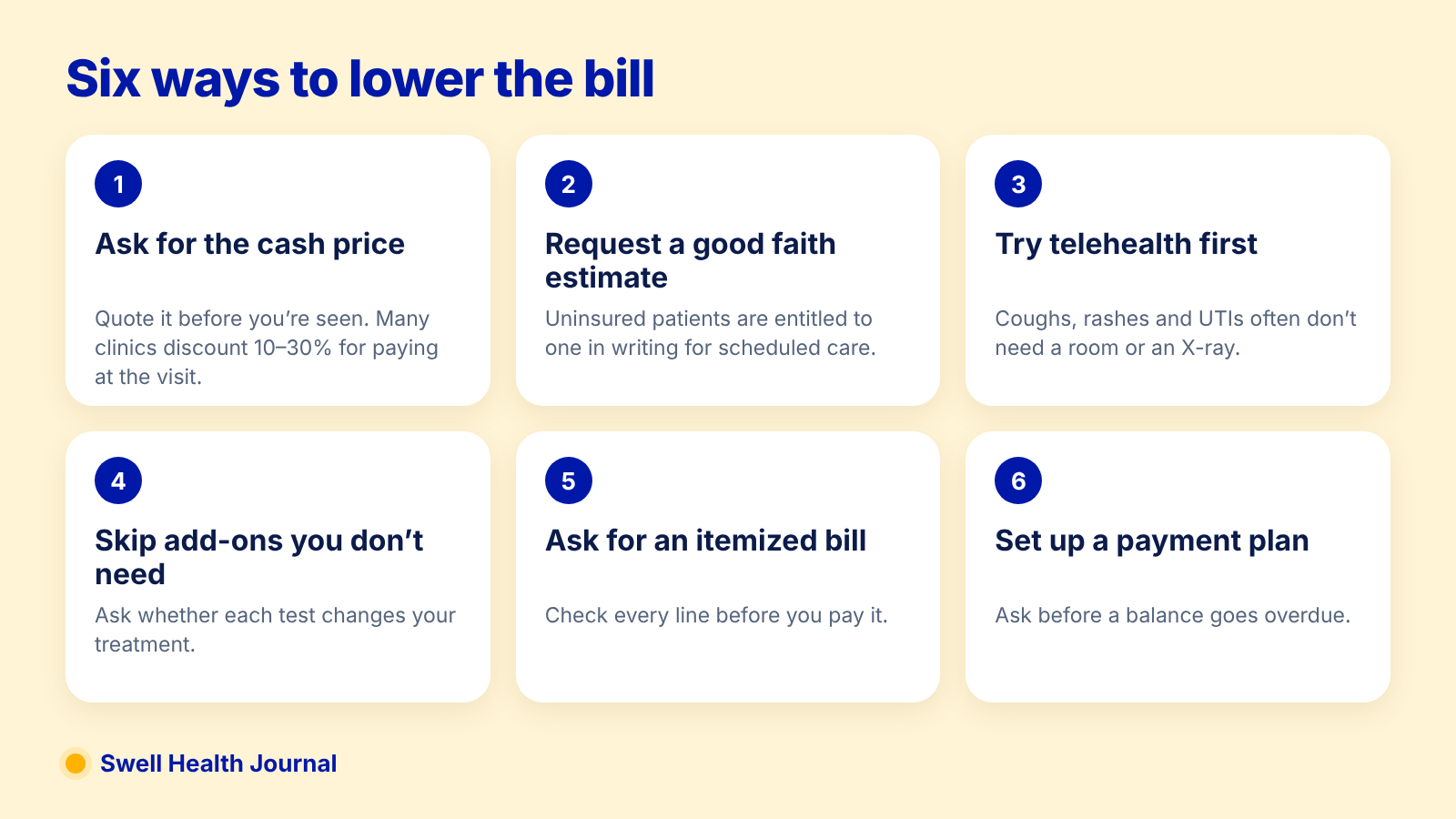
1. Ask for the cash price up front. Many clinics take 10% to 30% off if you pay at the time of service, and they don’t always advertise it. A cash discount costs you nothing to request, and it lowers your out-of-pocket total at the end of the urgent care visit.
2. Ask for a written estimate. Federal rules give uninsured and self-pay patients a good faith estimate. If you schedule care at least three business days ahead, the provider has to send one within one business day. Ask about price without booking, and you should get it within three business days, per the CMS guide to good faith estimates. Walk-in urgent care is often unscheduled, so the clock may not apply neatly. Ask for an estimate in writing anyway. Even a rough one on paper beats a verbal guess.
If the final bill comes in $400 or more above that estimate, you can start a dispute within 120 days of the bill (a $25 administrative fee applies). That’s a real lever, so keep the paperwork.
3. Try telehealth before you drive anywhere. If your symptoms don’t need an exam room, a virtual visit can cost a fraction of an urgent care visit.
4. Say no to tests that won’t change your treatment. It’s fair to ask, “If this comes back positive or negative, will my treatment change?” If the answer is no, skip it. That goes for lab tests and imaging alike. A clinician who’s worth seeing will give you a straight answer, and you’ll keep your cost down without gambling on your health.
5. Request an itemized bill. Check each line. Billing mistakes happen, and an itemized list is the fastest way to catch a duplicate charge.
6. Ask about a payment plan or sliding scale. Do it before the balance goes overdue. Federally qualified health centers and some urgent care centers charge by income, and plenty of clinics will split a bill into monthly payments without interest if you ask early. Spreading the cost out keeps your out-of-pocket hit manageable.
Should you buy insurance or apply for Medicaid first?
If you’re uninsured because you lost a job or your income changed, check your insurance options before your next urgent care visit, since coverage changes the cost of every visit after it. You may qualify for Medicaid, which you can apply for any time of year, depending on your state and income. Marketplace plans have an open enrollment window that typically starts November 1, and a special enrollment period can open if you lose coverage or have a qualifying life event.
Be honest about the math, though. With insurance, an urgent care visit usually means a copay, plus coinsurance on tests until you meet your deductible. A plan with a high deductible still leaves you paying the first few hundred dollars yourself, and coinsurance after that. Your out-of-pocket cost in a bad month can be real even with coverage.
For someone who rarely needs care, paying cash at a clinic may cost less than the premiums. For someone with an ongoing condition, a plan usually wins. Run both numbers, and compare the monthly premium, the deductible and the coinsurance rate before you buy. And if you qualify for Medicaid, the decision is easy: it can cover urgent care, primary care visits and lab tests with little or no cost to you. Check your state’s Medicaid site, because rules differ. Children are often eligible for Medicaid or CHIP at income levels where their parents aren’t.
When to skip urgent care and go to the emergency room
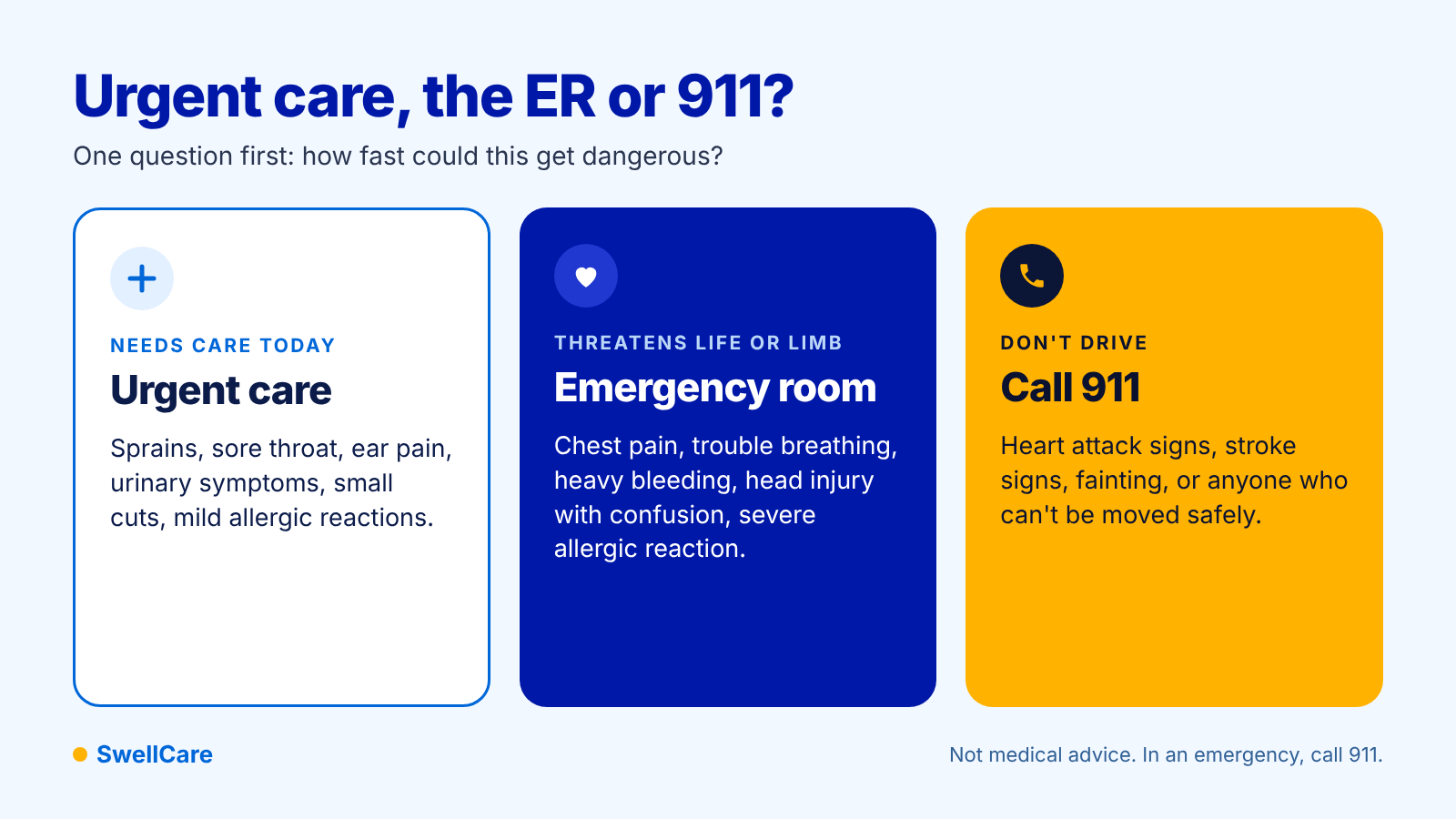
Price shouldn’t make this call, even when you’re worried about insurance and the cost of care. Urgent care handles non-emergency problems: colds, flu, sprains, small cuts, ear infections, minor burns. Go to the emergency room or call 911 for chest pain, trouble breathing, signs of a stroke, severe bleeding, a head injury with confusion, or any problem you think could threaten a life. People without coverage sometimes delay real emergencies because of cost. Don’t. Hospitals can discuss financial assistance after you’re stable, whether or not you have insurance.
Get care without the surprise bill
Here’s what most cost guides miss. The cheapest urgent care visit is the one where you know the price before you start, and you only pay for what you need. If you’ve ever asked how much is urgent care without insurance and gotten three different answers from three clinics, you know why that matters. A clear, upfront price takes the guesswork out of the cost.
That’s how we built SwellCare for everyday illness. You start with a free screening, then pay a $45 consultation. It’s cash-pay with no monthly membership, and clinician-led online care is available 24/7 nationwide, subject to clinician availability and fit. Medication and lab costs are separate. A clinician can review your symptoms, order labs when they’re warranted and tell you plainly if you need to be seen in person. You can see how it works or browse the conditions we treat before you decide.
SwellCare isn’t emergency care. If you think you’re having an emergency, call 911.
If you’d rather start with a clinic near you, use the scripts above. Ask for the self-pay price, ask what imaging would add and ask for the estimate in writing.
Questions people ask about urgent care costs
Can you go to urgent care without insurance?
Yes. Urgent care centers treat uninsured patients every day, and most offer a flat self-pay rate. Without insurance, you’ll usually pay at check-in or at the end of the visit, so ask the front desk which one applies. Ask about the cash discount while you’re there. Many uninsured patients are offered one only when they bring it up. And if you might qualify for Medicaid, apply before you need care.
Is urgent care cheaper than the emergency room without insurance?
Almost always, for the same minor problem, and the cost gap is big. A typical self-pay urgent care visit runs $125 to $300, while an uninsured ER visit for a common condition often runs $1,000 to $2,500. For anything life-threatening, go to the ER regardless of cost.
Do I have to pay upfront at urgent care?
Often, yes. Without insurance, many urgent care clinics collect the visit fee at check-in, and some bill the add-ons afterward. If a lump sum is hard, ask about a payment plan before you’re seen. Don’t wait until the bill is overdue.
Can urgent care refuse me because I’m uninsured?
Clinics can set their own payment policies, and some require payment before treatment for non-emergency care. ERs are different: federal law requires them to screen and stabilize you whatever your ability to pay. If one urgent care turns you away, call another or try a telehealth visit.
How much is an urgent care visit with an X-ray without insurance?
Expect roughly $250 to $500 in total. The X-ray itself usually adds $100 to $250 on top of the visit fee, and a separate radiologist read can sometimes bill later. Ask whether the quote is bundled.
Is telehealth cheaper than urgent care without insurance?
For conditions that don’t need a physical exam, yes. Telehealth visits typically run $50 to $100, which is well under a basic urgent care visit. It won’t replace imaging or stitches, but it’s a smart first step for mild symptoms.
Trusted references
Public-health, research, and medical-society resources related to this guide.
- GoodRx · How much is urgent care without insurance? ↗
- Solv Health · How much does urgent care cost without insurance? ↗
- Becker’s Hospital Review · ER vs urgent care prices for the same diagnosis ↗
- CMS · Understanding the good faith estimate and dispute resolution process ↗
- HealthCare.gov · Special enrollment period ↗