It’s 2 a.m., and swallowing feels like gulping gravel. Is this strep throat or just a sore throat that will fade by Friday?
Here’s the short version. A sore throat with a cough, a runny nose and a hoarse voice is almost always viral. Strep throat is different. It hits fast, brings a high fever and usually skips the nose and chest symptoms entirely. Only a throat swab can say for sure.
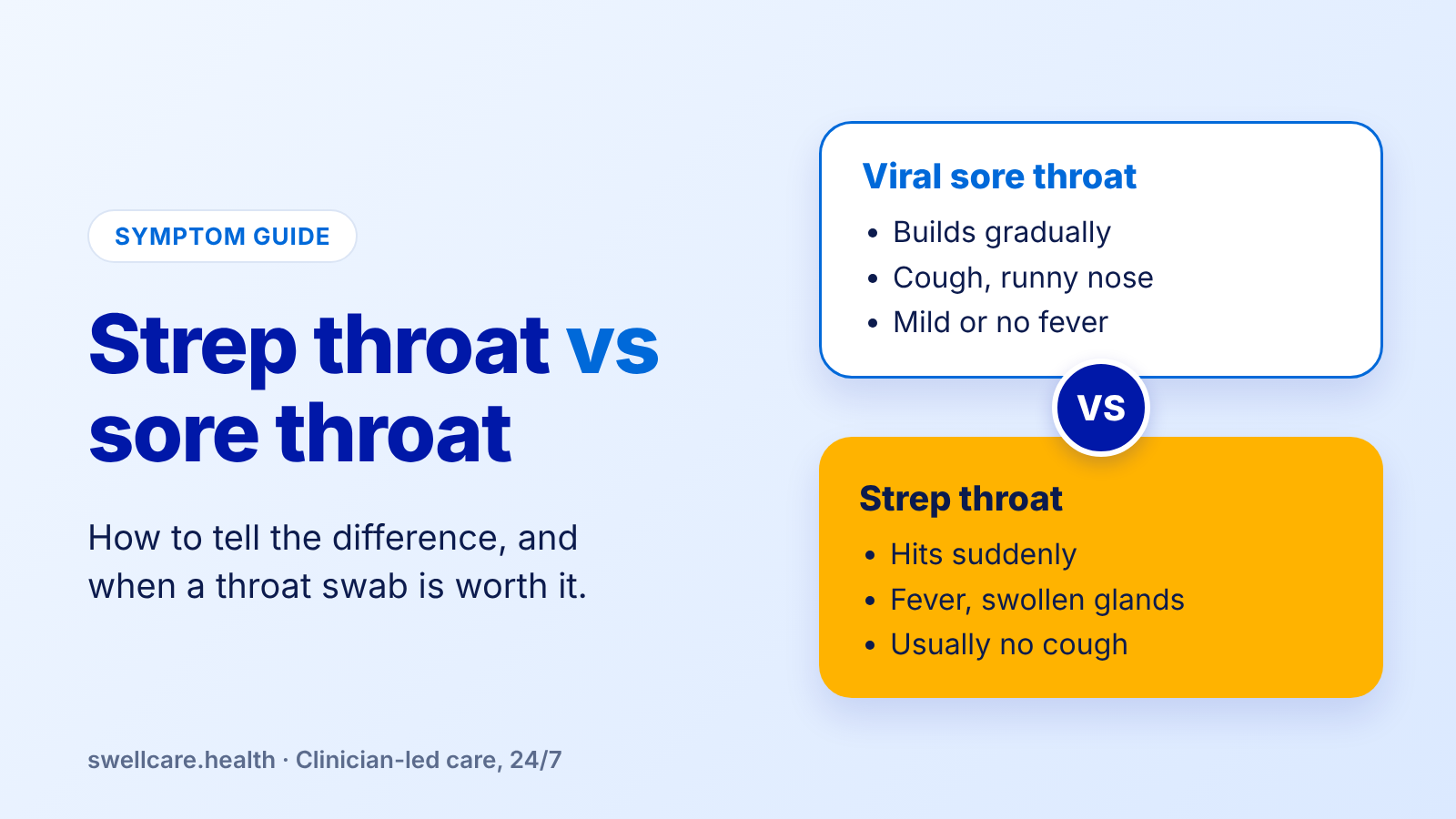
Strep throat vs sore throat at a glance
Most sore throats aren’t strep. The CDC says group A strep causes about 20% to 30% of sore throats in children and only 5% to 15% in adults (CDC clinical guidance). The rest come from viral infection, allergies and irritation.
That matters because the two need different handling. A viral sore throat gets better with rest and comfort care. Strep throat is an infection caused by group A streptococcus bacteria, the same bacteria behind scarlet fever, and antibiotics shorten it and lower the chance of complications. Knowing which one you have is the whole game.
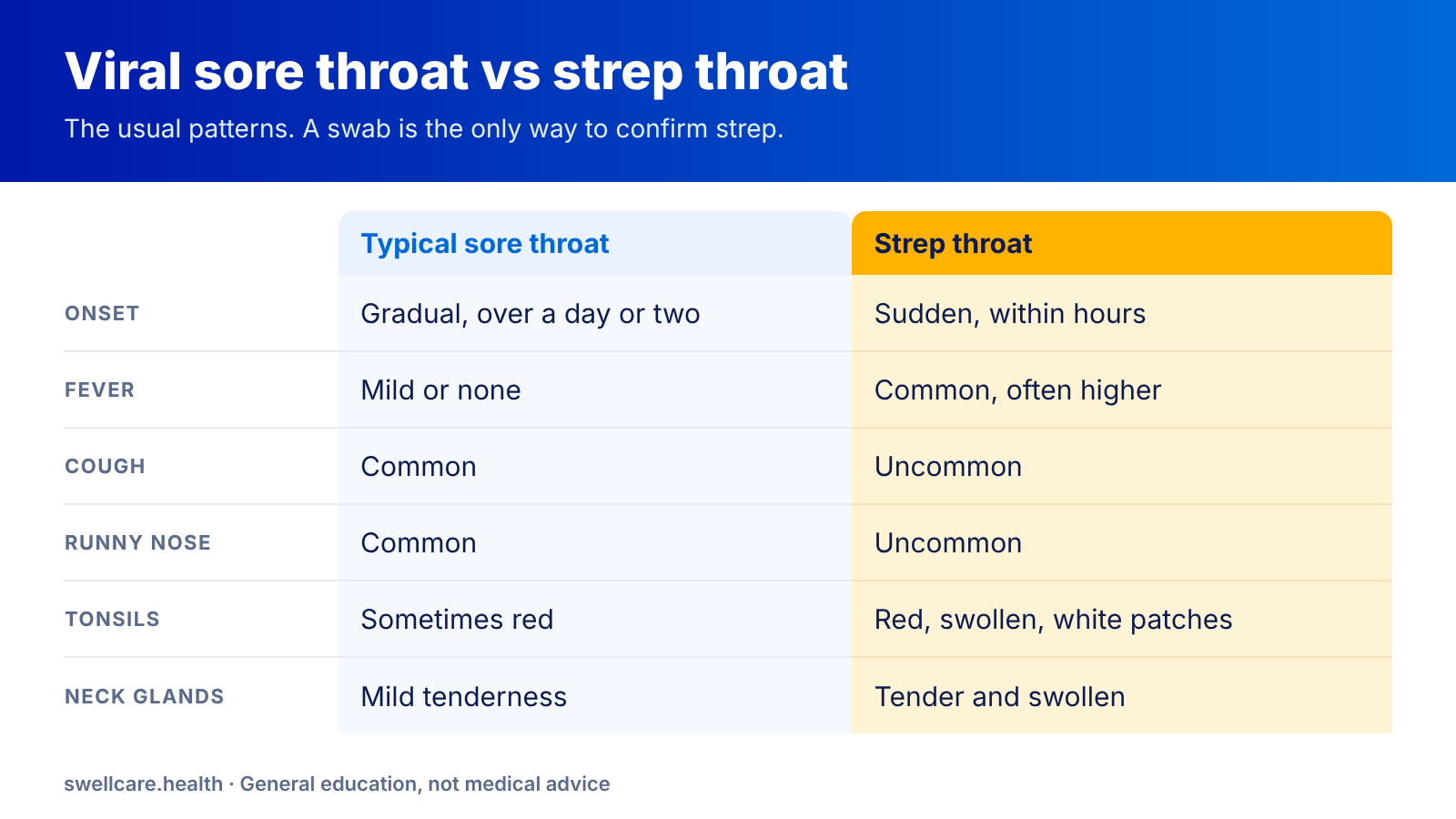
The table below shows where the symptoms usually split. Treat it as a guide, since symptoms overlap.
| What you notice | Typical viral sore throat | Strep throat |
|---|---|---|
| How it starts | Gradual, over a day or two | Sudden, often within hours |
| Fever | Mild or none | Common, often higher |
| Cough | Common | Uncommon |
| Runny nose | Common | Uncommon |
| Tonsils | Sometimes red | Red and swollen, maybe white patches |
| Neck glands | Mild tenderness | Tender, swollen glands at the front of the neck |
What a regular sore throat looks like
Think of the common cold, the classic sore throat. The throat scratches first, then the nose starts running, then a cough shows up. By day three you feel stuffy and tired rather than sharply sick. Most cold symptoms like these are your body fighting a virus, not bacteria.
A viral infection like the common cold clears on its own, usually within a week. Flu and COVID-19 can start the same way, so a sore throat alongside body aches or a loss of taste deserves a closer look.
Smoke, dry winter air and allergies can also irritate the throat. If you wake up scratchy but feel fine by lunch, that’s probably the culprit.
Signs that point to strep throat
Strep throat has a signature. The pain arrives quickly and swallowing hurts. Fever follows, and the tonsils swell and turn red, sometimes with white patches or pus. Tiny red spots can appear on the roof of the mouth, and the lymph nodes in the front of your neck get tender (CDC).
Children often add a headache, a sore belly, nausea or vomiting. A pounding headache is common too. Those extra symptoms from the bacteria can make strep look like a stomach bug. A fine, sandpaper-like rash can mean scarlet fever, which is strep in disguise.
The missing symptoms are just as telling. A cough, hoarseness and pink eye all point away from strep throat, and so does a stuffy nose.
Strep is most common in kids between 5 and 15, and it spreads through close contact. Parents and teachers catch it often. Symptoms usually start two to five days after exposure.
Only a strep test settles it
Looking at a throat can’t settle it. Even experienced clinicians can’t tell strep from a virus by sight alone when the viral clues are missing.
So a healthcare provider takes a throat swab from the back of your throat. A rapid strep test gives an answer in minutes. It’s very specific, so a positive result is trusted. It can miss some cases, though, which is why a negative rapid strep test in a child is usually followed by a throat culture. The culture takes a day or two but remains the gold standard.
You don’t need a swab when you clearly have cold symptoms. You do want one when the throat hurts badly, your temperature is up and there are no cold symptoms. Ask your healthcare provider, or an urgent care clinic, where to get a swab.
Antibiotics or home care: what actually helps
For strep throat, treatment means antibiotics, and that treatment works well. Penicillin or amoxicillin is the usual first choice, typically for 10 days, and people with a penicillin allergy have other options. Finish the course even after you feel better. Untreated strep infection can lead to rheumatic fever, abscesses around the tonsils and, rarely, kidney inflammation.
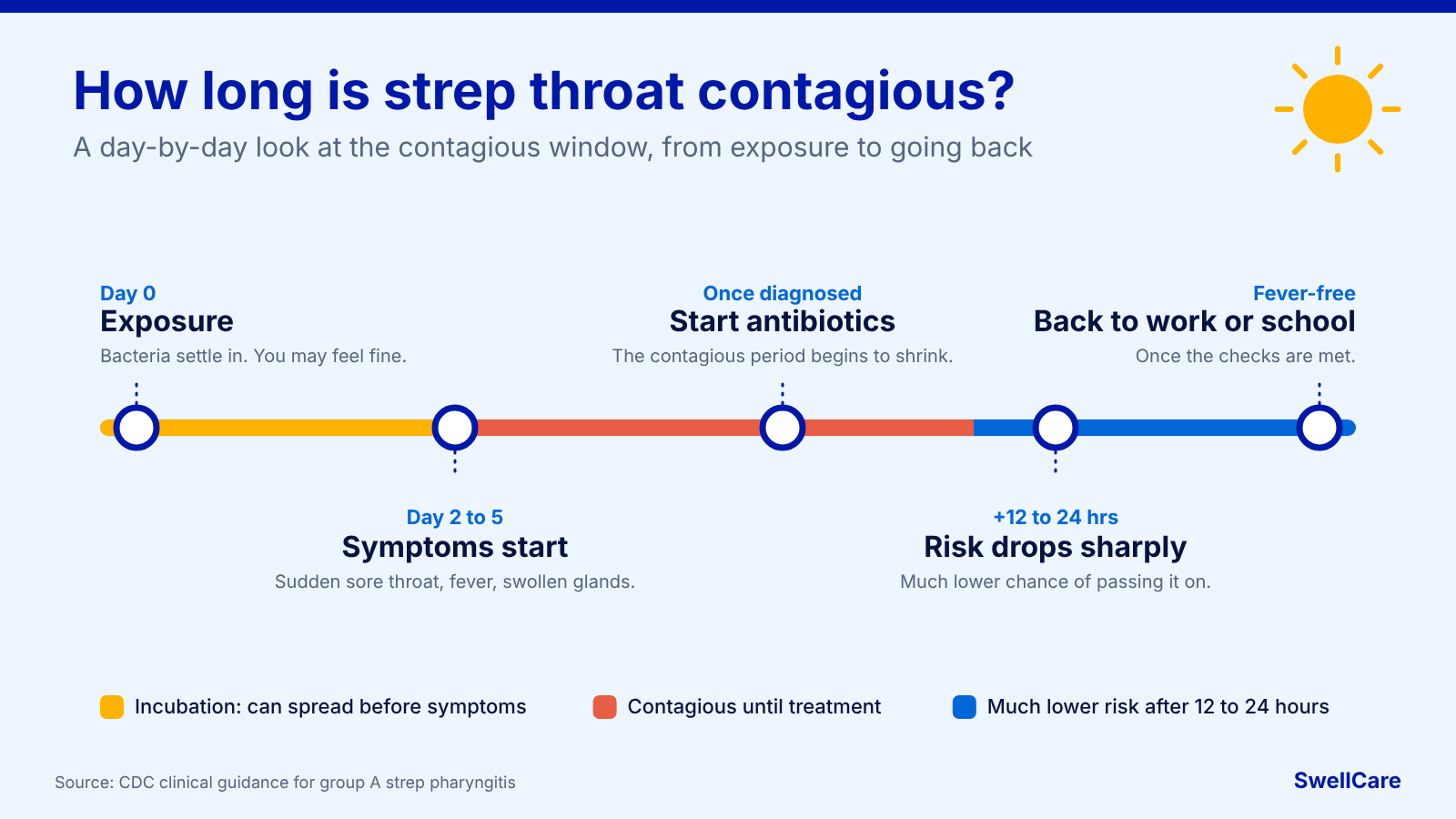
There’s a bonus. After at least 12 hours of antibiotics, you’re much less contagious, and the CDC suggests staying home until your temperature is normal and you’ve had that time on treatment.
Treatment for a viral sore throat is simpler, because viral sore throats don’t respond to antibiotics, so skip them. Comfort treatment does the work:
- Drink plenty of fluids, and warm tea with honey helps (never honey for babies under one).
- Take ibuprofen or acetaminophen for pain and a high temperature.
- Run a humidifier at night.
- Try throat lozenges if you’re old enough to use them safely; they’re a choking risk for small children.
Strep throat vs sore throat treatment differs on one point only: antibiotics. Pain relief, fluids and rest help both, and a short symptoms diary helps your provider decide.
When to get care for a sore throat
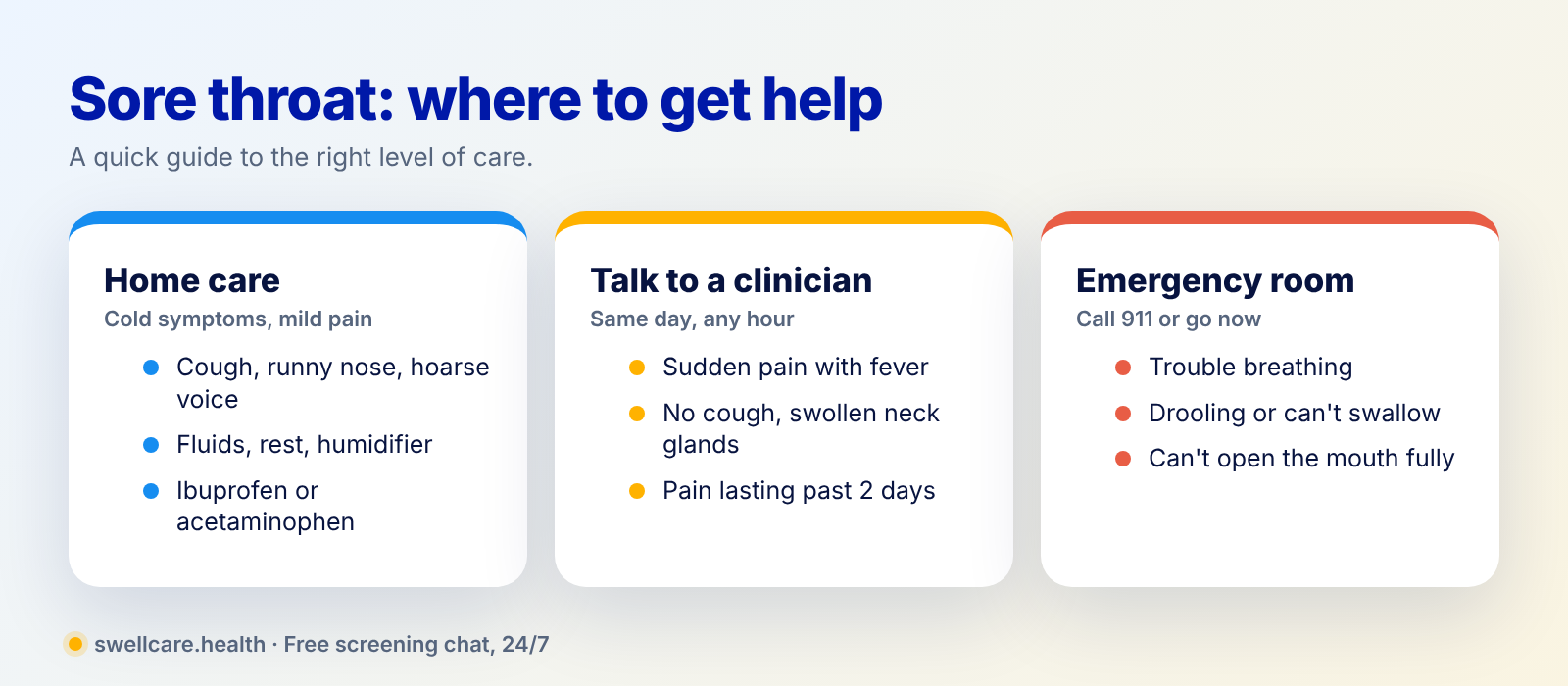
Don’t wait out a sore throat that doesn’t act like a cold. Get help if you have a high temperature, a sore throat lasting longer than a few days, or pain that keeps getting worse. Call a healthcare provider the same day if swallowing is hard, the neck is swollen, or a rash appears. And if you’re drooling, can’t open your mouth fully, or struggle to breathe, go to the ER.
For everything in between, SwellCare can help without a waiting room, and a healthcare provider can review your symptoms. Start a free screening chat at any hour, and a licensed clinician will tell you whether your symptoms look viral or bacterial, whether you need an in-person strep test, and what to do next. A completed consultation is $45. Antibiotics aren’t guaranteed, and the clinician may send you to urgent care or your primary care provider for a swab. Start a screening for your sore throat.
Questions people ask about strep throat and sore throat
Can you have strep throat with a cough or runny nose?
It’s unlikely. A stuffy nose, a hoarse voice or red eyes usually mean a virus. Some people with strep still cough, so if the throat pain is severe and your temperature is high, get tested anyway.
Can strep throat go away on its own?
Often the symptoms fade in a few days. Strep throat can still linger and, in some people, cause serious problems like rheumatic fever. That’s why a positive test deserves antibiotics.
How long is strep throat contagious?
Without treatment, you can spread strep throat for weeks. After about 12 hours of the right antibiotic you’re far less likely to pass it on, and your temperature should be back to normal before returning to school or work.
Is it strep throat or COVID-19?
They overlap. Both can cause a sore throat, but the virus more often brings congestion or loss of smell. Only testing separates them. Check cold, flu and COVID-19 symptoms with a clinician.
Can adults get strep throat?
Yes. Adults get it less often than children, but parents, teachers and anyone around kids are at higher risk, and strep symptoms in adults can be milder.
Trusted references
Public-health, research, and medical-society resources related to this guide.