It’s 2 a.m. You finally dozed off. Then comes the tickle at the back of your throat, a little clearing, and a dry hack that wakes you and everyone else in the house.
That’s the classic post-nasal drip cough. Here’s how to get rid of post nasal drip cough: thin the mucus, rinse it out of your nose, keep your head raised at night, and treat whatever is making the extra mucus in the first place. Most people feel a real difference within days once they do those four things together. A few need a clinician’s help, and we’ll show you who.
Why your post-nasal drip cough won’t quit
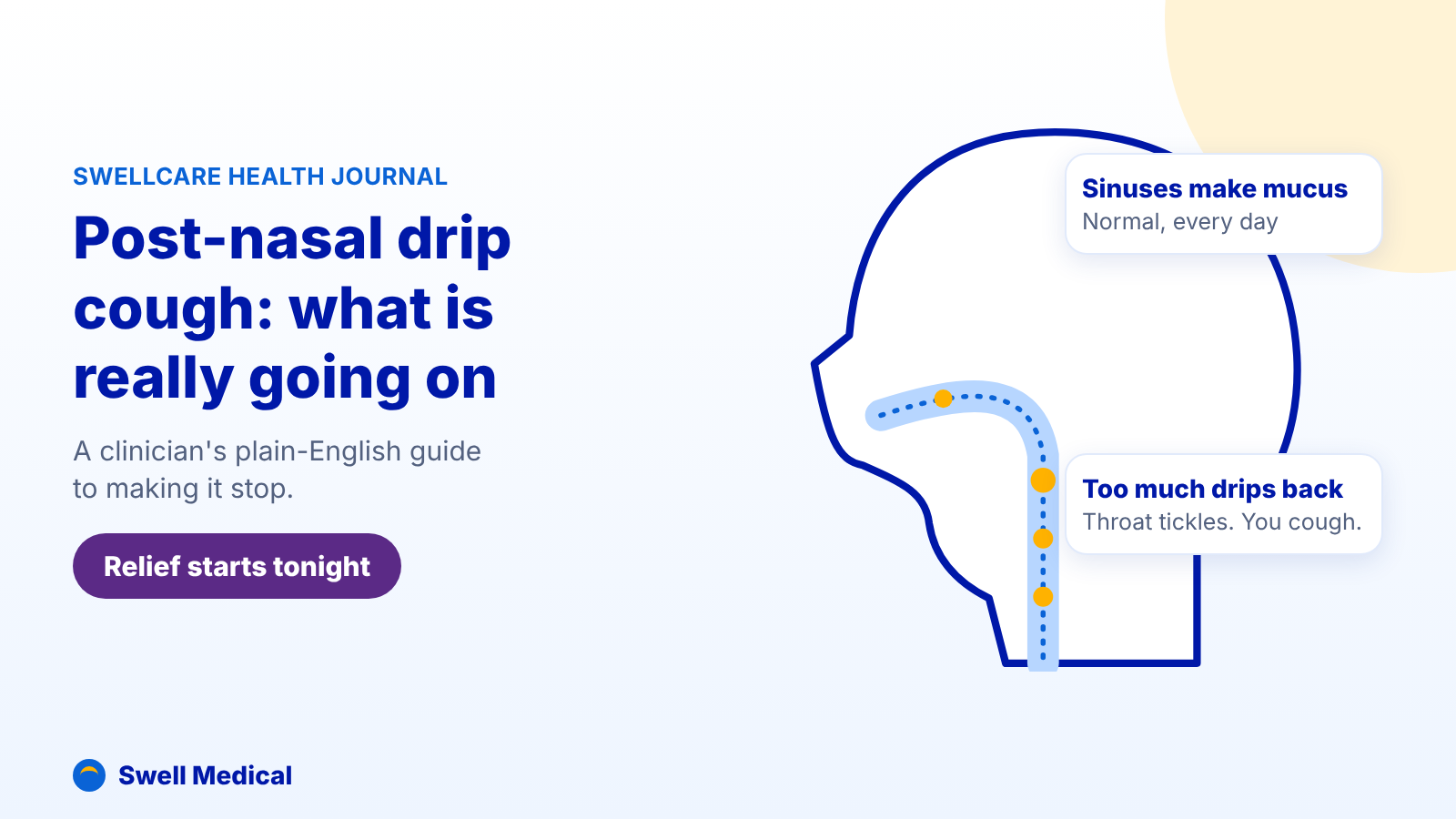
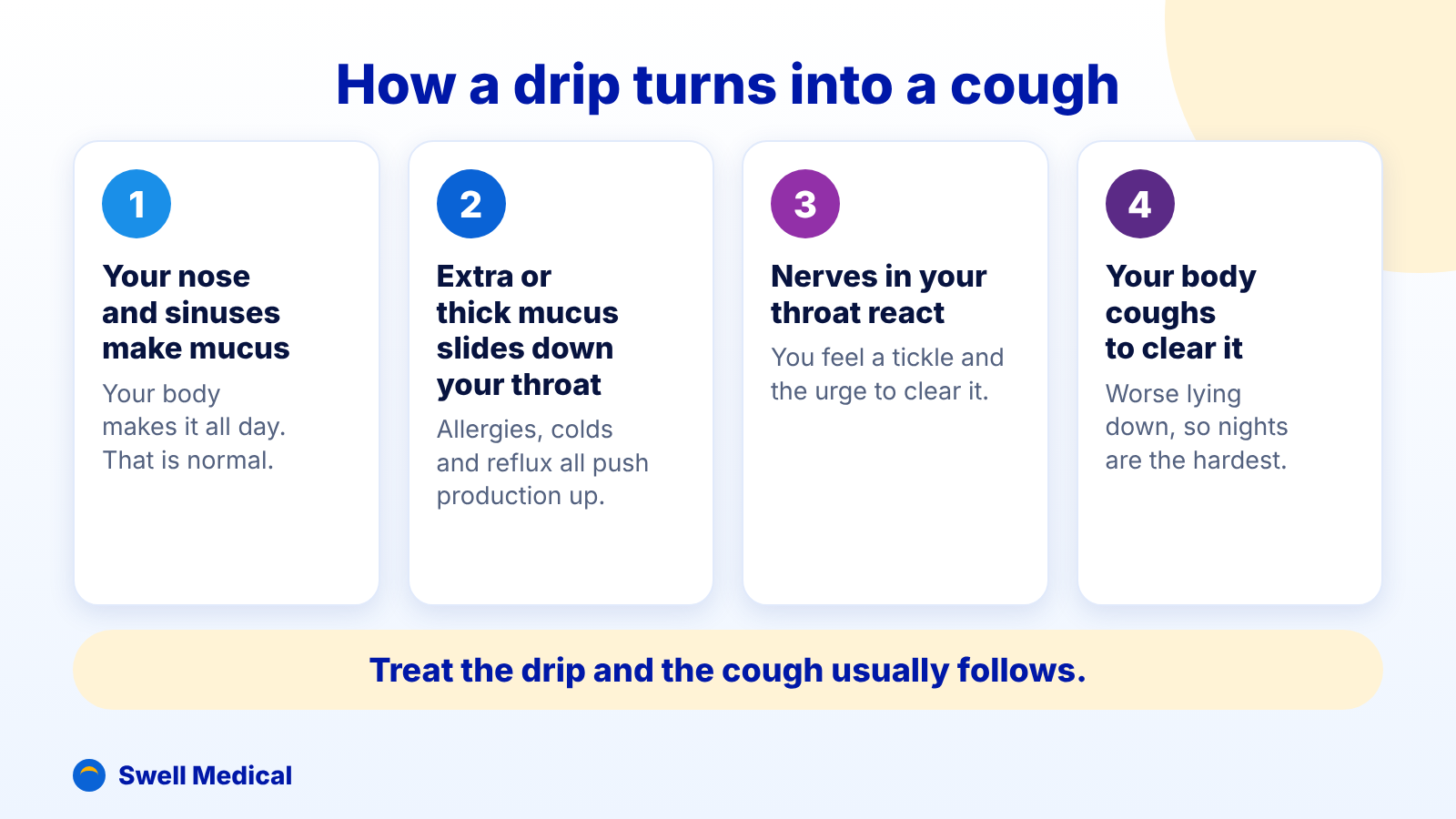
Your nose and sinuses make mucus all day long. That’s their job. It traps dust and germs and keeps the lining moist, and you swallow it without noticing.
Post-nasal drip, or postnasal drip as many clinics spell it, starts when there’s too much mucus, or it turns thick. The extra mucus slides down the back of your throat, and nerves there set off the cough reflex. Doctors call this upper airway cough syndrome, and it’s one of the common causes of a cough that hangs around, along with asthma and GERD, according to the American Academy of Family Physicians.
Here’s the catch. Coughing doesn’t fix the drip. A lozenge can soothe your throat for twenty minutes, but the real work happens upstream, in your nose and sinuses. That’s why it comes back every night.
What a post-nasal drip cough feels like
Most people describe the symptoms as a tickle, not a pain. You keep clearing your throat. It feels like something is trickling down the back of it. In the morning your throat is scratchy, maybe a bit hoarse, and the hack is worst when you lie down or first get up.
Other common symptoms of post-nasal drip include a runny nose, nasal congestion, bad breath and a sense of a lump in your throat. A sore throat that eases by lunchtime is a giveaway, and so are symptoms that come and go with the seasons. Expect a dry cough, or one with a wet, gurgly edge.
A chest cough from bronchitis or pneumonia feels different. Deeper. It can bring up thick mucus from your lungs, not your nose. If you’re wheezing or short of breath, skip this guide and see a clinician. Those symptoms point somewhere else.
Why it gets worse at night
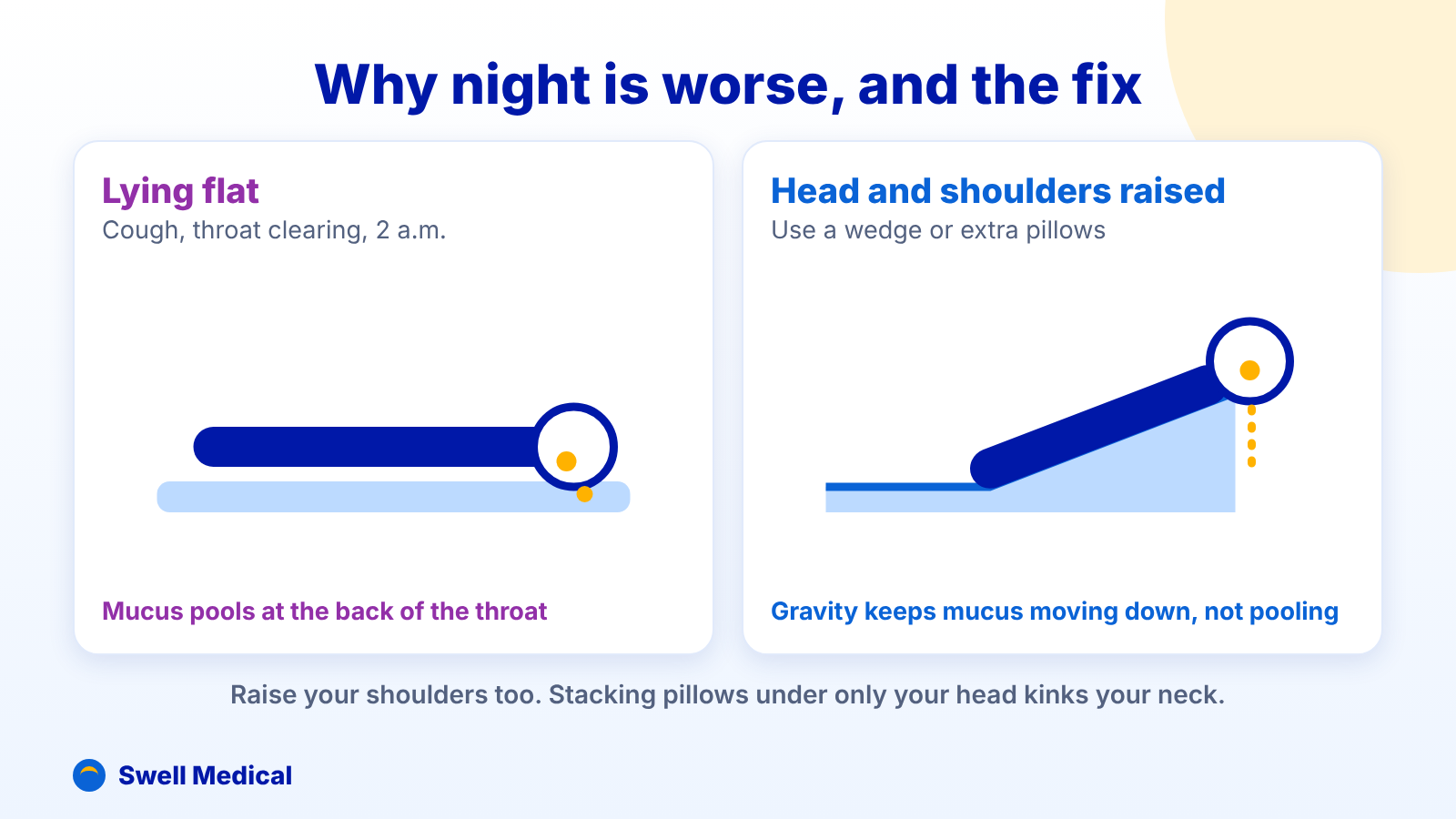
Lying flat to sleep takes gravity out of the equation. Poor sleep then makes everything worse, so fixing the night shift comes first. Mucus that drained away while you walked around now pools at the back of your throat, and your throat reacts. Dry bedroom air thickens it further and leaves you with a sore throat at dawn, and bedding full of dust or pet hair keeps allergies ticking over all night.
The fix isn’t complicated, and we’ve pictured it below.
What’s causing the drip in the first place
Treat the cause and the cough usually settles. Your symptoms hold the clues, so here are the usual suspects.
Allergies. Pollen, dust and pet dander inflame your nasal passages and turn up mucus production. Allergic rhinitis is a frequent culprit, and itchy eyes and sneezing are the tell.
A common cold or other infection. A viral illness leaves thick drainage for a week or two, and the hack can outlast the sniffles. Sore throat and congestion usually come along.
A sinus infection. Facial pressure plus thick green mucus suggests sinusitis, which is inflammation of the sinuses. Sinusitis symptoms like pain around the cheeks and forehead set it apart from a plain hay-fever drip.
Acid reflux (GERD). Stomach acid that creeps up irritates the throat and feels like a drip, even with little congestion.
Irritants. Smoke, strong perfume, spicy food and cold, dry air can all kick it off.
Knowing which one you have decides what works. Antihistamines help allergies, not heartburn. Heartburn medicine won’t touch a viral drip.
How to get rid of post-nasal drip cough at home
Start here. These home remedies cost little, and you can begin tonight. Home remedies work best stacked together. Work down the list and add steps only if you need them.
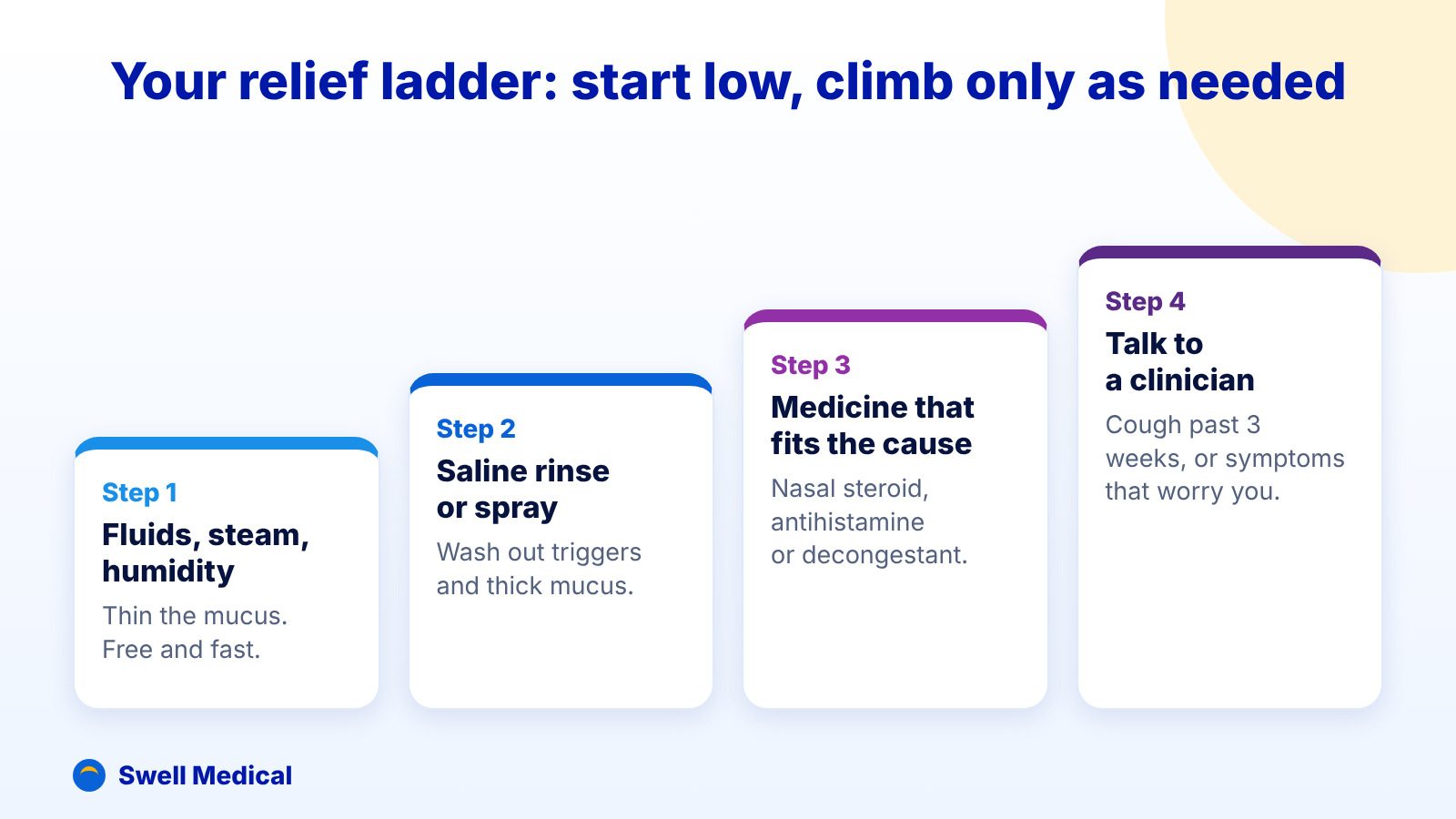
Thin the mucus: fluids, steam and humidity
Thin mucus moves. Thick mucus sticks and tickles. Drink plenty of water and warm fluids through the day, and sip tea or broth in the evening. A spoonful of honey in warm tea can coat the throat, and Cleveland Clinic notes it may calm a cough, particularly at night. Never give honey to a child under one year old.
Steam helps too, and it loosens congestion. Harvard Health suggests a humidifier or steam inhalation, such as a hot shower, to keep mucus loose. Run a cool-mist humidifier in the bedroom and clean it often so it doesn’t grow mold.
Rinse your nose the safe way
A saline rinse washes mucus, pollen and irritants out of your nasal passages before they reach your throat. Use a squeeze bottle, a neti pot or a saline spray, once or twice a day while you have symptoms. It clears your nasal passages of mucus, pollen and irritants. A nasal rinse takes about a minute and feels odd for the first few tries.
The water matters. The CDC says to use store-bought water labeled distilled or sterile, or tap water that has been boiled for one minute and cooled. Never use plain tap water, fresh from the faucet, in a neti pot. Follow your device’s cleaning instructions every time.
Sleep position and your bedroom
Raise your head and shoulders with a foam wedge or extra pillows. Good sleep is the goal. Stacking pillows under your head alone just bends your neck.
Wash sheets weekly on a hot cycle, keep pets off the bed if allergies are part of the picture, and keep the air from getting bone dry. A quick gargle with warm salt water before bed also soothes a sore throat, and you can gargle again in the morning. If you smoke, or live with someone who does, this is a good moment to change that, because smoke keeps the drip going.
Medicines that can help
When home care isn’t enough, medications can ease the symptoms and target the cause. Over-the-counter medications cover most cases. Match the medicine to the problem, and read labels, because many multi-symptom products pack several drugs together.
Nasal steroid sprays and saline sprays
A nasal steroid spray is a go-to for allergy-driven drip. GoodRx notes they begin working within hours, though relief can take a few days, and they work best when you use them daily, not just when you feel bad. It calms inflamed nasal passages over time, which cuts the drip at its source. Aim the spray toward the outer wall of each nostril, away from the middle of your nose.
Plain saline spray has no drug in it at all. It’s a gentle option if you need relief between rinses.
Antihistamines and decongestants
For many people, a first-generation antihistamine paired with a decongestant is the classic starting treatment for upper airway cough syndrome, as the AAFP guidance describes. Those older antihistamines often make you drowsy, so take them in the evening, and skip driving afterward.
Decongestants dry things out, but they have limits.
Pseudoephedrine can raise blood pressure, so talk with your primary care provider first if you have high blood pressure. Decongestant nasal sprays like oxymetazoline should only be used for a day or two, because longer use can backfire. An expectorant such as guaifenesin may help if the mucus feels thick and stuck. Check with a pharmacist if you take blood pressure medications or other prescription medications. Prescription medications such as ipratropium nasal spray, which reduces secretions, are an option if over-the-counter steps fail.
Antibiotics don’t help a drip caused by allergies or a virus. Don’t ask for them unless a clinician finds a bacterial infection.
Reflux medicine when GERD is the culprit
If you get heartburn, a sour taste, or the cough shows up after meals and when you lie down, this may be part of it. Acid reducers can help, but ask a clinician which one fits you, especially if you take other medications. Tell them about every medication on your list, and bring the medications you take to the visit.
How long a post-nasal drip cough lasts
It depends on the cause. A viral drip often fades in one to two weeks. Allergies can keep it going as long as you’re exposed.
Doctors group coughs by length: acute is under three weeks, subacute runs three to eight weeks, and chronic is longer than eight weeks, as the AAFP lays out. If you’ve tried a week or two of treatment with no improvement, GoodRx advises seeing a healthcare professional, since a stubborn drip cough can last weeks to months when the cause goes untreated.
When to see a doctor
Most drip coughs are annoying, not dangerous. But some signs deserve a real exam. The Mayo Clinic says adults should see a professional if symptoms last beyond 10 days, if there’s a high fever, or if yellow or green discharge comes with sinus pain or fever. Harvard Health adds blood in the mucus, wheezing, shortness of breath and foul-smelling drainage.
Sinusitis that lingers needs a clinician, since it may need more than home care. Get checked sooner if your cough passes the three-week mark, or if it keeps you from sleeping night after night.
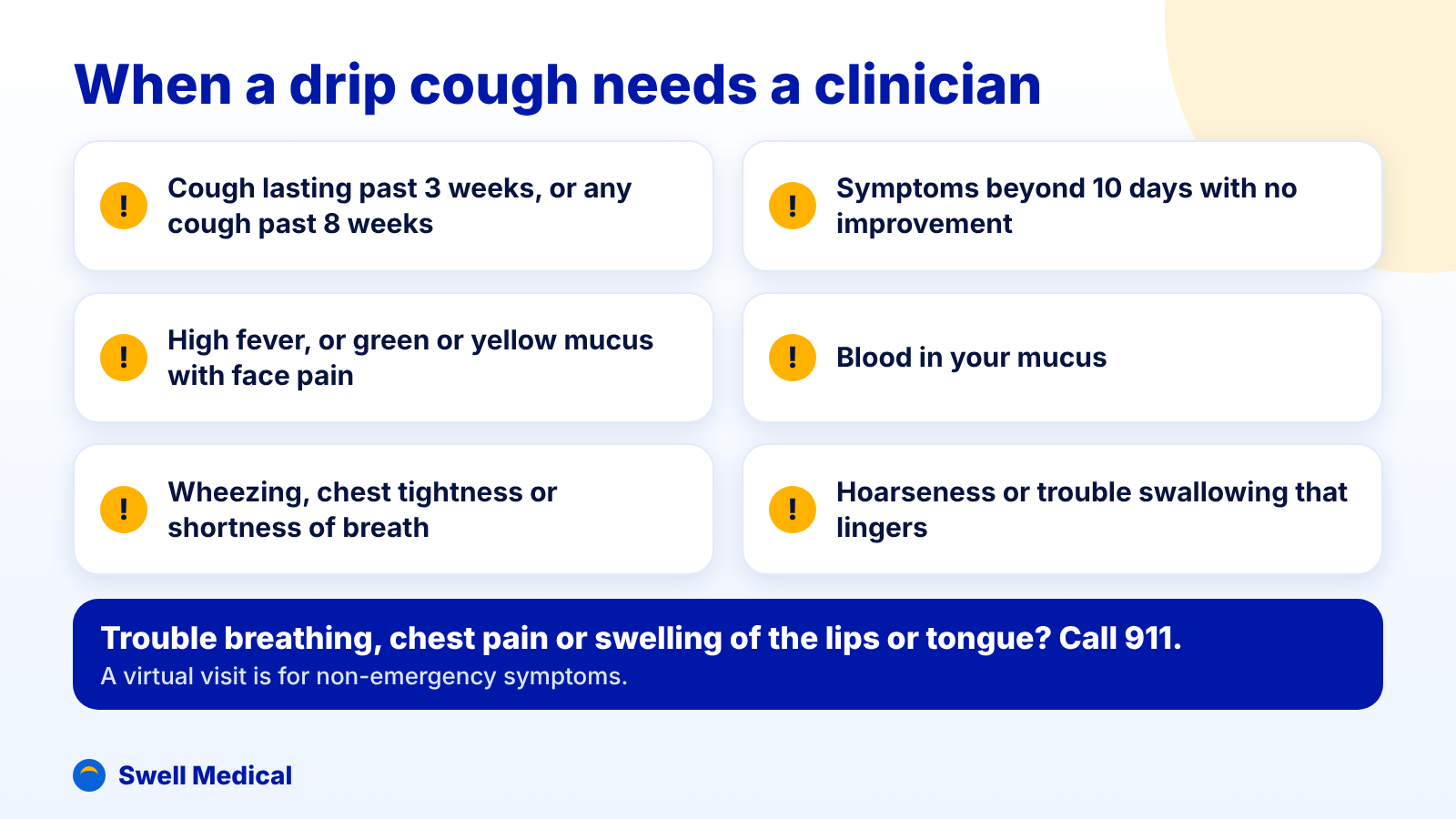
Call 911 for trouble breathing, chest pain or swelling of the lips or tongue.
Your plan for tonight
You don’t need to do everything. Do this:
- Start with a big glass of water, then have a warm drink with honey (adults and kids over one year).
- Do a nasal rinse, following the safety rules above.
- Take an allergy pill or use your nasal steroid spray as directed on the label.
- Prop your head and shoulders up to sleep, and turn on a clean humidifier.
- Repeat for three to five days. If your symptoms haven’t eased, get help.
If you’d rather talk it through, a SwellCare clinician can review your symptoms in a virtual urgent care visit, any hour, and tell you what can be handled online and what needs an in-person exam. See how it works before you start. Virtual care isn’t emergency care.
Questions people ask about post-nasal drip cough
How do you get rid of a post-nasal drip cough fast?
Thin the mucus with fluids and humidity, rinse your nose with a salt solution, and sleep with your head raised. If allergies are behind it, add a nasal steroid spray or antihistamine. Many people notice relief in a few days using these home remedies, though a full recovery can take longer. Night-time symptoms often ease first, and sleep improves with them.
Why does post-nasal drip cough get worse at night?
When you lie flat, mucus collects at the back of your throat instead of draining. Dry air and bedding allergens add to the irritation. Raising your head and shoulders, and running a humidifier, usually helps within a few nights.
How long does a post-nasal drip cough last?
A viral cough often fades within one to two weeks. Allergy-related coughs last as long as you’re exposed. If it goes past three weeks, or you’re not improving after a week or two of treatment, see a doctor.
Is post-nasal drip contagious?
The drip itself isn’t contagious, because it’s just mucus. But if a cold or virus is causing it, you can pass that illness on. Wash your hands and cover coughs while you recover.
Can post-nasal drip be a sign of a sinus infection?
Yes. A sinus infection can cause heavy drainage, but so can allergies and colds. Facial pain, fever, or thick green or yellow mucus that lingers beyond 10 days points toward sinusitis and deserves a doctor’s visit.
Trusted references
Public-health, research, and medical-society resources related to this guide.