Your nasal passages have been blocked for four days, your cheeks ache, and your partner wants to know if the couch is safer. Fair question. So, is a sinus infection contagious?
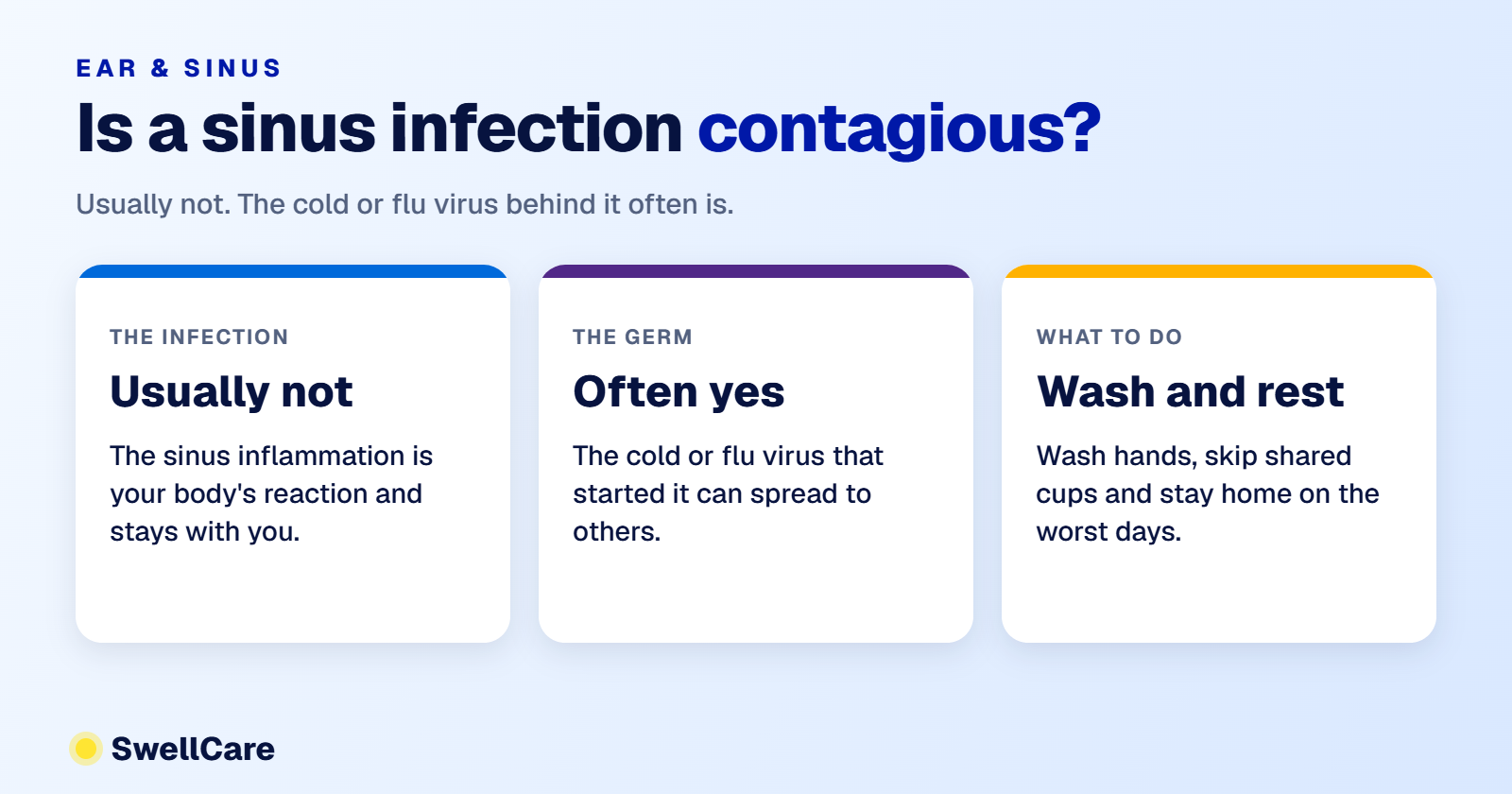
The sinus infection itself usually isn’t. The cold or flu virus that started it often is. The inflammation in your swollen, blocked sinuses is your body’s reaction, and that reaction stays with you. The germ is what travels. Here’s how it spreads, how long the contagious period lasts, and how to keep your household healthy.
So, is a sinus infection contagious?
Your sinuses are air-filled pockets behind your cheeks and forehead. Sinusitis means inflammation of their lining. Mucus can’t drain through your nasal passages, and sinus pressure builds behind your eyes. The Mayo Clinic notes that a viral infection, most often the common cold, is the usual trigger.
So if your sister catches a cold from you, she gets a cold. She might go on to develop a sinus infection of her own, especially if she has allergies. She might not. Contagious describes the virus, not the inflammation it leaves behind.
Viral vs. bacterial: which sinus infections can spread
Cause matters here, because it decides what you can pass on. A viral sinus infection comes from the same viruses behind colds and flu. A bacterial one comes from bacteria that settle in sinuses that are already blocked.
| Viral sinus infection | Bacterial sinus infection | |
|---|---|---|
| What’s going on | Inflammation triggered by a virus | Inflammation with bacteria trapped in the sinuses |
| How common | Most cases | Less common |
| Can it spread? | The virus can, through close contact | Not usually passed on directly |
| Typical pattern | Improves in 7 to 10 days | Lasts past 10 days, or improves and then worsens |
| Antibiotics | Don’t help | A clinician decides |
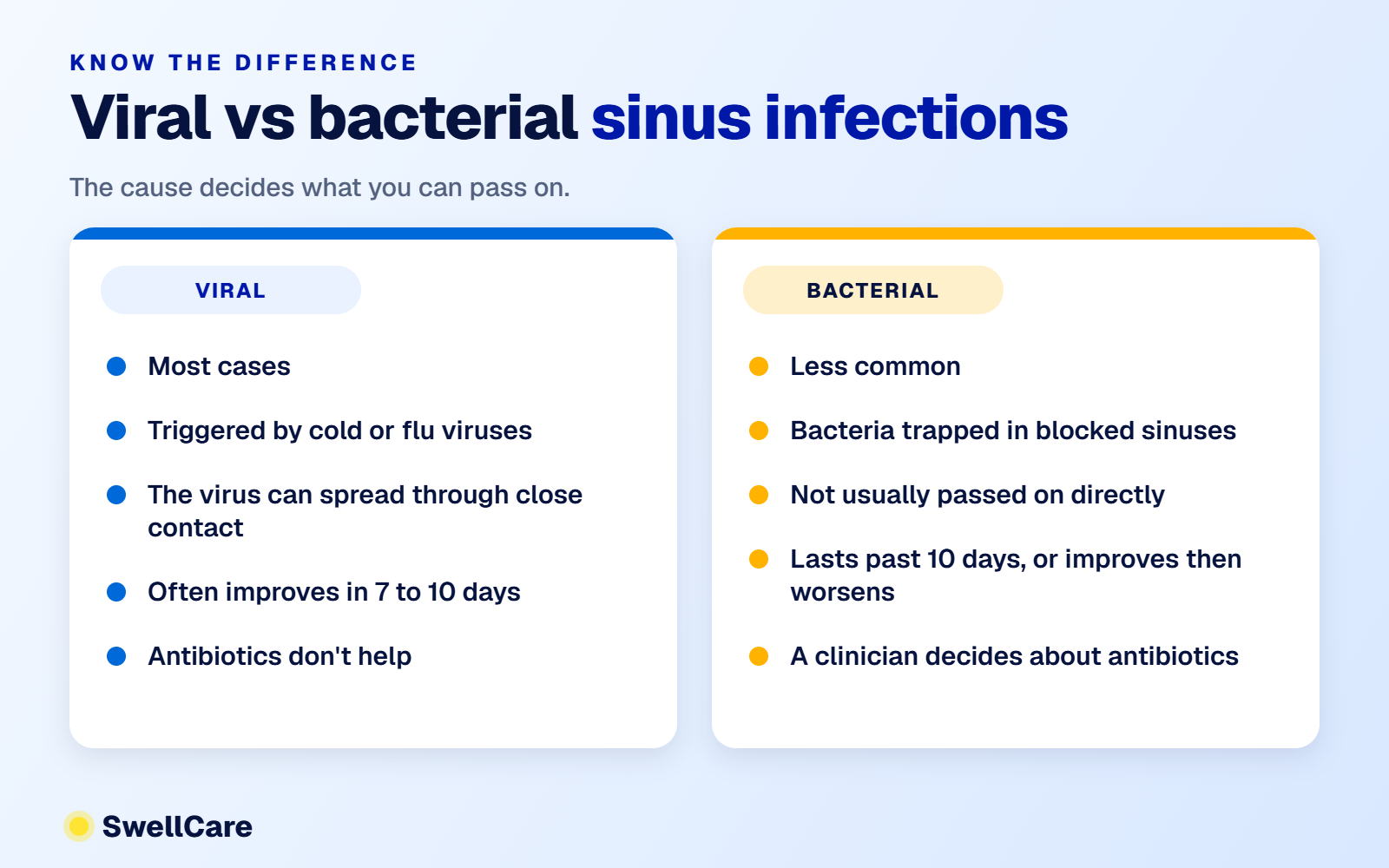
The tricky part is that viral and bacterial infections look identical early on. According to American Family Physician, you can’t tell them apart for the first three or four days. Doctors watch for “double sickening” with a bacterial infection, where you start to feel better and then get worse around days 5 to 10. Colored mucus on its own isn’t proof of bacteria.
How sinus infections spread
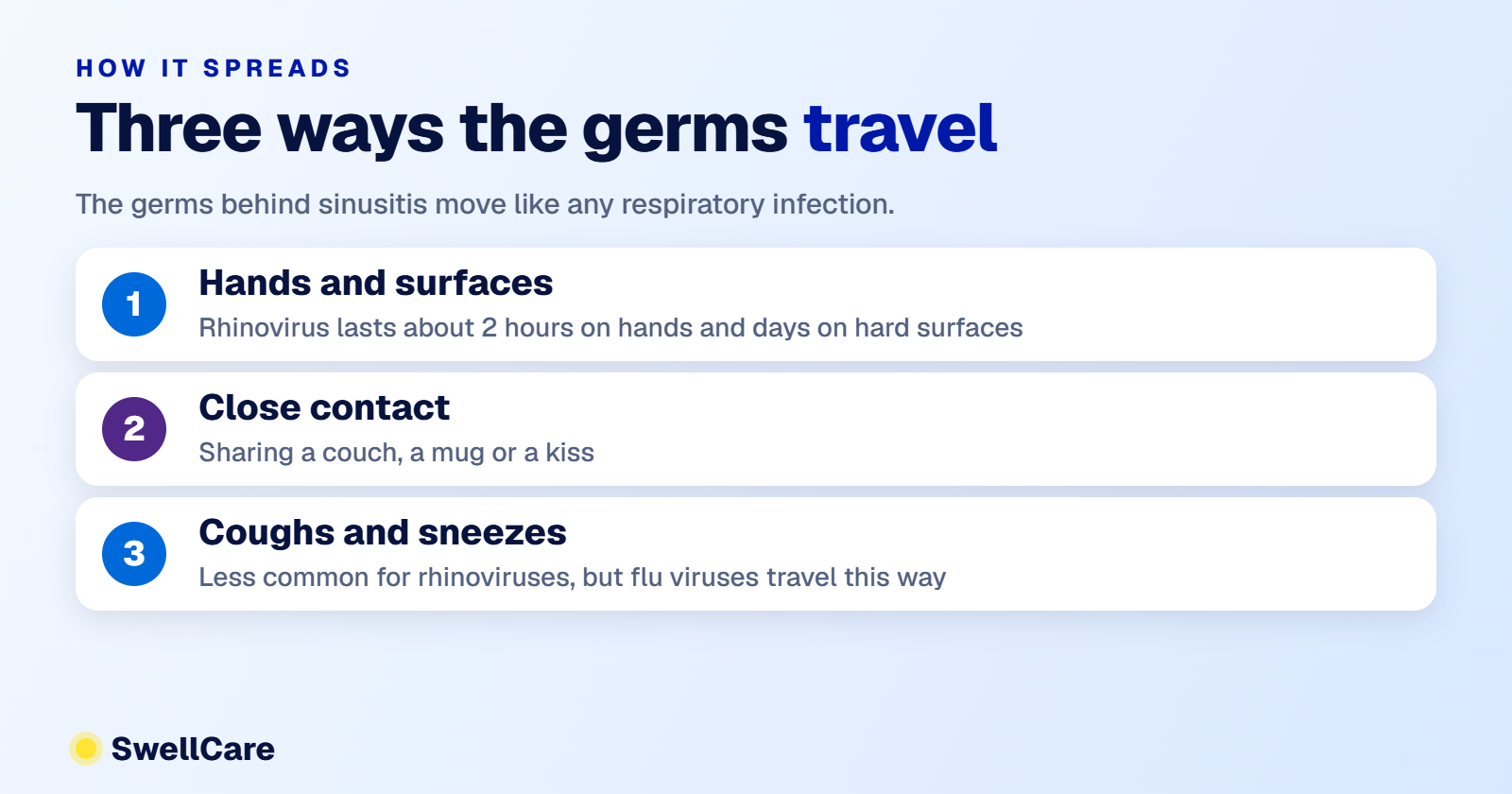
The germs behind sinusitis move the way any respiratory infection does. You touch a doorknob, then touch your eyes or nose. Rhinoviruses can survive about two hours on your hands and several days on hard surfaces, says UPMC.
Close contact matters too: sharing a couch or a coffee mug. Respiratory droplets from a cough or sneeze are a less common route for rhinoviruses, but flu viruses do travel that way.
How long are you contagious with a sinus infection?
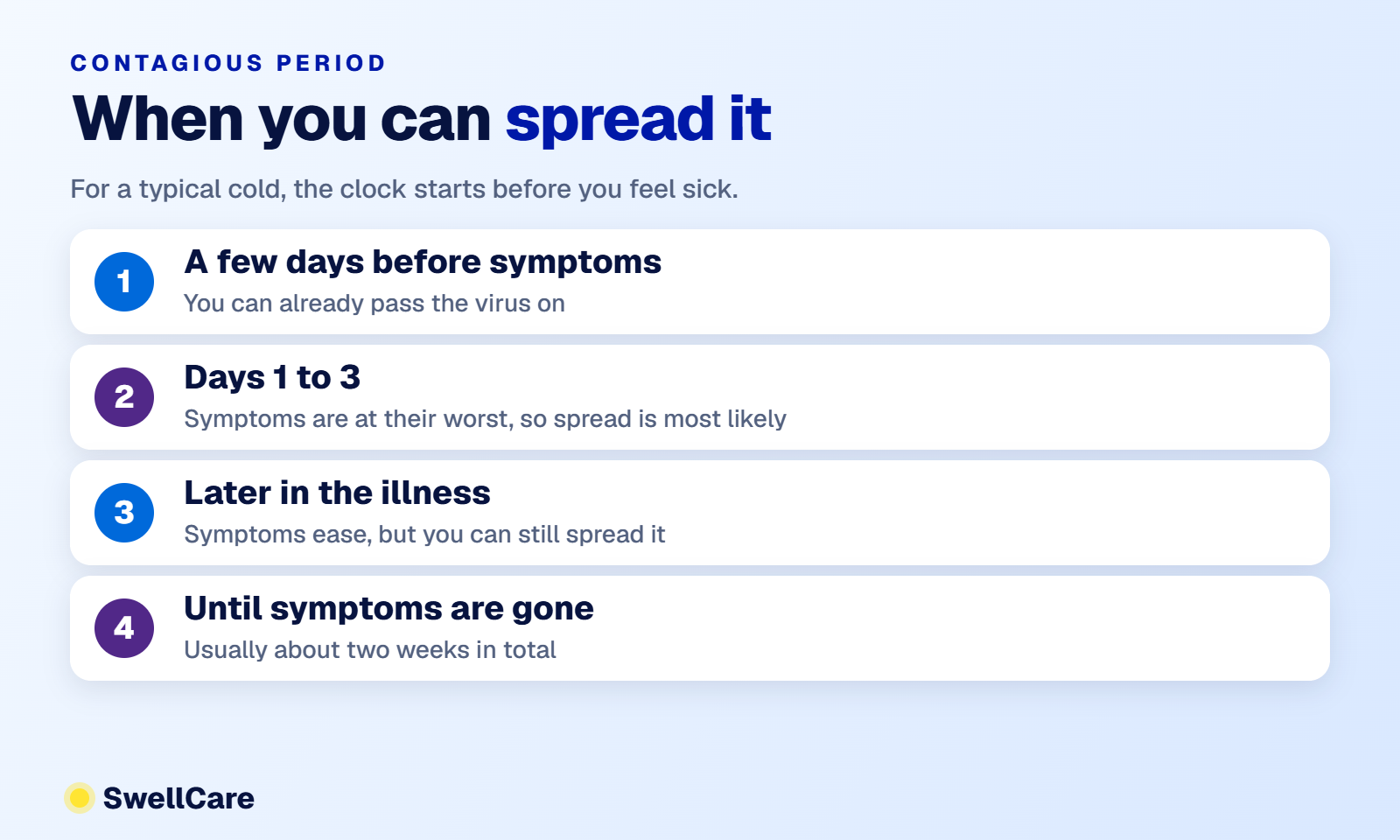
There’s no single number, because it depends on the virus behind it. With a typical cold, you can pass it on from a few days before symptoms start until they’re gone, which is about two weeks for most people, according to UPMC. You’re most likely to spread it during the first two or three days, when symptoms are at their worst.
That’s your contagious period in a nutshell. Children, older adults and smokers may have more severe or longer-lasting symptoms, and so may anyone whose immune system is weakened. The same goes whether the trigger was a cold or the flu.
A purely bacterial infection doesn’t follow the viral clock, since it isn’t usually passed on directly. If you’re not sure which one you have, treat yourself as contagious until you feel clearly better.
Cold, allergies or sinus infection? How to tell
A cold brings sneezing and a runny nose, maybe a sore throat, and it fades within a week or so. Allergies cause itchy eyes and nasal irritation without a fever. They aren’t contagious at all, though the Mayo Clinic lists them as a risk factor for sinusitis.
A sinus infection is the one with sinus pressure that gets worse when you bend over, thick yellow or green nasal mucus, postnasal drip, a headache and congestion that hangs on past a week.
How to avoid spreading it at home and work
You don’t need to quarantine yourself in the garage. A few habits do most of the work:
- Wash your hands with soap for 20 seconds. Hand washing with soap and water is best, but a sanitizer with at least 60% alcohol works when you’re away from a sink.
- Cough or sneeze into a tissue or your elbow, then toss the tissue.
- Skip shared cups or towels.
- Wipe doorknobs and remotes while you’re sick.
- Stay home on the worst days if you can.
Good hygiene won’t make you invisible to germs, but it cuts the odds a lot. The same upper respiratory infection that gave you a sinus infection can hit your coworkers.
What treatment helps while you wait it out
Most cases of acute sinusitis clear up on their own, so home treatment is usually enough. A saline rinse can ease nasal congestion, but use distilled, boiled or filtered water, never straight from the tap. A saline spray is gentler if you dislike rinsing. Over-the-counter pain relievers help with a headache or fever.
Over-the-counter decongestants can take the edge off, though they’re not proven for sinus infections and anyone with high blood pressure should check with a doctor before using decongestants. Don’t use decongestant nasal sprays for more than a few days, or the congestion can come back harder. Antibiotics are a different story, since they do nothing against a viral infection. The CDC says many sinus infections don’t need them, and that waiting two or three days before deciding is a common approach. Treatment depends on the cause, which is why a clinician’s opinion helps.
When to see a doctor
Most people don’t need an appointment. Reach out if:
- Symptoms last more than 10 days without improving
- You feel better, then worse
- A fever lasts longer than three or four days
- You get sinus infections again and again
- Symptoms last past 12 weeks, which is chronic sinusitis rather than acute sinusitis
Go to an emergency room for swelling or redness around the eye, double vision, confusion, a stiff neck or a high fever. Those are rare signs that an infection has spread.
Get care for sinus symptoms from home with SwellCare
Not sure whether it’s a cold, allergies or something that needs treatment? SwellCare offers clinician-led, non-emergency online urgent care around the clock, so you can talk with a clinician from your couch and keep your germs out of a waiting room. Prescriptions are never guaranteed, since many sinus infections don’t need antibiotics. See the conditions we treat or learn how it works. For emergencies, call 911.
Questions people ask about sinus infections
Can you catch a sinus infection from someone?
Not the infection itself, usually. You can catch the cold or flu virus that causes it, and that may lead to sinusitis if your sinuses get blocked. You’re more likely to if you have allergies or your immune system is run down.
Are bacterial sinus infections contagious?
Generally not. The bacteria involved tend to take hold after a virus has already swollen your nasal lining, so they aren’t usually passed on the way a virus is. The illness that came first can be.
Is a sinus infection contagious through kissing?
Respiratory germs can pass through close contact, including kissing. If you’re congested and feverish, a cheek kiss is safer until your symptoms settle.
How long does a sinus infection last?
Most viral cases improve within 7 to 10 days. About 70 percent of people get better within two weeks without antibiotics, per American Family Physician. Past 12 weeks it’s called chronic sinusitis. See a doctor if you’re past 10 days or getting worse.
Is postnasal drip contagious?
That drip is just mucus running down the back of your throat, so it isn’t contagious. The infection behind it might be. Allergies aren’t.
Can I go to work with a sinus infection?
If you’re running a temperature or have a pounding headache, stay home for the first few days. If it’s mostly mild sinus pressure and you feel fine, work from home or wear a mask and wash your hands often.
Trusted references
Public-health, research, and medical-society resources related to this guide.