You stand up, and the room tilts. Or you roll over in bed and everything spins for ten seconds. It’s scary, and it’s easy to blame stress or a bad night’s sleep.
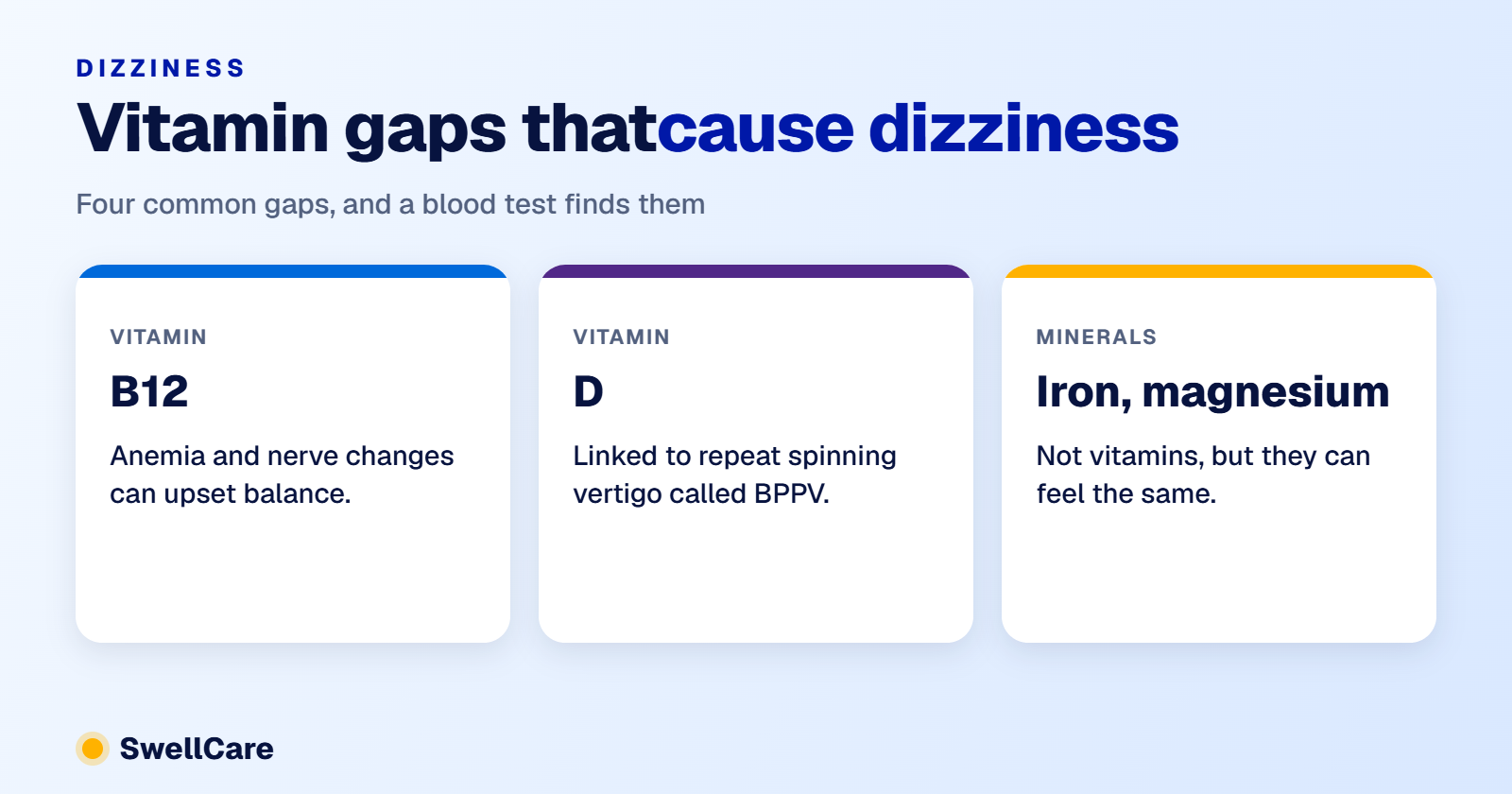
So what vitamin deficiency can cause dizziness? Vitamin B12 deficiency is the best-known culprit. Low vitamin D has a real link to a type of spinning vertigo called BPPV. Iron and magnesium gaps can also leave you lightheaded or unsteady, and strictly speaking those two are minerals, not vitamins. A simple blood test can tell you which one, if any, is the problem.
Here’s the useful part. These gaps are common, they’re easy to check, and most of them respond well to treatment once someone finds them. Let’s sort out which one fits you.
What vitamin deficiency can cause dizziness? The short answer
Dizziness is a symptom, not a diagnosis. Dozens of things can cause it, and a nutrient shortfall is only one. But when a shortfall is the cause, it usually comes from a short list.
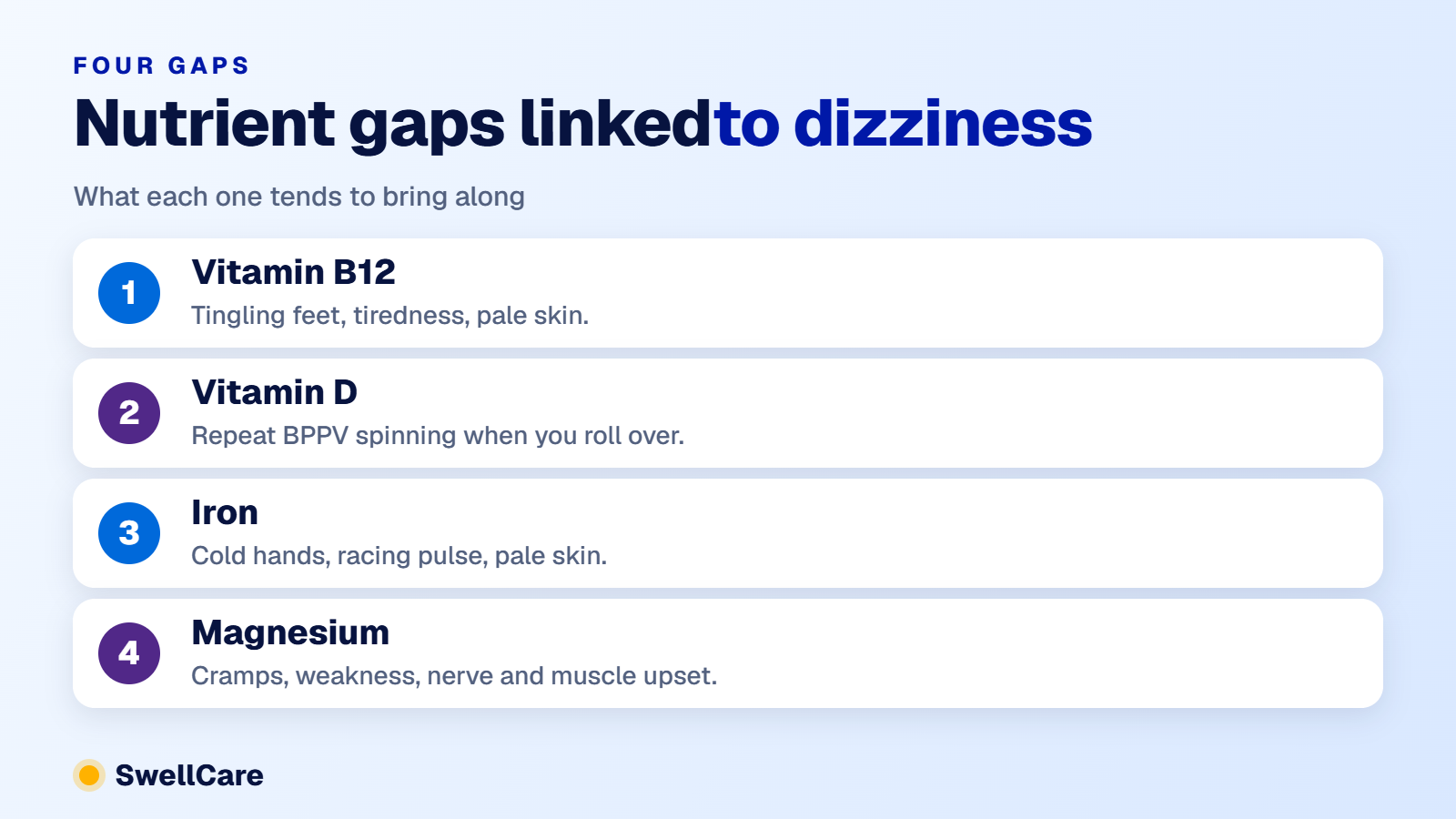
Four candidates come up again and again. Vitamin B12 can cause anemia and nerve changes that upset your balance, so watch for tingling feet and a tired, pale look. Vitamin D links to repeat BPPV vertigo, the kind where the world spins when you roll over or look up. Iron leaves fewer red blood cells to carry oxygen, which often brings cold hands and a racing pulse. Low magnesium disturbs nerves and muscles and tends to bring cramps with it.
One quick distinction helps your doctor a lot. *Dizziness* usually means lightheaded or woozy. *Vertigo* means a spinning sensation, as if you or the room is moving. Nutrient gaps can show up as either, so it’s worth noticing which one you feel.
Vitamin B12 deficiency and dizziness
Start here, because it’s the one most people have heard about.
Your body needs vitamin B12 to make healthy red blood cells and to keep nerves working. Let a vitamin B12 deficiency run long enough and you can develop anemia, a drop in the red blood cells that carry oxygen. Less oxygen means fatigue and weakness, plus a woozy, lightheaded feeling.
The nerve side matters just as much for balance. The NIH Office of Dietary Supplements lists numbness or tingling in the hands and feet and problems with balance among the signs of vitamin B12 deficiency. If your feet don’t tell your brain exactly where they are, you feel unsteady.
Here’s a point most articles skip. NIH doesn’t list “dizziness” by name on its B12 page. Dizziness shows up through the anemia and the nerve changes. That’s why vitamin B12 deficiency often looks vague at first. You feel a bit tired, a bit foggy, a bit off balance.
Who runs low on B12
Your body stores 1,000 to 2,000 times as much B12 as you typically eat in a day, according to NIH. So a vitamin B12 deficiency can take years to show up. By the time you feel it, the shortfall may have been building quietly for a long time.
Certain groups get there faster:
- Older adults. NIH puts vitamin B12 deficiency at 3% to 43% in this group, partly because stomach acid drops with age.
- People with pernicious anemia, an autoimmune condition that blocks B12 absorption.
- People who take metformin or acid-reducing drugs such as omeprazole.
- Vegetarians and vegans, since B12 comes naturally only from animal foods.
- Anyone who has had weight-loss or stomach surgery, or who lives with celiac disease or Crohn’s disease.
Other vitamin B12 deficiency symptoms that tag along
Dizziness rarely travels alone, and the other symptoms are often the real clue. With B12 deficiency you may also notice pale skin, heart palpitations, a sore tongue, poor memory and low mood. Numbness is common too. NIH also warns that nerve damage can happen even without anemia, so a normal blood count doesn’t rule B12 out. Early treatment of B12 deficiency matters, and your doctor can confirm it with a simple blood test.
Low vitamin D, vertigo and BPPV
Vitamin D is best known for bone health. Low vitamin D levels cause soft, painful bones (osteomalacia) and, over the years, raise the risk of osteoporosis. That’s why a bone density scan often comes up when levels stay low. Dizziness isn’t on that classic list.
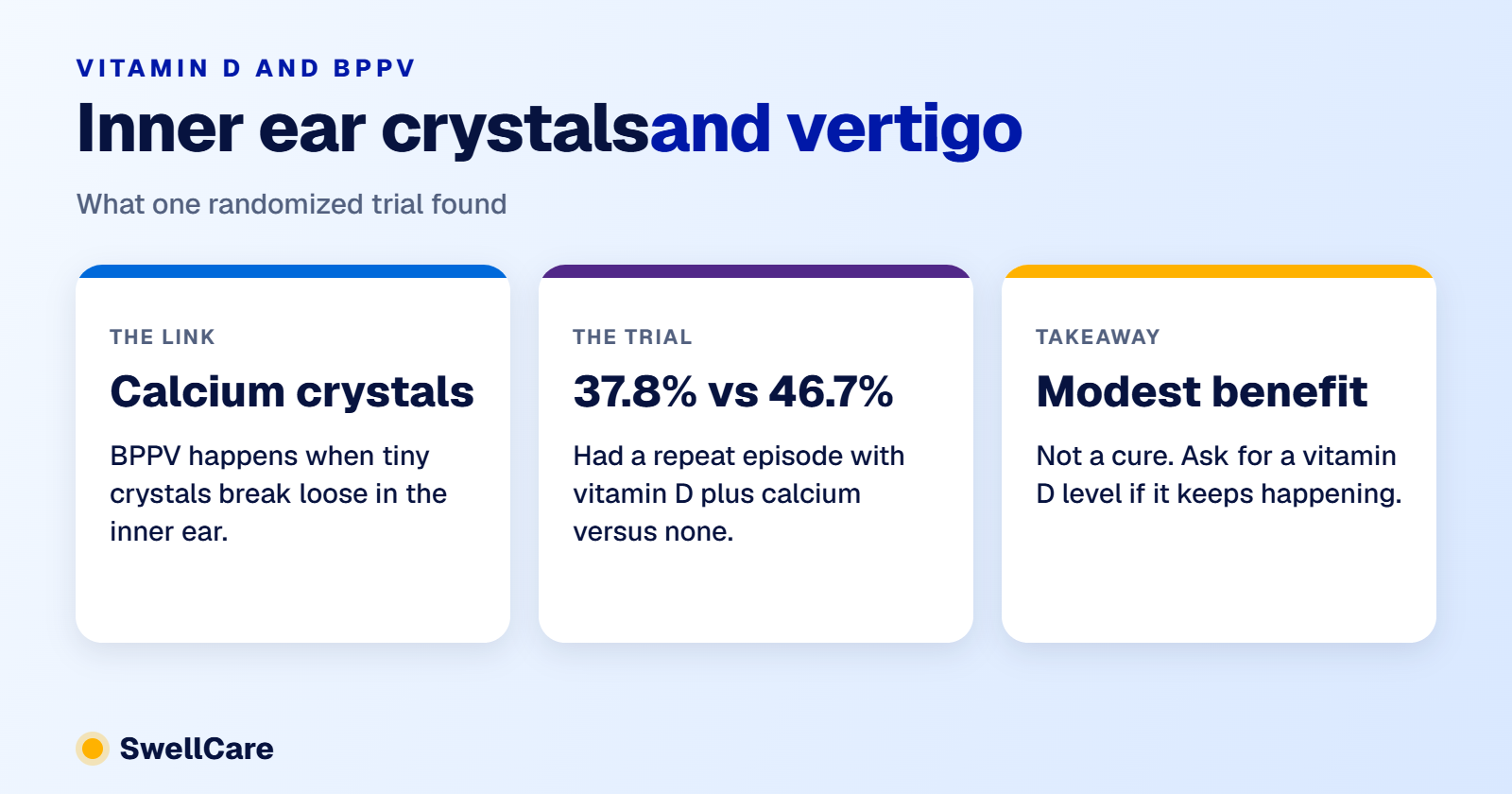
The vertigo link comes from a different direction. BPPV, short for benign paroxysmal positional vertigo, happens when tiny calcium crystals break loose inside the inner ear. You get a brief, strong spin when you tilt your head, roll over or look up. Because those crystals are made of calcium, researchers wondered whether vitamin D and calcium handling plays a part.
A randomized trial in the journal *Neurology* tested that idea. People with frequent BPPV took 400 IU of vitamin D plus 500 mg of calcium carbonate, twice a day for a year. According to a summary of the results, 37.8% of them had at least one recurrence, against 46.7% in the comparison group. The benefit looked larger for people whose vitamin D levels started below 20 ng/mL.
Read that fairly. It’s a modest benefit, not a cure. People with migraine didn’t seem to benefit, and two participants stopped the calcium because of high blood calcium. Still, if you keep getting BPPV episodes, asking for a vitamin D level is a reasonable move.
NIH says a vitamin D blood level of 20 ng/mL or above is adequate for most people, and below 12 ng/mL is too low. Researchers have also studied whether low vitamin D is tied to fainting spells, and that evidence is still being worked out.
Some people have vitamin D levels that run low more often: older adults, people with dark skin, people who rarely get sun on their skin, those with obesity or gastric bypass, and people whose gut can’t absorb fat well. Vitamin D deficiency is also one reason bone health comes up so often with older patients who worry about falls.
Iron, magnesium and other gaps that feel like a vitamin problem
You asked about vitamins, but two minerals deserve a spot here because they cause the same complaint.
Iron. Mayo Clinic lists headache, dizziness or lightheadedness among the symptoms of iron deficiency anemia, along with pale skin, cold hands and feet, and a fast heartbeat. Common causes include heavy periods and slow internal bleeding. Poor absorption and pregnancy also play a part. Treating iron deficiency starts with finding the cause, and a clinician needs to do that. Don’t start iron on a hunch. Iron deficiency and B12 deficiency can look alike, so the test matters. Excess iron can build up and harm the liver, so get tested first.
Magnesium. NIH lists appetite loss, nausea, fatigue and weakness as common signs of a shortfall. A severe shortage can bring numbness, tingling, cramps and abnormal heart rhythm. Dizziness isn’t named on the page. Even so, a heart-rhythm change or a nerve disturbance can leave you feeling unsteady. Low magnesium is more likely with Crohn’s disease, celiac disease, type 2 diabetes, long-term heavy drinking and older age.
Folate and other B vitamins can also matter, mostly through anemia. A clinician can check these when your story points that way.
Is it a deficiency or something else?
Be a little suspicious of any article that tells you dizziness is “probably a vitamin problem.” Often it isn’t. A healthcare provider can sort that out.
Johns Hopkins sorts dizziness by pattern. Brief spells triggered by position, lasting under a minute with no vomiting or neurological symptoms, may be BPPV. Episodes lasting minutes to hours may point to vestibular migraine or Ménière’s disease. And any dizziness with an unknown cause is worth a call to your healthcare provider, who can decide whether it needs same-day care.
Other everyday causes include dehydration, medication side effects, blood pressure swings, ear infections and anxiety. A deficiency may be one piece of a bigger picture, which is why testing beats guessing.
A few clues point toward nutrition:
- You also have tingling, numbness or a sore tongue.
- You look paler than usual or feel wiped out all day.
- You follow a vegan diet, take metformin or an acid reducer, or have a gut condition. Your diet and medicines both matter.
- Your dizziness arrives slowly over weeks or months instead of all at once.
How to find out: the blood tests to ask about
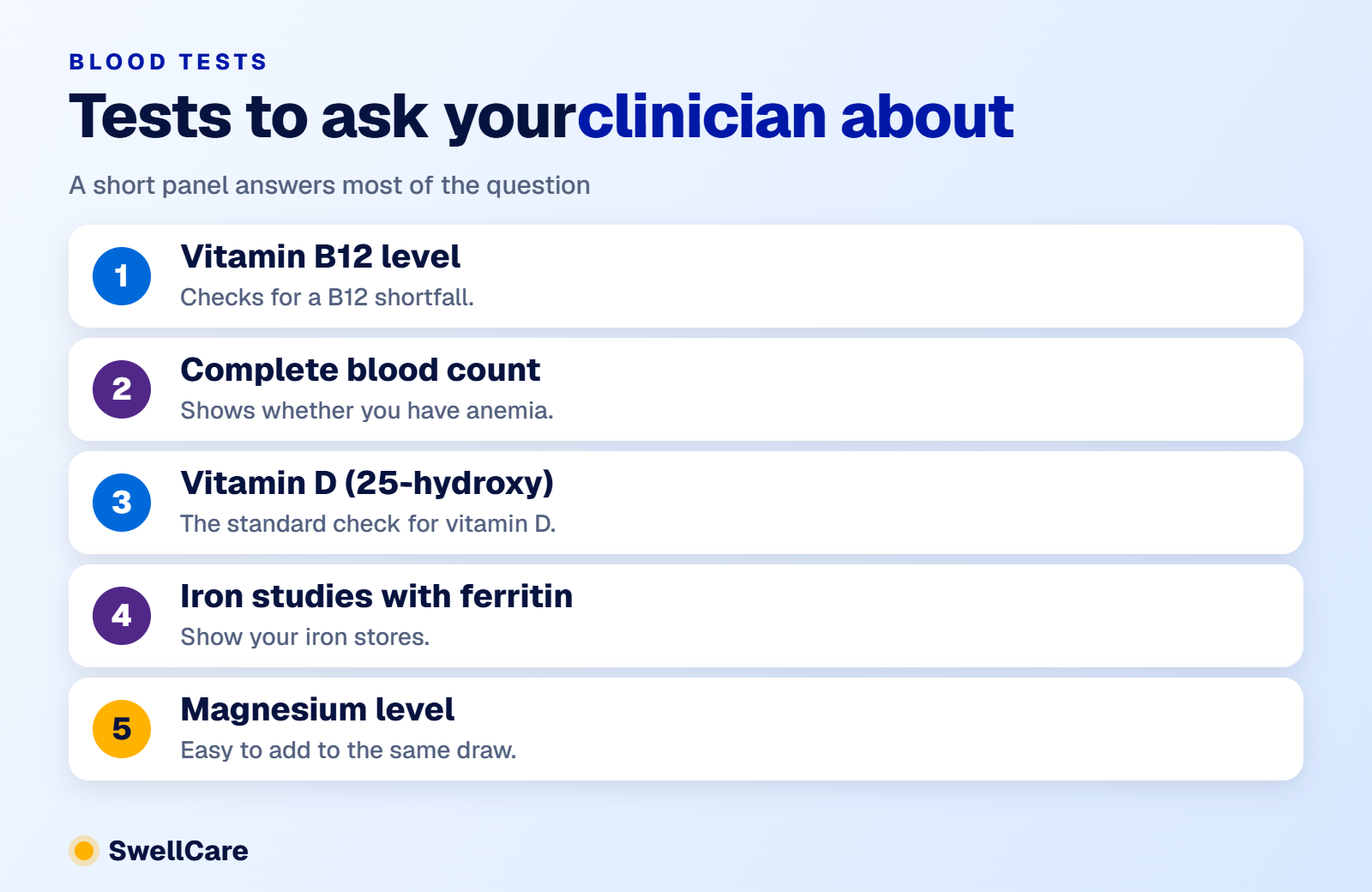
Don’t self-diagnose, and don’t buy a shelf of supplements to cover every possibility. A short panel answers most of the question, including whether your levels are low.
Ask your clinician about a vitamin B12 blood test and a complete blood count (CBC), which shows anemia. A vitamin D test (25-hydroxyvitamin D) is the standard check for D. Iron studies, including ferritin, show your iron stores, and a magnesium level is easy to add. If B12 looks borderline, your doctor may order extra markers or look for pernicious anemia.
Bring a short symptom diary. Note when the dizziness starts, how long it lasts, what sets it off and which other symptoms show up. Two weeks of notes can save an hour of guessing.
How to fix it
Treatment depends on what your lab results show, and it’s usually less dramatic than people fear.
Food first, with a catch
Diet helps, but it can’t always fix a true deficiency. B12 comes from fish, meat and poultry, from eggs and dairy, and from fortified cereals. Vitamin D comes from fatty fish like salmon, plus fortified milk and egg yolks. Magnesium hides in beans, nuts and seeds, and in whole grains and leafy greens.
The catch is absorption. If your stomach can’t absorb B12, a better diet alone won’t close the gap. That’s where supplements and shots come in.
Supplements and B12 shots
NIH puts the adult daily amount of B12 at 2.4 mcg, and says a prescription B12 shot is usually used to treat a confirmed vitamin B12 deficiency. Very high oral doses can also work for pernicious anemia. Vitamin D recommendations are 600 IU a day for most adults up to age 70 and 800 IU after that, with an upper limit of 4,000 IU from all sources.
Those numbers are general. Your dose depends on your lab results and your health history, so let a clinician set it. Calcium needs the same care, as the BPPV trial showed.
Give treatment time. Energy and color often improve before nerve symptoms do, and your clinician should recheck your B12 and vitamin D levels to confirm the fix is working. Falling levels mean the dose needs a second look.
When dizziness is an emergency
Most dizziness is harmless. Some isn’t, and no vitamin explanation should delay care.
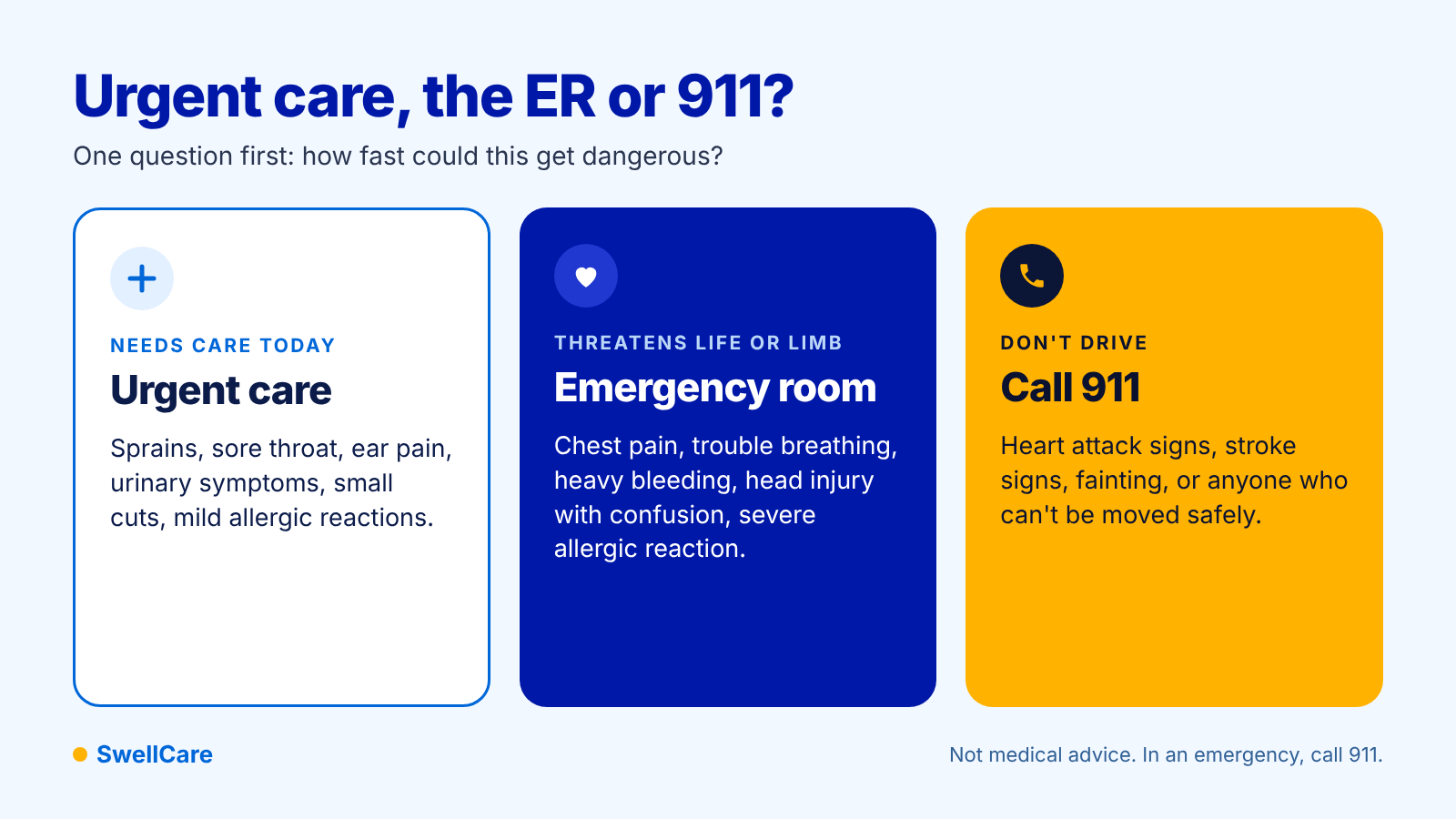
Johns Hopkins says to call 911 or go to the ER if dizziness comes with new confusion or trouble speaking, slurred speech, numbness or weakness of the face, arm or leg, trouble seeing, double vision, inability to stand even when holding on to something firm, sudden severe vomiting, or a sudden severe headache or neck pain. Those can signal a stroke.
Go to the emergency room too if the dizziness is new and severe and lasts for hours to days, especially with vomiting and trouble walking.
Get a clinician to look at it
Persistent dizziness deserves an actual answer, not another month of wondering. A clinician can go through your symptoms and risk factors and explain what the results mean. SwellCare’s online urgent care offers clinician-led, non-emergency care around the clock by video or chat, so you can start that conversation from home. A virtual visit can’t draw blood, so your clinician will point you to a lab when tests are needed, and prescriptions are never guaranteed. See how it works.
If your symptoms are severe or sudden, skip the screen and call 911.
Questions people ask about vitamin deficiency and dizziness
Can low vitamin D cause dizziness?
It can contribute in one specific way. Low vitamin D is linked to BPPV, the brief spinning vertigo triggered by head movement, and supplementing helped reduce repeat episodes in one trial. It isn’t a common direct cause of general lightheadedness. Check your level if you keep getting BPPV episodes.
What are the early signs of vitamin B12 deficiency?
Early signs of vitamin B12 deficiency are subtle. You may notice tiredness, weakness, pale skin and a vague unsteadiness. Tingling in the hands and feet, a sore tongue, palpitations and poor memory can follow. Because stores last for years, symptoms may creep in slowly, so lab work is the only reliable way to know.
Does being overweight cause dizziness?
Not directly in most cases. But NIH lists obesity as a risk factor for low vitamin D, and other conditions linked to weight, such as blood pressure changes, can also leave you lightheaded. A clinician can sort out which factors apply to you.
What is my body lacking if I have vertigo?
Sometimes vitamin D, sometimes B12, but often nothing at all. Most vertigo comes from the inner ear, as in BPPV, vestibular migraine or Ménière’s disease. Spinning that lasts or comes with other neurological symptoms needs medical evaluation.
How long does it take to feel better after fixing a deficiency?
It varies. Many people notice better energy first, while nerve-related balance problems can improve more slowly and sometimes incompletely. Your clinician will usually recheck your levels after a period of treatment to confirm the dose is working.
Trusted references
Public-health, research, and medical-society resources related to this guide.