You wake up at 3 a.m. scratching your arm. There are three itchy bumps in a row, and you have no idea where they came from.
So, what do bed bug bites look like? Usually small, red, raised bumps that itch, often in a line or a tight cluster on exposed skin while you slept. Some have a tiny dark dot in the middle. Some turn into welts. And some people get no mark at all, which is one of the odd things about bed bugs.
What do bed bug bites look like on your skin?
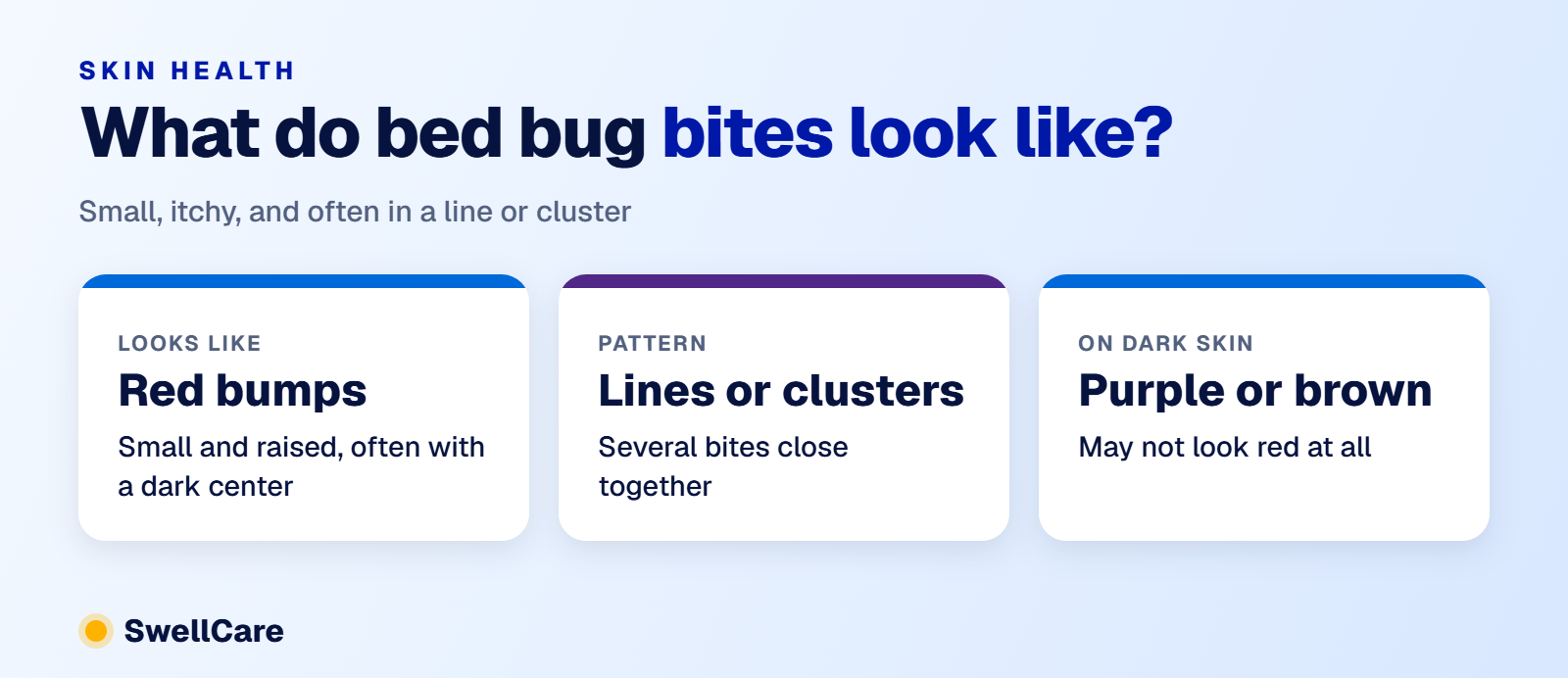
Most bed bug bites start as flat or slightly raised bumps, about the size of a pencil eraser or smaller. The center can look a little darker or show a pinpoint mark where the bug fed. Around it, the area turns red and puffy, and the itch usually builds over a day or two.
The classic clue is the pattern. Bed bugs often feed along a short row of bites, which people jokingly call “breakfast, lunch and dinner.” Other times the bites sit in a tight cluster. Either way, the pattern is several bites close together, not just one lonely bump.
Sizes and shapes vary:
- Small red bumps that look like mosquito bites but sit closer together
- Raised welts or hives, sometimes with a small hole at the center
- Flat, purplish or brownish patches, which are easier to spot on darker tones
- Blisters, less often, in people who react strongly
Color depends on your skin. On dark skin, bed bug bites may not look red at all. They can appear purple, brown or darker than the surrounding area, and the itch may be the first thing you notice.
Where on the body do bed bugs bite?
Bed bugs are nocturnal, and they go for whatever skin is easiest to reach. That means exposed skin: the face, neck, shoulders, arms and hands, plus legs and ankles if they stick out from the covers. Bites on exposed skin are the norm.
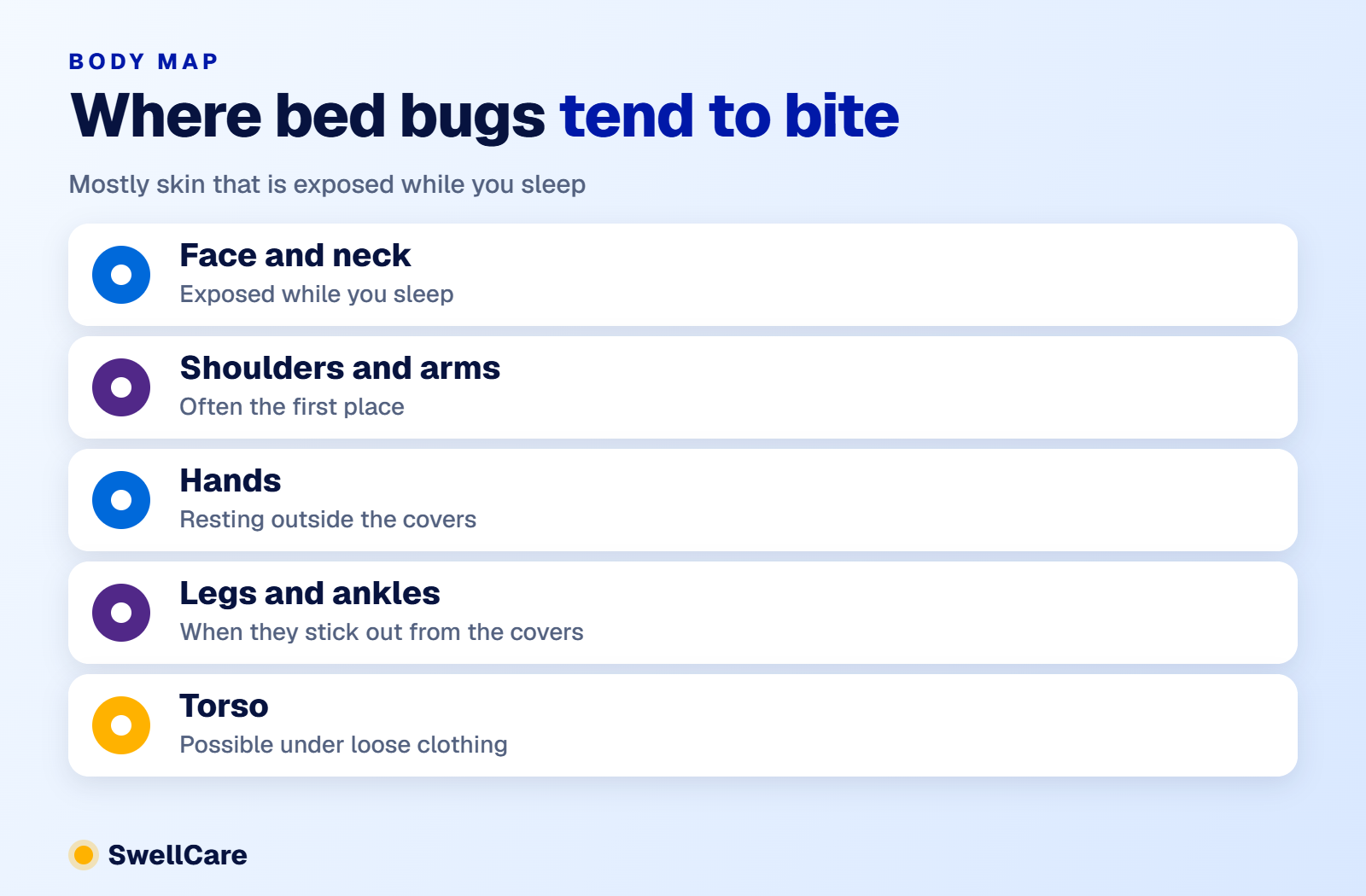
Sleeping in a T-shirt and shorts gives bed bugs more room than long pajamas do. Still, bed bugs can crawl under loose clothing, so don’t rule them out just because the bites are on your torso.
Why you may not notice bed bug bites right away
Here’s the part most guides skip. The bite itself is usually painless. Bed bugs inject saliva that numbs the spot and keeps the blood flowing, so you feel nothing at night.
The reaction comes later, and later can mean a lot later. According to the Merck Manual, marks can show up anywhere from a few hours to about 10 days after feeding, and the CDC says some people don’t react for up to two weeks. Others have a mild allergic reaction, or none at all.
What does that mean for you? The bed you slept in last night may not be where the bed bugs got you. If you traveled last week, a hotel is still a suspect, since bed bugs ride home in bags.
Bed bug bites vs. flea, mosquito and spider bites
Plenty of insect bites look alike, which is why guessing is frustrating. These clues help you sort bed bugs from the other usual suspects.
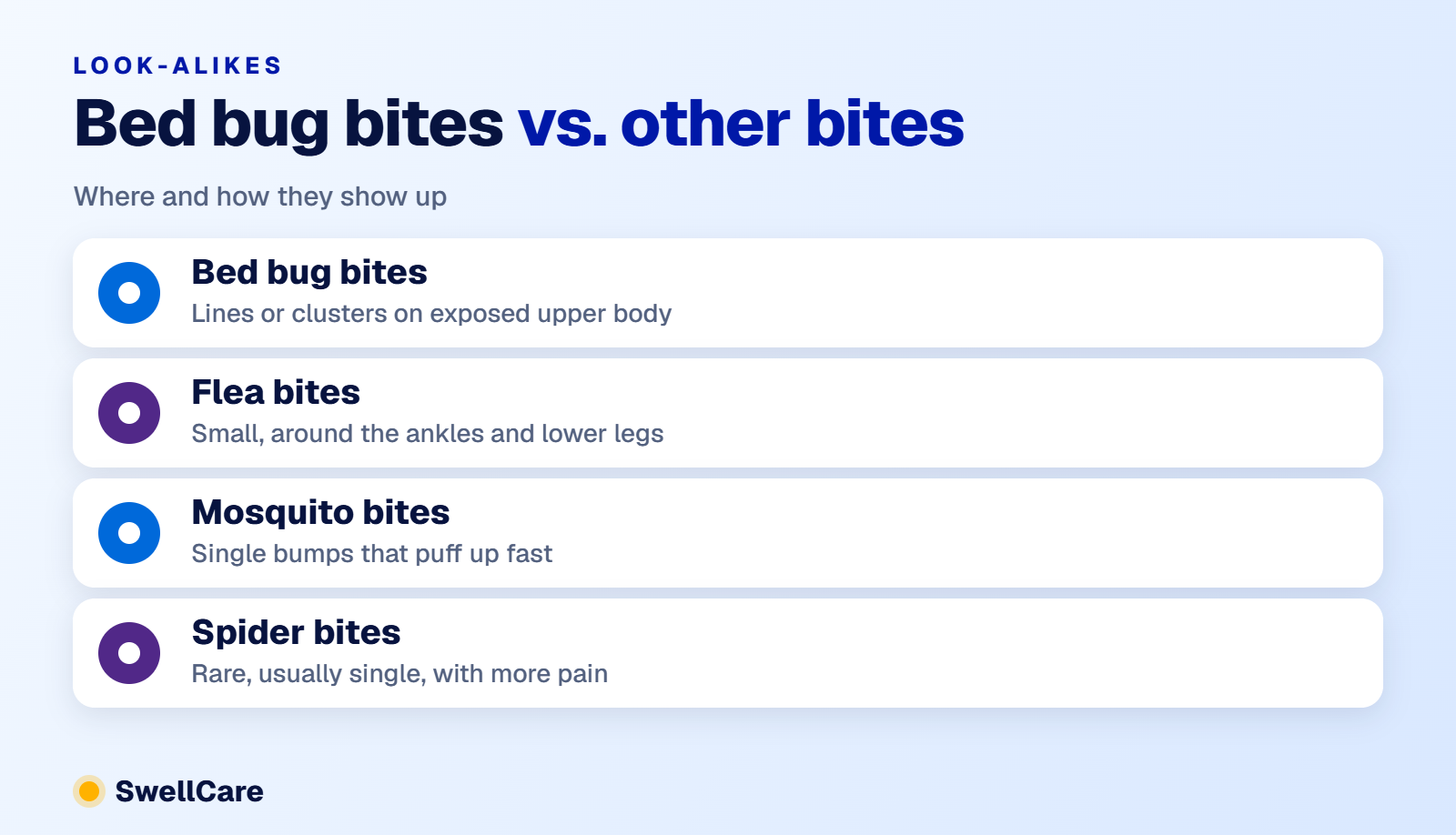
Flea bites are usually smaller and cluster around the ankles and lower legs. Pets in the house make flea bites more likely. Bed bug bites tend to be larger and spread across the upper body, and the red marks from flea bites rarely line up in rows.
Mosquito bites show up one at a time, mostly outdoors or near an open window, and the mosquito bite puffs up fast. Bed bug bites come in groups and take longer to appear. A mosquito bite on the arm after a night on the porch is just that.
Spider bites are rare and tend to be single, with two tiny puncture marks and more pain. A row of itchy bumps isn’t a typical spider bite pattern, so think bed bugs first.
Hives and scabies are the other big look-alikes. Hives move around and fade within hours. Scabies causes an intensely itchy rash that’s worse at night, often between the fingers. If your rash keeps spreading or won’t settle, get it checked, and see our guide on how to tell if a rash is serious.
How to tell if it’s bed bugs and not just bites
Bites alone can’t prove an infestation, so look for the bugs themselves. Adult bed bugs are flat, reddish-brown and wingless, roughly the size of an apple seed. Young bed bugs are paler and much smaller. Check the seams of your mattress, the box spring, the bed frame and the bedding, since bed bugs hide close to where you sleep.
Other signs of bed bugs include:
- Tiny rust-colored spots on sheets, which are blood or droppings
- Shed skins and pale, rice-sized eggs
- A sweet, musty smell in a heavily infested room
Bed bugs hide in cracks, so a quick glance at the sheets won’t cut it. Catching bed bugs early makes the cleanup far easier, and most people who find bed bugs find them in the seams first.
How to relieve the itch from bed bug bites
Most bed bug bites heal on their own within about a week. Your job is to calm the itch and protect the area. Symptoms like itching and swelling come from your body’s reaction, not from bed bugs staying on you, and symptoms ease as the reaction fades.
Wash the area with soap and water. A cold compress takes the heat out. An over-the-counter hydrocortisone cream helps with swelling, and an oral antihistamine can ease itching, especially at night. If the first antihistamine doesn’t help, ask a clinician which antihistamine suits you. Calamine lotion is a gentler treatment for mild symptoms.
Scratching is the real problem. Broken skin invites bacteria, and a simple itch becomes an infection. Scratch less and the swelling settles sooner. Keep your nails short, and cover bites with a bandage if you can’t stop touching them, which also helps head off infection.
When bed bug bites need a doctor
Bed bugs aren’t known to spread disease, according to the EPA. But bed bug bites can still cause trouble, and you shouldn’t wait it out if you notice any of these:
- Spreading redness, warmth, pus or fever, which point to a secondary infection of the bite
- Large blisters, or bites that keep getting worse after a week
- Swelling of the face or lips, hives all over, or trouble breathing, which can signal a severe allergic reaction or anaphylaxis (call 911)
- Poor sleep and constant anxiety from the infestation
For anything short of an emergency, SwellCare online urgent care offers clinician-led, non-emergency care by video or chat. You describe what’s going on, a clinician reviews your symptoms, considers other causes of the rash, and recommends next steps. Prescriptions are never guaranteed, and SwellCare is not for emergencies.
Stopping new bites: what to do about the bugs
Treating the bites only fixes half the problem. If bed bugs are in your home, the bites will keep coming, because bed bugs feed every few days.
Strip the bed and wash bedding and clothing in hot water to kill bed bugs, then dry on the hottest setting. Vacuum the mattress seams, bed frame and floor, where bed bugs hide. Toss the bag outside. Encasing the mattress and box spring helps prevent bed bugs from hiding there and traps what’s left. Then call an exterminator or pest control professional. A real infestation almost always needs one. Home sprays rarely reach every spot where bed bugs hide.
To prevent a repeat, inspect hotel rooms before you unpack, keep luggage off the bed, and check secondhand furniture before bringing it in. Bed bugs travel in bags and clothes, so travelers carry them home without knowing, and checking first is the easiest way to prevent a surprise.
Questions people ask about bed bug bites
How long do bed bug bites last?
Most bed bug bites fade in about a week. Heavy reactions with big welts can take two weeks or more. If symptoms last longer, look worse or keep appearing, bed bugs may still be feeding, so check the bed again.
Do bed bug bites hurt?
Usually no. The bite itself is painless, which is why you sleep through bed bugs feeding. The itching, burning or tenderness shows up afterward, and scratching makes it worse.
Can bed bugs bite you and leave no mark?
Yes. Some people have no visible reaction at all, so you can have an infestation without a single bite mark. That’s why finding the bugs matters more than counting the bumps.
Do bed bugs spread disease?
Bed bugs aren’t known to transmit disease to people. The real risks from bed bugs are itching, infection from scratching, an allergic reaction in some people, and lost sleep.
How do I know if it’s bed bugs or fleas?
Look at where the bites are. Fleas favor the ankles and lower legs, especially if you have pets, so flea bites stay low. Bed bug bites turn up on exposed upper-body skin, in a line or cluster pattern. Finding bed bugs in the bed seams settles it.
Trusted references
Public-health, research, and medical-society resources related to this guide.