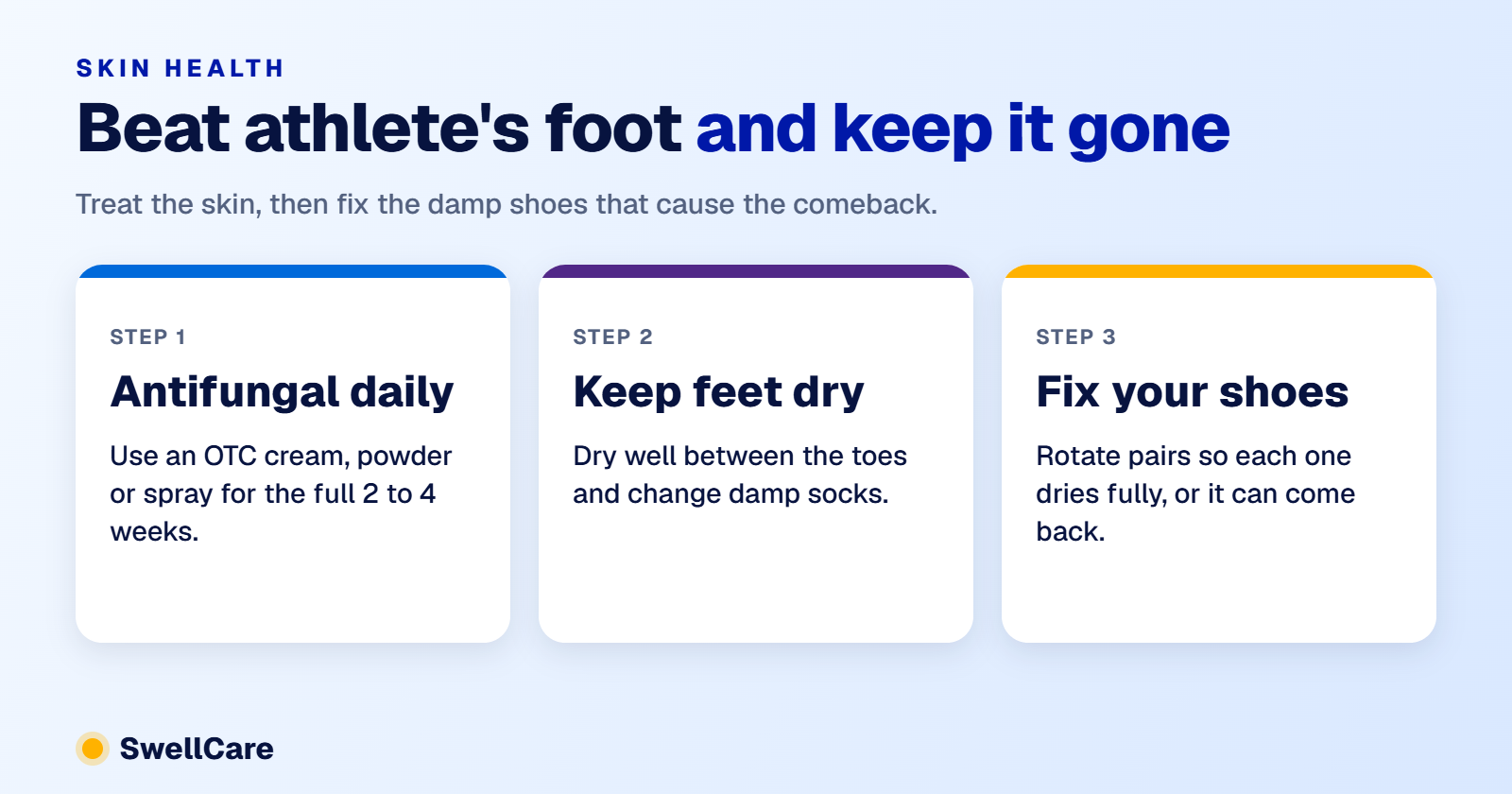
The itch hits the second your socks come off. You scratch. It burns. By the weekend the skin between your toes is peeling. Here’s the short answer on how to get rid of athlete’s foot: use an over-the-counter antifungal every day for the full 2 to 4 weeks, keep your feet dry, and quit wearing the same damp shoes. Most cases clear that way. A few don’t, and we’ll cover how to spot those.
Is it really athlete’s foot?
Athlete’s foot is common, and almost anyone with sweaty feet can get it. Before you buy anything, make sure you’re treating the right problem. Athlete’s foot (tinea pedis) is a fungal infection of the skin, and the same family of fungi causes ringworm and jock itch. The fungus loves warm, wet places, which is why a sweaty sock inside a closed shoe is its idea of a resort.
Symptoms vary a lot from person to person. Some people feel mostly itchy. Others get burning that wakes them at night. The fungal infection can sit on one foot for months before you pay attention, and without treatment it often spreads to the other foot or to the toenails.
What athlete’s foot looks and feels like
The classic sign is cracked, flaking or peeling skin between the toes, usually between the smaller ones. It’s itchy, and the itch is often worst right after you take your shoes off. Redness, burning or stinging can join in, along with small blisters that ooze or crust over. These symptoms often show up on both feet, though one foot may be worse.
Some people get a different pattern. The sole and sides of the foot turn dry and scaly. Those cases are easy to mistake for plain dry skin.
Other things can look similar. Eczema and psoriasis can both cause an itchy rash on the feet, and so can contact dermatitis from a new sock or shoe. If a rash doesn’t behave like athlete’s foot after a couple of weeks of treatment, that’s a clue it may not be one.
Why half-treating it fails
Here’s the trap. The itch fades in about a week, so people stop. But the fungus is still living in the top layer of skin, and a few days later it’s back, sometimes tougher to shift. The fix is boring and it works: keep going for the full course, even when your feet look and feel normal. Athlete’s foot treatment only works when it’s consistent, because the skin on your feet is thick and often stays damp.
It’s also contagious. The fungus passes through direct skin contact and through shared floors, towels and shoes. Drying your feet and then the rest of your body with the same towel can carry it to your groin, which is how a groin rash starts.
How to get rid of athlete’s foot with over-the-counter antifungals
For a mild or moderate case, an over-the-counter antifungal is the right first move, and it’s the heart of how to get rid of athlete’s foot at home. You don’t need a prescription, and you don’t need anything fancy. The active ingredient matters more than the brand on the box.
| Active ingredient | Common forms | Good to know |
|---|---|---|
| Clotrimazole | Cream, spray, solution | A long-standing option for itchy skin between the toes |
| Miconazole | Cream, powder, spray | The powder also helps soak up sweat |
| Terbinafine | Cream, gel, spray | A common option; follow the course on the label |
| Tolnaftate | Cream, powder, spray | Handy as a powder for shoes and prevention |
Pick an over-the-counter cream or gel for broken, peeling skin and a powder or spray for prevention. MedlinePlus names miconazole, clotrimazole, terbinafine and tolnaftate, and the CDC lists clotrimazole, miconazole and terbinafine among its examples.
One warning that saves a lot of grief: skip steroid creams such as hydrocortisone that you may already own. The CDC says creams containing steroids can make a ringworm rash worse.
A simple daily routine
- Wash your feet with soap and water, then dry them well, especially between the toes.
- Apply a thin layer of the antifungal to the rash and a little of the healthy skin around it.
- Let it absorb before putting on clean, dry socks.
- Do it once or twice a day, depending on the product label.
- Keep going after the rash clears, for as long as the label directs, because the fungus can outlast the symptoms.
Moisture keeps the infection alive, so the drying step isn’t optional. Feet that stay damp are feet that stay infected. Skin that stays dry gives the fungus less to work with. Some people tuck a bit of lamb’s wool between their toes to keep the spaces open, a trick MedlinePlus mentions.
How long it takes to clear
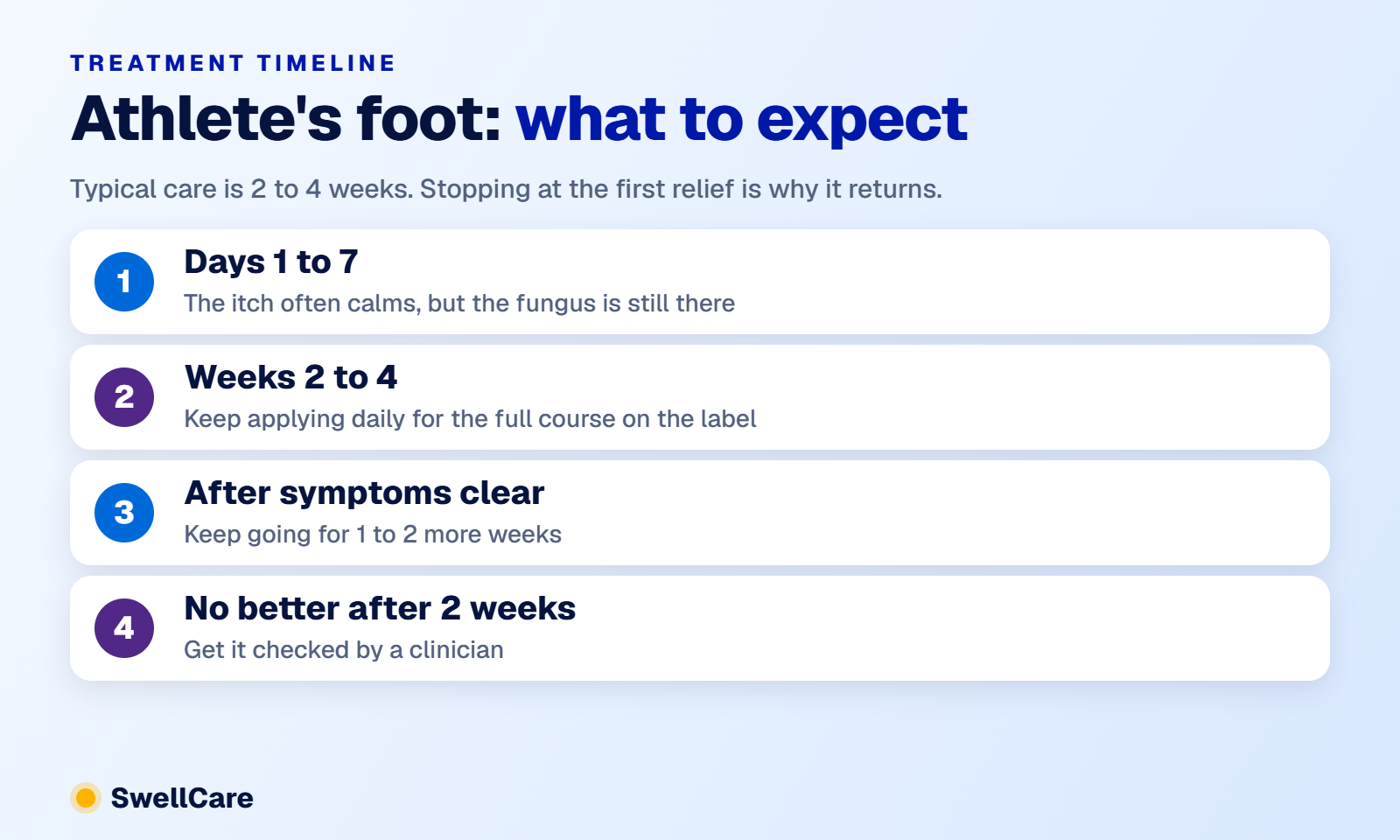
The CDC’s general range for athlete’s foot and similar skin ringworm is 2 to 4 weeks of treatment. MedlinePlus adds that you should keep using the medicine for 1 to 2 weeks after the symptoms are gone. In practice, itching often calms within days, and the skin takes longer to look normal. Treatment length varies by product, so read the label. Stopping treatment at the first sign of relief is a common reason athlete’s foot comes back.
If a rash hasn’t improved after two weeks of an over-the-counter antifungal, Mayo Clinic suggests getting it checked.
Vinegar, tea tree oil and other home remedies
You’ll find plenty of kitchen-cabinet advice online. Vinegar soaks and tea tree oil come up the most, followed by baking soda and hydrogen peroxide. The health sources we relied on for this guide, the CDC and MedlinePlus, point people to over-the-counter antifungal products instead. Treat home remedies as a side dish at best. Stop if your skin stings or breaks down, because a cracked, irritated foot is an easy way in for bacteria.
Fix your shoes and socks or it will come back
This is the step most people skip, and it’s why athlete’s foot has a reputation for returning. Your cream treats the skin. Your shoes can quietly reinfect it. Treatment isn’t really finished until the shoes are dealt with, too.
Fungus thrives on moisture. A pair of shoes worn two days running never fully dries, and that damp lining keeps the fungal infection fed. Athlete’s foot symptoms tend to creep back within weeks if the shoes stay wet. Dry shoes, dry socks and dry feet break the cycle. If you spend time barefoot at home, keep your feet clean and dry there too.
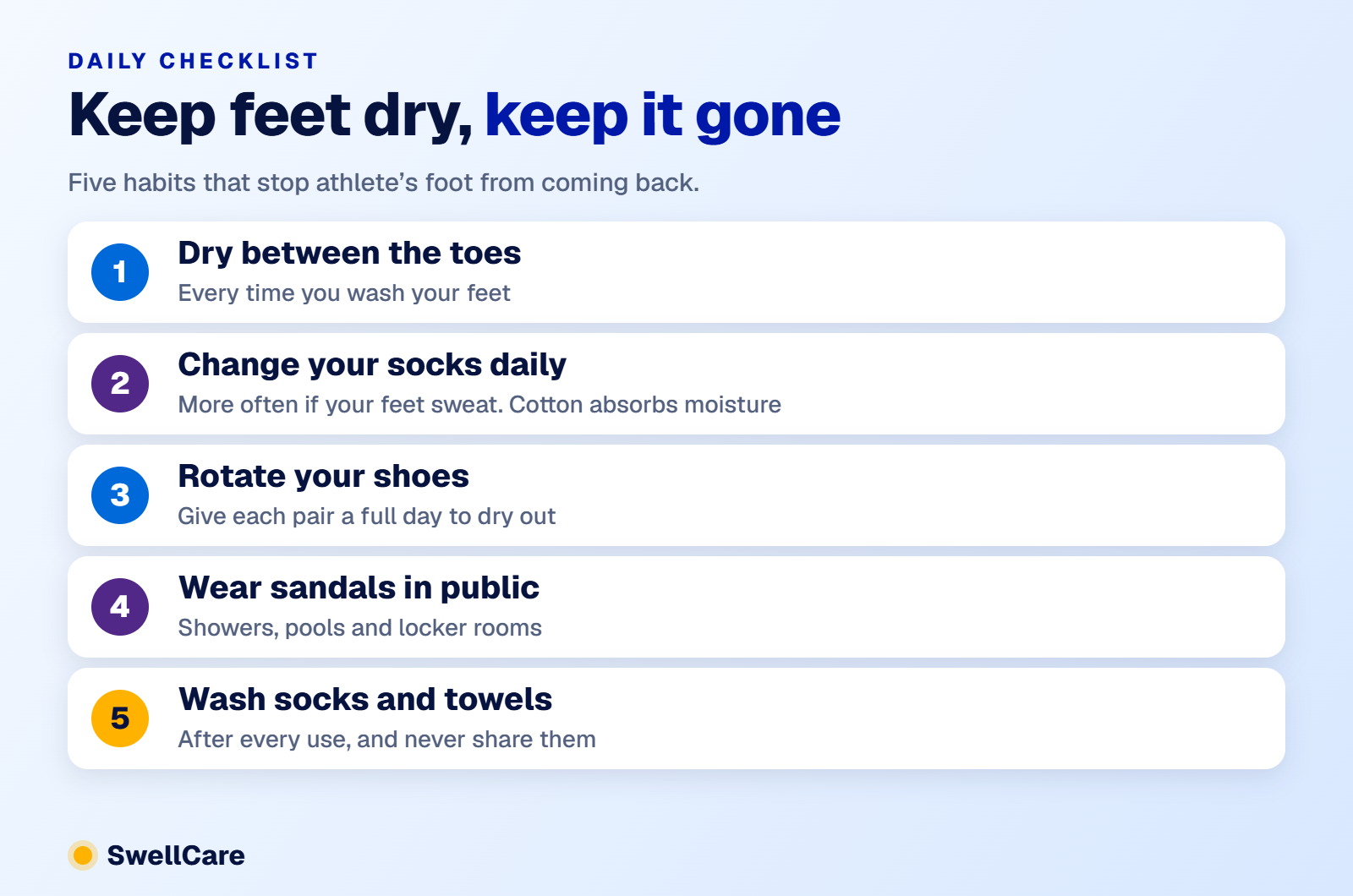
Rotate your shoes so each pair gets a full day to dry out. Choose well-ventilated shoes when you can, and avoid plastic-lined ones that trap sweat. Change your socks at least once a day, more if your feet sweat. Mayo Clinic favors cotton or other moisture-absorbing socks over nylon.
Use an antifungal powder or spray in your shoes if you’ve had athlete’s foot more than once. Wash socks and towels after every use. Don’t share them with anyone. In public showers, pools and locker rooms, wear sandals or flip-flops.
When athlete’s foot needs a clinician
Athlete’s foot symptoms usually respond to treatment within a few weeks. When they don’t, it’s time for a second opinion. Most people can handle this at home, but some shouldn’t. Get medical advice if any of these fit:
- The rash hasn’t improved after two weeks of treatment, or it hasn’t cleared in 2 to 4 weeks
- You have diabetes, since a minor foot infection can turn serious
- The foot is swollen, warm or painful, or you see red streaks, pus or fever
- Your toenails are thick, discolored or crumbly
- It keeps coming back
Swelling, warmth and pus point to a bacterial infection on top of the fungus, which needs different treatment. In people with weakened immunity, including those with diabetes, a skin infection called cellulitis is a real risk.
A clinician can confirm the diagnosis and, if needed, may prescribe a stronger topical or an oral antifungal. Prescription treatment is how doctors handle infections that ignore store-bought products. A podiatrist, who focuses on feet, or a dermatologist, who focuses on skin, is a good next step if the infection keeps returning.
Get a clinician’s eyes on it from home
If you can’t tell whether that rash is athlete’s foot, or your cream isn’t working, you don’t have to wait for an office slot. SwellCare offers clinician-led, non-emergency urgent care around the clock by video or chat. A clinician can look at your symptoms, tell you what’s most likely going on, and map out next steps, including whether a dermatologist or podiatrist visit makes sense. Prescriptions are never guaranteed. Call 911 for severe symptoms. Start your care when you’re ready.
Questions people ask about athlete’s foot
How long does it take to get rid of athlete’s foot?
Plan on 2 to 4 weeks of consistent athlete’s foot treatment with an over-the-counter antifungal. Itching often improves in the first several days, but the fungus lingers. Keep applying the product for as long as the label and your clinician say, even after your skin looks normal, to cut the odds of it coming back.
What kills athlete’s foot fastest?
A proven antifungal cream, spray or powder, used daily, is your quickest route. Terbinafine and tolnaftate are common choices. Drying your feet well and changing socks speeds things along. No product works overnight, so be wary of anything promising an instant cure. Consistent treatment beats any shortcut.
Can athlete’s foot go away on its own?
Rarely, and it isn’t worth waiting. Left alone, the fungal infection tends to hang around, spread to your toenails or groin, and pass to other people. Mild cases may calm down for a while, then flare when your feet get sweaty again. Treating it properly is faster and safer.
Is athlete’s foot contagious?
Yes. It passes through skin contact and through damp shared surfaces like locker room floors, pool decks, towels and shoes. Wear sandals in public showers, don’t share towels or footwear, and wash socks regularly. You stay contagious as long as the fungus is active, so finish your full course.
Can the same cream treat jock itch?
Often, yes. Both conditions come from the same type of fungus, and many antifungal creams are labeled for both fungal infections. Check the product directions, though, because use on the groin and the feet can differ. If the rash is widespread or isn’t improving, talk to a clinician or a dermatologist.
Trusted references
Public-health, research, and medical-society resources related to this guide.