
A small red sore shows up next to your child’s mouth on Tuesday. By Thursday it’s weeping, and by Friday there’s a honey-colored crust and a note from the school nurse. So, is impetigo contagious? Yes, and very. This bacterial skin infection passes easily from skin to skin, and a shared towel is all it needs. Daycare rooms are its favorite hangout.
The good news is that the contagious window is short once treatment starts. Most children and adults can go back to school or work about a day or two after the first dose of antibiotic, as long as the sores stay covered. Here’s how impetigo spreads, how to tell it from other rashes, and what to do next.
Is impetigo contagious? Yes, and it spreads fast
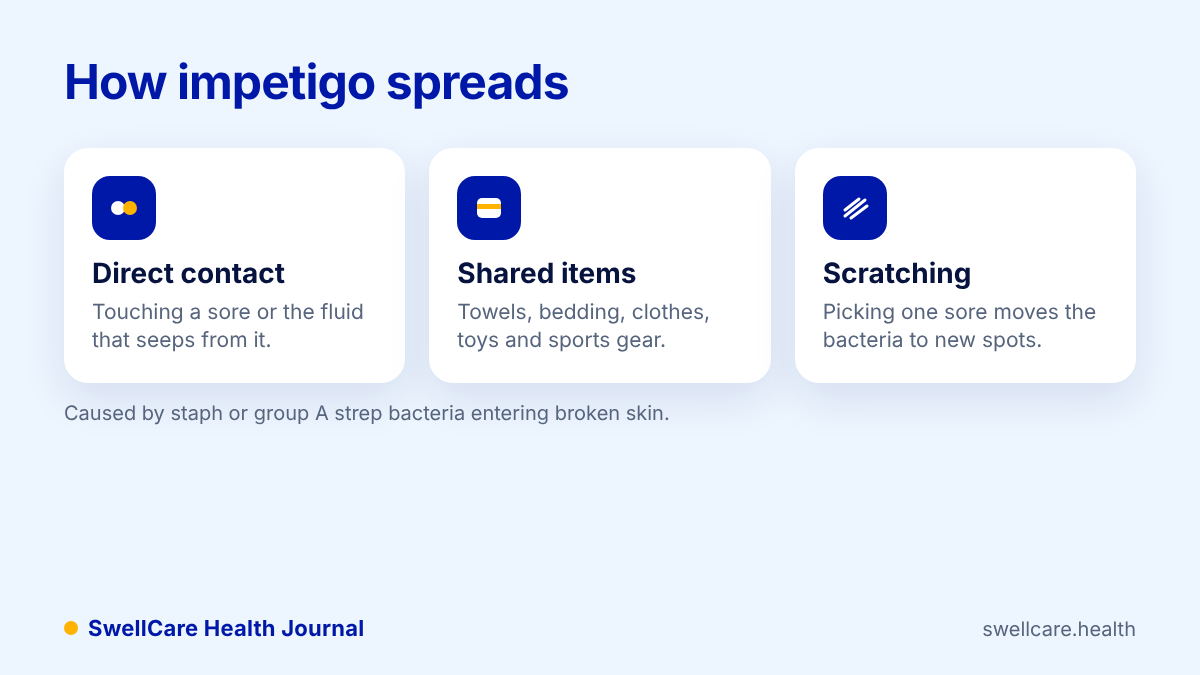
Two bacteria cause nearly all cases: Staphylococcus aureus (staph) and group A Streptococcus (strep). Both live on skin and in noses all the time. Trouble starts when they get through a break in the skin, like a cut, a bug bite, a patch of eczema or a rash someone’s been scratching.
From there, the infection spreads in two ways. The first is direct contact. Touch a sore, or the fluid that seeps from it, and the bacteria can move to your hand and then to your skin. The second is indirect. Towels, bedsheets, clothing, toys and sports gear carry the bacteria from one person to the next. That’s how impetigo spreads through a whole family.
Scratching is the sneakiest route. A child picks at one sore and a few days later there are three. One small rash near the nose becomes a cluster across the cheek.
Warm, humid weather makes it worse, and so does close quarters. Think daycare rooms, classrooms, wrestling mats and crowded households.
How long is impetigo contagious?
It depends almost entirely on whether you treat it. Medical groups give slightly different numbers, so here’s the range side by side.
| Situation | You’re contagious until | What the guidance says |
|---|---|---|
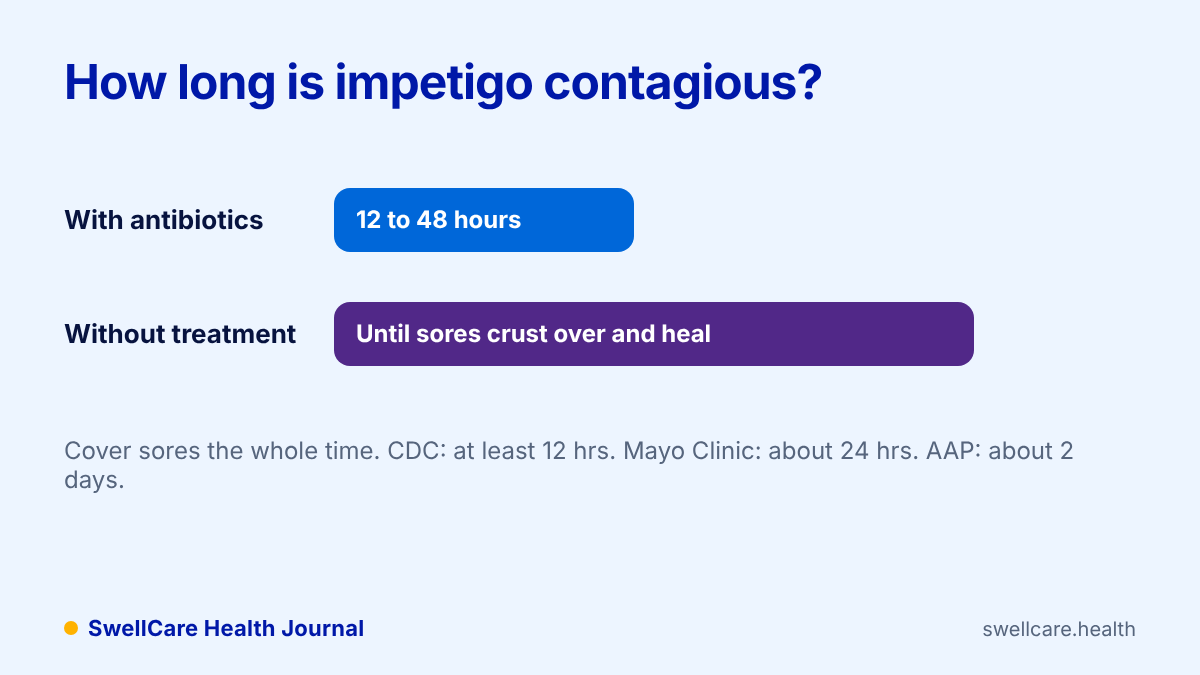
| Treated with antibiotics | About 12 to 48 hours after the first dose, with sores covered | CDC says at least 12 hours; Mayo Clinic says about 24 hours; the American Academy of Pediatrics says about two days |
| Not treated | The sores have crusted over and healed | American Academy of Dermatology |
| Healthcare worker or outbreak | At least 24 hours after starting antibiotics | CDC |
With antibiotic treatment
Antibiotic treatment knocks the bacteria back quickly. Most schools and daycares follow a 24-hour rule, so a child who starts medicine on Monday morning is often cleared by Tuesday morning. Check your own school’s policy, because some ask for a full two days.
Finish the whole course even when the skin looks better. Stopping early is how stubborn sores come back.
Without treatment
Untreated impetigo can clear up on its own, but slowly. You stay contagious while the sores are open and oozing, and that can run on for weeks. During that stretch you can pass the infection to everyone you live with, and you can reinfect yourself. A bandage helps, but it doesn’t replace treatment.
What impetigo looks like
Catching it early is the easiest way to shorten that contagious window. Most cases are the common, nonbullous type. Symptoms start as red sores, often around the nose and mouth. They burst, ooze, and dry into crusts the color of honey, and those crusts or scabs are the telltale sign. The rash is often itchy, though it’s usually more annoying than painful.
Bullous impetigo is less common and mostly hits babies and toddlers. It forms larger, fluid-filled blisters on the trunk, arms and legs. Those blisters break open and leave a shiny, raw patch with a thin crust.
Then there’s ecthyma, a deeper form. Those sores are painful, can turn into ulcers and may leave scars. If a sore looks punched-out or keeps getting deeper, don’t wait.
Plenty of rashes imitate it. Eczema can weep and crust, cold sores cluster around the lips, and scabies causes an itchy rash that can get infected on top. When it’s hard to tell, a doctor can usually diagnose impetigo just by looking, sometimes with a swab.
Who catches impetigo most often
Children between 2 and 5 are hit hardest, which is why daycare and preschool outbreaks are so common. But adults aren’t exempt. Anyone with broken skin can pick it up. Athletes in contact sports, people with eczema, older adults, people with diabetes and anyone with a weakened immune system are at higher risk.
Close contact is the common thread. If one child in your house has it, watch everyone else’s skin for the next week or so.
One myth worth dropping: impetigo isn’t a sign of a dirty home or a careless parent. Staph and strep are everywhere. A scraped knee and a sweaty afternoon are enough, even with good hygiene.
How to stop impetigo from spreading at home
Once you know impetigo is contagious, containment is mostly about small habits done consistently. Here’s what the dermatology and pediatric guidance boils down to:
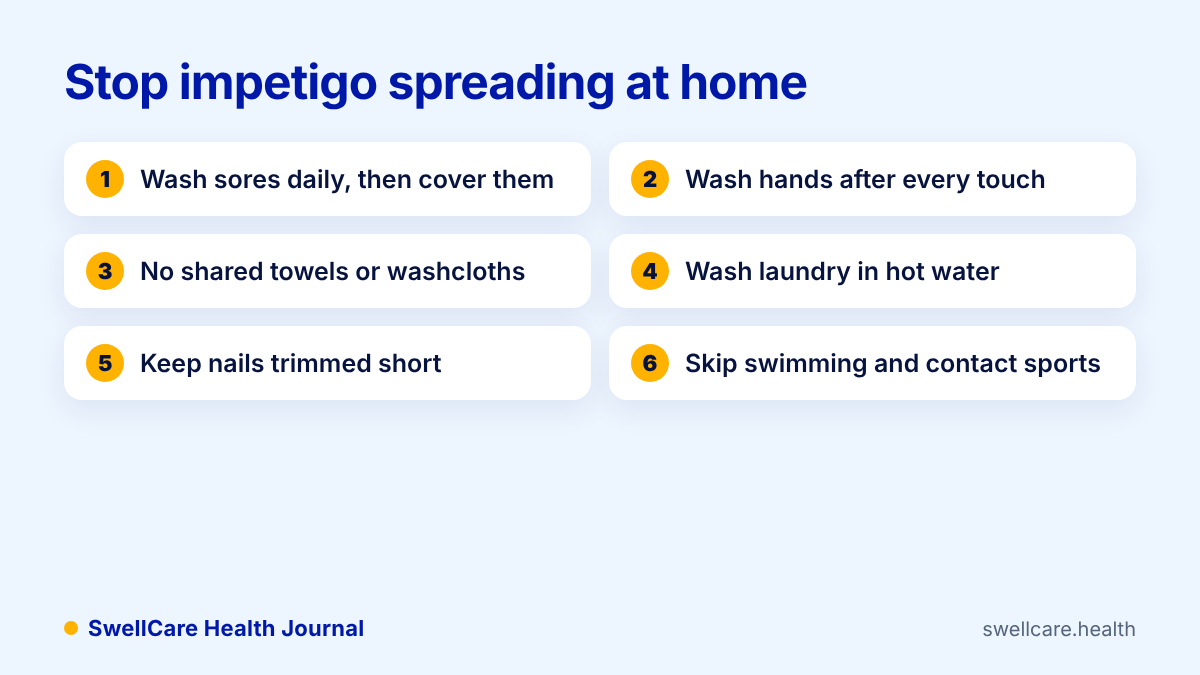
- Wash sores gently with mild soap and water every day, pat them dry, and cover them with a loose bandage or gauze.
- Wash hands with soap after touching the sores, before eating and after the bathroom. Dry them on a clean or paper towel. Good hygiene won’t stop impetigo on its own, but it limits the damage.
- Give the person their own towels and washcloths, and don’t share razors, toys or sports gear until the sores heal.
- Launder sheets, towels and clothes that touched the sores in hot water, separate from the rest of the family’s laundry.
- Keep fingernails trimmed short so scratching does less damage.
- Wipe down doorknobs, counters and other surfaces the person touches often.
- Sit out contact sports and swimming while sores are open.
If you’re the one applying ointment, wear gloves or wash up right afterward. It’s easy to carry the bacteria to your own hands.
Treatment and what getting better looks like
Treatment depends on how much skin is involved. A few small sores usually respond to a topical antibiotic, a prescription ointment such as mupirocin. Widespread impetigo, or a case that doesn’t improve, calls for oral antibiotics. Either treatment covers both staph and strep.
Most people see sores drying out within a few days of starting treatment. Crusts fall off on their own, and the skin underneath may stay pink for a while. Mild impetigo normally heals without scarring.
Complications are rare, but they’re real. The infection can sink deeper into the skin as cellulitis. And a strep infection can occasionally trigger kidney inflammation (post-streptococcal glomerulonephritis) one to two weeks after the skin has cleared. Puffy eyes or face, or tea-colored urine after a bout of impetigo, means a doctor visit that day.
When to see a clinician (and how SwellCare can help)
See a doctor if you spot honey-colored crusts that keep growing, sores that aren’t improving after two days of treatment, a fever, or redness that’s spreading beyond the sore. Babies and anyone with a weakened immune system should be seen quickly. Go to urgent or emergency care for rapidly spreading redness, severe pain, or a child who seems very sick.
Waiting a week for a clinic slot just lets the infection keep moving through your household. That’s where virtual care fits. SwellCare’s clinicians are available 24/7 in all 50 states and D.C. You can show them the sore on video, talk through your symptoms and find out the next step, including a prescription when it’s appropriate. Learn how SwellCare works, or start with urgent care if the sore looks like impetigo. Pricing is posted on the site and may change.
Virtual care isn’t right for every case. If your clinician needs to see the skin in person, they’ll tell you.
Questions people ask about impetigo
Can you get impetigo twice?
Yes. Having impetigo doesn’t make you immune. Reinfection is common in kids with eczema or frequent scrapes, and in households where towels and bedding get shared. Treat any new sore promptly. If impetigo keeps coming back, ask your clinician why.
Can adults catch impetigo from kids?
Absolutely. Parents and caregivers pick it up by touching sores or handling contaminated laundry. Adults with cuts, eczema or a skin condition are more likely to be infected. Wash your hands after caring for a child with impetigo and cover any broken skin on your own hands.
Does impetigo go away on its own?
Sometimes, but it’s not worth waiting. Untreated impetigo can take weeks to clear, you stay contagious the whole time, and it’s easier for the infection to deepen or spread. Antibiotics shorten the course and make the child safe to be around much sooner.
Can you go swimming with impetigo?
It’s best not to. Keep your child out of pools and out of shared baths until the sores have healed or the clinician says it’s fine. Open sores can spread impetigo to other swimmers, and a covered sore usually won’t stay covered in water.
How long does impetigo last?
With treatment, expect the sores to dry out within a few days, and the skin usually heals within a couple of weeks. Without it, impetigo can linger much longer. If the rash isn’t improving two days after starting antibiotics, check back in with your clinician.
Trusted references
Public-health, research, and medical-society resources related to this guide.