It’s late, your big toe is throbbing, and even the bedsheet hurts. Here’s the short answer on how to fix ingrown toenails caught early: soak the toe in warm water, lift the nail edge off the skin, keep the area clean, and give your toes room in your shoes. Mild cases often calm down within a few days, and most home remedies for an ingrown toenail work by taking pressure off the nail edge rather than removing anything.
The nail itself takes longer. Doctors writing in American Family Physician say it can take 2 to 12 weeks for healthy nail to grow past the sore spot.
Home care has limits, though. If you see pus, red streaks, or you have diabetes, skip the DIY and get seen today. Below you’ll find the steps, a realistic timeline, the mistakes that make things worse, and a plain checklist for when it’s time to call someone.
Why a toenail grows into the skin
An ingrown toenail happens when the edge of the nail presses into the soft skin beside it, called the nail fold. Your body treats it like a splinter. The skin gets tender, swollen and red, and walking starts to hurt.
It’s common. Ingrown toenails account for roughly one in five foot problems that family doctors see, and the big toe is the usual victim, according to AAFP.
Most of the time, the cause is something you did to the toe, which also means prevention is largely in your hands. Cutting nails too short or rounding the corners is the classic one. Tight or narrow shoes come next, then a stubbed toe, then sweaty feet. Some people are simply born with nails that curve or are too wide for the toe, as AAOS points out.
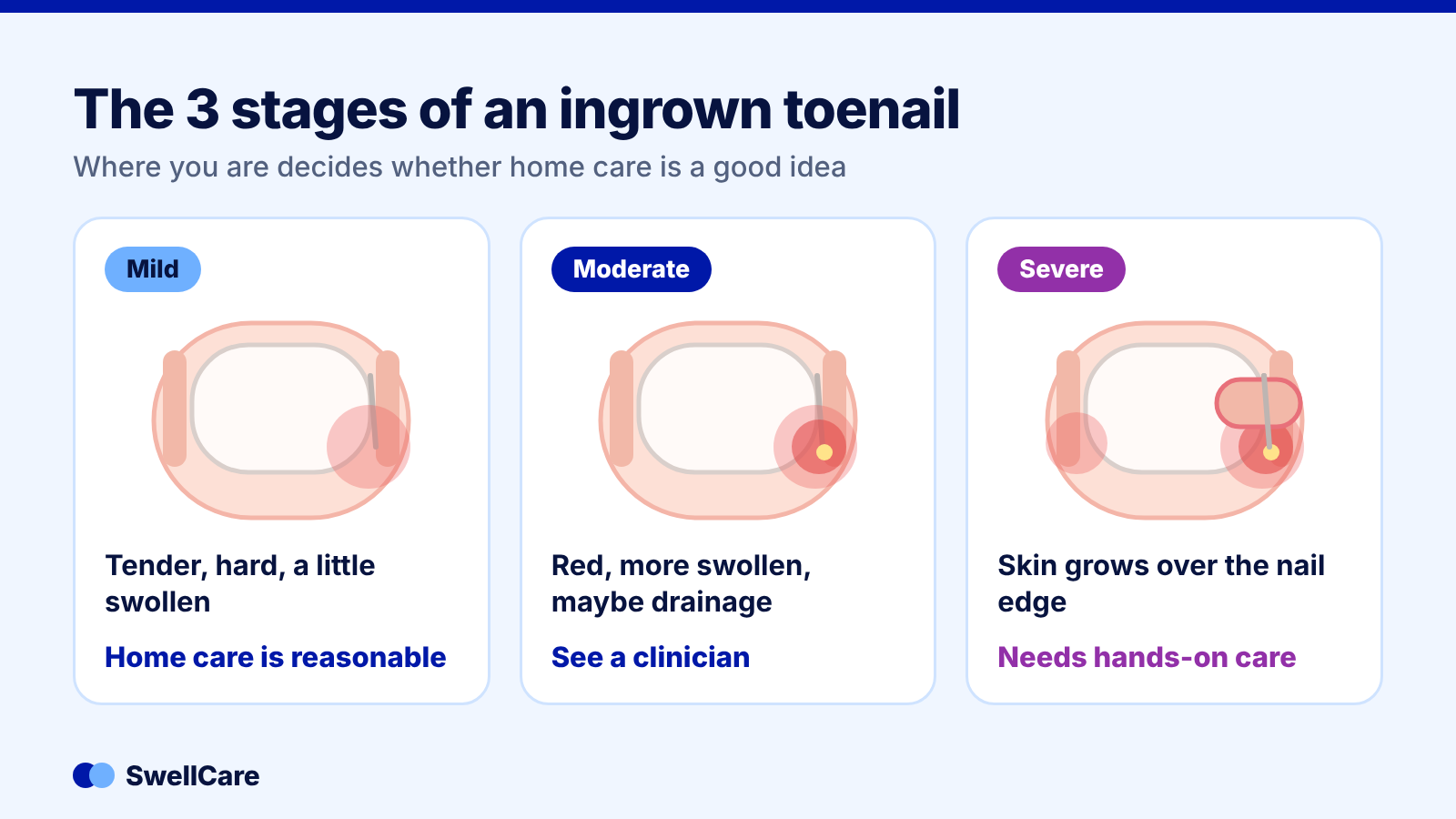
Think of it in three stages. Mild: the toe is hard, tender and a little swollen. Moderate: more redness and swelling, maybe a bit of drainage. Severe: the skin has overgrown the nail edge. Mild cases usually respond to home treatment. The rest need hands-on care.
Catching an ingrown nail early makes everything simpler. The first sign is usually tenderness along the side of the toe when your shoe presses on it. That’s the moment to start treatment, before swelling and infection set in and the pain starts to run the day.
Can you fix an ingrown toenail yourself?
Often, yes, if three things are true: it’s mild, there’s no pus, and you’re otherwise healthy. A mild ingrown toenail with no drainage is a fair candidate for home treatment, and any podiatrist would tell you the same. Infection is the thing to watch, because it turns a nagging pain into a medical problem.
If you have diabetes, nerve damage in your feet, poor circulation, or a weakened immune system, don’t treat it yourself. Cleveland Clinic and MedlinePlus both say the same thing. These conditions hide the warning signs of infection, and a small problem can turn serious fast.
How to fix ingrown toenails at home, step by step
Do this once or twice a day until the nail edge is clear of the skin. Stay patient. You’re not removing anything. You’re taking pressure off the sore nail and giving the nail room to grow out, which is how most home remedies for ingrown nails and toes actually work.
Soak the toe
Fill a basin with warm water, not hot, and add Epsom salt or a little mild soap. Soak for 10 to 20 minutes, and repeat three or four times a day if you can, as AAOS and MedlinePlus suggest. Dry the toe completely afterward. Gently massage the swollen skin to ease the swelling. A spoonful or two of Epsom salt is plenty. The warm water does the real work by loosening the skin so the nail edge is easier to lift.
Lift the nail edge
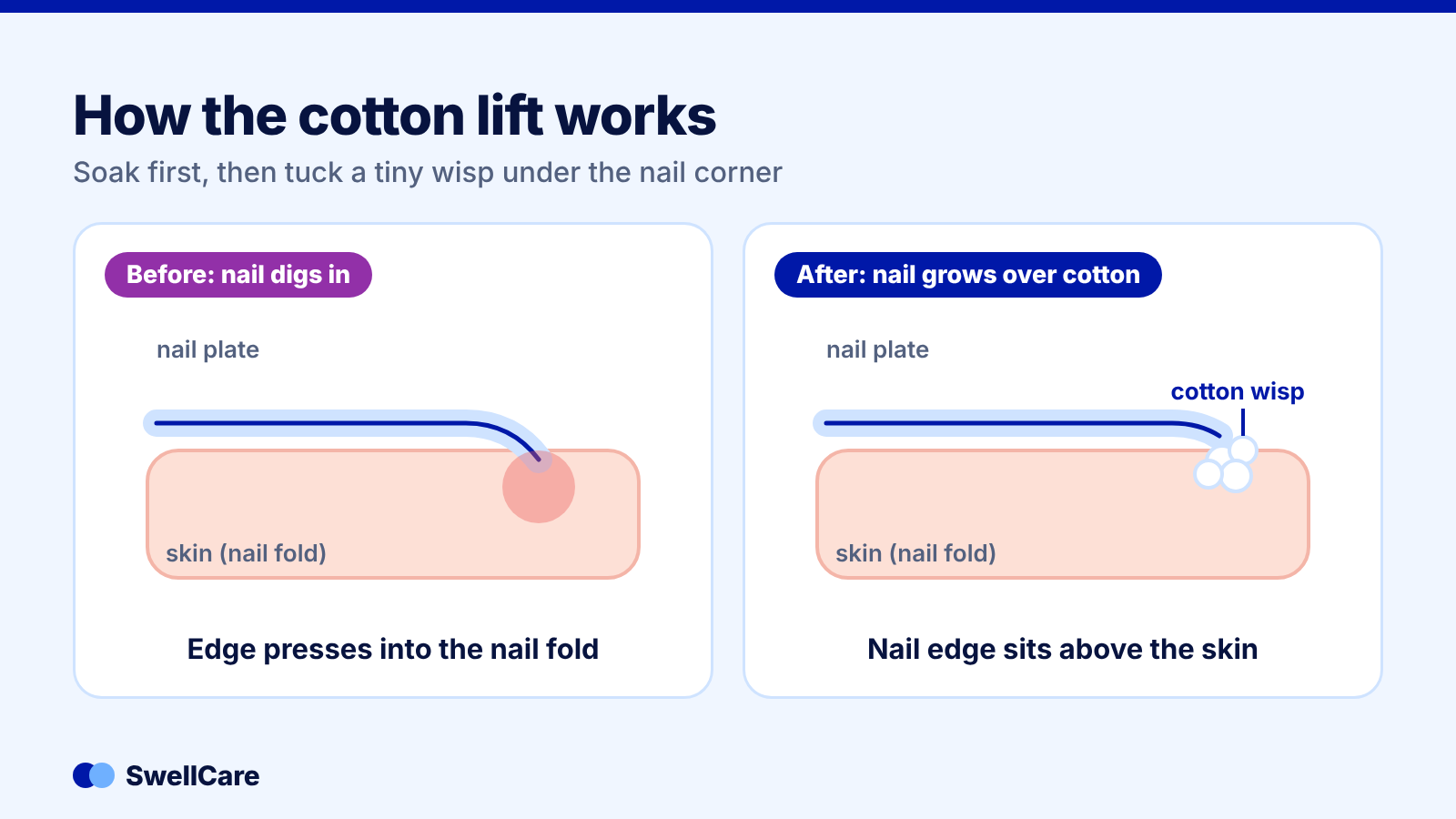
Once the skin is soft, the nail is easier to handle. Roll a tiny wisp of clean cotton, or a short piece of waxed dental floss, and slide it under the corner of the nail. The goal is simple: the nail grows over the cotton instead of into your skin. Wet the cotton first so the cotton stays put. Waxed dental floss works the same way and slides in more easily under a thin nail. Replace it daily after your soak.
One caution. Some foot surgeons say this DIY lifting can irritate a tender toe or trap bacteria, so stop if the pain gets worse, and skip it entirely if there’s any sign of infection. If you’re unsure, ask a clinician to look first.
Protect it and change your shoes
Dab on a thin layer of petrolatum jelly or antibiotic ointment and cover the toe with a loose bandage, changing it whenever it gets damp. A loose bandage is enough, since a tight one squeezes the toe and adds pain. Cleveland Clinic notes that plain petrolatum works about as well as many over-the-counter antibiotic ointments, with fewer allergic reactions.
Then fix the footwear, because no cream beats giving the nail room. Open-toed shoes take the pressure off completely, and sandals are the easiest open-toed shoes to live in at home. If work rules out open-toed shoes, pick wide athletic shoes with a wide toe box. An over-the-counter pain reliever like ibuprofen or acetaminophen can take the edge off, but over-the-counter products won’t fix the cause.
A note on pills: studies reviewed by AAFP found that oral or topical antibiotics don’t improve outcomes unless the skin has become infected.
What not to do with an ingrown toenail
When you’re hunting for how to fix ingrown toenails fast, the temptation is to grab the clippers. Most of the worst outcomes start with someone trying to be brave in the bathroom. Please don’t:
- Dig out or cut off the ingrown edge yourself. MedlinePlus warns this often makes things worse, and leaves a spike behind that grows right back.
- Trim the nail short or round the corners. That’s how you got here.
- Cut a V into the nail. It’s an old myth and it doesn’t work.
- Pour hydrogen peroxide on it. Cleveland Clinic says it’s no longer recommended for skin.
- Keep wearing the same tight shoes and hope for the best.
How long does an ingrown toenail take to heal?
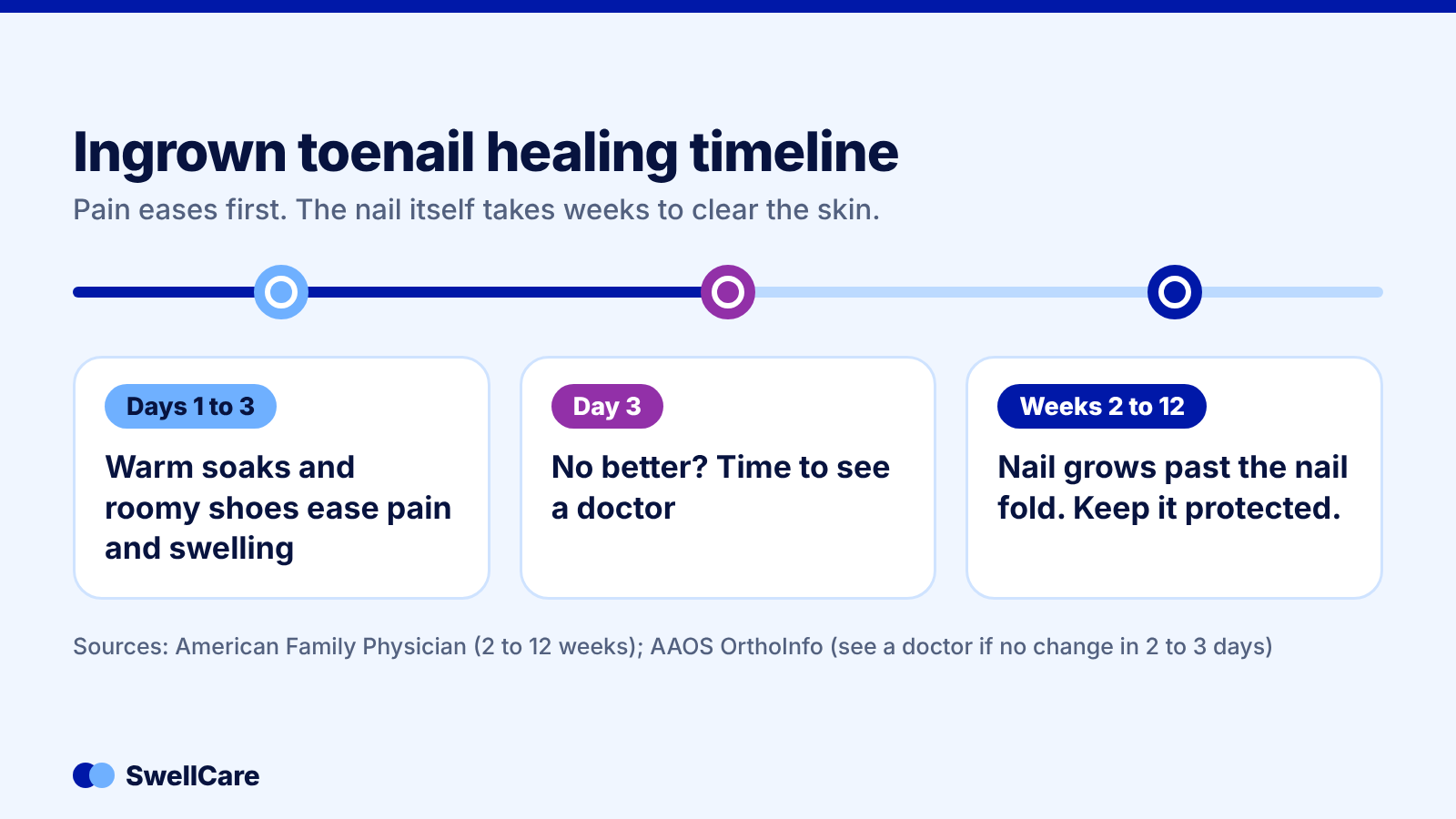
Pain usually eases first. The nail itself is slower. Here’s a realistic picture:
| When | What to expect |
|---|---|
| Days 1 to 3 | Soaking and roomier shoes should ease the pain and swelling. |
| Day 3 | Not better? AAOS says to see a doctor if there’s no improvement within 2 to 3 days. |
| Weeks 2 to 12 | The nail slowly grows past the nail fold. Keep protecting it until it clears. |
When to see a doctor
Home care is for early cases. Use this checklist to decide.
| Sign | What it may mean | What to do |
|---|---|---|
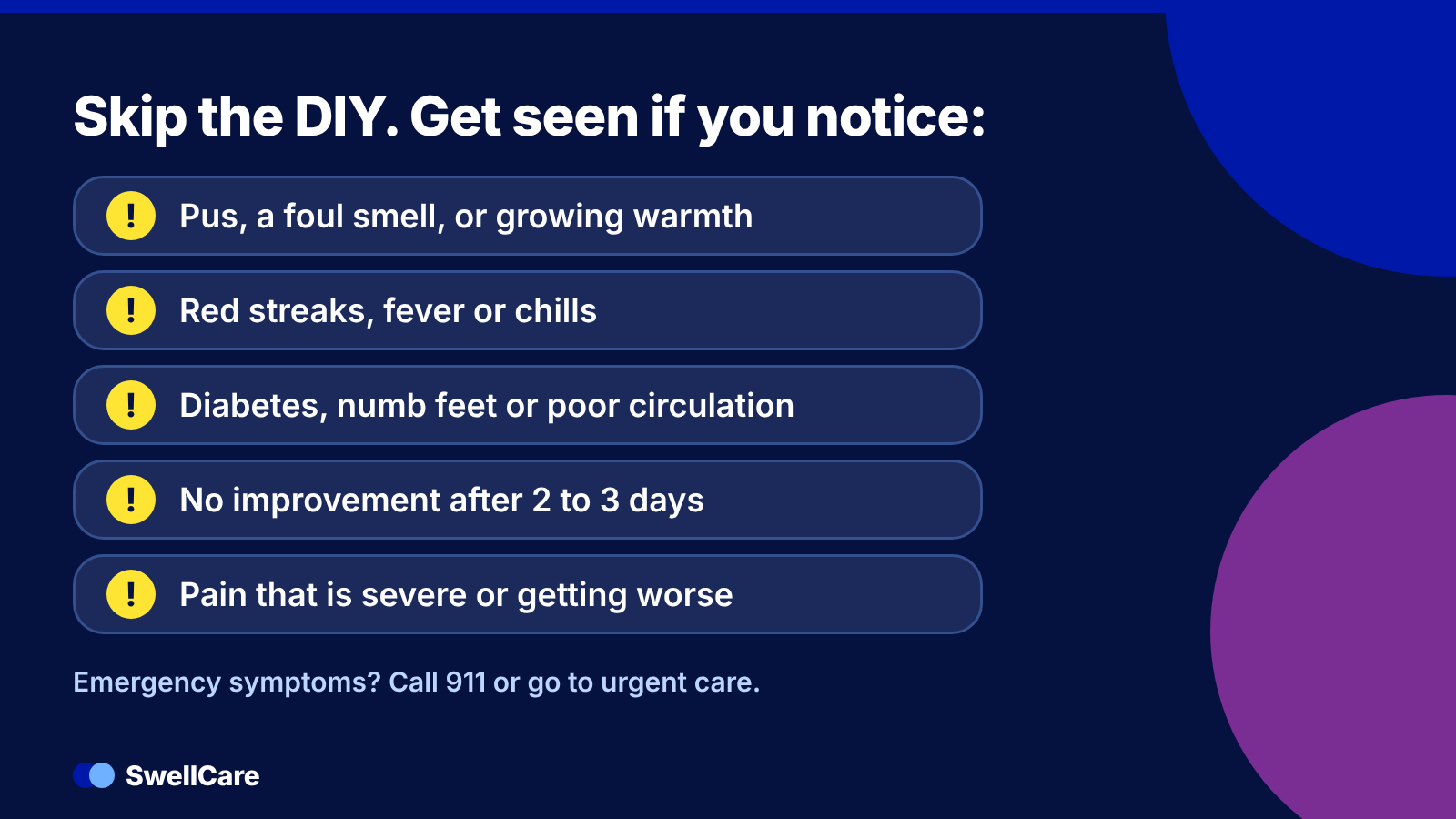
| Pus, a foul smell, or growing warmth | Infection | See a clinician today |
| Red streaks, fever or chills | Infection spreading, possibly cellulitis | Get care right away |
| Diabetes, numb feet or poor circulation | Higher risk of serious complications | Don’t treat it yourself |
| No improvement in 2 to 3 days | Home care isn’t enough | Book a visit |
| It keeps coming back | The nail shape or structure needs fixing | See a podiatrist for longer-term treatment |
What a podiatrist can do
If home treatment fails, the fix is usually quick. The most common procedure is a partial nail avulsion, and a podiatrist can usually do it in the office. The doctor numbs the toe and removes just the sliver of nail that’s digging in, which causes less trauma than taking the whole nail.
To stop it returning, they may also apply a chemical such as phenol to the nail root. In the studies AAFP reviewed, that approach worked more than 95% of the time, with recurrence between about 1% and 4%. Surgical approaches also beat non-surgical care for preventing repeat episodes.
If the toe is infected, you may get oral antibiotics too. After a partial nail avulsion, your clinician will explain how to keep the toe clean, covered and bandaged while it heals.
How to stop it coming back
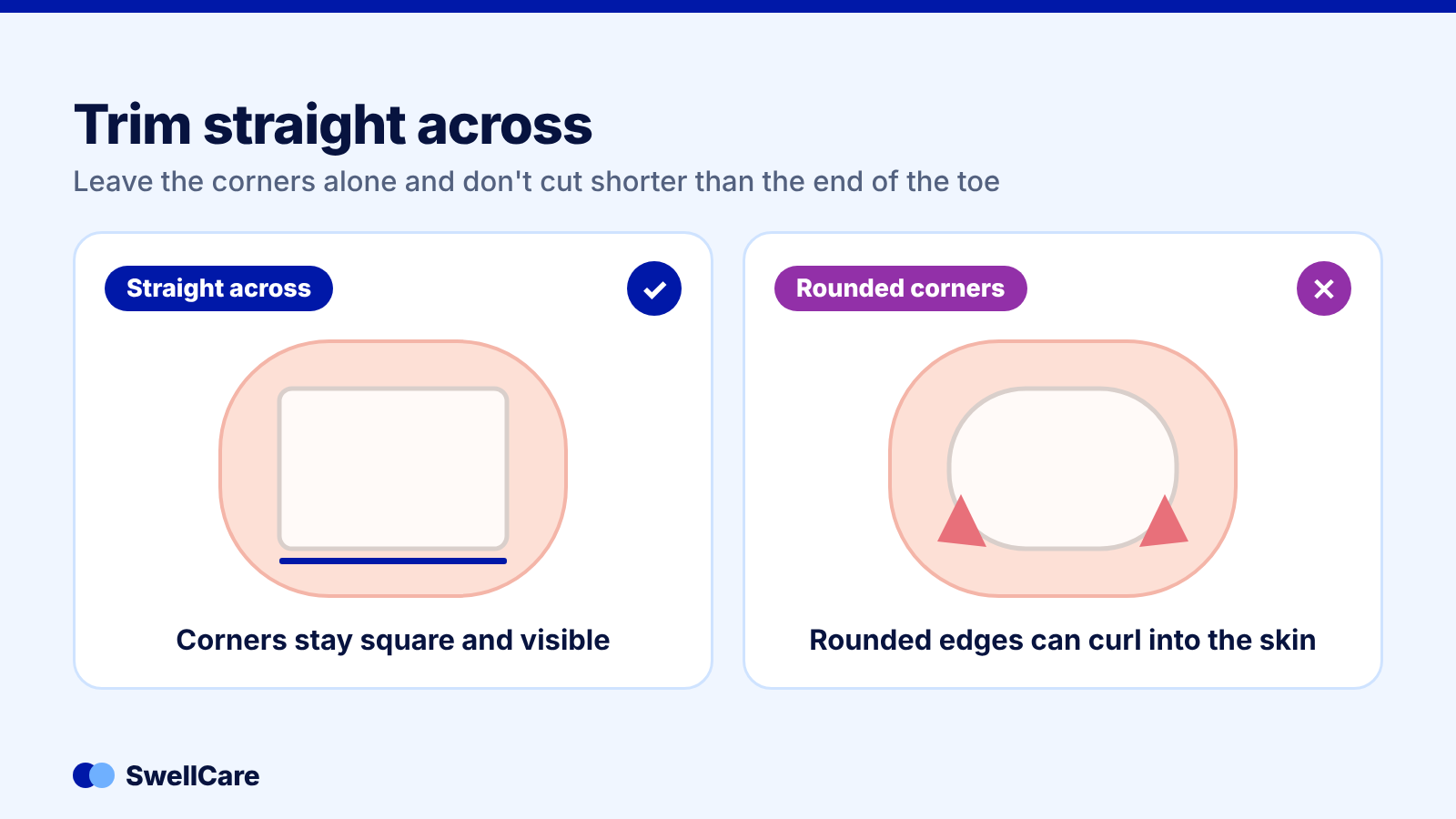
Prevention is mostly about habits, and good trimming is the biggest one. Trim your toenails straight across and don’t cut them shorter than the end of the toe. Don’t round the corners, even if it looks neater. A clean, sharp trimmer helps. Bad trimming is behind more ingrown toenails than any other habit, so slow down when you trim. Soften the nails with a short soak before trimming. Trim in good light, in small snips, and trim after a bath when the nail is soft.
Pick footwear with room for your toes, including your running shoes. Keep your feet clean and dry, and be careful with pedicures if the technician likes to dig at the corners. Check both feet once a week for early redness along the nail edge, and treat any new ingrown toenail pain right away. Good footwear and good trimming are the two prevention habits that matter most, and they cost nothing. Many home remedies only treat the symptom, while these two habits stop the next ingrown toenail and the next round of pain.
If you have nerve or circulation problems, regular foot exams belong on your calendar.
Not sure if home care is enough? Talk to a SwellCare clinician
Sometimes the hard part isn’t the soak. It’s knowing whether the toe looks normal, or whether it needs treatment beyond home care. SwellCare offers clinician-led virtual care 24/7, with a free screening and a $45 consultation if you continue, with no membership. A clinician can look at your toe on video, check for the red flags above, tell you whether home care is reasonable, and point you toward in-person care if it isn’t.
It’s not emergency care. If you have a high fever, spreading redness or severe pain, go to urgent care or call 911.
Start a visit with SwellCare →
Questions people ask about fixing ingrown toenails
Can I cut out an ingrown toenail myself?
No. Cutting into the corner often leaves a sharp spike behind that grows back into the skin, and it can introduce bacteria. Soaking and gently lifting the nail edge is safer. If that doesn’t work, a podiatrist can remove the problem section under numbing.
How do you fix an ingrown toenail with dental floss?
Soak the toe first. Then slide a small piece of waxed dental floss under the nail corner so the nail grows over it. Change it daily. Skip this if the toe is red, draining or very painful, and stop if it hurts more.
What is the fastest way to get rid of an ingrown toenail?
There isn’t a magic trick. If you want to know how to fix ingrown toenails quickly, the answer for mild cases is warm soaks several times a day, roomy shoes and a lifted nail edge, which often brings relief within a few days. For painful or infected toes, a clinician’s treatment is faster than waiting.
Should I put antibiotic ointment on it?
A thin layer is fine if you aren’t allergic, and it helps keep infection out of a sore toe. Petrolatum jelly works about as well. Neither will cure an infection that’s already spreading, so see a doctor for drainage, fever or red streaks.
Will an ingrown toenail go away on its own?
Sometimes a mild one eases once the pressure is off. The nail still has to grow out past the skin, which takes weeks. If it’s getting worse after two to three days, don’t wait.
Is it okay to keep walking and exercising?
Walking is fine if it’s comfortable, and many people with a mild ingrown toenail keep their routine. Avoid tight shoes and high-impact workouts while the toe is sore. If pain is limiting your steps, that’s a sign to get it checked.
Trusted references
Public-health, research, and medical-society resources related to this guide.