You woke up dizzy, you’ve had a fever for three days, and your doctor can’t see you until next week. So: does urgent care do blood work?
Yes, in most cases. Many urgent care centers draw blood on site, run the common tests in house, and send the rest to an outside lab. You can usually walk in without an appointment, and some same-day results come back before you leave.
That’s the short answer. The longer one covers which blood tests urgent care clinics actually run, what a visit costs, how long you’ll wait for results, and when a different door makes more sense. If you’ve ever typed “does urgent care do blood work” into a search bar at 9 p.m. with a pounding headache, this guide is for you.
The catch is that every urgent care clinic is different. Here’s what to expect before you go.
Which blood tests can you get at urgent care?
Most urgent care clinics keep a short menu of the blood tests that change treatment today. Think of urgent care blood work as a tool kit for finding out what’s behind your symptoms, not a full annual physical.
The usual lineup:
- Complete blood count. Often called a CBC, it counts red cells, white cells and platelets, and it helps flag infection or anemia, according to MedlinePlus.
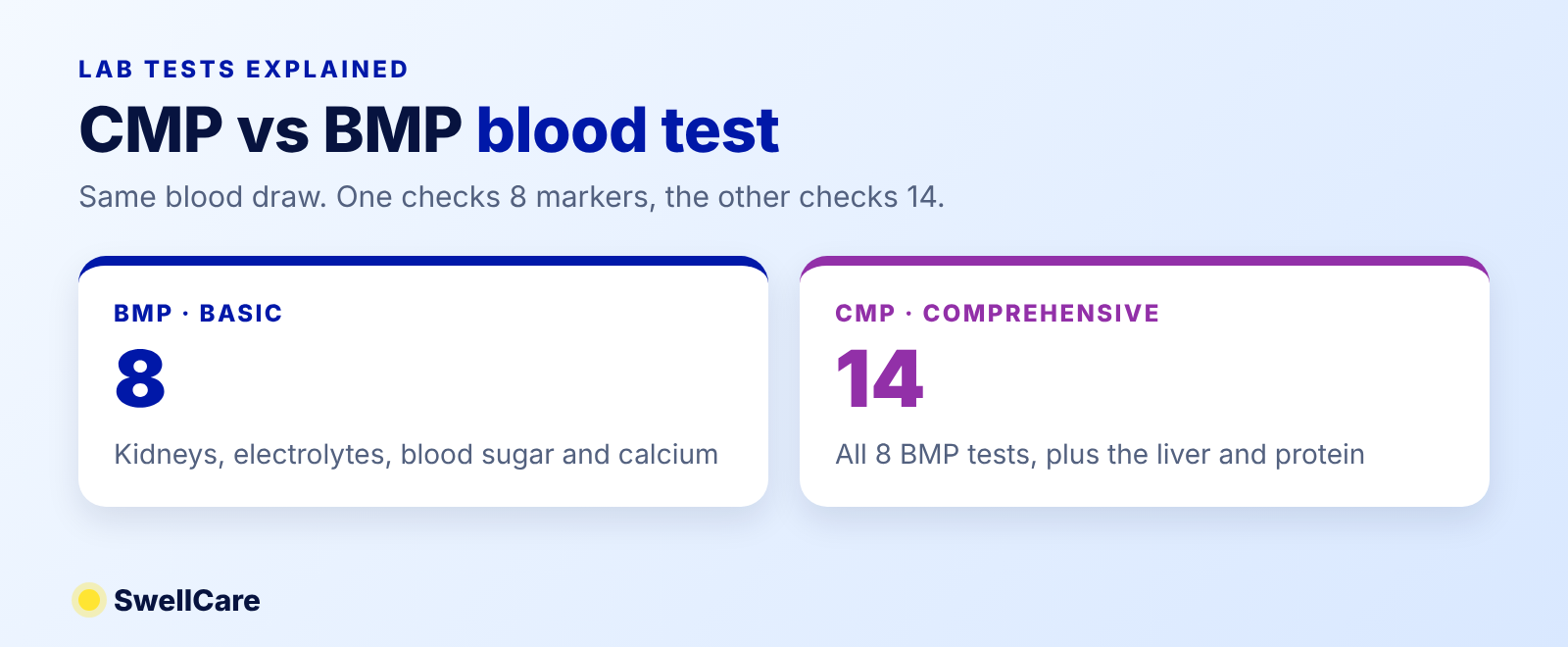
- Metabolic panel. The basic version measures blood glucose, electrolytes and kidney markers. The comprehensive version adds liver tests (MedlinePlus). Here’s how CMP vs BMP compare.
- Lipid panel. This is the cholesterol check, and it matters if you have diabetes or a family history of heart disease.
- Thyroid and A1C tests. Some clinics run them. Others send them out.
- Rapid tests. Pregnancy, strep, flu and some STI screens.
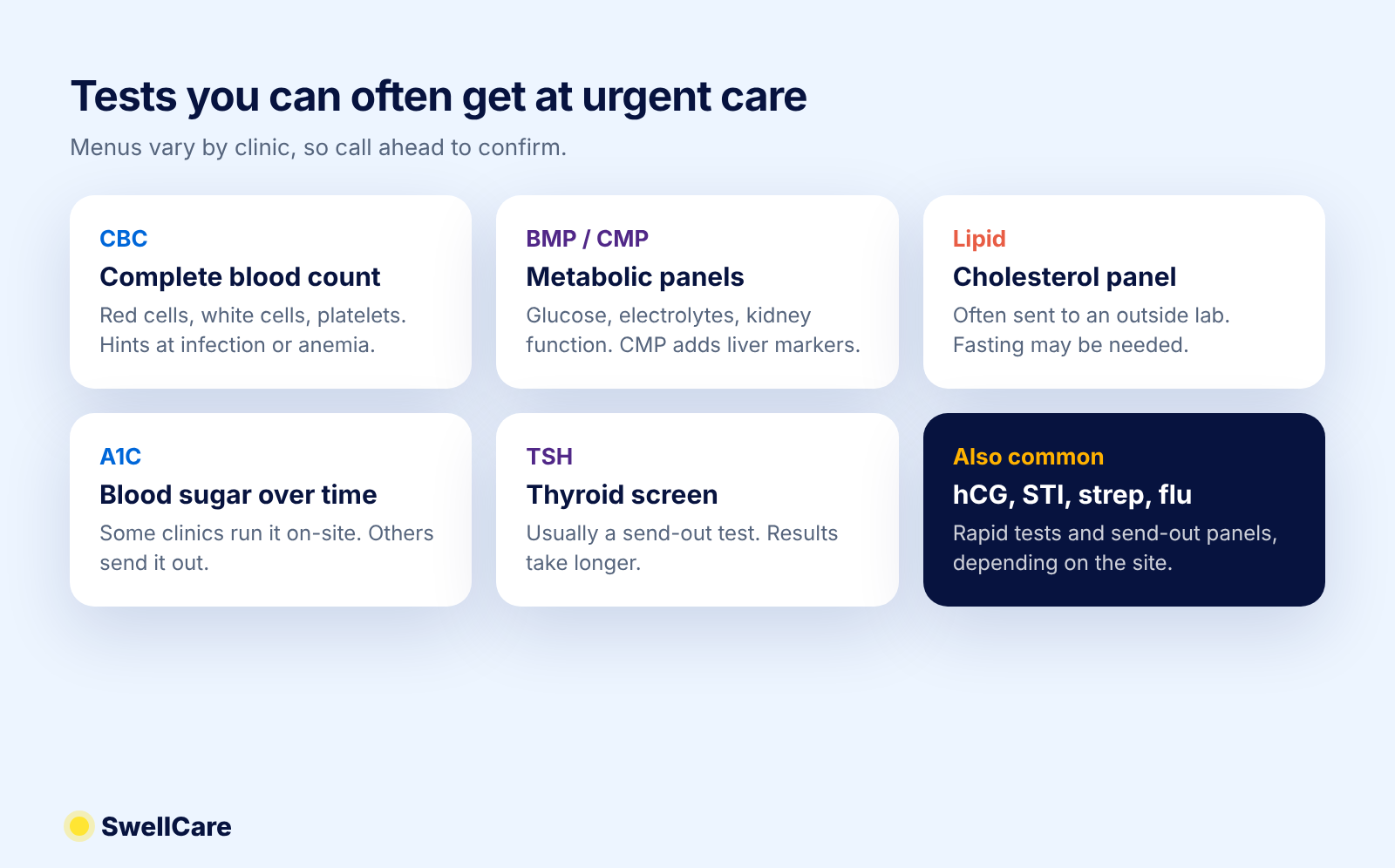
Menus vary a lot. A clinic with a full analyzer can run a panel in the back room. A smaller one may only do a finger-stick glucose. Call first and ask, “Do you draw blood on site, and which blood test options do you run here?”
How long do urgent care blood test results take?
It depends on where the sample gets analyzed. That’s the part most guides skip, and it decides whether you go home with answers or wait by the phone.
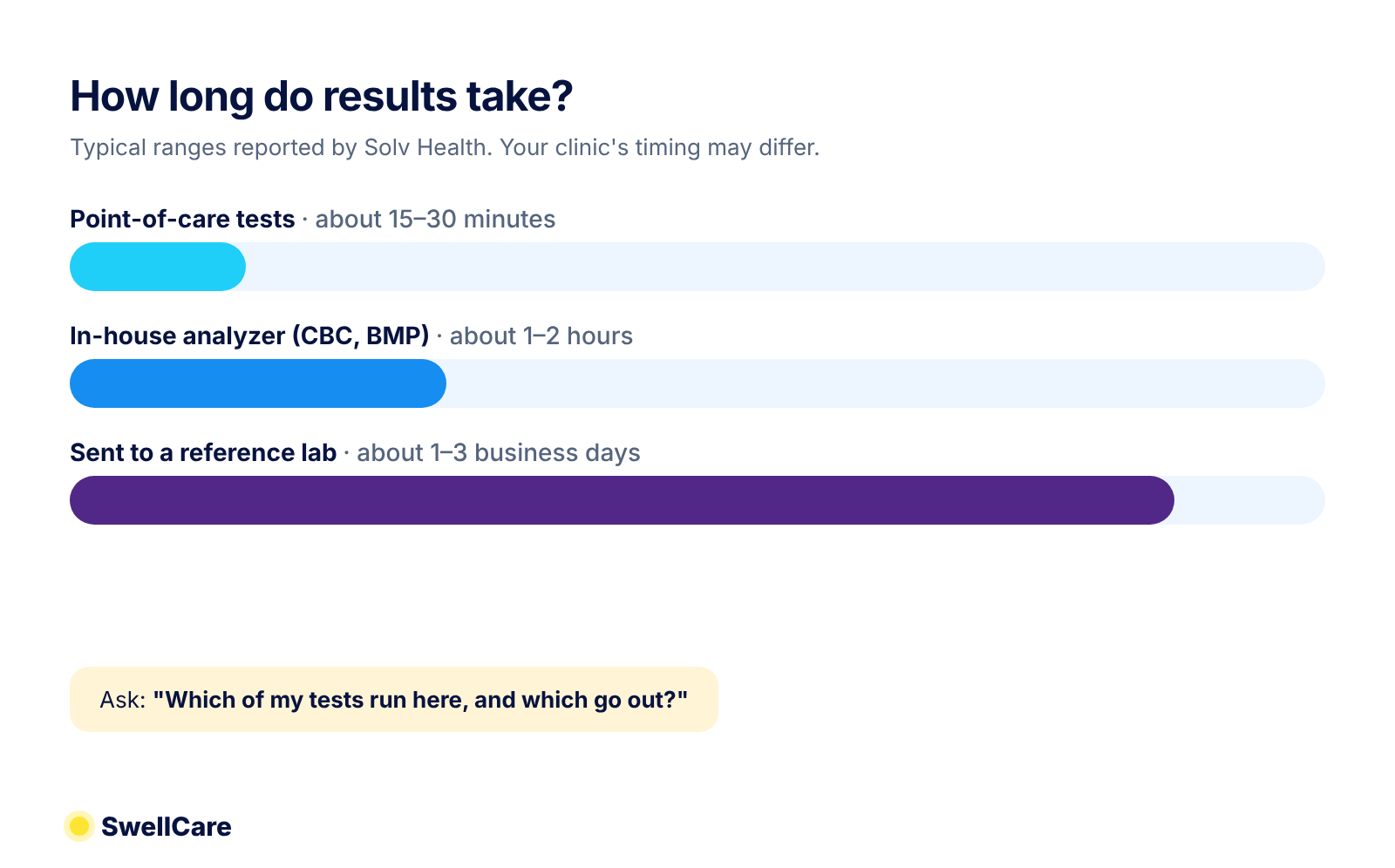
Point-of-care tests, like rapid blood glucose or strep, often take about 15 to 30 minutes. Tests run on the clinic’s own analyzer, such as a CBC, can take roughly one to two hours, based on Solv Health. Anything sent to a reference lab, like a lipid panel or thyroid test, usually takes one to three business days.
So same-day results are real, but only for some tests. Plenty of urgent care centers can turn a same-day CBC, while a thyroid test or cholesterol screen may take days. If you’re waiting on a send-out, ask who will call you when the results land. Don’t assume silence means good news. Same-day answers matter most when you’re sick today.
What does blood work at urgent care cost?
You pay twice, in most cases: once for the visit and once for each test.
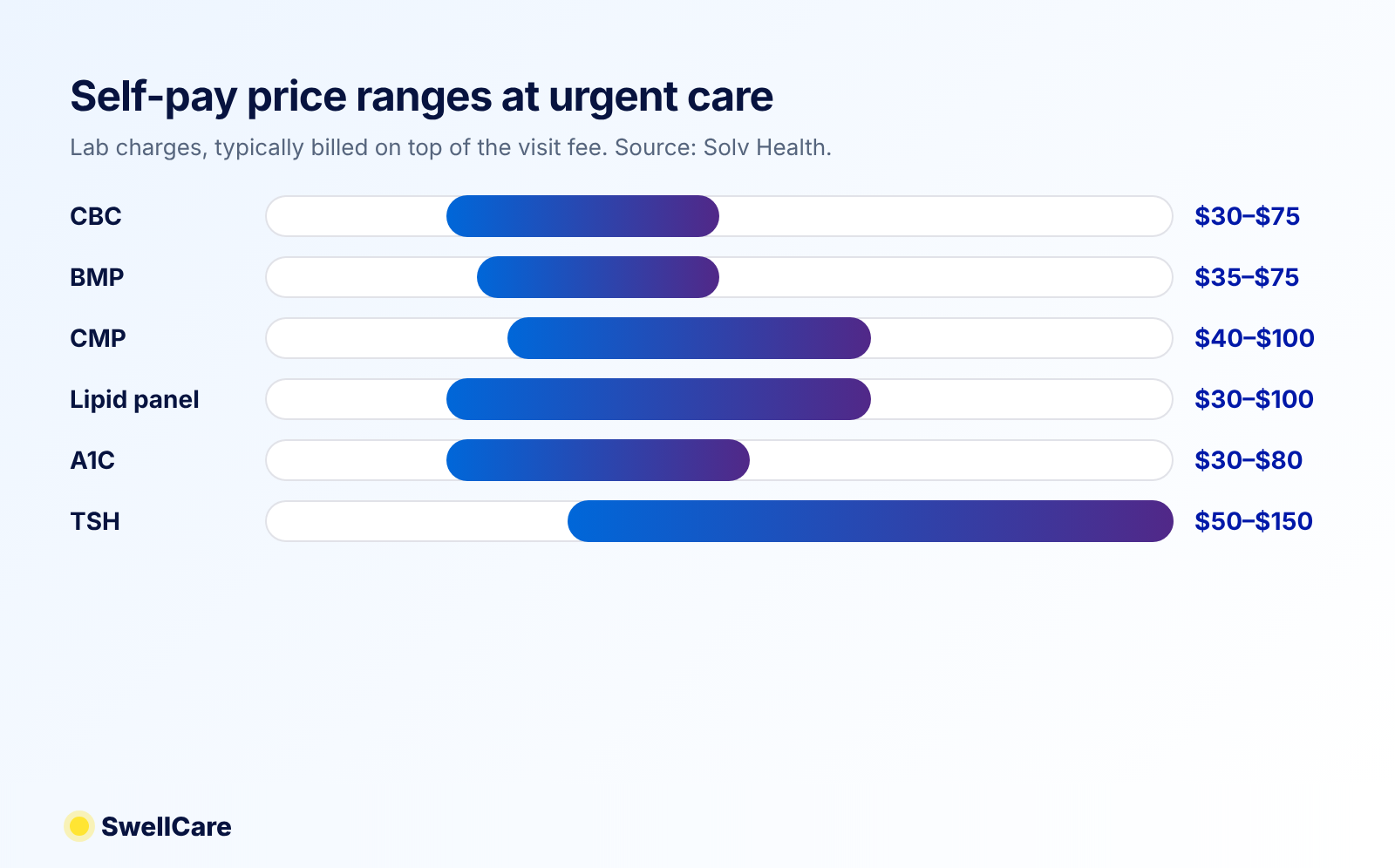
Solv Health’s self-pay ranges for common urgent care tests run from about $30 to $150 per test. A CBC runs roughly $30 to $75, a lipid panel $30 to $100, and a thyroid test $50 to $150. The base visit fee comes on top, so the real cost of urgent care blood work is the visit plus the tests.
Insurance changes the math. With insurance, medically necessary tests are usually covered, subject to your deductible and coinsurance, but outside labs sometimes send a separate bill weeks later. Ask whether the lab is in network before the draw, not after. Without insurance, ask for the cash price up front.
Compare that with a hospital outpatient lab. A CBC alone can run $50 to $400 or more at a hospital, according to Solv’s pricing guide. If you’re paying cash and you already have an order, a retail lab can cost less (GoodRx puts many common tests at about $29 to $99 at large independent labs).
When urgent care is the right call
Urgent care shines when you need answers today and it isn’t an emergency. Think of it as the middle ground between waiting for a primary care appointment and sitting in the ER.
Good reasons to go:
- A suspected infection with worsening symptoms, where a white cell count could change your treatment. Fever, chills and body aches are typical symptoms.
- Vomiting or diarrhea symptoms that have left you dizzy or dried out.
- Fatigue or weakness that came on fast.
- A known condition, like diabetes, when your primary care doctor is booked out and your symptoms are getting worse.
You don’t need a referral. The clinician examines you, decides which blood tests make sense, and orders them during the visit. A walk-in is fine at most urgent care centers, though some will only draw blood for a patient they’ve seen, and a few prefer an appointment. Standalone testing sites usually want a referral or provider’s order first.
Fasting is rarely needed for a complete blood count or thyroid test. Lipid panels and some metabolic panels may need 8 to 12 hours without food, so ask when you call.
When to skip urgent care for blood work
Don’t use urgent care for everything. Some symptoms belong elsewhere.
Go to the emergency room or call 911 for chest pain, stroke symptoms, severe trouble breathing, heavy bleeding or a severe allergic reaction. Urgent care testing can’t replace a hospital’s full workup, and the emergency room has the imaging and monitoring you may need.
Stay with your primary care doctor for routine screening, monitoring a long-term condition, or comparing numbers over time. Your primary care office has your history, and that context matters when someone reads your results. Insurance plans often cover preventive screening best through primary care.
Also skip it if you want a big wellness panel, hormone testing or vitamin levels. Those are usually better ordered through your doctor or a direct-to-consumer service.
How to get the most from your visit
A few small habits make an urgent care blood draw more useful.
Bring a list of your medications and symptoms. Tell the urgent care clinician when you last ate, and describe when your symptoms started. Ask what diagnosis the tests are meant to confirm or rule out, whether an infection, anemia or something else, and what you’ll do differently depending on the answer.
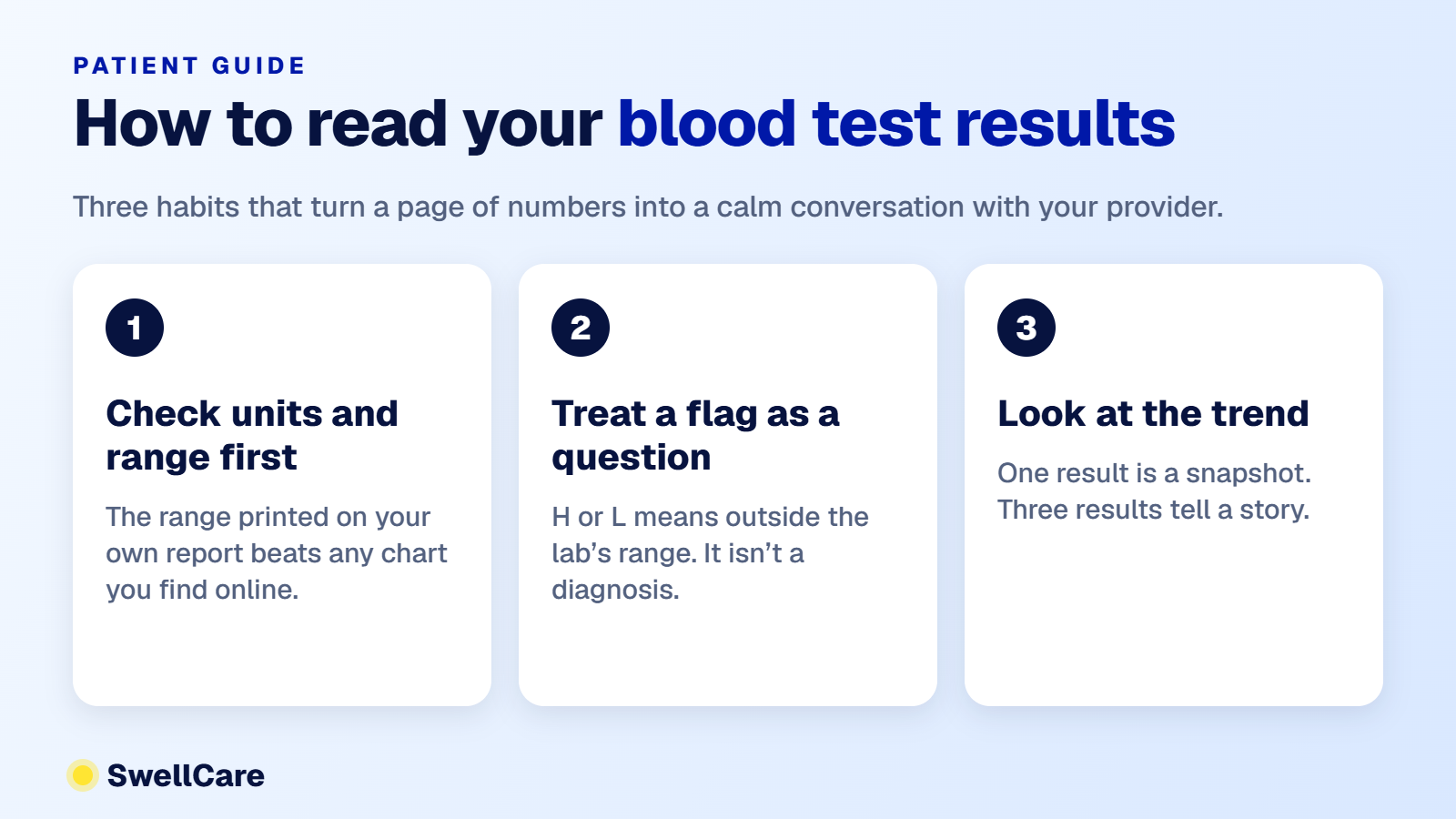
Then get the plan for results in writing, or at least in your patient portal. Who calls you? How soon? What counts as abnormal enough to come back? And keep your primary care doctor in the loop, because they’ll want to see these results too. Our guide on how to read blood test results can help in the meantime.
Your next step
If you’re sick right now and unsure where to go, start with a quick call to a nearby urgent care about their test menu, cost and appointment policy.
If you’d rather not sit in a waiting room, Swell offers clinician-led virtual care around the clock including labs and follow-up when a clinician decides you need them. It isn’t emergency care, so call 911 if something feels dangerous. For everything else, you can talk to a licensed clinician and get clear next steps.
Questions people ask about urgent care blood work
Can I walk in just for blood work?
Often, yes. Many urgent care centers accept walk-in patients for urgent care blood work, but some only draw blood after a provider visit. Call ahead to confirm whether you need an appointment, and ask whether you need a written order from another doctor.
Do I need a doctor’s referral or order?
Not for urgent care blood work, which starts with a visit. The urgent care clinician can examine you and order tests on the spot. A standalone testing site like Quest or Labcorp usually needs an order from a provider first.
Is blood work cheaper at urgent care than the ER?
Usually, yes. Hospital outpatient testing and ER visits tend to cost several times more than urgent care centers or retail testing sites. Cost still varies by test, location and insurance, so ask for the cash price before you agree.
Do I need to fast before an urgent care blood test?
Only for some tests. A complete blood count and thyroid panel generally don’t require it. Lipid and some metabolic panels may need 8 to 12 hours of fasting. Water is fine. Ask the clinic when you book.
How accurate are urgent care results?
Urgent care centers that run CLIA-certified analyzers or send samples to accredited reference laboratories produce reliable results. The bigger limit is scope: urgent care blood work answers today’s question and doesn’t replace follow-up with your regular doctor.
Trusted references
Public-health, research, and medical-society resources related to this guide.