You spot a louse on the pillowcase. Suddenly every couch cushion and rug looks suspect.
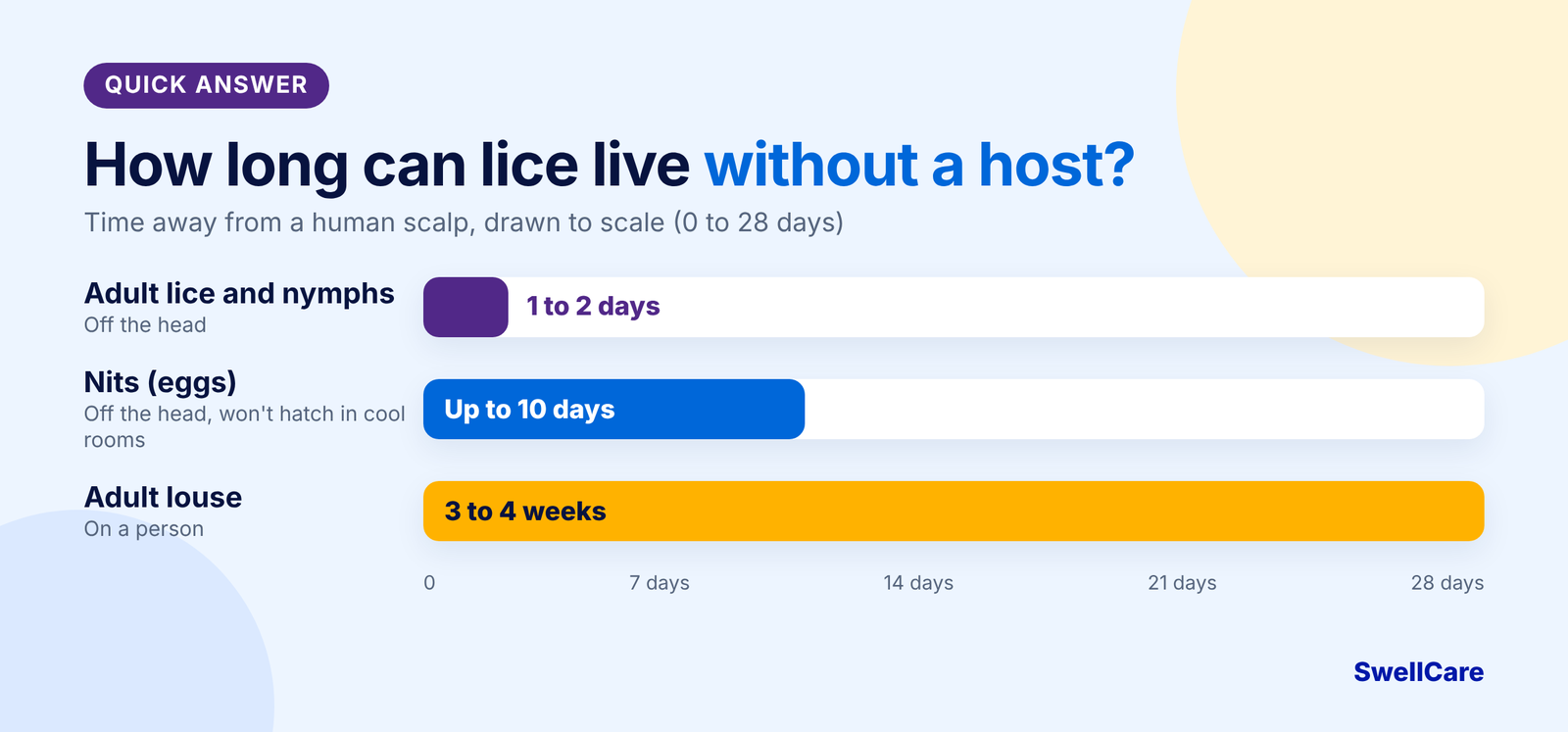
Here’s the short answer to how long can lice live without a host: about one to two days. Adult lice need blood from a human host every few hours. Once they fall off a human host, most are dead within 48 hours.
That clock changes how you clean. You don’t need to bleach your home or toss the bed. Head lice are a problem for the hair, not the house. What you need is a short checklist and an afternoon.
How long can lice live without a host?
Not long. Lice are built for one place, a warm scalp, and away from it they dry out and starve. The Illinois Department of Public Health says adults can last two to four days in a cool room (about 74°F) and one to two days in a warm one. Nits are tougher.
| Stage | Off the head | On a person |
|---|---|---|
| Adult lice and young | 1 to 2 days, up to about 4 in cool rooms | Adults live up to about 30 days |
| Nits (eggs) | Up to 10 days; won’t hatch at room temperature | Hatch in about 7 to 10 days |
Adult lice and nymphs
An adult feeds often and weakens fast without a meal. A nymph, the in-between stage, can’t last long off the scalp either. Lice that land on the couch usually have to climb back onto a person within hours.
Nits
Nits are glued to human hair close to the scalp, where it’s warm. Pulled off the head, they can stay alive for up to 10 days, yet they won’t hatch at room temperature or below. Lice don’t lay eggs on furniture.
Why lice die so quickly away from the scalp
Head lice live on humans and feed on human blood. Take a louse off a human host and it weakens fast. That’s why lice found on a sofa are rarely a threat, and why lice almost never survive a full week away from a head.
Lice crawl. Unlike scabies mites or bed bugs, they live only in hair, and they don’t jump or fly, so head-to-head contact is how most of them spread, especially among children who press heads together at school and play. Dogs and cats don’t carry head lice, which means pets can stay off your cleaning list.
The life cycle works in your favor too. Eggs hatch in about 7 to 10 days, nymphs mature over the following week or so, and an adult lives up to about 30 days, all on a scalp, according to Illinois health officials. Take away the head and the cycle stops.
Can lice live on furniture, carpets, pillows and bedding?
For a day or two, yes. The risk is low, though. Weak lice on carpets or a sofa rarely make it back to hair.
Check the things that touched hair directly. Mayo Clinic lists hats and scarves, brushes and hair accessories, headphones, pillows, towels and stuffed animals. Children trade hair ties all day, so start with their things. Anything used in the two days before treatment counts.
Lice cleaning guide: what to do in your home
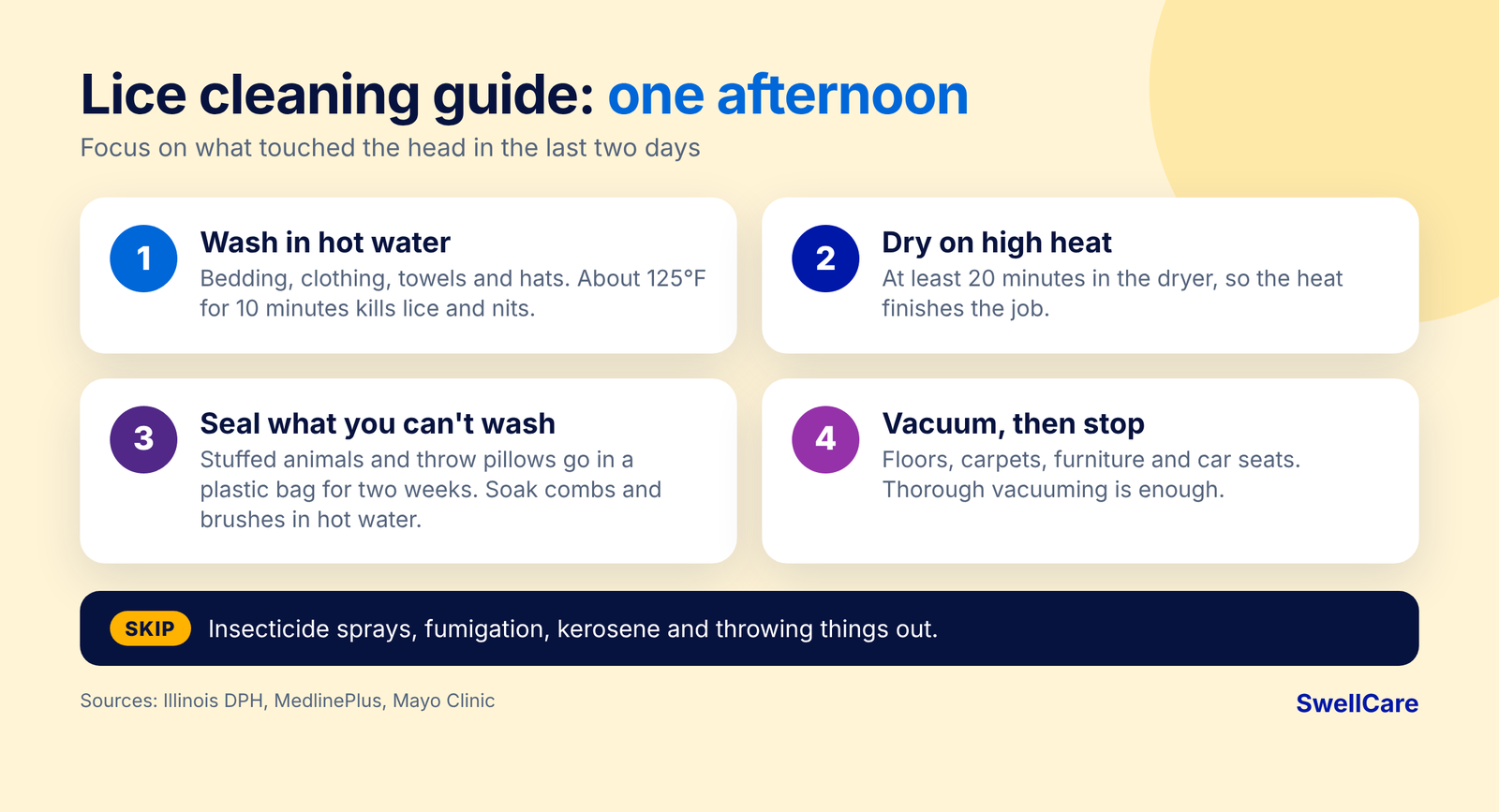
Do this once, in this order. An infestation lives on people, not in your home, and lice can’t set up camp there. The checklist is short.
Wash and dry fabric
Wash bedding and clothing in hot water, along with towels and hats. Then run the dryer on high heat for at least 20 minutes. Heat of roughly 125°F for 10 minutes kills lice and nits, so the dryer does most of the work.
Seal what you can’t wash
Put stuffed animals and throw pillows in a sealed plastic bag for two weeks (Illinois health officials say at least 10 days). Soak combs and brushes in hot water for 5 to 10 minutes. Rinse the nit comb, too.
Vacuum and skip the sprays
Vacuum the floors and carpets, then the furniture and car seats. Thorough vacuuming is enough. Illinois health officials don’t recommend insecticide sprays or fumigation, and MedlinePlus warns against kerosene or gasoline.
What to do about the head: treatment and when to get help
Cleaning won’t fix a head. Treatment happens on the hair. Use an over-the-counter lice shampoo or lotion, follow the label, then comb wet hair section by section with a fine nit comb. Repeat in 7 to 10 days to catch any lice that emerge late, and check daily for two to three weeks. Quick weekly checks after that help prevent a second round.
Check everyone in the household for head lice, because lice pass easily between hair. Hygiene has nothing to do with it, according to MedlinePlus. An infestation is usually treated at home, per the American Academy of Dermatology. Skip mayonnaise and olive oil, since MedlinePlus says there’s no clear evidence they work. Stick with a proper shampoo. Ask your school or daycare about its policy before children go back.
Call a clinician if you’re unsure it’s an infestation, since dandruff and hair products can look like nits. Do the same if you’re pregnant or nursing, if the treatment is for young children, or if an over-the-counter shampoo fails. To prevent a repeat, don’t share hats or brushes.
A Swell clinician can look at what you found and talk through next steps in an online visit, any hour. Start with Swell urgent care or see how it works.
Questions people ask about lice off the head
Can lice live on a pillow overnight?
Yes, lice can survive a night or two on a pillowcase. They can’t feed, so they weaken quickly. Toss the pillowcase in a hot wash and dry it on high heat. You rarely need to replace the pillow.
Can lice survive a washing machine?
Hot water and heat do the work. Wash at about 125°F or hotter, then dry on high heat for 20 minutes or more. That combination kills lice and nits, so one cycle is enough for most bedding and clothing.
Do pets spread head lice?
No. Head lice live only on people, so dogs and cats can’t pass lice on and don’t need to be treated or washed. Focus on the people in the house, children included, and on shared hats and brushes.
Can nits hatch on furniture?
Not in any way you need to worry about. Nits need the warmth of a scalp to develop, and cool rooms stop them. Vacuum the sofa, then move on.
Trusted references
Public-health, research, and medical-society resources related to this guide.