You wake up with itchy welts on your arm and a tight, stinging feeling in your skin. By dinner they’re gone. Two days later a fresh batch shows up on your legs, and the cycle starts over. Hives that come and go for weeks wear you down, and they’re far more common than most people expect. They’re rarely dangerous. They are, though, a sign to stop guessing and get a plan.
Here’s the short answer. Hives that keep returning past six weeks are called chronic hives, and doctors can usually bring them under control even when no cause turns up. This guide covers why they happen, what sets them off, which treatments work, and what to do tonight about the itch.
What it means when hives come and go for weeks
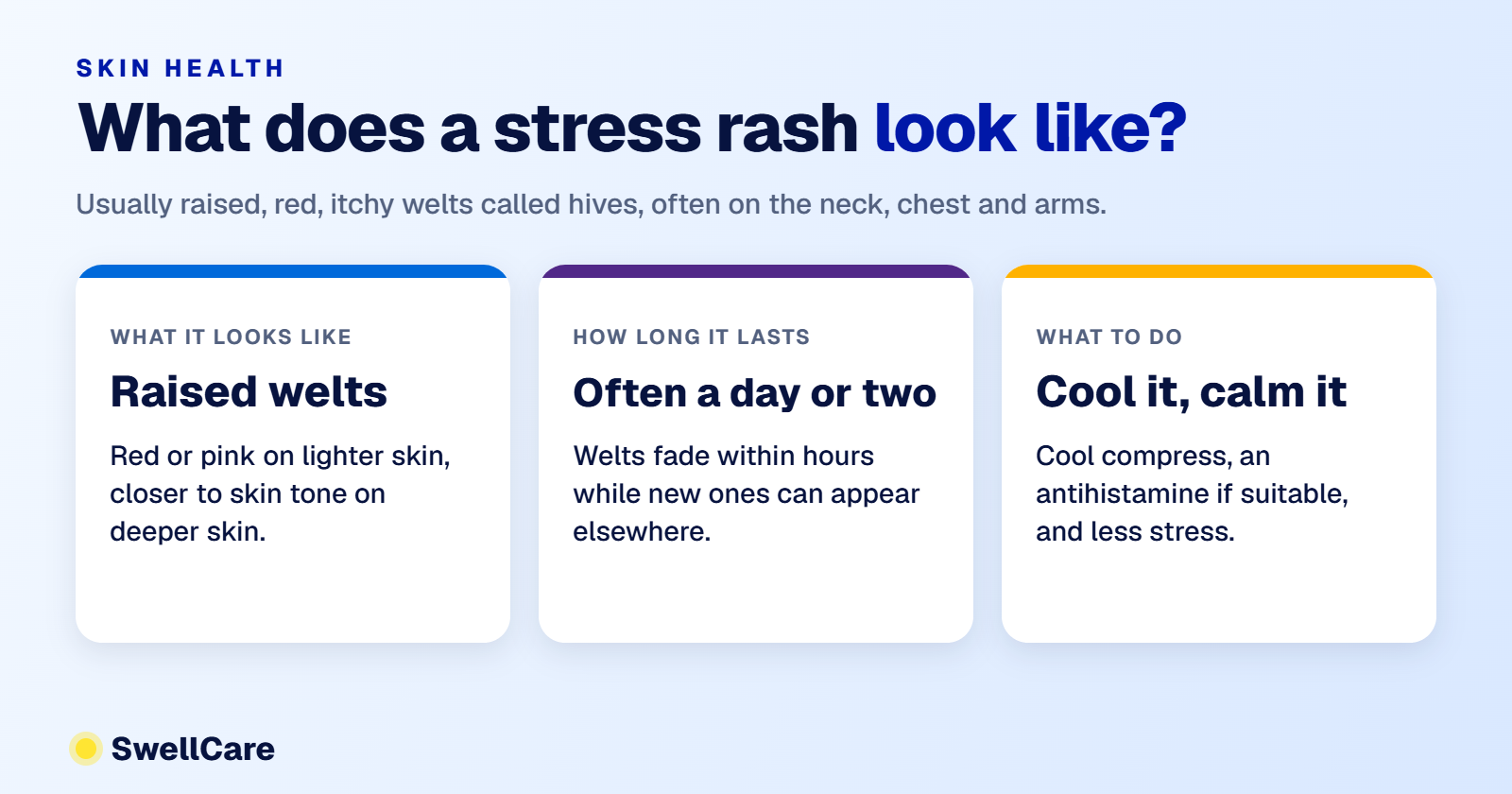
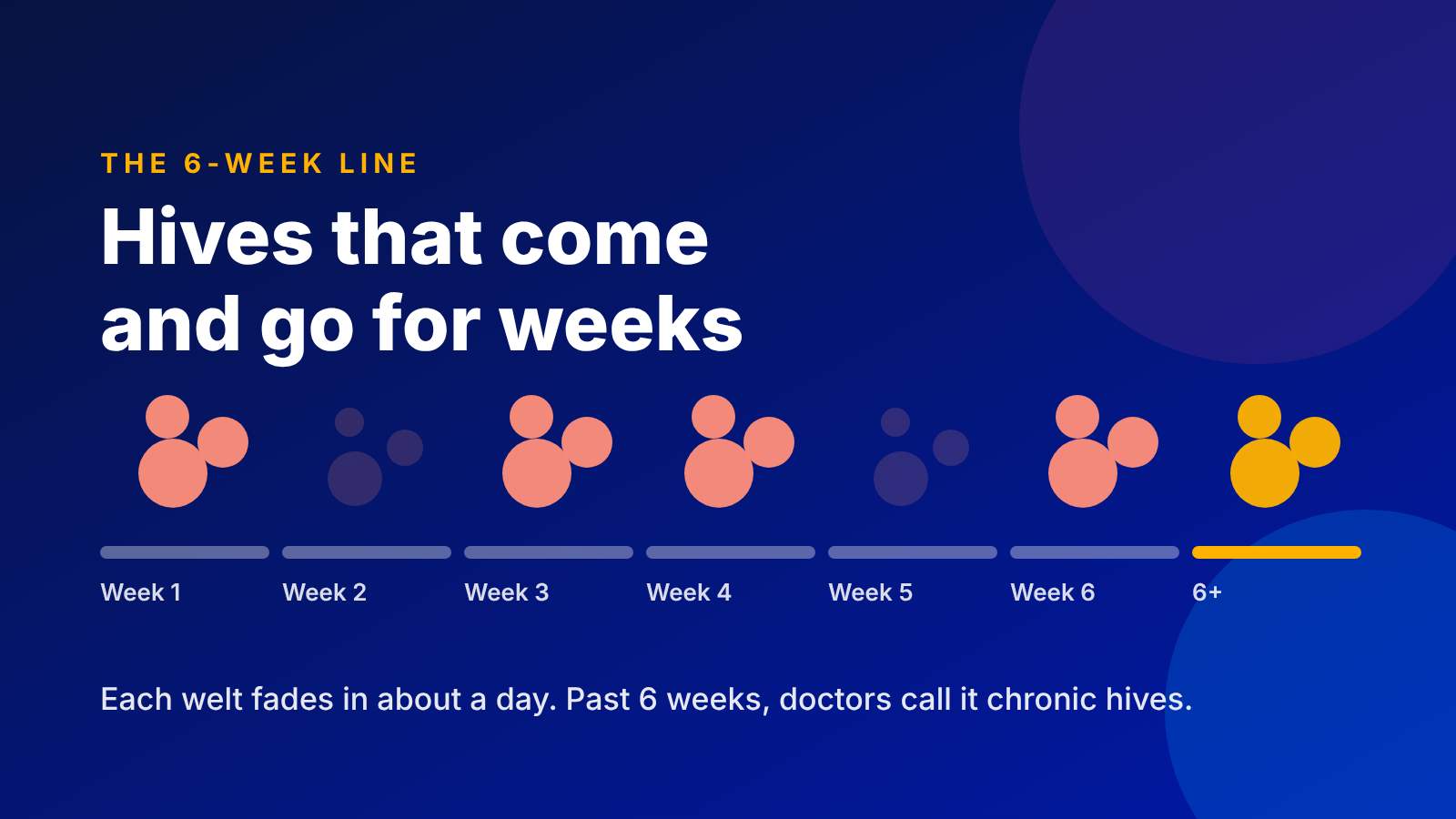
Hives, also called urticaria, are raised, itchy welts that can look red, pink or skin-colored. A single welt usually fades within 24 hours and leaves no mark, according to the American Academy of Allergy, Asthma & Immunology. That’s why the rash seems to travel. Old welts vanish while new ones form somewhere else.
The six-week line matters. Hives that clear sooner are acute. Hives that return past that point are chronic urticaria, and the American College of Allergy, Asthma and Immunology describes them as showing up at least twice a week. About 1.4% of people live with the spontaneous form, and women get it about twice as often as men.
The main symptoms are itching and raised welts, sometimes with a stinging or burning feel. The ACAAI adds that a red welt often turns pale in the middle when you press it. Symptoms can show up anywhere on your skin.
Some people also get swelling deeper in the skin, called angioedema. It tends to hit the lips, eyelids, hands or feet.
What causes hives that keep coming back?
Under your skin, cells called mast cells release histamine and other chemicals. Histamine makes tiny blood vessels leak fluid, and that fluid is the welt. What sets the mast cells off is the hard part.
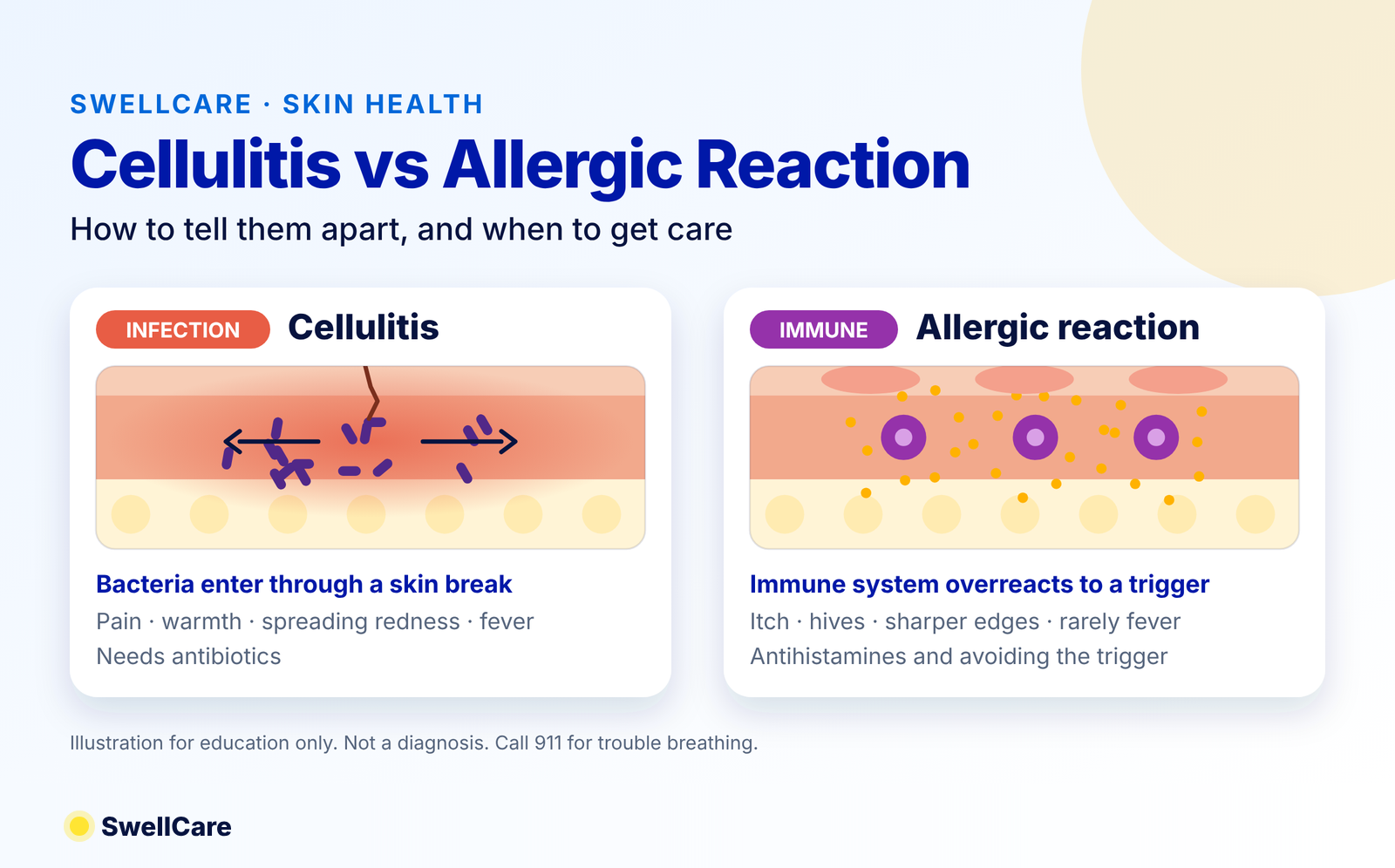
Here’s what surprises many people: in most chronic cases, no outside cause is ever found. The AAAAI says chronic spontaneous hives usually aren’t caused by an allergy, and the ACAAI notes that food almost never triggers them, even though people often blame their dinner. So hives that keep coming back may have nothing to do with the shrimp you ate last week.
An autoimmune link is more likely. Some chronic hives travel with autoimmune thyroid disease, rheumatoid arthritis or lupus, usually alongside other symptoms such as joint pain or fevers. If your history hints at that, your doctor will check.
Triggers that can set off a flare
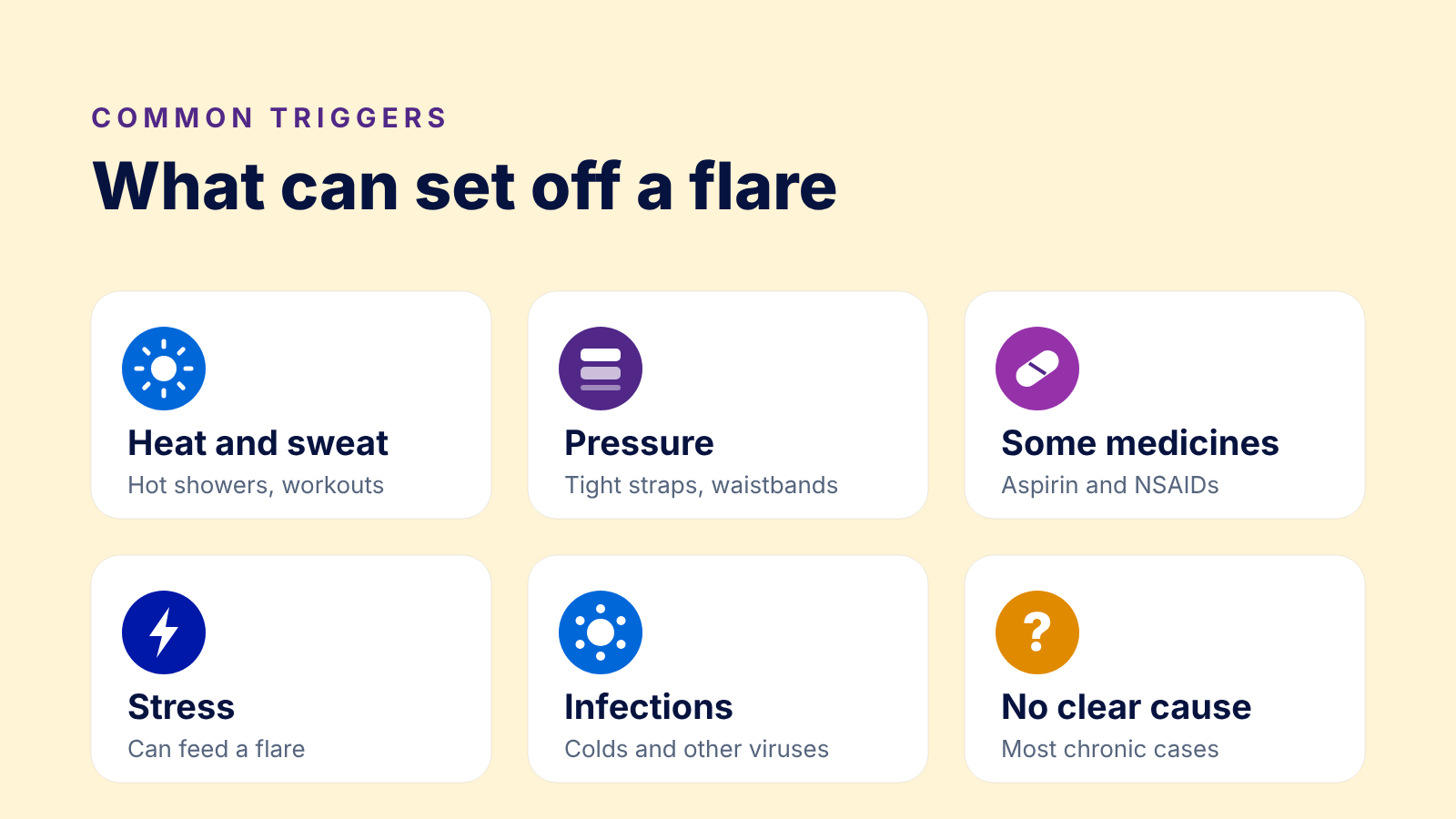
A trigger isn’t a cause. It’s whatever nudges an already-sensitive system over the edge. Common ones include:
- Heat and hot showers
- Pressure from tight waistbands, bra straps or backpacks
- Certain medicines, including aspirin and ibuprofen-type pain relievers
- Infections, especially viral ones
- Emotional stress, which can make a flare feel worse
Jot down a quick note each time you flare: what you did, what you ate, how your skin and other symptoms felt. Patterns hiding in plain sight are often the best clue you’ll get, and your doctor will want to see them.
How long will hives last?
It varies, and anyone who promises a date is guessing. The AAAAI reports that about half of people with chronic hives clear within one to two years, and 80% to 90% improve within five. Recurrence months or years later isn’t unusual, even after a good stretch.
That sounds long. It’s also why treatment focuses on control rather than waiting it out. The AAAAI says neither main form of chronic urticaria is dangerous, and most people feel much better long before the hives stop for good.
Individual welts, meanwhile, rarely last more than a day or two. If one spot stays put for several days, leaves a bruise, or burns more than it itches, tell your doctor. That pattern can point to something other than ordinary hives.
How doctors figure out what’s going on
There’s no single test for chronic hives. Diagnosis starts with your story: when spots appear and how long each one lasts. New medicines, a recent illness, joint pain or fatigue all matter. A few blood tests, such as a blood count or thyroid check, are common. A firm diagnosis of chronic urticaria mostly rests on that timeline. The American Academy of Dermatology guideline favors a limited workup over a long hunt for a cause, and broad allergy testing usually isn’t needed unless your history points to a specific allergen.
Photos help more than you’d think.
Welts fade fast, so snap one on your phone while it’s fresh. A clear picture helps confirm the diagnosis when the rash is gone by appointment time.
Treatments that bring relief
First line is a second-generation antihistamine, the non-drowsy kind sold at any pharmacy, such as cetirizine, loratadine or fexofenadine. If the standard dose doesn’t work, the AAD guideline says a doctor can raise it, up to four times the usual amount. Please don’t do that on your own. A doctor needs to supervise that step-up.
When antihistamines fall short, the next option is omalizumab, a monthly injection. The AAAAI notes that about half of people respond to antihistamines, and of those who don’t, 65% respond to the injection. Cyclosporine is saved for people who haven’t improved on either. A short course of steroids can calm a bad flare, but doctors avoid long-term use because of side effects.
Treatment doesn’t cure chronic hives. It can control the symptoms, though, so you sleep through the night and get through a workday without scratching.
Relief you can start at home
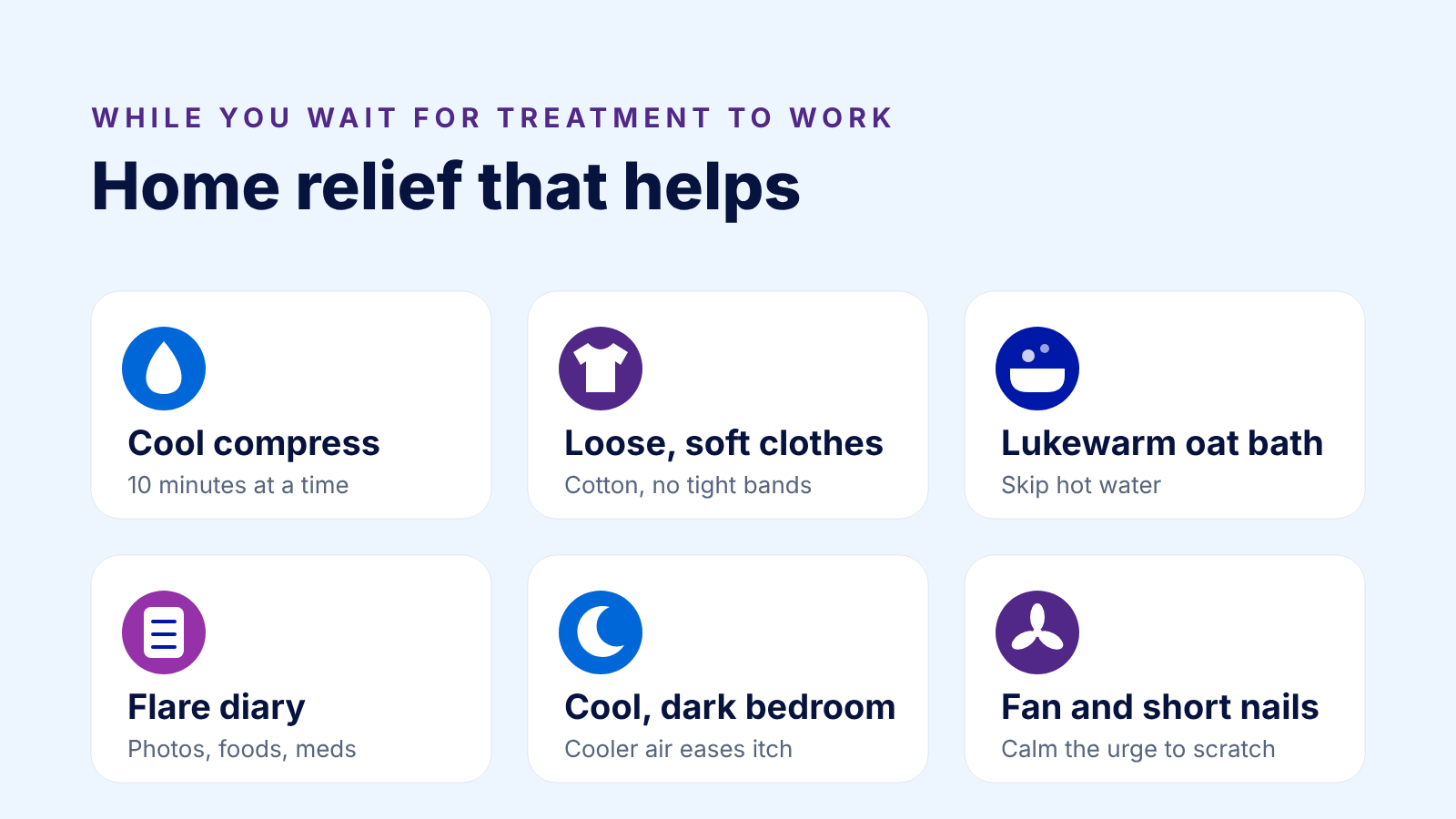
Medicine does the heavy lifting. These habits soothe your skin and ease symptoms while treatment kicks in:
- Press a cool, damp cloth on the welts for about ten minutes.
- Wear loose, soft cotton and skip anything tight.
- Take lukewarm baths instead of hot ones. MedlinePlus advises avoiding hot baths and showers.
- Keep your nails short so scratching does less harm.
- Log each flare and what you took or ate.
When to see a doctor, and when to go to the ER
See a doctor if hives keep returning for more than a few weeks, disturb your sleep, or your symptoms aren’t controlled by over-the-counter antihistamines.
There’s no prize for toughing it out, and a visit can rule out other causes.
Call 911 or go to the ER right away if hives come with trouble breathing, wheezing, throat tightness, swelling of the tongue or face, or fainting. MedlinePlus lists those as symptoms of a severe allergic reaction. Throat swelling in particular can be life threatening.
Your next step with Swell
Tired of guessing? A licensed Swell clinician can review your history and photos, plus the medicines you take, explain what treatment can be handled online, and tell you when you need an in-person allergist. Start with Swell urgent care or see how it works. Swell isn’t emergency care, so call 911 for trouble breathing or throat swelling.
Questions people ask about hives that come and go for weeks
Why do hives appear and then disappear?
Histamine from the skin’s immune cells makes each welt. Once those chemicals clear, usually within 24 hours, the welt fades, and new ones form elsewhere because different patches of skin fire at different times.
Can stress cause hives that last for weeks?
Stress is a commonly listed trigger and can make a flare feel worse. Root cause? Not proven. Managing stress is smart, but you’ll still want medical care to control the hives themselves.
What looks like hives but lasts longer?
Spots that stay put beyond a day or two, leave bruising, or burn rather than itch deserve a doctor’s look. Bug bites, eczema and other rashes can also pass for hives. Deep swelling of the lips or eyelids is angioedema, a related problem that needs its own plan.
Are hives that come and go contagious?
No. Hives aren’t contagious, so you can’t pass them to family or coworkers. A virus that set them off may spread. The welts don’t.
Should I try an elimination diet?
Usually not. The ACAAI notes that food almost never triggers chronic hives. Cutting foods without a reason can leave you hungry and no better. Talk with your doctor first, especially if you’ve had a reaction that looked like a true food allergy.
Trusted references
Public-health, research, and medical-society resources related to this guide.