You wake up with a red, warm patch on your calf. It wasn’t there last night. Is it an infection, or did your skin just react to something?
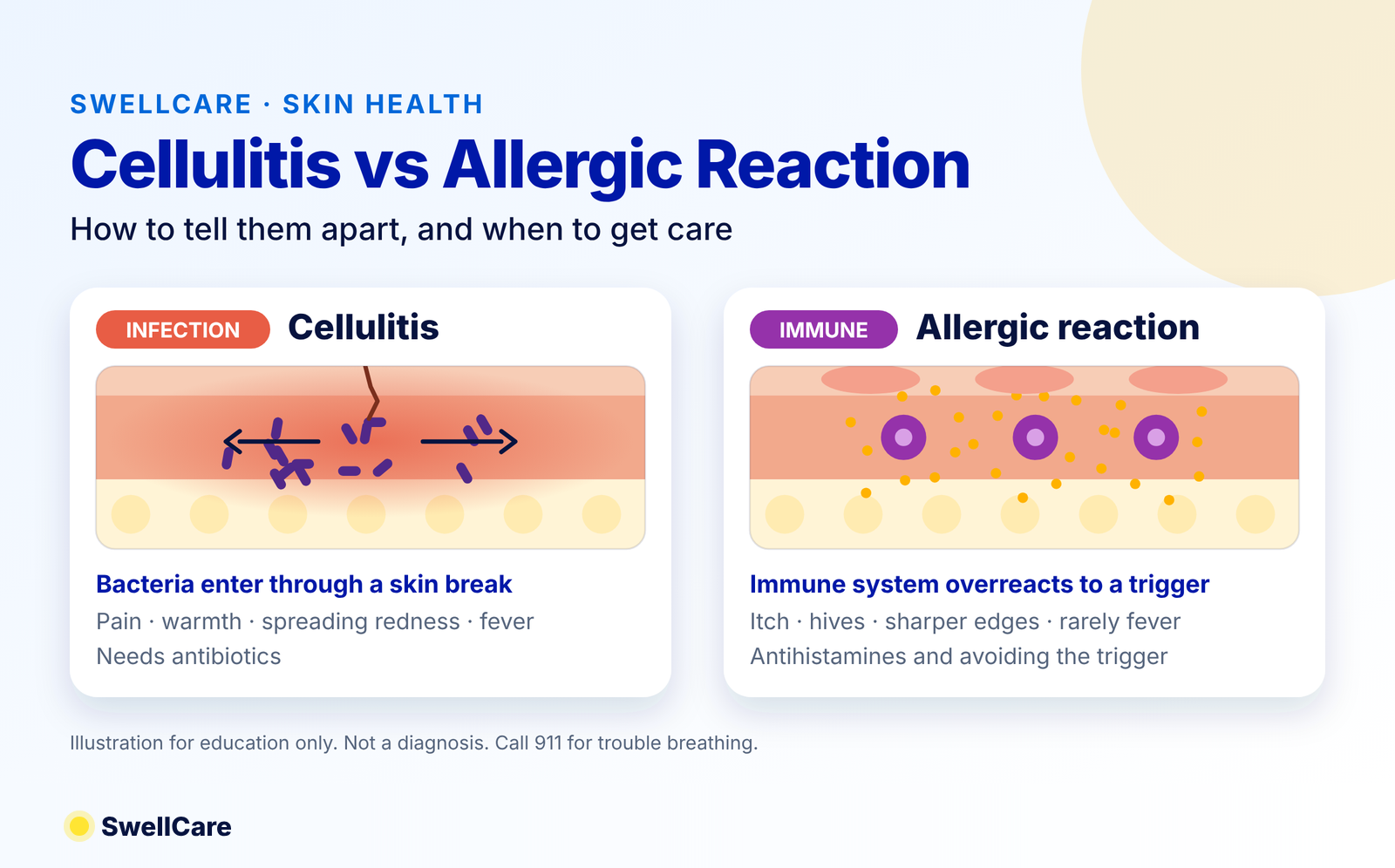
That’s the real question behind cellulitis vs allergic reaction, and the answer changes your treatment. Cellulitis is an infection caused by bacteria, and it needs antibiotics. An allergic reaction usually settles with an antihistamine and a little time. The quick rule: itching points toward allergy, while pain, spreading warmth and fever point toward infection.
Below you’ll find a side-by-side table, five checks you can run at home tonight, and plain rules for when to stop guessing.
Cellulitis vs allergic reaction at a glance
Most people want the short version of the symptoms first. Here it is.
| What you notice | Cellulitis | Allergic reaction |
|---|---|---|
| Main sensation | Pain, tenderness, tightness | Itching, sometimes burning |
| Warmth | Hot or clearly warm when you touch it | Mild at most |
| Speed | Creeps outward over hours to days | Often within minutes to hours |
| Edges | Blurry | Often sharper, may be patchy or raised (hives) |
| Fever or chills | Common as it spreads | Uncommon |
| Typical cause | Bacteria entering a skin break | Allergen, irritant or insect bite |
| Usual treatment | Antibiotics | Antihistamines, cool compresses, avoiding the trigger |
Treat the table as a starting point, not a verdict. Skin doesn’t always read the textbook, and some people have both an itchy bite and a real infection at once.
What cellulitis looks and feels like
Cellulitis is an infection of the deeper layers of skin. Bacteria, most often strep or staph, slip in through a cut, a scrape, a cracked heel or a scratched bite. The CDC describes the skin as red, swollen, painful, tender and warm, and it sometimes looks pitted, like the peel of an orange (CDC).
It usually starts small. Then it grows.
The shin and foot are the classic spots, but it can show up anywhere. The redness often has no crisp edge, and the whole area feels tight and sore, like a bruise you can’t stop noticing. Flu-like symptoms, such as aches or a fever, can show up before the skin looks bad. Those bacteria multiply under the surface, and your body’s defenses make the area hot and swollen. Nearby lymph nodes, such as those in the groin or armpit, can swell and turn tender too. Redness may also creep along the limb.
Long-term swelling raises the odds. If you live with chronic swelling in a leg or arm, the skin is stretched and fragile, and infection gets in more easily. Eczema, athlete’s foot and a recent injury do the same.
Cellulitis isn’t an infection you catch from another person. It comes from bacteria already living on or near your own skin.
What an allergic reaction looks and feels like
An allergic reaction is your immune system overreacting. Skin cells release histamine, and that triggers itch, redness and swelling. It’s inflammation without an infection.
Three versions show up most often:
- Contact dermatitis: a rash where something touched you, like nickel, a new detergent, latex or a plant. Edges often follow the shape of the contact.
- Hives: raised, itchy welts that move around and fade in hours.
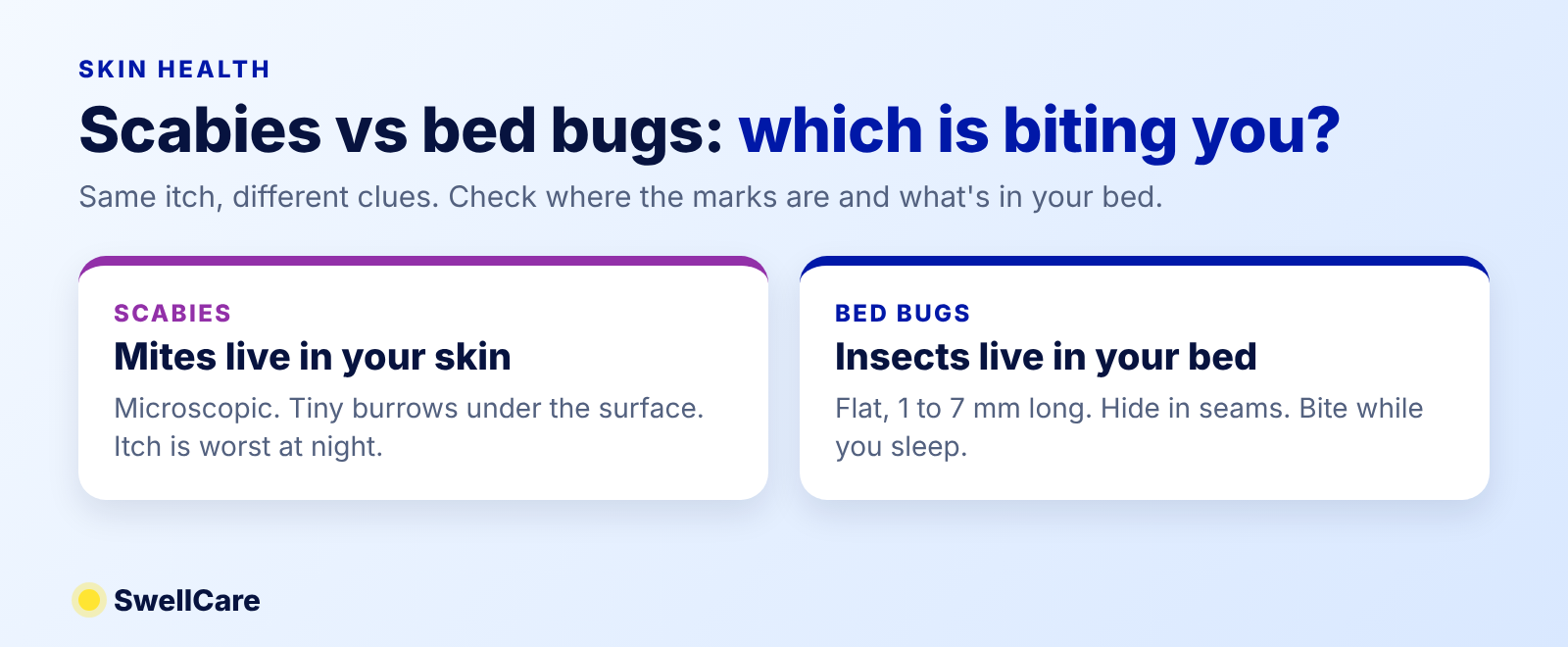
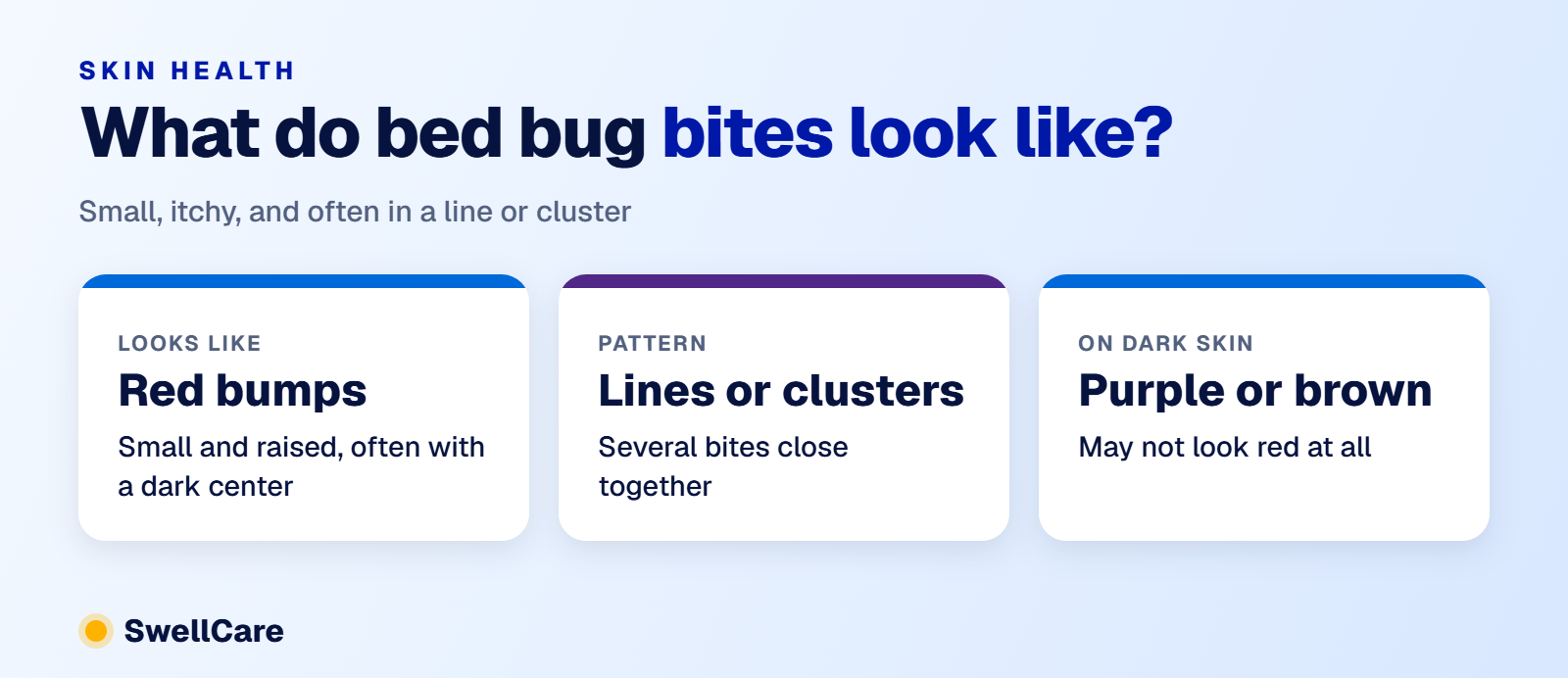
- A large local reaction to a bug bite or sting (what bed bug bites look like is a common mix-up): a big, itchy, swollen patch around the bite. Doctors sometimes call the mosquito version skeeter syndrome. The University of Maryland’s emergency medicine team says the rapid onset is what best separates it from cellulitis, and that these reactions itch rather than hurt (UMEM).
Itching is the headline of the symptoms here. It rarely hurts, and lymph nodes seldom swell. You might see warmth and swelling, but fever is rare.
A reminder, though. Throat tightness, trouble breathing, a swollen tongue or dizziness after a sting or new medicine is not a skin problem. That’s anaphylaxis, and it’s a 911 call.
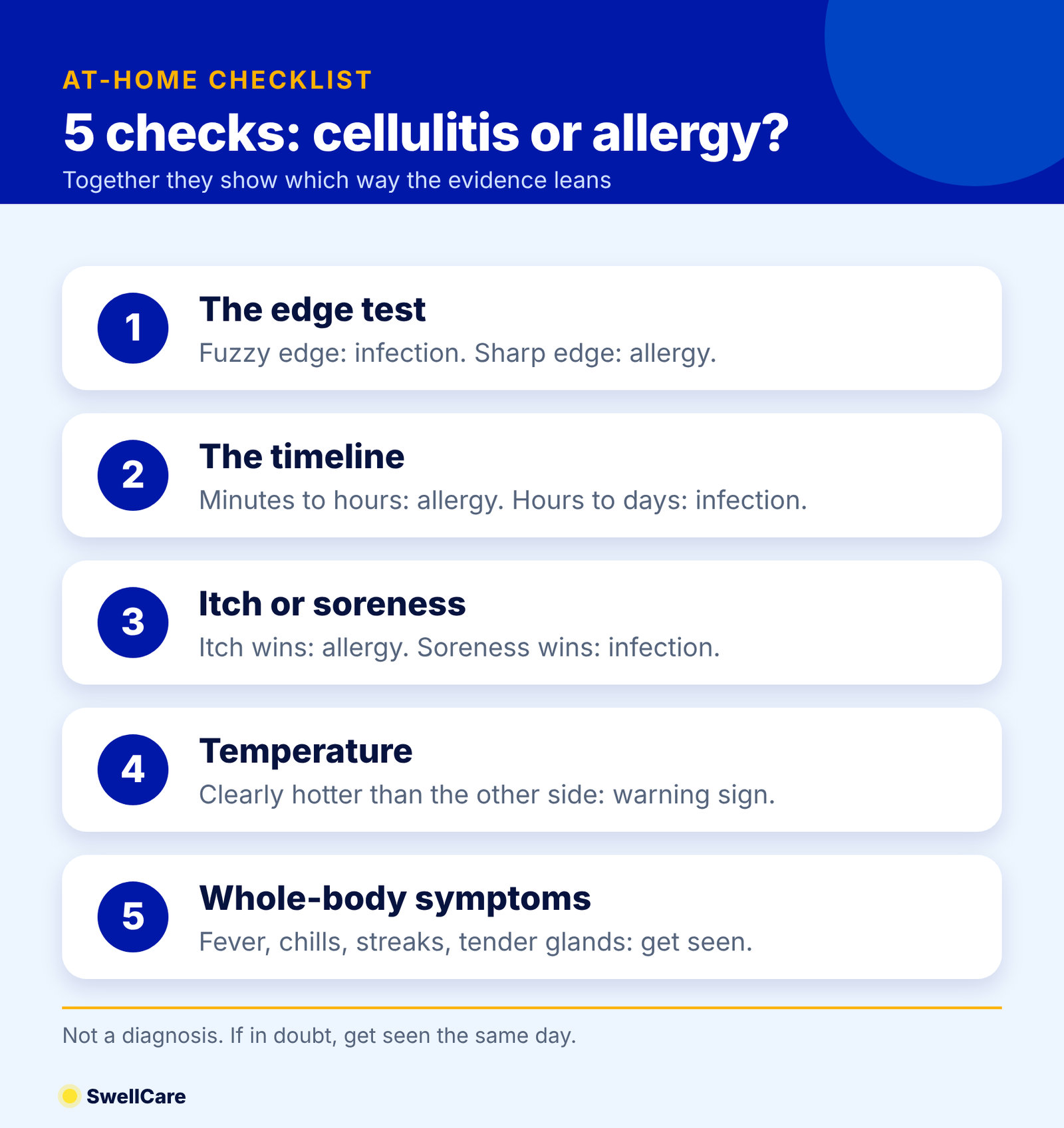
Five checks you can do at home
None of these replaces an exam. Together, the symptoms tell you which way the evidence leans, and how fast to act.
- The edge test. Press lightly around the border. Redness with a sharp, raised edge leans allergic. Redness with a fuzzy edge that fades into normal skin leans infection.
- The timeline. Did it explode within an hour of a new soap, a bite or a food? That’s allergic until proven otherwise. Did it creep outward over a day or two? That’s the cellulitis pattern.
- Itch or pain. Rate each from 0 to 10. If itching wins, think allergy. If soreness and tenderness win, think infection.
- Temperature. Compare the patch with the same spot on your other limb using the back of your hand. A clearly hotter patch is a warning sign.
- Whole-body symptoms. Fever, chills, feeling wiped out, tender lymph nodes or red streaks running up a limb all point to infection.
Draw a line around the edge
This one is simple and surprisingly useful. Trace the border of the redness with a skin-safe pen and note the time. Check again in four to six hours. If the redness has crossed your line, call a doctor the same day. If it has shrunk or stayed put after an antihistamine, an allergic cause becomes more likely.
Ask what bothers you more: itch or soreness
People lump every red patch together as “irritated.” Don’t. Spend ten seconds deciding whether you want to scratch it or protect it from being touched. Wanting to scratch is allergy territory. Flinching when your sleeve brushes it is infection territory.
Why guessing wrong costs you
The two problems need opposite treatments, and the wrong one wastes the window that matters.
Cellulitis needs antibiotics, most often by mouth. MedlinePlus lists a usual course of seven to ten days, with elevation of the limb and rest (MedlinePlus). Without treatment, the bacteria can spread into the blood or deeper tissue, and that’s when a simple pill course becomes a hospital stay.
An allergic reaction responds to the opposite treatment. Antihistamines calm the itching, a cool compress eases the swelling, and a short course of hydrocortisone cream can help on small areas. Antibiotics do nothing for it.
Here’s the catch. Cellulitis is also one of the most commonly over-diagnosed skin conditions, because contact dermatitis, stasis dermatitis and other inflammatory problems can look just like it in the leg. In one study of 145 patients admitted to the hospital for cellulitis, 28% turned out to have something else, most often stasis dermatitis (Dermatology Online Journal). So a quick look from a doctor or other trained clinician protects you in both directions: no missed infection, and no unneeded antibiotics.
When red skin needs care today
Some symptoms mean stop reading and get seen the same day. These are the red flags.
- Redness that spreads quickly, or that crossed your pen line
- Fever or chills
- Red streaks moving up the arm or leg
- Severe pain out of proportion to how the skin looks
- Blisters, pus or skin that turns dusky or purple
- A patch on your face, near your eye, or on a hand or foot if you have diabetes or a weakened immune system
- Swollen lymph nodes near the area
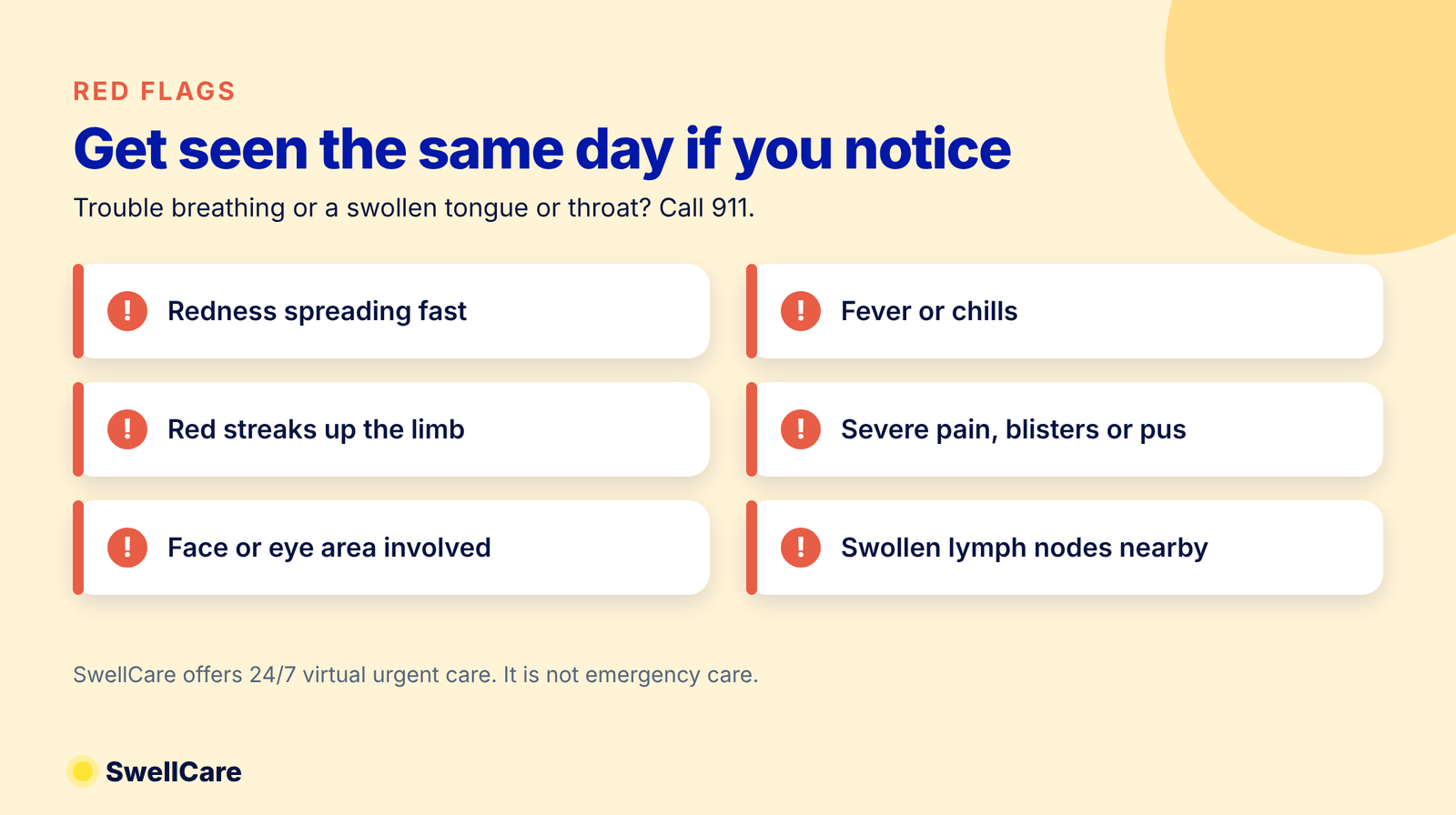
Call 911 or go to the emergency room for trouble breathing, a swollen tongue or throat, confusion, a racing heart or fainting. Those can signal anaphylaxis or sepsis. A same-day visit with a doctor, in person or by video, is the right move for the rest of the list.
Get it checked with Swell
If you’re staring at a red patch and can’t tell what it is, you don’t have to wait for the next available appointment. Swell clinicians offer 24/7 virtual urgent care by chat or video. You show the area on camera, describe how it has changed, and leave with a treatment plan, and a prescription when one is appropriate.
Tell us what’s going on and a clinician will take it from there. Not sure how a visit works? See how it works. Swell isn’t emergency care, so call 911 for anything life-threatening.
Questions people ask about cellulitis vs allergic reaction
Can an allergic reaction look like cellulitis?
Yes, and it happens a lot. A big local reaction to a sting or a contact rash can make skin red, swollen and warm. The symptoms that usually break the tie are itch versus soreness, how fast it showed up, and whether you have a fever. When it’s close, a doctor should look.
Does cellulitis itch?
Sometimes mildly, especially early on or around a healing bite. But itch isn’t the main symptom. If soreness, tenderness and warmth outweigh the itch, treat it as possible infection.
Can a bug bite turn into cellulitis?
It can. Scratching opens the skin and lets bacteria in. If a bite gets more painful, warmer or redder after the first day or two instead of calming down, get it checked.
Will cellulitis go away on its own?
Mild cases occasionally do, but you can’t know which kind you have. Untreated cellulitis can spread and become serious, so it’s not worth waiting it out. Your doctor can usually clear most cases with a course of oral antibiotics.
Is cellulitis contagious?
Generally no. The bacteria sit in deeper skin, not on the surface, so it doesn’t pass easily from person to person. Still, wash any open wound and keep it covered to avoid new infections.
Trusted references
Public-health, research, and medical-society resources related to this guide.