You didn’t do anything wrong to get eczema. That’s worth saying first, because most people with itchy, cracked patches spend months blaming their soap, their laundry detergent or their diet.
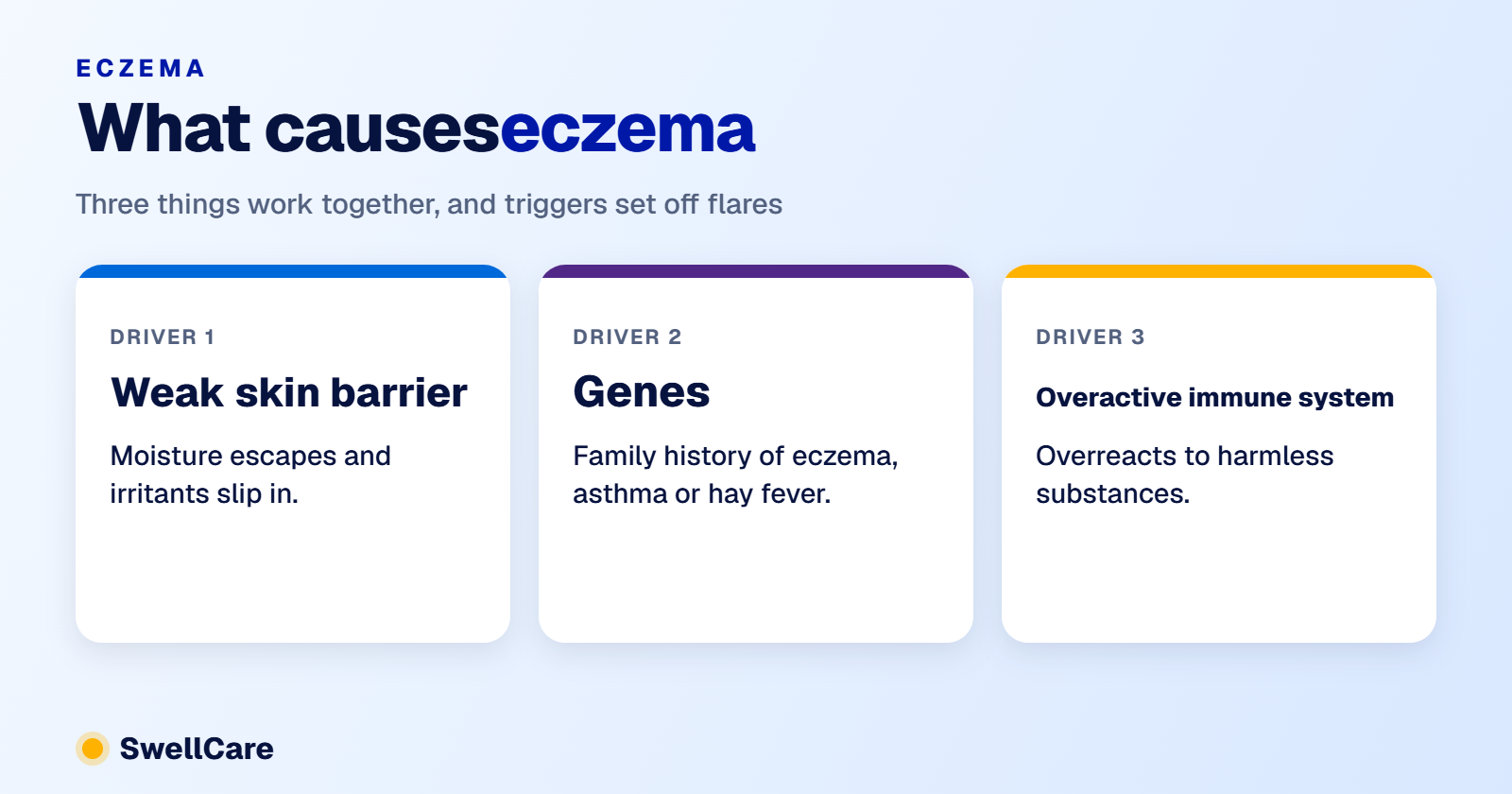
So, what causes eczema? Mostly three things working together: a skin barrier that doesn’t hold up, genes that run in families, and an immune system that overreacts. Triggers such as dry air, stress or a new fragrance then decide when flare-ups show up, and treatment works best when it targets both.
More than 31 million Americans live with some form of it, according to the Cleveland Clinic. If you’re one of them, or you’re watching your child scratch in their sleep, here’s what is happening under the surface and what you can do about it.
The short answer: a leaky skin barrier and an overactive immune system
Doctors don’t point to a single culprit. The National Eczema Association says people develop eczema because of an interaction between genes and environmental triggers. The skin barrier is weaker than it should be, your body’s defenses are quick to react, and the person’s genetic makeup tilts the odds.
Atopic dermatitis is the most common form, and it’s the one most people mean when they ask what causes eczema. Other types exist. Contact dermatitis, for example, comes from touching something your skin objects to, and it doesn’t depend on allergies or family history in the same way.
Here’s the useful part. The causes are what make your skin prone to eczema. The triggers are what set off a flare. You can’t change your genes, but you can change a lot of the triggers, and that’s where most of the day-to-day control lives.
How the skin barrier fails in eczema
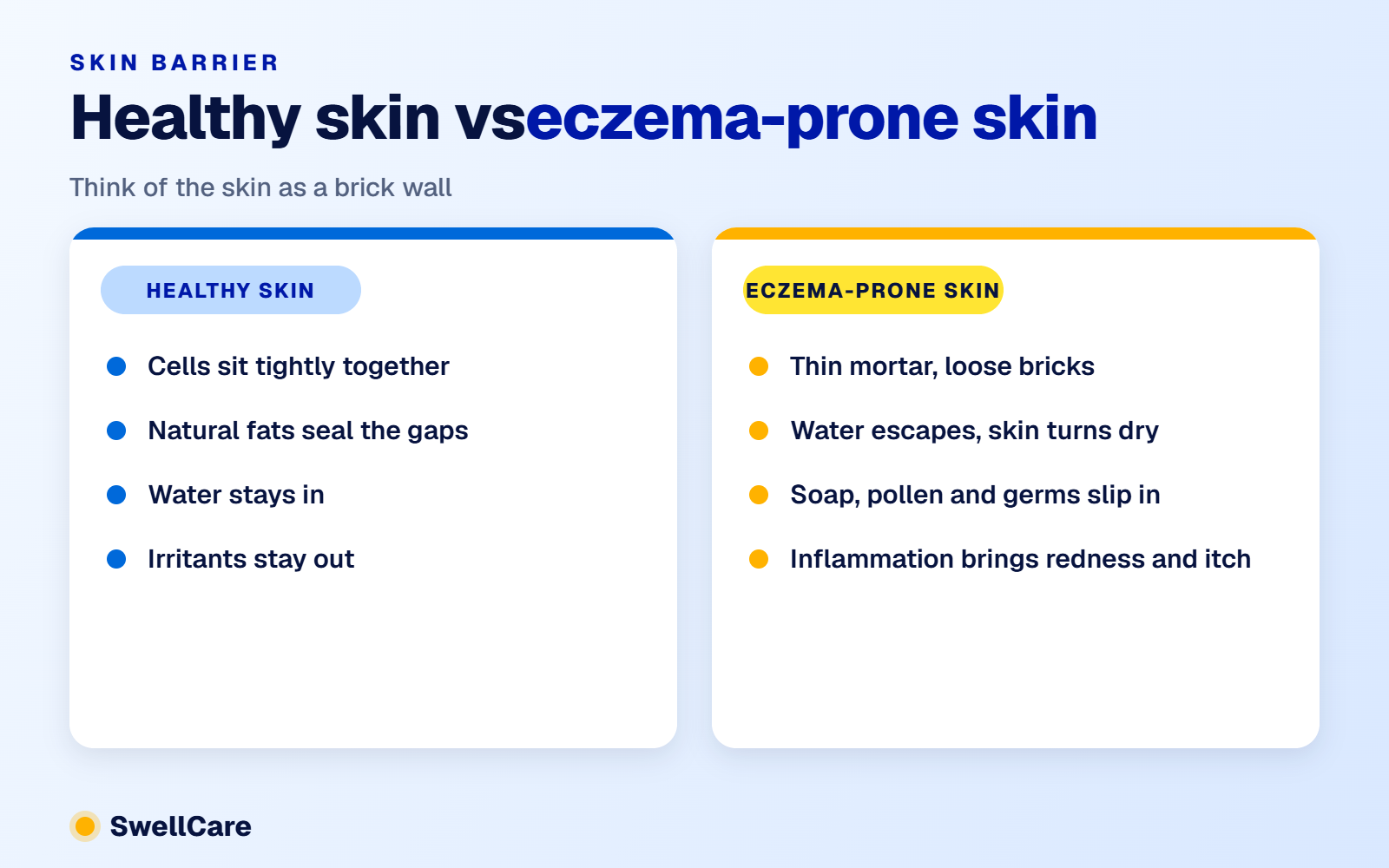
Healthy skin works like a brick wall. Skin cells are the bricks, and natural fats such as ceramides are the mortar. The wall keeps water in and keeps irritants, allergens and bacteria out.
In eczema, the mortar is thin and the bricks don’t sit tightly. Water escapes, so the skin turns dry and tight. Soap, pollen and germs slip through the gaps, and your defenses answer with inflammation. That inflammation is what you see as redness and rough patches, and what you feel as itch. Those are the classic symptoms of eczema.
Mayo Clinic explains that in some people a gene variation weakens this barrier, while in others an overgrowth of Staphylococcus aureus bacteria on the skin disrupts it. Mayo Clinic’s overview of atopic dermatitis lists both as possible starting points, and a weak barrier can in turn switch on the immune response.
That’s also why a good moisturizer isn’t cosmetic for eczema. A thick, fragrance-free moisturizer is repair work for a wall that keeps cracking, and it’s the first line of eczema treatment.
Genes and family history
If your parents had eczema, asthma or hay fever, your odds go up. Mayo Clinic names a personal or family history of eczema, allergies, hay fever or asthma as the main risk factor.
One well-studied gene change affects filaggrin, a protein the skin uses to build its barrier. Northwestern Medicine notes that a mutation in that gene can leave the barrier impaired. Having the mutation doesn’t guarantee eczema, though, and plenty of people with eczema don’t have it. Genetics load the dice. They don’t roll them.
An immune system stuck on high alert
When an irritant or allergen gets through the barrier, an eczema-prone body treats it like a threat. Inflammation follows, even when the substance is harmless to most people.
Eczema is not an autoimmune disease. Cleveland Clinic and the National Eczema Association both say so. The immune system is overactive, but it isn’t attacking a part of your own body the way it does in lupus.
Why eczema often travels with asthma and hay fever
Eczema and other allergic conditions cluster together so often that doctors have a name for the pattern, the atopic march. Many children start with atopic dermatitis as babies and develop allergies later. One widely cited statistic puts the share of children with atopic dermatitis who develop asthma at about half, according to the Allergy & Asthma Network.
It doesn’t mean your child will follow the pattern. It does mean that wheezing, a runny nose that never quite clears, or new food reactions are worth mentioning at the next visit.
What doesn’t cause eczema
Plenty of advice about what causes eczema is simply wrong, and a few myths cause real guilt, so let’s clear them out.
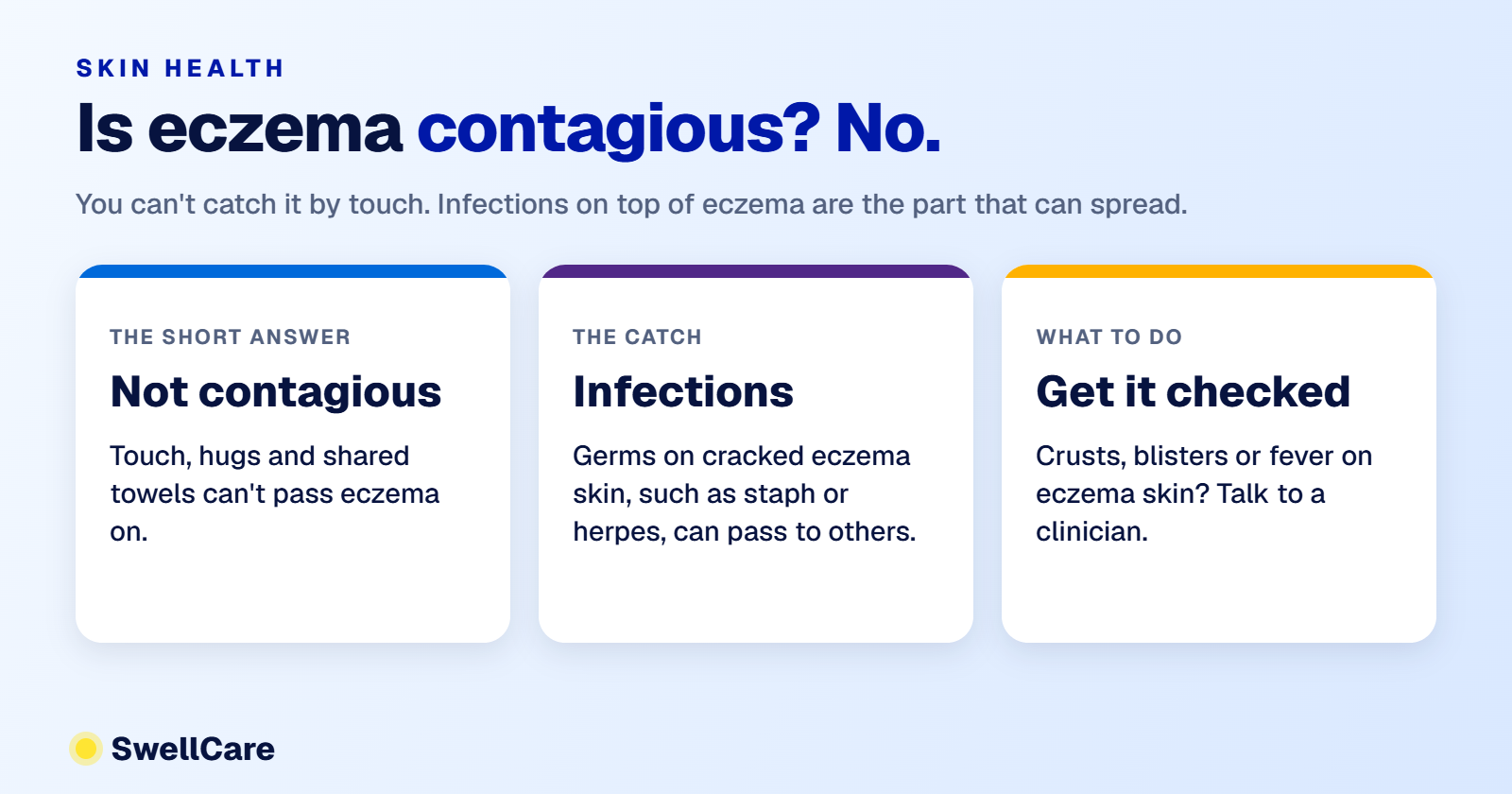
Eczema isn’t contagious. You can’t catch eczema from a hug, a shared towel or a swimming pool. Eczema isn’t caused by being dirty, either, and washing more often usually makes it worse.
Eczema isn’t an autoimmune condition, as covered above. And no, it isn’t something kids simply grow out of on a schedule. About 10% to 20% of infants get it, and nearly half of infants diagnosed with eczema outgrow it or improve a lot as they age, but for some it continues into adulthood or returns later. There’s no cure yet, which is why managing triggers matters so much.
What eczema symptoms look like during a flare
Knowing the symptoms helps you tell eczema from other rashes, and it helps you catch a flare early, when it’s easiest to calm. Eczema symptoms vary by age and skin tone, but a handful show up again and again.
The big one is itchy skin, often worse at night. Along with the itch, eczema brings dry skin, rough or scaly patches, and a rash that looks red or pink on lighter skin and can look purple, brown or gray on darker skin. Scratching can make itchy patches ooze, crust or thicken over time. In babies, the rash often appears on the face and scalp. In older children and adults, atopic dermatitis tends to settle in the creases of the elbows and knees, on the hands, and around the eyes.
Symptoms usually start in childhood, but they can appear at any age. They also come and go. Weeks of calm can be followed by flare-ups, and that pattern is a clue in itself: symptoms that return in the same season, the same room or after the same activity point toward your triggers.
Contact dermatitis, the type caused by touching an irritant or allergen, produces similar symptoms, but the rash stays where the contact happened. If your symptoms look different from this picture, or they don’t clear with treatment and good skin care, get a clinician’s opinion before you assume it’s eczema. Seasonal allergies, fungal infections and psoriasis can all look alike at first glance. Itchy skin that never settles is worth a closer look.
Common eczema triggers (and why they hit some people harder)
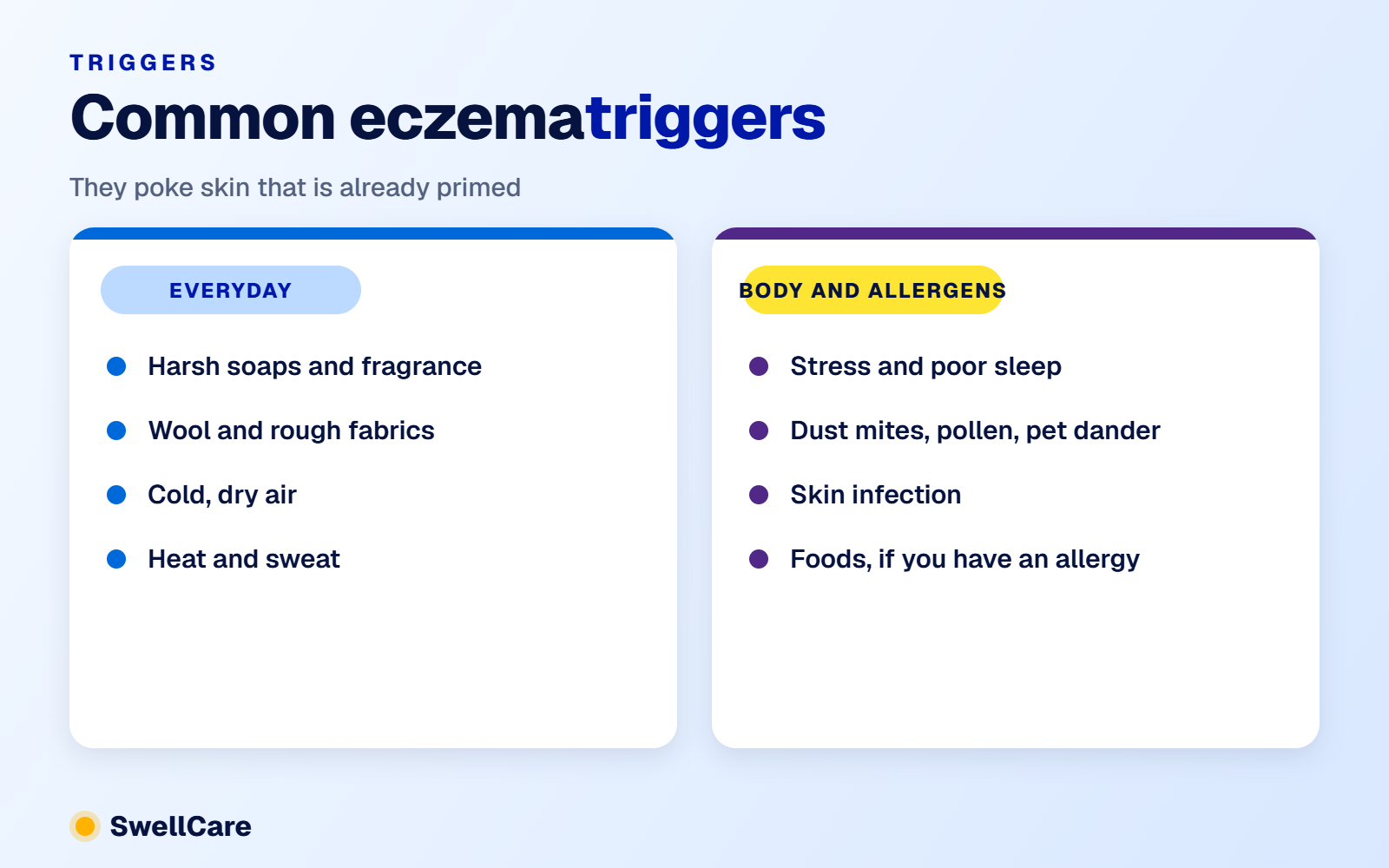
When people ask what causes eczema, they often mean triggers. A trigger doesn’t cause eczema. It pokes skin that’s already primed, and that’s how flare-ups start. Eczema triggers differ from person to person, and the same exposure can bother you in January and not in June.
| Trigger | Why it bothers eczema-prone skin | Easy first step |
|---|---|---|
| Harsh soaps, bubble bath, fragrance | Strips natural oils and irritates a thin barrier | Switch to a fragrance-free cleanser |
| Wool and rough fabrics | Rubs and scratches inflamed skin | Wear soft cotton next to the skin |
| Cold, dry air | Pulls moisture out of the skin | Add a humidifier, use moisturizer more often |
| Heat and sweat | Sweat stings and makes itch worse | Cool down, then rinse off and moisturize after you exercise, and change into dry clothes |
| Dust mites, pollen, pet dander | Allergens set off an immune reaction | Wash bedding weekly in hot water |
| Stress | Releases cortisol, which can strain the skin barrier | Protect sleep |
Soaps, fragrance, fabrics and everyday irritants
Irritants are the most common eczema triggers. Mayo Clinic’s list includes cleaning products, fragrances, rough wool, tobacco smoke and other chemicals. The National Eczema Association adds metals such as nickel and some synthetic fabrics.
Here’s a detail that trips people up: a flare can show up hours or even days after the exposure. So the new body wash from this morning is rarely the culprit. The one you started last week might be.
Weather, humidity and sweat
Eczema-prone skin reacts to extremes at both ends, and winter flare-ups are common. Low humidity in winter dries it out, and Cleveland Clinic notes that heat and high humidity can cause sweating that makes itchiness worse. Hot showers do their own damage to eczema-prone skin. Lukewarm is the goal.
Dry skin is the common thread in eczema. When it cracks, the barrier opens, and everything above in this section gets easier to react to.
Stress and poor sleep
Stress is a documented trigger. The National Eczema Association explains that the body releases cortisol, a hormone that can contribute directly to skin barrier dysfunction and flares.
It’s also circular. Eczema itch ruins sleep, poor sleep lowers your tolerance, and that feeds the next round of flare-ups. If your eczema calms down on vacation, take note.
Foods: when they matter and when they don’t
Foods get blamed for eczema more than they deserve. According to Cleveland Clinic, the link between eczema and food allergies is unclear, and if you don’t have a food allergy, foods won’t cause or worsen your eczema. In infants and young children, Mayo Clinic notes that foods such as eggs and cow’s milk can set off flares.
Please don’t cut major food groups on a hunch, especially for a child. Testing for food allergies is something to do with a clinician, and elimination diets can leave you or your child short on nutrients.
Skin infections
Broken, dry skin that’s been scratched is an open door. Bacteria, especially Staphylococcus aureus, can settle in and turn a manageable eczema patch into a flare that weeps, crusts or hurts. An infection is both a trigger and a complication, and it needs treatment.
Why one flare-up leads to the next: the itch-scratch cycle
Itch is the engine of eczema symptoms. It’s almost always there, and sometimes it gets so intense that people scratch until the skin bleeds.
Scratching feels like relief for about a minute. Then it damages the barrier, lets in more irritants and bacteria, and fuels inflammation, which makes the itch worse. That’s the itch-scratch cycle, and it explains why a small patch can spread over a few days.
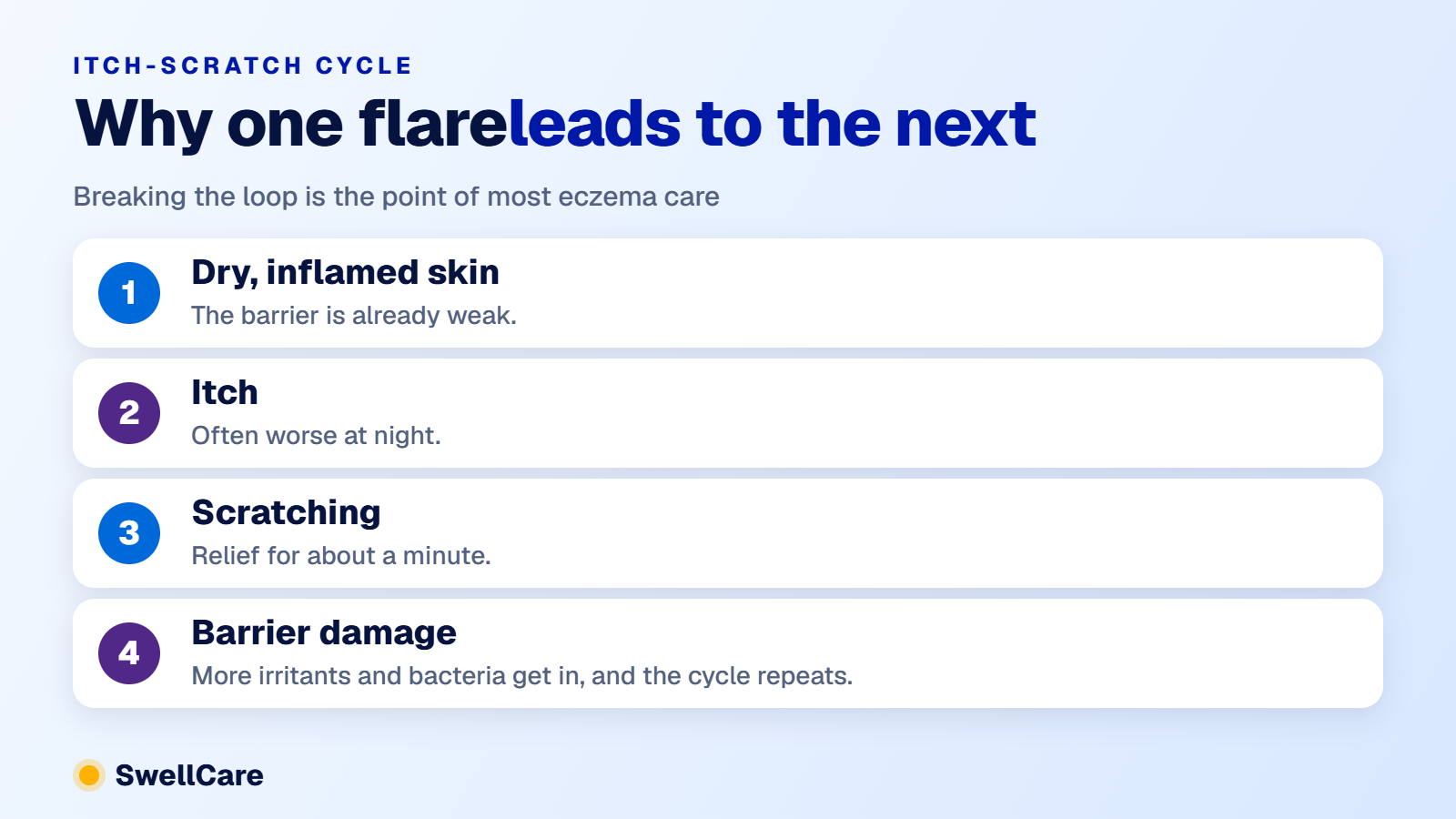
Breaking the loop is the point of most eczema care. You cool the itch with cold compresses, keep a moisturizer handy so the barrier has a chance to repair, and calm inflammation with the treatment your doctor recommends. Even small wins against the itch cut down on scratching, and a calmer itch means better sleep.
How to find your own eczema triggers
General lists only get you so far. With eczema, your skin is the real experiment. A simple flare diary, kept for three or four weeks, usually turns up patterns faster than guessing.
- Write down each flare, with the date, where it showed up, which symptoms came with it and how itchy it felt from 1 to 10.
- Note what changed in the 48 hours before: new products, detergent, foods, weather, travel, stress, poor sleep.
- Change one thing at a time. If you swap your soap and your laundry detergent together, you won’t know which one mattered.
- Look for repeats. Two or three flares after the same exposure is a real clue.
- Take the diary and your list of symptoms to your dermatologist or primary care clinician. It’s far more useful than “it comes and goes.”
Patch testing can help when contact dermatitis is on the table, and a dermatologist or allergist can do it. Bring a list of your symptoms and the dates, too.
What helps calm flare-ups and keep them away
Eczema treatment has two jobs: repair the skin barrier every day, and put out inflammation when a flare breaks through. Most people need both to keep symptoms under control.
For daily care, moisturize at least once a day, ideally right after a lukewarm bath while the skin is still damp. Choose a thick, fragrance-free moisturizer, such as a cream or ointment, because those hold in moisture better than thin lotions. Keep a spare moisturizer in your bag, too. Dry skin gets itchy fast, and itchy skin gets scratched.
When flare-ups break through anyway, eczema treatment usually starts with a topical steroid or another prescription cream matched to the area and the severity. Over-the-counter hydrocortisone can help mild patches, but it isn’t meant for the face or groin, or for long-term use without advice. A dermatologist can also talk through light therapy and newer prescription treatments if creams aren’t enough. Atopic dermatitis treatment for children is adjusted by age, so don’t borrow an adult’s tube.
The rest is avoiding triggers. Trim nails short, use gentle cleansers, wash new clothes before wearing them, and keep the bedroom cool at night. Avoiding triggers won’t cure eczema, but it often means fewer and milder flare-ups, and less need for medicated treatment.
When to see a doctor about eczema
Plenty of mild eczema symptoms can be handled at home with the treatment steps above. But see a healthcare provider if:
- the rash or other symptoms aren’t improving after a couple of weeks of treatment and good skin care
- it keeps you or your child awake at night
- skin is weeping, crusting, or has yellow patches, which can point to infection
- you develop a fever, severe pain, or fast-spreading redness
- the flare-ups keep coming back, even with careful skin care
- you’re not sure it’s eczema at all, or a dermatologist’s opinion would settle it
Go to urgent or emergency care for a high fever, a rash that spreads quickly with pain, or eczema in a newborn that looks infected. Mayo Clinic notes that infections from broken skin can turn serious.
If you’d like a clinician to look at an eczema flare, SwellCare’s online urgent care offers clinician-led, non-emergency care around the clock by video or chat. A clinician can help you work out whether it needs in-person attention and what treatment to try next, though prescriptions are never guaranteed. You can learn more about how it works.
Questions people ask about what causes eczema
Is eczema contagious?
No. Eczema can’t spread from one person to another through touch, sharing towels or swimming. Eczema symptoms can spread across your own skin, but that’s itch and inflammation at work, not an infection you’re passing on. Our guide explains more about whether eczema is contagious.
Is eczema an autoimmune disease?
No. The immune system plays a big role, because it overreacts to irritants and allergens, but eczema isn’t classified as an autoimmune condition. It isn’t attacking your own tissue. Research into the exact mechanisms is still going.
Can stress cause eczema?
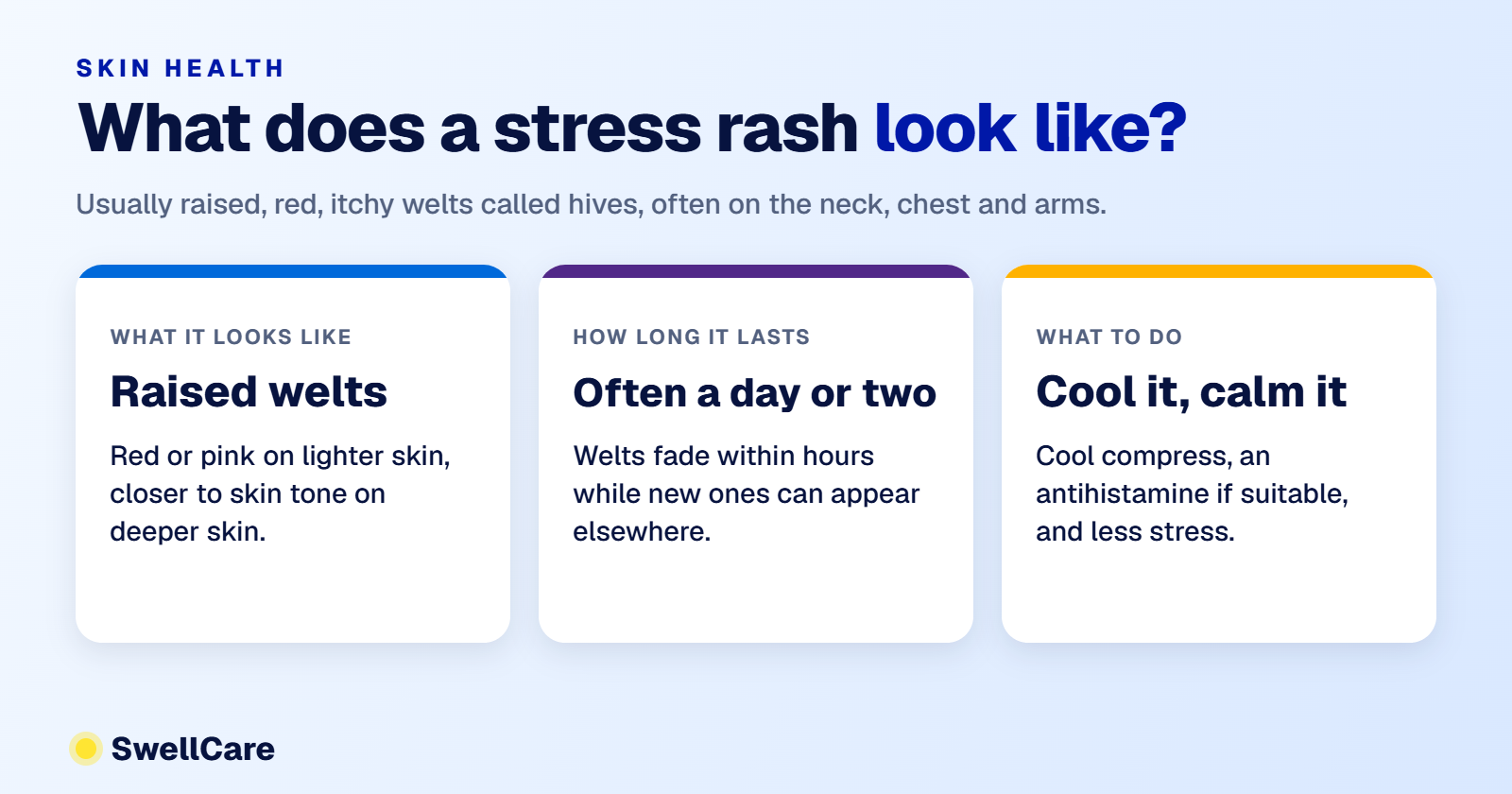
Stress doesn’t cause eczema on its own, but it’s a well-known trigger. Cortisol can contribute to skin barrier problems and flares. Stress also tends to disrupt sleep and increase scratching, which can keep a flare-up going.
Can food cause eczema?
Only if you have true food allergies or sensitivities. Eggs, dairy and peanuts are the usual suspects, especially in babies and young children. If a food seems to trigger flares, talk with a clinician or allergist before removing anything from the diet.
Why does eczema flare up in winter?
Cold, dry air pulls moisture out of the skin, and indoor heating dries it further. Hot showers add to the problem. A humidifier, lukewarm baths and thicker moisturizers applied more often usually help.
Can adults develop eczema?
Yes. Anyone can get eczema at any age. Many people have had atopic dermatitis since childhood, while others develop it for the first time as adults, sometimes after a change in work, skin products or daily routines. New adult-onset rashes should be checked.
Can I get eczema checked online?
Often, yes. A clinician can usually assess a rash from photos and your history, recommend treatment, and tell you when it needs an in-person exam. SwellCare’s clinicians can help you work out your next step. Start with SwellCare’s online urgent care.
Trusted references
Public-health, research, and medical-society resources related to this guide.