You woke up with a lump on your eyelid, and now you’re squinting at the mirror. Here’s the short answer to the chalazion vs stye question. A stye is an infection, usually tender, right at the lash line. A chalazion is a blocked oil gland, usually less painful, a little farther back on the eyelid. Both are common. Both often clear with warm compresses and patience. Trouble starts when people squeeze it or wait too long. This guide shows you how to tell the two apart, what helps, and when an eyelid bump needs a doctor.
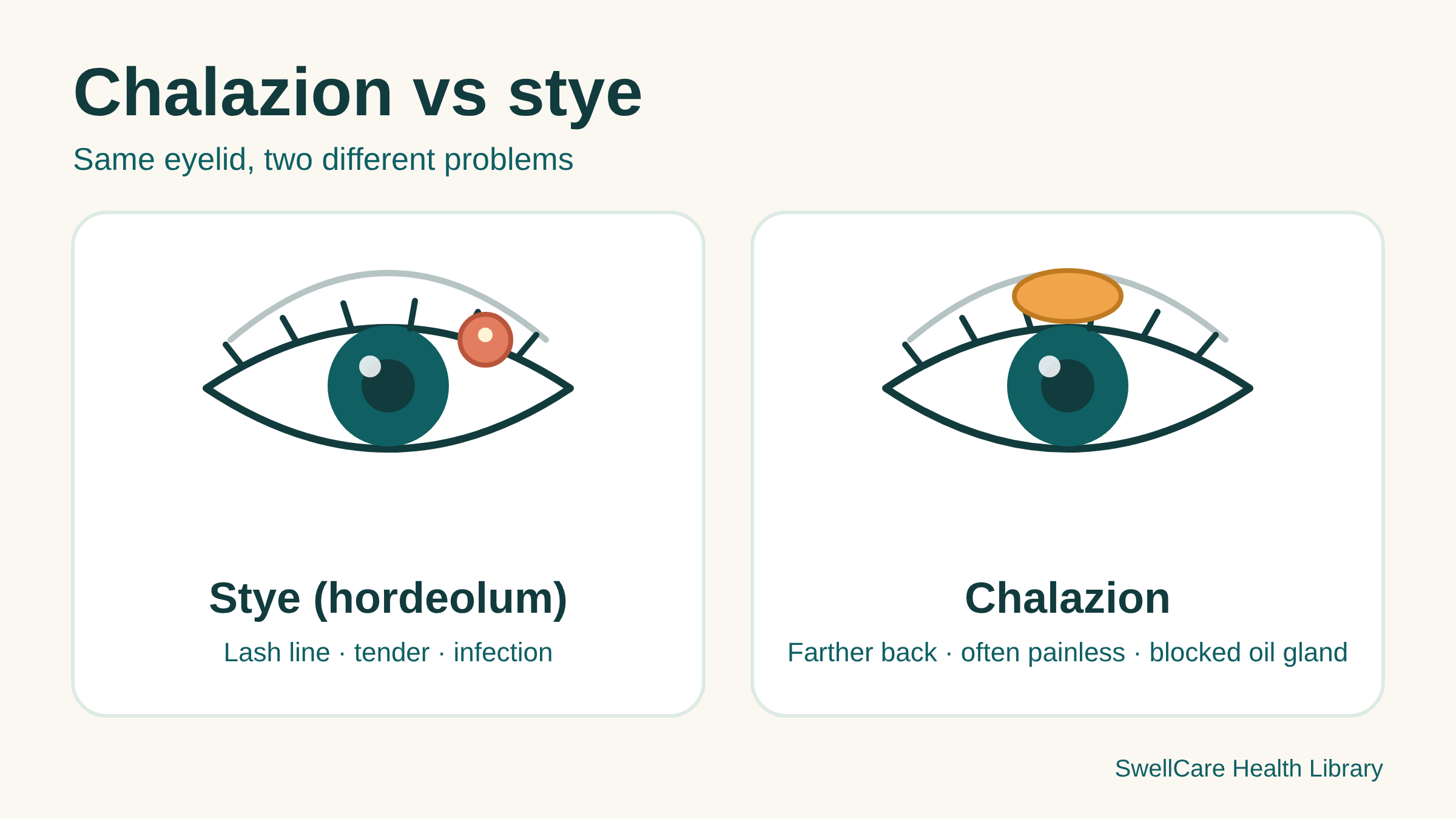
Chalazion vs stye at a glance
Start with the symptoms you can check in a mirror.
| Stye (hordeolum) | Chalazion | |
|---|---|---|
| What it is | Bacterial infection of a lash follicle or oil gland | Blocked meibomian gland, inflamed but not infected |
| Pain | Usually painful and tender | Often painless after the first day or two |
| Where | Right at the lash line | Farther back on the eyelid |
| Looks like | Red bump, sometimes a pus spot | Round, firm lump, no pus |
| Speed | Shows up in a day or two | Grows slowly over about a week |
| Timeline | Often improves within days | Two to eight weeks |
Pain is the biggest giveaway. A painful stye makes you wince when you blink. A chalazion often starts with some pain, then settles into a firm lump that barely bothers you. The Cleveland Clinic’s comparison lands in the same place.
Why one hurts and the other lingers
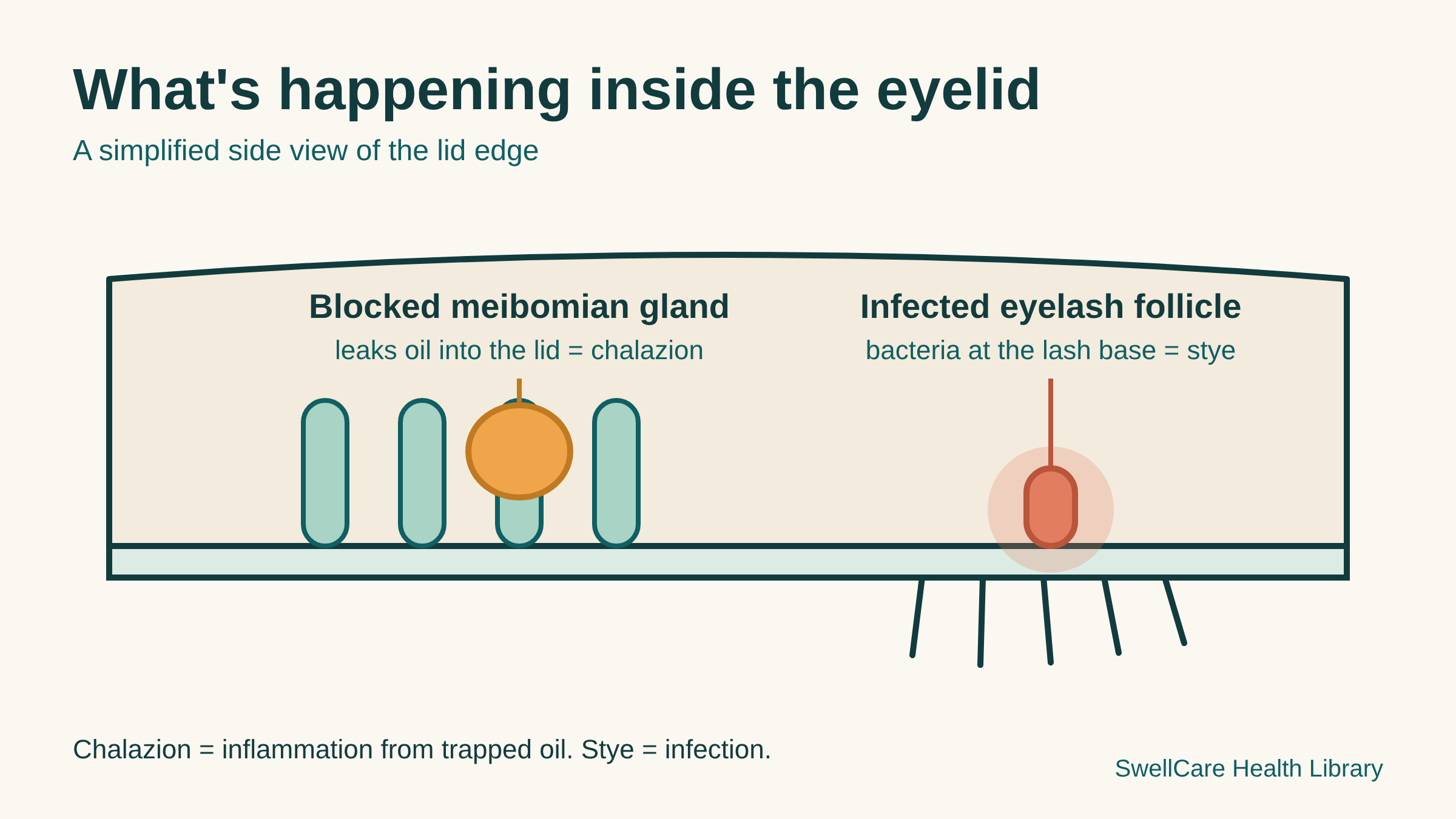
Staph bacteria usually cause a stye, a bacterial infection that settles in an eyelash follicle or a small oil gland at the eyelid edge. Doctors call it a hordeolum. It can also form inside the eyelid, where it’s called an internal stye. Internal styes hide under the surface, so symptoms can feel worse than they look.
Chalazia start differently. Your lids hold rows of tiny meibomian glands that release oil to keep your tears from drying out. When one clogs, the trapped oil leaks into nearby tissue and the body walls it off. That’s inflammation, not infection, which is why a chalazion rarely hurts for long, as All About Vision explains.
Here’s a twist most guides skip. An internal stye can leave a chalazion behind once the stye settles down, according to UPMC. You can start with one and end up with the other.
What helps a stye or chalazion at home
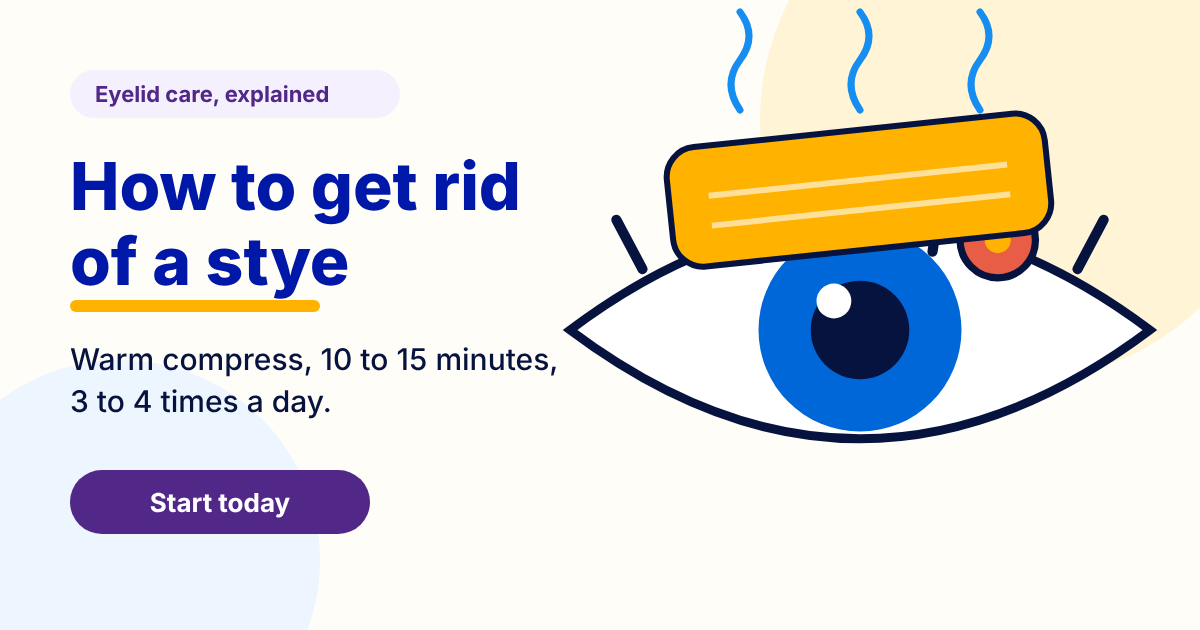
Start with a warm compress. This first treatment works for both, and it’s what most eye specialists suggest. Heat softens thickened oil in a blocked gland and helps a stye come to a head.
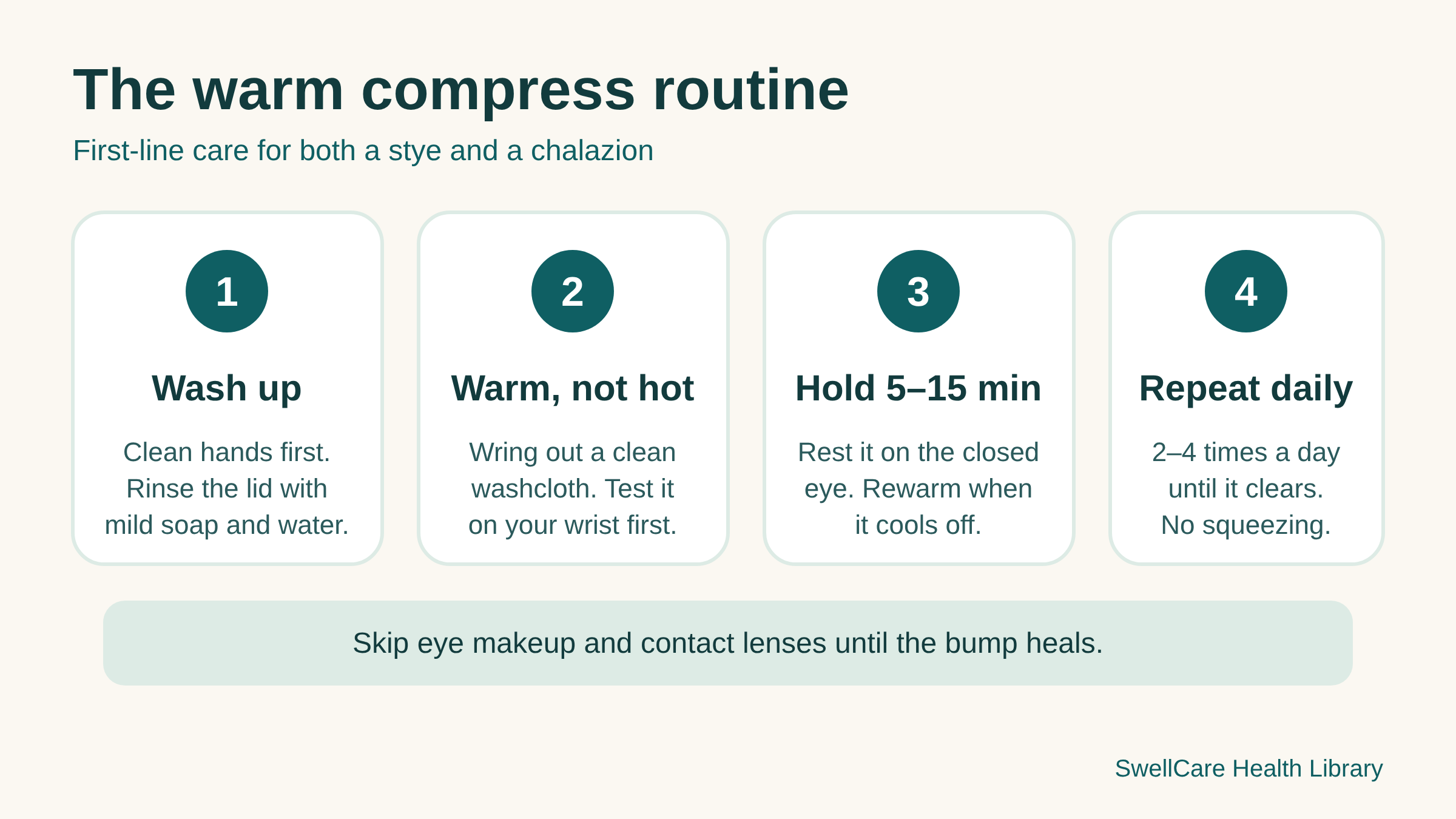
- Wash your hands, then rinse the eyelid gently with mild soap and water.
- Wring out a clean washcloth soaked in warm water. Test it on your wrist. Warm, never scalding.
- Rest it on the closed eye for 5 to 15 minutes, rewarming as it cools.
- Gently massage the eyelid afterward.
- Repeat two to four times a day until it clears.
Guidance varies a little. Mayo Clinic suggests 5 to 10 minutes, two to three times a day, while the Cleveland Clinic suggests longer sessions at least three times daily. Pick what fits your day and stay consistent.
Skip eye makeup and leave your contact lenses out until it heals. And don’t pop it. Squeezing can spread bacteria. Good eyelid hygiene helps prevent repeats. Hygiene matters most for people with blepharitis, who tend to get these lumps more often.
Medical treatment for a bump that won’t budge
A doctor can usually make the diagnosis just by examining the eyelid. Treatment then depends on which one you have.
If a stye isn’t improving after a couple of days, you may get antibiotic drops or ointment. Oral antibiotics are saved for cases that spread beyond the eyelid. A doctor can drain a stubborn stye with a tiny cut, per Mayo Clinic.
Chalazia aren’t infections, so antibiotics rarely help on their own. For a lump that lingers past a few weeks, an eye doctor can use a steroid injection to calm the inflammation, and many lumps shrink within one to two weeks afterward. If that fails, a quick in-office procedure can drain the cyst under numbing medicine.
One more thing. Lumps that keep coming back in the same spot may need a biopsy, because rare eyelid cancers can mimic a chalazion.
When to see a doctor
Most eyelid bumps are harmless. A few aren’t. Get checked if your symptoms match any of these:
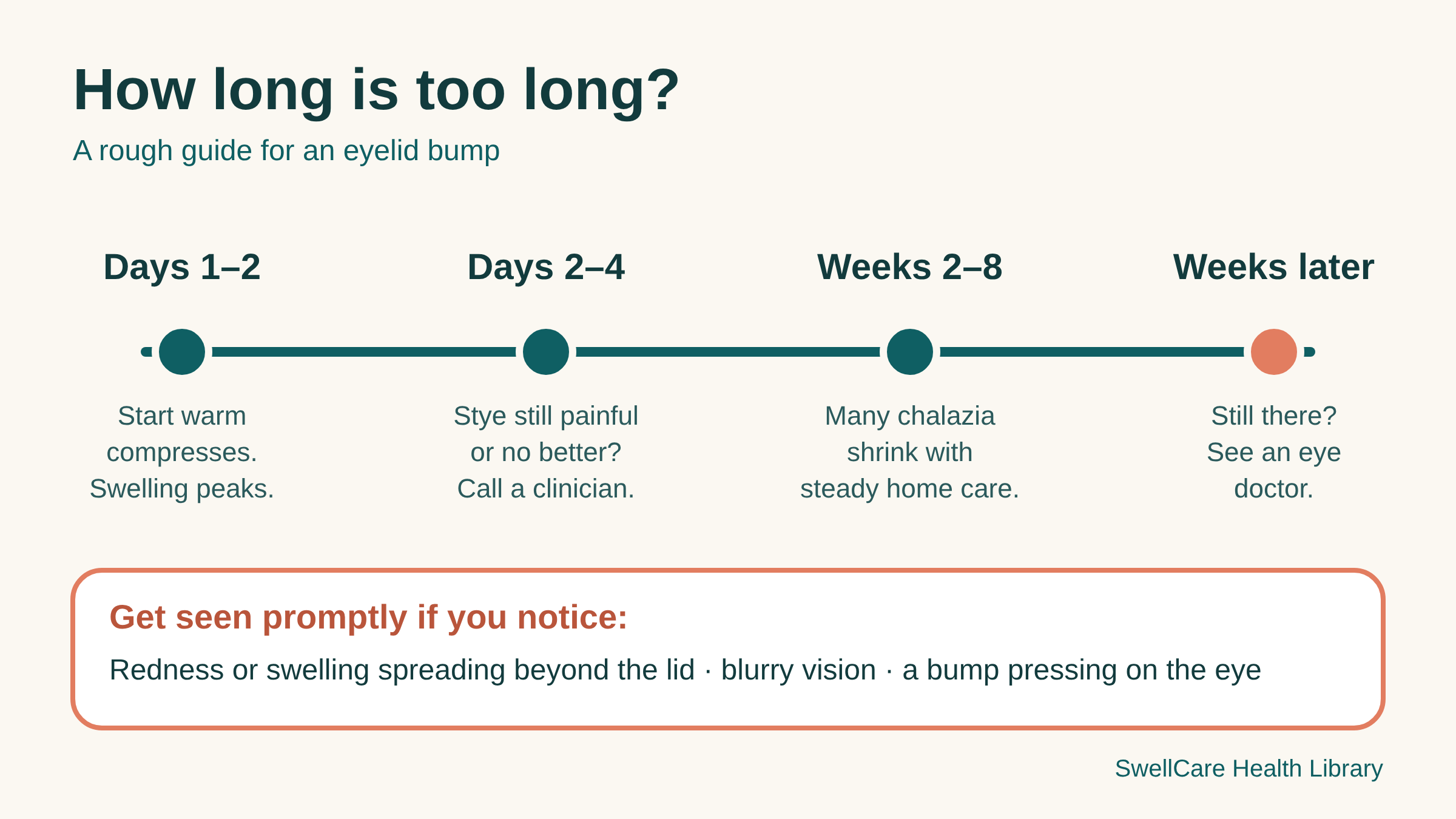
- A stye is still painful or no better after two to four days.
- Chalazia that have hung around for several weeks are worth a look.
- Things look blurry, or the lump presses on the eye.
- Redness or swelling spreads beyond the eyelid. That can signal preseptal cellulitis, an infection of the tissue around the eye that needs prompt care.
Get a quick answer from Swell
Not sure which one you have, or whether you need an eye doctor in person? Swell offers 24/7 non-emergency virtual urgent care. You talk with a clinician over secure video or chat, and stye concerns are on the list of what the team sees. The screening is free, a completed consultation is $45, and any medication is billed separately. Prescriptions are never guaranteed, and the team can point you toward in-person care when that’s the safer call. Here’s how a visit works.
Questions people ask about chalazion vs stye
Is a chalazion worse than a stye?
Neither is dangerous in most cases, but they feel different. These hurt more at first. The other lingers longer, sometimes for weeks, and can grow large enough to press on the eye. Judge yours by pain, size and how long it has stuck around.
Can I pop a stye?
No. Squeezing can push bacteria deeper and spread it across the eyelid. Let warm compresses do the work. If a stye needs drainage, an eye doctor can drain it safely with a small cut and numbing, which beats a home attempt.
Are styes and chalazia contagious?
Neither is very contagious the way pink eye is. A chalazion is a blocked gland, so there’s nothing to catch. A stye involves bacteria, though, so wash your hands, use your own towel, and avoid touching it and then your other eye.
How long does a chalazion last?
Many chalazia fade in two to eight weeks, and some hang on for months. Styes usually improve within days once you start compresses, and one may break open and leak a little drainage on its own. If either hasn’t budged, get it looked at.
Can a stye turn into a chalazion?
Yes. An internal stye can leave a firm, painless lump behind once it clears up, and that lump is a chalazion. It’s one reason an eyelid bump can seem to change identity. Keep up the compresses, and get it checked if the lump stays.
Can a chalazion affect my vision?
Small ones won’t. A larger one, around 5 mm or more, can press on the cornea and blur things for a while. Blurriness with any lid lump deserves a prompt visit, so don’t wait it out.
Trusted references
Public-health, research, and medical-society resources related to this guide.