You woke up with one eye red and gritty, and half glued shut. Now you want to know if it’s viral or bacterial, and whether you need antibiotics today.
Here’s the short version. Watery discharge plus a cold usually points to a virus. Thick, sticky, yellow-green gunk points more toward bacteria. Itchy eyes with no pus often mean allergies. Redness alone won’t settle it. The signs overlap, and even clinicians can’t always sort viral vs bacterial pink eye by looking. This guide shows you the clues that matter and what helps. It also covers the red flags that mean you shouldn’t wait.
Viral vs bacterial pink eye: the quick answer
Pink eye is the everyday name for conjunctivitis, an inflammation of the conjunctiva, the thin clear tissue over the white of your eye and inside your eyelids. Viruses, bacteria or allergens can each trigger it.
The CDC says most acute infectious conjunctivitis in adults is viral, and those cases don’t need antimicrobial treatment. Children get the bacterial kind more often. Both infectious types are very contagious. Allergic conjunctivitis is not.
So what does that mean for you? If your eye runs and you’re also sniffling, treat it as probably viral and focus on comfort. If you’re waking up with eyelids stuck together and pus-like discharge, bacteria are the likelier cause and a clinician’s opinion is worth getting. If it hurts, or light bothers you, skip the guessing and get seen.
How to tell viral from bacterial pink eye
No single sign settles it. Together, though, a few clues get you most of the way there.
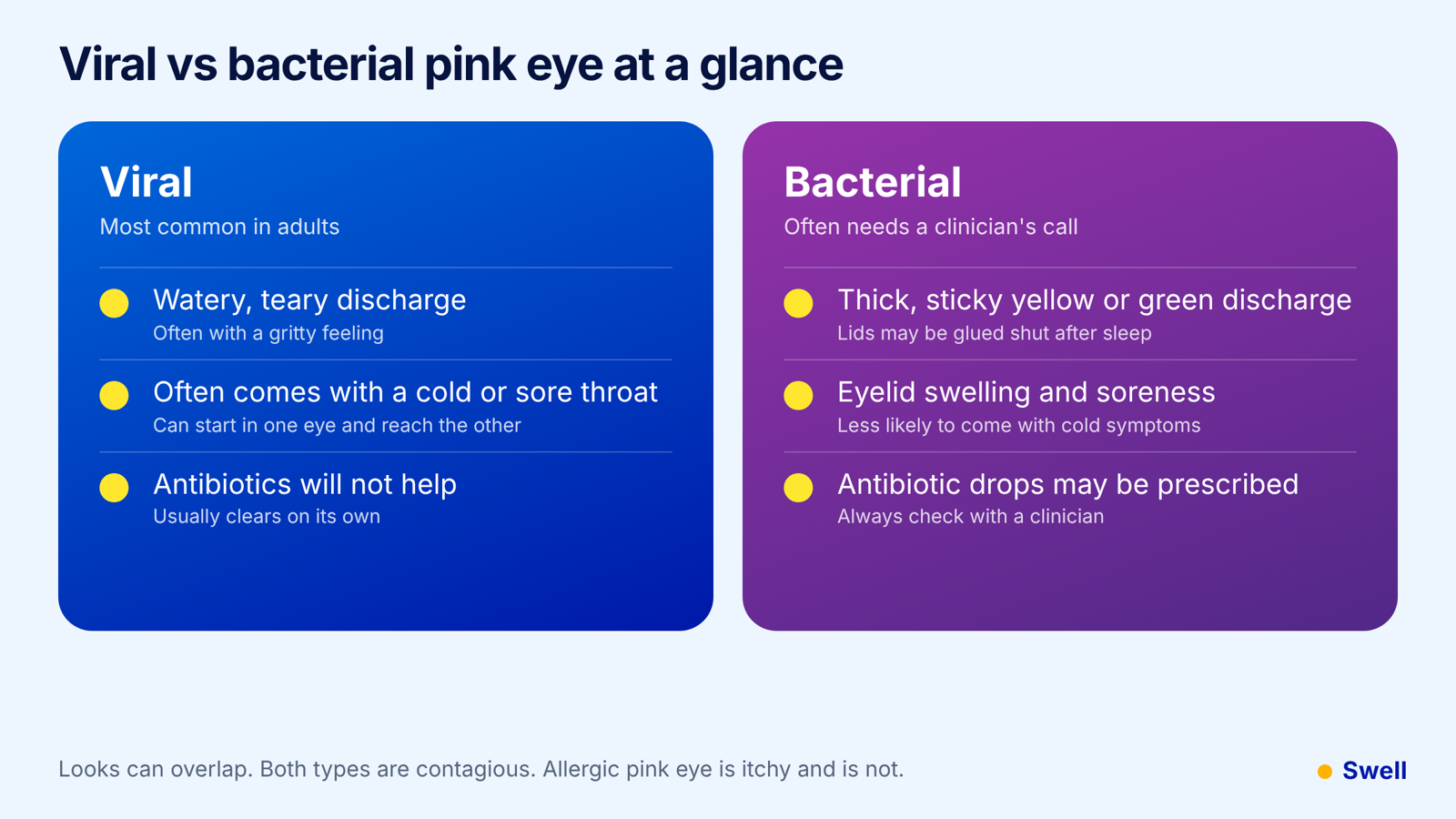
| Clue | Viral pink eye | Bacterial pink eye |
|---|---|---|
| Discharge | Watery, thin | Thick, pus-like, yellow or green |
| Eyelids in the morning | Light crust | Often stuck shut |
| Cold or sore throat | Common | Less common |
| Which eye | Often starts in one, then the other | One or both |
| Antibiotics | Don’t help | May help, sometimes needed |
The discharge test
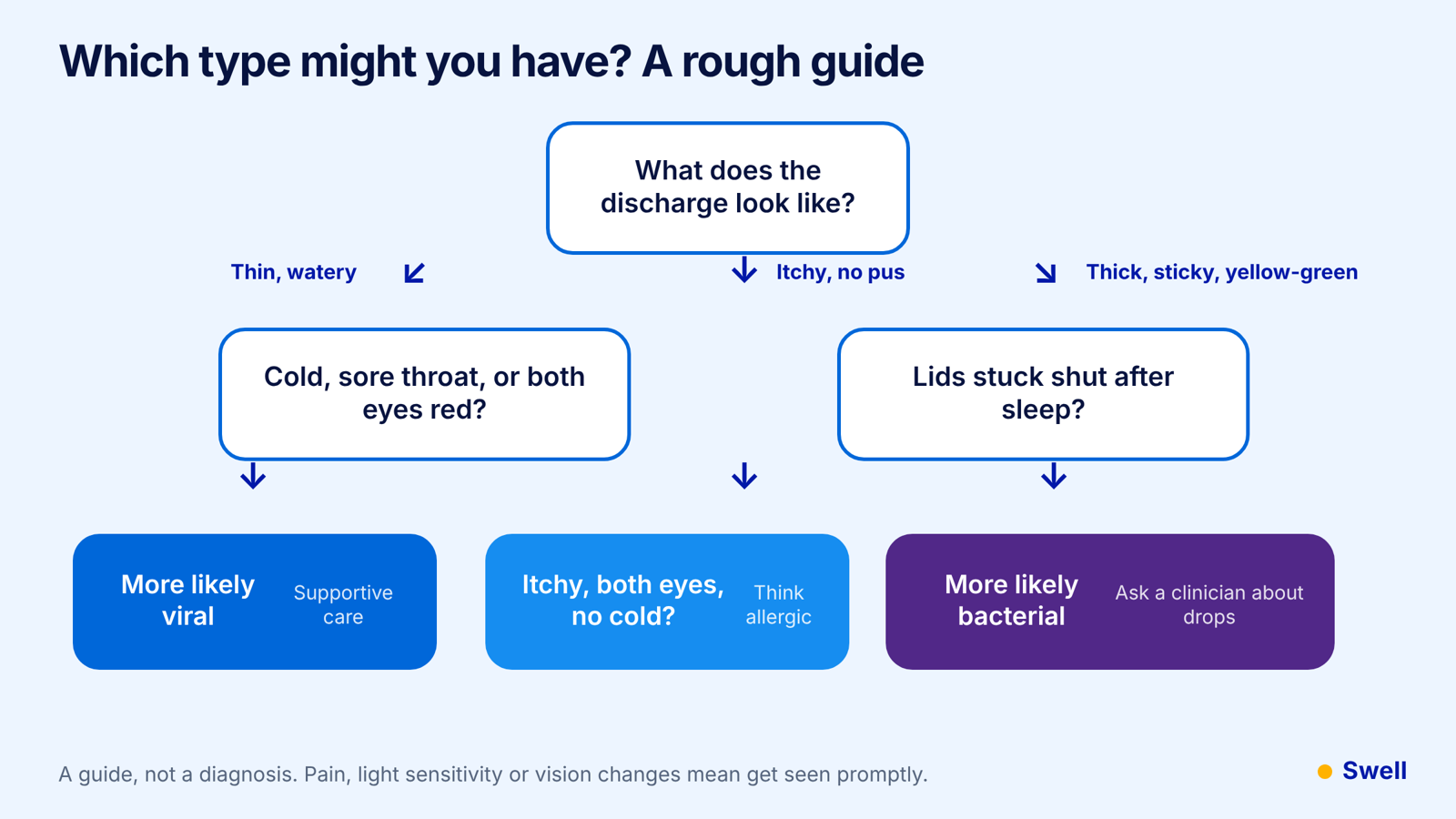
Discharge is the strongest everyday clue. Viral conjunctivitis tends to make your eye run with thin, clear tearing. Bacterial conjunctivitis produces thick, sticky pus that can glue your eyelids together overnight, and the lids may look puffy and swollen.
Be careful with colors, though. The CDC notes that discharge can be clear, yellow, white or green across different causes, and a little crusting on your lashes in the morning shows up with several types. Think texture and amount, not just color.
One eye or both, and the cold connection
Viral infections often arrive with a cold, the flu or another respiratory infection. Sore throat and a runny nose make viral more likely. It also commonly starts in one eye and moves to the other within a few days.
Bacterial conjunctivitis sometimes travels with an ear infection. That’s a useful clue in kids, who catch it more often than adults.
What’s behind each type
Adenoviruses are among the most common viral culprits. Others include herpes simplex virus, varicella-zoster virus (the one behind chickenpox and shingles), plus the germs behind measles and rubella. Most of these cases are mild, and your immune system clears them without drugs.
Bacterial conjunctivitis comes from germs such as Haemophilus influenzae and Staphylococcus aureus. They get into the eye from your own skin or nose, or from contaminated hands and objects.
Both infections spread through the same routes: handshakes, coughs or sneezes, and touching contaminated objects before your eyes. That’s why one case in a daycare or office rarely stays one case.
Either way, the redness comes from inflammation of the conjunctiva. Blood vessels widen and the eye turns pink. Swelling and tearing follow.
Could it be allergic pink eye instead?
Sometimes neither germ is to blame. Allergens irritate the conjunctiva, so allergic conjunctivitis usually hits both eyes at once. Expect intense itching, plus teary eyes and swelling of the lids. You may also have a stuffy nose, sneezing or a scratchy throat.
Pollen, dust mites, mold, pet dander or some cosmetics are common triggers, and it’s more common if you have hay fever, asthma or eczema. The big difference for your household: it isn’t contagious. Chemical splashes, smoke or a stray eyelash can inflame the eye too, and none of those spread to other people either.
If itch is the headline symptom and there’s no pus, think allergy first.
Do you need antibiotics for pink eye?
Often, no. Antibiotics don’t touch a virus, so antibiotic drops for a viral case just add side effects. The CDC says most viral conjunctivitis cases are mild and clear in 7 to 14 days without treatment, though some take two to three weeks or longer.
Bacterial cases are a different story, but not a simple one. A mild case can improve without antibiotics, usually in 2 to 5 days, and can take up to two weeks to clear fully.
Antibiotic drops or ointment may shorten the infection, lower the chance of complications and cut the risk that you pass it on. They’re more likely to be needed when there’s pus, when your immune system is weakened, or when a clinician suspects certain bacteria. Diagnosis usually rests on your history and an eye exam, and sometimes a lab sample.
Taking antibiotics you don’t need feeds antibiotic resistance, which makes these drugs weaker for everyone later. That’s why a good clinician asks questions before writing a prescription. Treatment should match the cause.
Two special cases deserve a mention. Herpes simplex virus and varicella-zoster virus can cause serious eye disease. Those forms may call for antiviral medicine. And if you wear contact lenses, a bacterial infection carries a higher risk of corneal trouble, so a prompt eye exam matters.
What actually helps at home
Whatever the cause, viral or bacterial, comfort care is the same, and it works well for most mild cases.
-
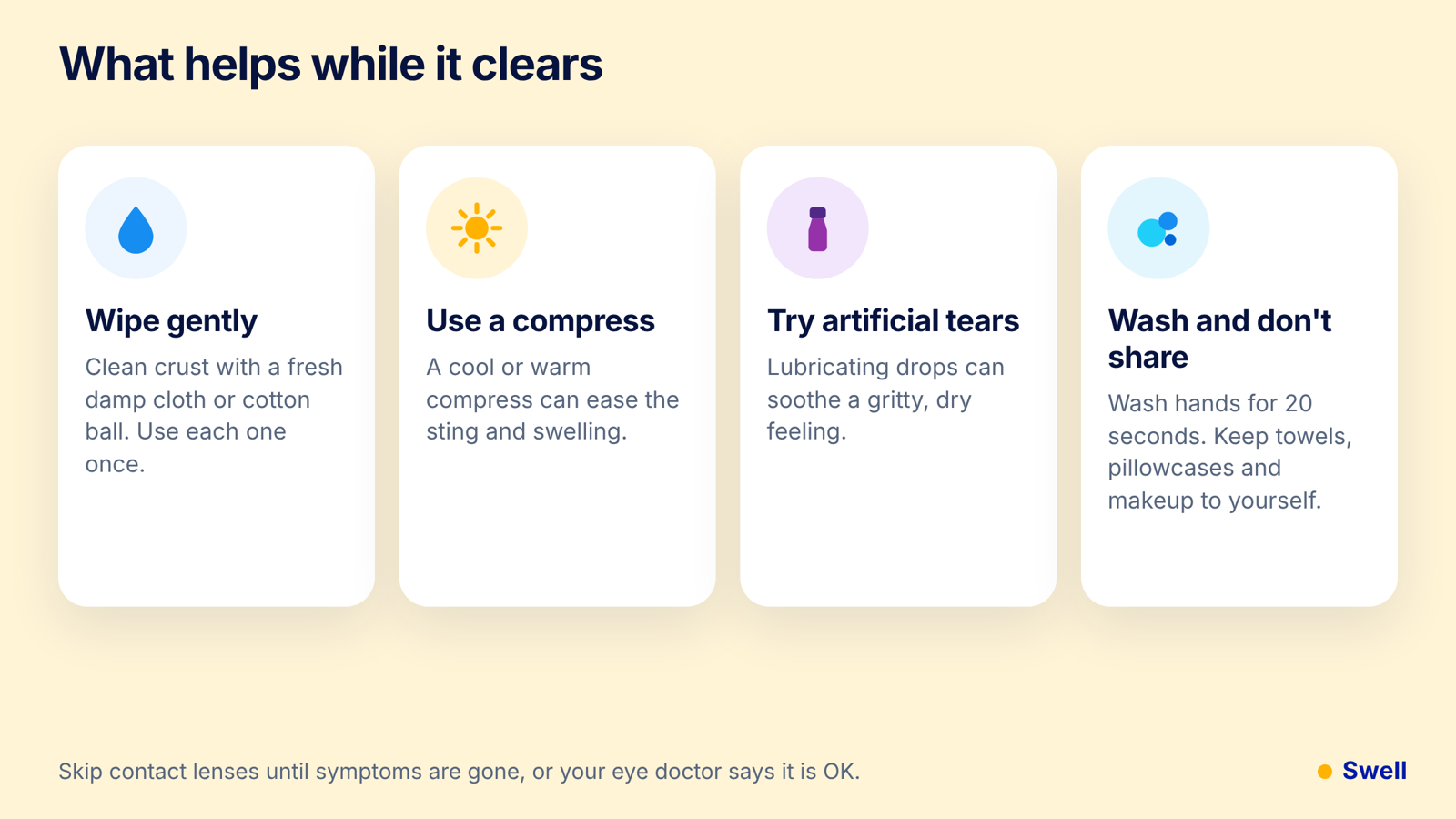
Wipe discharge away with a clean, damp washcloth or a fresh cotton ball, several times a day. Use each cotton ball once, and wash cloths in hot water.
-
Try a compress. The CDC recommends cold compresses and artificial tears, both available over the counter. Some people find warm compresses soften crusting on the eyelids. Pick whichever feels better. Either one can ease the swelling and sting, and neither needs a prescription.
-
Use artificial tears to calm that dry, gritty feeling. They’re lubricating eye drops. Don’t share the bottle. Skip redness-relief eye drops unless a clinician okays them, and never reuse leftover antibiotic drops.
-
Skip contact lenses until your symptoms are gone, or your eye doctor says it’s fine. Toss disposable contact lenses and cases you used while infected.
-
Don’t rub. Rubbing spreads the infection and irritates the cornea.
How long is pink eye contagious?
The CDC doesn’t give a fixed number of days. It describes viral and bacterial pink eye as very contagious and says to avoid close contact while you’re infected. You may return to school or work with a clinician’s approval, once any needed treatment has started and you have no fever or other symptoms. Kids and adults whose jobs involve close contact should stay home until it’s cleared.
To limit the spread:
-
Wash your hands with soap and water for at least 20 seconds, particularly when you touch your eyes or put in drops.
-
Don’t share towels, pillowcases, makeup, eye drops or glasses.
-
Change pillowcases and towels often.
-
Stay out of swimming pools while infected.
When to see a doctor right away
Most pink eye is a nuisance, not a danger. A few signs mean it isn’t just pink eye, or that it’s turning into something worse. Get seen promptly if you have:
-
Eye pain
-
Light sensitivity
-
Blurred vision that doesn’t clear after you wipe the discharge away
-
Intense redness
-
Symptoms that get worse, or don’t improve
-
Pink eye that hasn’t improved after 24 hours on antibiotics
-
A weakened immune system
A newborn with any pink eye symptoms needs a doctor right away, because infections in babies can be very serious. And if you wear contact lenses and your eye turns red and painful, don’t wait it out. A corneal ulcer can threaten your vision, and prompt treatment protects it.
For severe or rapidly worsening symptoms, go to the ER or call 911. Online care isn’t for emergencies.
Get a pink eye answer from home
Here’s the catch with viral vs bacterial pink eye: a good diagnosis depends on your symptoms and your history, not just a photo. That’s what a clinician sorts out.
At Swell, a licensed clinician reviews your case through telehealth, any time of day. You start with a free screening chat to see whether online care fits. If it does, you choose a video or chat consultation, which costs $45. Medication and lab costs are separate.
Your clinician asks when the symptoms began and what other health conditions you have. They also ask about allergies and contact lens use, and they check for warning signs. Your treatment plan might be home care, over-the-counter options, a prescription or testing. A prescription isn’t guaranteed, because plenty of cases don’t need one. If you need an in-person exam, they’ll point you to primary care, urgent care or a specialist.
See how Swell handles pink eye and start a free screening whenever your eye feels off.
Questions people ask about viral vs bacterial pink eye
Can you tell the difference without seeing a doctor?
You can make an educated guess from the discharge, any cold symptoms or whether lids stick shut. But the CDC notes bacterial signs overlap with viral and allergic ones. A clinician reviewing your history, or examining the eye, gives a more reliable diagnosis.
Does pink eye go away on its own?
Often, yes. Most viral cases and many mild bacterial cases clear without treatment, in days to a couple of weeks. Comfort care helps along the way. See a clinician if it’s getting worse, isn’t improving, or comes with pain, light sensitivity or vision changes.
Can you have pink eye in just one eye?
Yes. Viral and bacterial pink eye commonly start in one eye. The infection can spread to the second eye within days, usually through touching your eyes with unwashed hands. Allergic pink eye, by contrast, typically affects both eyes together.
Trusted references
Public-health, research, and medical-society resources related to this guide.