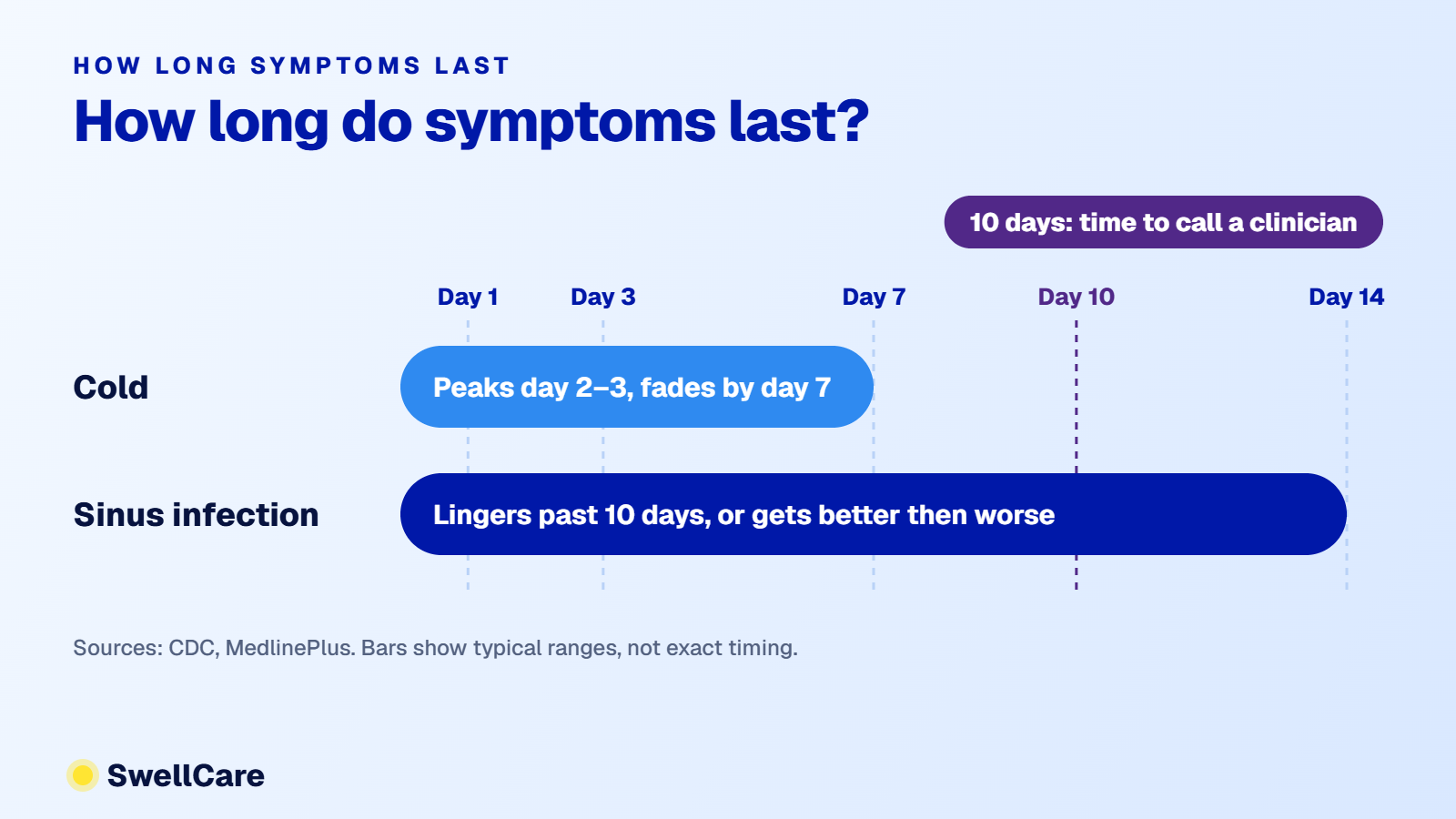
Day eight. Your nose is still blocked, your cheeks ache, and you’re wondering if this is still “just a cold.” Here’s the short answer on sinus infection vs cold: a cold usually fades in under a week, while a sinus infection digs in. If your symptoms last more than 10 days, or get better and then worse, think sinus infection. Pain behind your cheeks and eyes points the same way.
Sinus infection vs cold: the short answer
Both start the same way: nasal stuffiness, a scratchy sore throat, some fatigue. Early symptoms overlap. Nearly everyone mixes them up, even people who’ve had plenty of sinus trouble before.
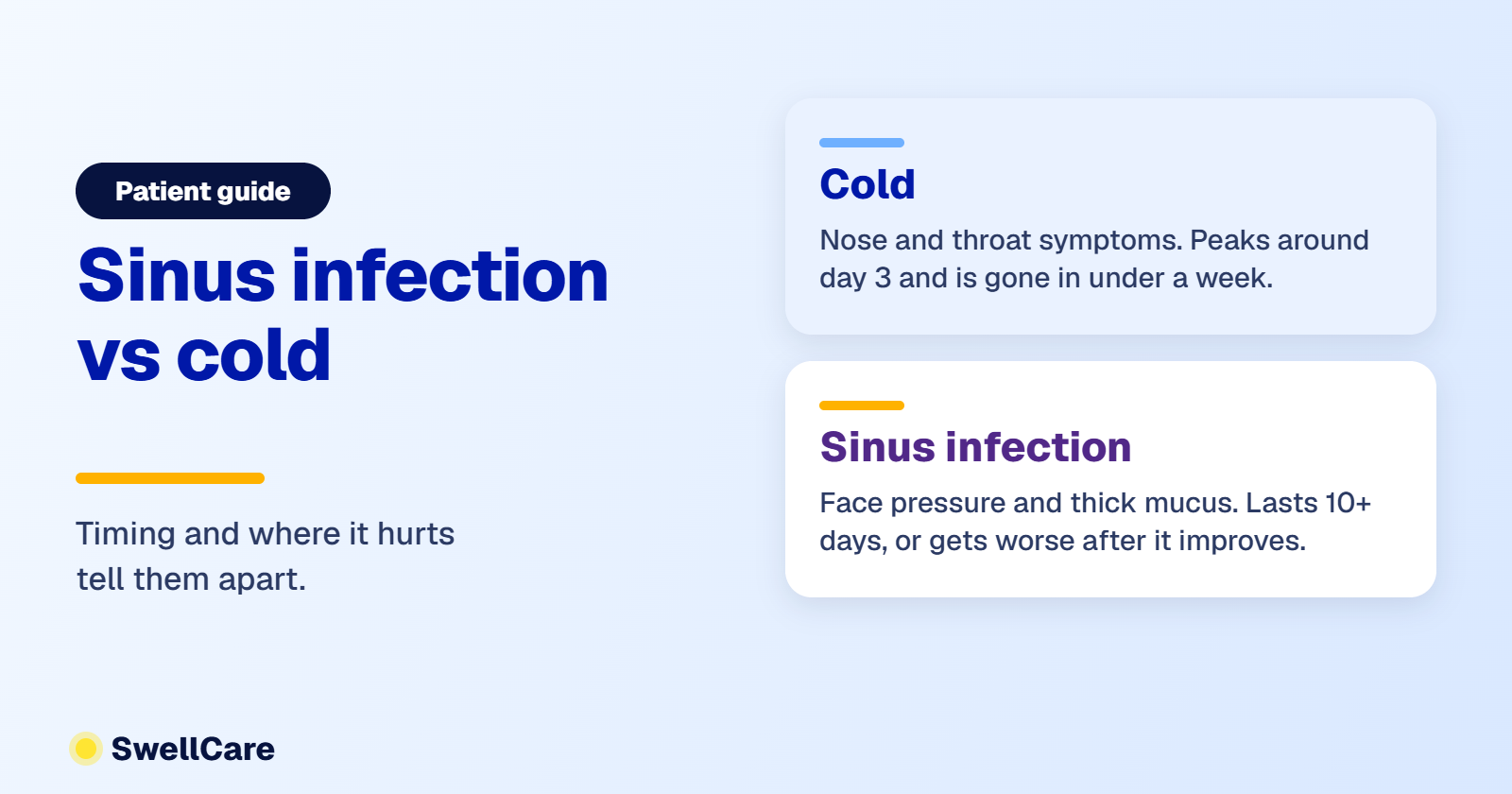
The difference is timing and location. Common cold symptoms stay mostly in your nose and throat. Sinusitis is swelling in the air-filled sinuses behind your forehead, nose and cheeks, so sinus pain and pressure build in your face.
Most cases of sinusitis are viral, just like the common cold. Fewer turn bacterial. Your sinuses swell, fluid builds up and germs grow, according to the CDC. Three questions sort it out fast: how many days, where it hurts, and whether you’re improving or sliding backward. Your sinus symptoms will usually answer all three.
What a cold feels like
The common cold is the classic sneezing, sniffling mess. Adults in the US catch two to three a year, and more than 200 viruses can cause one, CDC data shows.
Cold symptoms usually peak around days two to three and last less than a week. Expect a runny nose, sneezing, a sore throat, a mild cough and maybe a low fever. Your nasal passages clog, then clear. You feel lousy, then you feel better.
There’s no cure and no pill that ends it early. Treatment is about comfort while your body does the work. Nasal sprays, tea and sleep all count.
What a sinus infection feels like
Sinus infection symptoms feel heavier and more local. You may notice facial pressure that gets worse when you bend forward, facial pain around your cheeks or teeth, and thick nasal congestion that won’t clear. That facial pain is the big tell. Colds rarely cause it. Sinusitis symptoms often include nasal blockage on one side. Postnasal drip can leave you with a cough at night. Some people notice bad breath that wasn’t there last week, and a dull ache in the upper teeth.
Mucus color alone doesn’t settle it. MedlinePlus notes that green or yellow mucus doesn’t prove an infection, or that you need antibiotics. Fever, a headache that over-the-counter medicine can’t touch, and deep fatigue add weight. So does bad breath that brushing doesn’t fix.
Many sinus infections begin as a cold that doesn’t improve, or that worsens after seven to 10 days.
Cold vs sinus infection at a glance
Use this table to compare your symptoms with the usual sinus signs.
| Cold | Sinus infection | |
|---|---|---|
| How long | Under a week, peaks days 2-3 | Over 10 days, or better then worse |
| Pain | Mild throat or head discomfort | Facial pressure and pain |
| Mucus | Clear to cloudy | Thick, often discolored, with postnasal drip |
| Fatigue | Mild | Can feel deep and draining |
| Other symptoms | Sore throat, watery eyes | Bad breath, an ache in the upper teeth |
| Fever | Low or none | May linger 3-4 days or more |
| Common cause | Viral | Viral, sometimes bacterial |
What helps at home, and what doesn’t
Treatment for either one is simple. Rest, fluids, saline spray, a clean humidifier and warm steam ease nasal congestion. Over-the-counter pain relievers calm a headache. Decongestants help, but MedlinePlus says using nasal sprays for more than three to five days can make congestion worse.
Do you need antibiotics?
Usually not. Antibiotics don’t touch a viral infection, and they carry real risks, from rashes to antibiotic resistance. The CDC says many sinus infections get better on their own, and a clinician may suggest watchful waiting for two to three days before deciding whether a bacterial sinus infection needs them. Good sinus infection treatment starts with the right diagnosis.
Treating a cold
Skip the antibiotics entirely. For children, check with a clinician before giving any cold medicine. For adults, the best treatment is fluids, sleep and patience. These bugs clear on their own.
When to see a doctor
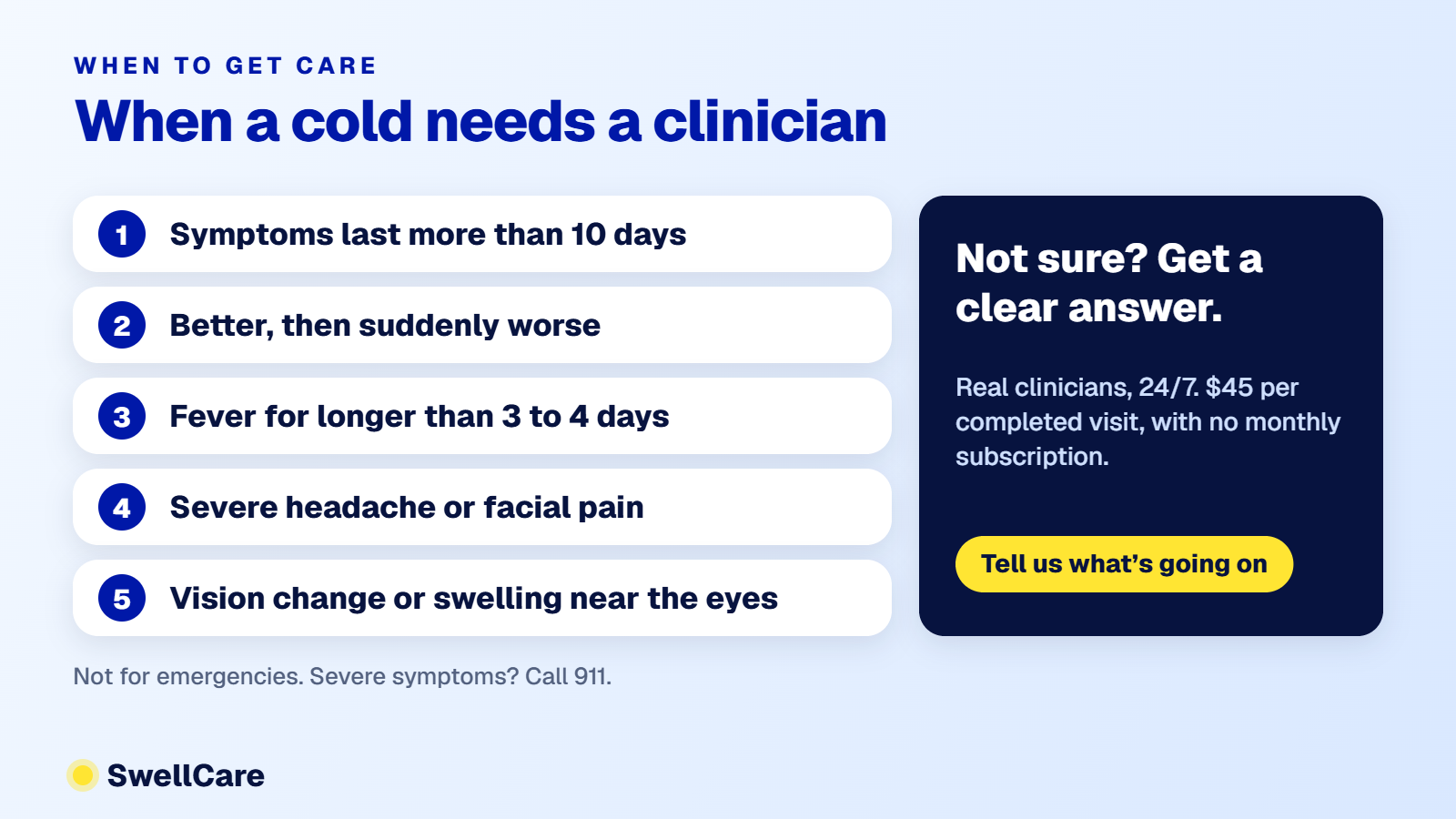
Don’t wait it out forever. A doctor can tell a viral cold from sinusitis, and whether antibiotics would help. See a doctor or other healthcare provider if you have:
- symptoms that hang around past 10 days with no improvement
- symptoms that improve, then come back worse
- fever lasting longer than three to four days
- severe headache or facial pain
- any vision change, swelling around the eyes, or a stiff neck (get care right away)
Not sure which pile you fall into? That’s a normal place to be, and a doctor’s quick read of your symptoms can end the guessing. SwellCare’s clinicians are available 24/7, and a completed visit is $45 with no monthly subscription. Tell us what’s going on and we’ll tell you whether it’s a cold, a sinus infection, or something that needs in-person care.
SwellCare doesn’t replace emergency care. If you have trouble breathing or severe symptoms, call 911.
Questions people ask about sinus infections and colds
How do I tell if I have a sinus infection or a cold?
Look at timing and pain, then compare your symptoms with the table above. A cold peaks in two to three days and clears in under a week. A sinus infection lingers past 10 days, brings facial pressure, or gets worse after you started to improve.
How long does a sinus infection last?
Acute sinusitis lasts up to four weeks, and many cases get better on their own. If you’re not improving after 10 days, it’s time to talk to a clinician.
Does green or yellow mucus mean I need antibiotics?
No. Discolored mucus happens with colds and viral sinus infections too. Treatment depends on your symptoms and how long they last, not color alone.
Can a cold turn into a sinus infection?
Yes. A cold can leave your nose swollen and blocked, so mucus gets trapped in the sinus cavities and germs grow. That’s why a cold that gets worse after day seven deserves a closer look.
Is a sinus infection contagious?
Many sinus infections start with a cold virus, and colds do spread. Wash your hands often, avoid close contact with people who are sick, and stay home while you have a fever.
Trusted references
Public-health, research, and medical-society resources related to this guide.