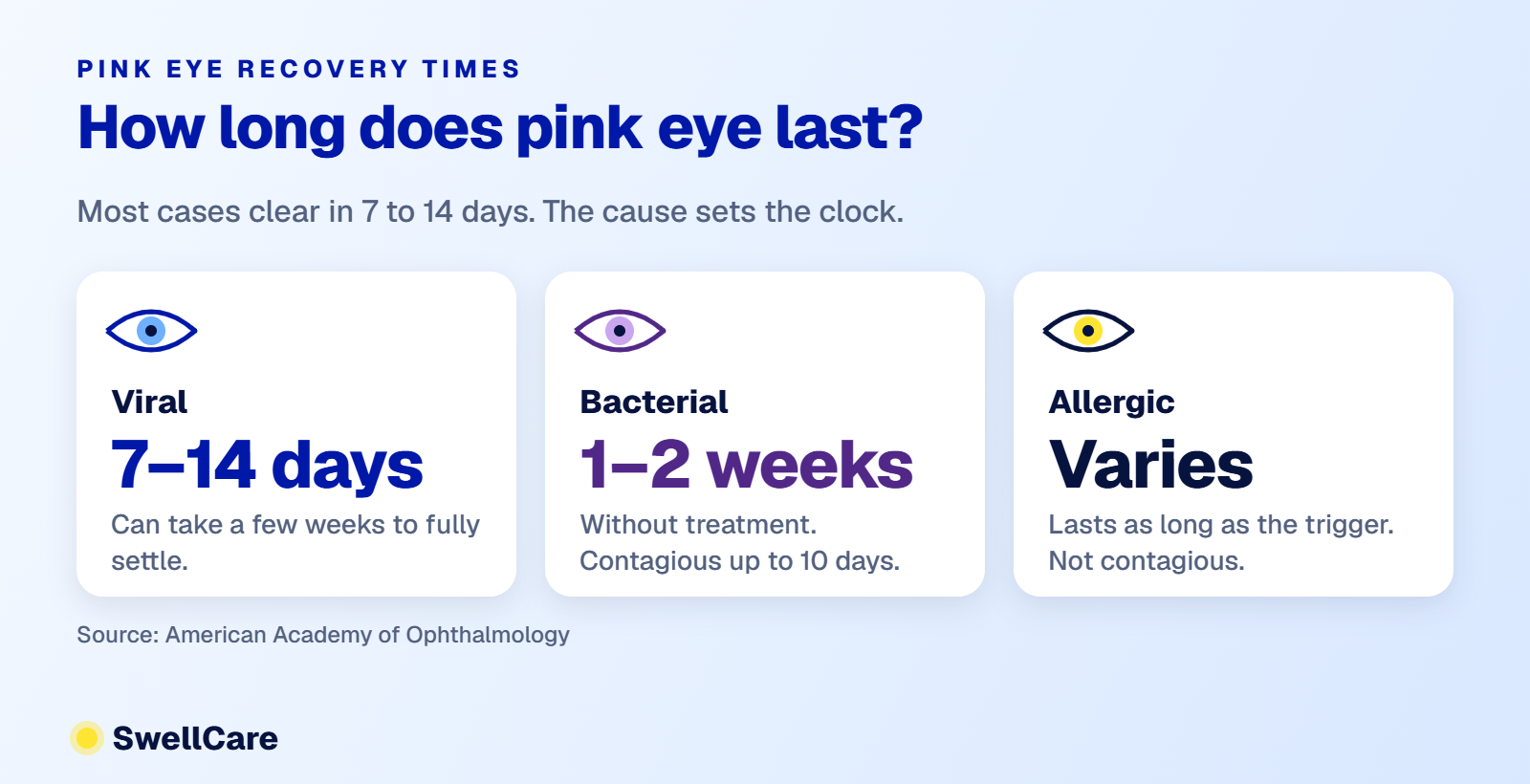
Your eye is red, gritty and glued shut when you wake up, and all you want is a number. Here it is. How long does pink eye last? Most cases clear up in 7 to 14 days, and plenty feel better well before that. Viral pink eye usually takes longest. Allergic pink eye lasts as long as whatever sets it off.
Pink eye, or conjunctivitis, is inflammation (and sometimes infection) of the thin, clear tissue covering the white of your eye. That inflammation is what turns it pink. The cause decides the length, and it also decides what you should do about it. Below you’ll find each type day by day, how long you’re contagious, and the signs that mean you shouldn’t wait it out.
Pink eye timeline at a glance
| Type | Typical length | Contagious? | Medicine needed? |
|---|---|---|---|
| Viral | 7 to 14 days, sometimes a few weeks | Yes, up to about 14 days | No |
| Bacterial | Roughly 1 to 2 weeks without treatment | Yes, up to about 10 days | Sometimes |
| Allergic | Until the trigger is gone or controlled | No | Allergy eye drops help |
These ranges come from the American Academy of Ophthalmology and its guidance on contagious periods. They’re ranges, not promises. A mild case can fade in under a week. A stubborn one can drag toward three. Use this pink eye timeline as a map, then read the section for your type.
Day-by-day timeline for viral pink eye
Viral conjunctivitis is the most common kind of pink eye. It often arrives with a cold, and there’s no specific treatment that clears it faster. The virus has to run its course, so the goal is easing symptoms and not passing it on.
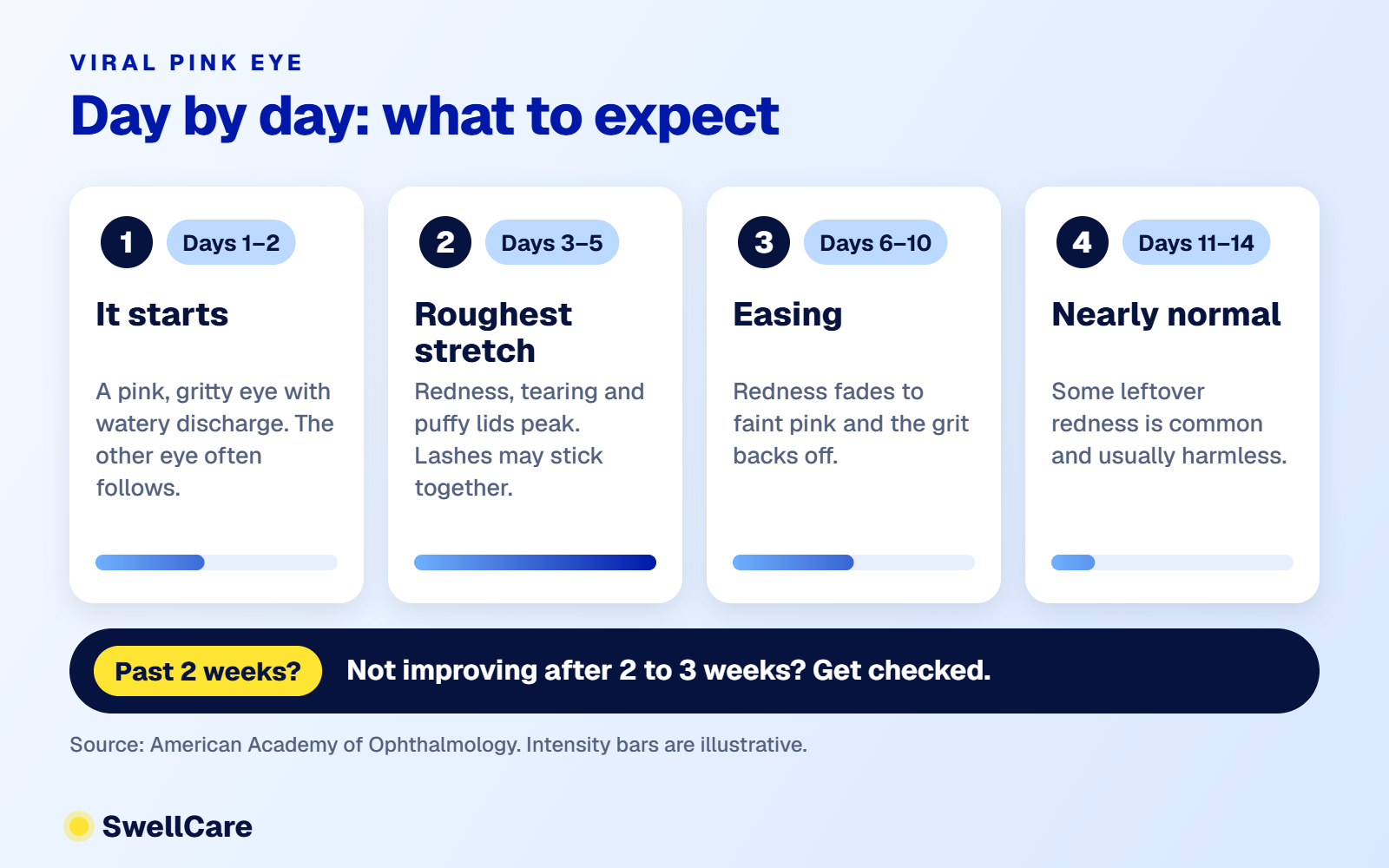
Days 1 to 2. One eye turns pink or red. It feels like there’s sand under the lid, and the itching can be maddening. Discharge is watery and thin. The second eye often follows within a day or two.
Days 3 to 5. Many people find this the roughest stretch. Inflammation peaks, so redness, tearing and puffy eyelids build, and your lashes may stick together in the morning. Cold compresses and artificial tears take the edge off.
Days 6 to 10. Symptoms ease. The color fades from angry red to faint pink and the gritty feeling backs off.
Days 11 to 14. Most people feel close to normal. A little leftover redness is common and usually harmless.
Beyond two weeks. Viral pink eye can take a few weeks to fully settle, and light sensitivity or blurry vision shouldn’t be part of that. If you’re no better after two to three weeks, get seen by an eye doctor or another clinician.
How long does bacterial pink eye last?
Bacterial conjunctivitis is an eye infection that tends to bring thick yellow or green discharge. It can crust your eyelids shut overnight. According to the American Academy of Ophthalmology, most bacterial cases improve in about one to two weeks even with no treatment at all. Antibiotic eye drops can shorten how long you can pass it on, though they may not speed up healing much.
Here’s the part people miss. Antibiotics only work on bacteria, and most pink eye isn’t bacterial. In a study of about 45,000 children, 69% were prescribed antibiotics, yet return visits stayed under 4% whether they got them or not. So pushing for a prescription isn’t always the right call. Doctors do recommend antibiotics when pink eye hasn’t improved after two to three weeks, and for babies under one month old.
Allergic pink eye lasts as long as the trigger
Allergic conjunctivitis is the odd one out. It isn’t an infection, so it has no natural end date. Itching is the giveaway, along with watery eyes, puffy lids and often sneezing.
Treatment starts with the allergen. Once the pollen, pet dander or dust is gone, or under control, your eyes settle. Antihistamine eye drops or an oral antihistamine help, and so does a cool compress. Seasonal allergy flare-ups can last all season. The good news: this type can’t spread to anyone else.
How long are you contagious, and when can you go back?
How long is pink eye contagious? Bacterial pink eye can spread for up to 10 days, and for less time if you’re using antibiotic drops. Viral pink eye can spread for up to 14 days. The CDC calls both types very contagious and easy to spread, and says allergic pink eye is not.
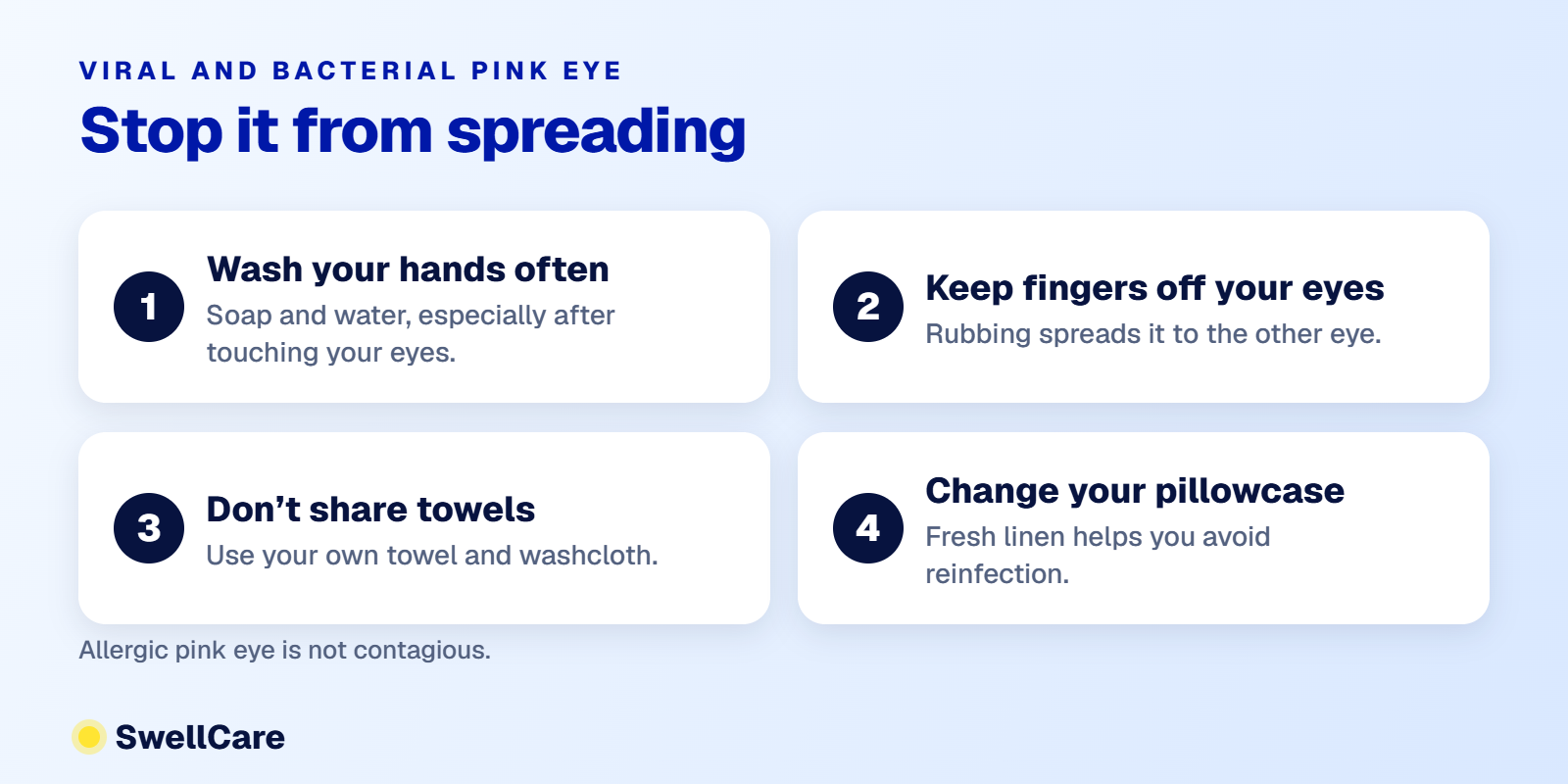
The infection spreads when your hands touch your eyes and then touch something else. That’s how it jumps from one eye to the other, too. Prevention is boring but it works. Good hygiene means washing your hands often, skipping the towel sharing, changing your pillowcase and keeping your fingers away from your eyes.
For school or work, symptoms are the better guide than the calendar. The American Academy of Ophthalmology says kids can usually return once redness and discharge have greatly improved. The CDC adds that you should check with your clinician first, and stay home if you have a fever or still have symptoms and can’t avoid close contact.
What helps pink eye clear faster
Let’s be honest: nothing makes a virus vanish overnight. You can still ease symptoms and avoid reinfecting yourself, which matters more than people think. Treatment depends on the cause.
A cold compress calms the inflammation and the burning, and it feels good. Refrigerated, over-the-counter lubricating eye drops soothe the grit. Clean away crusting with a fresh, damp cloth each time, and wash your hands afterward. If an allergy is behind it, an antihistamine does more than any antibiotic could.
Skip eye makeup while you’re red, and throw out what you used while infected. Stay out of your contact lenses too, and switch to glasses until a clinician says your contact lenses are safe again. The CDC warns that contact lens wearers with bacterial pink eye face a higher risk of corneal infection. They should take lenses out, start topical antibiotics and see an ophthalmologist promptly.
When pink eye isn’t getting better
Most pink eye is a nuisance, not a danger. A few signs say otherwise. Get care soon if you notice any of these:
- Blurry vision, or vision that keeps getting worse
- Real eye pain
- Swelling and pain in the eyelids
- Thick discharge that keeps gluing your lids shut every morning
- Light sensitivity, or blister-like spots on the skin around one eye
- No improvement after two to three weeks
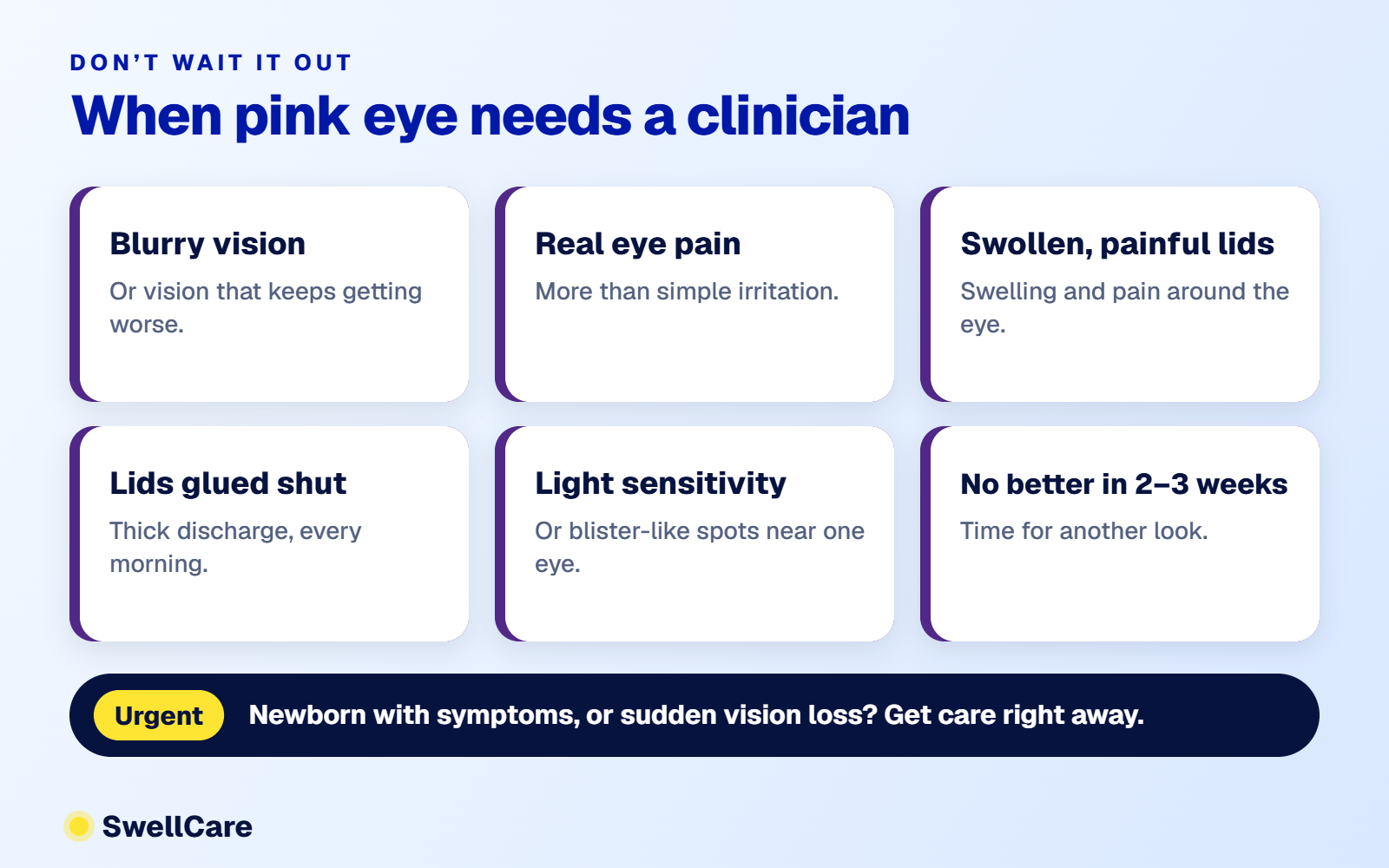
A newborn with pink eye symptoms needs to be seen right away, according to the CDC. Sudden vision loss or severe pain is an emergency. Go to an emergency room, not an online visit.
Get pink eye checked from home with SwellCare
If you’re not sure whether you have viral, bacterial or allergic pink eye, you don’t have to guess. SwellCare offers clinician-led, non-emergency online urgent care 24/7, and pink eye is on our list of conditions we see. A clinician reviews your symptoms, tells you what’s likely, and says whether you need in-person care.
You start with a free screening, then a $45 consultation if you go ahead. Prescriptions are never guaranteed, because most pink eye doesn’t need one. Start your care when you’re ready.
Questions people ask about how long pink eye lasts
Does pink eye go away on its own?
Usually, yes. Viral pink eye typically resolves within 7 to 14 days without treatment, and most bacterial cases improve within one to two weeks. If allergies are the cause, it fades once the trigger is gone. Cold compresses and artificial tears help you feel better in the meantime.
How long does pink eye last with antibiotics?
Antibiotic drops treat a bacterial infection only. They can shorten how long you can pass it on, but may not make it heal much faster. Viral and allergic cases don’t respond to them at all. If you’ve used drops for several days and aren’t improving, a doctor should take another look.
Can pink eye last more than two weeks?
Yes, though it’s a signal to get checked. Viral cases can take a few weeks, but pink eye that hasn’t improved after two to three weeks may need antibiotics or a different diagnosis. If allergies are behind it, it can last as long as you’re exposed.
When can my child go back to school?
Most kids can return once their symptoms have greatly improved, but confirm with your clinician or the school’s policy. The CDC advises keeping anyone home who still has symptoms and can’t avoid close contact. Wash hands and don’t share towels either way.
Trusted references
Public-health, research, and medical-society resources related to this guide.