You stubbed it on the bed frame, or something heavy landed on it. Now it throbs, and you’re wondering whether to keep walking on it.
Here’s the short answer on how to tell if your toe is broken. Look for swelling, bruising, sharp pain over the bone, and a toe that sits at an odd angle. Any one of those can mean a fracture.
Most breaks heal without surgery, but a few need care fast. Here’s what to check right now, and which signs mean you shouldn’t wait on getting it seen.
Signs your toe is broken
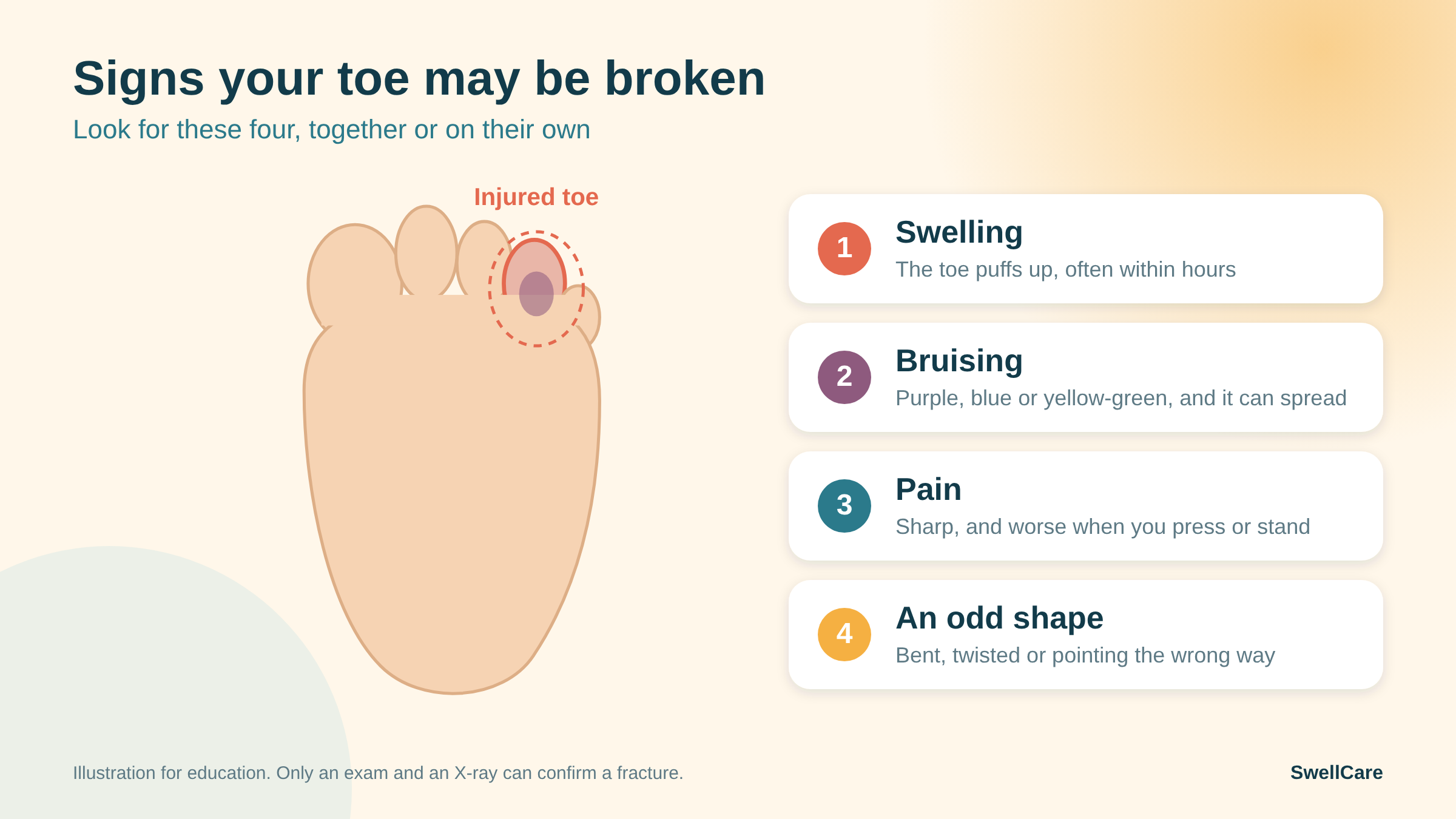
The four signs that matter most
Pain is the first of the symptoms, but it’s a weak clue by itself. A badly stubbed toe causes plenty of pain and turns out fine. The pattern tells you more.
Swelling comes first, often within hours. Bruising follows in shades of purple, blue and then yellow-green, and it may creep onto the foot. The pain is sharp and sits in one spot over the bone, and it gets worse when you press or stand. Toes that look bent, twisted or out of line may be displaced, meaning the pieces of bone have shifted.
Can you still move it?
Probably. A toe fracture doesn’t always lock the joint, so a broken toe can still wiggle. Pain when you try is the better clue.
If you can’t move it at all, or moving it sends a hot jolt up the toe, take that as a stronger warning. Your big toe deserves extra respect because it carries much of your body weight when you push off, so a big toe injury is harder to ignore. Hairline fractures, thin cracks, can feel like a bad bruise and still need protecting.
Broken, sprained or just bruised?
A sprained toe, a bruised toe and a broken toe can share symptoms on day one. This table shows how they usually differ.
| Broken | Sprained | Bruised | |
|---|---|---|---|
| Pain | Sharp, over the bone | Aches when you move it | Sore to the touch |
| Swelling | Often marked and quick | Moderate | Mild |
| Shape | May look bent | Looks normal | Looks normal |
| Walking | Painful, sometimes impossible | Painful but possible | Usually fine |
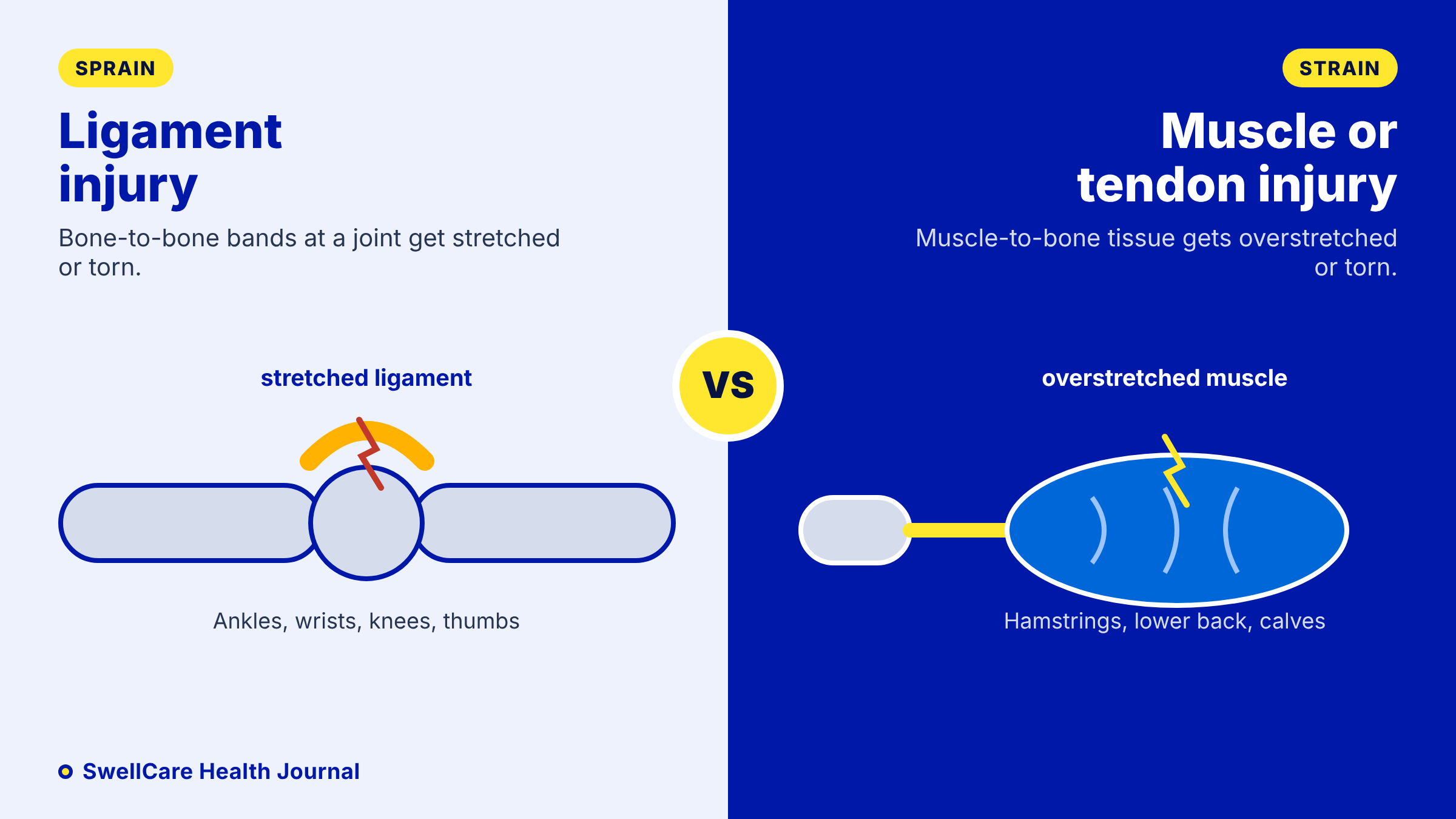
No single row settles it. A sprained toe means a stretched or torn ligament, the tissue that holds a joint steady. In a bruise, blood leaks under the skin with no fracture. Stress fractures are tiny cracks from repeated strain, such as running, and they may not show on an X-ray for several weeks, according to the American Academy of Orthopaedic Surgeons.
A two-minute self-check
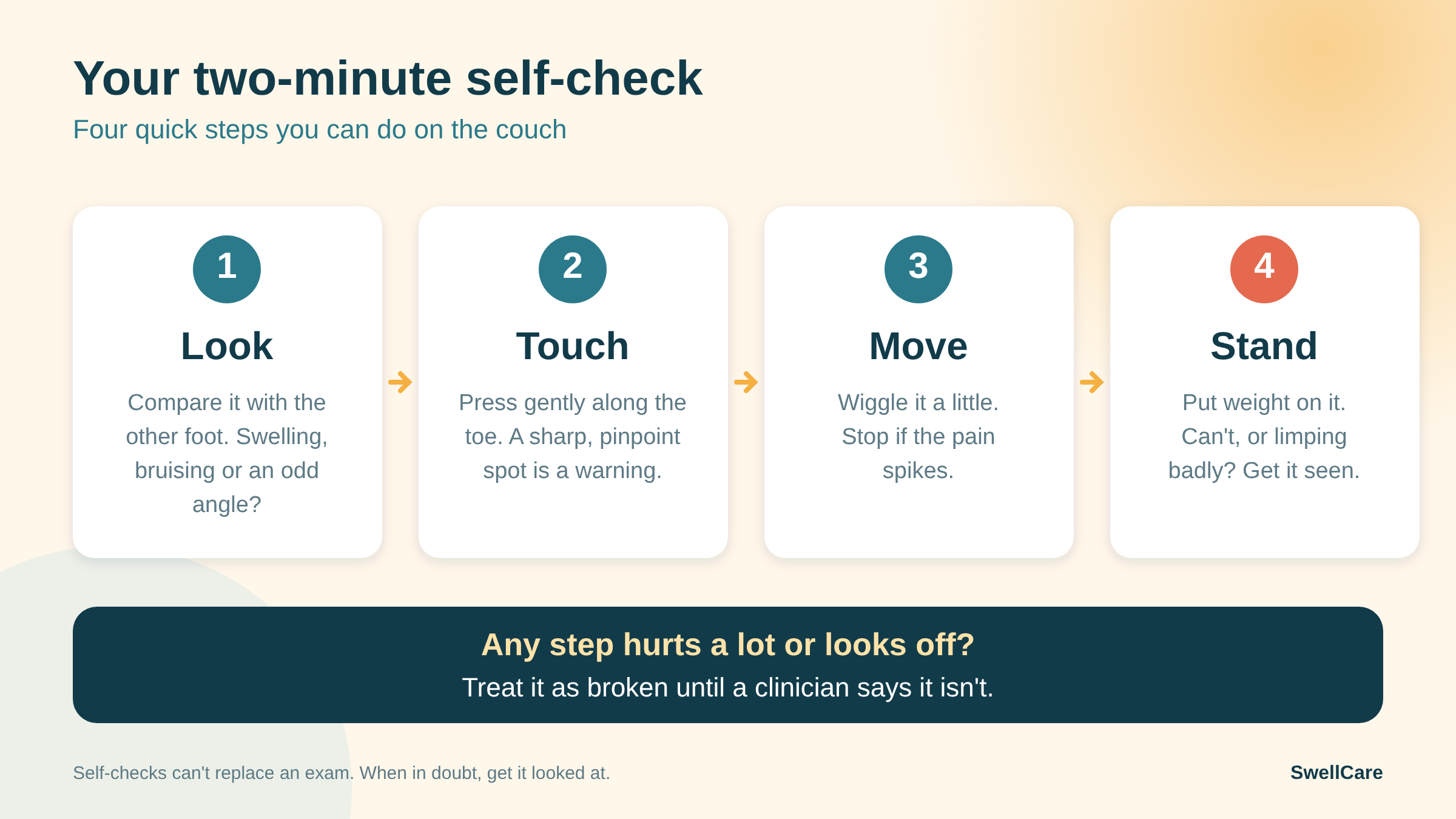
- Look. Compare it with your other foot. Note puffiness, bruise color or an odd angle.
- Touch. Press gently along it. Watch for a sharp, pinpoint spot over the bone.
- Move. Wiggle it gently, and stop the moment the pain spikes.
- Stand. Put some weight on the foot. Can’t, or limping badly? Get it seen.
If any step hurts a lot or looks off, treat the toe as broken until a clinician says it isn’t.
When to get your toe checked
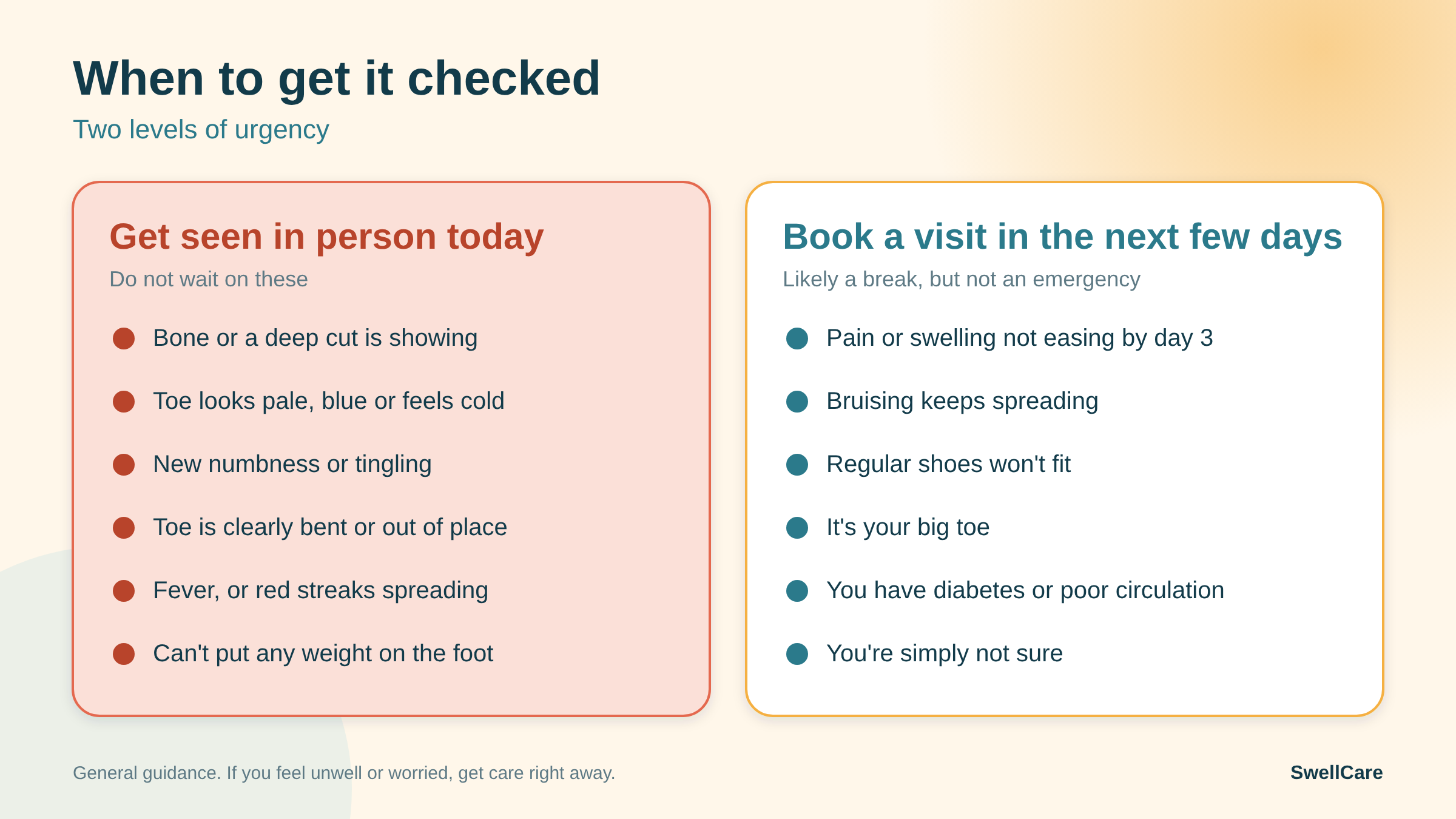
Get seen in person today
Go to urgent care or the ER if you can see bone or a deep cut, if the toe turns pale, blue or cold, if numbness or tingling is new, if the toe is clearly bent out of place, or if you can’t put any weight on the foot. Any cut over a broken bone is an open fracture, and those can lead to serious infection. Fever or red streaks spreading from the toe point to infection too.
If you have diabetes or poor circulation, don’t wait on any toe injury. Foot wounds are slow to mend in those cases, and a doctor should look early.
Book a visit in the next few days
Mayo Clinic says to see a doctor if pain, swelling or color changes last more than a few days, or if the injury makes walking or wearing shoes hard. Treat a big toe injury as a visit rather than a wait-and-see.
What happens when a clinician checks a broken toe
Expect a hands-on exam: the skin, the blood flow, the feeling in the toe, and pressure along the toe. An X-ray is the usual way to confirm a toe fracture. If a stress fracture is suspected and the picture looks clean, an MRI can find it.
Surgery is the exception. Displaced toes can often be moved back into place in the office after it’s numbed, and pins or screws are kept for harder cases. Most treatment is simple: protect the toe with tape or a stiff-soled shoe, and let it heal.
What to do at home while you wait
Home treatment starts with rest. Stay off the foot as much as you can for the first few days so the bone can heal, and elevate it above heart level when you sit. MedlinePlus suggests ice for about 20 minutes at a time, wrapped in a cloth and never pressed straight onto skin. Ice it again after a busy day, and elevate the foot while you do.
For pain, ibuprofen or naproxen can help. Check with a provider first if you have kidney, heart or stomach problems.
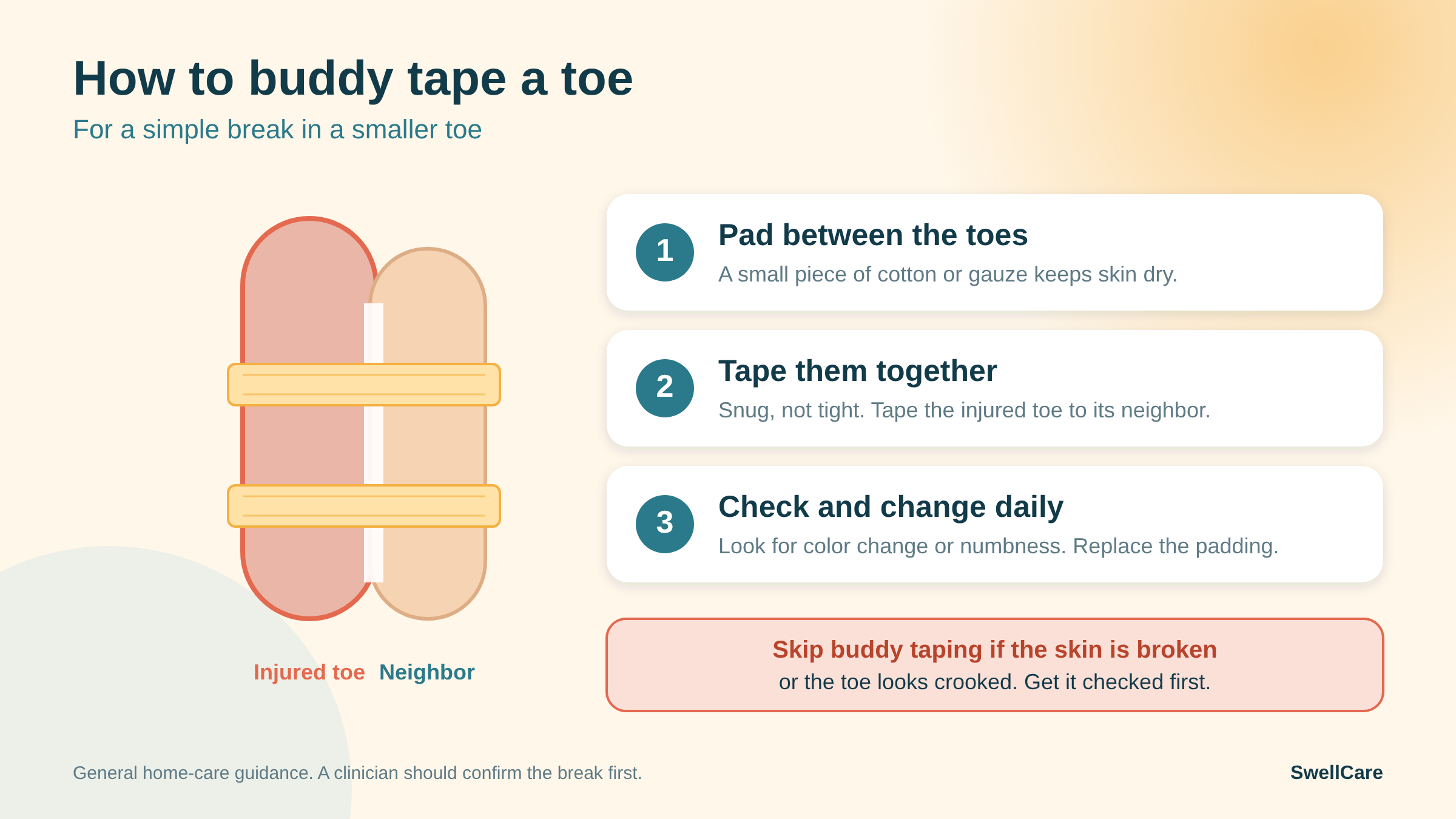
Buddy taping means taping the injured toe to its neighbor with a little cotton in between, using soft medical tape. It suits a simple break in a smaller toe, and it’s best done after someone has confirmed the break. Skip it if the skin is broken or the toe looks crooked. Wear wide shoes with stiff soles, and leave the heels and flip-flops in the closet.
How long does a broken toe take to heal?
Most toe fractures heal in about 4 to 6 weeks with simple treatment. The AAOS puts the wait until normal shoes feel comfortable at roughly 6 to 8 weeks, and the toe may stay achy or swollen for three to six months. Hold off on sports until your doctor says it’s safe, since going too early risks a second injury.
Getting your toe looked at with Swell
Here’s the honest part. Video visits can’t take X-rays. What a Swell clinician can do is look at the toe with you, ask the questions that sort a today problem from a this-week problem, and tell you where to go for imaging and what home treatment makes sense meanwhile. Real clinicians, clear next steps.
Staring at a possible broken toe and can’t decide? Get care now and tell a clinician what’s going on. Swell’s telehealth team handles urgent care questions that aren’t emergencies, so you’ll know what to do before it gets worse.
Questions people ask about a broken toe
Can you walk on a broken toe?
Sometimes, yes, and many people do for days. That doesn’t make it safe, because walking on a stress fracture or a full break can shift it or slow healing. Wear a stiff-soled shoe, rest often, and see a doctor if the pain doesn’t ease within a few days.
How do you tell if your toe is broken or just bruised?
Bruises show color and soreness but usually move normally and settle within days. Breaks tend to bring sharper pain at one spot, heavier swelling, spreading bruising or an odd shape. If you can’t tell, assume it’s broken and have it checked.
Should you tape a broken toe?
Buddy taping can help a simple break in a smaller toe. Pad between the toes with cotton and tape snugly, never tight. Don’t tape over broken skin or a crooked toe. Have a clinician confirm the break first, so you aren’t holding a displaced toe in the wrong place.
Does a broken toe need an X-ray?
Often yes. Imaging is the usual way to confirm a toe fracture and see whether the toe is displaced. Stress fractures can hide on early images, so a clinician may repeat the scan or order an MRI. If the pain and swelling are mild, a doctor may still examine it first.
What happens if you leave a broken toe untreated?
Possible problems include chronic pain, a crooked toe, trouble walking and arthritis in the joint. An open fracture can lead to serious infection. See a doctor if the injury still hurts after the first few days.
Trusted references
Public-health, research, and medical-society resources related to this guide.