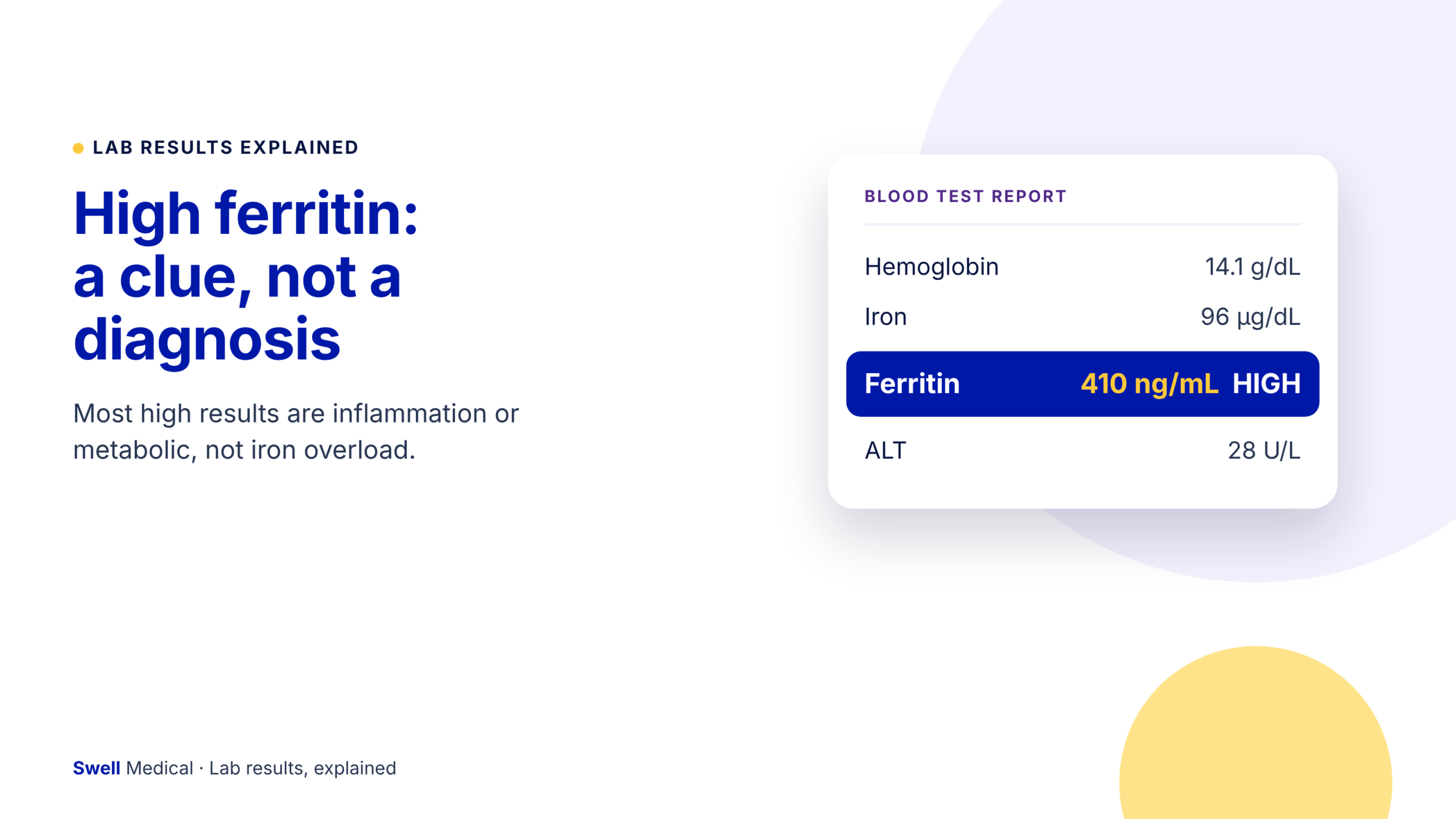
Your lab portal just pinged. One line is flagged in red: ferritin, high. Maybe it says 410. Maybe 1,150. You search it at 11 p.m. and the first page of results mentions cancer, liver damage and iron overload in the same breath.
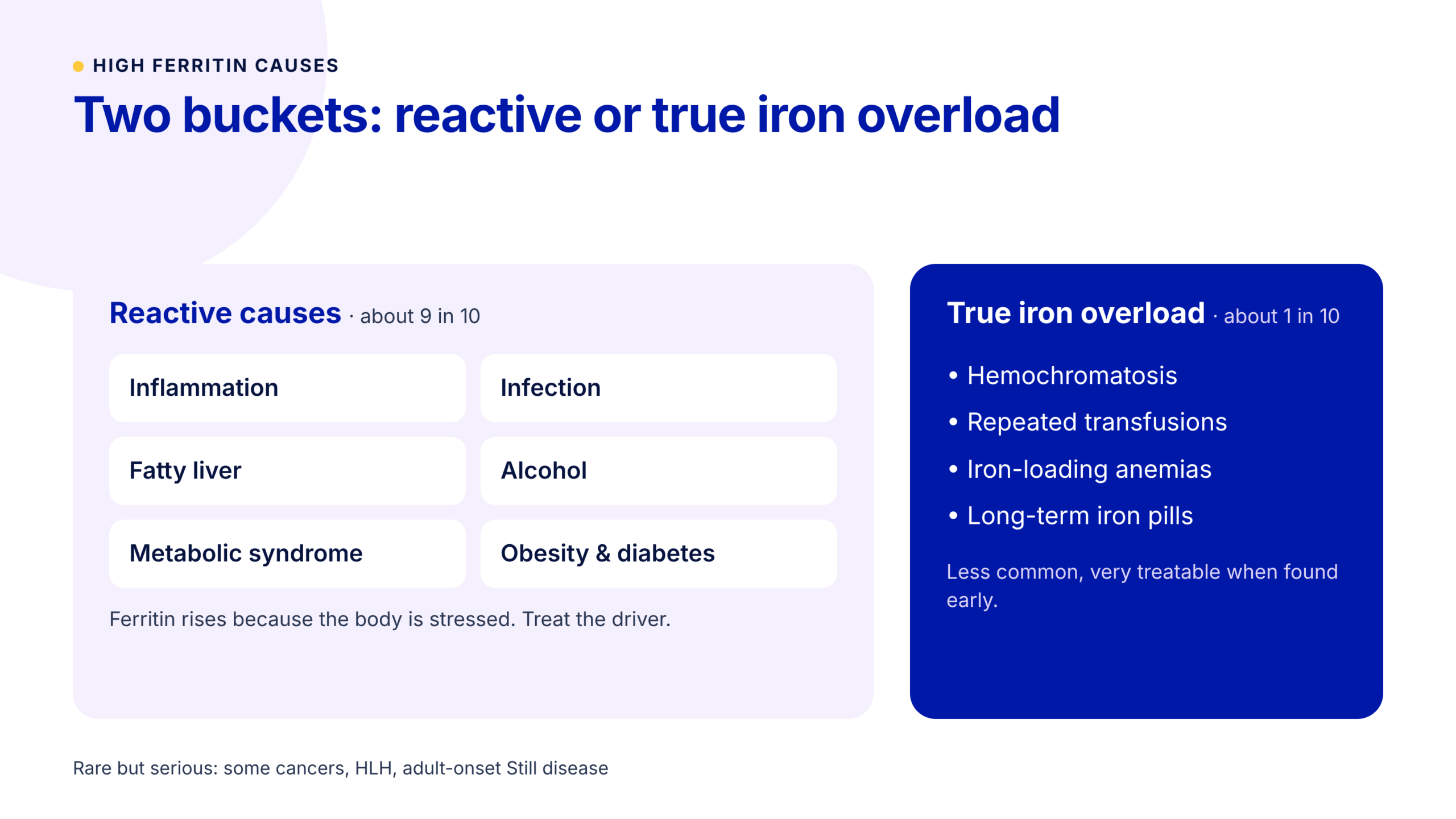
Take a slow breath. High ferritin causes are mostly harmless, and a flagged result is a clue, not a diagnosis. In routine care, only about 1 in 10 cases of hyperferritinemia turns out to be true iron overload, according to a clinical review in PMC. The other nine are usually your body reacting to something else: inflammation, a fatty liver, alcohol, weight gain, a recent infection.
Below, you’ll find the common reasons your ferritin level climbs, the few that need fast attention, the follow-up tests that sort one from the other, and what you can do this week.
Why a high ferritin level gets people’s attention
Ferritin is the protein your cells use to store iron. A ferritin test, usually one tube from a routine blood test, estimates how much iron you have in reserve. Low numbers point to iron deficiency and, eventually, anemia. A very low ferritin level can explain why you feel wiped out long before you’re technically anemic.
High numbers are trickier. Ferritin also rises when your body is inflamed or stressed, even if your iron stores are perfectly normal. The same ferritin level can mean very different things in two different people.
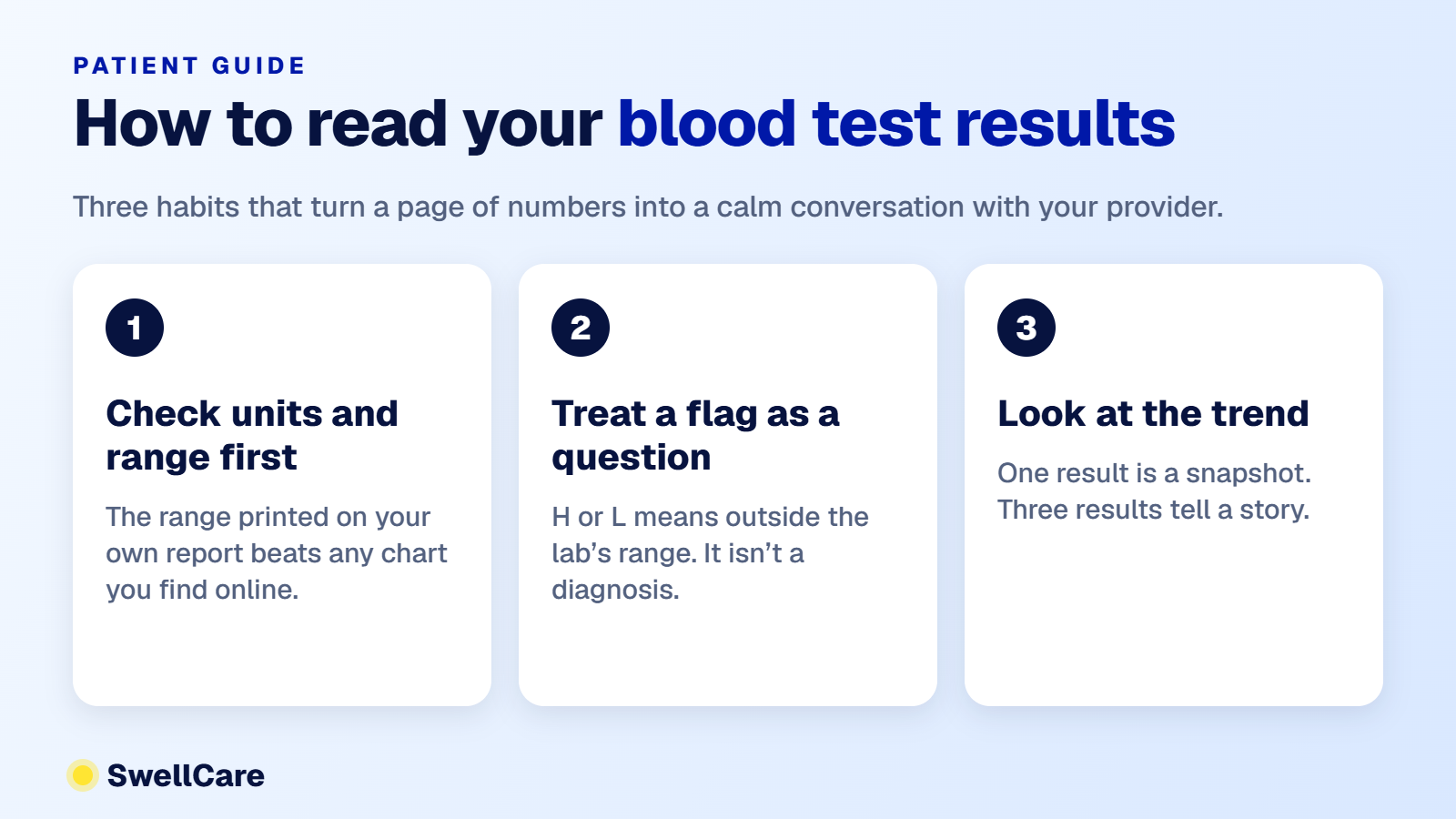
Most labs flag ferritin above roughly 200 ng/mL in women and 300 ng/mL in men, but ranges vary by lab and by age, so check the range printed on your own blood test report. A number between 300 and 1,000 is extremely common and often reactive. A ferritin test that stays above 1,000 deserves a proper workup.
What can high ferritin feel like? Symptoms to know
Many people feel nothing at all. The result turns up on a routine blood test ordered for something else.
When symptoms of high iron stores do show up, they tend to be vague, which is exactly why they get missed. The most common high ferritin symptoms include:
- Tiredness that sleep doesn’t fix
- Aching joints, especially the knuckles of the first two fingers
- Pain or fullness in the upper right abdomen, over the liver
- Lower sex drive
- Skin that looks darker or “bronzed”
Those clues come from the NIDDK’s hemochromatosis guide. Notice that fatigue and joint pain also come with inflammation and thyroid problems, plus a hundred ordinary conditions. Symptoms alone can’t tell you which one you have, and plenty of people with iron deficiency anemia report the same tiredness. Only a blood test can separate them. The follow-up tests below do exactly that, so don’t try to diagnose yourself from a symptom list.
High ferritin causes: the usual suspects
Here’s the big picture. Think of two buckets. In the first, ferritin is high because something is irritating the body. In the second, it’s high because you’re truly carrying too much iron.
Inflammation and infection
Ferritin is an acute phase reactant, which means it climbs when the body is fighting something. A cold, a flare of rheumatoid arthritis, a recent surgery or any stubborn infection can push it up for weeks. Doctors often check a marker such as C-reactive protein (CRP) alongside it to see whether inflammation is the story.
Fatty liver and other liver disease
The liver stores most of your ferritin. When liver cells are stressed or damaged, they leak ferritin into the blood. That’s why fatty liver and alcohol-related liver disease sit near the top of the list of high ferritin causes in primary care. Liver disease can also be paired with real iron buildup, so it’s worth sorting out which is which.
Metabolic syndrome, obesity and diabetes
Extra weight around the middle often travels with high blood sugar and high triglycerides. All of it pushes ferritin up. A pattern called dysmetabolic iron overload shows how tightly the two are linked. The reassuring part: this pattern often improves as weight, blood sugar and triglycerides improve.
Alcohol
Regular heavy drinking raises ferritin directly and by stressing the liver. The review above notes that stopping alcohol can bring ferritin down by around half within about two weeks, with a full return to normal taking a few more.
Hemochromatosis and other iron overload
Hereditary hemochromatosis is a genetic condition where the gut absorbs too much iron year after year. Left alone, the extra iron can slowly damage the liver and heart. The pancreas and joints are at risk too. Other forms of iron overload come from repeated blood transfusions, certain anemias or long-term iron supplements.
It’s the cause people fear most, and it’s the least common. But it’s also very treatable when caught early, which is the reason doctors look for it.
Cancer and blood disorders
Some cancer types, including leukemia and Hodgkin lymphoma, can raise ferritin, and so can rare immune conditions like adult-onset Still disease, according to MedlinePlus. These are uncommon explanations. They usually come with other signs: unexplained weight loss, drenching night sweats, fevers, swollen glands or very high ferritin numbers.
Other possible contributors include an overactive thyroid and certain medicines.
| Group | Examples | How common | Typical next step |
|---|---|---|---|
| Reactive | Inflammation, infection, fatty liver, alcohol, metabolic syndrome | Most cases | Treat the driver, recheck in 2 to 3 months |
| Iron overload | Hemochromatosis, transfusions, iron-loading anemias | About 1 in 10 | Transferrin saturation, genetic testing, maybe MRI |
| Serious but rare | Cancer, HLH, adult-onset Still disease | Uncommon | Prompt specialist workup |
Can ferritin be high when your iron is normal?
Yes, and it happens all the time. Ferritin and iron aren’t the same measurement. Serum iron is the iron circulating in your blood right now, and it swings with your last meal. Ferritin reflects storage and also reacts to inflammation.
So “high ferritin, normal iron” is a classic pattern for a reactive cause. The number to look at next is transferrin saturation, the share of your iron carrier protein that’s loaded with iron. Above about 45% in women or 50% in men, a clinician starts to think harder about iron overload and may order a genetic test for hemochromatosis. A normal result lowers the odds, though it doesn’t completely rule iron overload out.
When to worry: a simple way to read your number
There’s no single scary number, but there are zones. Use this as a rough map, not a verdict, and remember your lab’s own range comes first.
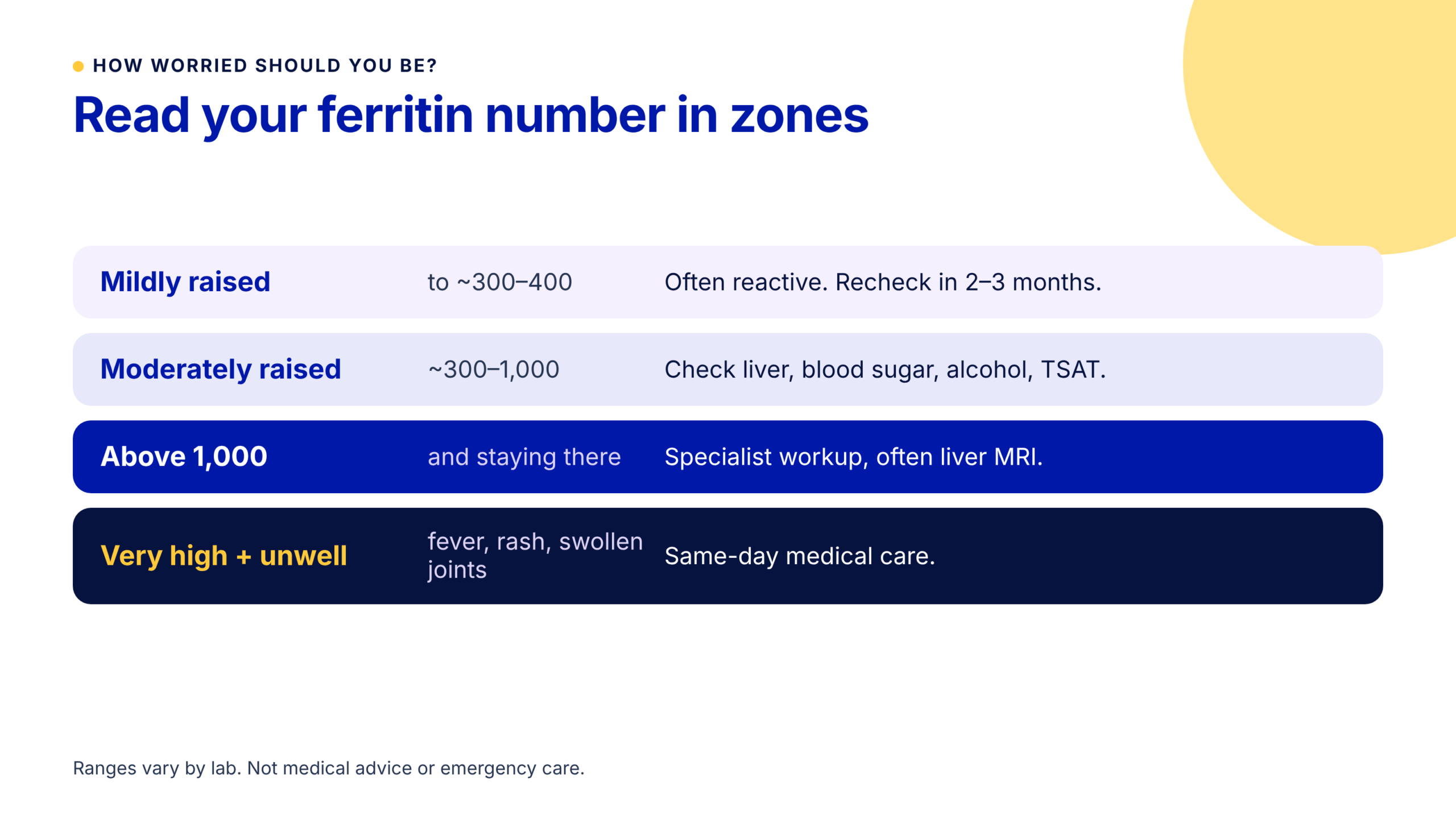
Mildly raised (above your lab’s limit, up to about 300 to 400). Very often reactive. A healthy person with a normal transferrin saturation is usually watched, given some lifestyle changes and retested in a couple of months.
Moderately raised (about 300 to 1,000). Common. Worth a fuller look at your liver and blood sugar, plus how much you drink. Transferrin saturation tells you whether to chase iron overload.
Above 1,000 and staying there. This is the zone where doctors stop watching and start investigating. A specialist referral and often an MRI of the liver to measure iron are reasonable.
Very high with fever, rash, swollen joints or feeling seriously unwell. Don’t wait for a routine appointment. Rare but serious inflammatory conditions can drive ferritin into the thousands, and they need same-day medical care.
Two more reasons to move faster: a close relative with hemochromatosis, or abnormal liver tests.
Which tests come after a high ferritin result?
One number rarely gives the answer. A single ferritin test is a snapshot, and your ferritin level can shift with a cold, a hard workout week or a night of drinks. Clinicians build the picture in layers.
Compare that with the low end. Low ferritin is easy to read: the iron deficiency is real, and iron deficiency anemia may follow if it isn’t treated. High ferritin has no such shortcut, and the symptoms don’t separate the two. Both can leave you tired. Both can bring headaches and brain fog.
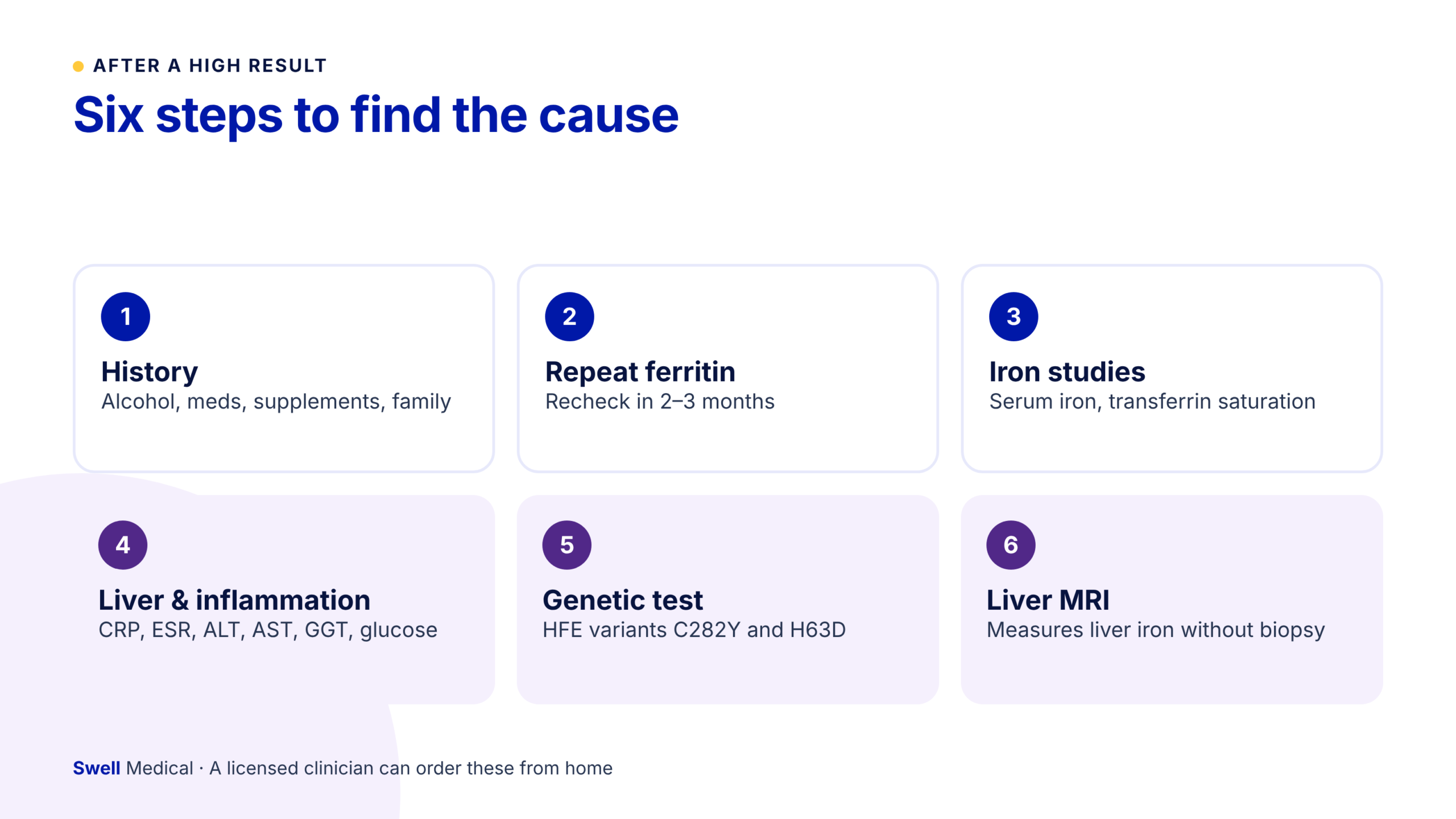
- History first. How much you drink matters, and so do your medicines, any iron supplements, past transfusions and your family. Even your job counts (welding, for example).
- Repeat the ferritin test. Many clinicians recheck the ferritin level in two to three months, ideally fasting, since it can bounce around. MedlinePlus notes that your provider may ask you to fast for up to 12 hours beforehand. A recent illness is also worth mentioning, because anemia screening and inflammation markers read differently after one.
- Iron studies. Serum iron, transferrin saturation and iron-binding capacity show whether iron is actually backed up.
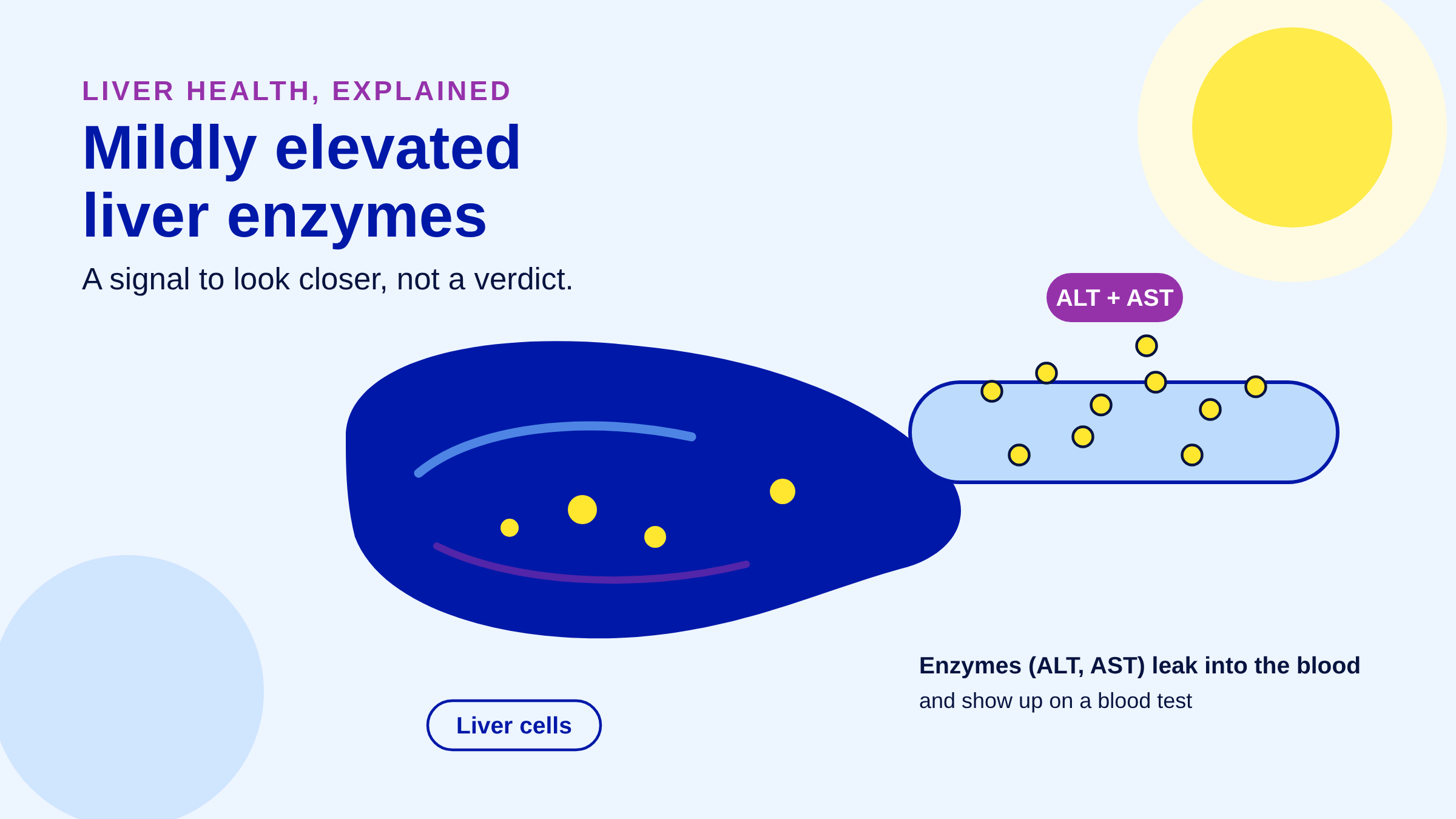
- Inflammation and liver markers. CRP, ESR, liver enzymes (ALT, AST, GGT), glucose and lipids.
- Genetic test. If transferrin saturation is high or a relative has hemochromatosis, a one-time test for the common HFE gene variants (C282Y and H63D) is the next move.
- Liver imaging. MRI is the preferred way to measure liver iron without a biopsy.
How to lower high ferritin
Treatment depends entirely on the cause, which is why guessing is a mistake. Don’t start cutting iron-rich foods on your own if your cause turns out to be inflammation. You can end up tired and short of iron without lowering anything that mattered.
If it’s reactive. Treat the driver. That can mean stopping alcohol, losing weight gradually, bringing blood sugar and triglycerides down, treating the infection or calming the inflammatory condition. Then recheck.
If it’s hemochromatosis or true iron overload. The standard treatment is phlebotomy, where about a pint of blood is removed at regular intervals until stores come down, then less often to keep them there, per the NIDDK. Doctors may also advise skipping iron and vitamin C supplements and raw shellfish, and limiting alcohol.
A caution from the RACGP review: removing blood to chase a high ferritin that isn’t caused by iron overload can lead to iron deficiency anemia. That’s why a diagnosis comes before treatment.
When to see a doctor about high ferritin
See a clinician soon, ideally this week, if your ferritin is above your lab’s range and:
- You have joint pain, ongoing tiredness, darker skin, or pain over your liver
- A parent, brother or sister has hemochromatosis
- Your liver tests are abnormal
- Your ferritin keeps climbing on repeat tests, or stays above 1,000
Get urgent care the same day if a very high result comes with fever, a new rash, swollen painful joints, confusion, yellow skin or eyes, or unexplained weight loss with night sweats. And if you ever have chest pain or trouble breathing, call 911. This article is for education and is not emergency care.
What to do next
You don’t need to sit with a scary number for weeks. Here’s a clear next step. Bring your actual lab report and your family history, along with a list of your medicines and supplements, and let a clinician connect the dots.
At Swell, a licensed clinician can review your ferritin level, order a repeat ferritin test with the right follow-up blood tests (iron studies, liver enzymes, inflammation markers), and explain each result in plain language. It happens any time of day, from home. It’s a free screening first, so you’ll know what the next step costs before you commit.
Questions people ask about high ferritin
Which cancers cause high ferritin?
Leukemia and Hodgkin lymphoma are the ones most often mentioned, and some solid tumors can raise it too. Cancer is an uncommon cause, though. It usually shows up alongside other warning signs such as weight loss, fevers, night sweats or swollen lymph nodes.
Does high ferritin make you tired?
It can, but tiredness isn’t specific. Iron overload and inflammation can cause fatigue. Fatty liver and thyroid problems can too, and so can iron deficiency, which has symptoms that look nearly identical. If you’re tired and your ferritin level is high, ask for iron studies and liver tests so the cause gets found rather than assumed.
How do you treat high ferritin levels?
You treat the cause. Stopping alcohol, losing weight, controlling blood sugar and treating inflammation bring down reactive ferritin. For hemochromatosis, regular phlebotomy removes the extra iron. A clinician should confirm which one you have first.
Should you worry about high ferritin?
Not automatically. Most mildly or moderately high results are reactive. Worry more if the level stays above 1,000, if it comes with symptoms or abnormal liver tests, or if hemochromatosis runs in your family. A repeat test and iron studies settle most cases.
Can ferritin be high with normal iron?
Yes. Ferritin rises with inflammation, liver stress and metabolic problems even when serum iron looks normal. Transferrin saturation helps tell the difference, since iron overload tends to push it above 45 to 50 percent.
Trusted references
Public-health, research, and medical-society resources related to this guide.