You stand at the toilet and it burns. Twenty minutes later you need to go again, and barely anything comes out. That pattern is the classic start of a urinary tract infection, and yes, men get them. UTI symptoms in men are easy to brush off as “something I ate” or a sore from the gym, which is exactly why they linger.
Here’s the short version. A burning feeling when you pee, a constant urge to go, cloudy or strong-smelling urine and pressure low in your belly all point to a UTI. In men, an infection like this usually means something is making it easier for bacteria to stick around, so it deserves a proper look.
What UTI symptoms in men actually feel like
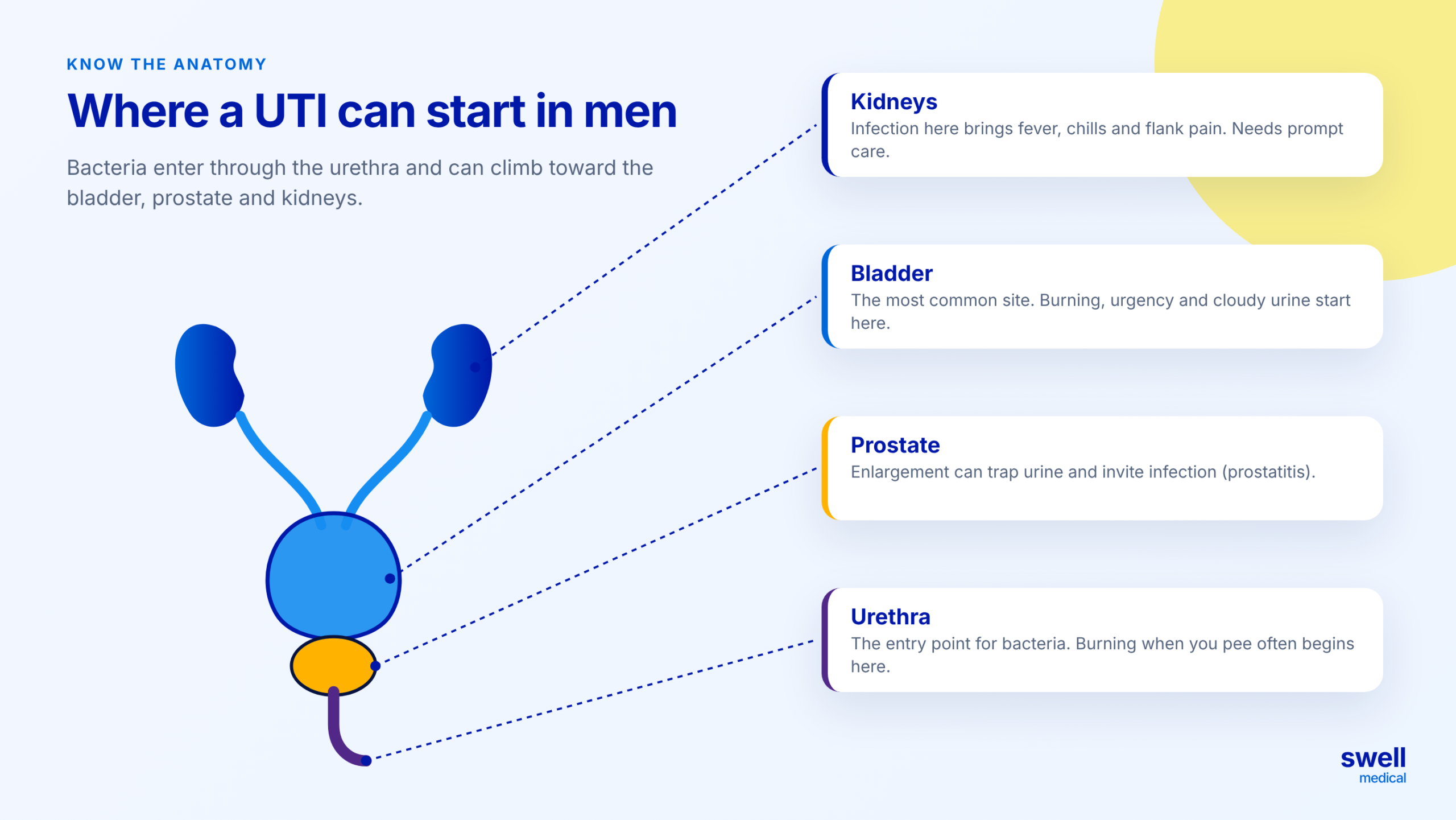
A urinary tract infection (UTI) is an infection anywhere in the urinary tract, which includes the kidneys, ureters, bladder and urethra. Most often the bladder or urethra is affected. The urinary tract signals trouble through the way you pee, and men’s symptoms tend to build over a day or two.
Early signs in the bladder
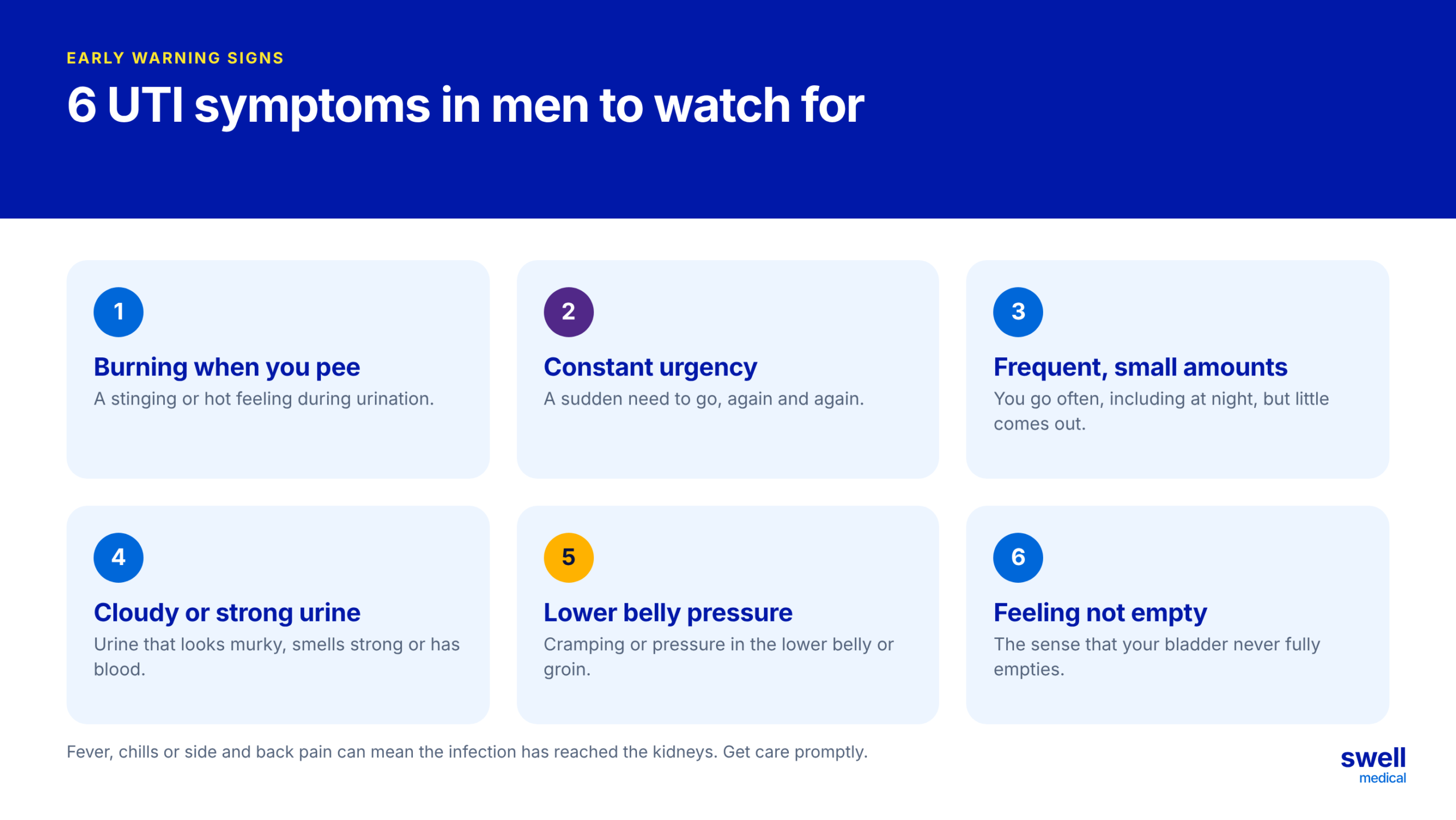
The NIDDK lists burning when you urinate, frequent urges to go, lower belly discomfort and cloudy, bloody or strong-smelling urine. For men, Harvard Health adds frequent urination that wakes you at night, plus pressure in the lower abdomen.
In plain terms, you might notice:
- A stinging feeling when you pass urine
- Frequent urination in small amounts, with a sudden urgency to go
- Cloudy urine, or urine that smells stronger than usual
- The sense that your bladder never quite empties
- Pressure or cramping low in the belly or groin
Signs it has reached the kidneys
Chills change the picture. So does flank pain, which is an ache in your side or upper back, and so do nausea and vomiting. Together with a fever, these point to a kidney infection (pyelonephritis), and the CDC treats it as the more serious form of a UTI. Don’t wait this one out. The pain alone is reason enough to call someone.
Can men really get a UTI?
They can. UTIs are less common in men than in women, mostly because the male urethra is longer, which gives bacteria a longer trip to the bladder. The CDC notes that older men especially can get a urinary tract infection, including recurrent ones.
Here’s the catch. Young men with a healthy urinary tract rarely get a bladder infection out of nowhere. So when men do, clinicians call it “complicated” and look for a reason. It’s not an insult to your hygiene. It’s a clue about what’s happening in your plumbing.
What causes a UTI in men?
Germs cause nearly every UTI. They travel up the urethra and multiply in the bladder, and a healthy bladder normally flushes them out. Anything that slows or blocks the flow of urine gives them time to settle in.
Enlarged prostate
This is the big one after age 50. An enlarged prostate can squeeze the urethra and leave urine behind. Harvard Health explains that trapped urine lets bacteria grow. Incomplete bladder emptying, a weak stream and dribbling are the tell-tale signs, and ignoring them can lead to urinary retention. The prostate can also become infected itself (prostatitis), which usually needs a longer course of treatment.
Kidney stones and a blocked flow
A stone, or a narrowing in the urethra called a stricture, can block urine and set the stage for infection. If your UTI keeps returning, a urologist may want imaging to look for one.
Catheters, diabetes and a weaker immune system
Catheters give bacteria a direct path into the bladder. Diabetes and conditions that weaken the immune system raise the odds too. Sexual activity can bring bacteria in as well, which leads to the next question.
UTI or STI? How to tell the difference
The two feel alike, and men often guess wrong. Knowing the UTI symptoms in men that differ from an STI saves a wasted week. The CDC says plainly that a UTI isn’t a sexually transmitted infection, though UTI symptoms can look like an STI, so ask a clinician whether you should be tested.
| Clue | UTI | STI (like chlamydia or gonorrhea) | Prostatitis |
|---|---|---|---|
| Burning when you pee | Yes | Yes | Often |
| Discharge from the penis | Rare | Common | Rare |
| Urgency and frequency | Very common | Sometimes | Common |
| Pain between the scrotum and anus | No | No | Common |
| Fever or chills | If it reaches the kidneys | Rare | Can occur |
Discharge is the biggest tell. If you see it, say so at your visit.
How doctors diagnose a UTI in men
Diagnosis starts with talk. Your clinician will ask about your symptoms, past infections and sexual history. Urinalysis checks your urine for white blood cells and bacteria. A urine culture identifies the exact bacteria and which antibiotics will work against it. For recurrent infections, the diagnosis often goes further, and a proper diagnosis also rules out an STI. A negative urinalysis makes a UTI unlikely in most patients, according to the Michigan guide below, while an abnormal one should be confirmed with a culture.
That culture matters more for men. A 2026 University of Michigan guide on virtual UTI care says most men should get a urine culture, even during telehealth visits, and that over-the-counter rapid UTI tests aren’t accurate enough to confirm an infection. Older men or men with repeat infections may also need a prostate exam or imaging.
UTI treatment for men: antibiotics and what to expect
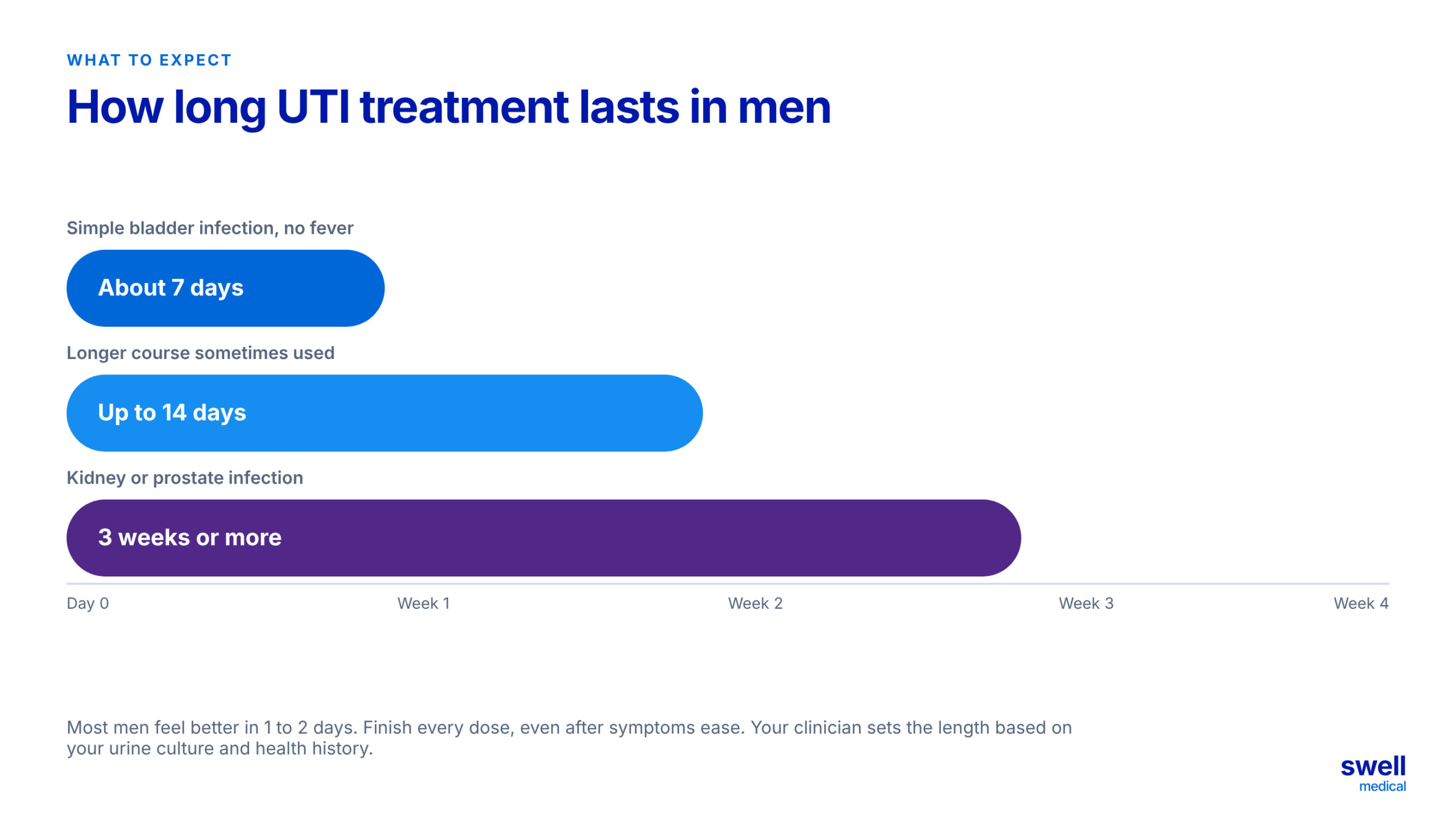
UTI treatment for men means antibiotics, matched to your culture results where possible. Common choices include nitrofurantoin, among others, and the right one depends on your culture and health history. Treatment length depends on where the infection sits.
For a simple bladder infection in men without a fever, a randomized trial reported by CIDRAP found that 7 days worked about as well as 14 days. Symptoms resolved in 93.1% of men on the shorter course and 90.2% on the longer one. Kidney or prostate cases run longer, often three weeks or more, according to Harvard Health.
Most men feel better within a day or two. Finish the whole course anyway. Stopping early is how a half-treated UTI comes back stronger. The CDC also warns that misused antibiotics bring side effects and antibiotic resistance, so antibiotics should only be taken when a clinician prescribes them. Treatment works best when the antibiotics are matched to the bug. Skipping doses feeds antibiotic resistance.
Home care that helps (and what won’t fix it)
Drink water. The NIDDK says extra fluids, ideally water, may help prevent infections and ease symptoms, so keep a bottle close. Drinking more fluids can also speed recovery. Pain relief from over-the-counter products is a question for your doctor, because it can mask what’s going on. What won’t work is cranberry juice as a stand-in for antibiotics. The NIDDK says diet hasn’t been shown to play a role in treating a UTI. Skip the wait-and-see approach too. A urinary tract infection in a man seldom clears on its own.
What happens if a UTI goes untreated
Left alone, it can climb to the kidneys. Harvard Health lists kidney infection, dehydration and repeat infections among the complications when a blockage or another cause isn’t fixed. The pain gets worse, too. In rare cases a kidney infection spreads to the bloodstream and becomes sepsis, a medical emergency.
When to see a doctor, and when to go to the ER
See a doctor the same day or next if you have burning, urgency or cloudy urine, because most men with a first UTI need a culture. Don’t wait if you see blood in your urine or the symptoms are recurrent.
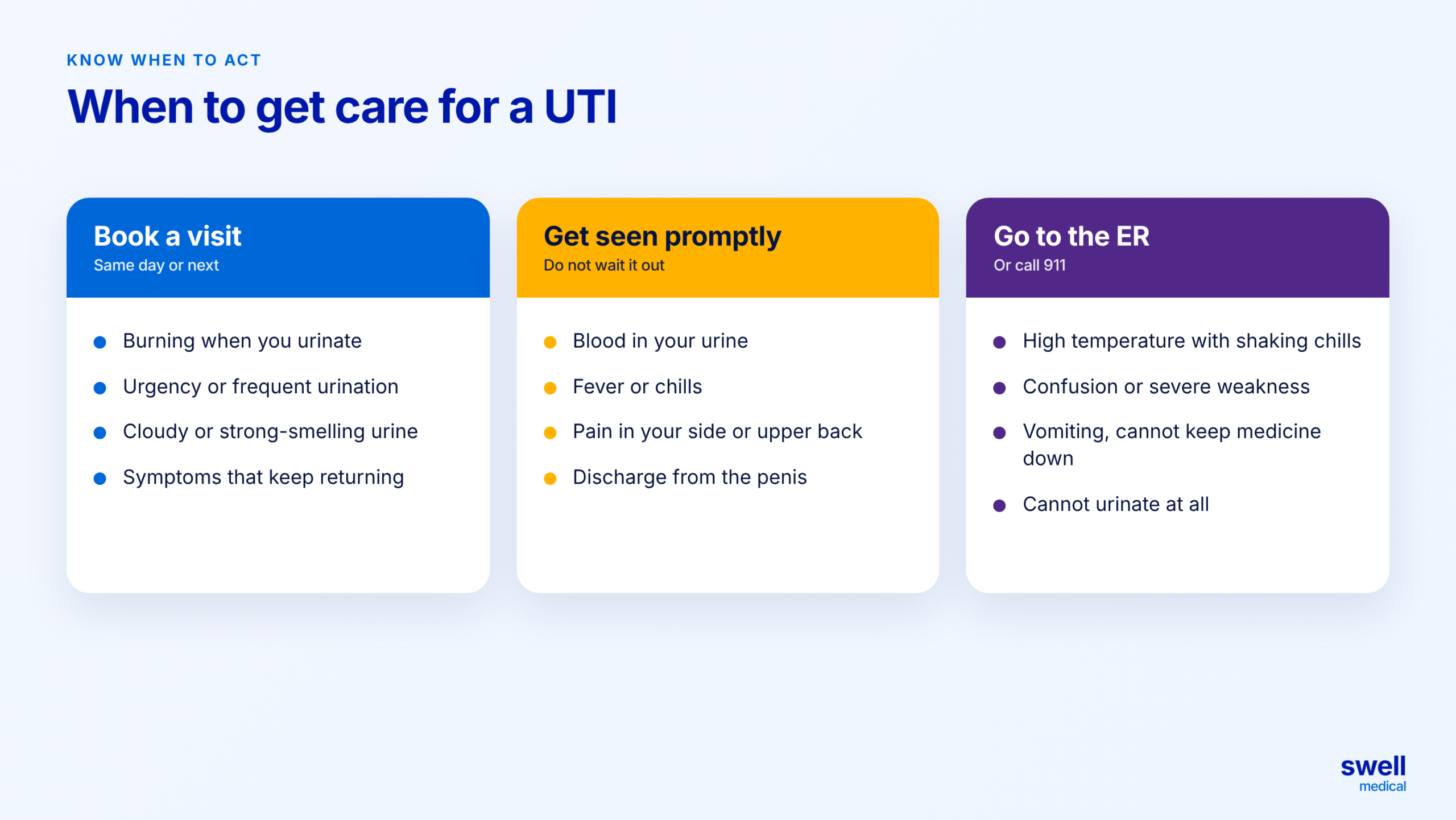
Go to the emergency room, or call 911, if you have a high temperature with shaking chills, severe back or side pain, confusion, vomiting that keeps you from taking medicine, or you can’t urinate at all.
Getting UTI care from home with Swell
If you’re not sure where to start, Swell’s clinicians can talk it through by secure chat or video. Each completed visit is $45 with no membership. A clinician will tell you honestly whether virtual care fits, or whether you need an in-person urine test or an ER visit instead. Start a visit with Swell.
Questions people ask about UTI symptoms in men
What happens if a male UTI goes untreated?
An untreated urinary tract infection can spread from the bladder to the kidneys, causing chills, back pain and sometimes hospital care. It can also settle in the prostate. Rarely, it reaches the bloodstream. Early treatment keeps it simple.
What can be mistaken for a UTI in males?
Sexually transmitted infections such as chlamydia and gonorrhea, kidney stones and prostate infections can all mimic a UTI. Discharge points toward an STI, and pain behind the scrotum points toward the prostate. Only a urine test sorts them out.
How do you clear up a male UTI?
Treatment means a prescription antibiotic, usually for 7 to 14 days, and longer for prostate involvement. Drink water and finish every dose. Home remedies like cranberry juice can’t replace antibiotics.
Will a UTI in men go away on its own?
Rarely. Because a male UTI often has an underlying cause, such as a swollen prostate, the bacteria tend to return or spread. Get tested instead of waiting it out.
Can an enlarged prostate cause recurrent UTIs?
Yes. When the prostate blocks the urethra, incomplete bladder emptying leaves urine behind and bacteria multiply. Treating the blockage with medication or surgery can reduce repeat infections.
Trusted references
Public-health, research, and medical-society resources related to this guide.