It hits mid-sip. You swallow, and a sharp ache flares inside your ear, even though the ear itself looks and feels fine. Ear pain when swallowing is a strange symptom, and a little alarming, yet the cause is usually ordinary: an ear infection, a clogged Eustachian tube, a sore throat or an irritated jaw joint. Sometimes it isn’t ordinary. Here’s what’s behind it, what eases it at home, and the signs that mean you shouldn’t wait.
Why does your ear hurt when you swallow?
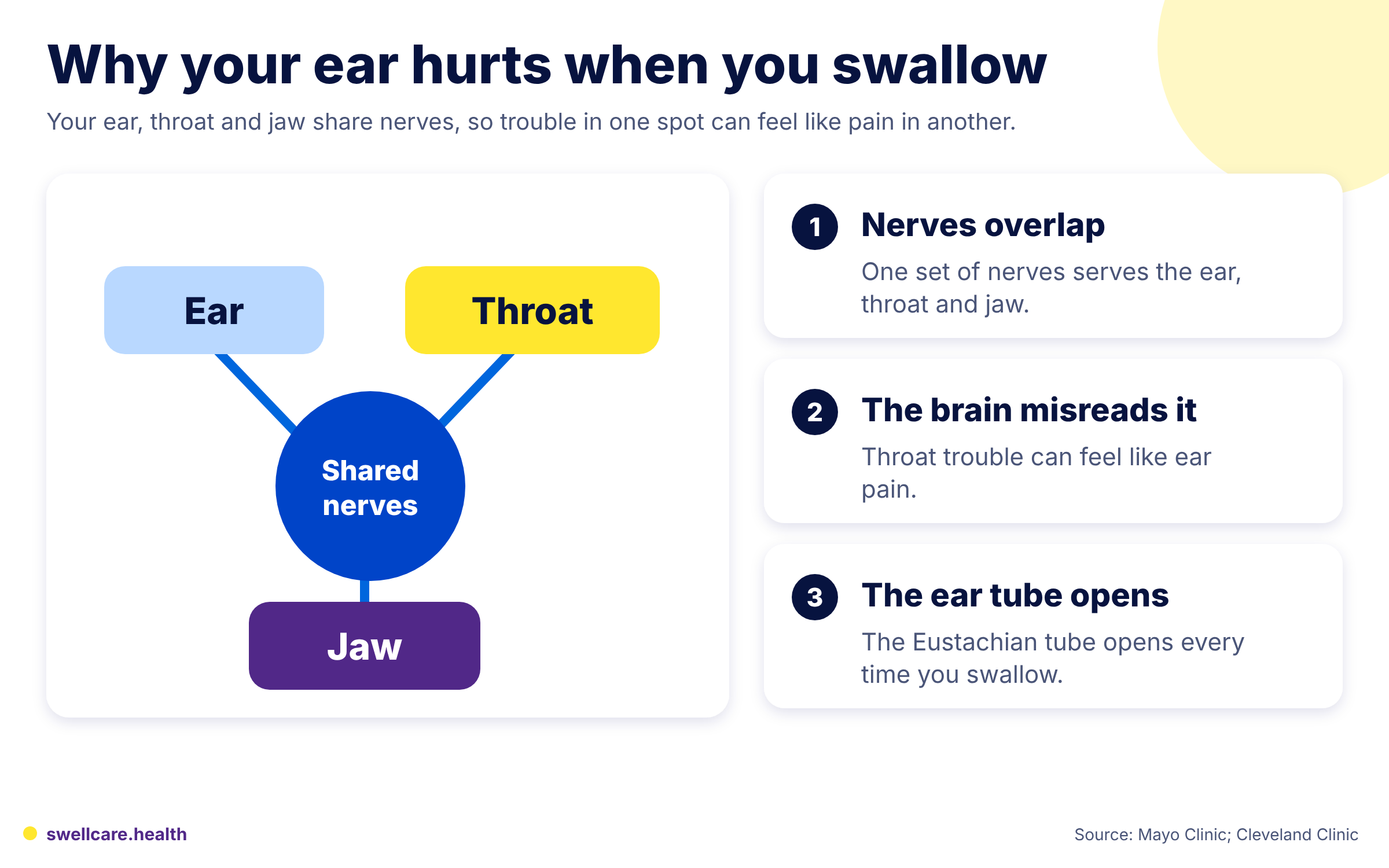
Your ear, throat and jaw share wiring. Several nerves carry sensation from all three areas, so when one is irritated, your brain can place the pain in your ear instead. Doctors call this referred pain, and it’s why a normal-looking ear can still ache. The MSD Manual notes that infections of the tonsils can make ear pain much worse when you swallow.
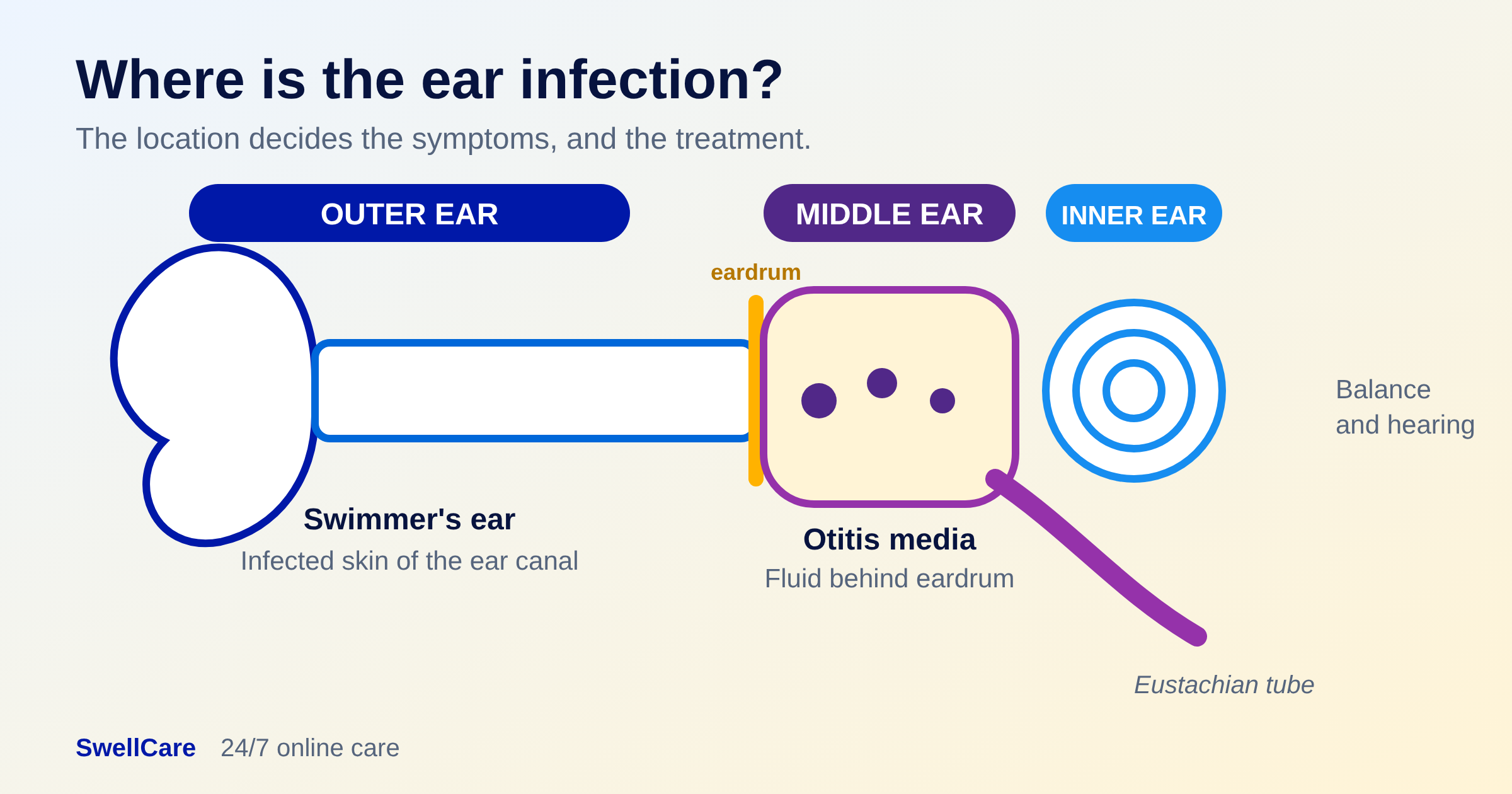
There’s a plumbing reason too. Each ear has a narrow channel, the Eustachian tube, that runs down to the back of your throat. Every time you swallow, it opens for a split second to even out pressure and drain fluid. If that Eustachian tube is swollen or blocked, or a middle ear infection has inflamed the space behind your eardrum, that tiny movement hurts.
So the pain isn’t random. It’s a clue about where to look.
Common causes of ear pain when swallowing
Sore throat, tonsillitis and strep
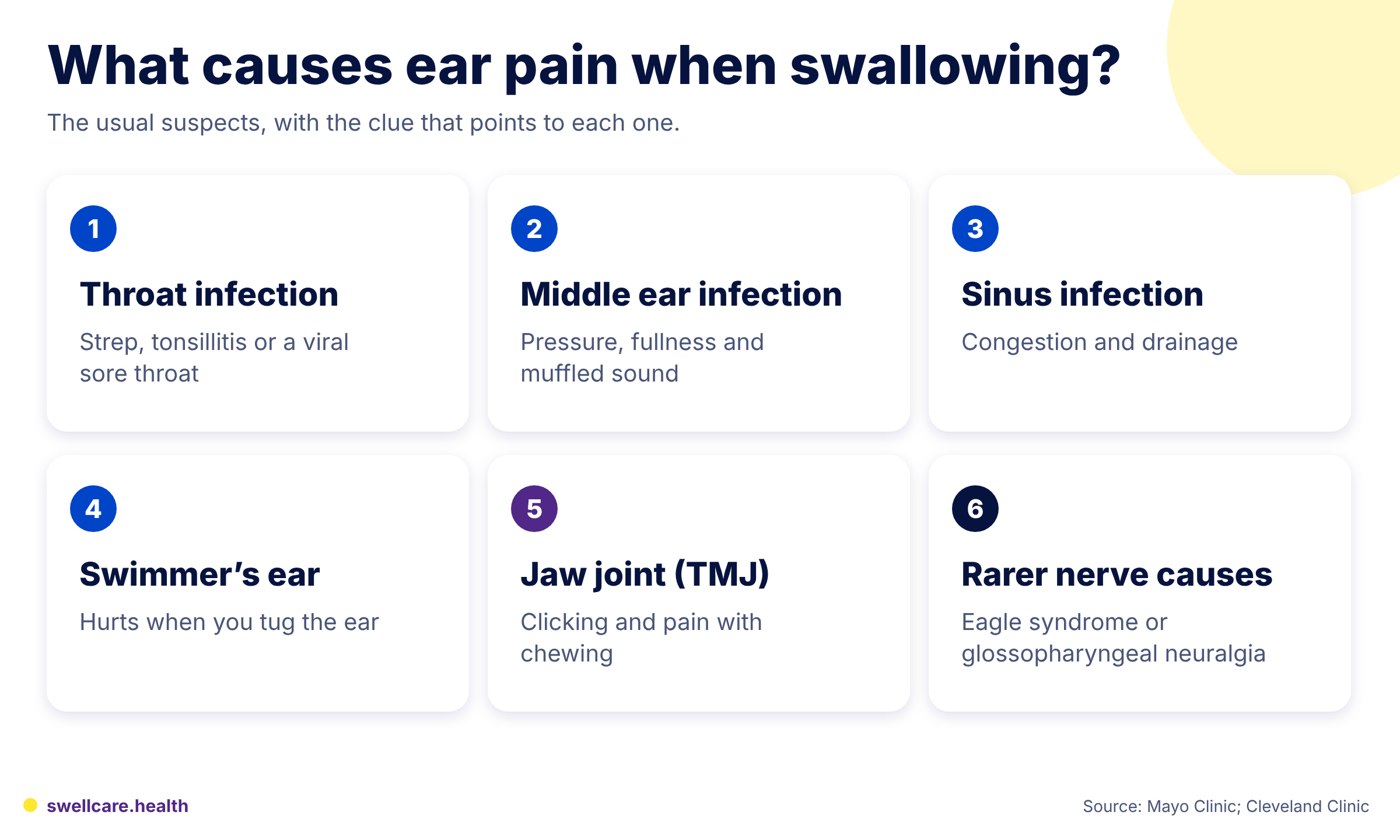
A throat infection tops the list. Viral sore throat, strep throat and tonsillitis all make swallowing painful, and it often shows up as ear pain on one or both sides. Most are viral and ease within about a week, according to the CDC. Strep throat is the bacterial infection that needs antibiotics, so a quick test matters if your symptoms include a fever and swollen glands but no cough or runny nose.
Tonsillitis means inflammation of the tonsils, and it can bring swollen glands and soreness on one side. Left alone, a bacterial throat infection like tonsillitis or strep can turn into an abscess.
Middle ear infections and Eustachian tube trouble
A middle ear infection, called otitis media, usually follows a cold, flu or allergy flare. The swelling blocks the Eustachian tube and traps fluid in the middle ear, as Mayo Clinic explains. Then swallowing tugs on an inflamed middle ear.
The symptoms of a middle ear infection in adults are mostly ear pain, pressure and muffled sound. Children with an ear infection may also pull at the ear, get cranky and run a high temperature. Many ear infections clear without antibiotics, so treatment usually starts with pain relief and a couple of days of watching.
Sinus infections, swimmer’s ear and silent reflux
Sinus infections bring congestion and pressure, and the drip down the back of your throat can irritate the Eustachian tube and the middle ear behind it. Swimmer’s ear is a different infection, one that affects the ear canal, the passage leading to your eardrum. It hurts when you tug the outer ear, and a swallow or a chew can jolt it. Keep cotton swabs out of the ear canal.
Acid reflux that reaches the throat can leave you hoarse and clearing your throat, per Cleveland Clinic. Ear pain isn’t a classic sign, but throat irritation can refer pain to the ear, so mention reflux if you have it.
Jaw joint (TMJ) problems
The temporomandibular joint, or TMJ, sits right in front of your ear. When it’s inflamed or the muscles around it are tight, the pain can feel like an earache that flares when you chew, yawn or swallow. The NIDCR estimates that about 5% of U.S. adults have a temporomandibular disorder, and women are affected about twice as often. Clues include clicking and discomfort after a night of teeth grinding.
Rarer causes: Eagle syndrome and glossopharyngeal neuralgia
Two uncommon conditions are easy to miss. Eagle syndrome happens when an elongated styloid process, a thin bone just below the ear, presses on nearby nerves. Cleveland Clinic describes pain that can radiate toward the ear and worsens with turning your head or yawning.
Glossopharyngeal neuralgia is a rare nerve disorder with short, stabbing pain, and BrainFacts lists swallowing, coughing and cold drinks as common triggers.
How to tell what’s behind your ear pain
You can’t diagnose yourself from a chart, but a few symptoms narrow the field between the throat, the middle ear and the jaw.
| Likely cause | Feels like | Clue | See someone |
|---|---|---|---|
| Viral sore throat | Scratchy, mild ear pain | Cough, runny nose | Self-care first |
| Strep or tonsillitis | Sharp pain, fever | Swollen neck glands | Within a day or two |
| Middle ear infection | Pressure, muffled sound | Followed a cold | If it lasts 2 to 3 days |
| Sinus infection | Face pressure, fullness | Congestion, postnasal drip | If it drags on |
| TMJ problem | Dull ear pain near the jaw | Clicking, sore chewing | If it persists |
| Peritonsillar abscess | Severe one-sided pain | Can’t open mouth, drooling | Same day or ER |
| Eagle syndrome or nerve pain | Brief, stabbing pain | Set off by head turns | Soon, if it repeats |
What can you do at home for ear pain when you swallow?
Treatment depends on the cause, but you can take the edge off while you wait. These home remedies for painful swallowing suit most healthy adults:
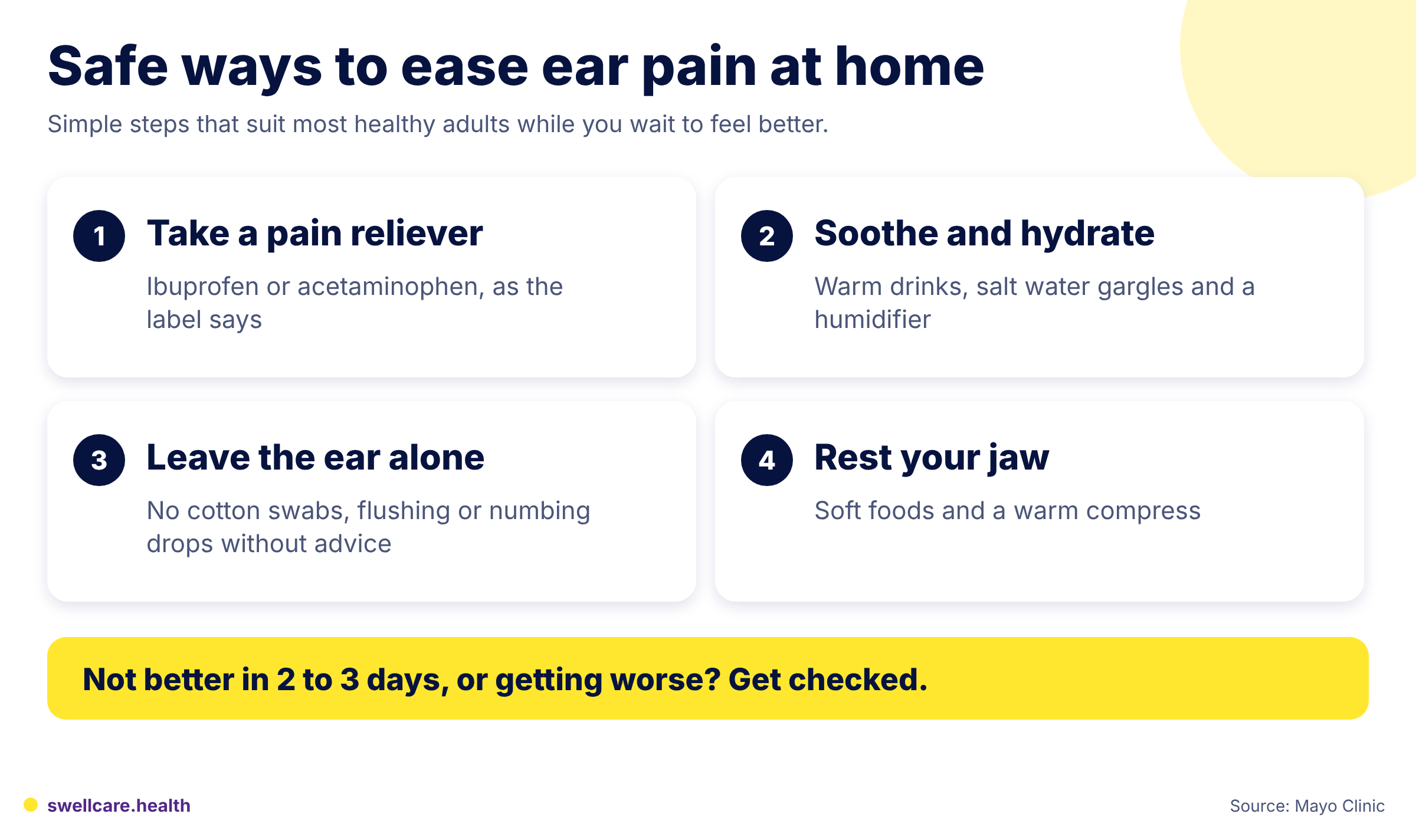
- Take a pain reliever. Over-the-counter NSAIDs such as ibuprofen, or acetaminophen, are usually enough, says the MSD Manual. Follow the label, and ask a clinician first if you have kidney, stomach or heart problems.
- Soothe your throat and stay hydrated. Warm drinks, honey in tea (not for babies under one), salt water gargles, ice chips and a clean cool-mist humidifier all help, per the CDC.
- Leave the ear alone. No cotton swabs, no flushing, no home cleaning kits. Numbing ear drops aren’t very effective and aren’t safe if the drum is perforated, so ask a clinician before using them.
- Rest your jaw. If TMJ trouble is possible, switch to soft foods, use a warm compress and skip the gum.
Antibiotics only work on bacterial infections. They do nothing for a virus, which is why a clinician has to work out which infection you’ve got.
Children need a different approach. Call a pediatrician rather than guessing, and never give children aspirin. Ear infections are common in children, and an infant under 3 months with a fever of 100.4°F (38°C) or higher needs care right away.
When ear pain when swallowing needs a doctor
Most cases settle in a few days. A few don’t, and some shouldn’t be left at all.
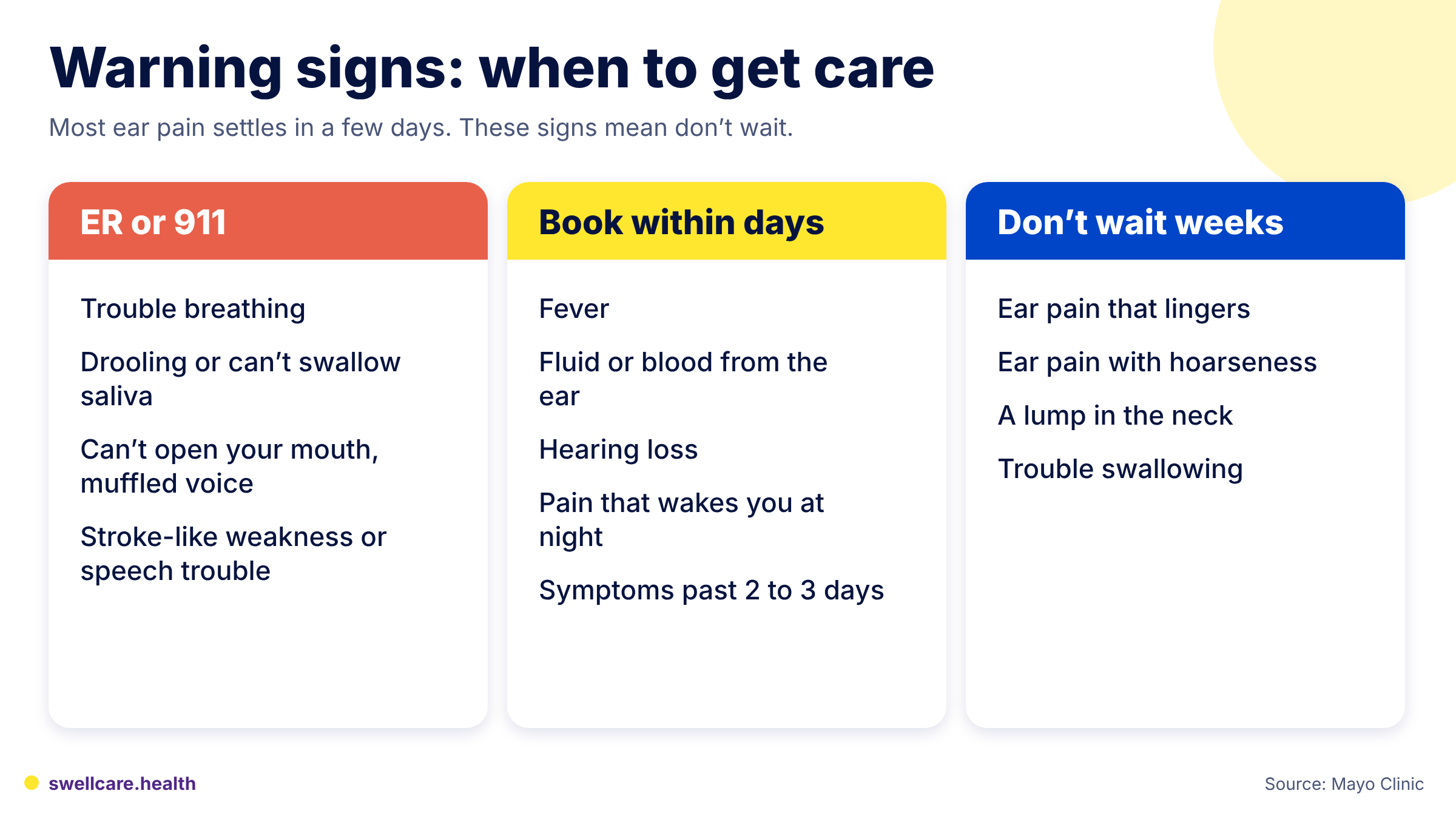
Go to the emergency room or call 911 for any of these, which can signal a blocked airway or a throat abscess (MedlinePlus):
- Trouble breathing, or a high-pitched sound when you breathe in
- Drooling, or being unable to swallow your own saliva
- Severe one-sided pain with trouble opening your mouth or swallowing
- A muffled voice, or swelling in your face or neck
Sudden weakness, a drooping face or trouble speaking also needs emergency care, since Eagle syndrome can occasionally affect a neck artery.
Book a visit within a few days if you have a fever, fluid or blood draining from the ear, hearing loss, redness or swelling behind the ear, or pain that wakes you at night. The same goes for symptoms that last more than two to three days, and for anyone with diabetes or a weakened immune system.
Don’t wait weeks. Ear pain that lingers for weeks, especially alongside hoarseness, a neck lump or trouble swallowing, can occasionally point to throat cancer. It’s uncommon, and heavy tobacco and alcohol use raise the risk, according to Roswell Park. A doctor can check with a small camera.
Get a clinician’s eyes on it, day or night
Ear pain doesn’t keep office hours. It loves 2 a.m. Swell offers clinician-led virtual care around the clock, so you can talk it through with a licensed clinician whenever it starts.
We’ll be straight about the limits. A virtual visit can’t put a scope in your ear or swab your throat. If your story points toward an exam for an ear infection, a strep test or the emergency room, we’ll say so and help you work out where to go. Start with urgent care online, browse the conditions we treat or see how a Swell visit works.
Questions people ask about ear pain when swallowing
How do I get rid of ear pain when I swallow?
Treat the cause and calm the pain. Ibuprofen or acetaminophen, warm fluids, salt water gargles and a humidifier help with most throat-related causes. If you also have ear drainage, or the pain lasts beyond two or three days, get checked, since bacterial infections need prescription treatment.
Do I have an ear infection if it hurts when I swallow?
Not necessarily. A sore throat, sinus infection or jaw problem can feel the same. A middle ear infection is more likely with pressure, muffled sound or drainage, especially after a cold that clogs the Eustachian tube. Only a clinician who can see inside your ear can say for sure.
Can an ear infection go away on its own?
Often, yes. Many middle ear infections clear without antibiotics, so doctors sometimes suggest pain relief and watchful waiting first. See someone if symptoms last more than two to three days, get worse or bring drainage or hearing loss. A baby under six months needs prompt care.
How do I know if my earache is serious?
Worry more when the ear pain is severe or one-sided, comes with drooling, trouble opening your mouth, swelling behind the ear or a changed voice, or simply won’t quit after a few weeks. Ear discharge and pain that wakes you from sleep deserve a visit soon. Trouble breathing is an emergency.
Why do my throat, ear and jaw hurt at the same time?
They share nerves and sit close together, so one problem can set off pain in all three. A throat infection, inflamed tonsils or a jaw joint disorder is the usual reason. If it keeps coming back, ask a clinician to look beyond the ear.
Trusted references
Public-health, research, and medical-society resources related to this guide.
- Mayo Clinic: Ear infection, symptoms and causes
- MedlinePlus: Ear pain
- MSD Manual: Earache
- CDC: About sore throat
- NIDCR: Temporomandibular disorders
- Cleveland Clinic: Eagle syndrome
- Cleveland Clinic: Laryngopharyngeal reflux
- BrainFacts: Glossopharyngeal neuralgia
- Roswell Park: Ear pain as a sign of throat cancer