It’s 2 a.m., your throat is on fire, and even a sip of water feels like a bad idea. Tonsillitis or strep throat?
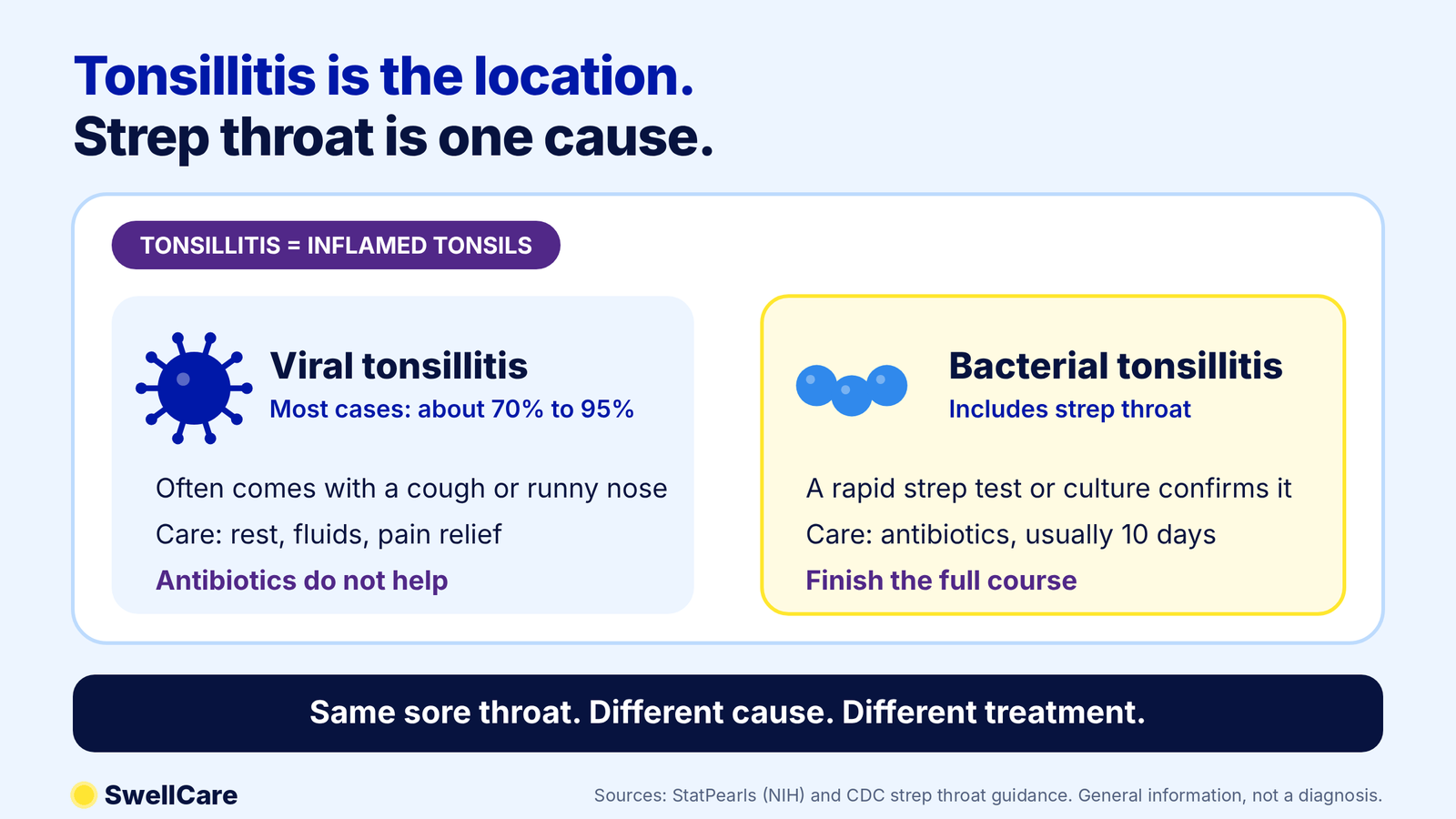
You’re really comparing two different kinds of thing. Tonsillitis describes where the trouble is: inflamed tonsils. Strep throat describes what’s behind it: group A strep bacteria. So tonsillitis vs strep throat isn’t always an either/or. Strep can cause tonsillitis. Most tonsillitis, though, comes from a virus, and that changes the treatment completely.
Tonsillitis vs strep throat: the short answer
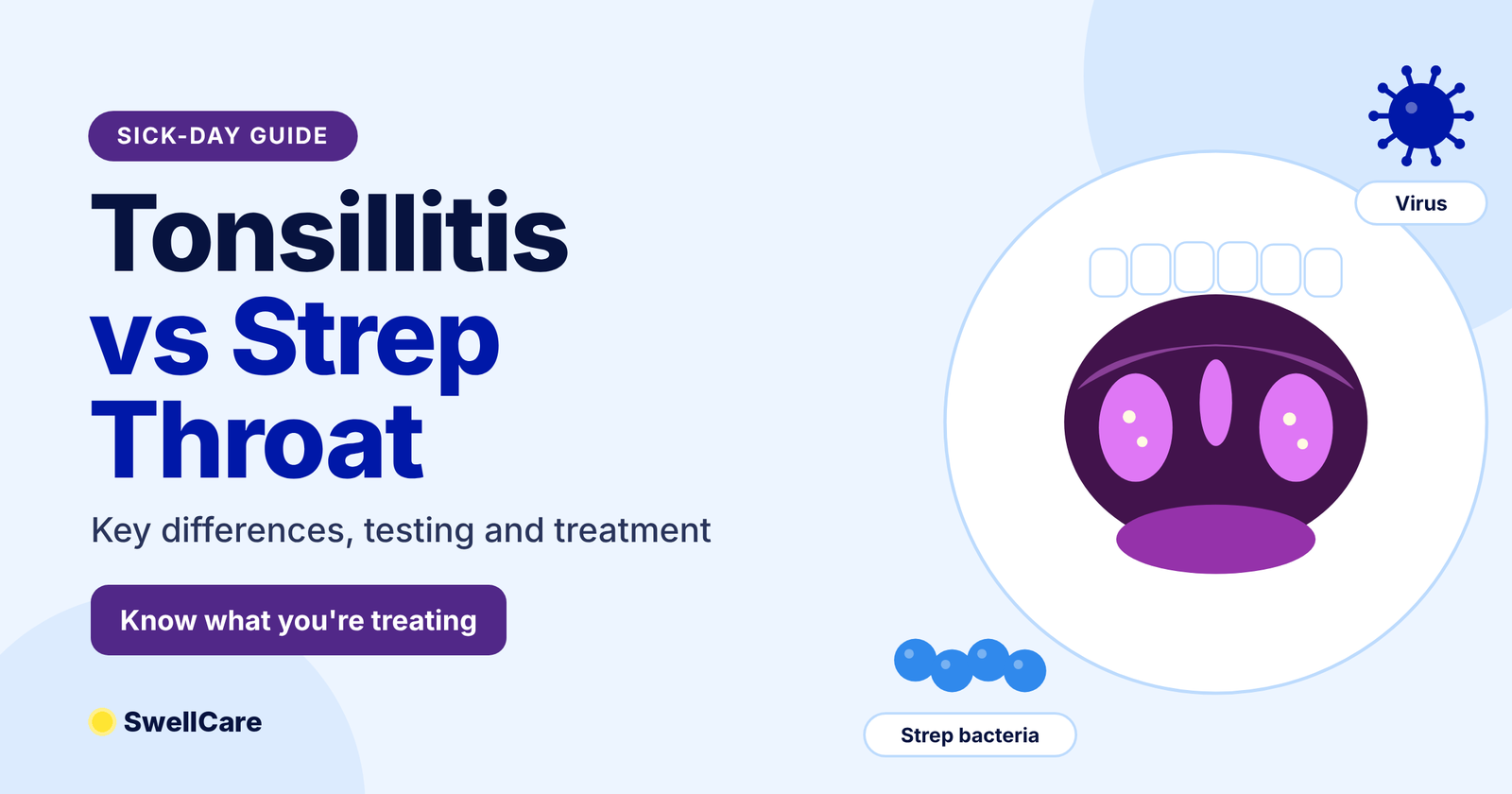
Think of a map and a cause. Tonsillitis is the map: your tonsils, the two soft pads at the back of your throat, are swollen and sore. Strep throat is one possible cause, a bacterial infection. A viral infection is the other big cause, and it’s far more common. A StatPearls clinical review puts viruses behind 70% to 95% of tonsillitis cases.
Why does the label matter? Antibiotics kill bacteria, but they do nothing at all for a virus. The CDC says only about 1 in 10 adults and 3 in 10 children with a sore throat have strep. Get the label right and you avoid drugs you don’t need. You also don’t skip the ones you do.
What tonsillitis actually is
Your tonsils catch germs that come in through your nose and mouth. Sometimes they lose the fight, and the infection leaves them inflamed. That inflammation is tonsillitis.
Tonsillitis symptoms
The classic symptoms are red, swollen tonsils, a sore throat, pain when swallowing and fever. White patches or pus may show up. A headache and bad breath are common, and swollen neck glands often feel tender.
Viral tonsillitis usually looks like a cold at first, with a cough, a runny nose or a hoarse voice. It usually fades within about a week, or up to 10 days in young children, as your immune system clears the infection.
What causes it
Rhinovirus and adenovirus are common culprits, along with coronaviruses and Epstein-Barr (the mono virus). On the bacterial side, group A streptococcus leads the list, especially in kids 5 to 15. That overlap is why nobody can make a diagnosis by peeking at your throat.
What strep throat is
Strep throat is a bacterial infection of the throat and tonsils caused by group A streptococcus. It’s contagious, and the strep bacteria spread through close contact, mostly in homes and classrooms, and symptoms start two to five days after exposure. It’s most common in children 5 to 15 and rare under age 3.
Strep throat symptoms
It hits fast. Expect a sudden, very sore throat and pain with swallowing, plus fever. Throat inflammation makes the tonsils look red and swollen, and lymph nodes at the front of the neck feel tender. Some people get tiny red spots on the roof of the mouth. Kids may also have a headache, nausea, stomach pain or a sandpapery rash called scarlet fever.
How to tell them apart
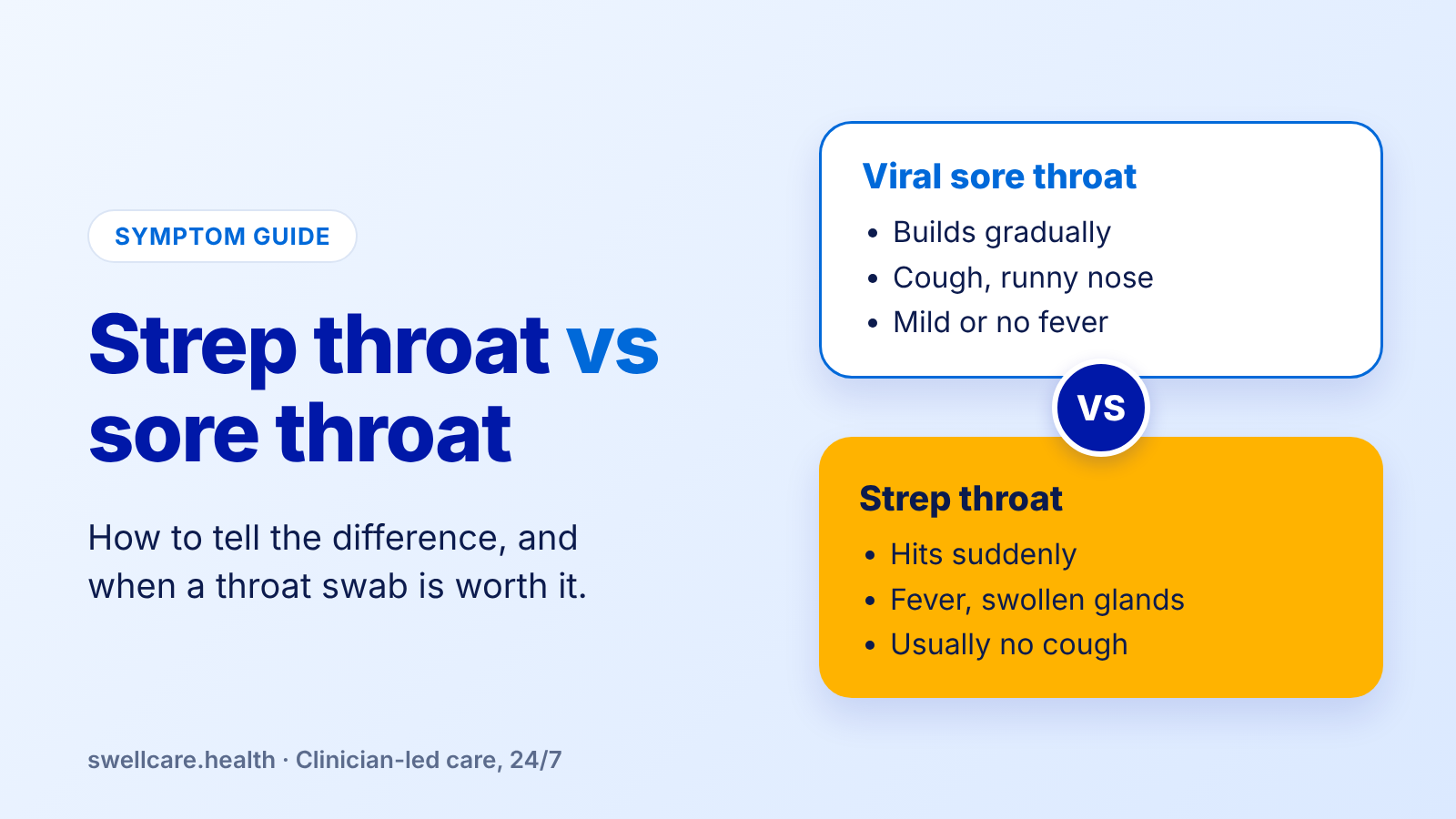
Tonsillitis vs strep throat comes down to clues. No home checklist is perfect, but a few symptoms help. A cough, runny nose, hoarse voice or pink eye all point to a virus. Strep rarely looks like a common cold. Sudden pain with tender neck glands raises the odds of strep.
| Viral tonsillitis | Strep throat | |
|---|---|---|
| Cause | Viral infection such as rhinovirus or adenovirus | Bacterial infection with group A streptococcus |
| Cold symptoms (cough, runny nose) | Common | Usually absent |
| Fever | Mild to moderate | Often higher, starts suddenly |
| Tonsils | Red and swollen, sometimes white patches | Red and swollen, white patches or pus |
| Neck lymph nodes | Tender | Tender, especially at the front |
| Needs antibiotics? | No | Yes |
Here’s the catch: white patches show up in both viral and bacterial cases. Looks can mislead, which is why testing matters.
How doctors test for strep
A diagnosis starts with your symptoms and a look at your throat, then a swab. A rapid strep test gives an answer in minutes, according to the AAP. For kids and teens, a negative rapid strep test is usually backed up with a throat culture, which is grown in a lab and takes about a day. Adults generally don’t need the backup. A negative result means antibiotics aren’t needed. A positive one confirms strep.
Treatment for tonsillitis and strep throat
Treatment depends on whether the cause is viral or bacterial, so it starts with the test.
Viral tonsillitis care at home
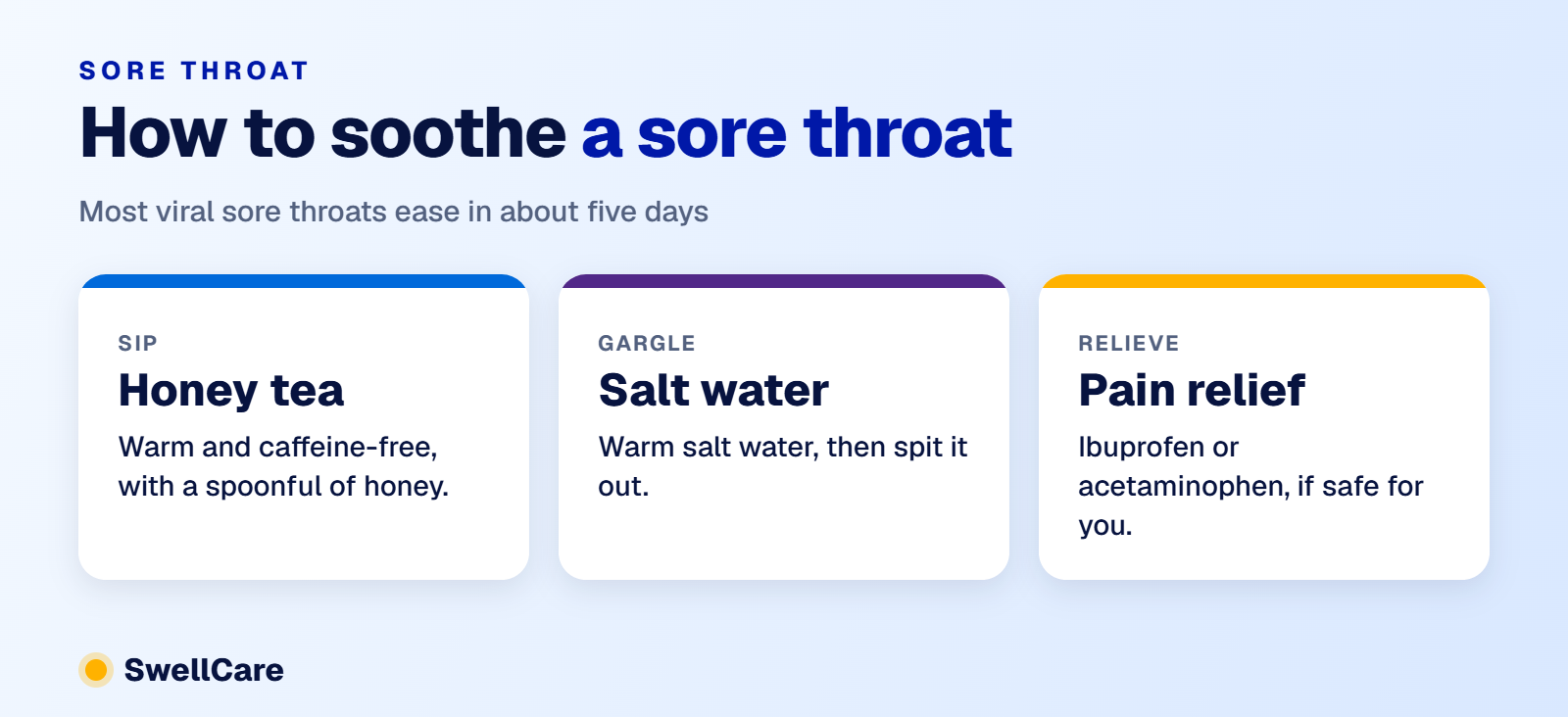
There’s no cure for a virus, so you ease the misery while your body does the work. Rest, and drink plenty of fluids. Our guide to soothing a sore throat has more ideas. Soft, cool foods go down easier. Acetaminophen or ibuprofen takes the edge off pain and aches. Lozenges or salt-water gargles (for older kids and adults) soothe swallowing. Dehydration is the real risk, so keep sipping. Antibiotics won’t help here and can cause side effects.
Strep throat and antibiotics
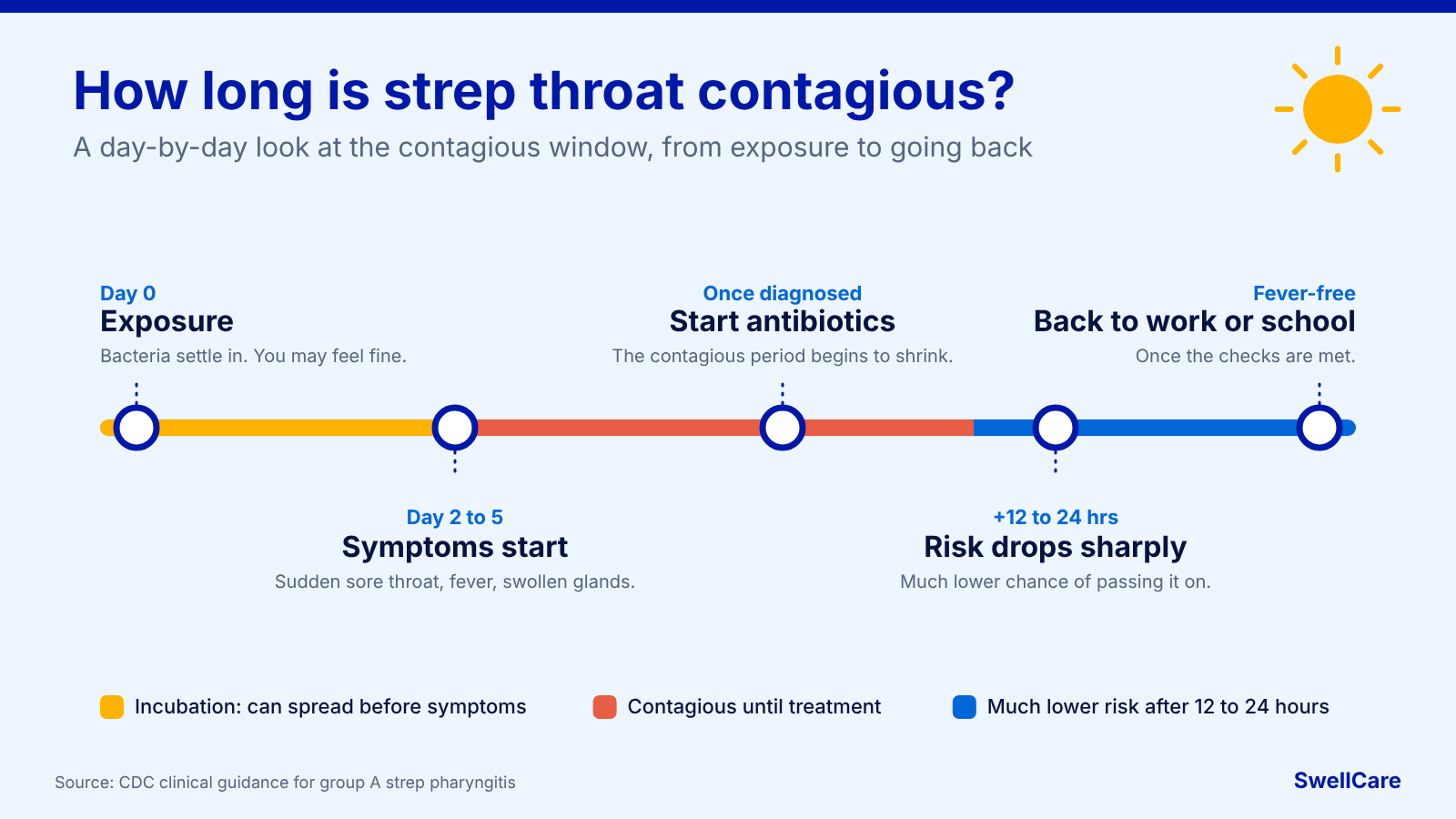
Strep is a bacterial infection, so antibiotics are the fix (more in strep throat vs a regular sore throat), usually penicillin or amoxicillin for 10 days. Finish the whole course even when you feel fine by day three. It shortens the illness and cuts the chance you’ll pass it on. It also lowers the risk of complications. Stay home until the temperature is normal and you’ve had at least 12 to 24 hours of treatment. Not better after 48 hours? Call your clinician.
Complications and when to get care fast
Complications are rare, but they’re why strep deserves a real answer. Untreated, the bacterial infection can spread into a peritonsillar abscess, a pocket of infection beside the tonsil. Other complications include ear and sinus infections. Strep can also trigger rheumatic fever, which can harm the heart, or kidney inflammation. Treatment lowers the rheumatic fever risk in children with confirmed strep.
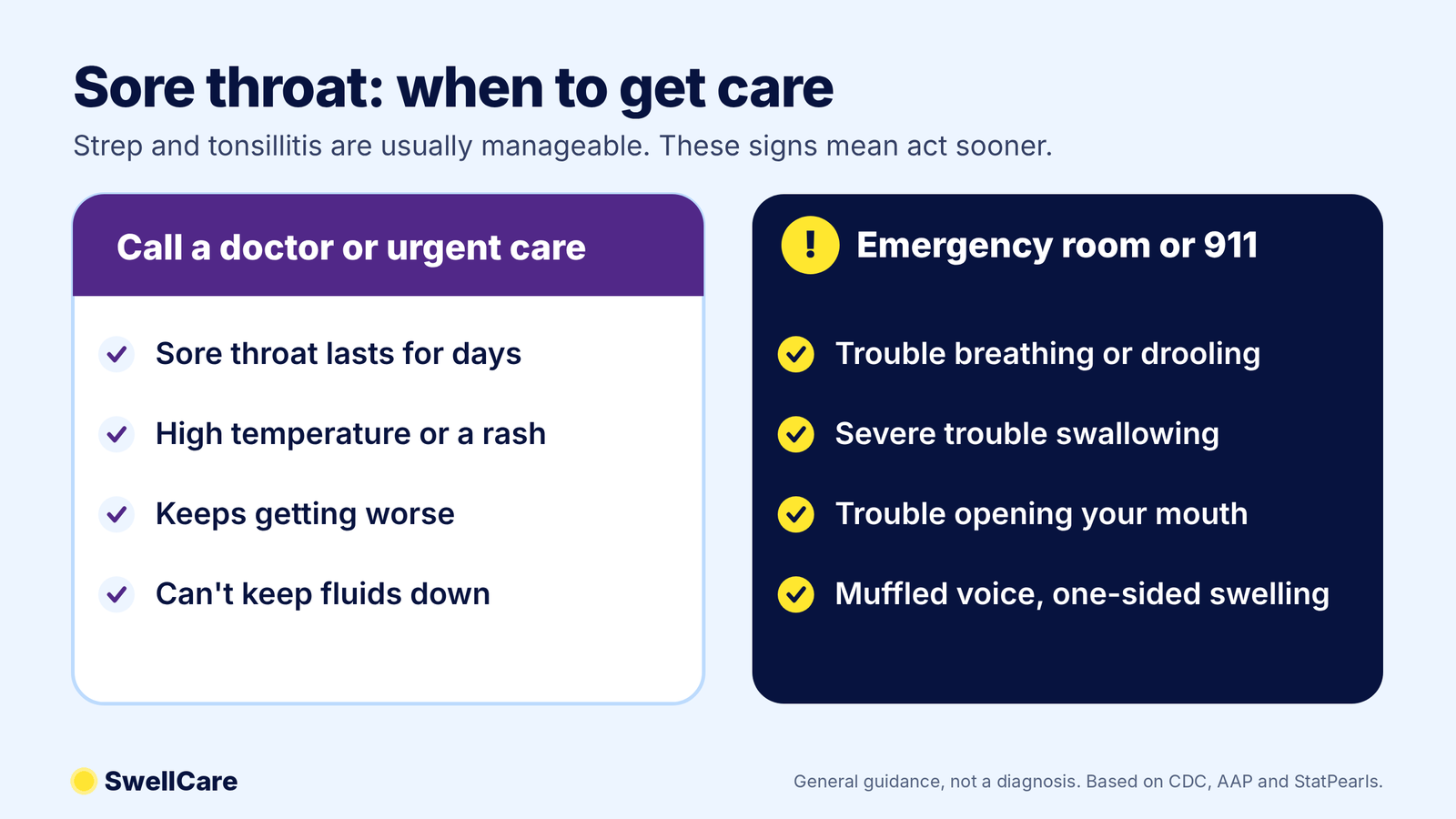
Call a doctor or an urgent care clinic if a sore throat drags on for days, comes with a high temperature or a rash, or keeps getting worse. Go to an emergency room or call 911 for trouble breathing or severe trouble swallowing. The same goes for drooling, trouble opening your mouth, or a muffled voice with swelling on one side. Those can signal an abscess or an airway emergency. If tonsillitis keeps coming back, for example seven or more throat infections in one year, or five a year for two years in a row, ask about a tonsillectomy.
Get answers today
Throat pain doesn’t keep office hours, and urgent care doesn’t have to mean a waiting room. A Swell clinician is available 24/7 by chat or video. A telehealth visit can sort your symptoms, tell you whether a strep test makes sense and point you to where to get a swab. Start with SwellCare urgent care, browse the conditions we treat or see how labs and follow-up work.
Questions people ask about tonsillitis and strep throat
Is tonsillitis the same as strep throat?
No. Tonsillitis means inflamed tonsils from any cause, most often a virus. Strep throat is a bacterial infection with group A streptococcus, and it can cause tonsillitis. So strep can lead to tonsillitis, but most tonsillitis isn’t strep.
How can you tell if it’s strep throat or tonsillitis?
You can’t be sure from symptoms alone. A cough or runny nose suggests a virus, while sudden pain with no cough suggests strep. Only a rapid strep test or throat culture confirms it, so get swabbed whenever strep is possible.
Can tonsillitis go away on its own?
Yes, viral tonsillitis usually clears by itself within about a week, or up to 10 days in young children, with rest and fluids. Bacterial tonsillitis from strep needs antibiotics. See a doctor if you’re getting worse after a few days or can’t keep fluids down.
Do you always need antibiotics for a sore throat?
No. Strep is the only common cause that calls for them, and it explains just 5% to 15% of adult sore throats, per CDC clinical guidance. They don’t touch a virus and can cause side effects, so ask for a test first.
How long is strep throat contagious?
You can spread it while you’re sick (see how long strep throat is contagious). Treatment with the right antibiotic for 12 hours or more limits spread, and most people can go back to school or work once the temperature is normal and they’ve had 12 to 24 hours of treatment.
Trusted references
Public-health, research, and medical-society resources related to this guide.