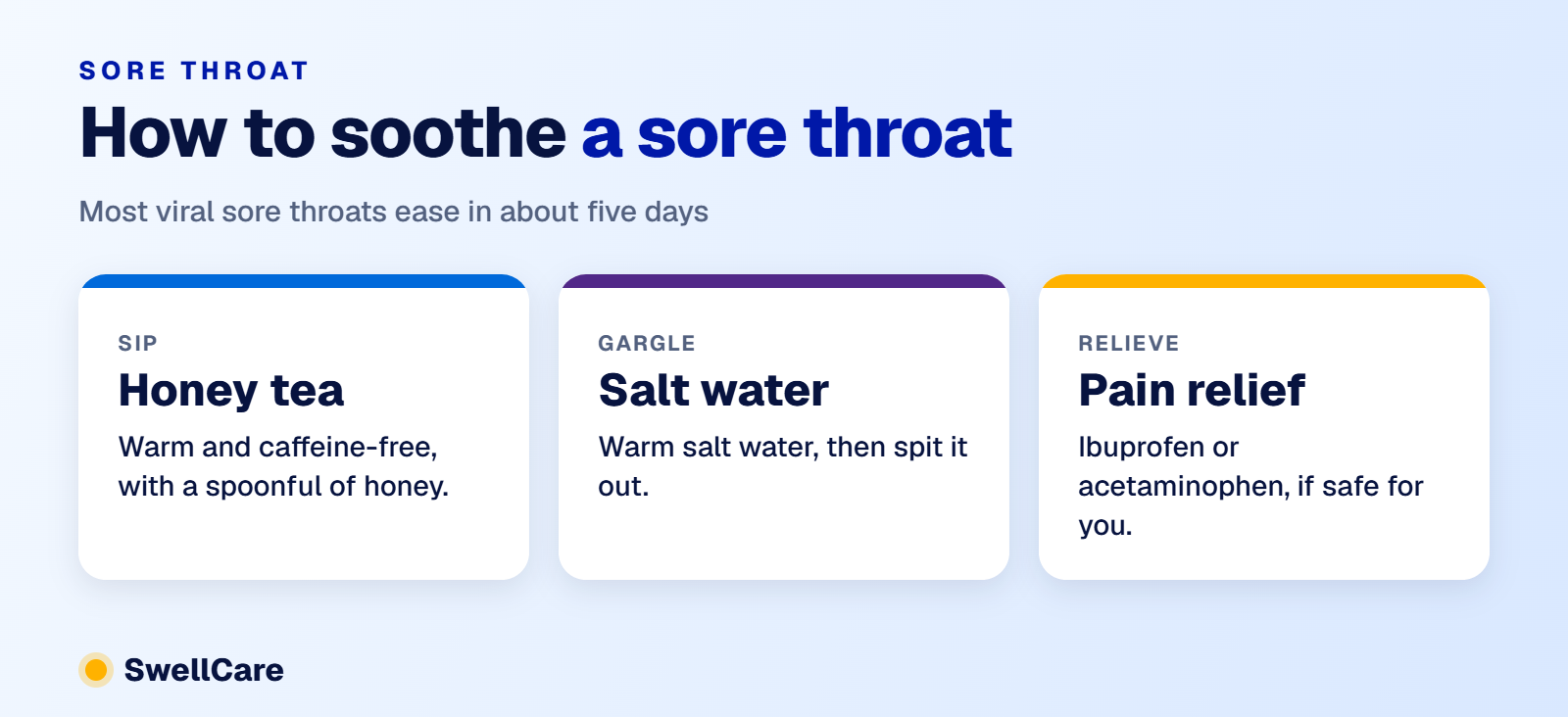
It’s 2 a.m. Every swallow feels like gulping down gravel, and the pharmacy closed hours ago. Sound familiar? Here’s the short answer on how to soothe a sore throat tonight: sip something warm with honey, gargle with salt water, keep the air moist, take ibuprofen or acetaminophen if they’re safe for you, and rest. Most sore throats are viral and ease up within about five days. This guide covers which remedies work, how to use them, and the signs that mean you should call a doctor instead of waiting it out.
Why your throat hurts in the first place
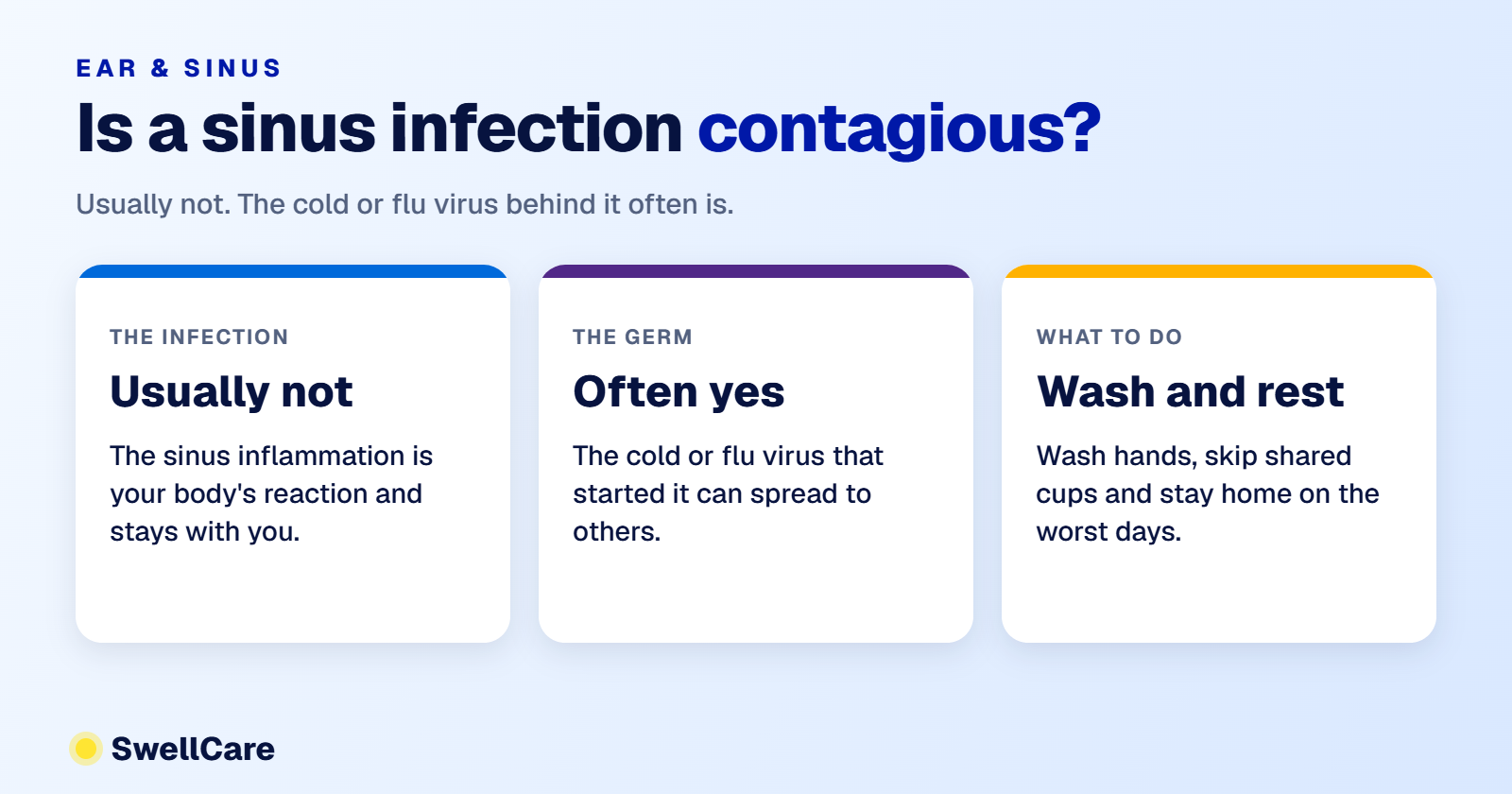
A sore throat is a symptom, not a diagnosis. Viruses behind the common cold and flu cause most cases, and those clear on their own. Viruses also explain why cold symptoms often arrive together with the sore throat. Bacteria cause fewer, and their symptoms can look similar. UCLA Health notes that only about 1 in 10 adults and 3 in 10 children with a sore throat actually have strep, the most common bacterial culprit (UCLA Health).
Most of the soreness comes from irritation and inflammation. The lining swells, nerve endings fire, and every swallow hurts. Plenty of other things can add to that irritation. Dry air does it overnight. Allergies send mucus down the back of your throat. Acid reflux leaves it raw by morning, and smoke makes everything worse.
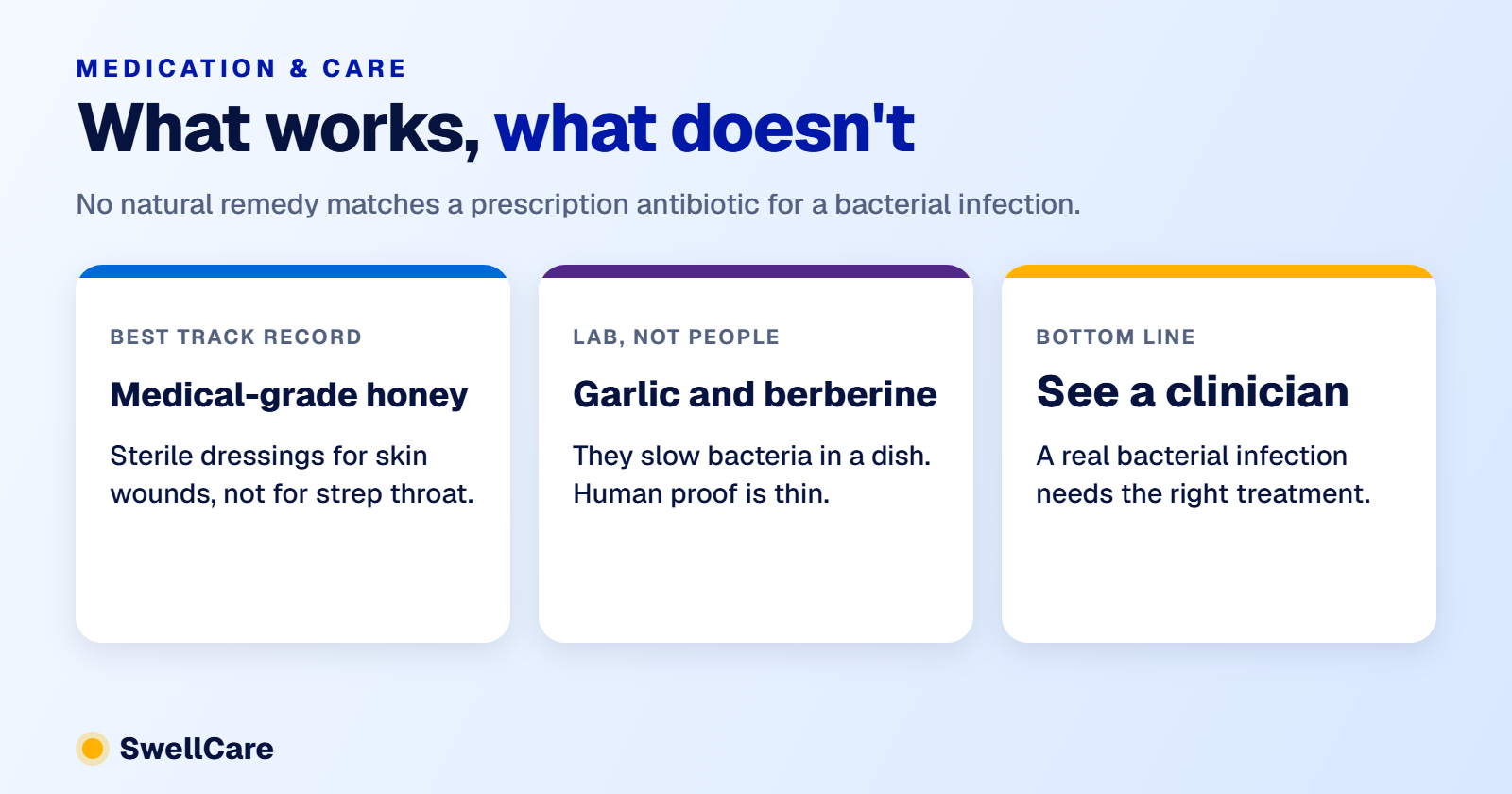
Why care about the cause? Because it decides the fix. Antibiotics treat bacteria. They do nothing for viruses, which spread easily, so wash your hands often. The remedies below calm the irritation and inflammation while your body does the real healing.
How to soothe a sore throat at home: remedies that help
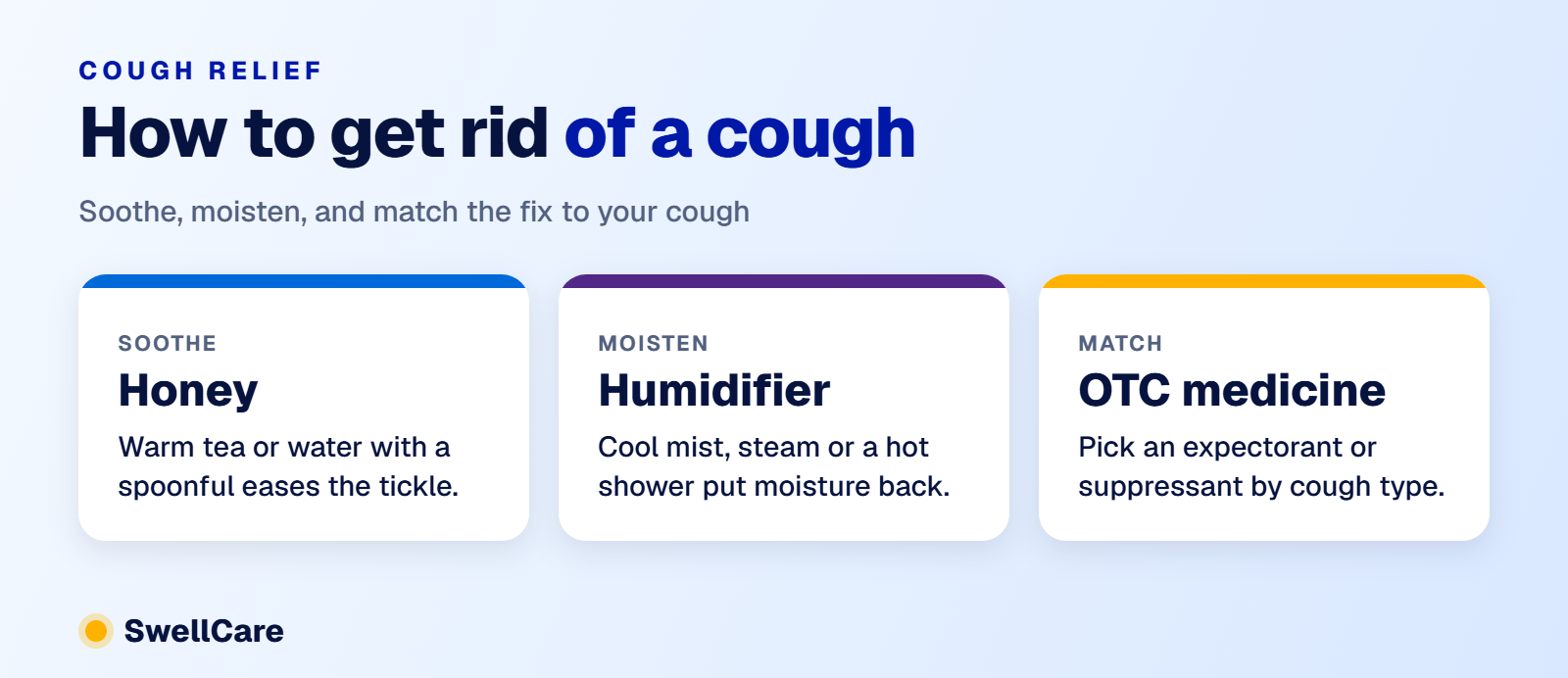
None of these home remedies cure a sore throat. They ease the symptoms, and that’s often enough to let you eat and sleep. Think of them as relief, not treatment.
Honey and warm tea
Honey coats the throat, and UCLA Health says research shows it’s just as effective as some cough suppressants (UCLA’s home remedies roundup). Stir a spoonful into warm water or caffeine-free herbal tea such as chamomile or peppermint. Skip caffeine and alcohol, which can dry you out. Herbal tea also counts toward your daily fluids.
One firm rule: never give honey to a child under 1. It can carry spores that cause infant botulism.
A saltwater gargle
Dissolve one quarter to one half teaspoon of table salt in 4 to 8 ounces of warm water. Gargle, spit it out, and repeat a few times a day if it helps. Mayo Clinic says children older than 6 and adults can gargle and spit (Mayo Clinic). Younger kids shouldn’t try.
Prefer something gentler? A baking soda gargle is the milder cousin. UCLA suggests a quarter teaspoon of baking soda plus an eighth teaspoon of salt in a cup of warm water, three or four times a day, followed by a plain-water rinse. Mix the baking soda fresh each time.
Lozenges and hard candy
Lozenges and hard candy keep saliva flowing, and saliva keeps the throat moist. Menthol lozenges add a mild numbing effect. Mayo Clinic says not to give them to children 4 and younger because they might choke, so offer a popsicle instead. Skip them too if you might fall asleep with one in your mouth.
Fluids, ice pops and soft foods
Swallowing hurts, so you drink less without noticing. Hydration slips fast, and a dehydrated throat feels worse. Plenty of fluids also thin mucus, and good hydration matters more than which drink you pick. Warm broth soothes. Ice pops numb. Pick whichever feels better, because both help. Soft foods like yogurt, oatmeal and scrambled eggs go down easier until swallowing improves.
A humidifier, steam and rest
Dry air adds to the irritation in an already raw throat, so run a humidifier in the bedroom. UCLA Health says to clean the humidifier before using it, since a dirty one can be a breeding ground for mold and bacteria. A few minutes in a steamy bathroom works too, because steam adds moisture to the air. Rest your voice and avoid smoke. Sleep as much as you can. Seasonal allergies can keep a throat raw, so treat those too.
Do over-the-counter pain relievers help a sore throat?
Yes, and UCLA Health says they are effective and last longer than most other home remedies. Ibuprofen (Advil, Motrin) and acetaminophen (Tylenol) both ease pain and bring down a fever. Ibuprofen also calms inflammation. Read the label, and ask a doctor or pharmacist first if you take other medicines or have a health condition.
Other over-the-counter options help a sore throat in specific situations. Throat sprays can numb the area. A nasal decongestant or saline drops can clear a stuffy nose, which matters if mouth breathing and postnasal drip are making things worse. Follow the label on any decongestant. If a cough comes along for the ride, honey does double duty.
Never give aspirin to children or teenagers. Mayo Clinic says it’s linked to Reye’s syndrome, a rare but serious condition.
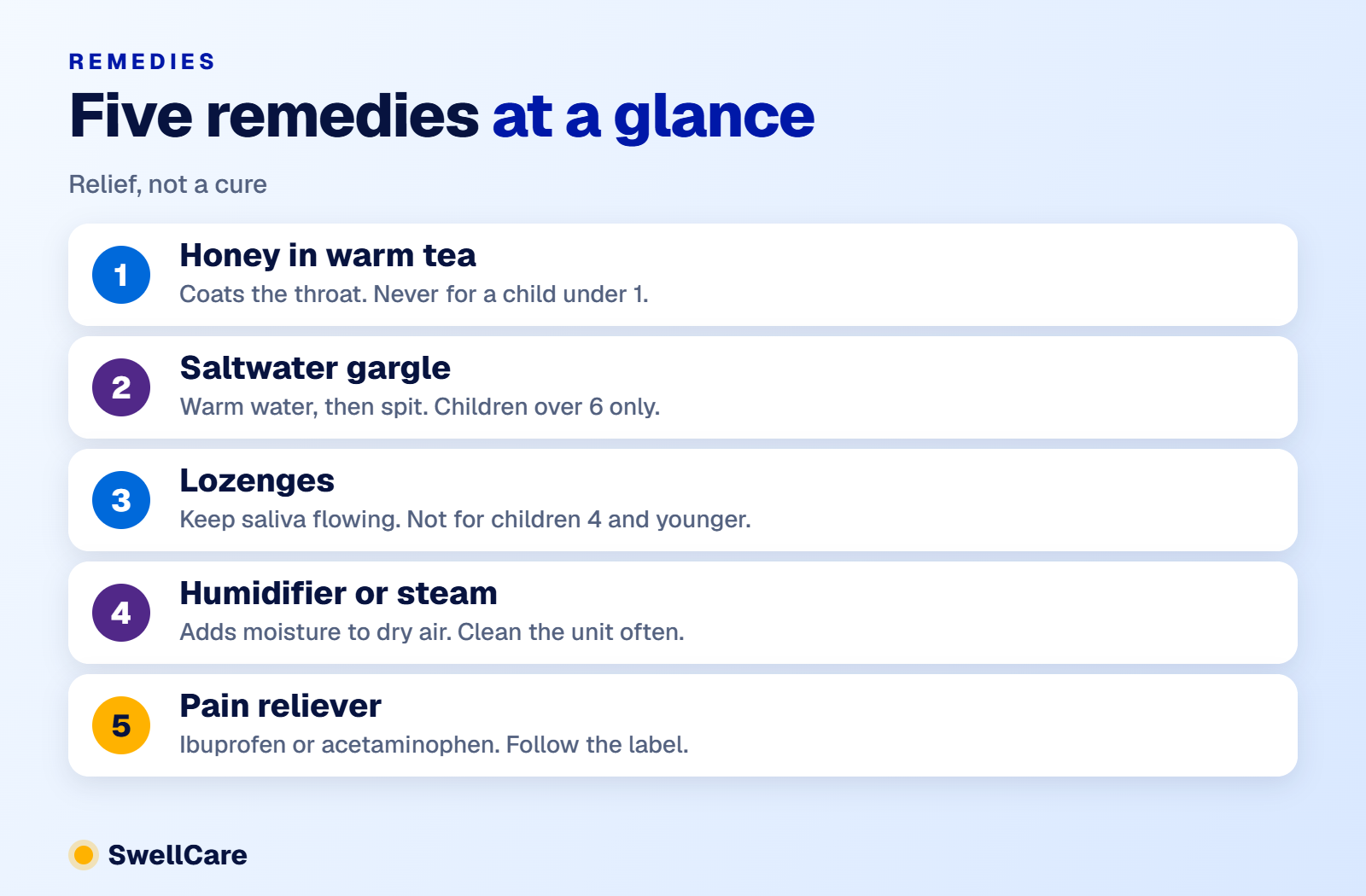
A simple plan for tonight
You don’t need all of it. Here’s the order for these remedies when you’re miserable and just want relief.
| Remedy | Helps with | Skip if |
|---|---|---|
| Honey in warm herbal tea | Coating, nighttime cough | Child under 1 |
| Saltwater gargle | Swelling, mucus | Child 6 or younger |
| Lozenges | Dry, scratchy throat | Child 4 or younger |
| Ice pop | Numbing | Cold makes it worse |
| Humidifier | Dry air, sleep | Unit isn’t clean |
| Over-the-counter pain reliever | Aches and fever | Label or doctor says no |
Start with the pain reliever, since it takes a little while to work. Then gargle, sip your tea, and set up the humidifier before bed. Keep lozenges on the nightstand for the dry-throat wake-ups. That’s how to soothe a sore throat without making it a project. Many people feel some relief as the day goes on, even though the sore throat itself may hang around for days. Home remedies work best when you stack them.
When to see a doctor for a sore throat
Most sore throats don’t need a doctor, especially when symptoms are mild. Some do, and a doctor can swab your throat and check your ears and neck glands.
Strep throat or a virus?
Strep throat tends to bring severe throat pain, a fever above 100.4°F, and swollen glands, according to the National Institutes of Health (NIH News in Health). Children may also get nausea, vomiting or stomach pain. Strep is more common in children between ages 5 and 15. Red, swollen tonsils with white patches are another commonly cited clue.
You can’t confirm it by looking. A throat swab does that. If it’s positive, you’ll need antibiotics, and you should finish the whole course. NIH says you should no longer be contagious after 24 hours of taking them. Untreated strep throat can lead to ear infections, rheumatic fever and kidney problems.
Red flags that shouldn’t wait
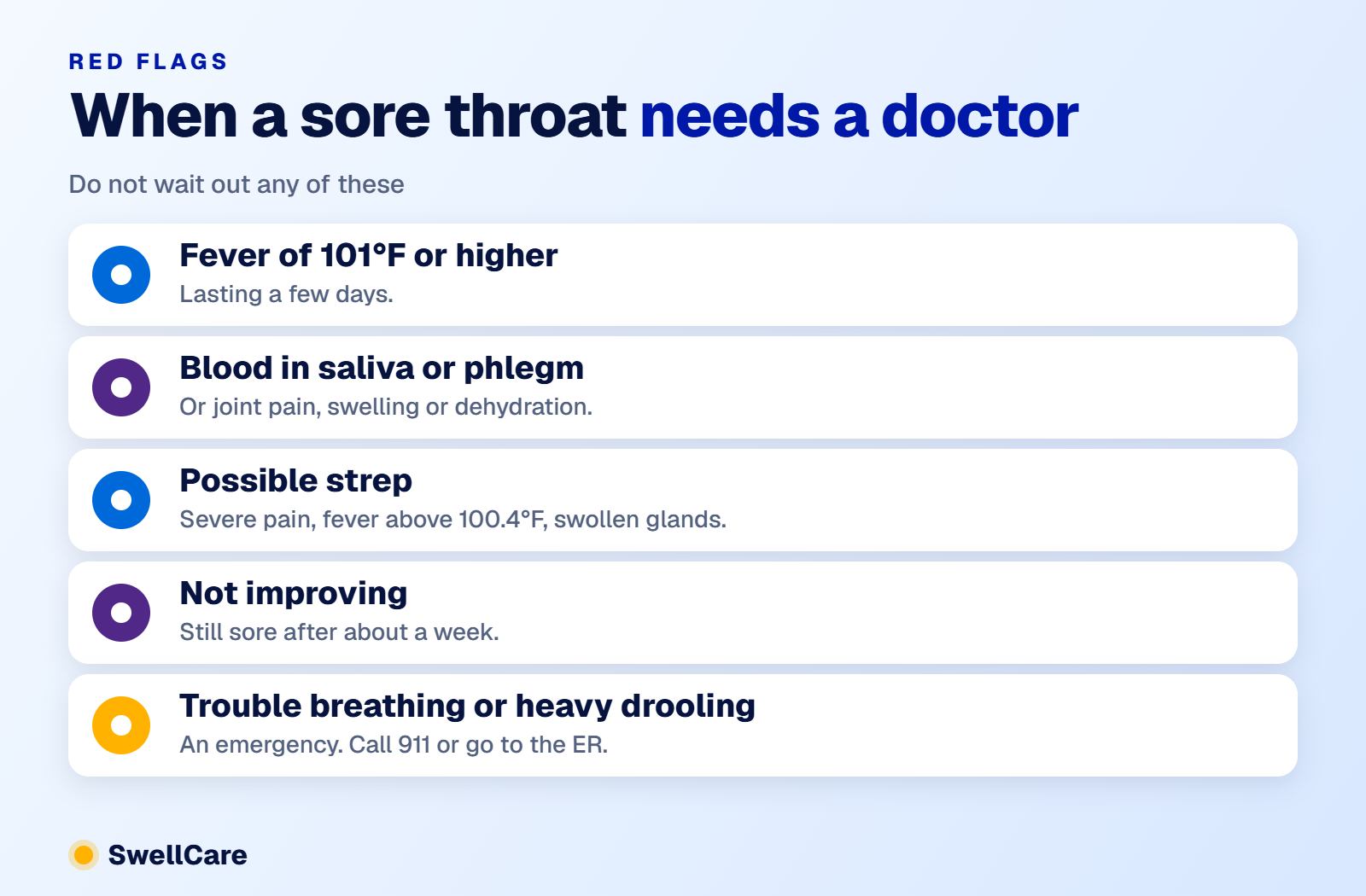
See a doctor soon if you notice any of these:
- A fever of 101°F or higher lasting a few days
- Blood in your saliva or phlegm
- Signs of dehydration
- Joint pain or swelling
- A sore throat that isn’t improving after about a week
Trouble breathing or heavy drooling, especially in a child, is an emergency. Call 911 or go to the nearest ER.
Get your sore throat checked online with SwellCare
Can’t tell if your sore throat is strep? You don’t have to guess. SwellCare’s online urgent care offers clinician-led, non-emergency care around the clock by video or chat, so you can talk through your symptoms from your couch and find out what to do next. A virtual visit can’t swab your throat, so your clinician may point you to in-person testing for strep, and prescriptions are never guaranteed. See how it works. SwellCare isn’t for emergencies. If symptoms are severe, call 911.
Questions people ask about sore throats
How do you get rid of a sore throat fast?
You can’t speed up a virus, but you can ease it quickly. Take an over-the-counter pain reliever, gargle with warm salt water, and sip warm tea with honey. Keep the air moist and get plenty of sleep. A few simple remedies stacked together work best. Most viral sore throats improve within about five days, and these steps bring relief sooner.
How long does a sore throat last?
UCLA Health says viral sore throats typically show signs of improvement within five days, and some linger up to about a week. Strep throat won’t clear without antibiotics. If yours is getting worse, or hasn’t improved after about a week, it’s time to get checked.
Is it strep or just a cold?
Colds usually bring a runny nose and cough. Strep leans toward severe pain plus fever and swollen glands. Only a throat swab confirms it, and a positive swab means antibiotics. When the symptoms match and you’re unsure, see a doctor.
What can I give my child for a sore throat?
Cold liquids, ice pops, rest and an over-the-counter medicine such as acetaminophen or children’s ibuprofen are common choices. Avoid honey under age 1, lozenges at 4 or younger, and aspirin for children and teenagers. Call your pediatrician if symptoms worry you.
What drink helps a sore throat the most?
Warm water or caffeine-free herbal tea with honey is a reliable pick. Broth works too, and ice water or an ice pop numbs. Steer clear of caffeine and alcohol, because both can dry you out.
Trusted references
Public-health, research, and medical-society resources related to this guide.