You noticed the burning when you pee. Now your back aches too. That combination deserves attention.
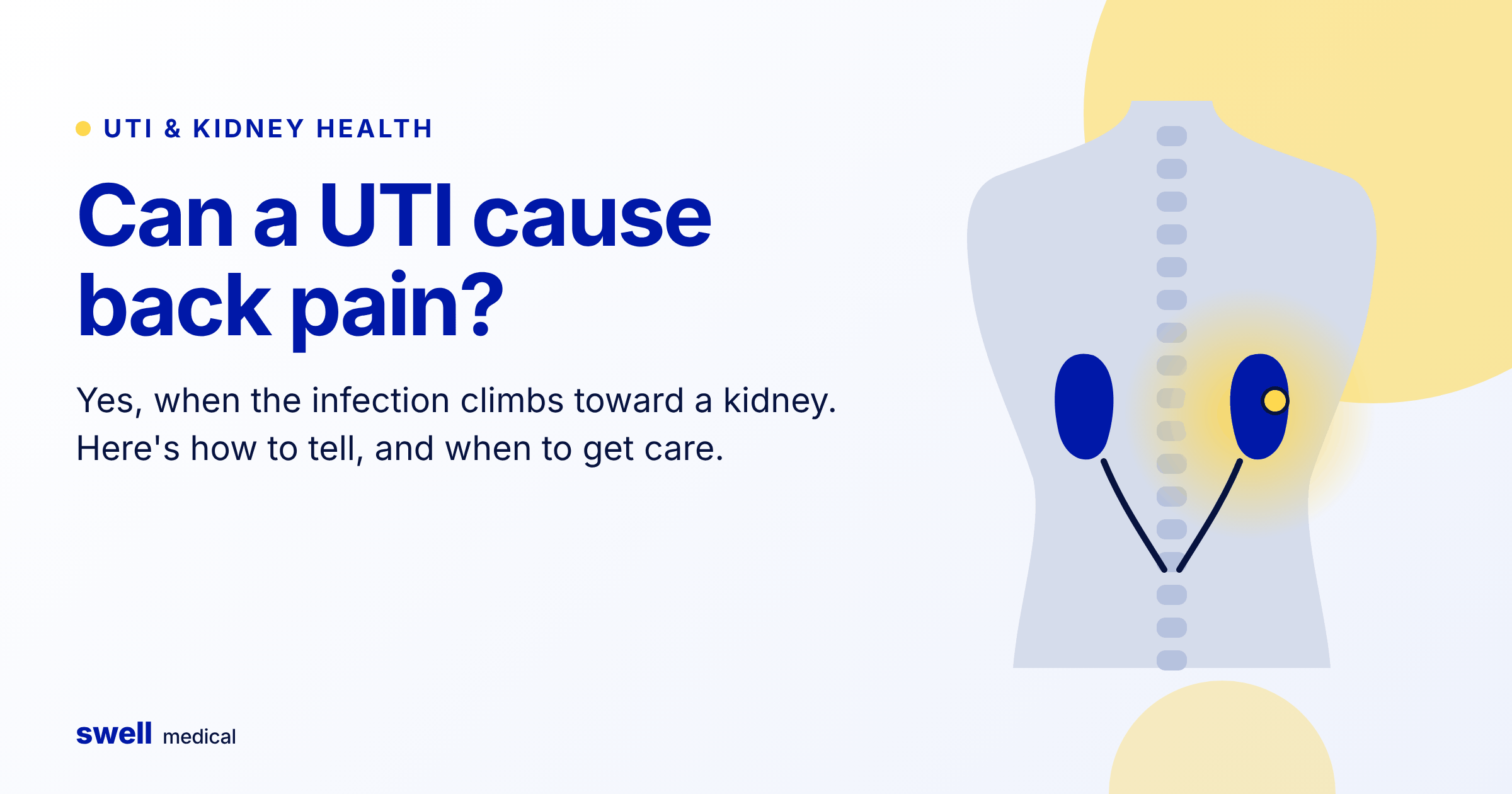
Can a UTI cause back pain? Yes. A bladder infection usually stays low in the abdomen, but pain in your back, often on one side just under the ribs, can mean the infection has traveled to a kidney. That’s a kidney infection, and it needs a doctor within a day, not a week.
Can a UTI cause back pain? Short answer: yes, sometimes
“Sometimes” is the honest word. Most urinary tract infections are bladder infections. The usual symptoms are burning during urination, a strong urge to go and pressure in the lower abdomen. Back pain isn’t the usual headline.
When bacteria keep moving, the picture changes. A kidney infection, also called pyelonephritis, brings flank pain and often nausea. The CDC describes it as pain in the lower back or along one side of the back, with chills (CDC).
So the useful question isn’t whether your back hurts. It’s where, and what other symptoms came with it.
Why a urinary tract infection hurts your back
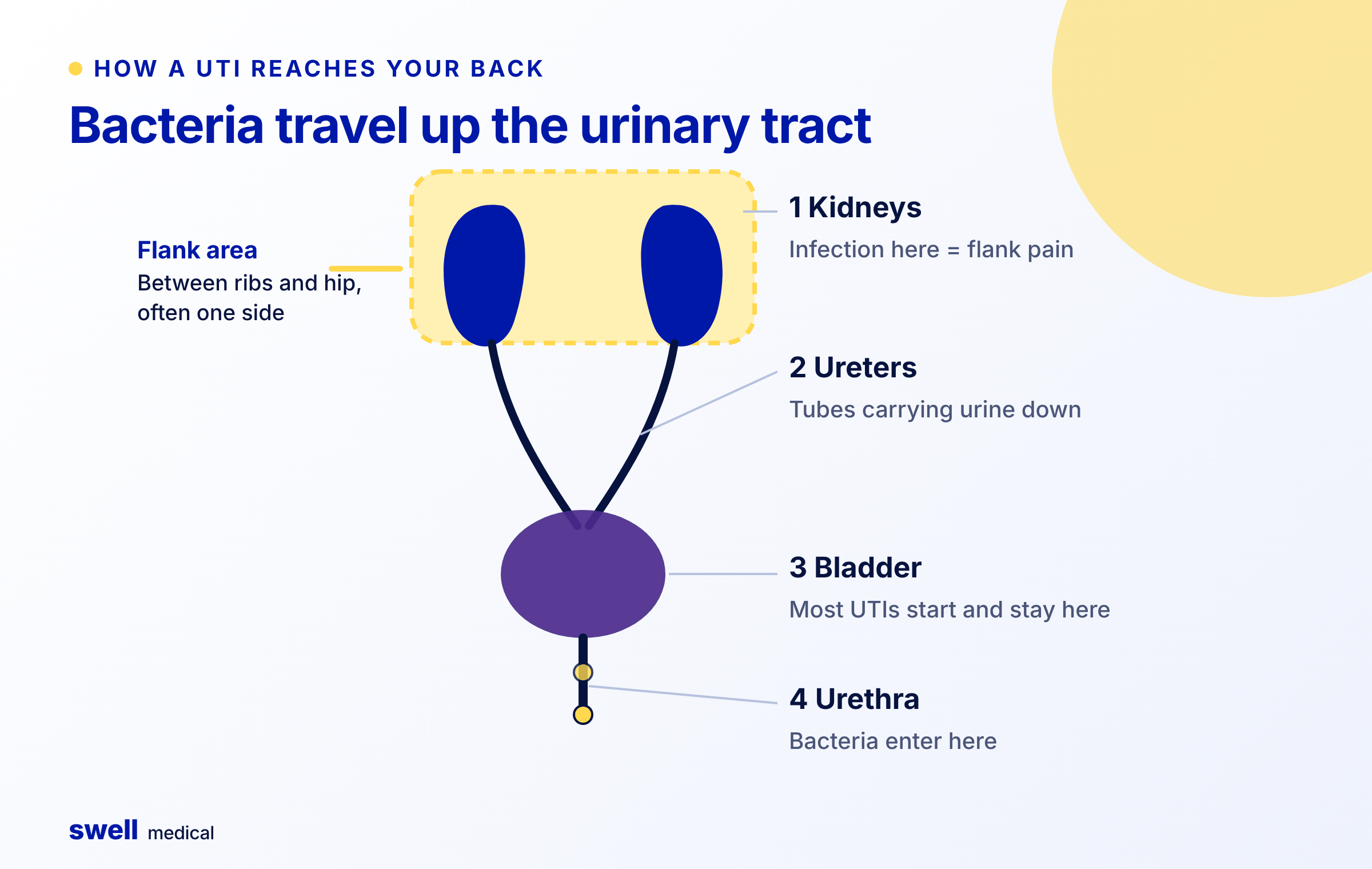
Picture the urinary tract as a one-way street. Bacteria, usually from the skin or rectum, enter through the urethra and multiply in the bladder. In women the urethra is short, so the bacteria have less distance to cover. That’s one reason bacteria cause so many UTIs.
If the infection isn’t treated, it can climb the ureters, the two thin tubes that carry urine down from your kidneys. Those organs sit high in the back of your abdomen, tucked under the lower ribs. When they’re infected, they swell and the tissue around them gets irritated. You feel that as a deep ache in the flank, the area between your ribs and hip.
An untreated urinary tract infection is the usual way in. That’s why a UTI you hoped would clear up by itself can turn into something bigger.
What UTI back pain feels like
People describe it as a dull, steady ache rather than a sharp stab. It tends to sit on one side, though both can hurt. Some feel it wrapping around toward the abdomen or groin, which can make it easy to mistake for a stomach problem. Lying still doesn’t fix it. That’s a clue.
Most UTI symptoms are down low. Back pain, especially above the waist, is the odd one out.
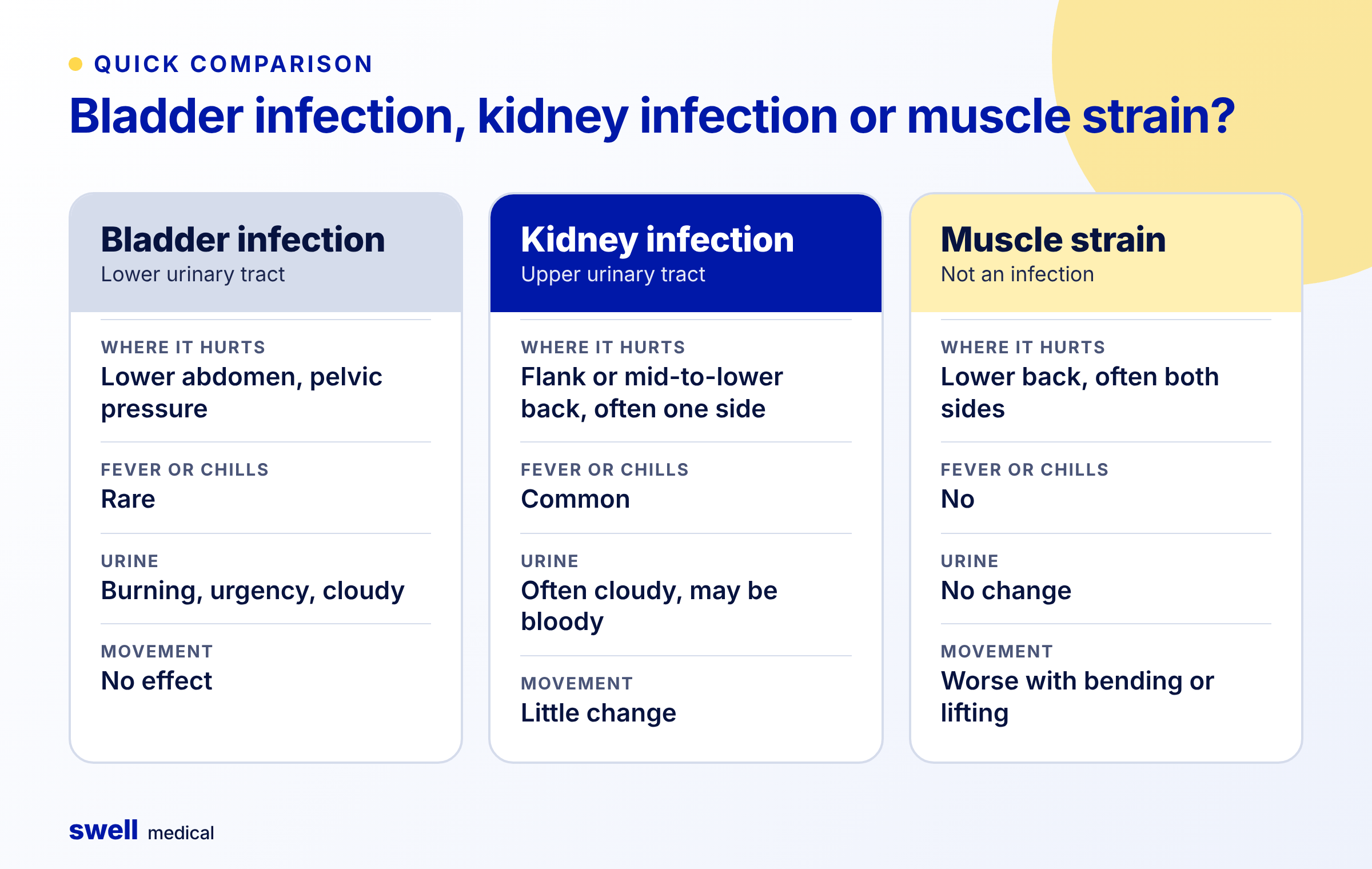
Here’s how the common causes compare:
| Bladder infection | Kidney infection | Muscle strain | |
|---|---|---|---|
| Where it hurts | Lower abdomen, pelvic pressure | Flank or mid-to-lower back, often one side | Lower back, often both sides |
| Fever or chills | Rare | Common | No |
| Urine changes | Burning urination, urgency, cloudy urine | Often the same, plus blood or a strong smell | None |
| Movement | No effect | Little change | Worse with bending or lifting |
Other signs it may be a kidney infection
Back pain alone rarely tells the whole story. Look for company. A fever, shaking chills, nausea or vomiting alongside back pain points strongly toward pyelonephritis. So does pain that arrives a day or two after the first urinary symptoms.
Mayo Clinic also lists blood or pus in the urine, plus a cloudy or foul smell (Mayo Clinic). Older adults sometimes show something different: confusion or sudden tiredness with no clear pain at all.
Some people are more likely to get here. Pregnancy, diabetes, a urinary catheter, urinary stones and an enlarged prostate all raise the odds. So does menopause, which changes the bacteria in the urinary tract. Spermicides, which some people use for birth control, can do the same. During pregnancy the stakes are higher, so the bar for calling your doctor is lower.
Could it be something else?
Yes, and it’s worth keeping an open mind. Back pain has plenty of causes that have nothing to do with infection.
Kidney stones can cause severe flank pain that comes in waves. Sciatica usually shoots down one leg. A strained muscle hurts when you move and eases at rest. What separates a UTI is the urinary side: burning, urgency, changes in your urine, or a fever.
No urinary symptoms at all? A back problem is more likely, and physical therapy may be the better route. A urinalysis is the quickest way to know for sure.
When to see a doctor (and when to go to the ER)
Call your doctor the same day if you have urinary symptoms plus back pain. Don’t wait it out. Prompt medical attention and treatment matter because a kidney infection can cause scarring, and in rare cases bacteria enter the bloodstream.
Seek emergency medical attention, or call 911, if you have:
- A high fever that won’t break
- Severe pain in your back or side
- Repeated vomiting that keeps you from holding down fluids or pills
- Confusion, a racing heart or feeling faint
- Blood in your urine along with any of the above
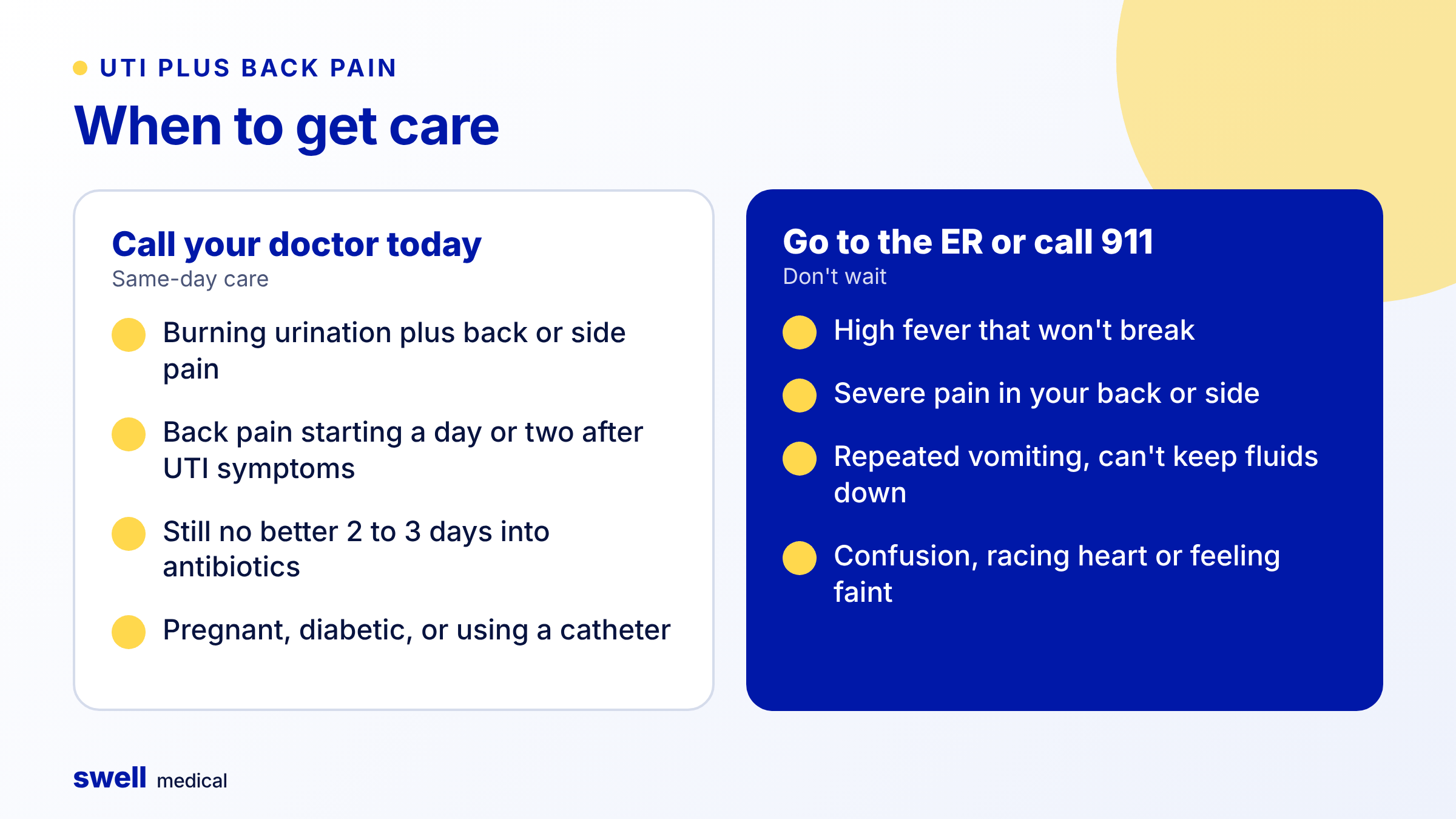
Already on antibiotics for a UTI? If you aren’t better after two to three days, call your healthcare provider. A doctor can swap the drug or check for a blockage.
How UTI back pain is treated
Treatment is simpler than most people fear, as long as it starts early. Antibiotics are the core of it. The NIDDK says the choice of drug may change once lab results come back, and you should finish the whole course even if you feel better (NIDDK). Very sick people may need IV antibiotics and fluids in the hospital.
Diagnosis starts with a urinalysis, a quick test that checks your sample for infection. A urine culture then identifies the bacteria and shows which antibiotic will work. If symptoms are severe or keep returning, you may also need an ultrasound or CT scan to rule out a blockage.
At home, a few things ease the discomfort while the medicine works:
- Drink plenty of water. It won’t cure the infection, but it helps flush your system.
- Use a heating pad on your back for comfort.
- Ask your doctor which pain reliever is safe for you.
Recurrent infections deserve a closer look. If an infection keeps coming back after treatment, ask your doctor about a deeper workup, since recurrent UTIs sometimes point to an underlying cause.
Get UTI care from home with Swell
Not sure whether it’s a simple UTI or something more? You don’t have to guess, and you don’t have to sit in a waiting room with a sore back.
Swell offers 24/7 telehealth with licensed healthcare providers who can review your symptoms, explain your next steps and tell you plainly if you need in-person testing or emergency care. If you’re burning up, in severe pain or can’t keep fluids down, skip the screen and go to the ER.
Start a visit with Swell and get a clear plan today.
Questions people ask about UTI back pain
Where does the back hurt with a UTI?
Usually the flank, which is the area between your lowest ribs and your hip, most often on one side. The ache can feel deep and constant. Pain right across the lower back is more typical of a muscle problem, though a kidney infection can cause it too.
How do I know if a UTI has spread to my kidneys?
Look for back or side pain together with nausea or vomiting. Urinary symptoms often come first, then the pain follows. If you suspect it, get a diagnosis promptly, because a kidney infection needs prescription antibiotics.
How long does UTI back pain last?
It usually starts easing within a couple of days of starting the right antibiotic. If the pain hasn’t improved after two to three days of treatment, or it gets worse, call your doctor. Don’t cut treatment short, even once you feel better.
Is back pain from a UTI serious?
It can be. Back pain suggests a kidney infection may be starting, which carries a higher risk of complications such as kidney damage if it’s left alone. Caught early, it’s very treatable. That’s why the answer is to get medical attention the same day.
Can I have UTI back pain without burning when I pee?
Yes. Some people with a kidney infection have little or no burning urination, particularly older adults. If you have chills or flank pain with no clear cause, ask for a urine test. Don’t assume it’s your back.
Trusted references
Public-health, research, and medical-society resources related to this guide.