You woke up with a tender, red bump on your eyelid, and now you’re eyeing the shared bathroom towel. Fair. So, are styes contagious? Not the way pink eye is. A stye usually stays with the person who has it, and the American Academy of Ophthalmology says styes aren’t contagious. The bacteria inside one can still travel on your hands, towels and pillowcases, though, so a few small habits matter. Here’s what really spreads, what doesn’t, and what to do today.
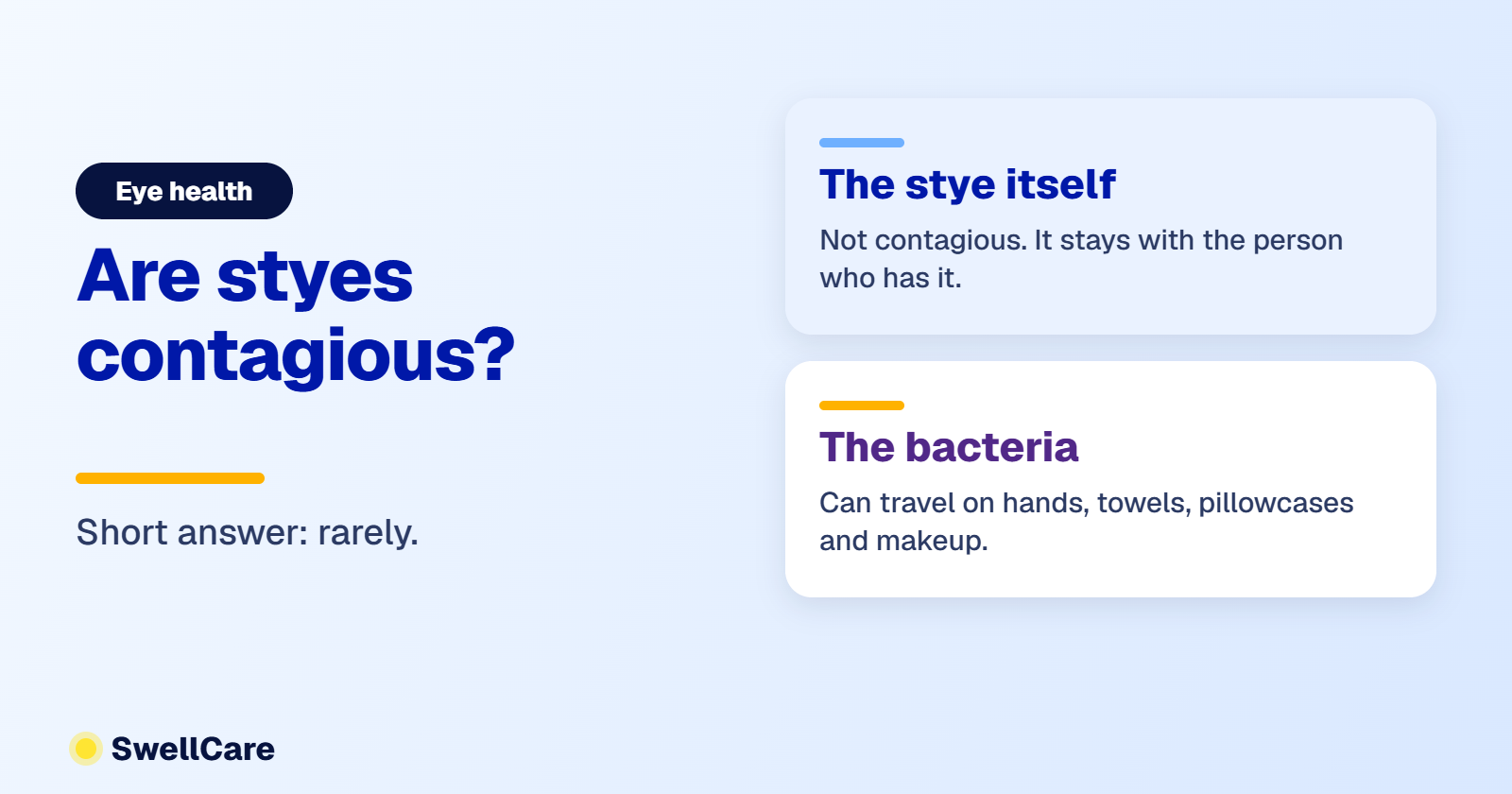
Are styes contagious? The short answer
Mostly no. A stye (the medical name is hordeolum) is an infection of a blocked oil gland or eyelash follicle in the eyelid. It’s a local infection in one spot, not something that travels through the air. You can’t catch one by sitting next to someone at lunch or by looking at their eye.
Cleveland Clinic puts it a little more carefully: generally not contagious, but a stye can pass along small amounts of bacteria. That’s the part worth remembering. The lump isn’t what spreads. The germs on the surface might.
A healthy eyelid usually handles a few stray bacteria without any fuss. Trouble starts when an oil gland is already clogged and the bacteria get a place to settle.
How a stye can spread (and why it usually doesn’t)
Think of it as a low-risk, not no-risk, situation. Bacteria need a ride to spread from one person to another, and there are only a few rides available.
The biggest one is your own fingers. Rub a stye, then touch your face, a doorknob or your child’s cheek, and you’ve moved bacteria around. Shared towels and washcloths come next, since a damp cloth held against an infected lid can carry bacteria to the next person who uses it. A draining stye can also leave pus or crust on a pillowcase. And mascara or eyeliner used during a stye can pick up bacteria and hand it right back to your lashes.
Most of the time, none of this leads to a second stye. A clean, healthy eyelid shrugs off a few stray germs, so the odds of passing on an infection stay low. They climb when the other person has a clogged gland, an irritated lid margin, a weaker immune system, or a habit of rubbing their eyes.
What causes a stye in the first place?
Almost always, bacteria. *Staphylococcus aureus*, a common skin germ, is the most common culprit, according to the NIH’s StatPearls overview of hordeolum. An external stye starts at the lash line when one of the tiny oil or sweat glands gets blocked. An internal stye starts deeper, in one of the meibomian glands on the inside of the lid. The external kind is what most people mean by a stye, and it often looks like a pimple on the eyelid.
Some people just get more of them. Blepharitis, which is inflammation along the lash line, is a common reason. So are rosacea, seborrheic dermatitis, diabetes, high cholesterol and a past stye. Rubbing your eyes with unwashed hands makes every one of those worse.
Adults tend to get styes more than kids, partly because adult oil is thicker and clogs more easily. Stress gets blamed a lot. The evidence is thin, but poor sleep and stress can make you rub your eyes more, and that doesn’t help.
Stye, chalazion or pink eye? How to tell them apart
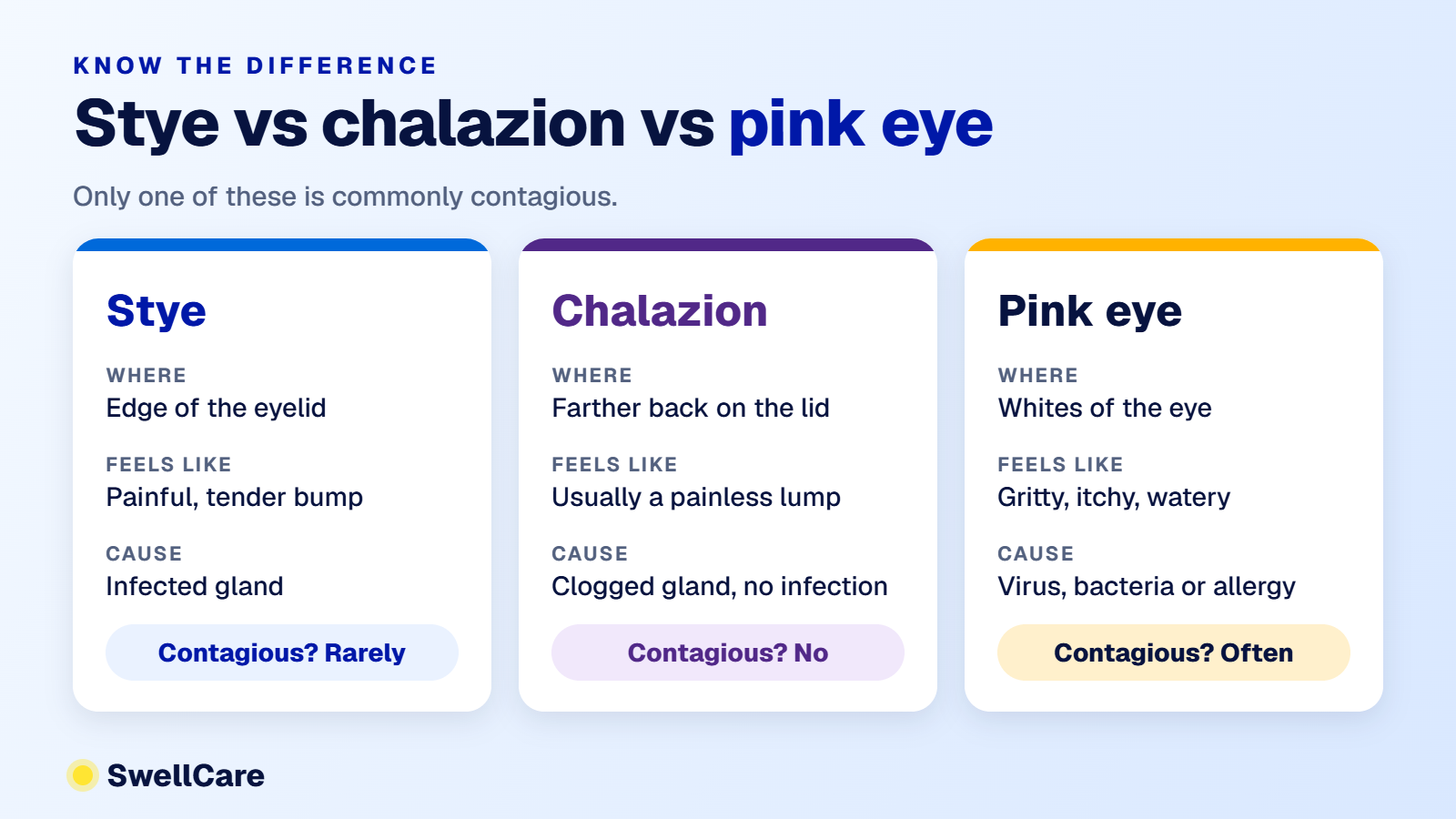
People mix these up all the time, and the difference matters because pink eye really is contagious.
| Stye | Chalazion | Pink eye | |
|---|---|---|---|
| Where | Edge of the eyelid | Farther back on the lid | Whites of the eye |
| Feels like | Painful, tender bump | Usually painless lump | Gritty, itchy, watery |
| Cause | Bacterial infection of a gland | Clogged oil gland, no infection | Virus, bacteria or allergy |
| Contagious? | Rarely | No | Often, yes |
A chalazion can look a lot like an internal stye early on, since it can be sore at first, which is why some bumps are hard to tell apart. If the whole white of your eye is red and you wake up with it glued shut, that points to conjunctivitis, not a stye.
What a stye looks and feels like
Early on, the lid just feels sore, like a pimple that hasn’t surfaced yet. Within a day or two the classic stye symptoms appear: redness and a tender bump along the lash line, eyelid swelling that sometimes spreads across the whole lid, and a small yellow-white dot of pus. Some people also get crusting on the eyelashes, extra tearing, or a gritty feeling.
You’ll usually notice them on one eyelid only. Pain at the touch is the usual clue that points to a stye rather than a chalazion, though a chalazion can be tender early on.
How to keep a stye from spreading to your family or your other eye
A stye in one eye rarely moves to the other. The AAO notes that a new stye on the opposite lid is usually caused by the same underlying conditions, not by the first stye traveling across. Still, good hygiene costs nothing.
Here’s a simple hygiene checklist for the next week or two:
- Wash your hands before and after you touch the area, every time.
- Use a fresh washcloth for each compress, then launder it in hot water.
- Keep towels separate and swap your pillowcases every night or two.
- Skip eye makeup until the bump is gone. Toss the mascara or eyeliner you used when it started.
- Switch to glasses. Contact lenses sit right against the infected lid, so wait until it heals, and use a fresh pair or a fresh case afterward.
- Don’t share makeup, eyelash brushes or washcloths, especially with children.
Kids need extra care. They rub their eyes constantly and share everything, so extra hand-washing and separate towels help.
How to treat a stye at home
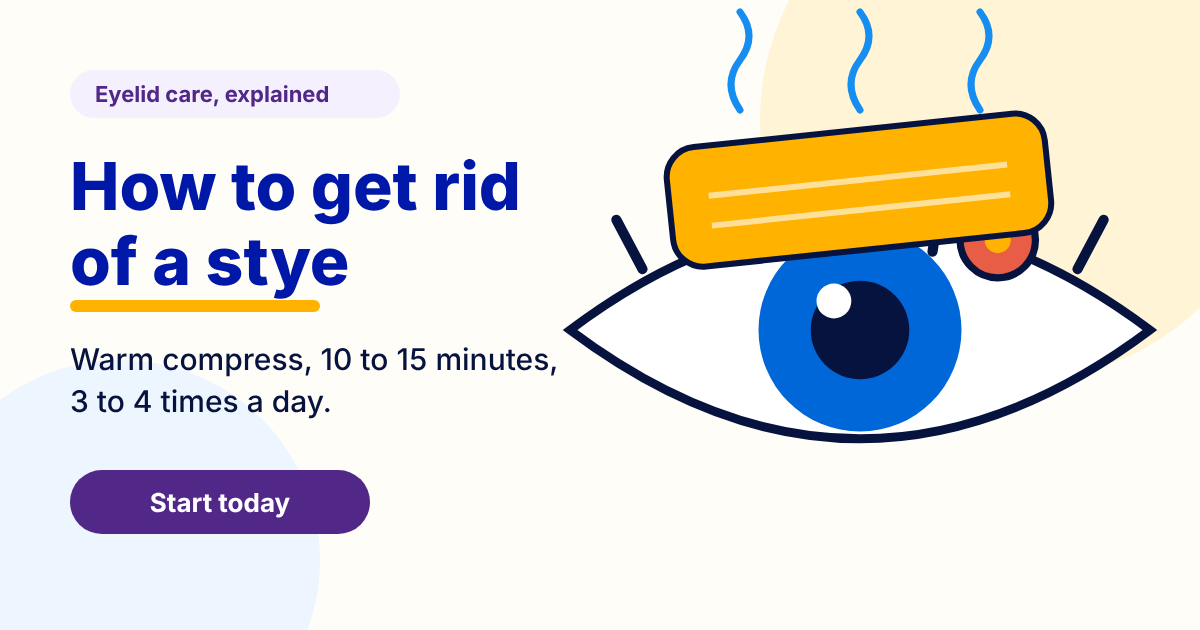
Most styes clear up in one to two weeks without any prescription. The best home treatment is dull, and it works: warm, wet heat. Good home care also means gentle lid hygiene, so the gland has a chance to drain.
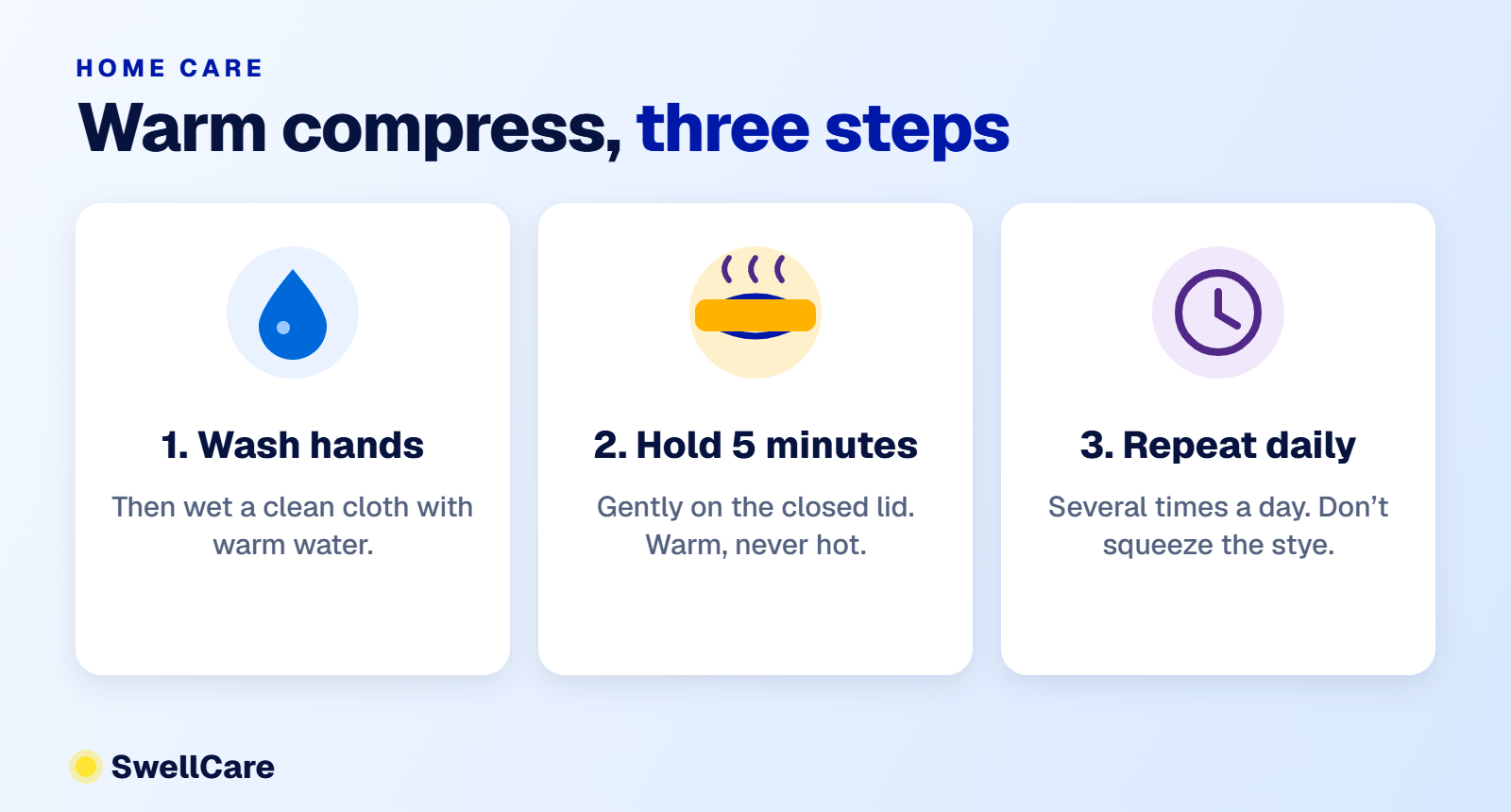
- Wash your hands and run a clean washcloth under warm (not hot) water.
- Hold it gently against the closed eyelid for about five minutes.
- Repeat several times a day, rewarming the cloth as it cools.
- Gently clean the lash line with a tear-free cleanser if there’s crust.
Heat softens the oil blocking the gland so it can drain on its own. That’s why a warm compress is the foundation of stye treatment in nearly every guide, from Harvard Health to the American Academy of Ophthalmology. Natural drainage is a good sign. Wipe the area with a clean cloth each time, and don’t hold the compress so long that the skin turns red.
Don’t pop it. Squeezing can push the infection deeper into the eyelid and make the swelling worse. Stick with the warm compress instead. And hold off on eye makeup and contact lenses until the lid has healed. That’s the whole home treatment plan.
When to see an eye doctor
Home care is enough for most people. Get checked if your symptoms match any of these:
- Pain and swelling don’t improve after about 48 hours of home care, or the stye hasn’t started to heal after a week
- The swelling spreads to your cheek or the rest of the eye
- The lid feels hot, or you can’t open the eye
- Your vision blurs
- Pain gets worse when you move your eye
- Styes keep coming back
An eye doctor may prescribe an antibiotic ointment, and an antibiotic by mouth if the infection has spread into the skin around the eye. For a stubborn one, they can arrange drainage under local anesthesia. They’ll also want to rule out another lid problem if the same spot keeps flaring up.
Not sure whether yours needs a visit? You don’t have to wait for a clinic to open. A SwellCare virtual visit connects you with a clinician any hour of the day, so you can show them the bump, get a plan, and find out if you need to be seen in person.
Questions people ask about whether styes are contagious
Can I get a stye from someone else?
It’s unlikely. The bacteria that cause styes live on most people’s skin already. A stye forms when a gland is blocked and infected, and that depends more on your own eyelid and immune system than on exposure to someone else’s.
Can I go to work or school with a stye?
Usually yes. A stye isn’t something other people catch. Wash your hands often, skip sharing towels, and keep kids from rubbing the area. Stay home if you have a fever, heavy discharge or can’t see well.
Can a stye spread to my other eye?
Rarely. The first stye tends to stay put. If a second one shows up on the other lid, it’s usually because the same risk factor, like blepharitis, affects both eyes. Hands that touch one eye and then the other can add to it.
How long does a stye last?
One to two weeks, most of the time. A draining stye often feels better quickly, within a few days. If it’s still swollen and painful after a week of warm compresses, it’s time for an eye doctor.
Should I throw away my mascara after a stye?
Yes, if you used it while the stye was forming or open. Bacteria on the wand can reinfect the lid. Replace any eyeliner, mascara or brushes that touched the area. Wait until the stye has fully healed before wearing eye makeup or putting your contact lenses back in.
Trusted references
Public-health, research, and medical-society resources related to this guide.