You’ve been coughing for six days. Your chest feels tight, you’re wiped out, and every search you run ends on the same scary word: pneumonia. Or is it just bronchitis?
Here’s the short answer, and what your symptoms are telling you. With bronchitis vs pneumonia, the difference comes down to where the infection sits and how sick you feel. Bronchitis inflames your airways. Pneumonia infects the lungs themselves. Bronchitis usually clears on its own, while pneumonia often needs a doctor, and sometimes a hospital bed.
You can’t diagnose yourself from the couch. But you can learn which symptoms point in each direction, and which ones mean you should be seen today.
Bronchitis vs pneumonia at a glance
Both affect the lower respiratory tract. Both leave you coughing. That’s why people mix them up, and why their symptoms get confused so often.
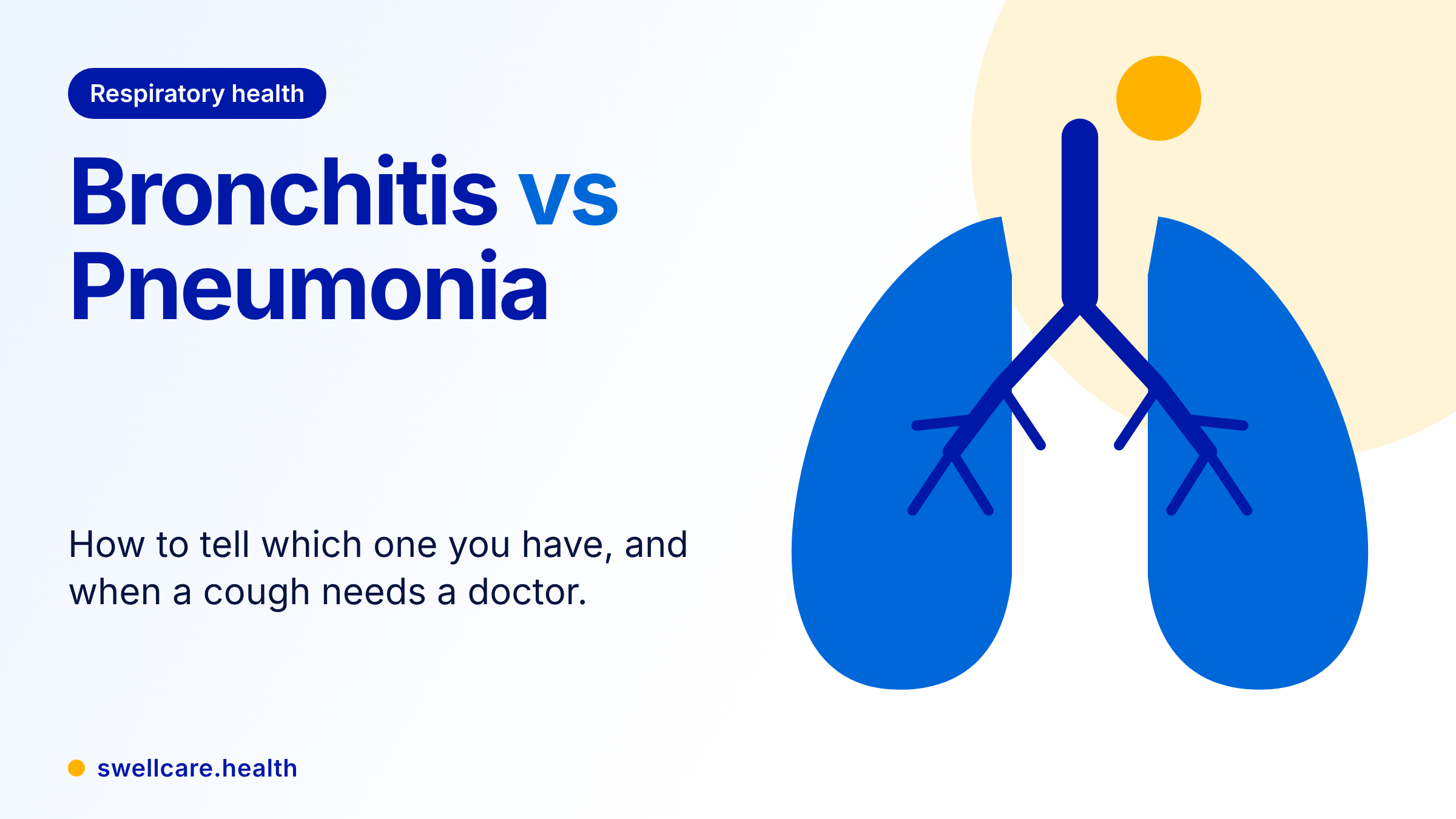
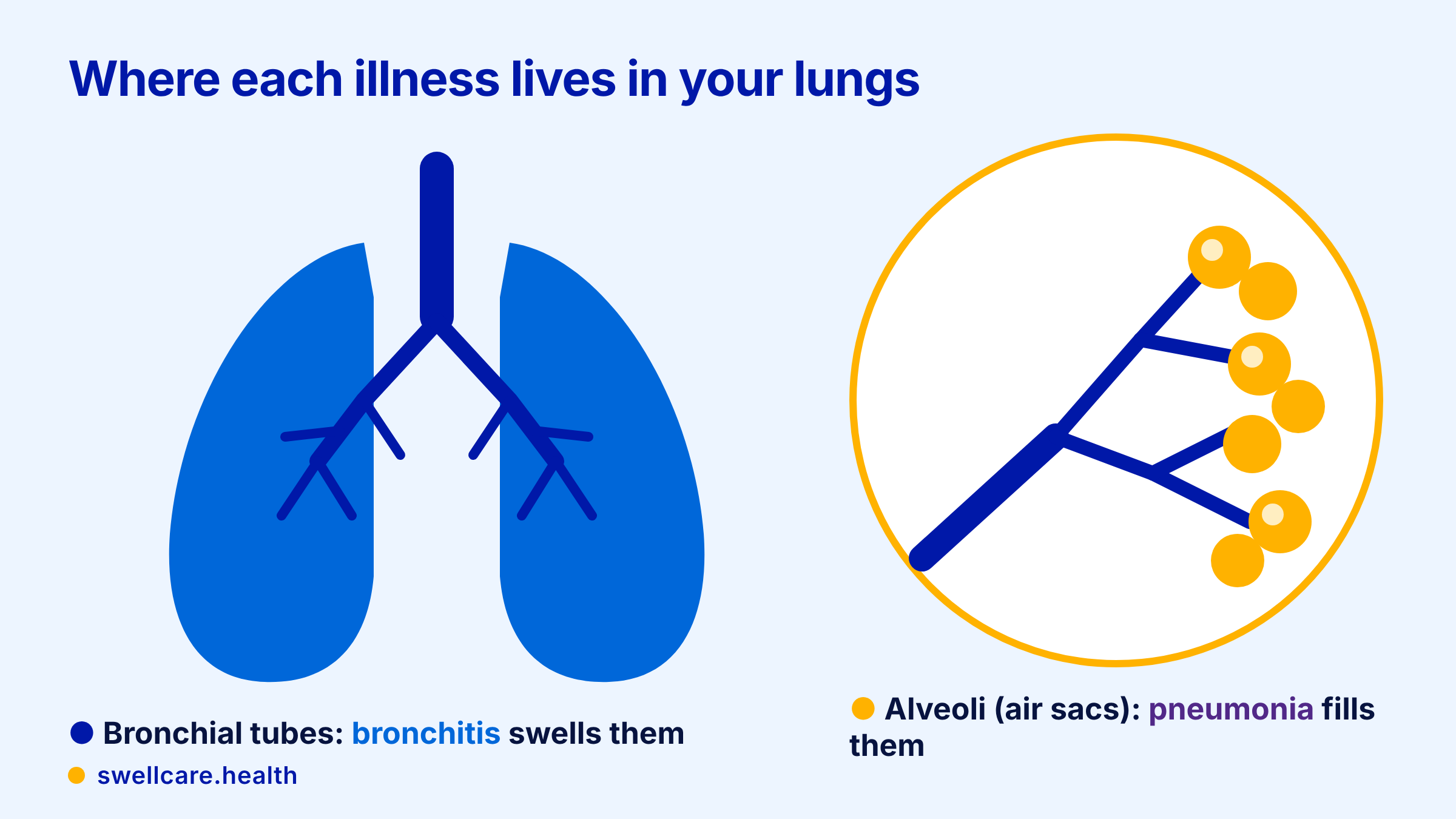
The difference is anatomy. Your windpipe splits into two large bronchial tubes, which branch into smaller and smaller airways. Those end in tiny air sacs called alveoli, where oxygen passes into your blood. Bronchitis means inflammation in the lining of those airways. Pneumonia fills the alveoli, those air sacs, with fluid or pus, so oxygen has a much harder time getting through. The air sacs can’t do their job when they’re full.
Think of it like plumbing. Bronchitis is trouble in the pipes. Pneumonia is trouble in the rooms where the pipes end, and those rooms are supposed to stay clear.
What bronchitis feels like
Most people with bronchitis feel lousy but functional, and their symptoms stay mostly above the neck and in the chest. You’re coughing, you’re tired, and your chest feels sore from all the hacking.
Acute bronchitis
Acute bronchitis is the “chest cold” most of us have had. According to the CDC, it usually brings a cough with or without mucus, fatigue, congestion, a sore throat and mild body aches. Wheezing is common too. A viral infection causes most cases, and symptoms typically run less than three weeks. The bronchial tubes swell, and that inflammation keeps you coughing while the virus clears out of your lungs.
Chronic bronchitis
Chronic bronchitis is a different animal. It’s a long-term condition where airway inflammation lingers and you bring up mucus most days for months. It falls under COPD, and smoking is the leading cause. If a rattle in your chest never fully leaves, it’s worth a visit even on days you feel fine. Ask about a lung check, too, because chronic bronchitis can hide a bigger problem.
What pneumonia feels like
Pneumonia tends to hit harder. You don’t just feel run down. You feel sick, and the symptoms feel different from a cold’s. Pneumonia symptoms often arrive fast, because the infection sits deep in the lungs rather than the airways.
The CDC lists chest pain when you breathe or cough, confusion, ongoing coughing, fatigue, fever or chills, nausea or vomiting, and shortness of breath. A temperature that spikes, shaking chills and breathing that feels like work are classic signs.
Age changes the picture. The NHLBI notes that older adults and people with weak immune systems may run a lower-than-normal temperature instead of a fever. An older parent who’s suddenly weak or confused deserves a call to a doctor, even if the thermometer looks fine.
Walking pneumonia
“Walking pneumonia” is an informal name for a mild case. You’re still up and going to work, but the coughing drags on, you’re exhausted and something feels off. It’s often a bacterial illness caused by bacteria such as Mycoplasma pneumoniae. Mild doesn’t mean harmless. Walking pneumonia is still pneumonia, so get checked if a “cold” won’t budge.
Bronchitis and pneumonia symptoms side by side
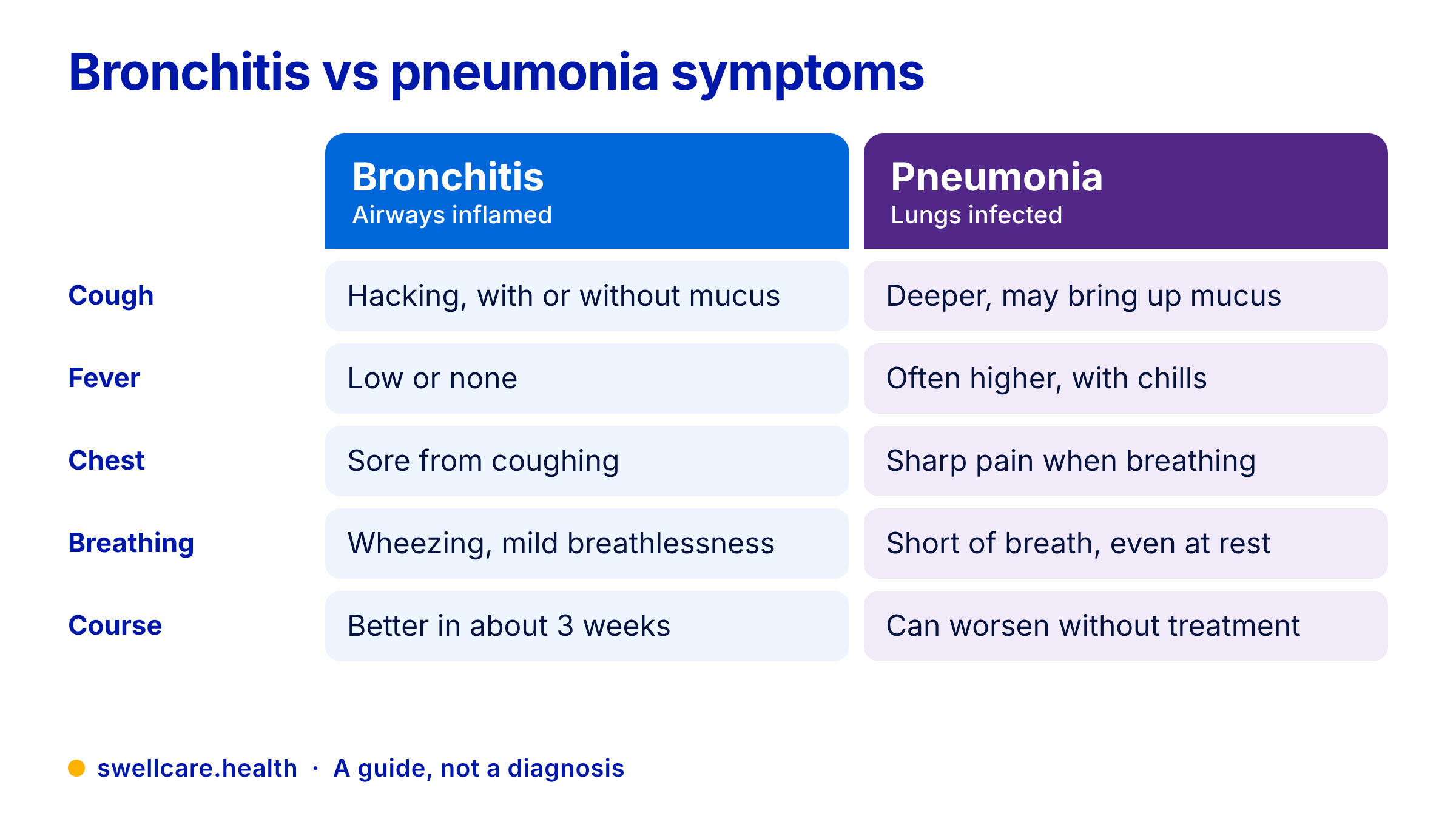
Use this table to compare bronchitis and pneumonia symptoms. It’s a rough guide, not a diagnosis, and symptoms can overlap.
| What you notice | Bronchitis | Pneumonia |
|---|---|---|
| Cough | Hacking, with or without mucus | Often deeper, may bring up mucus |
| Fever | Low or none | Often higher, with chills |
| Chest | Sore from coughing | Sharp pain when breathing or coughing |
| Breathing | Wheezing, mild breathlessness | Shortness of breath, even at rest |
| Energy | Tired | Exhausted, sometimes confused |
| Usual course | Better within about three weeks | Can worsen without treatment |
What causes bronchitis and pneumonia
Viral infections drive most acute bronchitis. The same cold and flu viruses that make your nose run can settle in your chest. A bacterial infection causes a small share of cases, though it’s the rarer culprit, and the CDC says antibiotics still aren’t recommended for those.
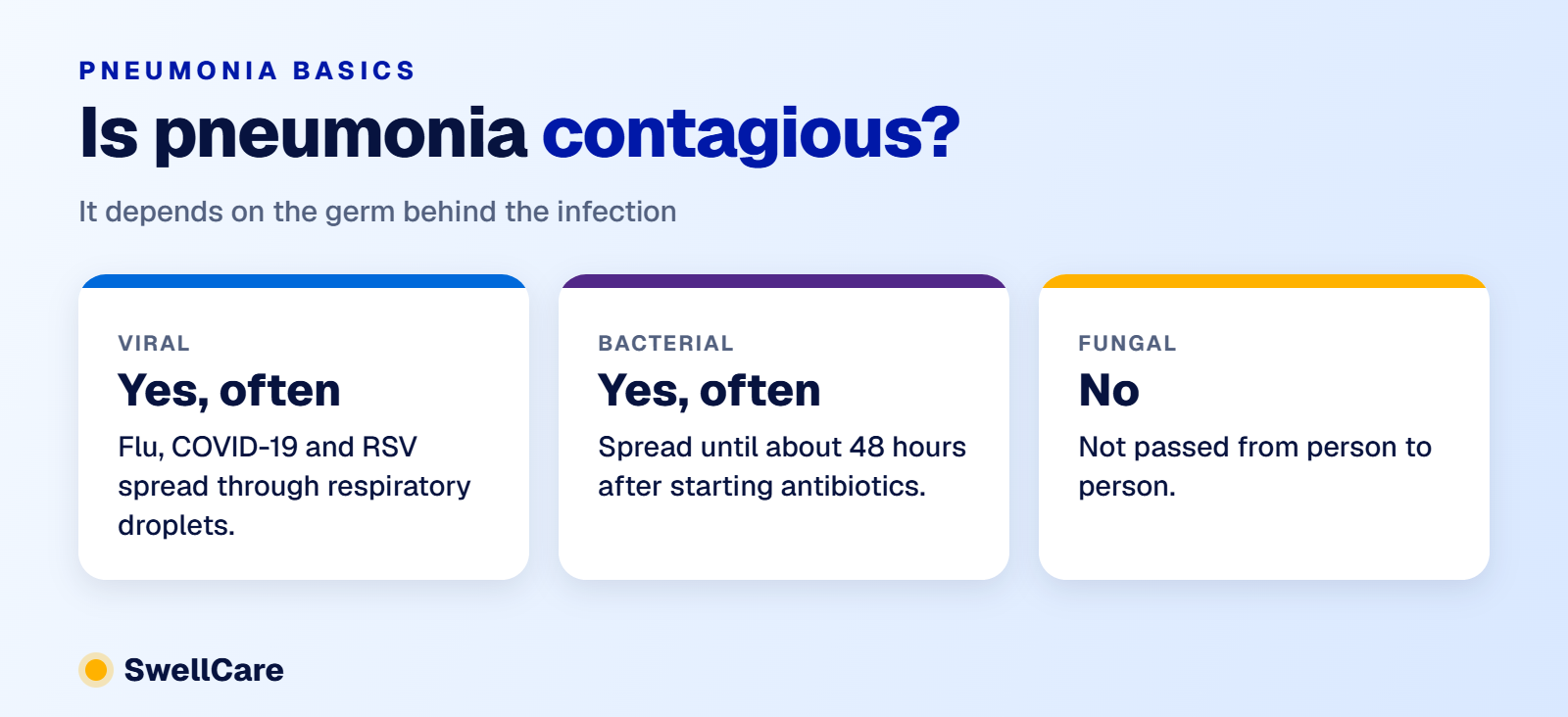
Pneumonia has a longer list of culprits. Bacterial pneumonia and viral pneumonia are the most common types. Pneumococcus is a familiar bacterial cause, while flu, COVID-19 and RSV are viral ones. Fungi cause fewer cases, and sometimes doctors never pin down the exact germ behind the illness.
Some things raise your odds of either illness or make symptoms worse. Smoking weakens the lungs’ defenses. Asthma and long-term lung disease leave airways touchy, and asthma flares can look like bronchitis. A weak immune system, older age and very young age matter too.
Can bronchitis turn into pneumonia?
Yes, it can happen. A viral chest illness can leave your airways worn down, and bacteria sometimes move in behind it, adding inflammation to the mix. When that spreads into the lungs, you have pneumonia.
Watch for this pattern. You start getting better, then you slide backward with a new temperature spike, worse coughing or heavier breathing. That second wave is a reason to call a doctor.
How doctors tell them apart
You and your doctor will start with a conversation. How long have you been sick? How high is your temperature, and are you short of breath at rest?
Then comes the exam. A clinician listens to both lungs, checks your breathing rate and often uses a pulse oximeter, a small clip on your finger that reads oxygen in your blood. Low oxygen, plus crackling sounds in the lungs, points toward pneumonia. Pneumonia can show up as chest pain too.
Chest X-ray results are the usual way to confirm pneumonia, because it shows fluid or cloudy patches in the lungs. With plain acute bronchitis, the X-ray is typically clear. Doctors may add a sputum test or blood work in tougher cases, and a breathing test called spirometry if chronic bronchitis or COPD is the worry.
Treatment for bronchitis and for pneumonia
Treatment is where the two diverge most. Bronchitis treatment is mostly comfort care, while pneumonia treatment targets the germ. Your treatment plan depends on which one you have.
Bronchitis treatment
For acute bronchitis, you’re mostly supporting your body while it heals. The CDC suggests rest, plenty of fluids, a clean humidifier or cool-mist vaporizer, saline spray, steam, lozenges and pasteurized honey for anyone age one and up. Over-the-counter medicines can ease symptoms, though they won’t cure the illness. The CDC advises against over-the-counter cough and cold products for children under 6. If dry air bothers your throat at night, run a humidifier.
Antibiotics usually don’t help, since a viral infection causes most cases, and taking them anyway carries real risks. Think rashes, allergic reactions, resistant germs. If wheezing is the main complaint, a doctor may prescribe an inhaler.
Pneumonia treatment
Pneumonia treatment depends on the cause. Bacterial pneumonia calls for antibiotics, since a bacterial germ is the target of the drug, and you should finish the full course even after you feel better. Viral pneumonia treatment may include antivirals in some cases, like flu or COVID-19, plus rest and fluids. Fungal pneumonia needs antifungal medicine.
Severe pneumonia may need a hospital stay with supplemental oxygen or IV medicine. Over-the-counter medicine that lowers a temperature helps with comfort, and your doctor can tell you what’s safe for you.
Lowering your risk
A vaccine is your best protection against pneumonia, and a flu vaccine also cuts your risk of the viral infection that sets it off. The American Lung Association says all adults 50 and older should get the pneumococcal vaccine. Younger people with chronic conditions may need it too, since an infection hits them harder. Flu, COVID-19 and RSV shots help as well, and each vaccine protects your lungs in a different way. Ask your doctor about any vaccine you’ve missed.
Wash your hands to avoid passing on any infection, skip tobacco smoke and keep conditions like asthma and COPD under control. If you smoke, quitting is the single biggest favor you can do your lungs. Your immune system will thank you for rest and decent food, too.
When to see a doctor
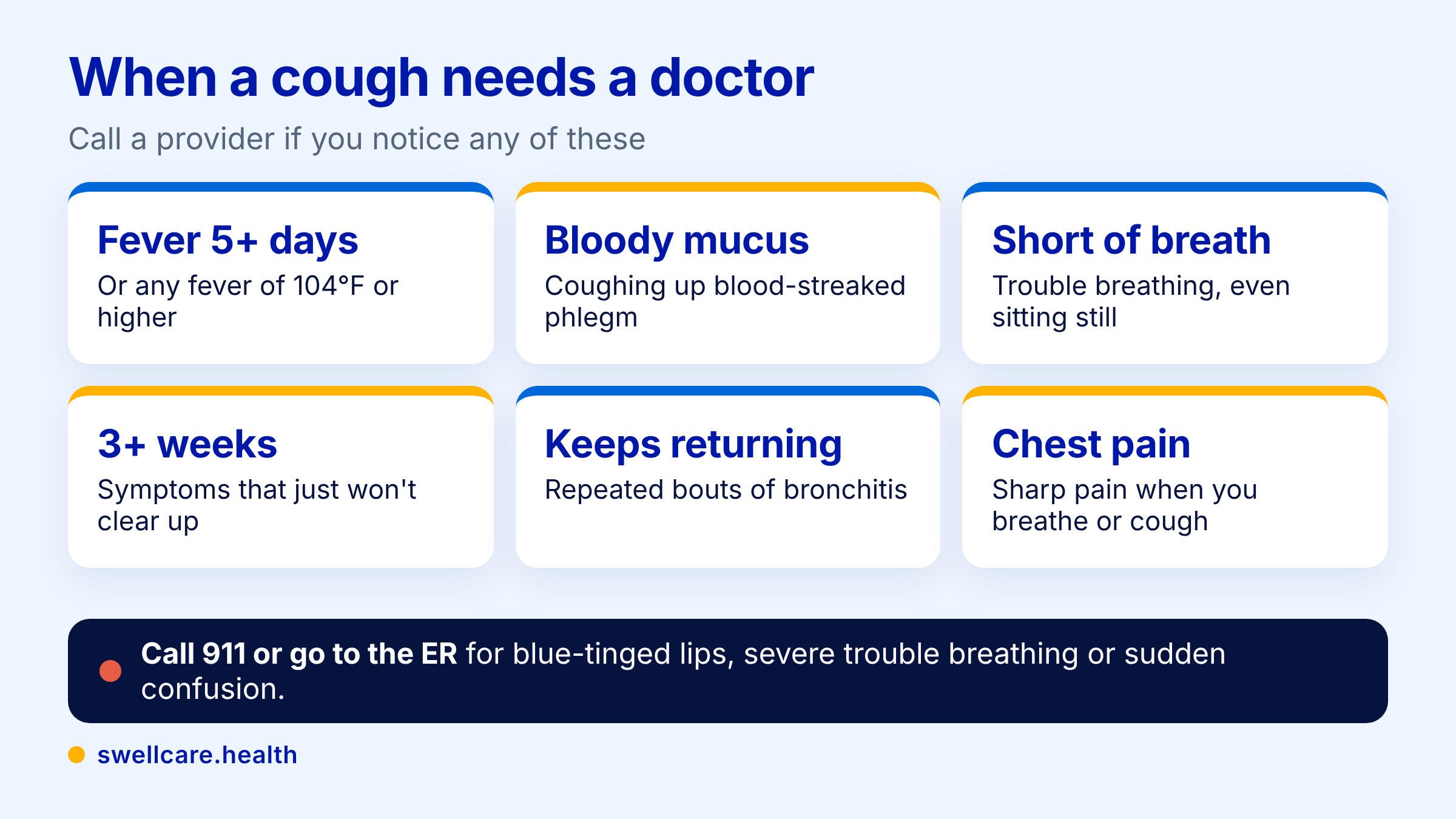
Most chest colds don’t need an office visit, and mild symptoms often fade on their own. Some situations do call for care, especially when pneumonia symptoms show up. The CDC lists these reasons to call a provider:
- Fever lasting more than five days, or a fever of 104°F or higher
- Coughing up bloody mucus
- Shortness of breath or trouble breathing
- Symptoms lasting more than three weeks
- Bronchitis that keeps coming back
With suspected pneumonia, don’t wait on those thresholds. Sharp chest pain, confusion, blue-tinged lips or a baby who is struggling to breathe all need urgent care. Call 911 or go to the nearest emergency room if breathing is hard.
Not sure where you fall? Swell can help you sort that out from home. Talk to a Swell clinician online, describe your cough and symptoms, and get a clear answer on whether you can rest at home or need an in-person chest X-ray. Start a visit with Swell and find out before a long cough turns into a bigger problem.
Questions people ask about bronchitis vs pneumonia
Can you have bronchitis and pneumonia at the same time?
Yes. Bronchitis can lead into pneumonia, and the two can overlap. If your cough suddenly worsens, your fever returns or breathing gets harder partway through a chest cold, get checked. A clinician can listen to your lungs and order a chest X-ray to see what’s going on.
Is bronchitis contagious?
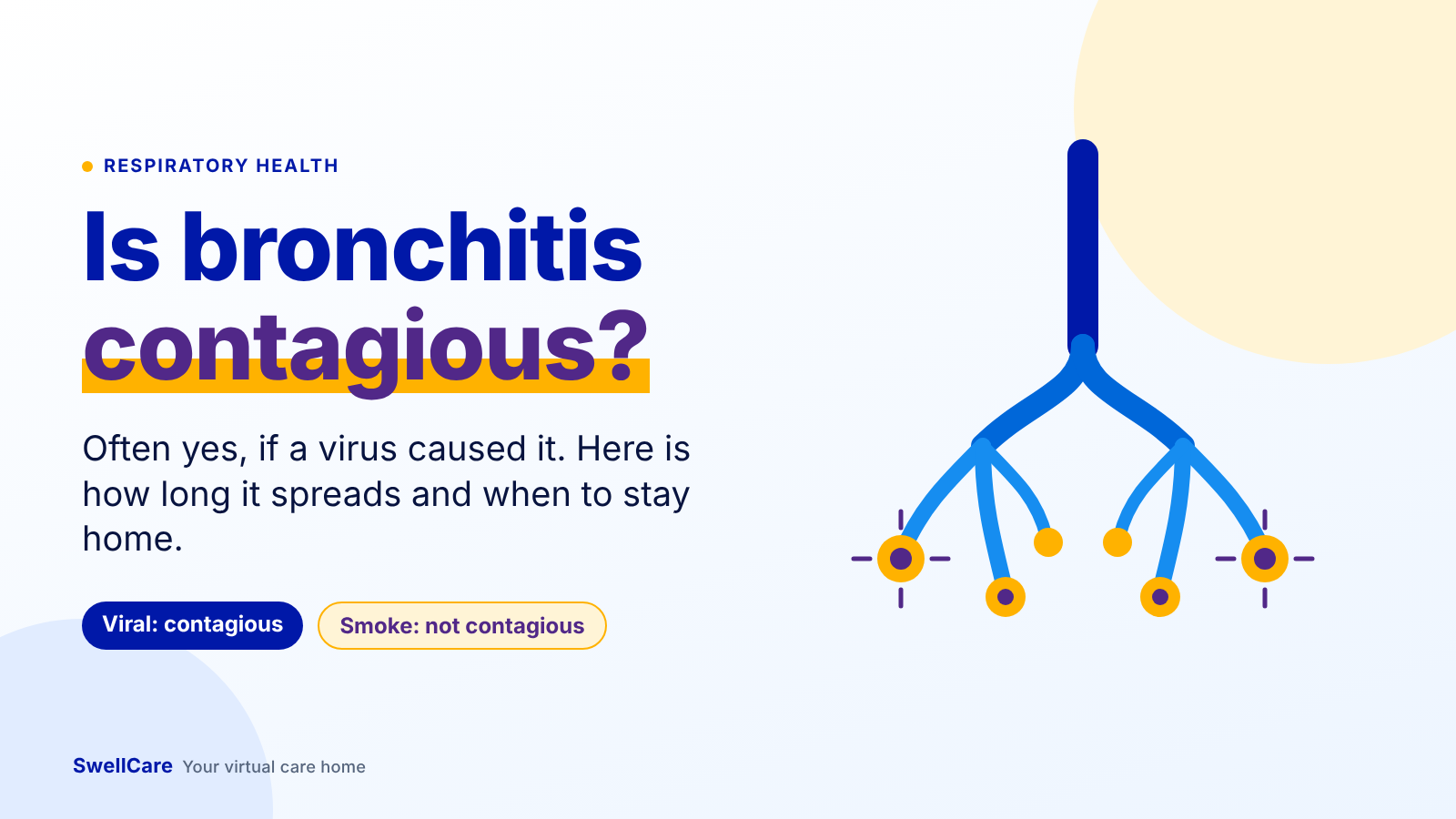
The viruses behind most acute bronchitis spread through coughing and sneezing, so you can pass the germ along while you’re sick. The bronchitis itself isn’t the thing spreading. Wash your hands, cover your mouth and stay home while you have a fever. Chronic bronchitis from smoking isn’t contagious.
Do I need antibiotics for bronchitis?
Usually no. Viruses cause most cases, and antibiotics don’t work on viruses. The CDC says acute bronchitis typically improves on its own without them. A doctor may prescribe antibiotics if they suspect pneumonia, whooping cough or another bacterial infection instead.
How long does a cough last after bronchitis?
Symptoms of a chest cold usually run less than three weeks, according to the CDC. Some people notice the coughing lingers a bit longer than the other symptoms. If your symptoms drag past three weeks, brings up blood or comes with shortness of breath, see a doctor.
Can I tell the difference without a doctor?
You can spot clues. High fever, chills, sharp chest pain and breathlessness lean toward pneumonia, while a hacking cough with a mild fever leans toward bronchitis. But the signs overlap, and only an exam, and sometimes a chest X-ray, can say for sure. When in doubt, get checked.
Trusted references
Public-health, research, and medical-society resources related to this guide.