Your coworker has been out for a week with pneumonia. Or your dad just came home with a diagnosis, and you’re the one handing him soup and pills. So you wonder: is pneumonia contagious?
Here’s the plain answer. The lung infection itself doesn’t pass from one person to the next, but the germs behind it often do. You can catch the bug, and whether it settles into your lungs is a different story.
Is pneumonia contagious? It depends on the cause
Pneumonia is a lung infection. The air sacs inflame and can fill with fluid or pus, as the National Heart, Lung, and Blood Institute describes it. Bacteria, viruses or fungi can all start it.
The American Lung Association lists the usual suspects. Flu viruses can lead to pneumonia, and they spread easily. Streptococcus pneumoniae, the most common cause of bacterial pneumonia, is contagious too. So is the germ behind walking pneumonia. Fungal pneumonia is the exception, since it isn’t passed person to person.
Not everyone exposed gets sick. Many people carry pneumococcal bacteria in the nose or throat and never feel a thing, the CDC notes.
How does pneumonia spread from person to person?
Mostly through the air you share. When someone with an infection coughs, sneezes or even talks, they release respiratory droplets packed with virus or bacteria. You breathe in those respiratory droplets, and the germs get a foothold. Close contact makes it far likelier, which is why household members and caregivers catch things first.
Surfaces play a smaller part. Touch a contaminated doorknob or cup, then rub your nose, and you can pick up germs. Wash your hands and that risk drops.
Viral pneumonia
Flu, COVID-19 and RSV can all lead to a viral pneumonia. RSV, short for respiratory syncytial virus, hits little kids and older adults hardest. Each virus moves through respiratory droplets from coughs and close contact, and a bad cold or flu that sinks into the chest is how many people end up here.
Bacterial pneumonia
Bacterial pneumonia often follows a respiratory illness, though it can strike without one. Bacteria in the throat can slip down into the lungs after a viral infection has worn down your defenses. Antibiotics treat it, and they also shorten the window in which you can pass the bacteria along.
Fungal pneumonia
Fungi in soil or dust cause this type, and you can’t catch it from another person. It mostly threatens people with a weakened immune system.
How long is pneumonia contagious?
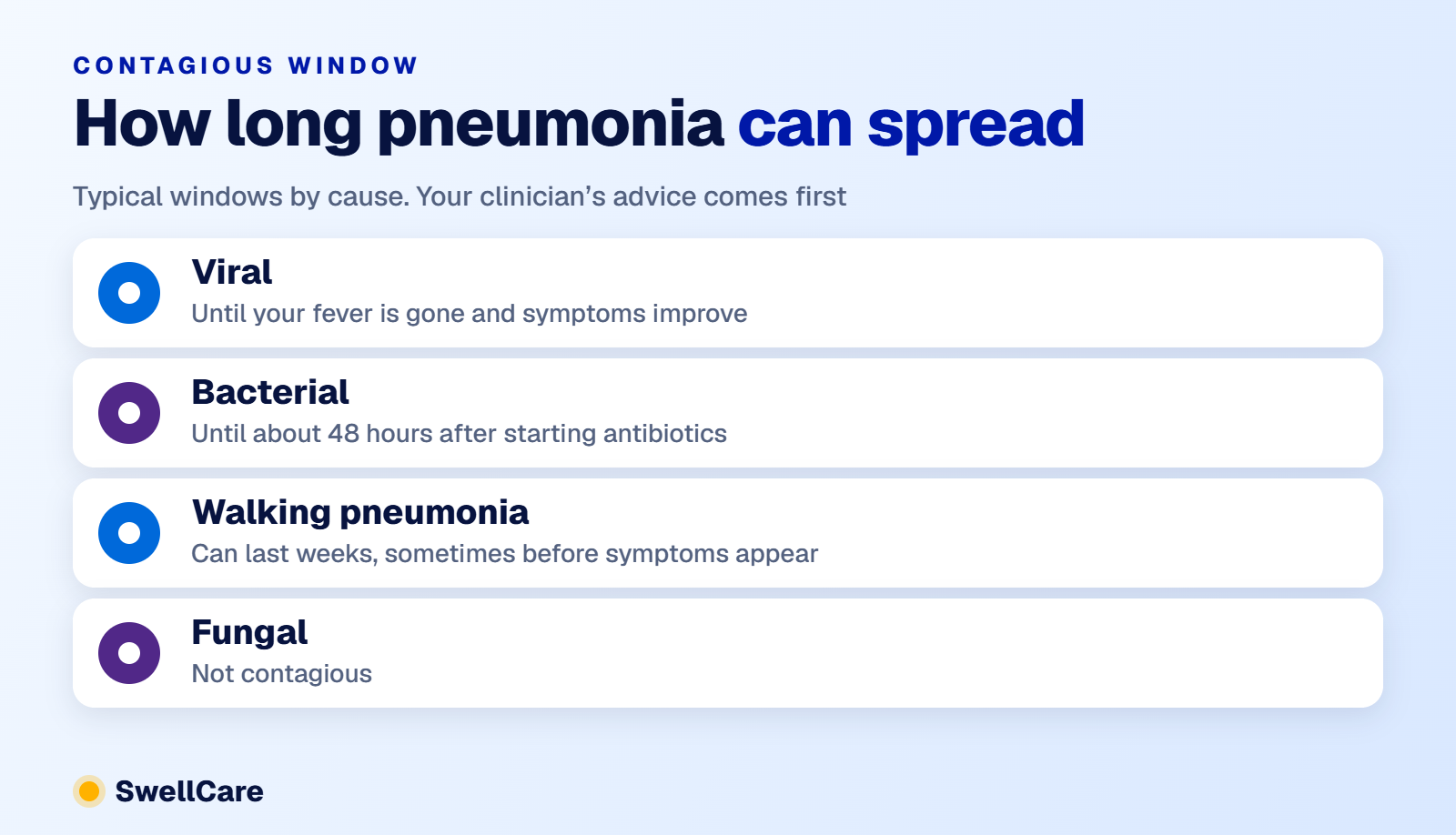
Short version: it varies by cause, and your clinician’s advice beats any chart. Still, the Lung Association gives these typical windows.
| Type | When you can spread it |
|---|---|
| Viral pneumonia | Until your fever is gone and symptoms improve, from several days to over a week |
| Bacterial pneumonia | Until about 48 hours after starting antibiotics, and until your fever is gone |
| Walking pneumonia | Can last for weeks, and may start before symptoms appear |
| Fungal pneumonia | Not contagious |
Most people can return to work or school once they’ve gone at least 24 hours without a fever, with no medicine masking it, and their symptoms are easing. Recovery takes longer. Some people feel normal in one to two weeks, while others need a month or more, and most stay tired for about a month, says the NHLBI.
Walking pneumonia spreads quietly
Walking pneumonia is a mild form, usually caused by Mycoplasma pneumoniae. You might feel like you have a lingering cough, some fatigue and a low fever. Symptoms stay mild, so you shrug them off and keep going to work. That’s exactly how walking pneumonia travels, in respiratory droplets from one cough to the next.
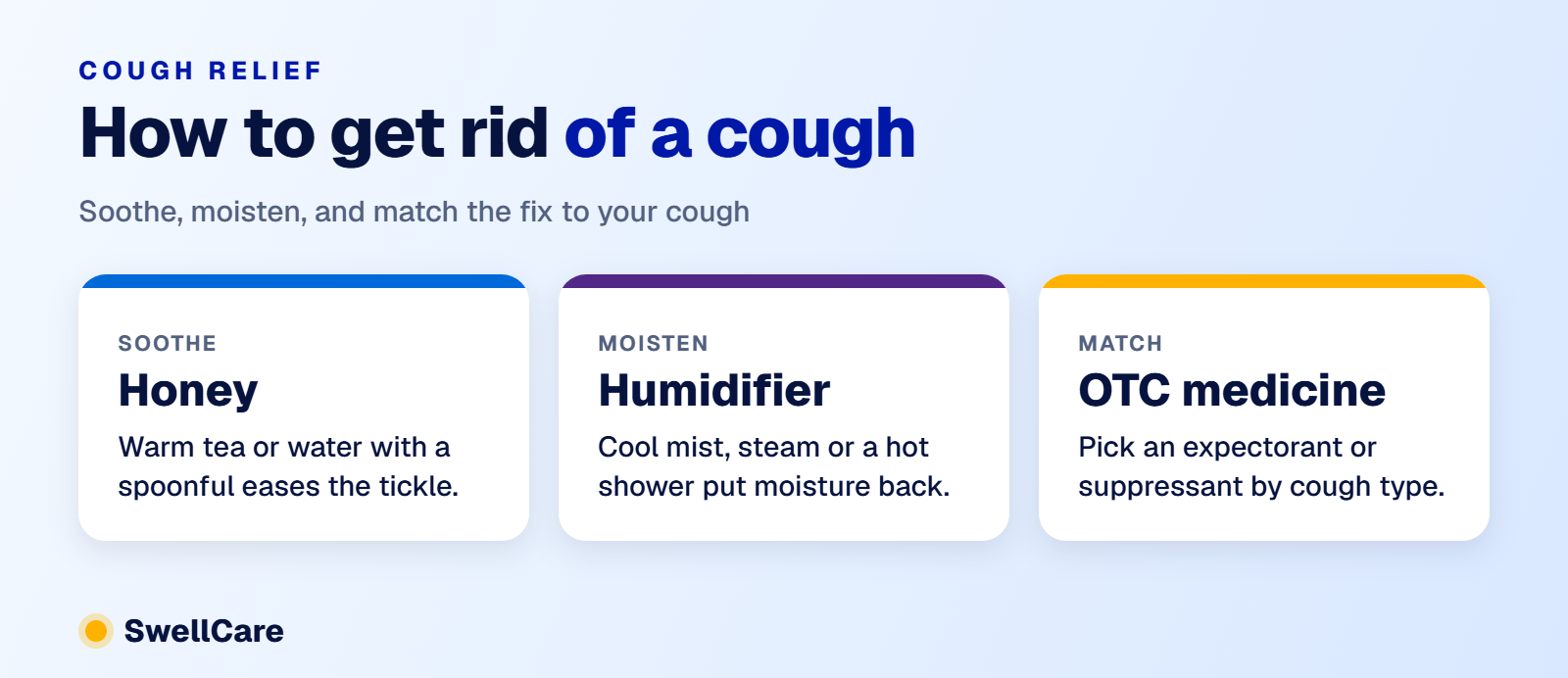
The CDC says it spreads through droplets from coughing and sneezing, mostly among people who spend a lot of time together. School-age children are hit most often, and outbreaks show up in dorms, schools and long-term care. There’s no vaccine, and you can get it more than once. A cough that lingers is worth a look, and our guide to getting rid of a cough covers home care and the warning signs.
Who catches pneumonia most easily?
Your odds go up when your defenses are run down. Adults 50 and older and children under 5 carry a higher risk of pneumococcal disease, per the CDC. Chronic lung, heart, kidney or liver disease, diabetes and smoking add to it. Cancer treatment and other conditions that weaken your immune system matter too.
If someone in your home fits that list, protect them first.
How to protect your household while someone has pneumonia
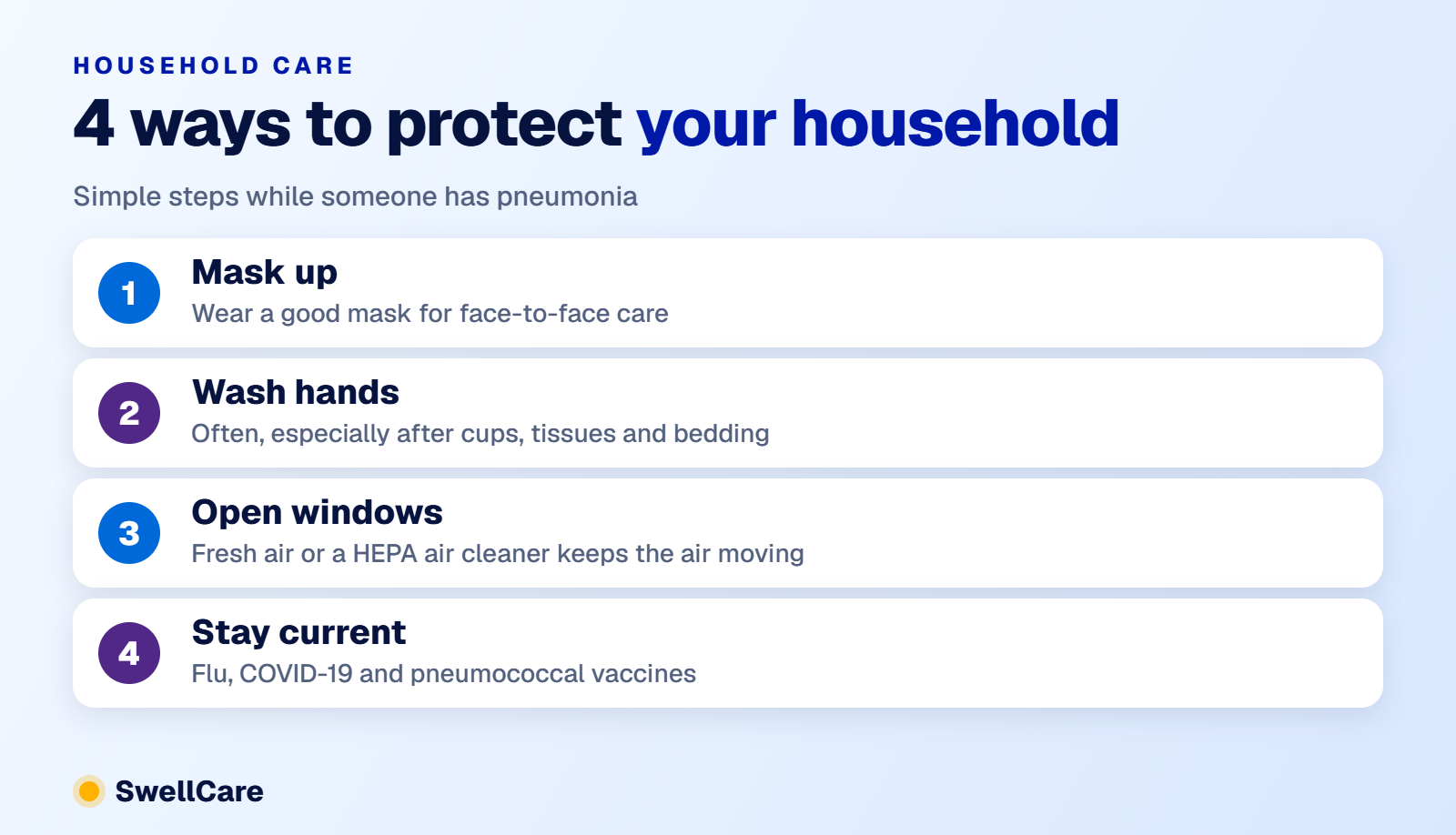
Wear a good mask for face-to-face care. Wash your hands often, especially after handling cups, tissues or bedding. Open a window or run a HEPA air cleaner so the air keeps moving.
Vaccines help as well. Staying current on your flu and COVID-19 vaccines lowers the odds that either one turns into pneumonia, and the CDC now recommends pneumococcal vaccines for adults 50 and older. Ask your clinician which vaccines fit you.
And if you’re the one who’s sick? Take every antibiotic dose, even once you feel better. Rest. Drink water. Keep your distance from anyone fragile until you’ve had a normal temperature for a full day.
When to see a doctor about pneumonia
Don’t wait it out if symptoms get worse. Pneumonia symptoms often start like a cold or flu, then turn. Get care right away for shortness of breath, even at rest, trouble speaking, chest pain, confusion, bluish lips or a fever that won’t break. Older adults, young children and anyone with a weakened immune system should be seen sooner rather than later, because pneumonia can turn serious fast. Call 911 or go to the ER for severe breathing trouble.
Your healthcare provider may listen to your lungs and order a chest X-ray, and some cases need hospital treatment with oxygen or IV antibiotics.
Get checked from home with SwellCare
Chest tightness and chills that showed up overnight? You don’t have to guess.
SwellCare’s online urgent care lets you talk with a clinician today, from your couch. They can review your symptoms, tell you whether this sounds like pneumonia or something milder, and say plainly if you need an in-person exam or X-ray. Start a visit at swellcare.health and get a clear next step. Prescriptions are never guaranteed, and SwellCare is not for emergencies.
Questions people ask about pneumonia
Can you catch pneumonia from someone who has it?
You can catch the germ that causes it, especially bacteria or viruses spread by coughing and close contact. Whether you actually develop pneumonia depends on your overall health. Fungal pneumonia doesn’t spread between people.
Is it safe to be around someone with pneumonia?
Usually yes, with care. Wear a mask for close contact, wash your hands and keep the room ventilated. Take extra care if you’re older, pregnant or immunocompromised, and keep infants away until the person has recovered.
Can pneumonia go away on its own?
Mild cases, including some viral pneumonia, can improve with rest and fluids. But you shouldn’t assume that. Bacterial pneumonia needs antibiotics, and only a clinician can tell which type you have. See someone if your symptoms aren’t clearly improving, or if you notice any shortness of breath.
Can you get pneumonia from the flu?
Yes. The flu virus can inflame your lungs directly or leave the door open for a bacterial infection afterward. That’s one more reason a yearly flu shot is worth it, and why a flu that gets worse after seeming better deserves a call to your provider.
How long does it take to recover from pneumonia?
Some people feel better in one to two weeks, while others take a month or longer. Fatigue often lingers for about a month. Follow up with your provider if symptoms haven’t improved.
Trusted references
Public-health, research, and medical-society resources related to this guide.