Your bowel movements have stalled for days. Now there’s lower back pain that won’t quit. Are the two connected?
Often, yes. Can constipation cause back pain? It can. A colon packed with stool presses on nearby structures, and the strain of pushing can add to the lower back pain. But it isn’t the whole story. Sometimes the back pain and the constipation are both symptoms of something else, and a few combinations need care fast. Here’s how to sort out which one you’re dealing with.
So, can constipation cause back pain?
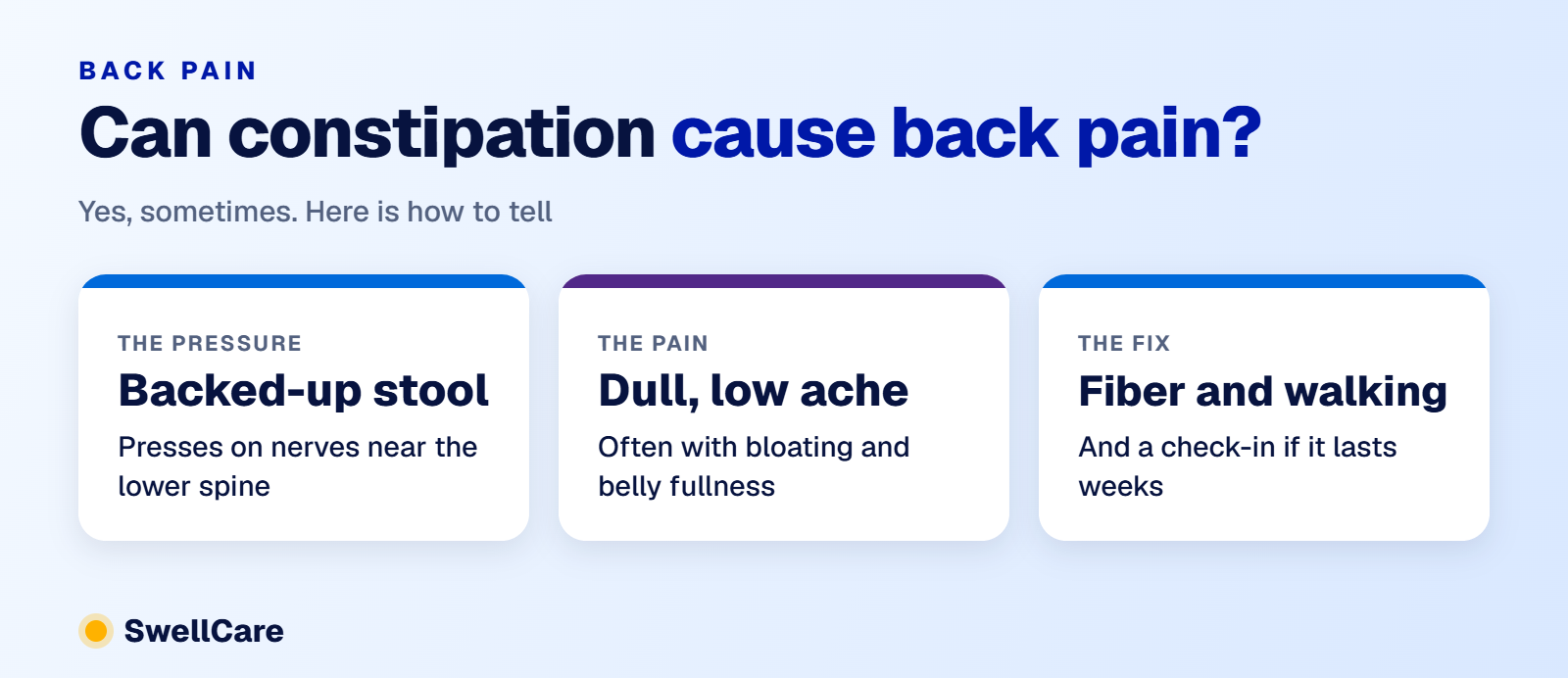
Yes, though constipation is rarely the first suspect a clinician reaches for. Constipation is common. About 16 in 100 US adults have symptoms, and the rate climbs to roughly 33 in 100 for people 60 and older, according to the NIDDK. Most never develop back pain symptoms from it.
When they do, the back pain tends to sit low and feel like a dull ache or pressure instead of a sharp, catching pain. It often shows up with belly fullness, bloating and the feeling that you’re not done going.
Why constipation can cause lower back pain
Three things are usually at work. They can overlap.
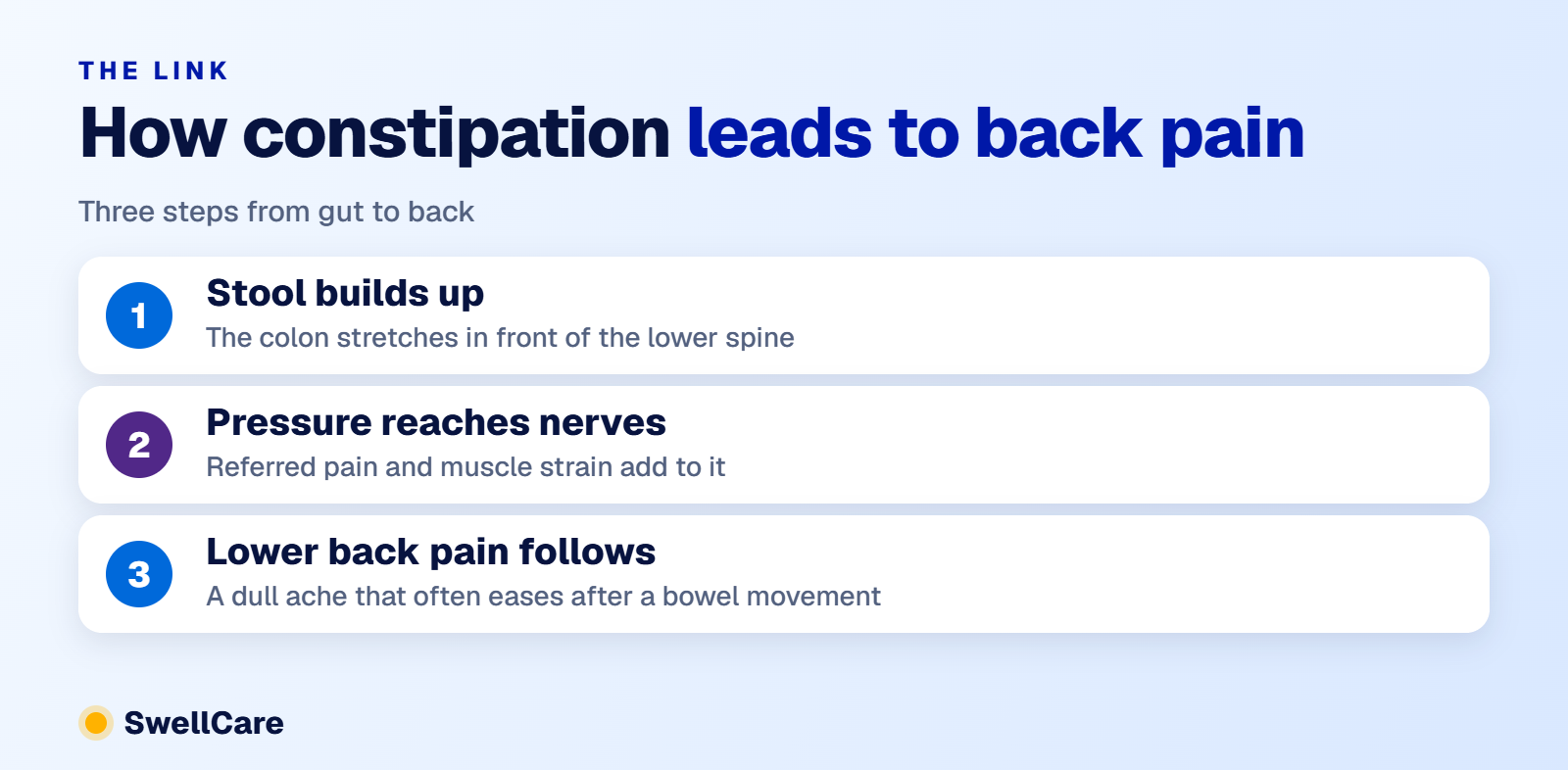
Pressure from backed-up stool
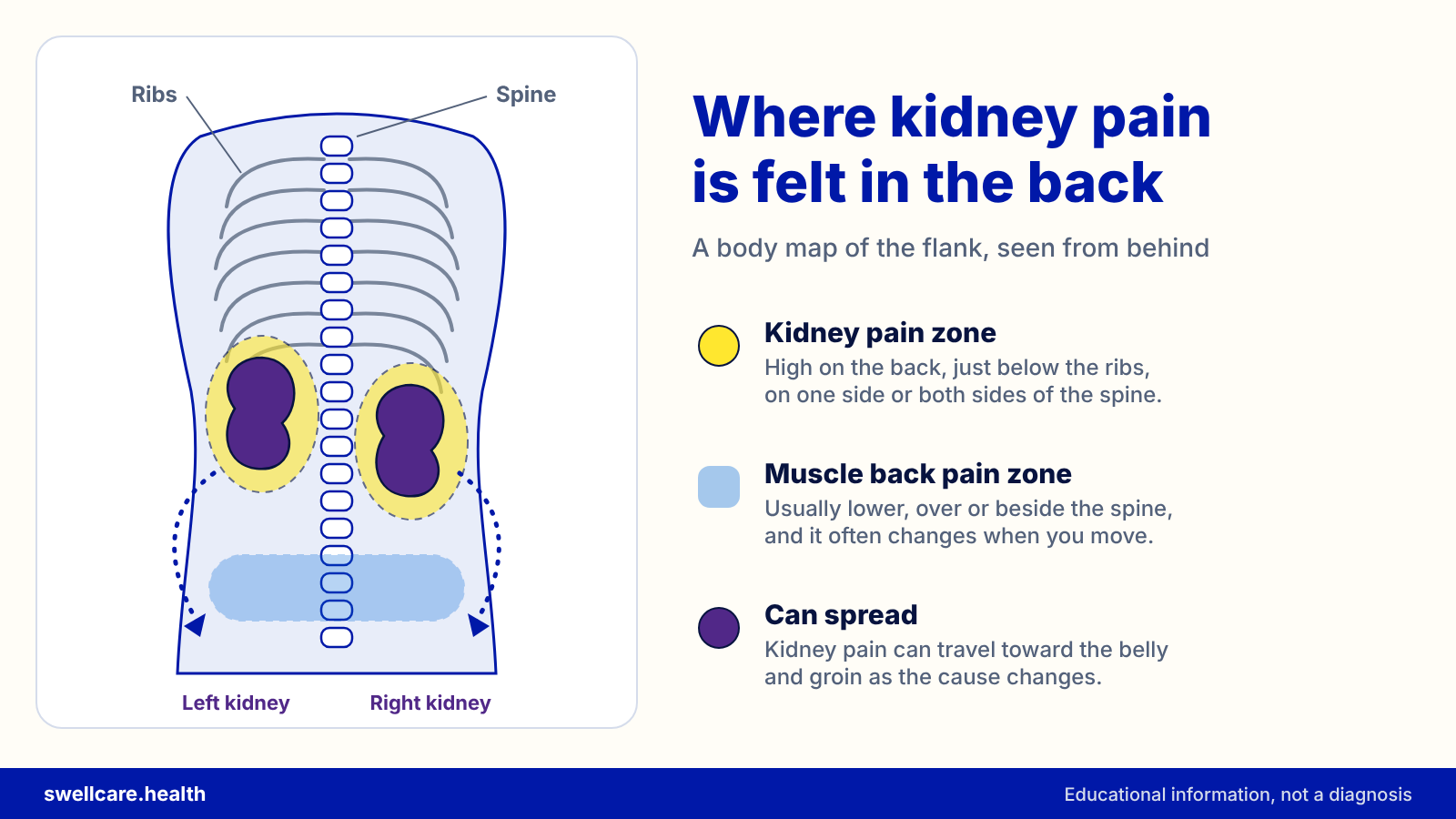
Your colon sits right in front of your lower spine. When stool piles up, it stretches, and that bulk can press on nearby nerves. Cleveland Clinic describes it as nerve pressure in the lower spine, which produces dull, achy lower back pain. Gas adds to the squeeze.
There’s a second layer. The spinal nerves that serve your lower back run close to the nerves that supply the colon, so your brain doesn’t always pinpoint where a signal started. That’s called referred pain. The trouble is in the intestines, but the ache shows up in the back.
Fecal impaction
Sometimes stool doesn’t just back up. It hardens into a dry mass lodged in the rectum, which is called fecal impaction. MedlinePlus lists lower back pain as a less common symptom of it. More typical signs are cramping, a swollen belly, small semi-formed stools, straining, and leaking liquid stool around the blockage. You can have diarrhea-like leakage and still be badly constipated.
Fecal impaction tends to follow long-standing constipation. It’s more likely if you move very little, take medications that slow the gut, or live with a nervous system condition. Of all the forms of constipation, fecal impaction is the one most likely to hurt your back, and it’s the one that shouldn’t be waited out. If you suspect fecal impaction, don’t keep pushing at home. A clinician may need to clear it with an enema or manual removal.
Straining and muscle tension
Hard pushing tightens the abdominal wall, pelvic floor and lower back muscles. Do it for days and those muscles can feel like you’ve overdone a workout. That soreness is real, even though the root cause is your bowel.
What constipation back pain feels like
The pattern matters more than any single symptom. Here’s how constipation-related pain usually compares with a typical muscle strain.
| Constipation-related back pain | Muscle or disc strain | |
|---|---|---|
| Feel | Dull ache, pressure, fullness | Sharp, catching, or stiff |
| Location | Lower back pain, often with belly pressure | Back only, sometimes one side |
| Movement | Little change when you bend or twist | Worse with bending, lifting, twisting |
| Bowel link | Eases after bowel movements | No change after going |
| Other symptoms | Bloating, hard stool, fewer than three bowel movements a week | Tenderness over a muscle, pain on one movement |
Use it as a guide, not a diagnosis. The first sign of constipation itself is simple: fewer than three bowel movements a week, hard or lumpy stool, or the sense that you can’t fully empty. Keep a rough tally for a week. Bowel movements that are less frequent than your usual, even if you’re still going now and then, count as a clue. Other symptoms to watch for include nausea, loss of appetite and a hard, tender belly.
When something else is causing both
If you’ve had back pain and constipation for weeks, don’t assume one is causing the other. A third problem may be behind both.
Irritable bowel syndrome
IBS makes gut nerves oversensitive. It can swing between constipation and diarrhea, and the discomfort can be felt as referred pain in the back. Cleveland Clinic notes IBS often travels with other pain conditions, which helps explain why the back gets pulled in. If your constipation comes and goes in cycles, and flares with stress or certain foods, IBS belongs on your list of questions for a clinician. Managing IBS usually means looking at triggers, fiber type and stress, not just taking a laxative.
Nerve and spine conditions
Parkinson’s disease and multiple sclerosis can slow digestion and affect the nerves around the spine at the same time. A herniated disc or other spinal problem can irritate the nerve roots that also influence bowel function. Tumors in or near the spine, or large growths in the lower abdomen, can press on the same structures. These are less common, but they are the reason lingering symptoms deserve a proper look. People with Parkinson’s disease, in particular, often deal with constipation for years.
Pain medicines and inactivity
This one runs the other direction. Many pain and muscle-relaxant medications slow the bowel, and opioids such as codeine and oxycodone are well-known examples. Parkinson’s medication can do it too.
Medication is the cause people miss most often, so look at your list, including anything new in the past month. Add lower back pain that keeps you in bed or on the couch, and low physical activity slows things further. Now back pain is causing constipation, which is making the back pain feel worse. Don’t stop a prescribed medication on your own. Ask your prescriber whether a different dose or another medication would spare your bowel.
How to tell if your back pain is from constipation
Ask yourself a few plain questions.
- Does the back pain ease after your bowel movements finally resume?
- Has your stool been hard, small or infrequent for several days?
- Is the back pain duller and deeper than a typical pulled muscle?
- Did it start after a new medicine, a long stretch of sitting, or travel?
- Is there bloating or belly pressure that comes with it?
If most answers are yes, constipation is a reasonable suspect. If the pain gets worse when you bend, lift or twist, a muscle or disc problem is more likely. If you can’t tell, that’s useful information too, and it’s a good reason to check in with a clinician instead of guessing.
How to relieve lower back pain from constipation
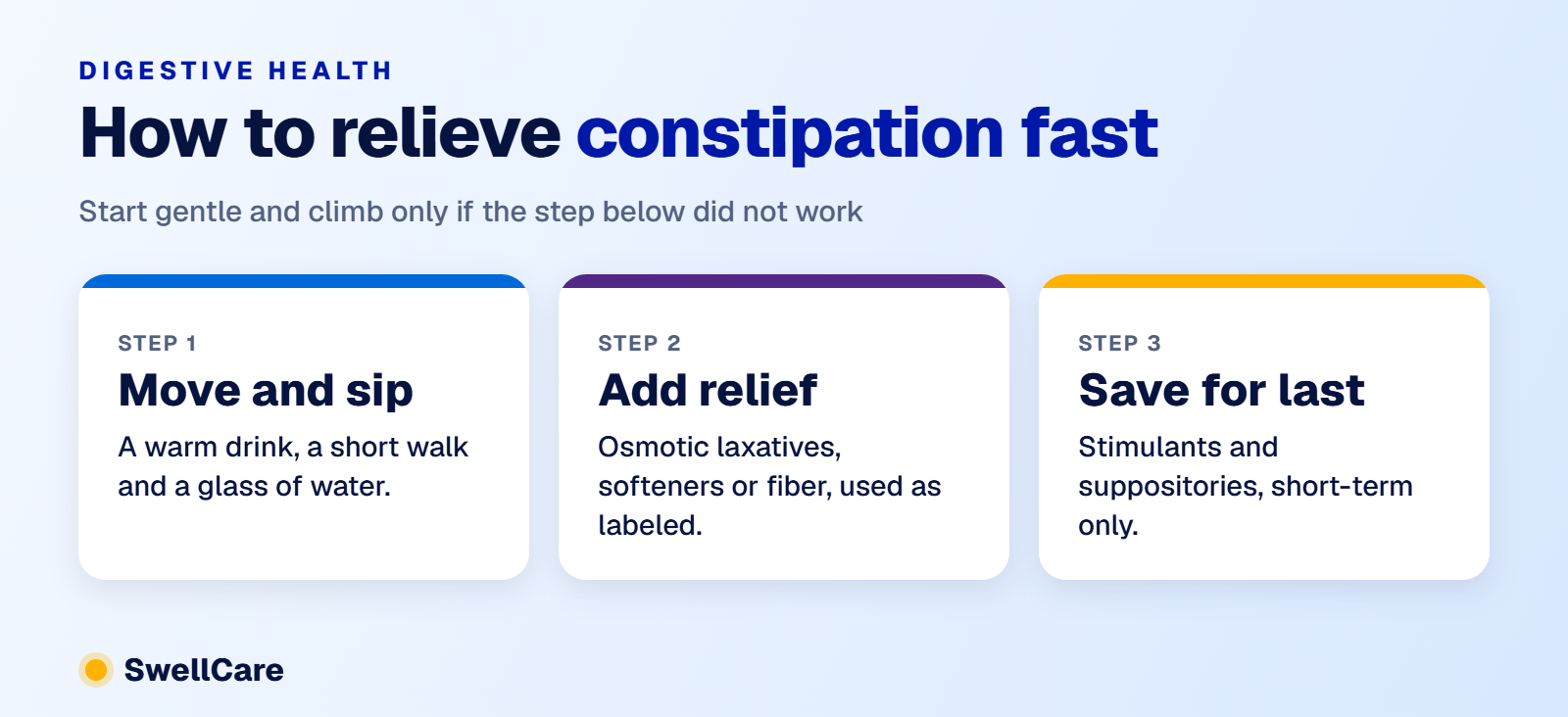
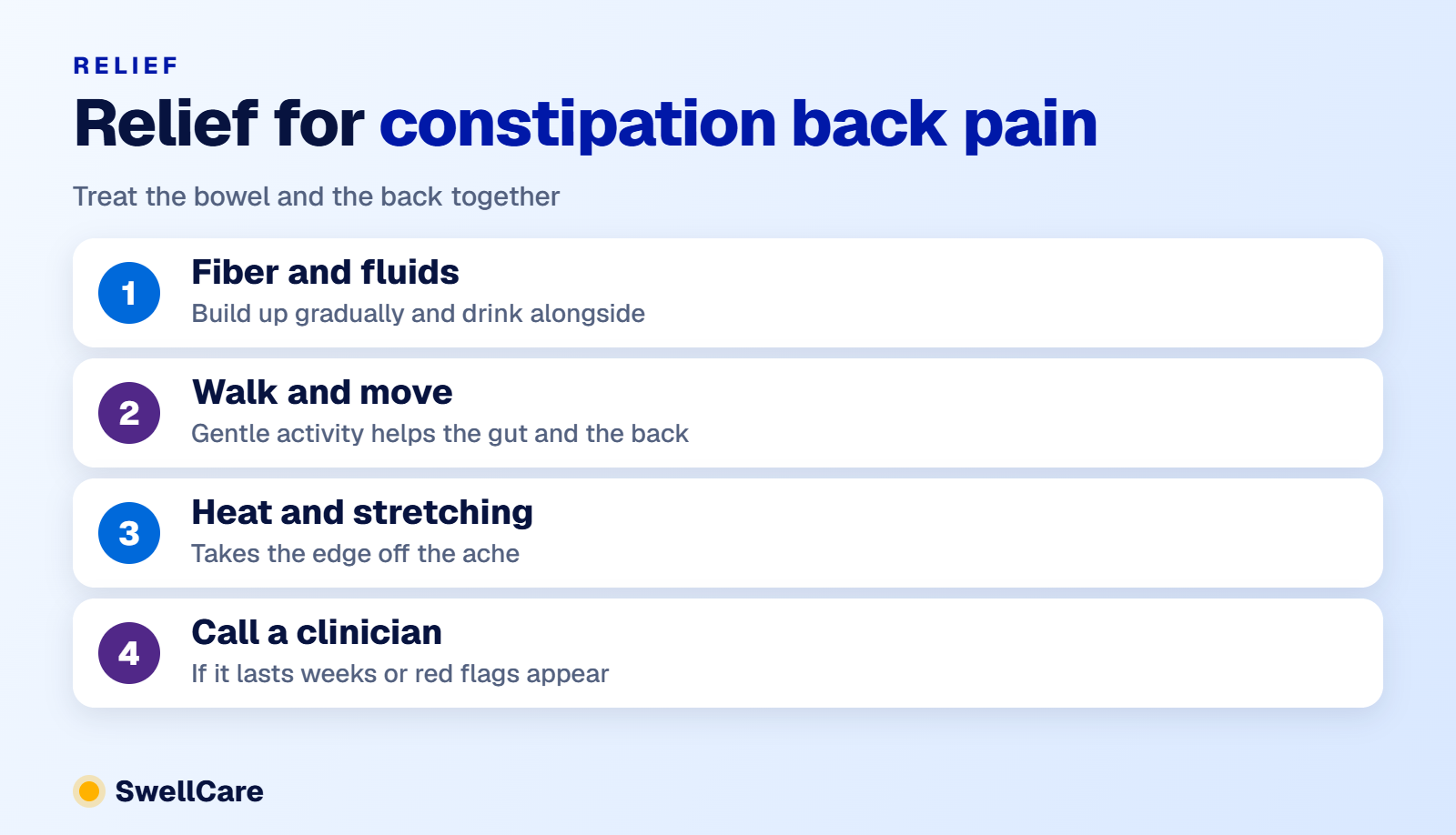
Treat both the constipation and the back pain. Get the bowels moving, and take the edge off the pain in the meantime. Our guide on how to relieve constipation has more ideas.
Get the bowels moving
Start with the basics, because they work for a lot of people. Fiber and fluids come first.
- Fiber. Oats, beans, berries, pears and whole grains are easy sources. Build up gradually toward the amount your clinician recommends, and drink fluids alongside it. Fiber adds bulk that keeps stool soft, but too much fiber too fast can make bloating worse.
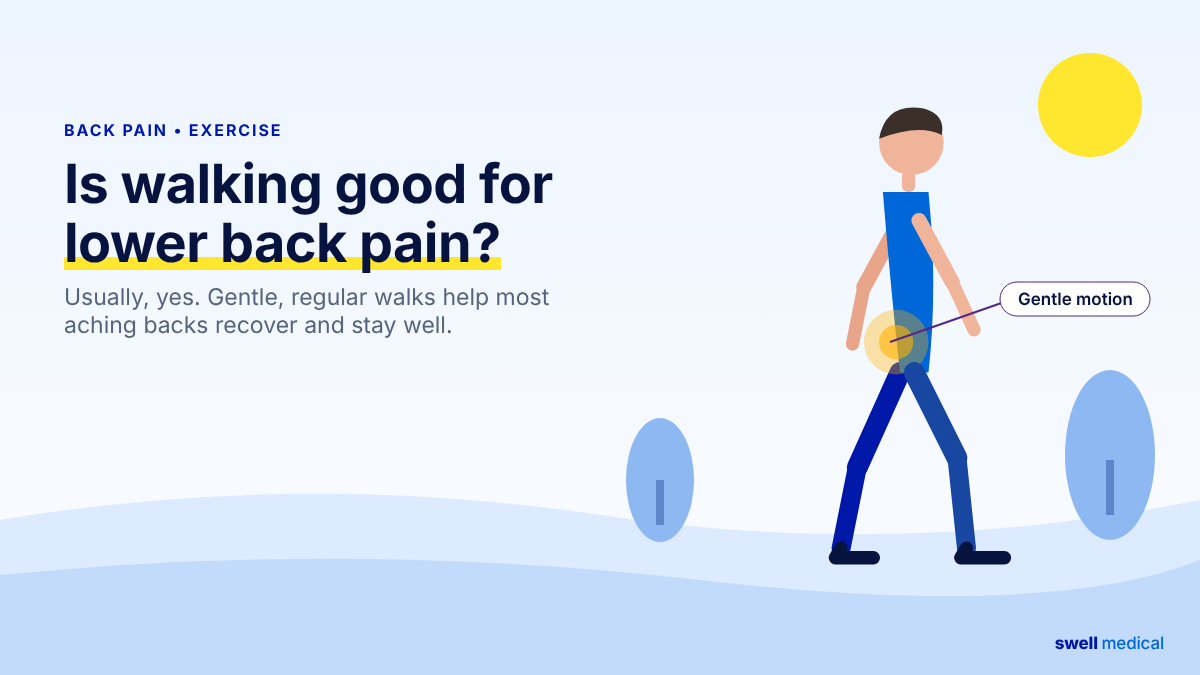
- Exercise. A brisk walk is enough. Gentle exercise such as walking, swimming or easy yoga helps the colon do its job and loosens a stiff back at the same time. Regular physical activity is one of the best long-term protections.
- Go when you feel the urge. Holding it makes stool harder, and regular bowel movements depend on not putting it off. Don’t try to push through suspected fecal impaction with extra fiber, because that can make it worse.
- Give it a little time. Sit, relax, and don’t strain for long stretches.
If lifestyle changes aren’t enough, over-the-counter options include stool softeners, osmotic laxatives such as polyethylene glycol, and stimulant products. Stool softeners are gentle but may not do much for stubborn stool, so many people need a laxative to follow. A 2023 ACG and AGA guideline for chronic idiopathic constipation strongly recommends polyethylene glycol and conditionally recommends fiber, magnesium oxide and senna. Those recommendations are written for ongoing constipation in adults, so check with a clinician before starting anything if you take other medications or have kidney disease.
Don’t use laxatives if you suddenly can’t pass gas or stool and you have cramping. That pattern can mean a blockage. MedlinePlus says to call a provider right away.
Ease the back pain in the meantime
Heat or ice, gentle stretching, a short walk and slow breathing can all take the edge off. Cleveland Clinic suggests topical pain relievers over pills where possible, since some over-the-counter pain relievers can aggravate the gut. Ask before you reach for them, especially if you suspect fecal impaction. Stay moving, and avoid long stretches of bed rest. Wondering about exercise for a sore back? See is walking good for lower back pain.
If lower back pain has been a long-term problem, physical therapy can help. A therapist can build an exercise plan for your spinal and core muscles, teach you positions that take pressure off the lower back, and sometimes address pelvic floor tension that makes passing stool harder. Physical therapy helps both the pain and your bowel habits.
When to see a doctor
Most constipation symptoms and the back pain that goes with them settle within days of the right steps. So can constipation cause back pain serious enough to worry about? Rarely on its own, but the combination can hide something else. These red flags need medical attention:
- Back pain and constipation that last more than a few weeks
- Blood in your stool or rectal bleeding
- Unexplained weight loss
- Fever with belly or back pain
- Severe belly pain, or vomiting with no gas or stool
- Very thin, pencil-like stools
Go to emergency care right away if you notice numbness in your groin, inner thighs or buttocks, new leg weakness, or loss of control of your bladder or bowels. Those can signal cauda equina syndrome, a rare emergency in which nerves at the base of the spine are compressed. The damage can become permanent if pressure isn’t relieved quickly.
Talk to a clinician from home
Still wondering whether constipation could cause back pain like yours, or whether it’s your back, or something that needs a closer look? SwellCare online urgent care offers clinician-led, non-emergency care by video or chat, so you can describe your symptoms and get a clear next step. If your symptoms point to something urgent, you’ll be told to go to the ER instead. Prescriptions are never guaranteed, and SwellCare is not for emergencies.
Questions people ask about constipation and back pain
What does constipation back pain feel like?
Most people describe constipation back pain as a dull, achy pressure low down, often with a full or bloated belly. It’s usually steady rather than sharp, and it often eases after a bowel movement. Sharp back pain that spikes when you move points more toward a muscle or disc problem.
Where is constipation pain located?
Mostly in the lower abdomen, where cramping and fullness are felt. The lower back pain tends to sit low, around the base of the spine and pelvis. Some people feel it spread toward the hips. Pain between the shoulder blades is much less likely to come from your bowels.
Can constipation cause sciatica or leg pain?
It can press on nerves in the lower spine, so some people notice an ache or heaviness that travels toward the buttocks or legs. True sciatica is more often a disc or spine issue. New leg weakness or numbness is a reason to get checked quickly.
How long does constipation back pain last?
Usually until your bowel movements resume, which may be hours to a few days once you start treating it. If back pain and constipation last more than a few weeks, call a provider. Ongoing symptoms suggest something else may be going on.
Can back pain cause constipation?
Yes. Back pain can keep you from moving, and low activity slows digestion. The medications used for back pain, especially opioids and muscle relaxants, are also common triggers. Treating the pain without constipating yourself is part of the plan.
Trusted references
Public-health, research, and medical-society resources related to this guide.