You finished the antibiotics. The fever broke, swallowing stopped hurting, and life went back to normal. Then three weeks later your throat feels like it’s lined with gravel again.
So, can you get strep throat twice? Yes. You can get it twice, three times, or more in a single year. Having strep doesn’t give you lasting protection, and that’s the part that catches most people off guard.
This guide covers why recurring strep throat happens, how to tell a true repeat infection from a sore throat that only looks like one, and what to do next. Getting strep twice is common, and it’s usually fixable. If you’re hurting right now, jump to the section on when to see a doctor.
Yes, you can get strep throat twice (or more)
Strep throat is a bacterial infection caused by group A streptococcus, and the bacteria spread easily from person to person. Your immune system does build a defense after an infection, but it’s tuned to the specific strain you met. There are more than 200 types of group A strep, sorted by a surface protein called the M protein.
In a five-year study of Pittsburgh schoolchildren, a past encounter with a strain was linked to roughly 82% protection against sore throat symptoms from that same strain. A different type is a fresh start for the bacteria. That’s why a classmate, a coworker or your own kid can hand you strep again a few months later.
It also isn’t rare. The CDC says that about 1 in 10 adults and 3 in 10 children with a sore throat have strep. It’s most common between ages 5 and 15, and parents of school-age kids and people who work with children get it more often than the rest of us.
Why strep throat keeps coming back
A repeat sore throat doesn’t always mean a repeat infection. Clinicians usually sort recurring strep throat into four buckets, and the right fix depends on which one you’re in.
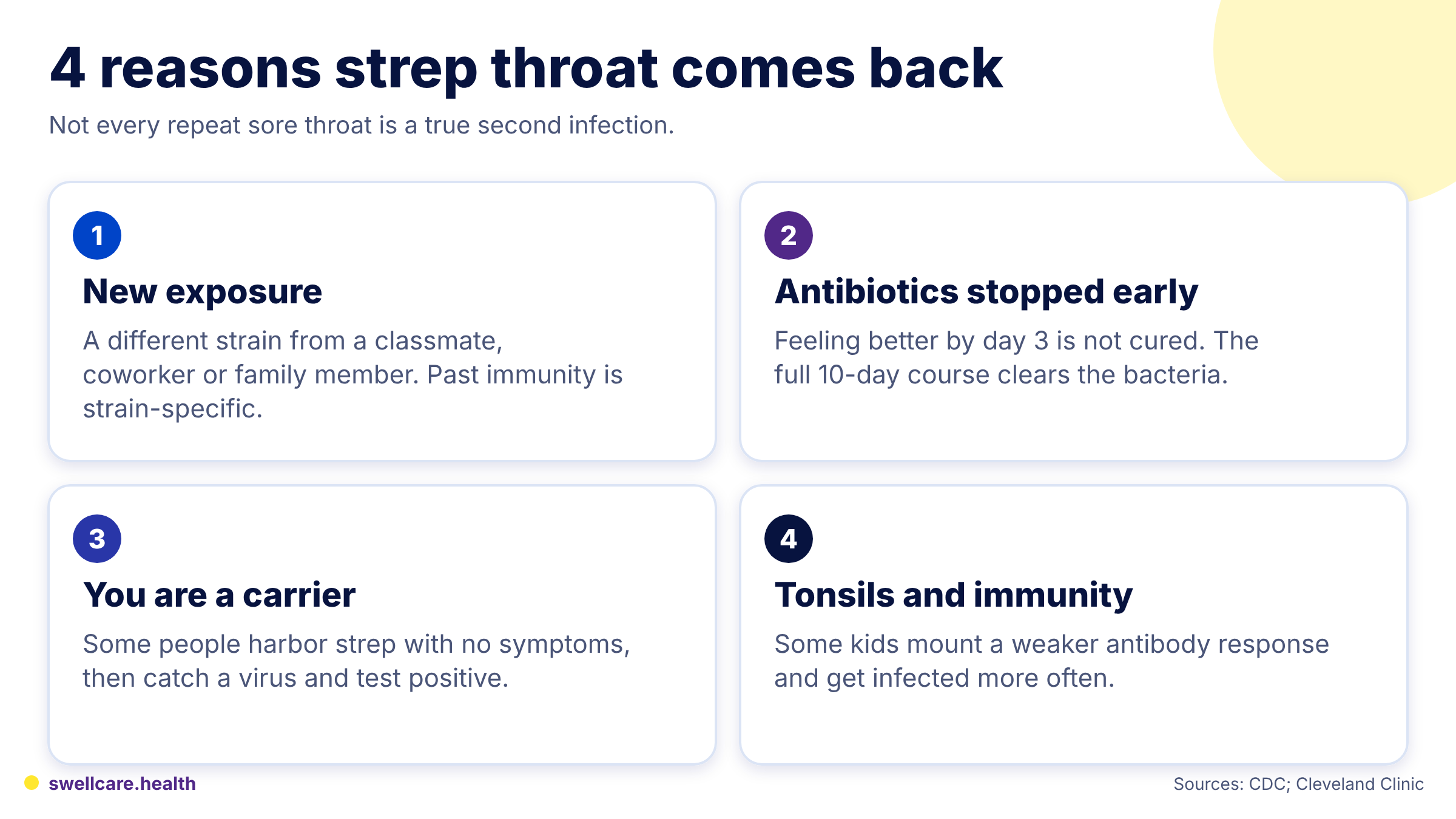
You were exposed again
This is the most common story. Strep spreads through close contact and respiratory droplets, and it moves through households, daycares and classrooms fast. If one person in the house gets treated and the sibling doesn’t, the bacteria can circle back to the first person. That’s reinfection, and it’s the likeliest explanation when strep returns within weeks.
The antibiotics stopped too soon
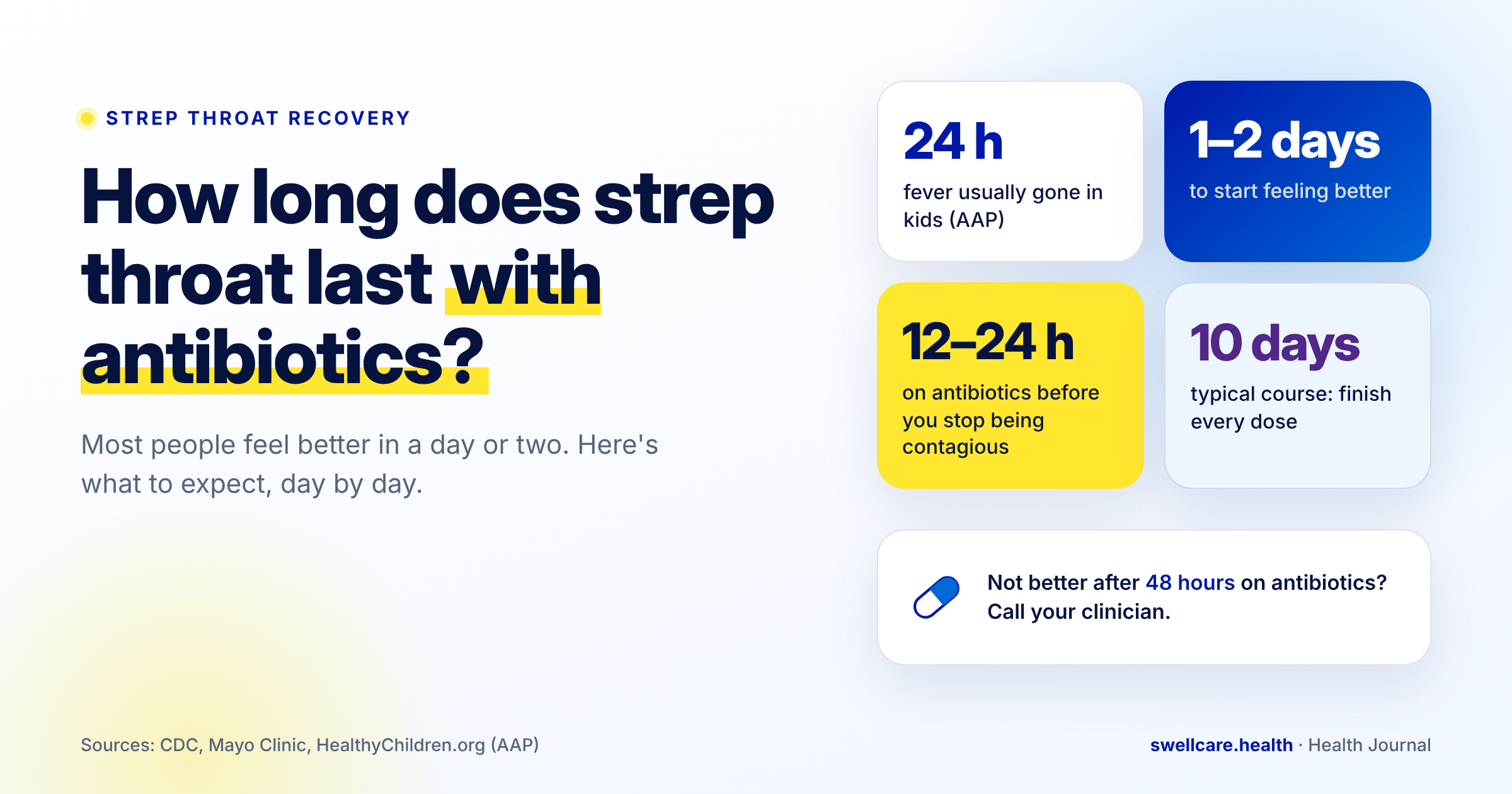
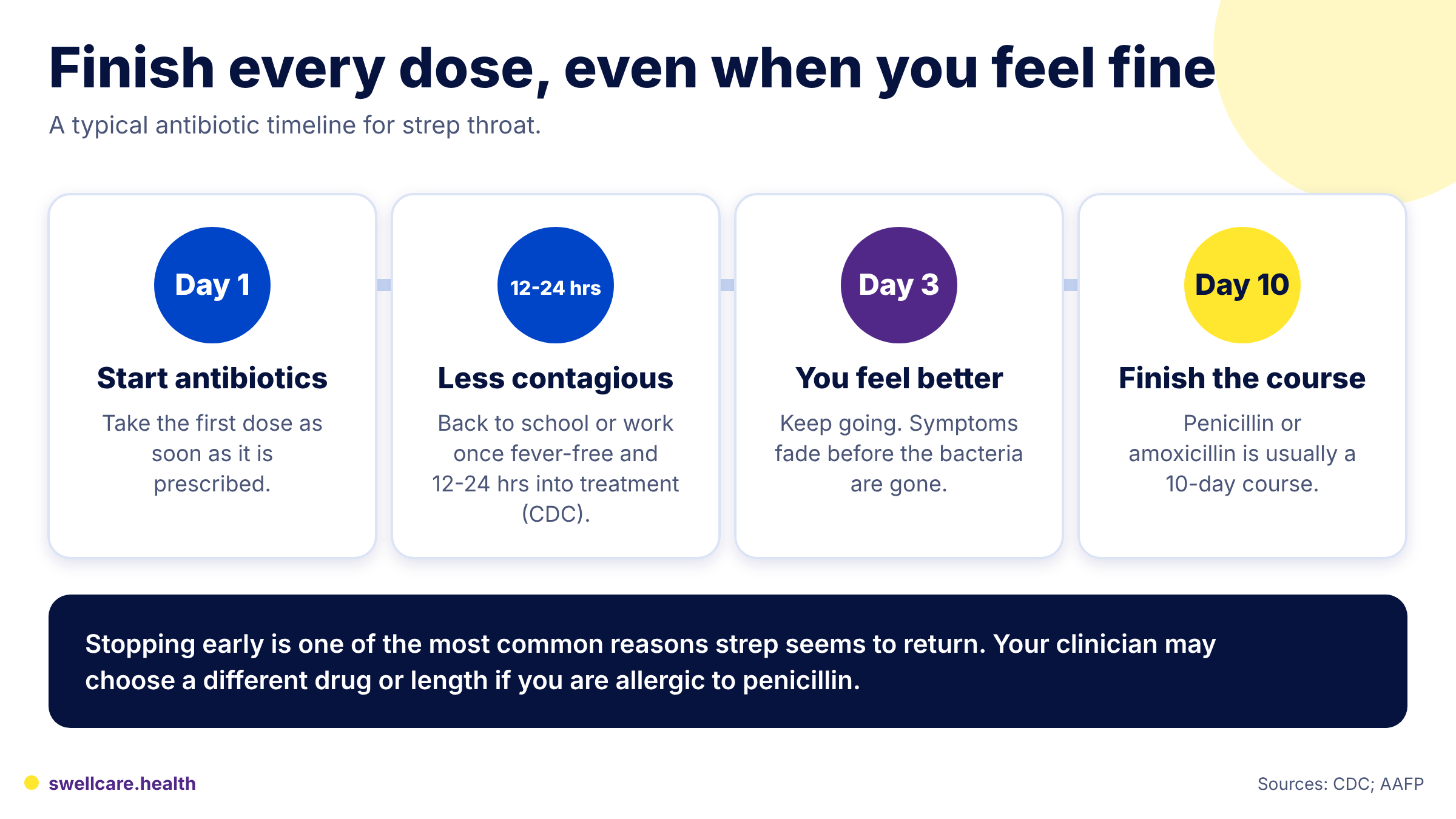
Most people feel much better on antibiotics by day two or three. The bacteria aren’t gone yet. Not close. Penicillin is the usual first choice, with amoxicillin close behind, and the standard course is 10 days. Stop your antibiotics at day four and the infection can flare back up. Skipped doses count too.
Sometimes the drug itself is the problem. If amoxicillin or penicillin doesn’t clear the infection, your clinician may switch to another antibiotic, such as clindamycin or a cephalosporin.
You may be a strep carrier
Some people carry group A strep in their throat and never get sick from it. Then they catch an ordinary cold, their throat hurts, a swab picks up the strep, and everyone assumes it’s a second bacterial infection. It isn’t. It’s a viral illness in someone who happens to be a strep carrier, and the bacteria were just along for the ride.
Researchers estimate that roughly 20 percent of school-age children are carriers, according to Science News. The guidelines generally don’t recommend antibiotics for carriers, so a positive test every time you feel sick is a good reason to ask your clinician about carriage.
Your tonsils and immune system
Some children seem to get strep over and over. A 2019 study in Science Translational Medicine found that kids with recurrent strep had smaller germinal centers in their tonsils, the structures that help build the body’s defenses. That points to a weaker immune response in some children, with fewer antibodies against the bacteria. The study had limits, and some of those kids may have been carriers, so treat it as a clue rather than an answer.
Strep throat or just a sore throat?
Viruses cause most sore throats, so a second one is more likely to be a viral illness than strep. The CDC lists a few features that tilt toward one or the other.
| Clue | Points to strep throat | Points to a virus |
|---|---|---|
| Onset | Sore throat that hits fast | Gradual, with other cold signs |
| Temperature | Often high, with chills | Mild or absent |
| Cough and runny nose | Usually absent | Often present |
| Throat and tonsils | Red, swollen, white patches or pus | Red but without pus |
| Neck | Tender, swollen lymph nodes at the front | Less pronounced |
| Other signs | Headache, stomach pain, a sandpaper-like rash | Hoarseness, pink eye |
You can’t sort this out in the mirror. Don’t try. A rapid strep test or a throat culture, which is usually a quick swab at a clinic, is how a clinician confirms strep and rules out a look-alike virus. In children, a negative rapid test is usually followed by a backup culture. Adults generally don’t need one. Repeating antibiotics without a positive test is how people end up taking drugs for a bacterial infection they don’t have.
What happens if strep keeps coming back
Treated strep almost always clears without lasting trouble. The concern is untreated or repeatedly missed infections. Left alone, the bacteria can spread and cause abscesses around the tonsils, ear and sinus infections, or kidney inflammation. Those are the complications of strep. Rheumatic fever, which can damage the heart, is the one clinicians worry about most. Scarlet fever, a strep infection with a rash, is another of those complications and another reason to get a sore throat checked, and scarlet fever with a bad throat deserves a call to a doctor.
Frequent strep wears you down. Missed school. Missed work. A house full of people passing the same germs back and forth.
How to stop strep throat from coming back
Here’s where you take control. Most repeat cases come down to a handful of unglamorous habits.
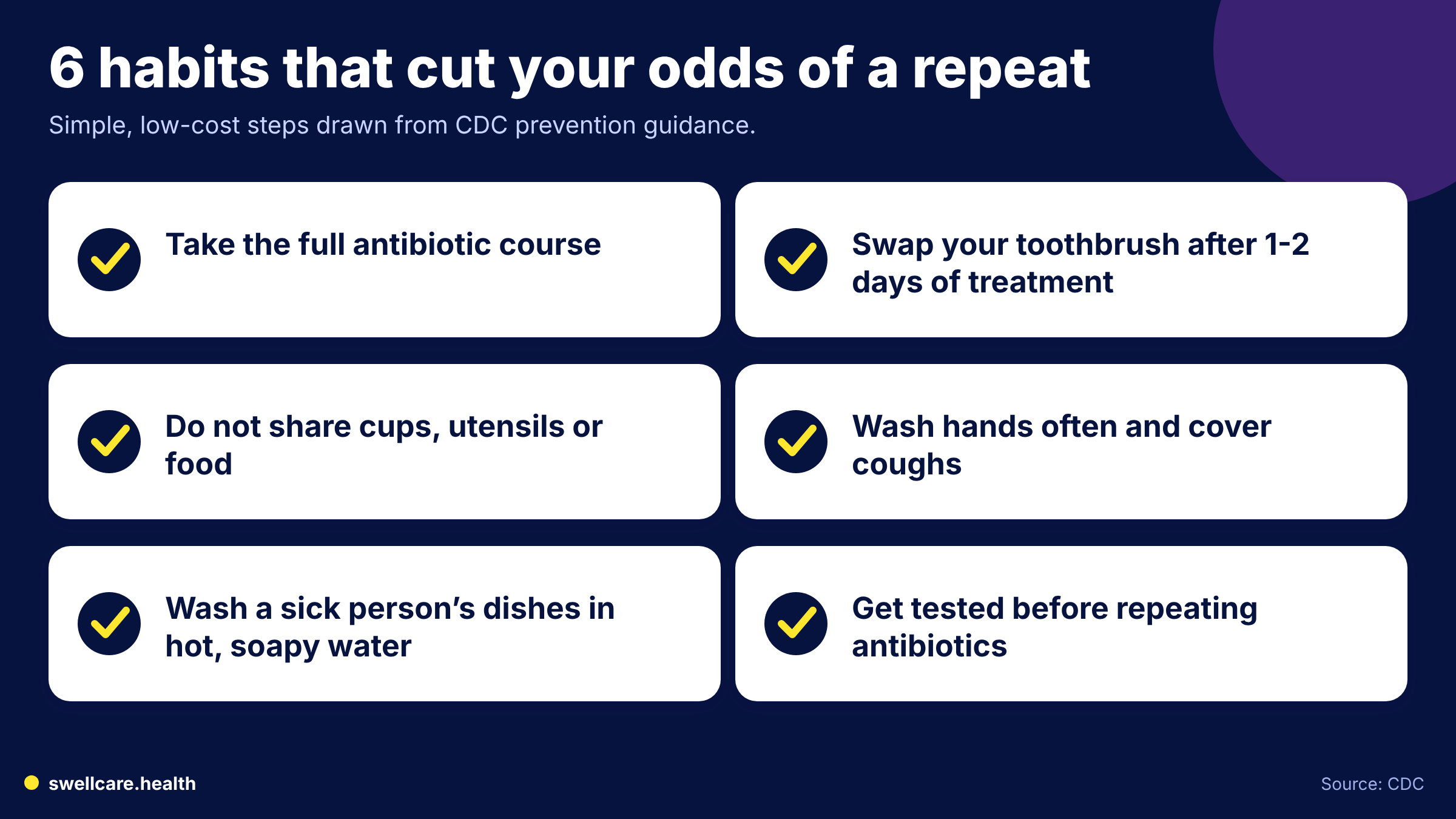
Finish the whole course of antibiotics, even when you feel fine. If amoxicillin upsets your stomach, tell your clinician instead of quietly skipping doses. Replace your toothbrush once you’ve been on treatment for a day or two, because bristles can hold bacteria. The evidence for the toothbrush swap is thin, but a new toothbrush costs a couple of dollars. Don’t share cups, forks or food with someone who’s sick, and wash their dishes in hot, soapy water. If you’re not sure you’re past the infection, ask a healthcare provider before you go back to normal routines.
Wash your hands. Cover coughs. That’s the CDC’s own prevention advice. If one family member has strep and others have symptoms, ask a healthcare provider whether they should be tested too. Your pediatrician or primary care office can also review whether a tonsillectomy is worth discussing.
Surgery is a last resort, and not for every case of recurrent strep. For children, the AAO-HNS guideline, summarized by the American Academy of Family Physicians, says a tonsillectomy can be considered after seven or more documented infections in a year, five a year for two years, or three a year for three years. Each episode needs a record of a temperature above 101°F, swollen neck nodes, tonsil pus or a positive strep test. Below those numbers, watchful waiting is recommended.
When to see a doctor for strep throat
Get checked if you have a sore throat that came on fast with fever, swollen glands or white patches, especially if someone around you has strep. Don’t wait if you’ve had strep before and your symptoms feel familiar. Talk to a doctor before taking leftover antibiotics, which is a bad idea.
Go to an emergency room for trouble breathing, drooling, inability to swallow liquids or a very stiff neck. Those can signal an abscess or another serious problem.
Once you start treatment, the CDC says to stay home until you have no fever and have been on antibiotics for at least 12 to 24 hours.
If it’s 2 a.m. and your throat is on fire, Swell’s urgent care clinicians are available around the clock for urgent care questions like this one, by secure chat or video. We’ll review your symptoms, tell you how likely strep is, and be upfront if you need a swab test in person. The consultation is $45 with no membership. You can also see the everyday conditions we treat.
Questions people ask about getting strep throat twice
Can you get strep throat twice in a month?
Yes. Getting strep twice in a month, or back to back, can come from catching a different strain, from stopping antibiotics early, or from being a carrier who caught a cold. If symptoms return within weeks of treatment, call your clinician and ask about a retest instead of guessing. Recurring strep throat deserves a plan, not another round of leftovers.
Are you immune to strep throat after you’ve had it?
Not for good. Antibodies protect mostly against the strain that infected you, so a different strain can still make you sick. Adults tend to get strep less often than kids, likely because years of exposure build up some protection.
How long are you contagious after starting antibiotics?
At least 12 hours on the right antibiotic lowers the chance you’ll spread strep, per the CDC. Most people can go back to school or work once their temperature is normal and they’re 12 to 24 hours into treatment. Without treatment, you can pass it on for longer.
Can adults get recurrent strep throat?
They can. It’s less common than in kids, but adults with children at home or jobs around kids get it more often. If you keep testing positive, ask whether you might be a carrier instead.
What else gets mistaken for strep throat?
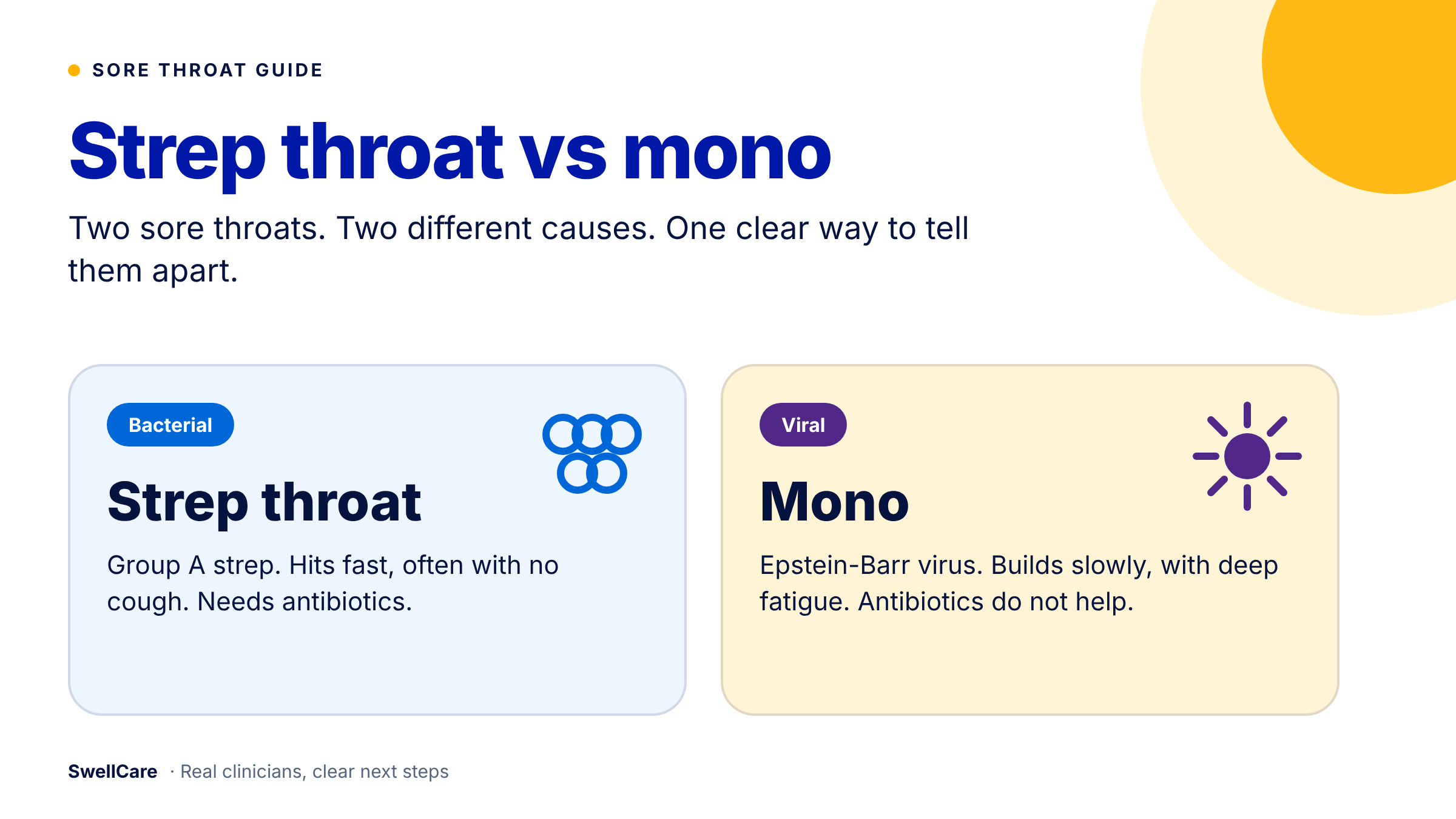
Colds, flu, mono, allergies and COVID-19 can all cause a sore throat. Cough, runny nose and hoarseness point toward a virus. Only a strep test can tell them apart for sure.
Trusted references
Public-health, research, and medical-society resources related to this guide.