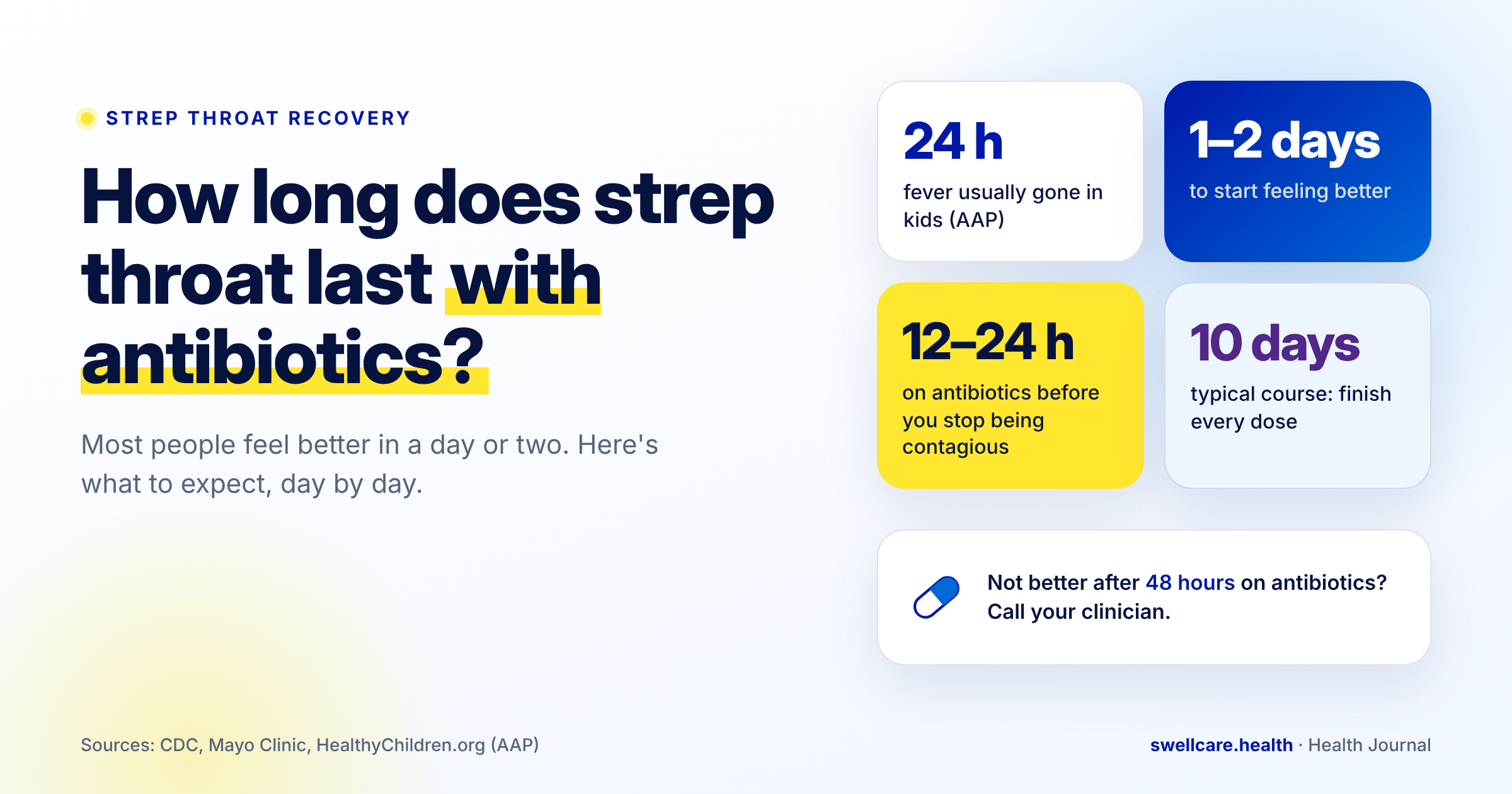
Your test came back positive, you’ve swallowed the first pill, and every gulp still feels like glass. So how long does strep throat last once you’re on treatment? Not long. With antibiotics, most people feel noticeably better within a day or two, the temperature drops first, and you stop being contagious after 12 to 24 hours of medicine. The prescription itself runs 10 days.
How long does strep throat last with antibiotics?
Most people with strep throat start to feel better within a day or two of the first dose, according to Mayo Clinic and Cleveland Clinic. The worst throat pain usually fades by day three. Some scratchiness or tiredness can hang around for a few more days.
The pills keep going long after you feel fine. Penicillin or amoxicillin is normally prescribed for 10 days, per the CDC’s clinical guidance. Feeling better on day two doesn’t mean the bacteria are gone.
Strep throat recovery timeline, day by day
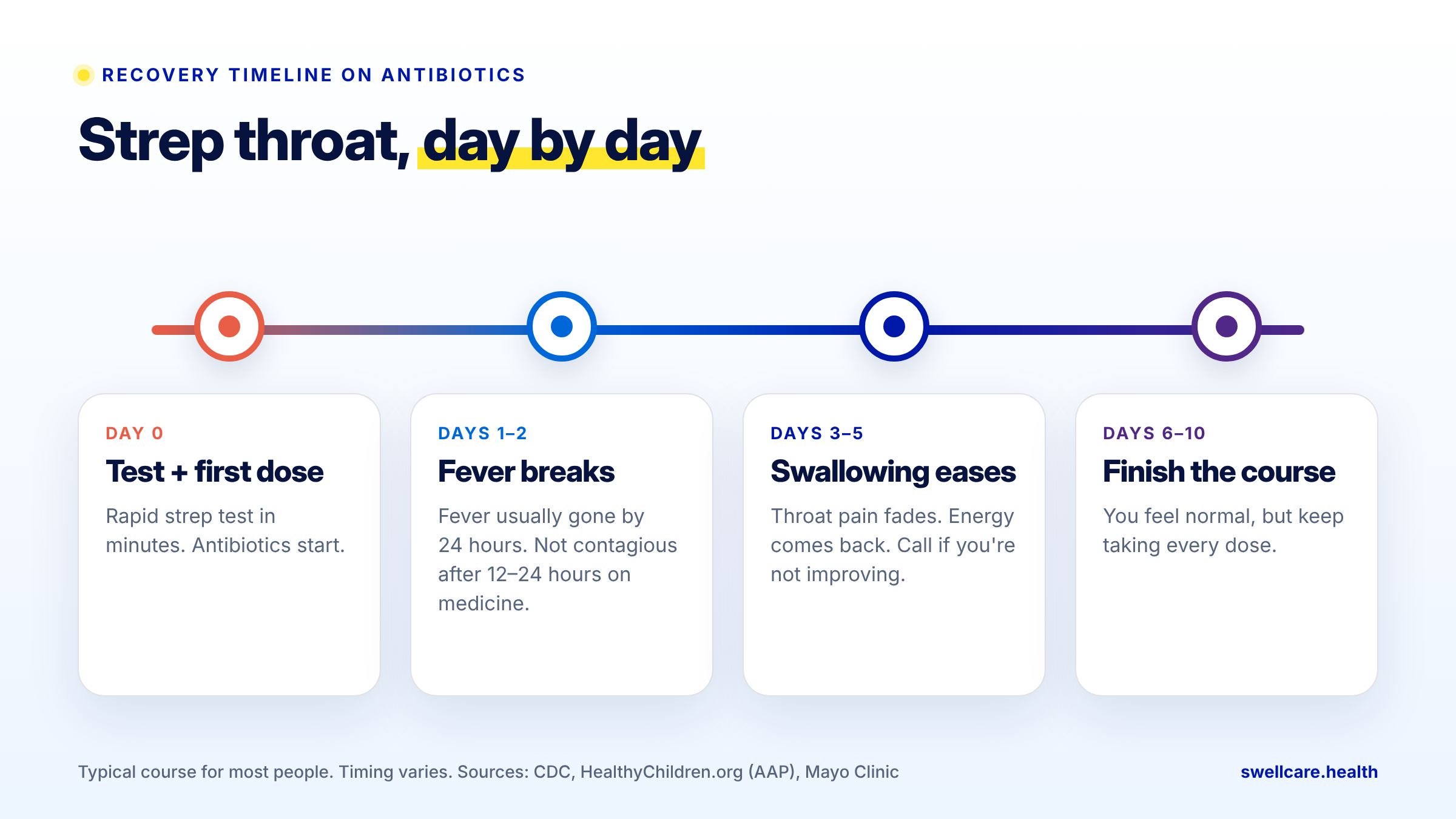
Recovery on medicine follows a fairly predictable arc.
Day 0: the test and the first dose
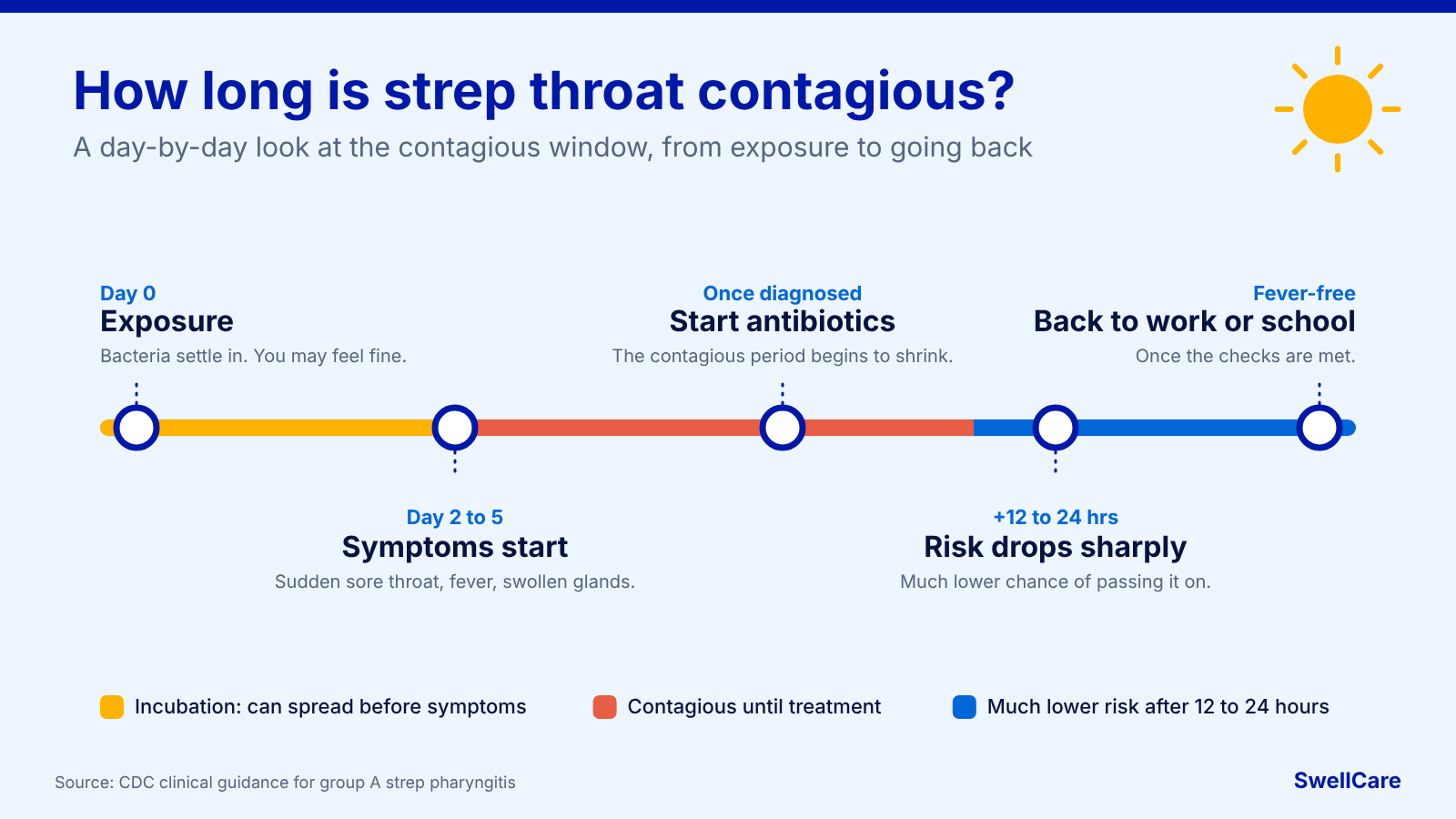
Strep throat is a bacterial infection caused by group A strep bacteria (Streptococcus pyogenes), and the diagnosis can’t be made by looking at your throat alone. A rapid strep test gives an answer in minutes. If it’s negative but your clinician still suspects the infection, a throat culture can take up to two days. Symptoms of strep throat often show up 2 to 5 days after exposure.
Days 1 to 2: the fever breaks
For most children, the fever is gone within 24 hours of the first dose, and the sore throat starts easing by 48 hours, says the American Academy of Pediatrics’ HealthyChildren.org. Adults and older kids tend to follow the same curve. This is also when you stop being able to spread it easily.
Days 3 to 5: swallowing gets easier
The tonsils shrink, eating stops being a project, and energy creeps back. Mild fatigue is common after any infection that knocks you flat. If your symptoms aren’t clearly improving by now, call your clinician.
Days 6 to 10: finish every pill
This is where people quit. Don’t. Stopping early can leave bacteria behind, let strep throat come back and raise the risk of complications. Take the full course, even if you feel completely normal.
How long does strep throat last without antibiotics?
Strep throat often clears on its own in about three to five days, according to the American Academy of Family Physicians. The same source notes antibiotics only help you feel better about a day sooner. So why treat it?
Because how you feel isn’t the whole story. Left alone, the bacteria can keep spreading and cause problems elsewhere.
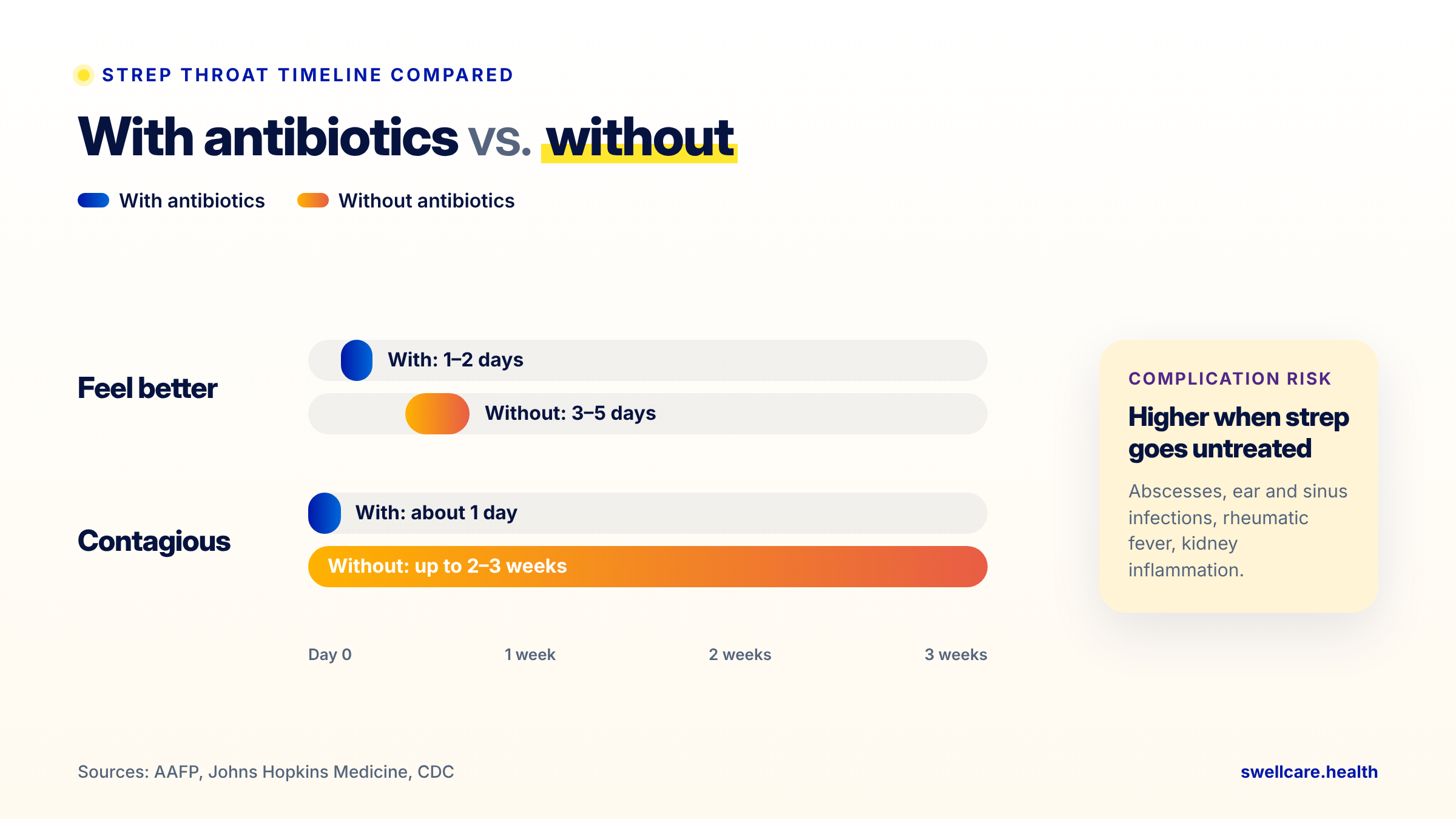
| With antibiotics | Without antibiotics | |
|---|---|---|
| Feeling better | 1 to 2 days | About 3 to 5 days |
| Contagious period | Ends within a day of treatment | Can last 2 to 3 weeks |
| Risk of complications | Lower | Higher |
Untreated, it can stay contagious for 2 to 3 weeks (Johns Hopkins Medicine), and complications become more likely. They include abscesses around the tonsils, ear and sinus infections, rheumatic fever (rare in the US, but it can damage the heart) and post-streptococcal glomerulonephritis, a kidney problem, as the CDC lists them. The heart complication is preventable: penicillin still protects against it even when started up to nine days after symptoms begin, according to American Heart Association guidance summarized by the AAFP.
If you have these symptoms, get tested rather than waiting it out. The test is quick, and treating it protects the people around you.
How long is strep throat contagious?
Group A strep bacteria spread through respiratory droplets when an infected person coughs, sneezes or talks, and through shared cups or utensils. Close contact in a household, classroom or daycare is how strep throat usually spreads.
The CDC advises staying home until there’s no fever and at least 12 to 24 hours have passed since the first dose.
One more tip: MedlinePlus suggests a new toothbrush after two or three days of medicine.
When can kids go back to school or daycare?
Children can usually return once their temperature is normal, they feel well enough for normal activities, and they’ve had at least 12 hours of medicine. Some schools ask for a full day, so check your district’s policy before the morning drop-off.
Is it strep or a virus?
Most sore throats aren’t strep. About 3 in 10 children and only 1 in 10 adults with a sore throat actually have strep throat, per CDC data.
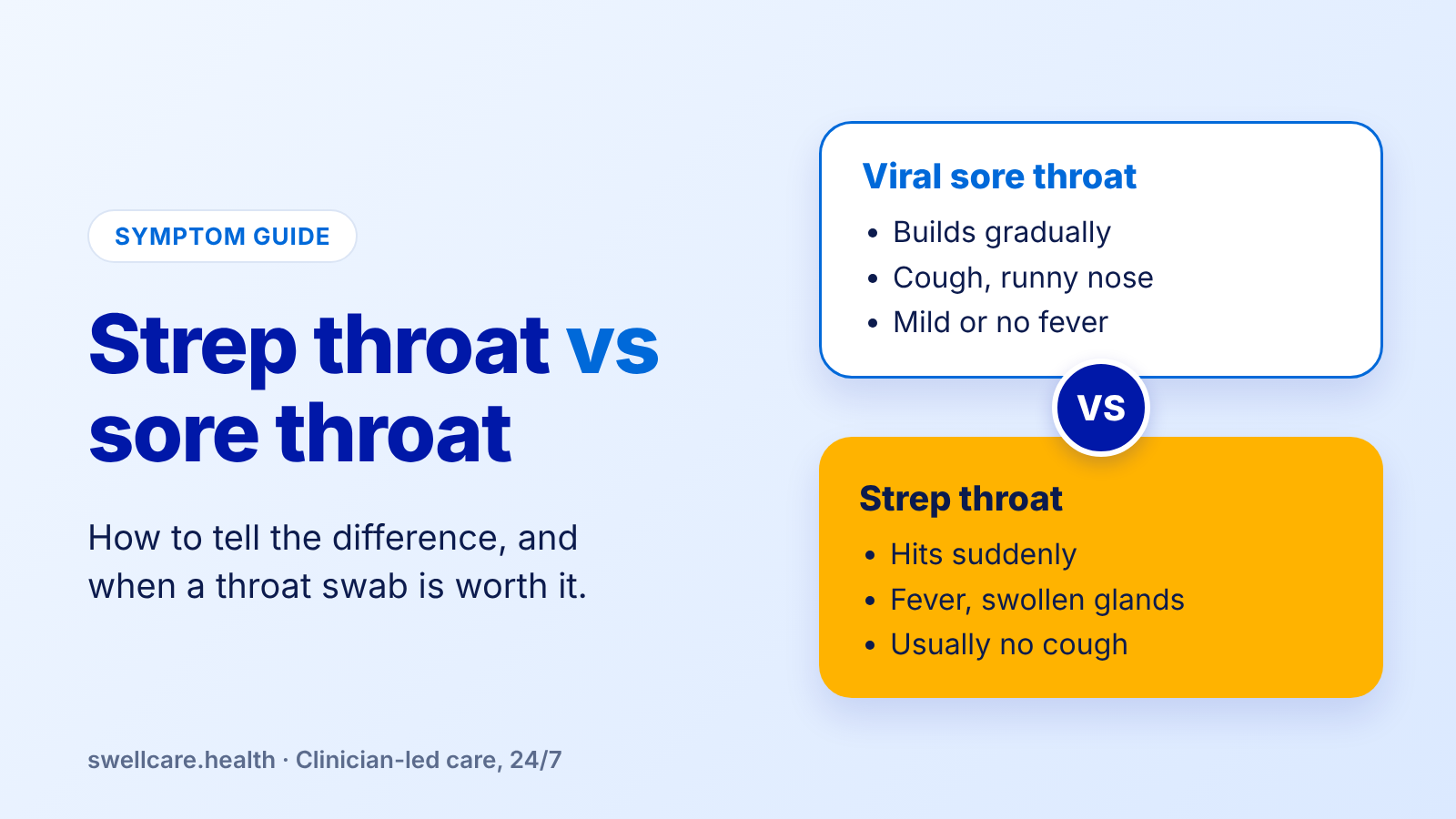
Symptoms of strep tend to come on fast. Think sudden throat pain, painful swallowing, fever, red and swollen tonsils (sometimes with white patches or streaks of pus), swollen lymph nodes in the neck, and tiny red spots on the roof of the mouth called petechiae. Children may also get a headache, stomach pain, vomiting or the sandpaper-like rash of scarlet fever.
A cough, runny nose, hoarse voice or pink eye points more toward a viral sore throat. Antibiotics don’t work on viral infections, which is exactly why testing matters.
What helps you feel better faster
The prescription treats the bacterial infection. The rest is comfort, and it makes a real difference in those first couple of days.
- Pain relievers. Acetaminophen or ibuprofen take the edge off. Never give aspirin to children or teens.
- Cold and soft foods. Popsicles, smoothies, yogurt and broth slide down easier than toast. Skip spicy and acidic foods for now.
- Salt water gargles. Mayo Clinic suggests about 1/4 teaspoon of salt in 8 ounces of warm water.
- Honey. It soothes, but never for babies under 1 year.
- Rest and hydration. Sip something all day. Dehydration makes everything hurt more.
When to call a doctor about strep throat
Call your clinician if your symptoms aren’t better after 48 hours on antibiotics, or if your temperature stays high for more than two days on treatment. A sore throat that’s still bad after three days of medicine needs a call too.
Other symptoms to check in about: a new rash (it may be scarlet fever or a drug reaction), ear pain, or pain that’s clearly worse on one side of the throat.
Signs that need emergency care
Go to the ER or call 911 for trouble breathing, drooling because you can’t swallow, being unable to open your mouth fully, a stiff neck, or signs of dehydration like no urine for 8 hours. These symptoms can point to an abscess or another serious complication.
Get checked for strep with Swell
Not sure if it’s strep or a cold virus? Start a free screening chat with Swell’s online urgent care. A licensed clinician reviews your symptoms and tells you whether you need in-person testing to confirm the diagnosis (a rapid strep test or throat culture), home care or another plan. A completed consultation is $45 (see how it works and pricing), and a prescription is only given when it’s appropriate.
Questions people ask about how long strep throat lasts
What are the worst days of strep?
For most people, the first one to two days of strep throat are the hardest. That’s when throat pain and swollen tonsils peak. Once you’re on medicine, you usually feel the shift within a day, and swallowing gets easier by day two or three. If pain is worse rather than better after 48 hours, call your clinician.
What makes strep throat go away faster?
Starting antibiotics early is the biggest factor. Mayo Clinic notes that starting within 48 hours of the first symptoms may shorten the illness. Rest, fluids, cold foods, salt water gargles and acetaminophen or ibuprofen ease the pain meanwhile. Finishing the full course clears the bacteria and keeps the infection from coming back.
How long are you contagious if you have strep throat?
With antibiotics, you’re generally no longer contagious after 12 to 24 hours of treatment, as long as your temperature is back to normal. Without antibiotics, it can spread for 2 to 3 weeks. Stay home from work, school or daycare until you meet both conditions, and avoid close contact and shared cups so it doesn’t spread.
How do I know if my strep throat is going away?
Good signs your strep throat is clearing include a normal temperature, easier swallowing, smaller tonsils, less swollen lymph nodes and your appetite coming back. Most people notice these within 48 to 72 hours of the first dose. A temperature that climbs again or worsening pain means it’s time to call.
How long does strep throat last without antibiotics?
Untreated strep throat usually improves on its own in about three to five days, but you can stay contagious for two to three weeks. Skipping treatment raises the risk of complications like abscesses and heart or kidney problems, so clinicians test and treat confirmed infections.
Trusted references
Public-health, research, and medical-society resources related to this guide.
- Mayo Clinic: Strep throat, diagnosis and treatment
- Cleveland Clinic: Strep throat
- CDC: Clinical guidance for strep throat
- HealthyChildren.org: Strep throat infection symptom checker
- American Academy of Family Physicians: Patient information, tonsillitis and strep throat
- Johns Hopkins Medicine: Strep throat
- CDC: About strep throat
- American Family Physician (2010): American Heart Association guidance on strep pharyngitis
- MedlinePlus: Strep throat (encyclopedia)