You wake up with a strip of skin along one side of your ribs that feels sunburned. There’s nothing to see. No redness, no bumps. Just a burning, tingling ache that makes your shirt feel like sandpaper.
That odd, one-sided sensation is one of the early signs of shingles, and it can show up days before any rash does. It’s worth catching then, because antiviral medicine works best when it starts early. Here’s what shingles feels like at the start, how to tell it from look-alikes, and what to do today.
What the early signs of shingles feel like
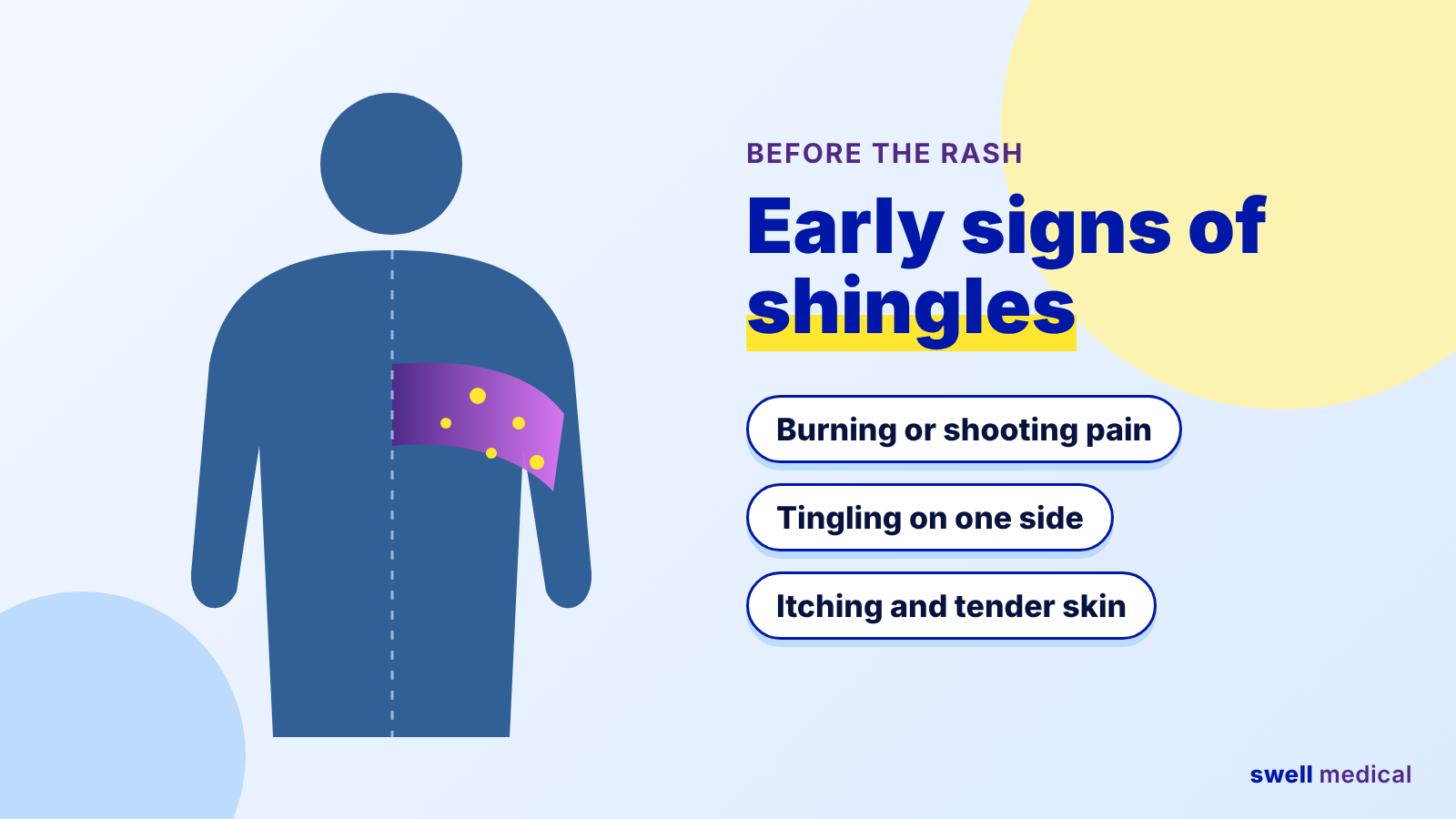
Shingles is caused by the varicella-zoster virus, the same virus behind chickenpox. After chickenpox clears, it sleeps in your nerves and can wake up years later. So the first shingles symptoms come from the nerve, not the skin. The CDC points to pain, itching or tingling in the exact spot where the rash will later appear.
Burning, tingling or shooting pain
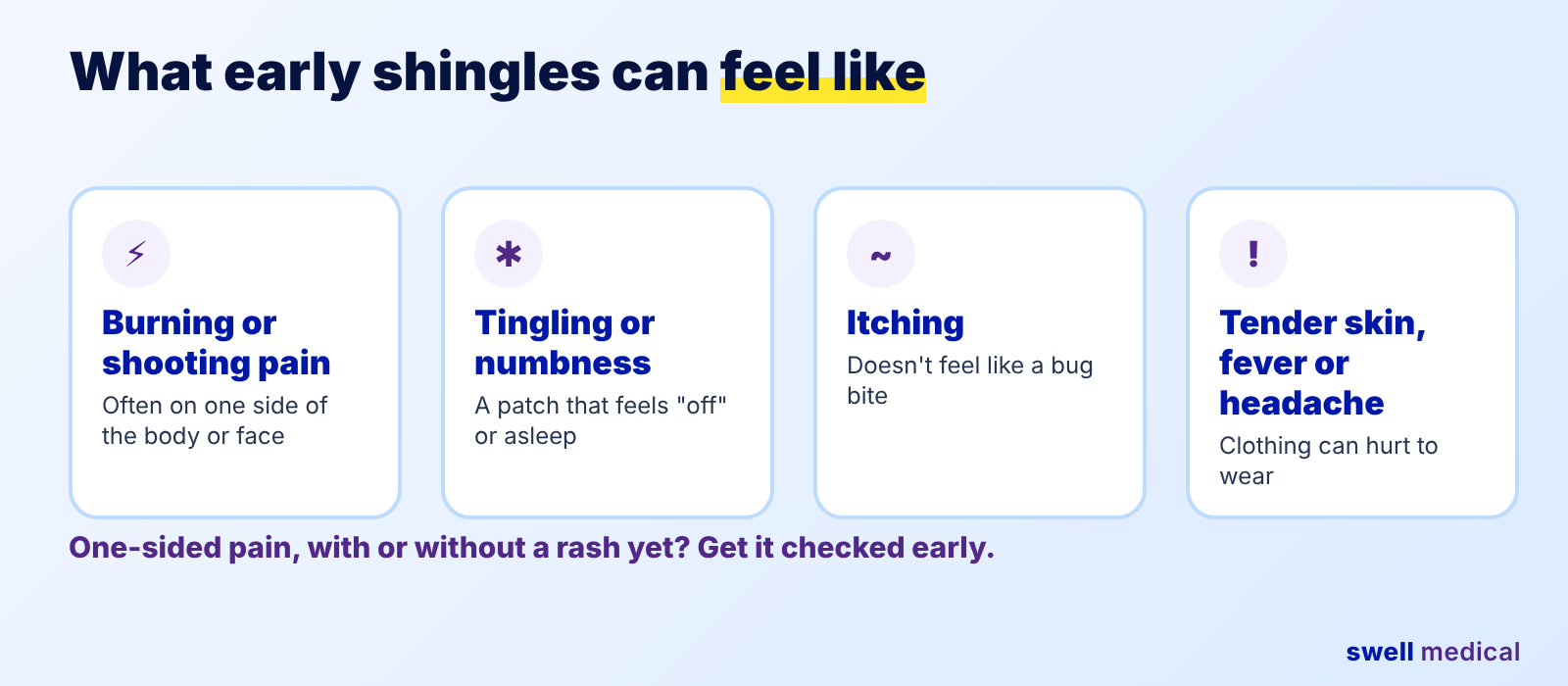
This is the one people notice first. MedlinePlus describes burning or shooting pain, mild to severe, usually on one side of the body or face. The American Academy of Dermatology adds that some people feel something like an electrical sensation. You might also notice it comes and goes.
Itching and skin that hurts to touch
Itching that doesn’t feel like a bug bite is common, and it’s one of the early symptoms people dismiss. So is skin that’s oddly tender, where a bra strap or waistband suddenly hurts. Some people also report numbness in the same patch, according to Healthline.
Flu-like symptoms
You may run a fever, get a headache, feel chills or have an upset stomach. The CDC lists all four. It’s easy to blame a cold or another virus, and a headache on its own rarely means shingles. But if one-sided pain comes with a fever or headache, don’t shrug it off.
How long before the rash do symptoms start?
Often a day or two. The AAD puts the pain and tingling at one to two days before the rash, while the CDC and MedlinePlus say it can start up to several days earlier. Plan on “a few days, give or take.”
Then the shingles rash arrives, usually as a single stripe wrapping around the left or right side of the torso, or on one side of the face. Think of a band on one side of the body, not a scatter.
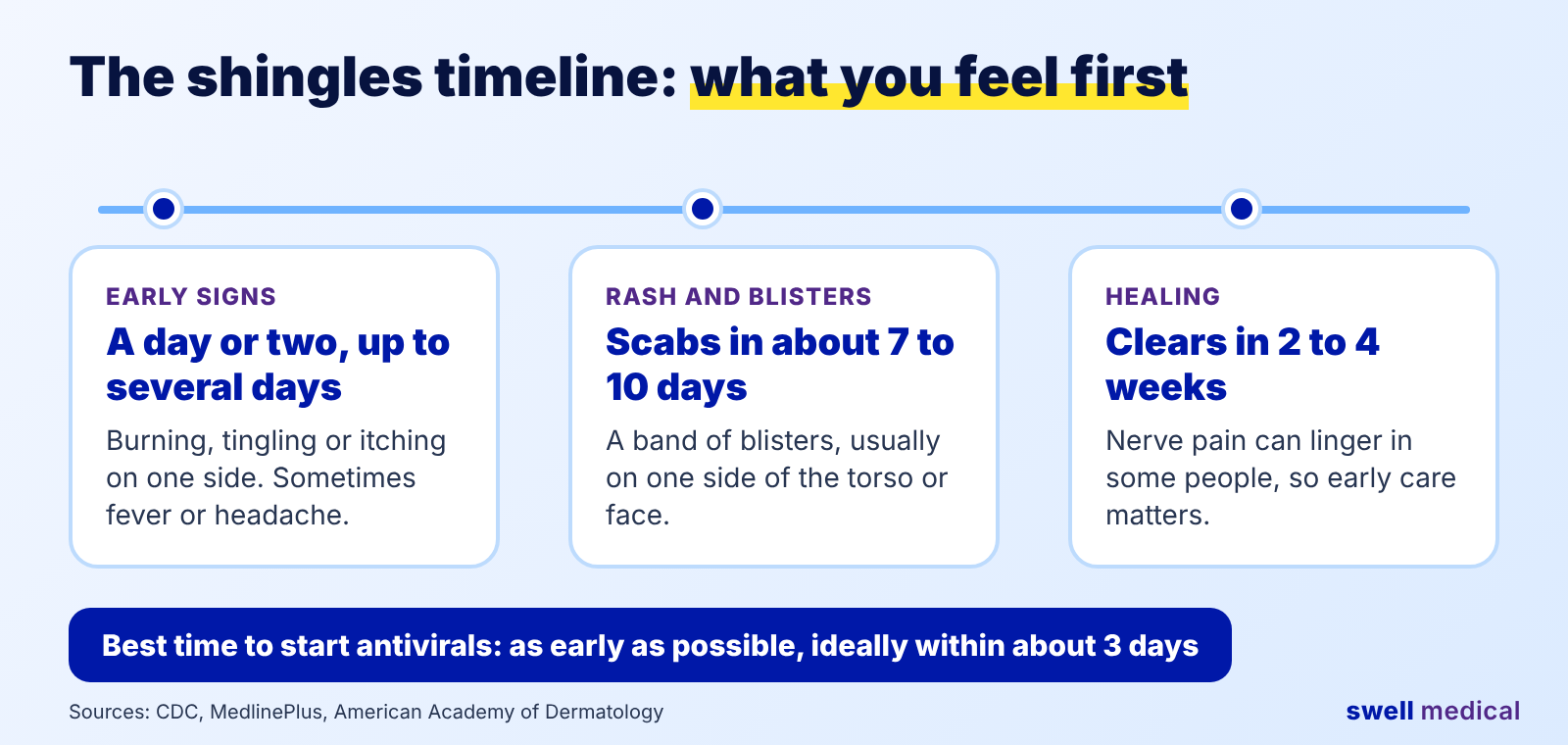
| Stage | What you notice | Typical timing |
|---|---|---|
| Early symptoms | Burning, itching, sometimes fever | A day or two, up to several days, before the rash |
| Blisters | Fluid-filled bumps that crust over | Scabs form in about 7 to 10 days |
| Healing | Rash fades, skin calms | Clears within 2 to 4 weeks |
Is it shingles or something else?
Here’s the honest answer: before a rash, it can be hard to tell. The CDC’s clinical guidance notes that diagnosis may not be possible without one.
The symptoms can overlap with a pulled muscle, contact dermatitis, folliculitis and herpes simplex. What points toward shingles is the pattern. It stays on one side. It follows a band of skin and doesn’t cross the midline. And the pain often seems out of proportion to anything you can see.
Why the first three days matter
This is why I’d rather you get checked early than be sure. The CDC says treatment is most effective within 72 hours of symptoms starting. Antiviral medication such as acyclovir, valacyclovir or famciclovir can speed healing, cut new blisters and ease the acute pain. That’s the core of shingles treatment, and it only works if you start it in time.
The bigger prize is the long game. The AAD notes that treatment may lower the odds of complications, including postherpetic neuralgia, pneumonia and hearing loss. Postherpetic neuralgia is nerve pain that lingers at the rash site for months or even years. The CDC says about 10 to 18 percent of people with shingles get it, and the risk climbs with age.
Waiting for blisters to “prove it” can burn the window. You can always be told it’s nothing, but you can’t get those lost days back. A clinician can also help rule out other causes of your symptoms.
What the rash looks like when it arrives
First come clusters of small bumps. They turn into fluid-filled blisters, which crack, ooze and scab over. On lighter skin the rash looks red. On darker skin it can look grayish, pink, dark brown or purplish, according to the AAD, so don’t wait for “red.”
The torso is the classic spot, but shingles can appear almost anywhere, even a palm. Don’t scratch. It slows healing and invites infection. Cool compresses and over-the-counter pain relievers can take the edge off while you get proper treatment.
Who gets shingles, and can you prevent it?
About 1 in 3 people in the US will get shingles in their lifetime, the CDC reports, and risk rises with age. More than 99 percent of Americans born in 1980 or earlier have had chickenpox, so the chickenpox virus is already sitting in most adults’ nerves, ready to cause shingles if it reactivates. A weakened immune system, another infection or stress can raise your odds, per MedlinePlus.
The best prevention is the shingles vaccine, Shingrix: two doses, two to six months apart, for adults 50 and older, and for adults 19 and older with a weakened immune system. The CDC says it’s over 90 percent effective in healthy adults 50 and up. It also lowers the odds of postherpetic neuralgia and other complications. You should still get the vaccine if you’ve already had shingles or chickenpox.
When to see a doctor right away
Get seen the same day if the shingles pain or rash is on your face, near your eye or in or near your ear. Shingles near the eye can threaten vision, and the AAD calls a facial rash a medical emergency. Near the ear, it can cause hearing or balance problems and facial weakness. See someone quickly, too, if your immune system is weakened, because complications are more likely.
Call your local emergency number or go to an emergency room for sudden vision changes. Virtual care is not emergency care.
Get checked from home with Swell
If you’re not sure whether what you feel is shingles, don’t sit on it overnight. A licensed Swell clinician can review your symptoms online, any time of day, explain what’s likely, and tell you whether you need an in-person exam. Start with Swell urgent care and describe exactly where it hurts and since when.
Questions people ask about early shingles
Is shingles contagious before the rash?
No. According to MedlinePlus, you aren’t contagious before blisters appear or after they crust over. You can’t catch shingles from someone, but fluid from blisters can cause chickenpox in a person who’s never had chickenpox or the vaccine.
How long does shingles last?
Blisters usually scab over in 7 to 10 days, and the rash clears within 2 to 4 weeks. Nerve pain can last longer in some people, which is one of the complications early treatment aims to prevent. That’s why starting treatment early is worth the call.
Can stress cause shingles?
Stress doesn’t cause it on its own, since the virus has to already be in your body. But the virus is already there, and MedlinePlus lists stress, along with infection and a weakened immune system, among the things that can raise your risk of an outbreak.
Can you get shingles twice?
Yes. The CDC says most people have one episode, but shingles can come back. That’s one more reason adults 50 and older should still get the shingles vaccine after an outbreak, once the rash is gone.
Trusted references
Public-health, research, and medical-society resources related to this guide.