Your blood test came back with one flag next to it: platelets, high. Maybe it showed up on a routine complete blood count, and nobody explained it. Now you’re staring at a number and wondering whether to worry.
Take a breath. The most common high platelet count causes are ordinary and fixable, like low iron, an infection or recent surgery. A smaller group of people have a bone marrow condition that needs a specialist, and that’s where the risk of blood clots comes in. This guide shows you which is which, so you know what to ask your doctor next.
What does a high platelet count mean?
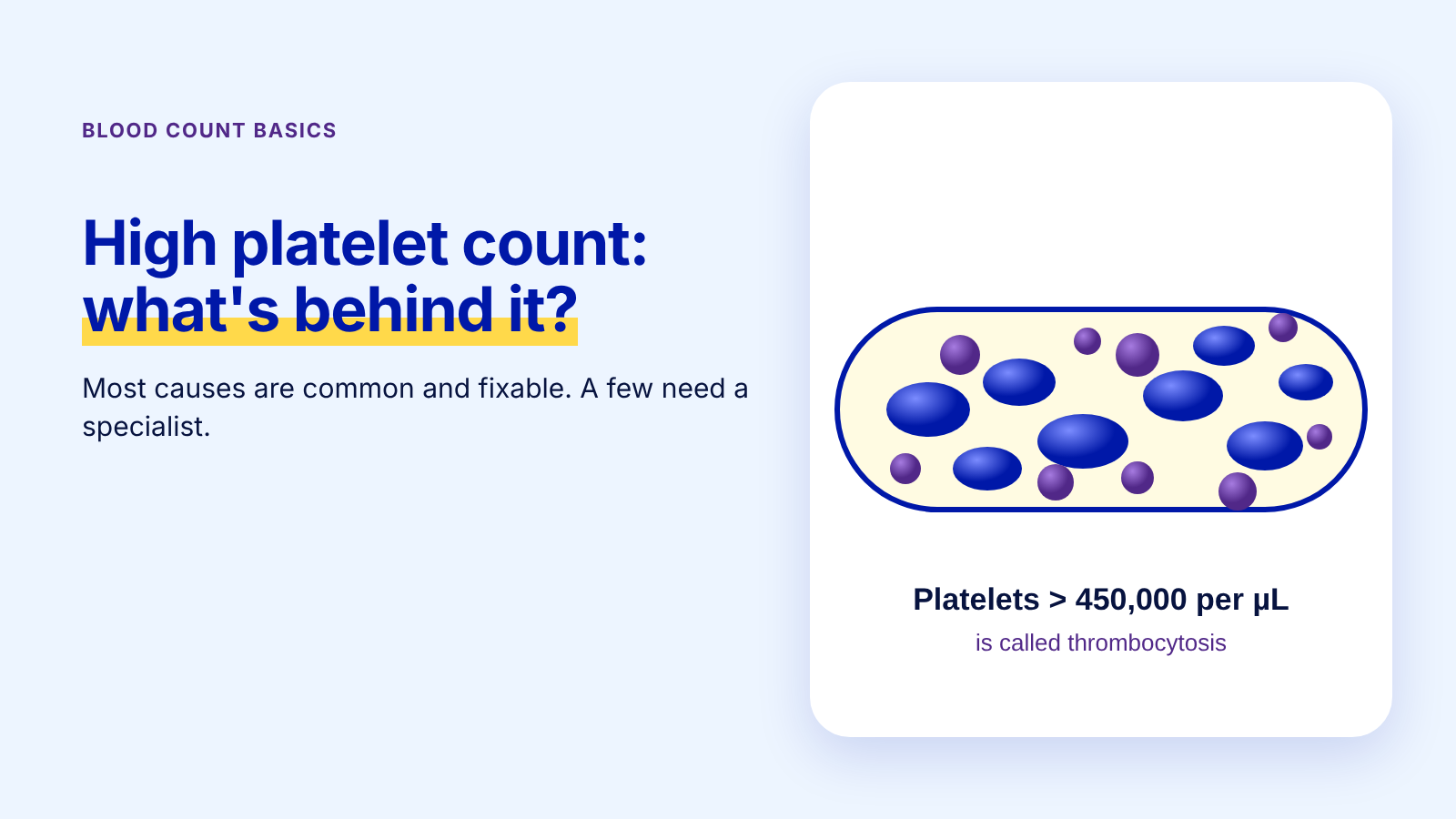
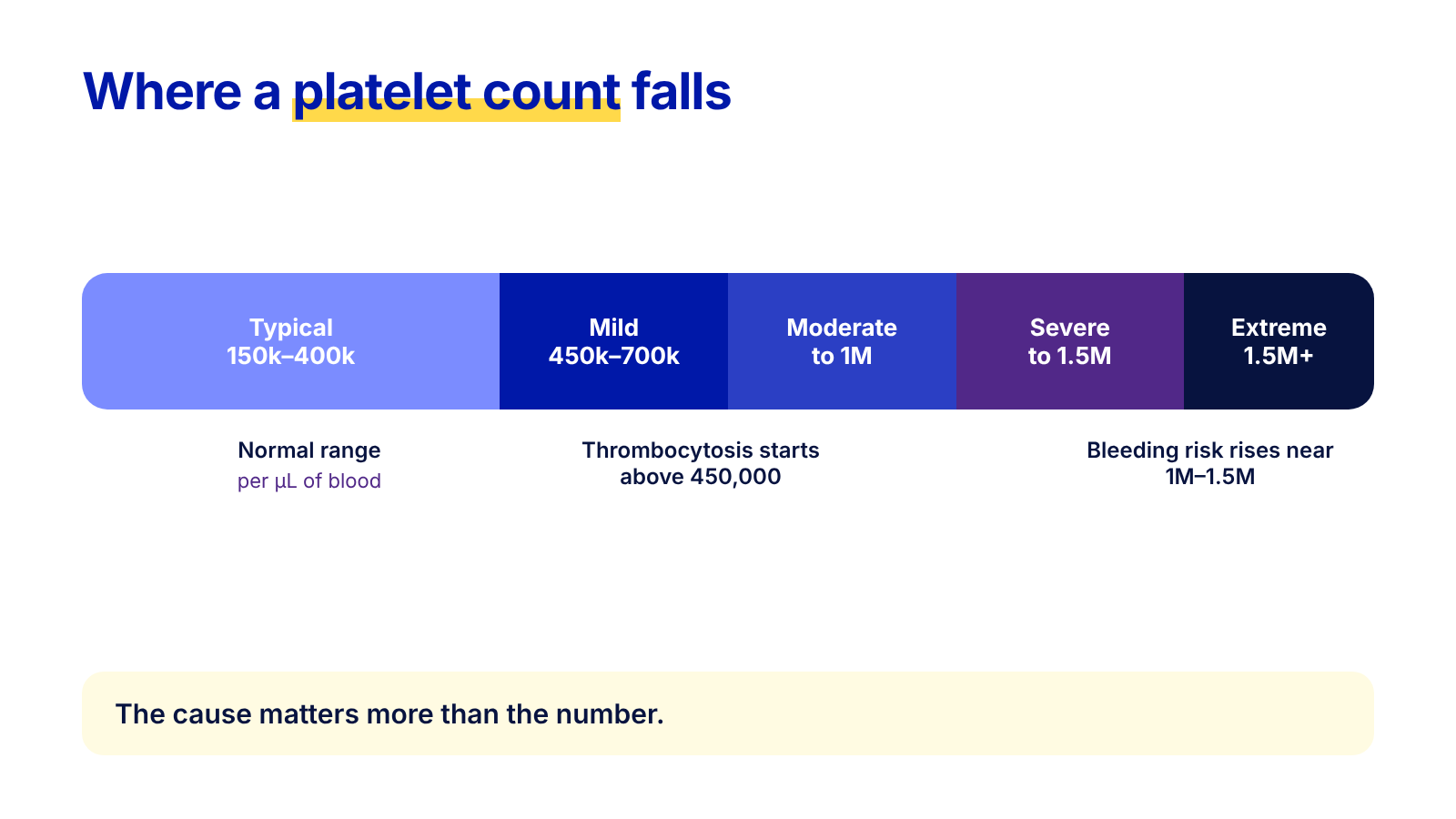
Platelets are tiny cells made in your bone marrow. They stick together to plug a cut and stop bleeding. Too many platelets can tip the other way, and your blood may clot when it shouldn’t. A typical count runs from about 150,000 to 400,000 per microliter of blood, according to Healthgrades.
Doctors call it thrombocytosis once the platelet count passes 450,000. The Cleveland Clinic uses the same cutoff. The Blood Project sorts levels into bands: mild runs from 450,000 to 700,000, moderate up to 1,000,000, severe up to 1,500,000, and extreme above that.
Here’s the part that surprises people. The number matters less than the reason behind it. A count of 600,000 from an infection is a very different story from the same count with no explanation.
The most common high platelet count causes
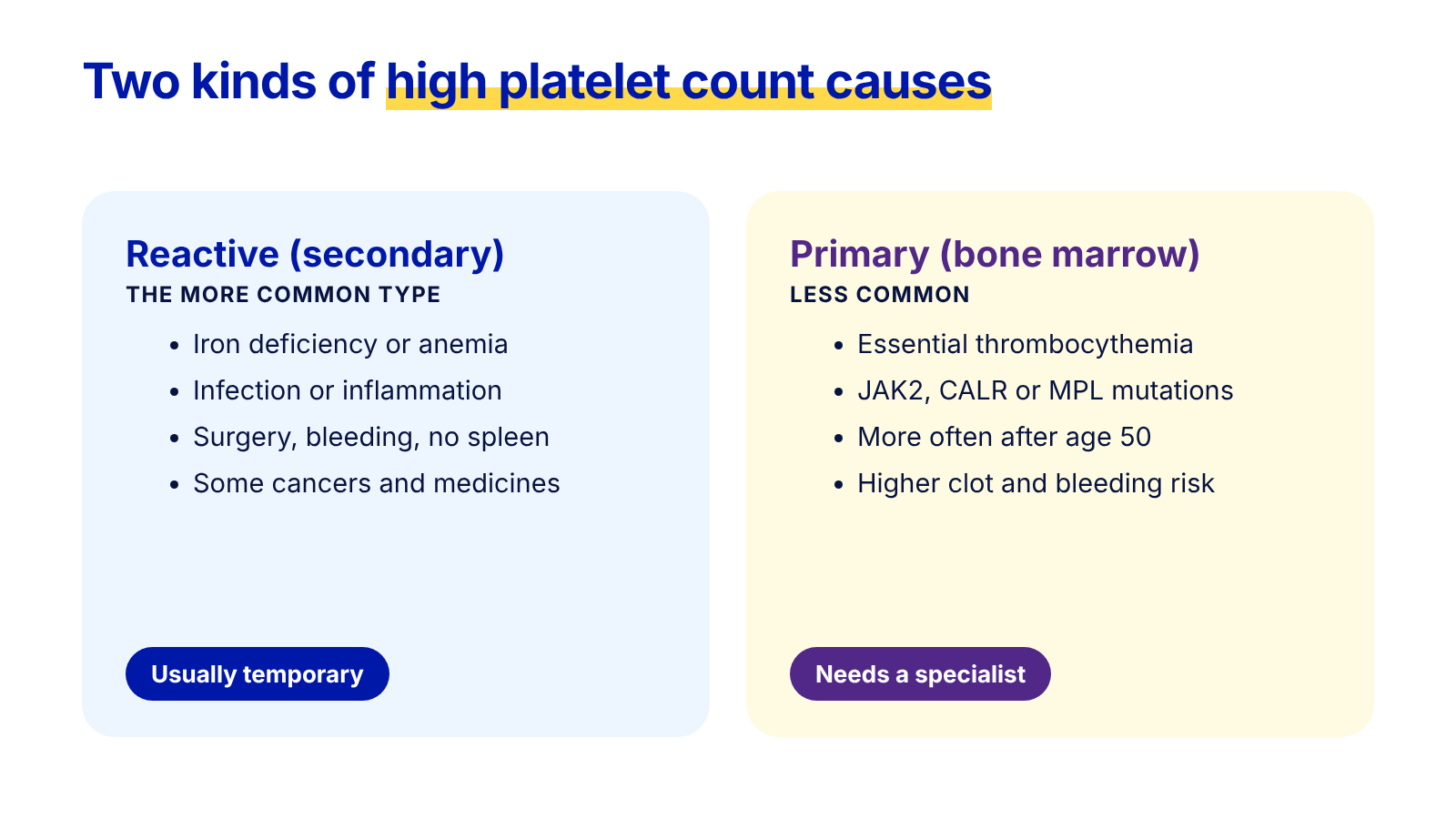
Most people have what’s called reactive thrombocytosis, also known as secondary thrombocytosis. Your marrow isn’t broken. It’s responding to something else going on in your body. Mayo Clinic calls this the more common type, and it usually settles once the trigger is dealt with.
Iron deficiency and anemia
Low iron is a classic one, and it’s often the first thing doctors check. Plain old anemia from iron deficiency is common. The Blood Project describes iron deficiency as a frequent and important cause. Hemolytic anemia, where red blood cells break down too fast, can do it too. Doctors often check ferritin, a measure of your iron stores, early in the workup.
Infection and inflammation
Your body pumps out extra platelets when it’s fighting something. A bad chest infection or a flare of rheumatoid arthritis can push the count up. So can inflammatory bowel disease, which includes Crohn’s disease and ulcerative colitis. Rheumatoid arthritis and inflammatory bowel disease are both long-term conditions, so a count can stay raised until they’re under control. Once the inflammation calms down, the count usually follows.
Surgery, bleeding and spleen removal
Recent surgery, a serious injury or heavy blood loss can lift platelets for weeks. After splenectomy, the surgery that removes your spleen, counts often run high because the spleen normally holds back and clears platelets.
Cancer
Some cancers raise platelets and cause reactive thrombocytosis, and Healthgrades lists lymphoma along with gastrointestinal, breast and ovarian cancers. Please hold onto the context, though. Most people with a high count don’t have cancer. It’s one item on a long list, and doctors look for it only when the rest of the picture points that way.
Medicines and everyday triggers
Certain drugs, including epinephrine and some growth factors, can nudge platelets up. Smoking is linked to higher counts. Healthgrades also notes that stress and anxiety can affect platelets, and that low folate or B12 and heavy alcohol use can play a part.
When the bone marrow is the cause
Less often, the marrow itself is making too many platelets for no outside reason. Doctors call this primary thrombocytosis. This is primary thrombocytosis, and the best-known form is essential thrombocythemia, or ET.
Many people with ET carry mutations in one of three genes: JAK2, CALR or MPL. The Cleveland Clinic says these changes are acquired during life, and the gene mutations are what push the marrow to overproduce platelets. ET tends to show up after age 50, though younger women can get it too, according to the Merck Manual.
Why does the distinction matter? In reactive thrombocytosis, the Blood Project notes that studies show no clear extra clot risk from the platelet number alone. With ET, the platelets can work poorly, so the risk of blood clots and bleeding is higher. It’s the same number on the lab report with a very different meaning.
Is a high platelet count dangerous?
Often it isn’t. Many people feel completely fine and only learn about their thrombocytosis from a routine blood test. Most reactive thrombocytosis carries little danger by itself, and the platelets usually behave normally.
When symptoms do appear, they tend to come from clots or from bleeding. Think headaches, dizziness, tingling or burning in the hands and feet, easy bruising, nosebleeds and bleeding gums. Blood clots can block flow to the brain and cause a stroke, or reach the heart and cause a heart attack. They can also form in the legs or lungs. A stroke or heart attack is rare when the cause is reactive, but it’s the reason doctors take ET seriously.
Very high platelet counts can flip the risk the other way. Around 1,000,000 to 1,500,000, platelets can stop working properly and raise the chance of bleeding, the Blood Project explains. So both too much clotting and too much bleeding are possible. The nosebleeds and bruising are easy to dismiss, which is why they’re worth mentioning to your doctor.
How doctors find the cause
Nobody should guess from one lab result. The usual path looks like this:
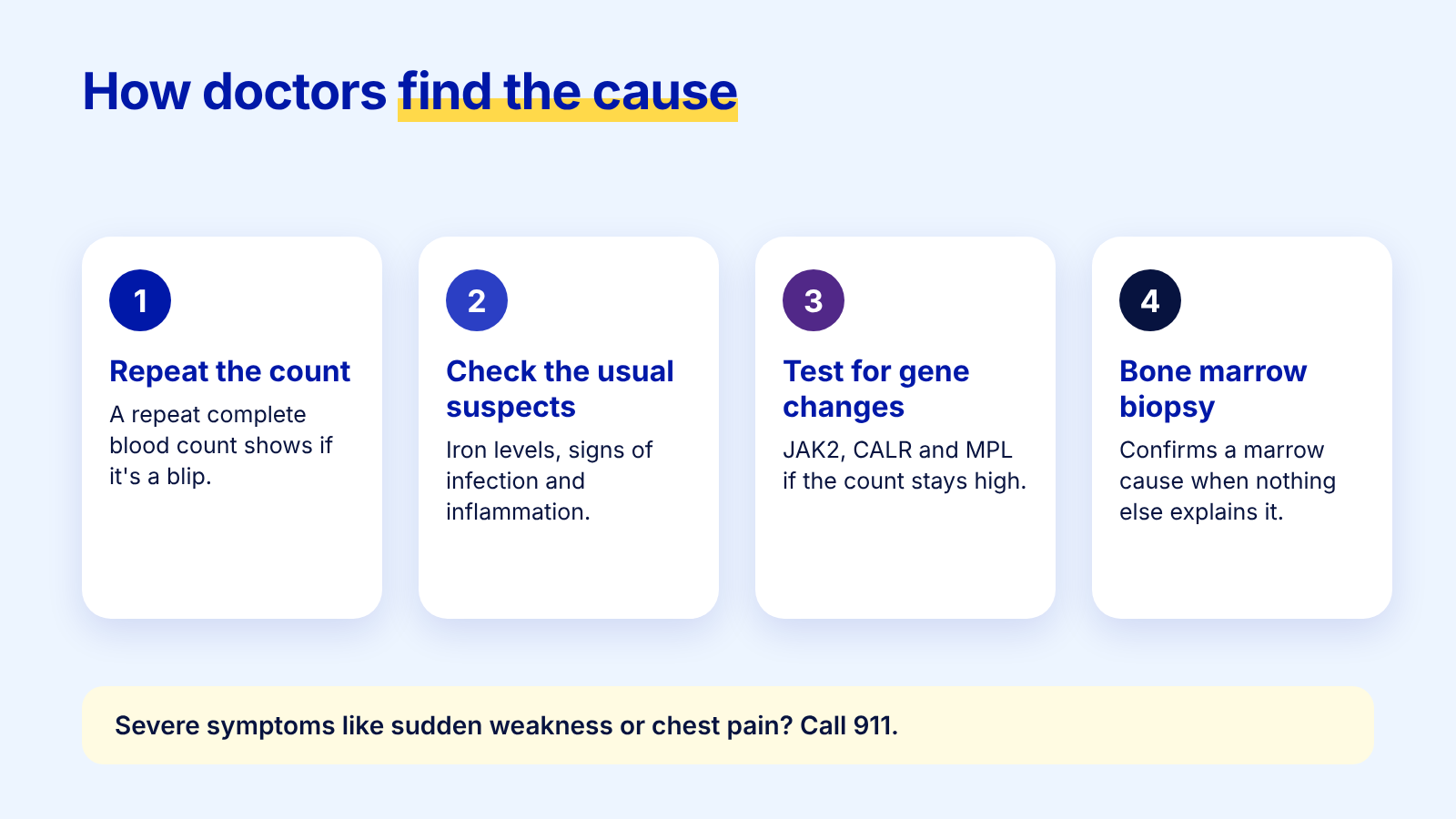
| Step | What it tells you |
|---|---|
| Repeat complete blood count | Shows whether the high count is a blip, since one blood test can mislead. The Cleveland Clinic says a return to normal is usually not concerning. |
| Iron and inflammation checks | Look for the common reactive triggers, like low ferritin or an infection. |
| Blood smear | Lets a lab expert look at the shape of your platelets. |
| JAK2, CALR and MPL testing | Checks for the gene changes linked to ET. |
| Bone marrow biopsy | Confirms ET when the count stays high without a clear reason. |
The Blood Project suggests a follow-up blood test about 4 to 8 weeks after the suspected cause is treated. If the count stays high for several months with no explanation, a hematologist usually steps in.
What treatment looks like
Treatment follows the cause. With reactive thrombocytosis, you treat the iron deficiency, the infection or the inflammation, and the count comes down on its own. Most people in this group need no platelet-lowering treatment.
Essential thrombocythemia is handled differently. There’s no cure, but there are good options. The goal is to protect you from blood clots and stroke while keeping your platelets in a safer range. The Cleveland Clinic lists watchful waiting, low-dose aspirin, hydroxyurea, anagrelide and interferon alfa. Healthgrades adds that interferon and anagrelide carry serious side effects, so doctors may try aspirin or hydroxyurea first. Don’t start aspirin on your own. Ask your provider first. A procedure called plateletpheresis removes platelets from the blood quickly, but Healthgrades says it’s typically saved for emergencies. For reactive cases the plan is usually just treating the cause and rechecking.
When to call a doctor or go to the ER
Knowing when to see a doctor makes a real difference here. Call your doctor soon if you notice unexplained bruising, frequent nosebleeds, bleeding gums, new or severe headaches, vision changes or swelling and pain in one leg.
Go to the ER or call 911 for any of these, since they can signal a stroke or a clot in the lungs or heart:
- Sudden weakness or numbness on one side of the body
- Trouble speaking or confusion
- Chest pain or severe shortness of breath
- Bleeding that won’t stop
Get a clear next step with Swell
A flagged lab result is stressful, especially when nobody has explained it. At Swell, you can describe what’s going on and a licensed clinician reviews it, explains what can be handled online and tells you what to do next. It isn’t emergency care, so call 911 if you have severe symptoms.
Bring your lab report, a list of your medicines and any recent illness or surgery. Those three things speed up the answer more than anything else.
Questions people ask about high platelet count
Can stress cause a high platelet count?
It can play a part. Healthgrades says stress and anxiety may affect platelets. But a persistent high count shouldn’t be blamed on stress without checking for iron deficiency, infection and other causes first.
Can a high platelet count go away on its own?
Yes, when the cause is temporary. Reactive thrombocytosis often settles once the infection clears, the iron is restored or you recover from surgery. A repeat blood test confirms it.
Does a high platelet count mean cancer?
Usually not. Some cancers do raise platelets, and a marrow disorder like ET is a chronic blood condition, but most high counts come from common reactive causes. Your doctor decides whether more testing is needed.
What platelet count is considered dangerous?
There isn’t one magic number. Risk depends on the cause and your own history. Counts above about 1,000,000 get extra attention because of bleeding risk, while clot risk is tied more to primary disease, age and smoking.
Do I need to take aspirin for a high platelet count?
Not necessarily. Aspirin is mostly considered for primary conditions or specific clotting risks. Check with your provider before you start taking it.
Trusted references
Public-health, research, and medical-society resources related to this guide.