It’s 3 a.m. You’ve been to the bathroom four times since midnight, and one question won’t leave you alone: how long does diarrhea last? For most adults, the answer is a few days, and often just one or two. If it’s gone in under a week, it’s called acute diarrhea, and it usually clears up by itself. The real worry starts when it won’t quit, or when other symptoms tag along, because those symptoms change the advice. This guide gives you the timeline, what actually helps, and the point where waiting stops being smart.
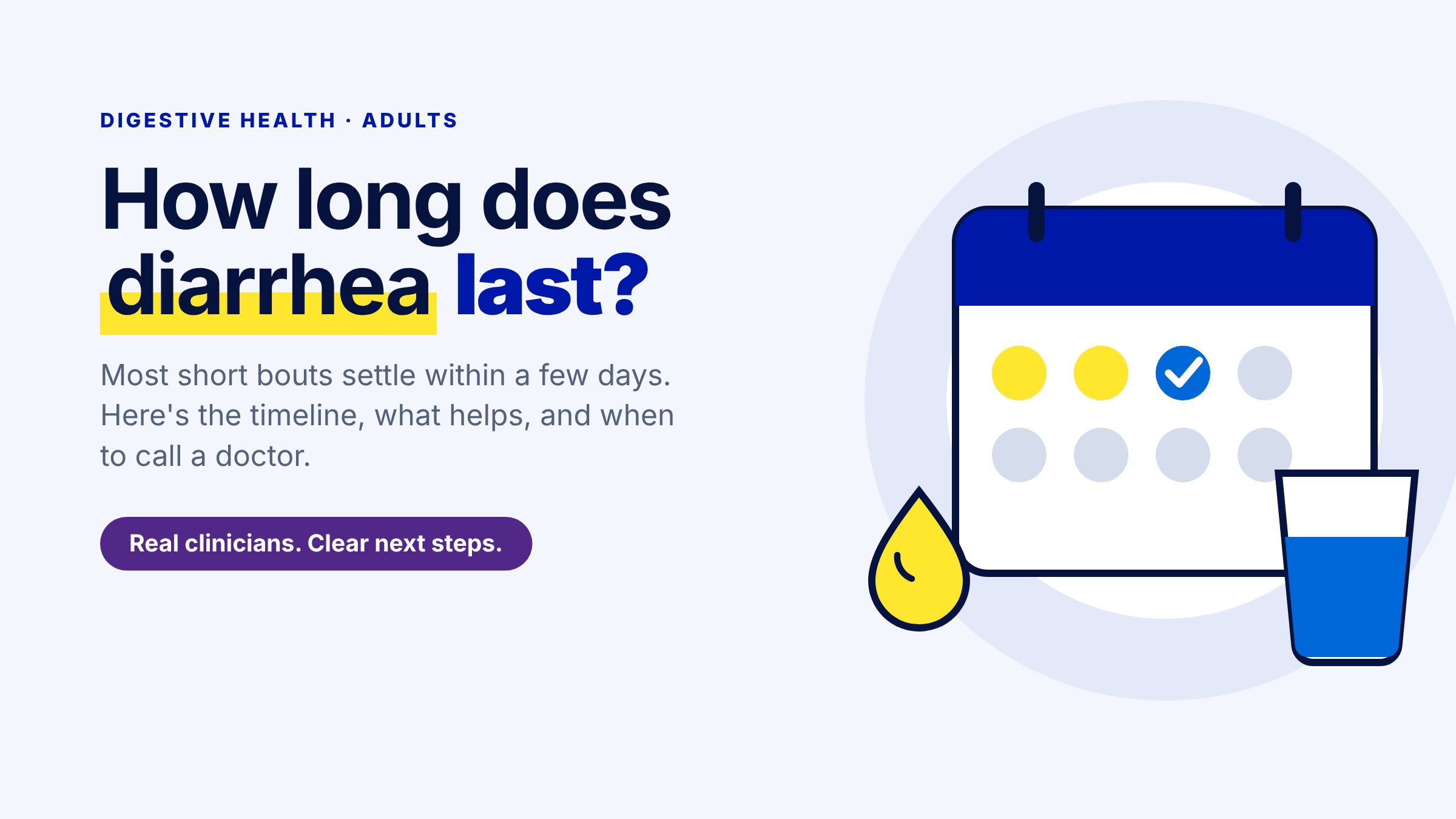
How long does diarrhea last?
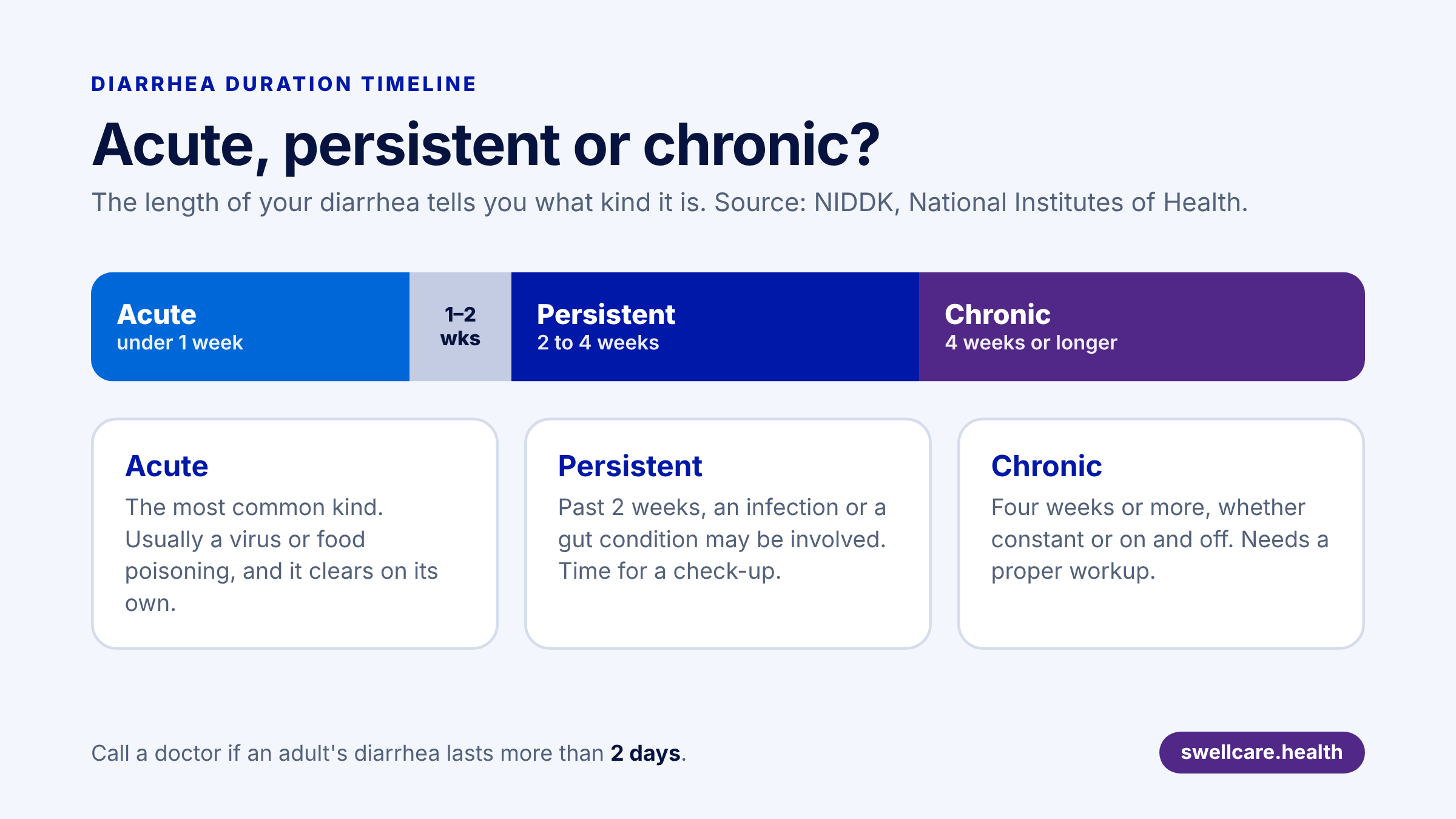
Doctors define diarrhea as loose, watery stools three or more times a day, or more often than is normal for you, according to the National Institute of Diabetes and Digestive and Kidney Diseases (NIDDK). The name changes as the days pile up.
| Type | How long it lasts | What it often points to |
|---|---|---|
| Acute diarrhea | Less than 1 week | A stomach virus, bad food or a medicine side effect |
| Persistent diarrhea | 2 to 4 weeks | A lingering bug or a gut condition |
| Chronic diarrhea | 4 weeks or longer | Something that needs a full workup |
Most short bouts run a day or two, and MedlinePlus says it can occasionally go on longer than that. Food poisoning typically passes within a week. You’re also in good company: NIDDK estimates that people in the US have a bout about once a year.
Notice the hole in the middle. Nobody gives a neat label to the stretch between one and two weeks. We’d treat it as the zone where you stop guessing and get checked.
Why some bouts end fast and others drag on
The cause sets the clock. Viral infection is the usual suspect for acute diarrhea, with norovirus leading the list, and food poisoning comes next. Bacteria in contaminated food are the other big source, along with the occasional parasite. Traveler’s diarrhea, from contaminated food or water abroad, behaves much the same way. Some medicines can do it too, including magnesium antacids and cancer drugs.
Antibiotics deserve their own warning. They wipe out helpful bacteria along with harmful ones, which can let a germ called C. diff move in. The CDC says your risk of C. diff is up to ten times higher while you take an antibiotic and for the month after you finish. Diarrhea during or after a course is common, and most of it doesn’t come from that germ. Still, it’s worth a call to your clinician, who will weigh the symptoms against your medicine history.
When diarrhea refuses to leave, the list shifts toward long-term causes: irritable bowel syndrome, celiac disease, lactose intolerance and inflammatory bowel disease such as Crohn’s. Some of these produce bacteria-related problems, like small intestinal overgrowth. Surgery on the gut or gallbladder can also leave a mark.
What helps while it runs its course
You can’t hurry a stomach virus along. You can keep it from hurting you.
Replace what you’re losing. Sip water and broth all day, with the occasional sports drink. An oral rehydration solution, sold at pharmacies, replaces fluids and electrolytes in the right balance, and NIDDK says you can also make one at home. Older adults and people with diabetes or kidney disease should check with a doctor before using it. Skip caffeine and alcohol, which Mayo Clinic says to avoid.
Eat when you’re ready. Appetite often dips for a day. When it returns, bland, low-fiber foods such as toast or plain rice go down easily, and many people call this the BRAT diet. For a few days, steer clear of greasy, spicy or dairy-heavy meals.
Think twice about the medicine cabinet. The over-the-counter drug loperamide can calm watery stools in most short-term cases. Doctors generally advise against it if you have a fever or bloody stools, because it can keep the cause trapped inside. If you’re taking it and you’re no better after two days, stop and call. As for probiotics, NIDDK says the evidence doesn’t support them for treating diarrhea, and Mayo Clinic says it’s unclear whether probiotics shorten an episode. Don’t count on them.
Ignore any home remedies that promise a quick fix. None of them shortens a viral infection. Good home care simply keeps you hydrated until your body finishes the job, and most symptoms ease as it does.
Signs you’re getting dehydrated
Dehydration is the main way diarrhea turns dangerous, and you lose electrolytes along with the water. Adults should watch for these symptoms:
- Extreme thirst or a dry mouth
- Urinating much less than usual, or passing urine that looks unusually dark
- Dizziness or lightheadedness, especially when you stand up
- Feeling more tired than the situation explains
- Skin that doesn’t snap back right away when you pinch it
Any of these is a reason to call, and the fluids matter more than the food. Dehydration can be life-threatening if it goes untreated. If vomiting means you can’t keep liquids down, don’t wait for the next day.
When to worry about diarrhea
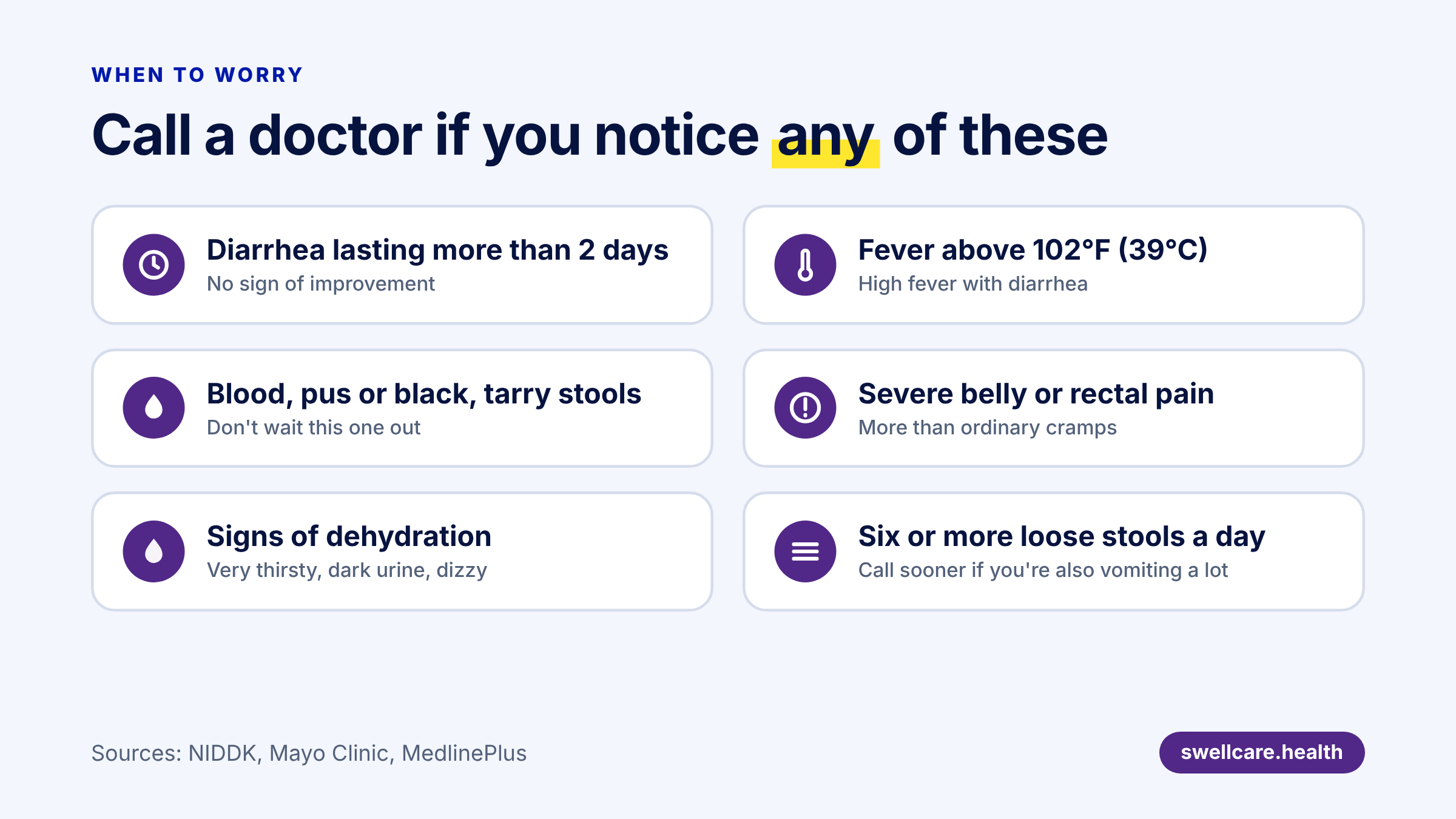
Time is only one measure. Mild cramping is common with diarrhea, but abdominal pain that keeps building isn’t. These red flags mean you should talk to a doctor, even if it’s only been a day:
- Diarrhea lasting more than two days with no improvement at all
- A fever above 102°F (39°C)
- Blood or pus in your stools, or black, tarry stools
- Severe abdominal pain or rectal pain
- Frequent vomiting
- Six or more loose stools in a single day, which is hard to ignore
- Any sign of dehydration
These symptoms come straight from NIDDK and Mayo Clinic. One item alone is enough. If you’re confused or unusually drowsy, or dizziness makes it hard to stand, treat that as an emergency.
When diarrhea lasts longer than expected
Three weeks in, a stomach bug is no longer a believable explanation. Persistent diarrhea, the 2-to-4-week kind, and chronic diarrhea both deserve a proper look. A clinician may order a stool test for bacteria, blood work or a scope of the colon to tell an infection apart from a condition like celiac disease.
If tests point to a long-term condition, a gastroenterologist usually takes over. Meanwhile, keep a short note of when the diarrhea started, plus any symptoms and new medicines. It’ll save time at the visit.
Who should call sooner
Some adults shouldn’t wait out even a mild bout. NIDDK says to stay in touch with a doctor if you’re pregnant, over 65 or on antibiotics, and the same goes for a weakened immune system. Home care alone is a gamble for these groups, who have more to lose when a bug hangs around.
Get a clinician’s opinion from home
You don’t have to sit on the bathroom floor wondering whether this is normal. At Swell, a licensed clinician can review what’s going on, explain what it likely means and tell you what to do next, all without leaving the house.
Be realistic about the limits. A virtual visit can’t press on your belly or run a stool test on the spot. If you need those, your clinician will say so and point you to in-person care. If you have signs of severe dehydration, blood in your stools or severe pain, don’t wait for an appointment. Go to an emergency room or call 911.
Questions people ask about how long diarrhea lasts
Is it normal to have diarrhea for 3 days?
It happens, but it’s past the usual window. Most short bouts settle in a day or two. By day three you should be improving at least a little. If you’re not, or if new symptoms show up, such as a fever, blood in your stools or signs of dehydration, call a doctor rather than waiting another day.
How long should diarrhea last before I see a doctor?
For adults, the standard advice is two days with no improvement. Go sooner if you have a high fever, bloody or black stools, severe pain or signs of dehydration. If you’re pregnant, over 65 or on antibiotics, don’t wait out the full two days. A quick call costs you very little.
Can diarrhea last 2 weeks?
It can, but it shouldn’t be ignored. Anything beyond two weeks falls into the persistent range, and it often has a cause worth finding, such as a stubborn bug, a food intolerance or a condition like irritable bowel syndrome. Book a visit instead of hoping it fades.
Should I take Imodium for diarrhea?
Imodium is generally considered safe for most adults with ordinary diarrhea, and as an over-the-counter medicine it’s easy to grab. Skip it if you have a fever or bloody stools. It can keep an infection in your body. If your diarrhea is no better after two days on it, stop taking it and call your doctor.
What should I eat when I have diarrhea?
Start with fluids, then add plain, low-fiber foods like toast or eggs once you’re hungry. Avoid greasy, spicy and dairy-heavy foods for a few days, plus caffeine and alcohol. Most home remedies beyond fluids and bland food are unproven. Once your appetite is back, most people can return to their normal diet even if the diarrhea hasn’t fully stopped.
Trusted references
Public-health, research, and medical-society resources related to this guide.