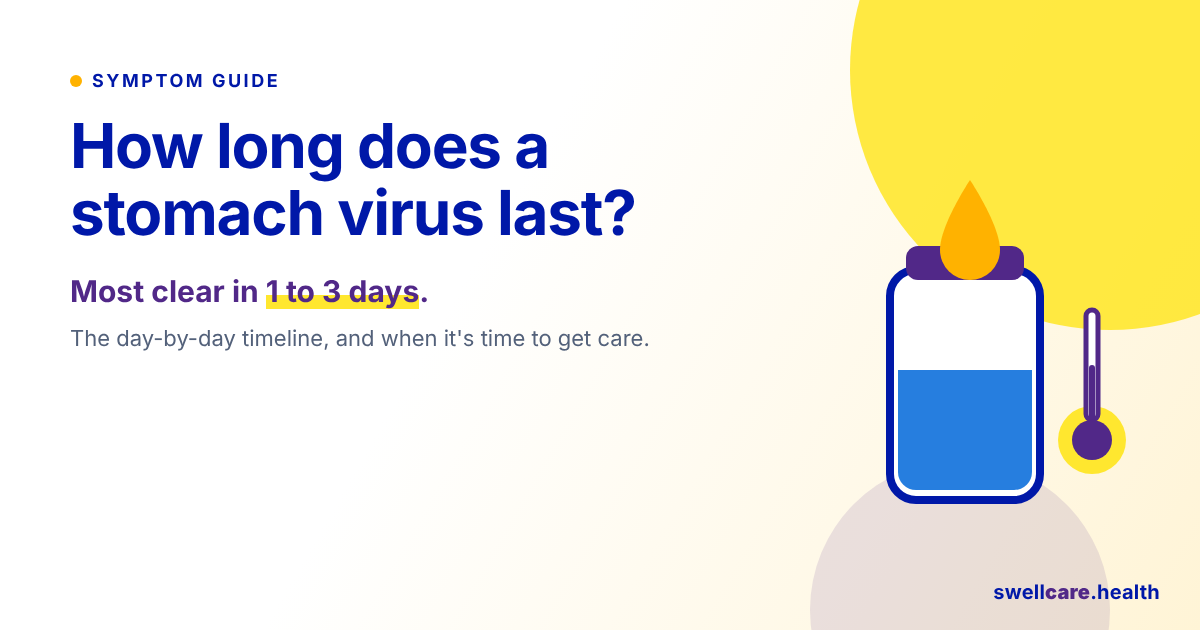
It’s 3 a.m., you’re hugging the bathroom floor, and you only want one answer. How long does a stomach virus last? For most people it’s 1 to 3 days. Some bugs hang on for a week or more.
That range is wide because “stomach virus” isn’t one illness. Viral gastroenteritis, the medical name for the stomach flu, is a group of viruses that all inflame your gut, and each one keeps its own schedule. Below you’ll find the timeline for each, what the worst days feel like, why a bug sometimes drags on, and the exact signs that mean it’s time to talk to a clinician.
How long does a stomach virus last?
Norovirus is the most common culprit in the US, and it’s quick. Vomiting and diarrhea are its trademark symptoms. According to the CDC, symptoms usually show up 12 to 48 hours after exposure, and most people feel better within 1 to 3 days. Rotavirus takes its time. Adenovirus takes even longer.
Here’s how the main culprits compare, based on the NIDDK summary:
| Virus | Symptoms start | Usually lasts |
|---|---|---|
| Norovirus | 12 to 48 hours after exposure | 1 to 3 days |
| Rotavirus | About 2 days | 3 to 8 days |
| Astrovirus | 4 to 5 days | 1 to 4 days |
| Adenovirus | 3 to 10 days | 1 to 2 weeks |
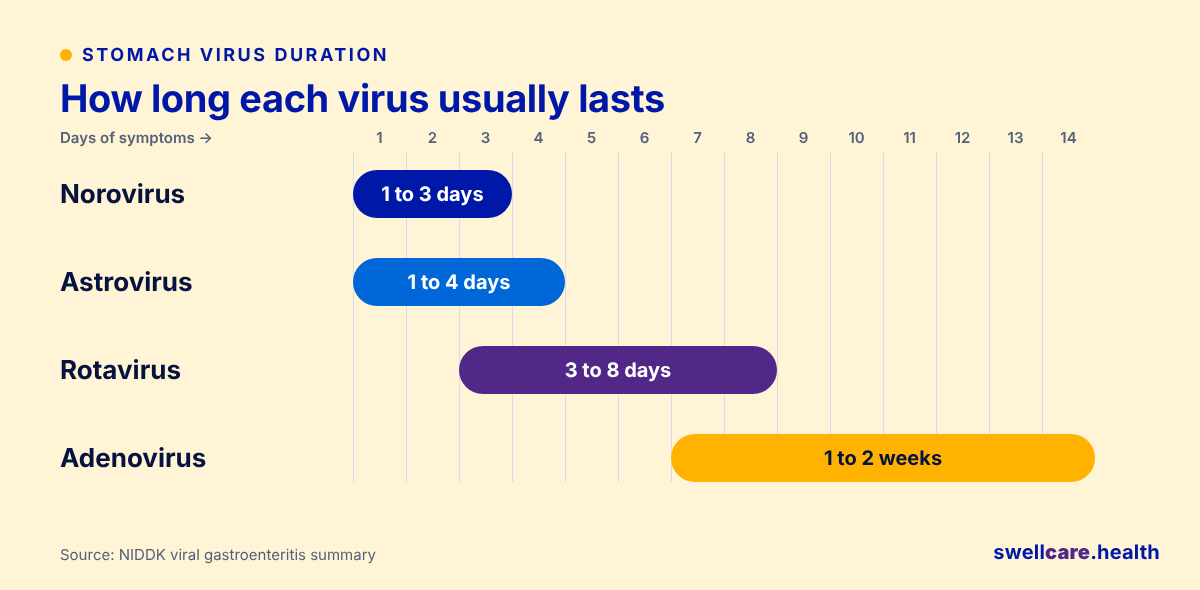
Mayo Clinic’s range for the stomach flu is similar: usually 1 to 2 days, occasionally up to 14. So if you’re on day 2 and still miserable, you’re not behind schedule. Day 5 with no improvement is a different conversation, and we’ll get to it.
A day-by-day timeline of stomach flu symptoms
Most people call it the stomach flu, though influenza has nothing to do with this illness. The pattern is the part people don’t expect. It doesn’t fade in a straight line.
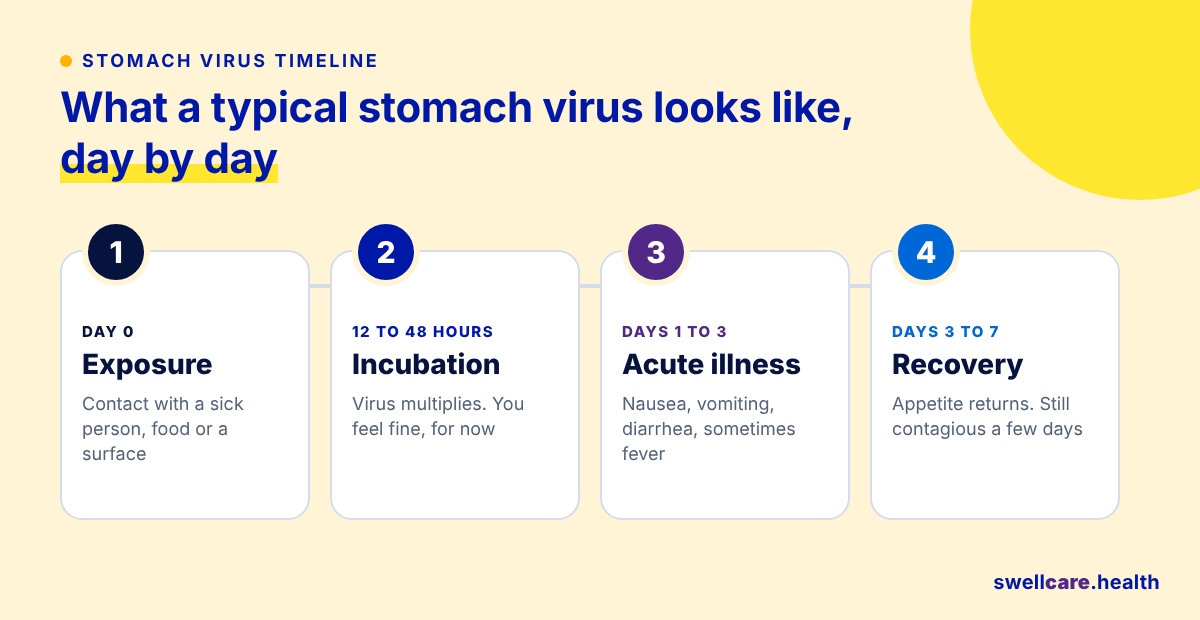
Hours 12 to 48: it hits fast
You feel fine, then you don’t. Nausea arrives first, often with cramps, and vomiting can start soon after. Some people get a low fever and the achy, wrung-out fatigue that makes them think of the flu. The symptoms can ramp up within a couple of hours.
Days 1 to 3: the worst stretch
Vomiting usually eases first. Watery diarrhea tends to stick around longer, and it’s the main reason dehydration sets in. Fatigue is heavy here, and the symptoms can swing from awful to almost fine and back again. Sleeping 14 hours isn’t laziness, it’s your immune system doing its job.
Days 3 to 7: the slow rebuild
Your appetite comes back in pieces. Toast first. Then rice. Then something with actual flavor. Your gut stays touchy for several days after the worst has passed, so recovery often feels slower than the illness itself. Cleveland Clinic notes you can keep shedding the virus for a few days even as you feel better, which means the infection can still spread.
Why your stomach bug is lasting longer than expected
If you’re past day 3, the usual suspects are boring ones.
You may have a slower bug. Rotavirus can run 8 days, adenovirus up to two weeks. You may also be dehydrated, which makes everything feel worse and look longer. And in a household, one person’s recovery often overlaps with the next person’s start, so the “same” illness seems to last a week.
Sometimes it isn’t viral at all. Bacterial food poisoning and a few parasites cause similar symptoms, including vomiting and diarrhea, and don’t clear on their own the same way. Cleveland Clinic’s guidance is blunt: if you haven’t improved after 4 days, call a provider.
How long is a stomach bug contagious?
Longer than you’d hope. You’re most contagious while you’re sick and for a few days after, and the germs spread through shared surfaces, food and close contact. The CDC also says you can keep spreading norovirus for 2 weeks or more after you feel fine. Tell the people who live with you, because they’re the likeliest to catch it, and keep the infection from spreading by giving the sick person their own bathroom if you can.
The practical rule is simple. Stay home until 48 hours after your last symptoms, and don’t prepare food for others in that window. If you work around food or look after kids or older relatives, treat 48 hours as a minimum.
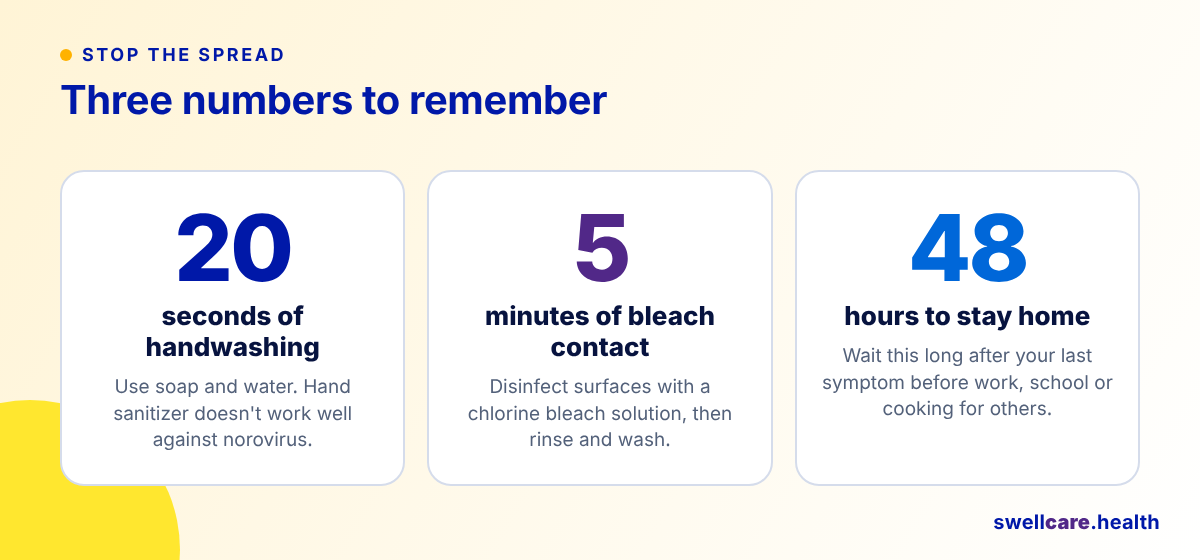
Hand sanitizer doesn’t work well against norovirus and won’t stop it from spreading, so wash with soap and water for at least 20 seconds. For surfaces, the CDC recommends a chlorine bleach solution left on for at least 5 minutes, and soiled laundry goes in the hottest wash cycle.
What helps you recover faster
There’s no pill that makes it disappear, and antibiotics don’t touch a viral infection. What helps is keeping up with fluids and hydration while your body clears it.
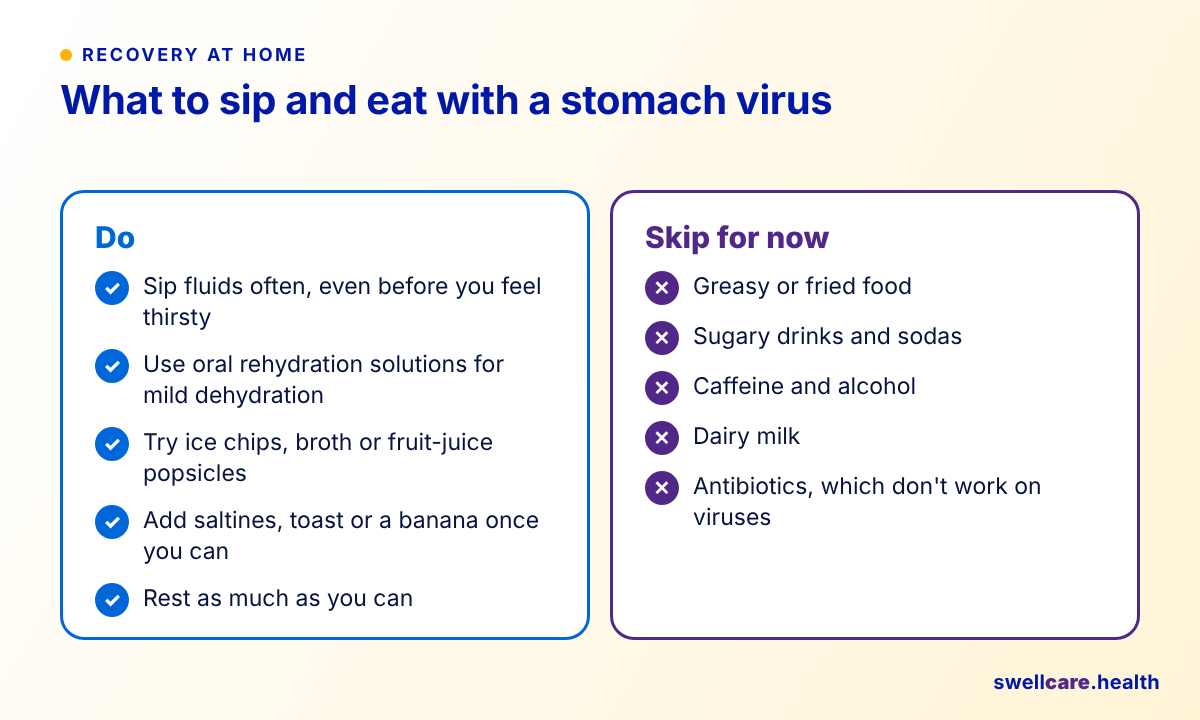
Sip fluids in small amounts, often, even before you feel thirsty. Ice chips count. For mild dehydration, over-the-counter oral rehydration solutions work better than plain water or soda because they replace electrolytes along with fluid. Good hydration also helps with the fatigue and the nausea. Sports drinks without caffeine can help in a pinch.
Once your stomach settles, go bland: broth, saltine crackers, a banana, plain toast. Skip greasy food, sugary drinks and caffeine for now. Dairy, too. Those can bring the symptoms back. Some research suggests probiotics might shorten the illness, but ask a clinician first, especially for kids or anyone with a weak immune system.
Rest matters more than people admit. Cancel the plans. Treatment here is really just supportive care until recovery catches up, and the stomach flu has no quick fix.
When to see a doctor for a stomach bug
Most cases are a rough few days at home. A few are not, and dehydration is the main reason. Here’s when to stop waiting it out, based on guidance from the NIDDK, Mayo Clinic and Cleveland Clinic.
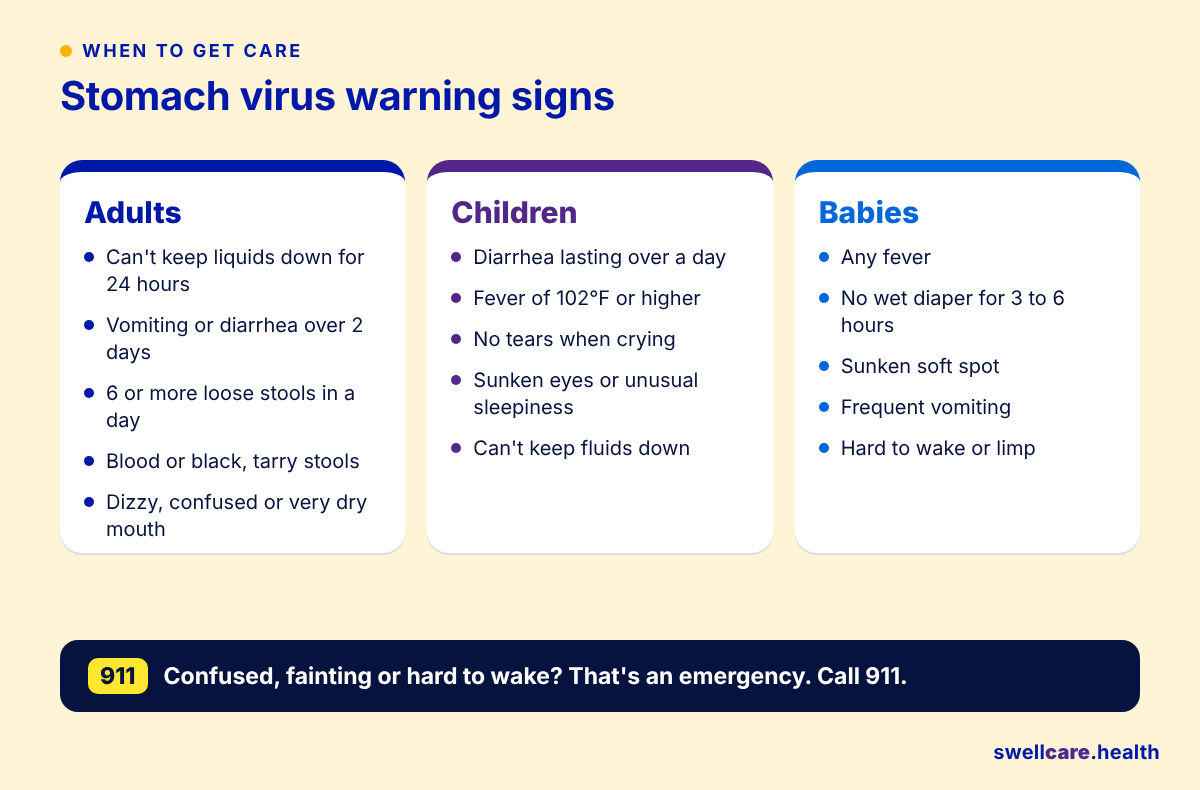
Adults, get care if you:
- can’t keep liquids down for 24 hours
- have vomiting or diarrhea lasting more than 2 days
- have six or more loose stools in a day
- see blood in your vomit or stool, or black, tarry stools
- have severe belly pain or a high fever
- feel confused, dizzy or faint, or notice dark urine and a very dry mouth
Children and babies, act sooner:
- diarrhea lasting more than a day
- any fever in an infant, or 102°F or higher in a child
- no tears when crying, sunken eyes, or unusual sleepiness
- no wet diaper for 3 hours or more (Mayo says 6 hours, so call early rather than late)
Older adults, pregnant women and anyone with a weakened immune system should check in with a clinician for any symptoms at all. NIDDK warns that dehydration can turn serious fast in babies. When dehydration starts, it’s a sign to act, not wait.
If someone is hard to wake, confused or collapsing, that’s an emergency. Call 911.
Stomach bug, food poisoning or the flu?
They overlap, which is why people mix them up. A stomach virus (viral gastroenteritis) is an intestinal infection. Food poisoning comes from contaminated food, and the culprit can be a virus or bacteria. Influenza is a respiratory illness, so a flu shot won’t protect you from the stomach flu. A cough or a stuffy nose points to influenza. Vomiting, nausea and diarrhea point to your gut.
Get care for a stomach bug without leaving home
Not sure if you’re past the point of waiting it out? Symptoms that linger or worry you deserve a quick check. SwellCare’s online urgent care puts you in touch with a licensed clinician by video or chat, day or night. They can review your symptoms, tell you whether home care is enough, and point you to in-person care if you need it. You can also browse the conditions SwellCare treats or see how it works.
SwellCare isn’t emergency care. If your symptoms are severe, call 911.
Questions people ask about a stomach bug
How long does it take to get over a stomach virus?
Most adults feel better in 1 to 3 days, though energy and appetite can lag for a few more. Rotavirus can run up to 8 days and adenovirus up to two weeks, and full recovery takes longer for some people. If you haven’t improved after 4 days, or you’re getting worse, it’s time to talk with a clinician.
What are the stages of a stomach virus?
There are four. First comes exposure, then an incubation period of about 12 to 48 hours for norovirus. Next is the acute stage, when nausea, vomiting, diarrhea and sometimes fever peak. Last is recovery, when symptoms fade but you’re still contagious for a few days.
Why is my stomach bug lasting so long?
It could be a slower bug like rotavirus or adenovirus. Dehydration can make you feel sick longer, and a second household infection can restart the clock. Food poisoning can also look the same. Past 4 days with no improvement, get checked.
How long is a stomach virus contagious?
You’re most contagious while symptoms last and for a few days afterward. The CDC says norovirus can keep spreading for 2 weeks or more. Stay home until 48 hours after symptoms stop, and wash your hands with soap and water, because sanitizer isn’t enough.
Can you flush a stomach virus out faster?
Not really. No drink or supplement speeds the virus out of your body. What you can do is replace lost fluids and electrolytes with oral rehydration solutions, rest, and eat bland food when you’re ready. That keeps you safe while your immune system finishes the job.
Trusted references
Public-health, research, and medical-society resources related to this guide.