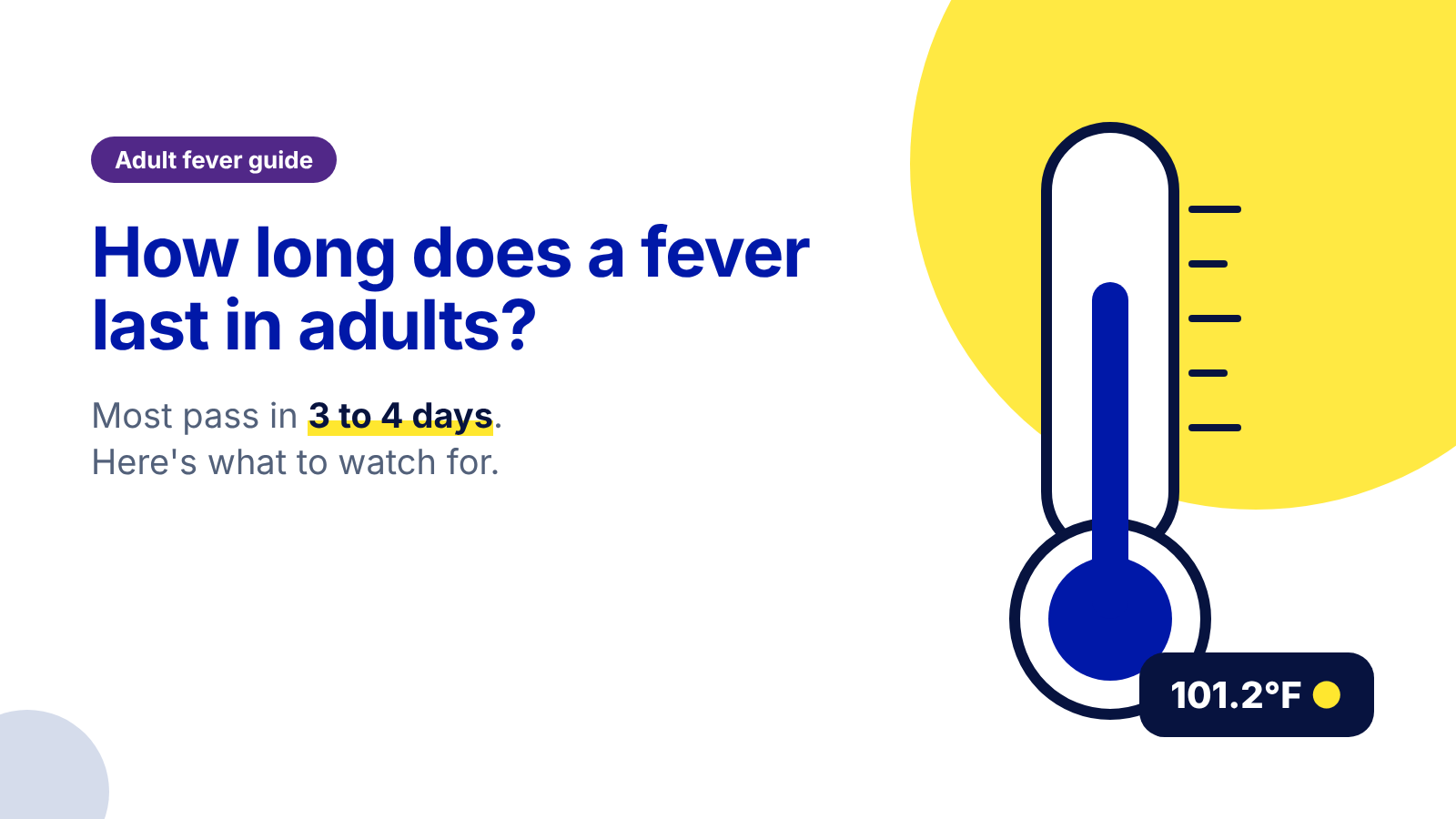
You’re hot, achy, and you want a number. So here it is. How long does a fever last in adults? For most people, a fever from an ordinary infection passes in three to four days, according to Cleveland Clinic. Still burning after that? Or climbing past 103°F? Then it’s time to get checked, not time to wait it out.
The rest of this guide shows what a normal fever timeline looks like, how long it runs with different illnesses, and which signs mean you shouldn’t sit at home.
How long does a fever last in adults?
Short answer: a few days. Mayo Clinic says most fevers go away within a few days, and that fits what clinicians see every week. Think of the fever as a symptom, not the disease. It’s your immune system turning up your body temperature so viruses and bacteria struggle to survive. When the infection loses, the fever goes with it. So if you’re wondering how long does a fever last in adults who are otherwise healthy, the honest answer is about three to four days, give or take a day.
Here’s the rule of thumb we give patients:
- Under 48 hours: expected. Rest and drink plenty of water.
- 48 to 72 hours: pay attention. MedlinePlus says adults should call a healthcare provider if a fever lasts beyond that window.
- Above 103°F at any point: call a healthcare provider, no matter how long it’s been.
Length matters, but so does the trend. A fever that’s slowly easing is a good sign. One that’s getting worse is not. Check your temperature morning and night, and jot down any new symptoms. That little log helps a doctor far more than “I’ve had a fever for a while,” and it keeps you honest about whether things are really improving.
What counts as a fever in adults
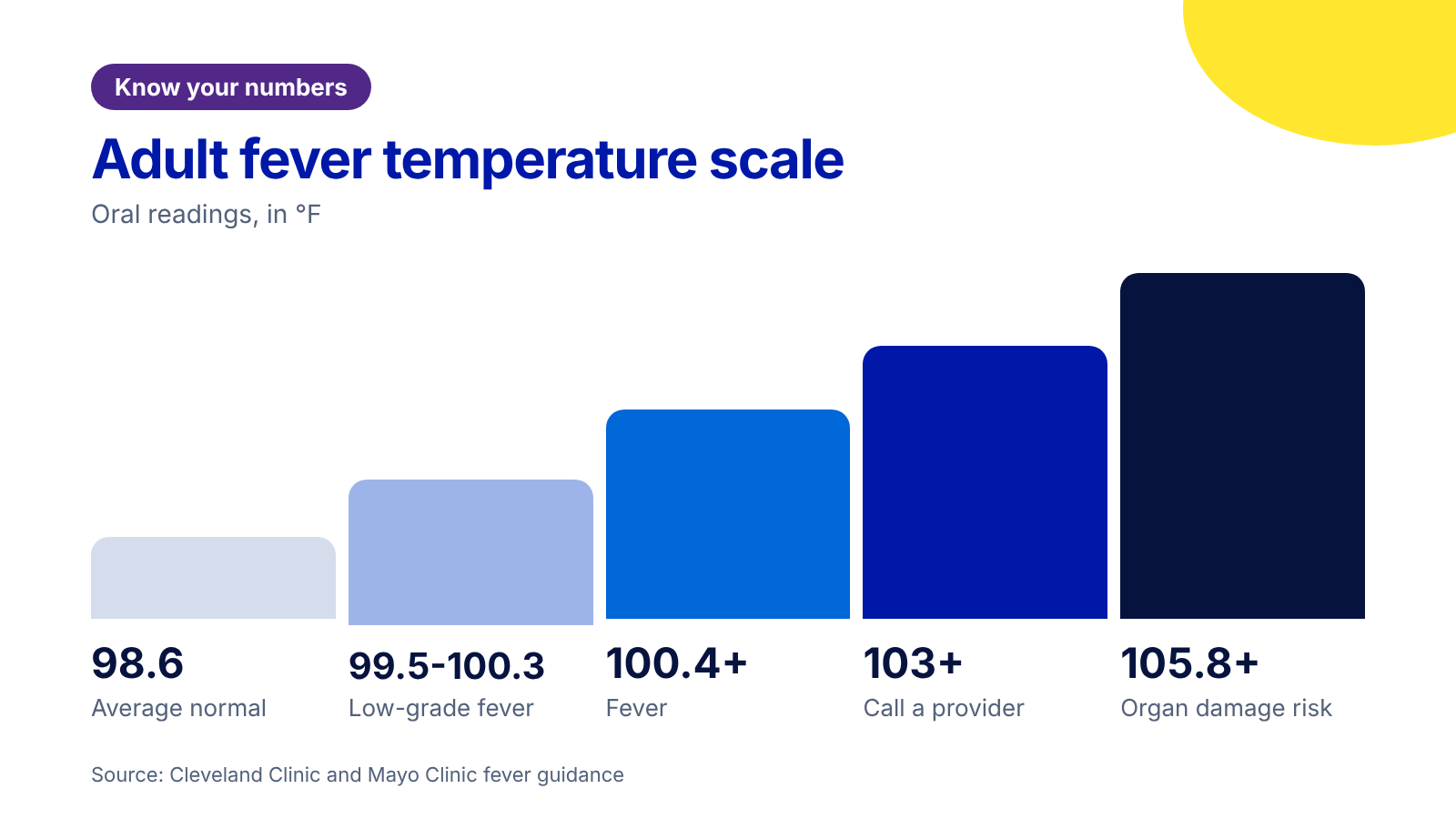
Your normal body temperature averages around 98.6°F, but it drifts through the day. Most providers call 100.4°F (38°C) by mouth a fever, though Mayo Clinic uses 100°F as its starting line.
| Reading (oral) | What it usually means |
|---|---|
| 98.6°F | Average body temperature |
| 99.5°F to 100.3°F | Low-grade fever |
| 100.4°F and up | Fever |
| 103°F and up | Call a healthcare provider |
| Above 105.8°F | Risk of organ damage if untreated |
Those numbers come from Cleveland Clinic’s fever guidance. A low-grade fever often means your immune system just started working, and you may feel nothing more than warm and tired. Common fever symptoms usually go beyond the number on the screen: sweating, a headache, aching muscles, weakness and less appetite. A small climb in body temperature can feel bigger than it looks, and a reading of 100°F with a pounding headache deserves as much respect as 101°F with none.
Use a digital thermometer. Oral readings are the everyday standard. Ear and rectal readings run about 1°F higher, and forehead readings about 1°F lower, so pick one spot and stick with it. Checking in the morning and again at night tells you more than checking every twenty minutes. Temperature naturally runs lowest early in the day and highest in the evening, so a bump at 7 p.m. isn’t a relapse. Body temperature also climbs after exercise, a hot shower or a heavy meal, so wait ten minutes before you measure. Take your temperature before any fever reducer, too, or the reading won’t mean much.
How long a fever lasts, by cause
The cause sets the clock. Most adult fevers come from a viral infection, and those tend to run short. Bacterial infections can run longer because they often need antibiotic treatment before the fever lets go.
| Cause | What the fever tends to do |
|---|---|
| Flu (influenza) | Typically 3 to 4 days, per the CDC. A fever that improves and then returns is a warning sign. |
| COVID-19 | Fever or chills are one symptom among many, alongside cough, fatigue and sore throat. There’s no fixed number of days, so watch the direction your temperature is heading. |
| Bacterial infections (strep, urinary tract infection, pneumonia) | Often lingers until the infection is treated. Antibiotics are the usual fix. |
| Vaccine reaction | Usually a day or two, according to MedlinePlus. |
| Heat illness, inflammatory conditions, some medications | Lasts as long as the trigger does. |
One more thing the table can’t show. Not everyone with flu gets a fever at all, so a normal reading doesn’t rule it out. When symptoms overlap, a test for influenza or COVID-19 can sort out the cause and shape your treatment.
A day-by-day look at a typical fever
Every body runs its own schedule. Still, a simple viral infection tends to follow a familiar arc, and knowing it makes the symptoms less scary.
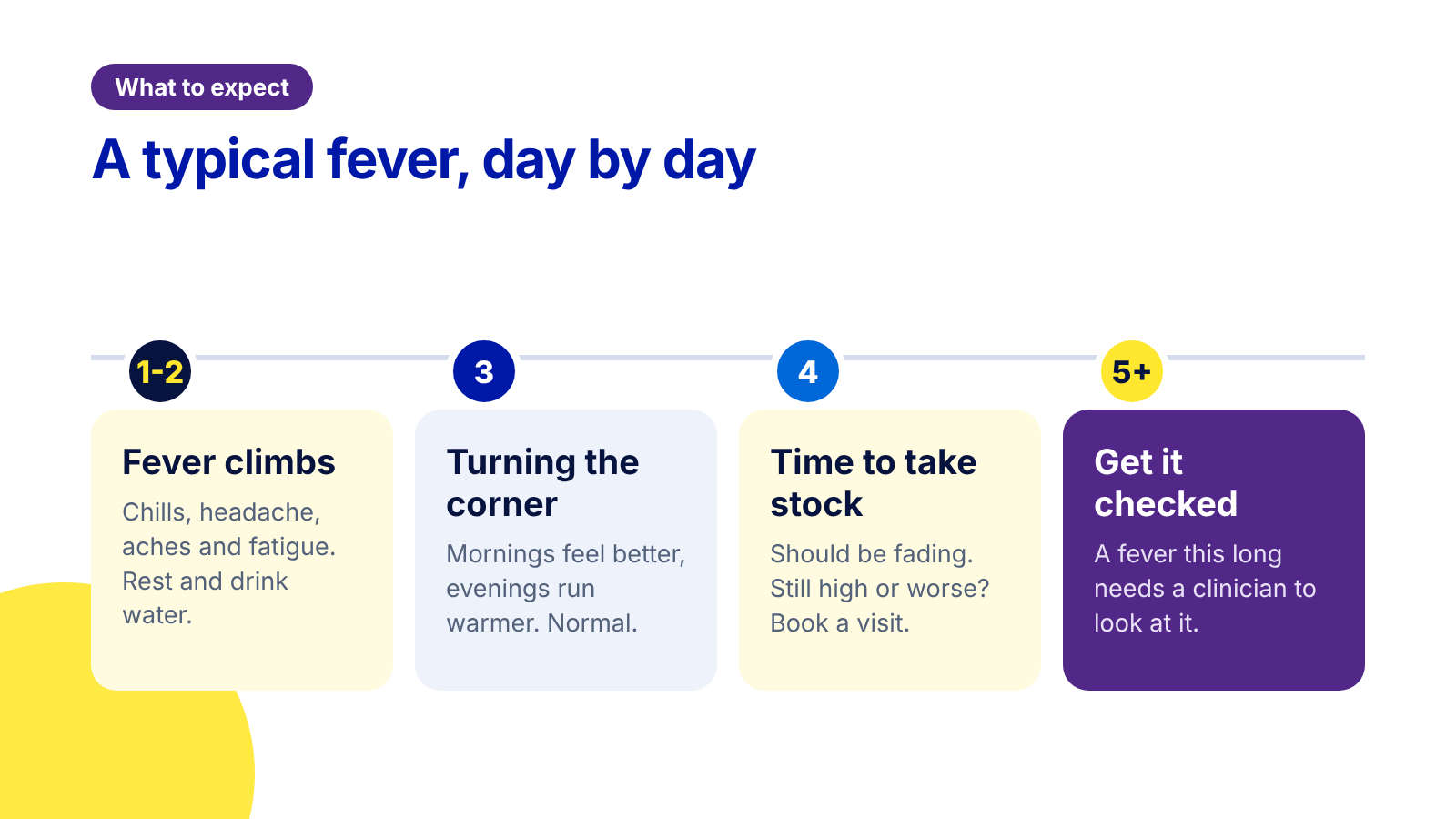
Days 1 and 2. The fever climbs. Chills, a headache, aching muscles and heavy fatigue are all common. You’ll probably sweat as the temperature swings, and a rash isn’t part of the usual picture, so tell someone if one appears.
Day 3. Many people turn the corner here. Your temperature may drop in the morning and creep up again at night. That’s normal.
Day 4. The fever should be fading, though cough or tiredness can hang around. This is the day to take stock. If your temperature is still high, or you feel worse than you did on day two, book an urgent care visit and get medical attention before the weekend.
Day 5 and later. A fever that’s still here now usually points to something that needs a closer look, so see a doctor.
How to feel better while the fever runs its course
The goal of treatment isn’t a perfect 98.6°F. It’s comfort. Cleveland Clinic points out that a fever under about 101°F often needs no medication at all.
Fluids, rest and cooling
Fever burns through water, so dehydration sneaks up fast. Sip water, broth or an electrolyte drink all day. Aim for pale yellow urine, and if it turns dark you’re behind on hydration. Sweating, vomiting or diarrhea make that worse.
Sleep as much as you can. Dress in light layers and keep the room comfortable. A lukewarm bath can help, but skip cold baths, ice and alcohol rubs, since they cause shivering that pushes your temperature back up. Don’t pile on blankets when you’re shivering.
Fever reducers: what to take and what to skip
Above 101°F, the usual choices are acetaminophen or an anti-inflammatory such as ibuprofen. MedlinePlus lists acetaminophen about every 4 to 6 hours and ibuprofen about every 6 to 8 hours, but follow the label on your bottle. Check with a clinician first if you have liver, kidney or stomach problems, or take other medications. Watch for signs of dehydration too: a dry mouth, dizziness when you stand, and very little urine. Some common medications, including certain antibiotics and drugs for high blood pressure or seizures, can cause fever themselves, so tell your clinician what you take.
Two cautions. Skip any pill that hides the same ingredient as your fever reducer, like some cold and flu mixes. And never give aspirin to anyone under 17.
Home treatment never needs to be fancy. Good hydration, sleep and a fever reducer when you’re miserable cover most cases. And if you’re staying home, the NHS advises avoiding other people until your temperature is back to normal. Nobody gets a medal for pushing through a shift with a fever.
When a fever lasting this long is a problem
You don’t need to be a hero. A fever is a symptom, and sometimes the thing causing it needs treatment. Knowing when to seek medical attention is the most useful skill in this whole guide, so here’s a plain split between “call someone soon” and “go now.”
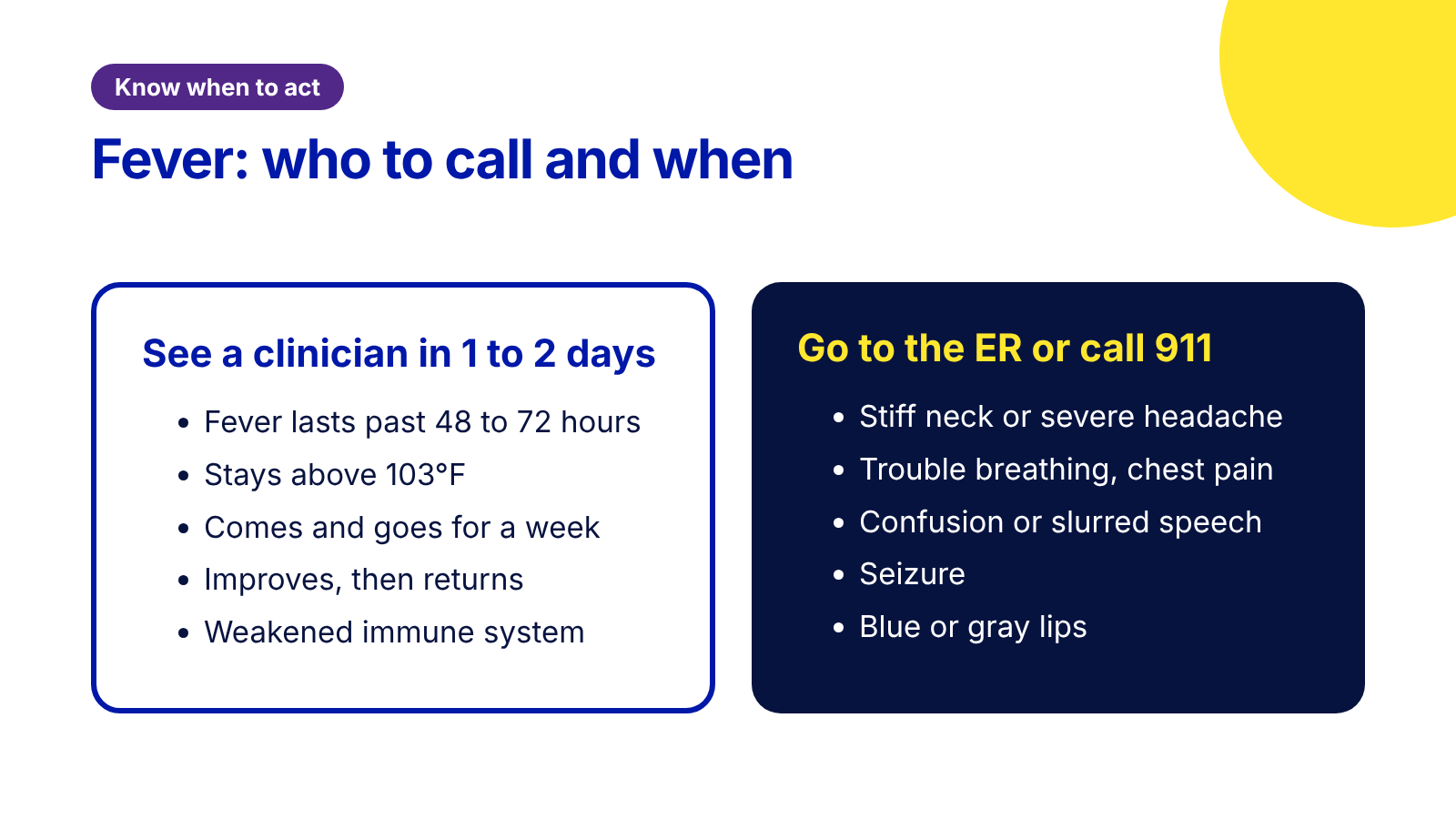
See a clinician within a day or two
Get medical attention from a doctor or other healthcare provider if any of these apply:
- The fever lasts more than 48 to 72 hours
- It stays above 103°F
- It comes and goes for a week or more, even if it’s mild
- It improves, then returns or worsens
- You have a chronic illness, take medications that weaken your immune system, or recently traveled abroad
- You’ve developed pain when urinating, which can point to a urinary tract infection
Go to the ER or call 911
Skip the waiting and head to the emergency room for medical attention, or call 911, if a fever comes with any of these symptoms. The list draws on Mayo Clinic and the CDC, and both name seizures. Many people with chest pain or trouble breathing try to drive themselves. Don’t. Get an ambulance.
- A severe headache, or a stiff neck that hurts when you bend your head forward
- Trouble breathing or chest pain that won’t ease
- Confusion, strange behavior or slurred speech
- A new rash, or unusual sensitivity to bright light
- Persistent vomiting or severe abdominal pain
- A seizure
- Gray, pale or blue lips, or you can’t stay awake
A stiff neck with fever can signal meningitis, and fever with confusion and fast breathing can mean sepsis. Both are emergencies that belong in an emergency room. Don’t second-guess it.
Get fever care from SwellCare today
Most fevers don’t need an emergency room visit. They need a clinician who’ll listen, look at your symptoms and tell you what happens next, from home treatment to in-person tests. That’s what a SwellCare urgent care visit is for.
You can start a visit from home, day or night, and talk with a licensed clinician about your fever, your other symptoms and how long this has gone on. Bring your temperature log if you’ve kept one. If we think a screen isn’t enough, we’ll tell you plainly and point you to in-person care. We’re not emergency care, and we can’t treat chest pain over video. If you have severe symptoms, call 911.
Not sure whether your symptoms are covered? Browse the conditions we treat or see how it works. Feeling sick today? Start a visit and get a clear next step.
Questions people ask about fever duration
Is a fever that lasts 3 days normal?
Yes, for most adults. When people ask how long does a fever last in adults, three to four days is the typical answer for an infection like flu. What matters is the trend. If your temperature is easing and you feel a little better each day, you’re on track. If it’s holding at 103°F or higher, or you feel worse, call a healthcare provider.
How long should you stay home after a fever?
The NHS advises staying home until your temperature has gone. A common rule of thumb is to wait until you’ve been fever-free for a full 24 hours without taking a fever reducer. Your workplace or clinician may have a stricter rule.
Is 99.5 a fever in adults?
Not quite. Cleveland Clinic describes 99.5°F to 100.3°F as a low-grade fever, and most providers start counting a true fever at 100.4°F. A low-grade reading with other symptoms, like fatigue or chills, still means your body is fighting something.
Can you have the flu without a fever?
Yes. The CDC notes that not everyone with flu runs a fever. Sudden body aches, cough, fatigue and chills can all point to flu even when the thermometer stays near normal, and COVID-19 can look much the same.
Why does my fever keep coming back?
Fevers often dip in the morning and rise at night, which is normal. But a fever that improves and then returns or worsens is a warning sign the CDC lists for flu, since it can mean a second infection such as pneumonia. If it comes and goes for a week or more, or you notice a rash, see a clinician.
Should I take medicine for a low fever?
Usually not. Cleveland Clinic says medication is typically unnecessary under about 101°F. Focus on fluids and rest, and take acetaminophen or ibuprofen only if you’re uncomfortable. The medicine treats how you feel, not the infection underneath, and your temperature will rise again as it wears off.
Trusted references
Public-health, research, and medical-society resources related to this guide.