You felt fine at breakfast. By dinner your legs ached, your head pounded, and a chill had settled in that two blankets couldn’t fix. That’s the flu, and it rarely knocks politely.
So how long does the flu last? For most healthy adults, the worst passes in about 5 to 7 days, and the CDC says most people recover in a few days to under two weeks. The cough and the bone-deep tiredness are the stragglers. They can outlast the worst of it by a good margin, and fatigue is the symptom that lingers most.
Here’s the full recovery timeline, day by day, plus how long you’re contagious, why some people take longer, and when it’s time to call a doctor.
How long does the flu last? The short answer
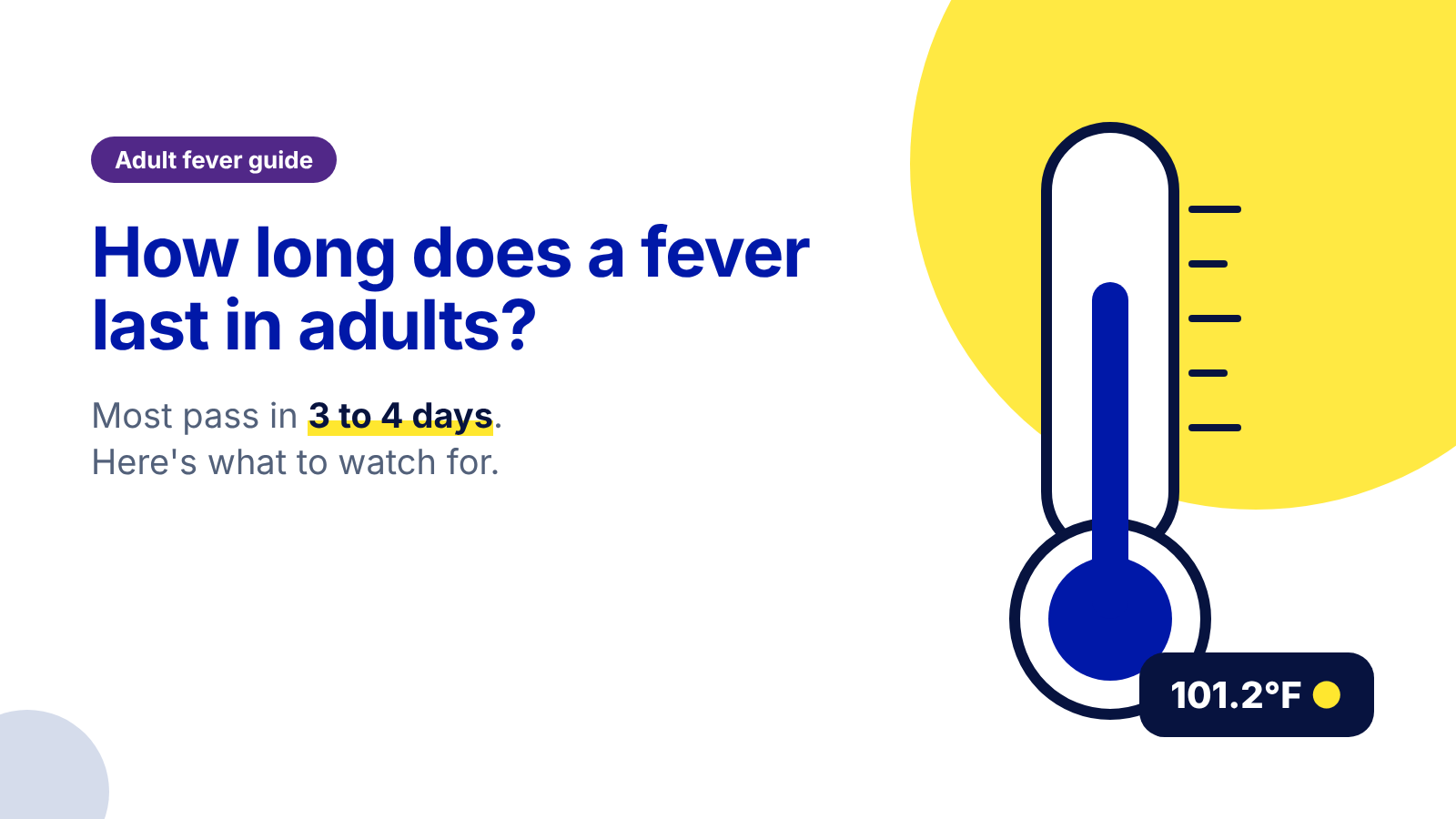
Plan on about a week of real illness, with flu symptoms that peak early and fade in stages. Harvard Health puts the usual span at five to seven days in otherwise healthy people, and the fever itself usually lasts around three to four days.
Then comes the tail. Your temperature drops, you start eating again, yet you still nap at 2 p.m. and wake at night. That’s normal, and it doesn’t mean you’re getting worse. Think of the first week as the illness and the second week as the recovery.
Flu recovery timeline for adults, day by day
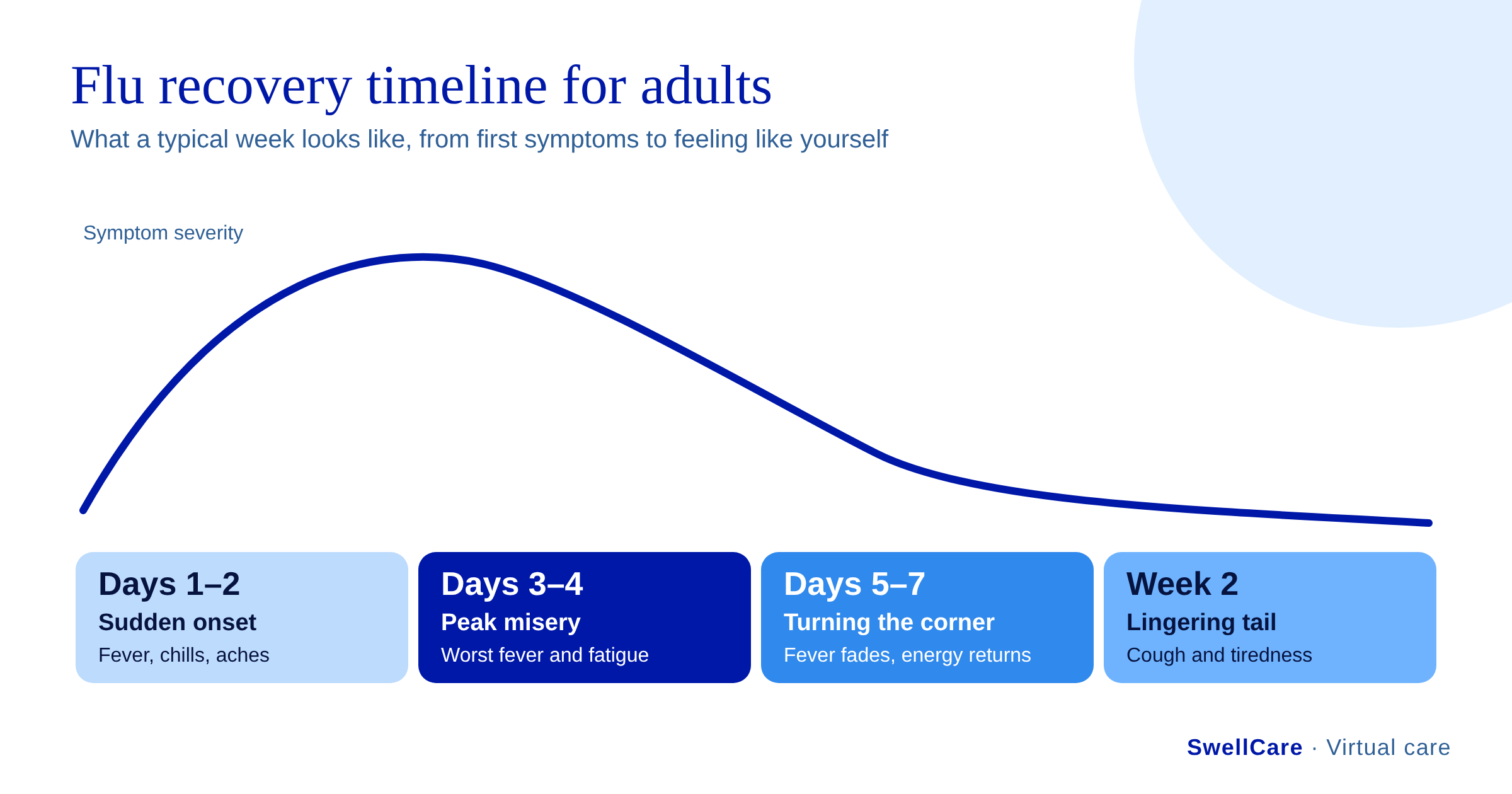
Every case runs a little different. This is the typical shape of the recovery timeline when nothing goes wrong, and your symptoms will change from one day to the next. The virus usually takes about two days, within a range of one to four, to cause symptoms after exposure to influenza, so day 1 below means the first day you feel sick.
Days 1 and 2: it hits fast
Flu starts suddenly, which is the biggest clue that it isn’t a cold. You get a fever or chills, a dry cough, a sore throat, body aches and a headache, often all in one afternoon. Fatigue arrives with them, along with a stuffy nose or other congestion for some people. Not everyone runs a fever, and the chills can come first, so don’t rule flu out just because the thermometer looks fine.
Days 3 and 4: the worst stretch
This is where most people feel truly flattened. The temperature peaks, the body aches are at their loudest, and the cough turns deeper. Rest is not optional here. Plan to be horizontal.
Fatigue, sore throat and chills all tend to be at their worst. If you’re going to see a clinician about antiviral medication, now is the very latest you want to be calling.
Days 5 to 7: turning the corner
Your temperature settles first. Appetite creeps back, the sore throat eases and the headache lifts. Most symptoms ease, but you’re still tired, and a short walk can wipe you out. You can finally think straight again.
Week 2: the lingering tail
A dry cough, a bit of congestion and low energy can hang on, and those leftover symptoms are mostly fatigue. Rest still matters. Gradual improvement is the goal. A fever or cough that gets better and then comes back worse is a different story, and we’ll cover it in the doctor section below.
How long are you contagious with the flu?
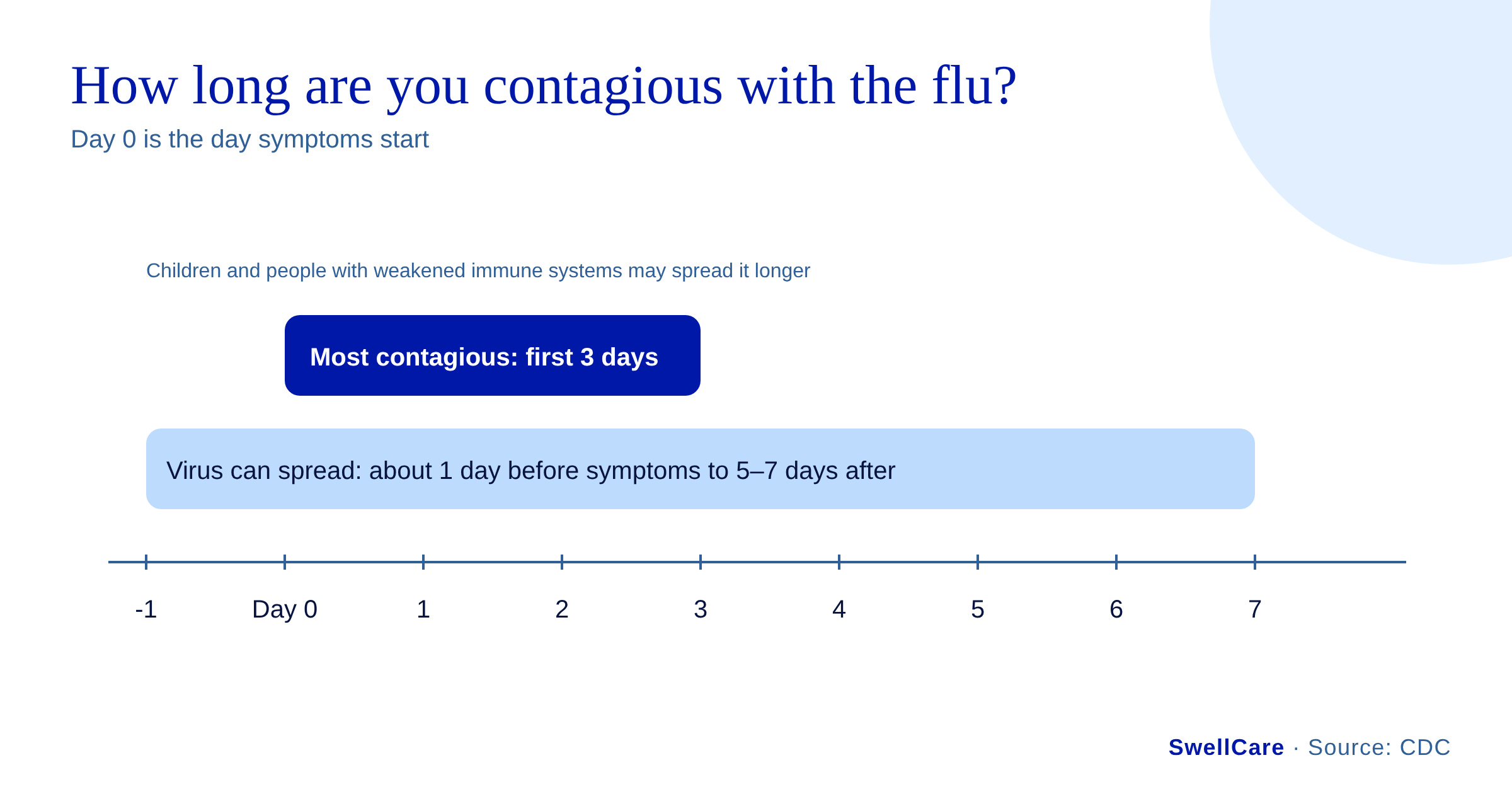
Longer than most people think, and it starts before you feel sick, so exposure at home or the office can happen before you feel a thing. Exposure that early is why flu moves through families so fast. The CDC says flu viruses can be detected from about a day before symptoms to five to seven days after you get sick, and you’re most contagious in the first three days of illness.
Young children and people with weakened immune systems may spread the virus for longer.
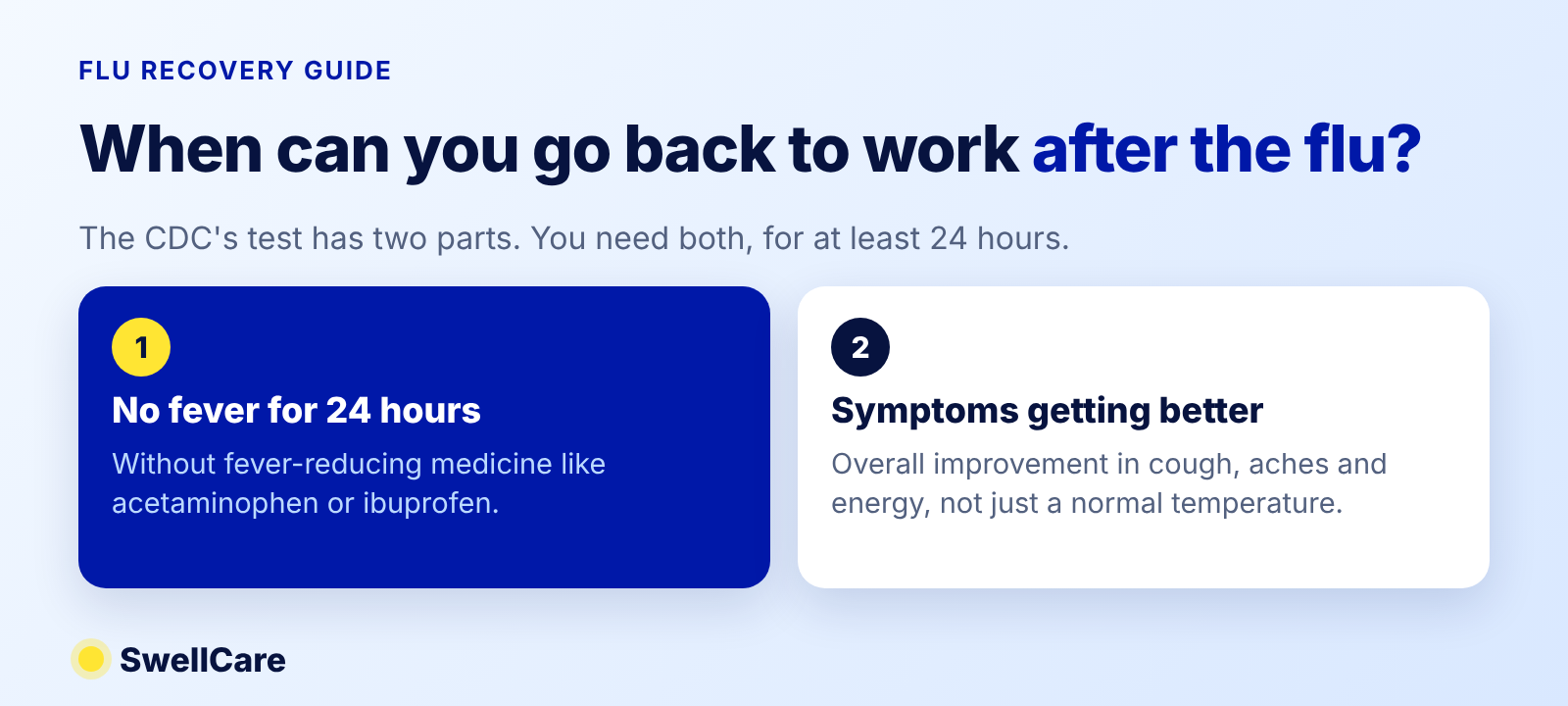
The CDC’s rule for returning to normal activity is simple: wait until your symptoms are improving overall and you’ve been fever-free for at least 24 hours without fever-reducing medicine. Staying home until then limits exposure for coworkers who may be at higher risk, and every extra day of exposure matters to them. Rest at home, away from others, is the point.
Why the flu drags on for some adults
Same influenza virus, very different weeks. People 65 and older, pregnant women, and people with asthma, diabetes or heart disease face a higher chance of complications and often feel sick longer, with more severe symptoms. So do people who start resting late and push through the first two days at work.
The complication to watch is pneumonia, a lung infection that can follow influenza when a bacterial infection piles on. Other complications include worsening of asthma or heart problems, and any respiratory complication is a reason to call. The warning sign is a pattern, not a single symptom: you start to improve, then the symptoms return and worsen.
Other respiratory illnesses can also masquerade as a slow flu, and their symptoms look much the same. If you’re still sick after two weeks, or you never really improved, it’s worth being checked.
Is it the flu, a cold or COVID-19?
Flu symptoms come on in hours, while a cold builds slowly and rarely brings real fever or body aches. COVID-19 overlaps heavily with flu, down to the cough and fatigue. Loss of taste or smell is more common with COVID-19, but symptoms alone can’t separate them. A swab test can, and the rapid tests deliver results in about 15 to 20 minutes in a clinic.
What actually speeds up flu recovery
Antibiotics don’t touch it. Antibiotics fight bacteria, not viruses like influenza, so skip the request. Flu is a viral illness, and the flu virus doesn’t respond to them.
What can help is a prescription antiviral medication. Oseltamivir (Tamiflu) and a few others work best when started within one to two days of the first symptoms, and the CDC says they can shorten illness by about a day and cut some complications. That sounds small until you’re on day three. Adults at higher risk get them first. Most healthy adults with mild illness don’t need one, but the 48-hour window is the reason not to wait and see.
The rest is basic, and it works for most flu symptoms:
- Rest. Sleep is when your body does the work. Cancel things. Your fatigue is a signal, not a weakness.
- Fluids. Water, broth and tea keep hydration up, and steady hydration also helps loosen congestion and a sore throat, especially when you’re sick and not eating. Drink fluids all day, in small sips if your stomach is touchy.
- Fever and aches. Acetaminophen or ibuprofen can take the edge off. Check labels and your own health conditions first.
- No aspirin for teens. The CDC warns that children and teenagers with flu shouldn’t take aspirin because of the risk of Reye’s syndrome.
When to see a doctor for the flu
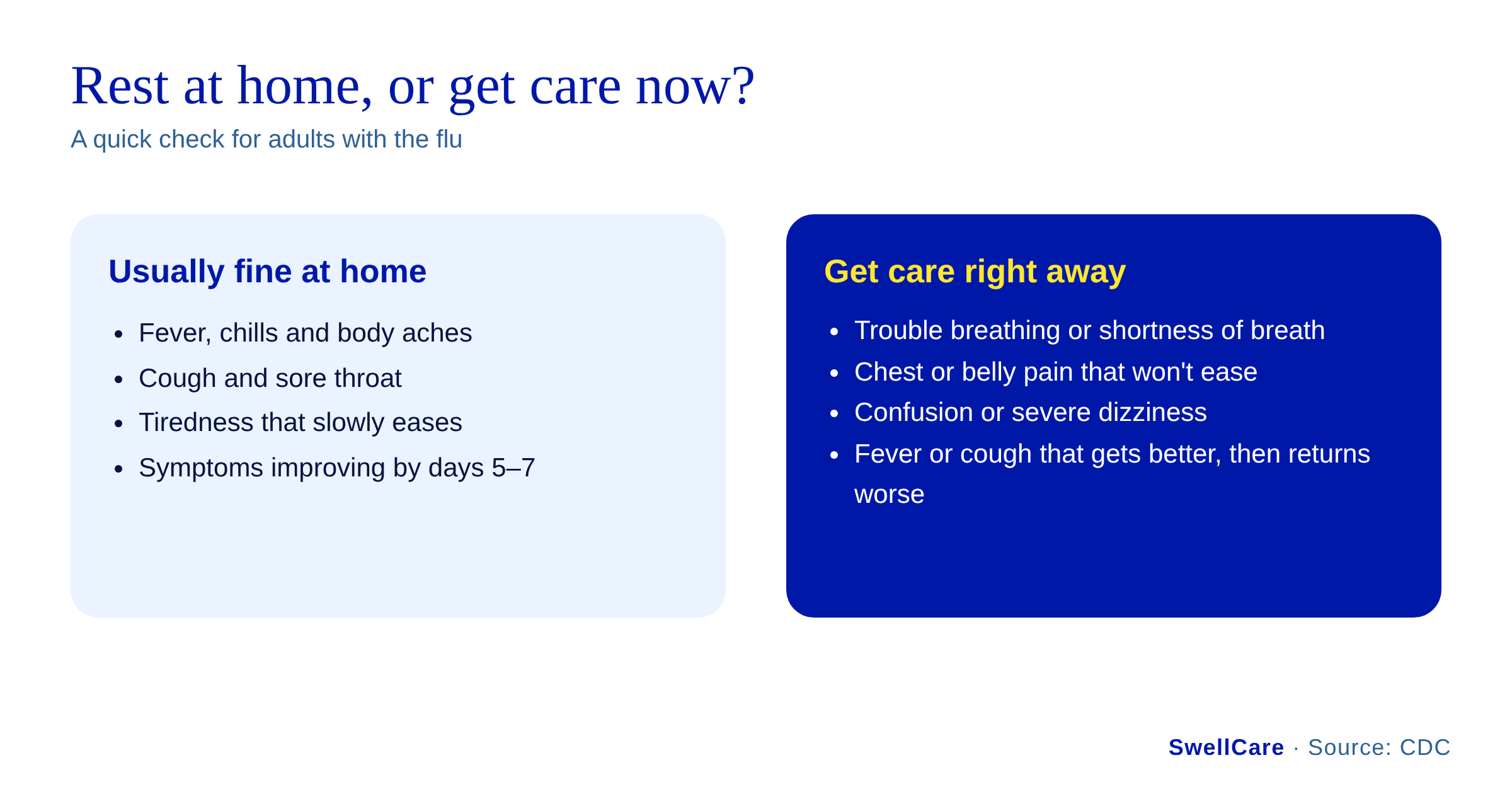
Most people get through the flu at home with rest and fluids. Some don’t, and the emergency warning signs are specific. The CDC lists trouble breathing or shortness of breath, chest or abdominal pain that won’t go away, confusion, severe dizziness, seizures, not urinating, severe muscle pain or weakness, and a fever or cough that improves and then returns or worsens. Those symptoms need care right away, so go to the ER or call 911.
For everything short of that, a clinician can help. If you’re high risk, or you’re within the first two days and want to ask about an antiviral, a short virtual visit is faster than a waiting room. Swell offers 24/7 clinician-led virtual care for urgent concerns with no membership needed. You describe what’s going on, and a clinician tells you whether home care is enough.
Questions people ask about how long the flu lasts
How long does the flu last in adults?
Most healthy adults feel clearly better in 5 to 7 days. The CDC says most people recover in a few days to under two weeks. Fatigue and other lingering symptoms can run past the worst days, so full energy sometimes takes a little longer.
Can the flu last 2 weeks?
Yes, in some people. Tiredness and a cough can run into week two. What isn’t normal is feeling worse after improving, or no improvement at all. Either one means it’s time to see a doctor.
When can I go back to work after the flu?
Once you’ve gone 24 hours without a temperature, without using fever reducers, and your symptoms are clearly getting better, per the CDC. You may still have a cough, so cover it and wash your hands.
Do antibiotics help the flu?
No. Flu is caused by a virus, and antibiotics only work on bacteria, so they won’t ease flu symptoms. Antiviral medication is the prescription option, and it works best when started early.
How long is the flu contagious?
From about a day before symptoms start to five to seven days after, with the first three days being the peak. Some people, like young children, stay contagious longer.
Trusted references
Public-health, research, and medical-society resources related to this guide.