Most people lose a few pounds. That’s the honest answer to how much weight you can lose on semaglutide in a month, and it surprises many patients who expected dramatic weight loss in the first four weeks. You’ll see “10 pounds in 30 days” on social media. Neither the trial data nor the dosing schedule supports that as typical.
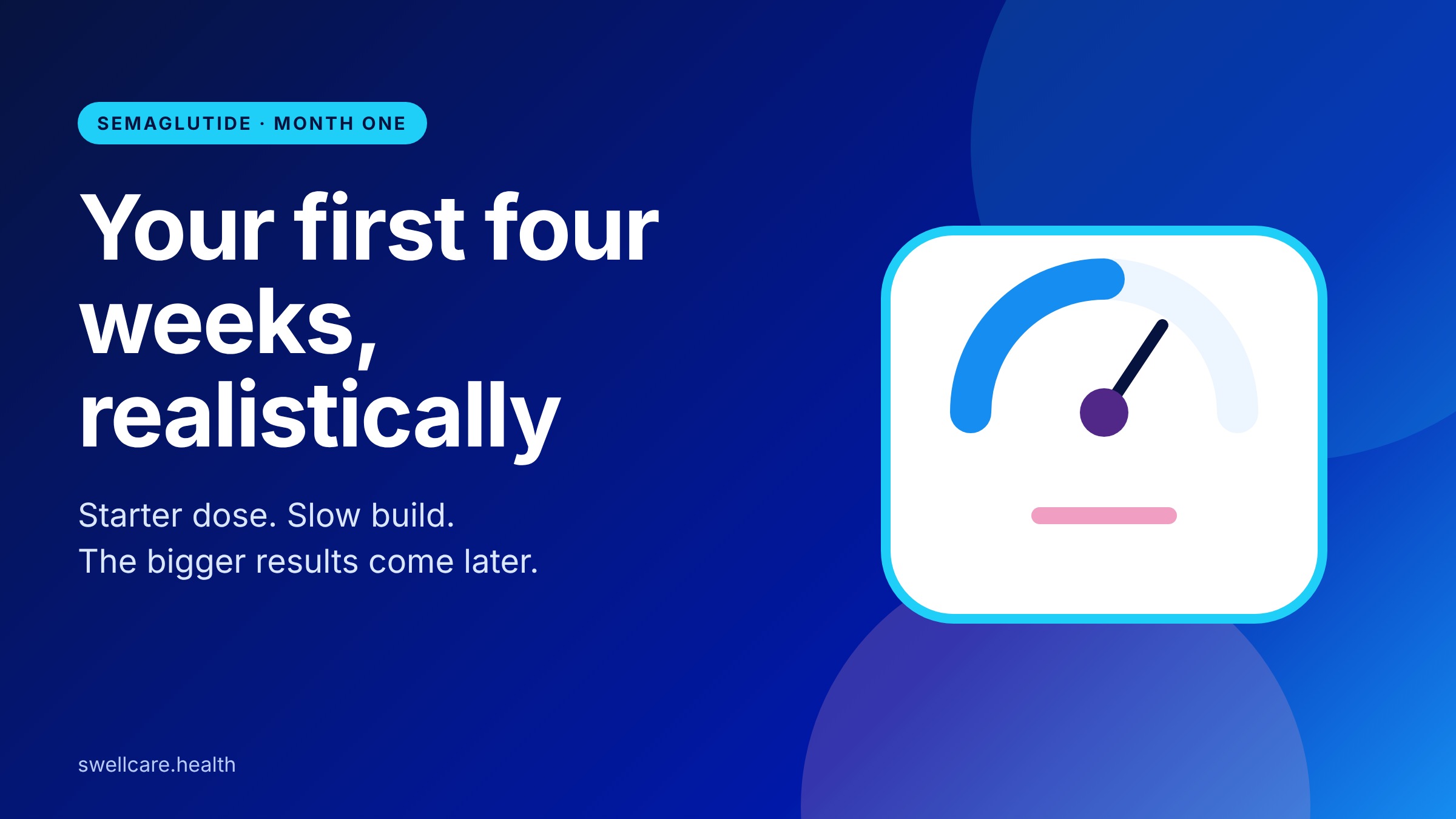
Here’s why. The first month is the starter dose. Your body is getting used to the medication, your appetite is starting to shift, and the bigger weight-loss results come in the months that follow. This guide covers what a realistic first month looks like, what changes the number, and how to make those four weeks count.
The short answer on first-month semaglutide weight loss
Start with simple math. The CDC describes 1 to 2 pounds a week as a safe, steady pace of weight loss. Four weeks at that pace tops out at 4 to 8 pounds. Think of that as the ceiling for healthy weight loss in the first month, not the average weight loss on a starting step.
For someone who weighs 200 pounds, 4 pounds is 2% of body weight, which shows how small even a good first month can look.
So how much weight can you lose on semaglutide in a month? Usually a modest drop on the scale, often a few pounds, plus a clear change in appetite. Some people see more weight loss early on, partly because they’re eating far less and shedding water. Some lose almost nothing. Both are normal, and neither predicts your long-term weight loss.
No major clinical trial reports one neat number for week four. Anyone quoting you an exact figure is estimating. What we can say comes from three places: the FDA dosing schedule, the long-running clinical trials, and the pace guidance above.
Why month one runs slower than you’d expect
Semaglutide is a GLP-1 medication given as a weekly injection. According to the Wegovy prescribing information, treatment begins at 0.25 mg once a week for four weeks. After that, the dose steps up every four weeks toward a maintenance dose, usually 2.4 mg. In your first month on semaglutide, weight loss is not the main goal of the dose; tolerance is. If a step isn’t tolerated, the label says to consider delaying the next increase by four weeks.
So your entire first month sits on the smallest rung. Back to the question: how much weight can you lose on semaglutide in a month at 0.25 mg? Not much, by design. That starter dose exists to let your stomach adjust. It isn’t built to deliver full-strength weight loss.
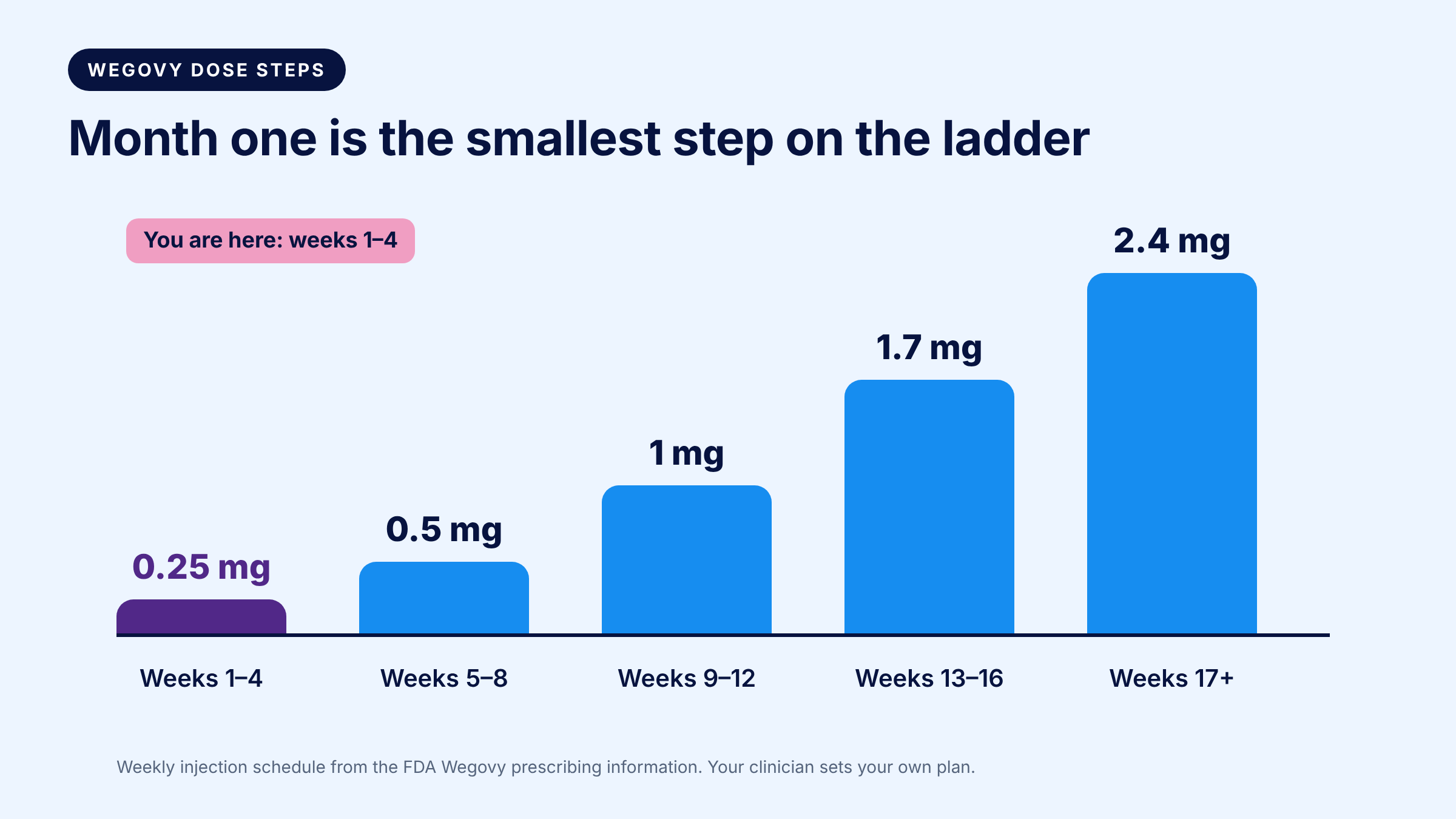
Think of it as a ramp for weight loss. Hunger and cravings often change before the scale does. You might feel full sooner or notice the urge to snack fading, and that quiet shift is the thing doing the work.
One quick note on names. Wegovy is the semaglutide injection approved for weight management, and Ozempic is the same drug approved for type 2 diabetes. Patients often hear both brand names, and Ozempic and Wegovy share the same 0.25 mg opening step. Tirzepatide (Zepbound, Mounjaro) is a different drug.
What clinical trials say about semaglutide weight loss
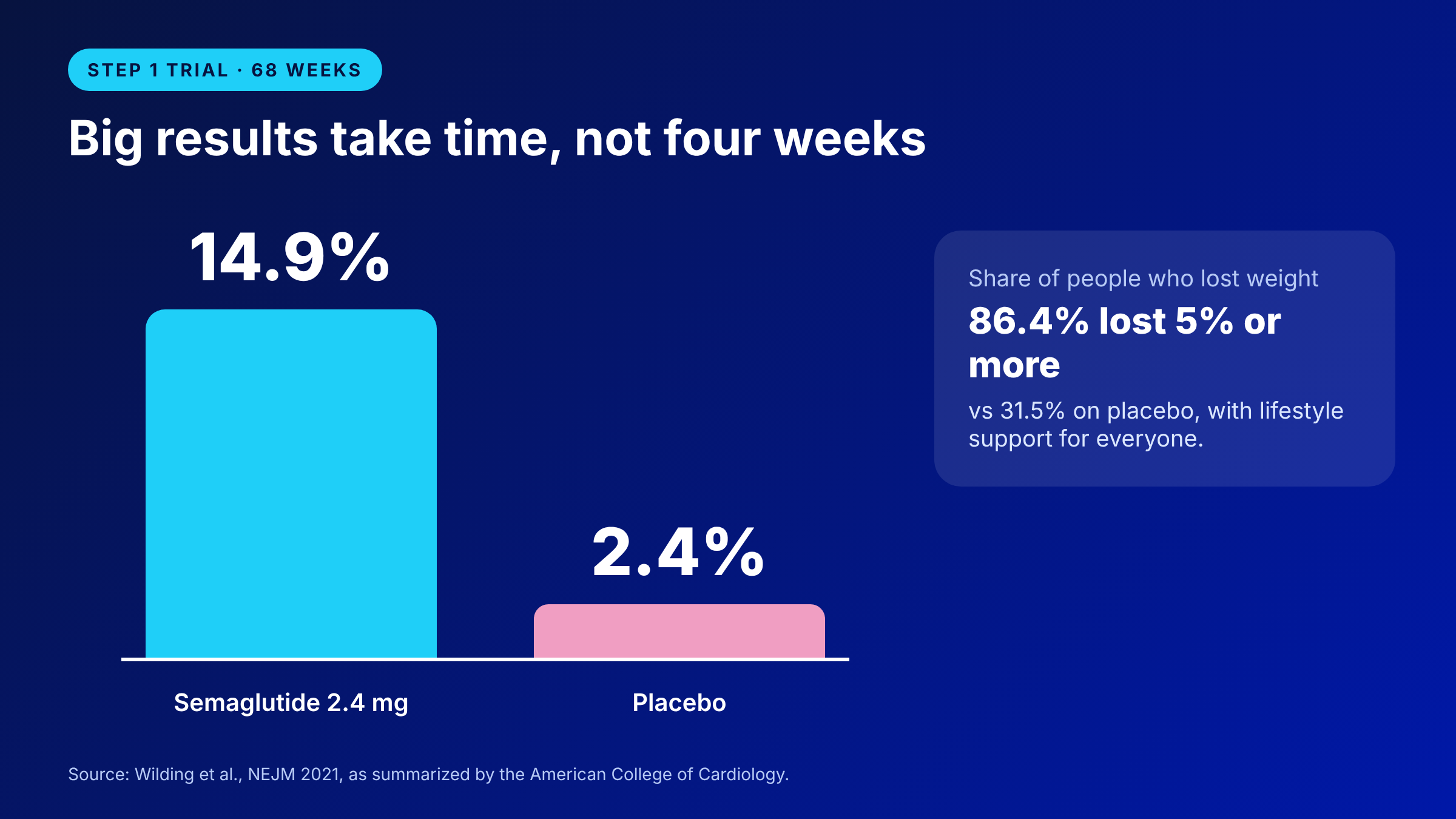
The best-known study is STEP 1. It followed 1,961 adults with obesity, or with overweight plus a related condition, for 68 weeks. As summarized by the American College of Cardiology, patients taking semaglutide 2.4 mg weekly with lifestyle support lost an average of 14.9% of their body weight. STEP 1 excluded people with diabetes, so results can differ if you have type 2 diabetes. The placebo group lost 2.4%. About 86% of the semaglutide group lost at least 5% of their body weight, compared with roughly 32% on placebo.
Those are 68-week results at the full maintenance dose, not four-week results on a starting step. So how much weight can you lose on semaglutide in a month versus a year? The trial answers the year question, not the month question. You can’t divide 14.9% of body weight by the number of weeks and call it a monthly rate. Weight loss tends to build as the dose climbs, so the first month is the quietest stretch of the whole weight loss course. Everyone in the trial, including the placebo group, also got lifestyle support, so that weight loss came from medication plus habits.
A related GLP-1-based medication, tirzepatide, has its own clinical trials and its own results. This article sticks to semaglutide, so don’t mix the two sets of numbers when you compare plans.
What moves your month-one weight loss
Two people on the same medication can finish month one several pounds apart. Six things explain most of the gap.
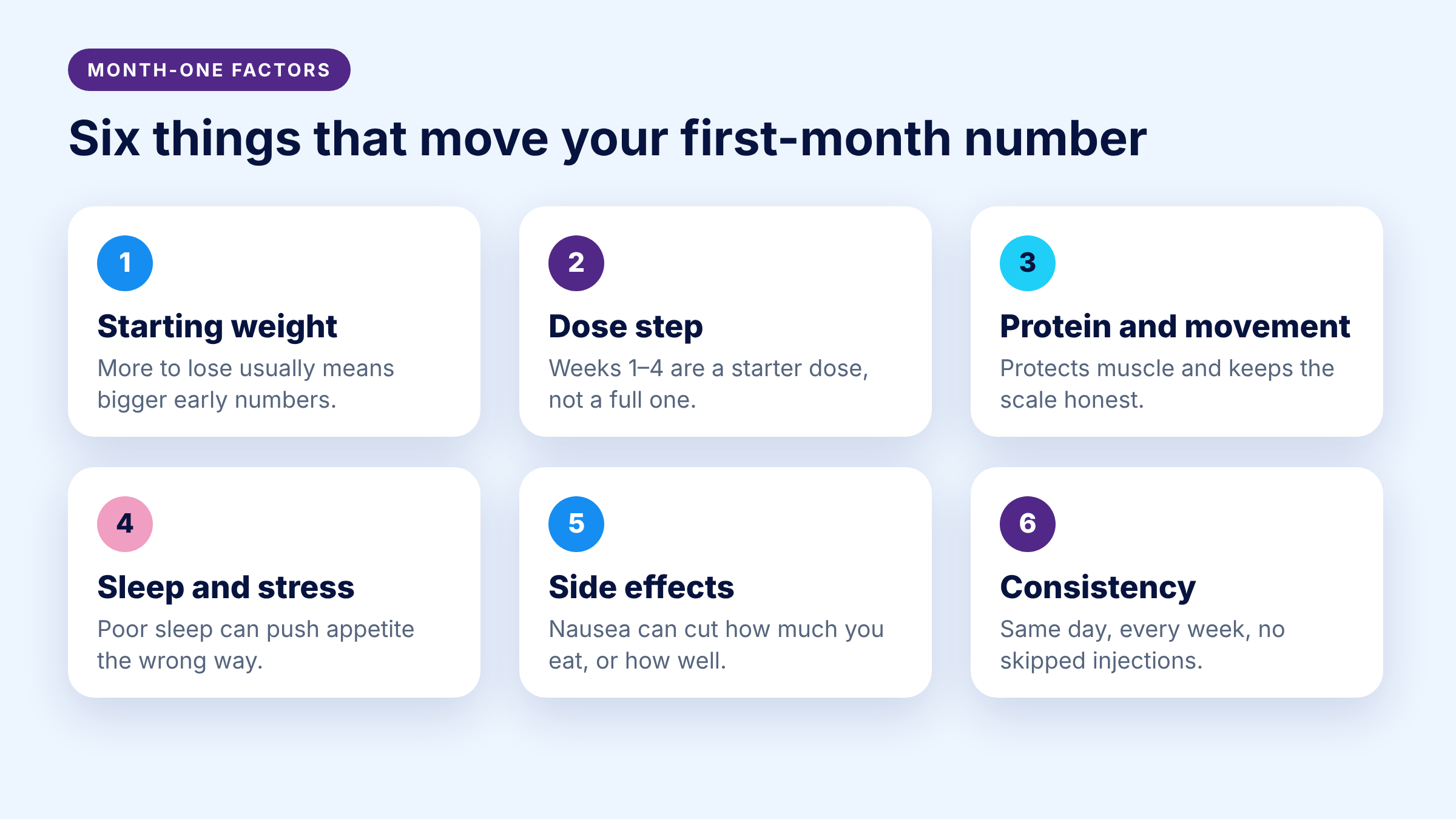
Starting weight. A higher starting weight usually means more pounds of weight loss in month one, even when the percentage of body weight is the same.
Your dosing step. Month one is the starter dose, which is why early weight loss runs modest.
Protein and movement. Eating enough protein and doing some exercise, mainly strength work, helps you keep muscle while the fat comes off, so more of your weight loss is fat.
Sleep and stress. Short nights and high stress can push hunger up and blunt your weight-loss results.
Side effects. Nausea can make you eat less, or eat in ways that undercut the medication.
Consistency. Taking your injection on the same day each week keeps the medication steady in your system. Skipped doses show up as slower weight loss.
Water matters too. Daily swings of two or three pounds of body weight are normal, so judge your progress by the weekly trend and not by one morning’s number.
Side effects in the first month
Most side effects land in the digestive system. The Wegovy label lists nausea, diarrhea, vomiting, constipation, and abdominal pain among the reactions reported by 5% or more of adults. People with type 2 diabetes can also see low blood sugar, especially alongside other diabetes medications, so check in with your provider about your blood sugar plan.
In STEP 1, 4.5% of people on semaglutide stopped the study drug because of digestive problems, compared with 0.8% on placebo. Most patients stay on treatment, but the numbers show it’s not a trivial issue. Side effects can also slow weight loss when they keep you from eating well.
A few habits help. Eat smaller meals and stop when hunger fades. If nausea hits, a bland diet for a day or two can settle things. Go easy on greasy or very sweet food. Sip fluids through the day. If you’re vomiting repeatedly or can’t keep liquids down, call your provider rather than waiting it out.
How to get more out of your first four weeks
You can’t speed up the dosing schedule, but you can set up everything around it. Small lifestyle changes in the first month pay off with steadier weight loss for months afterward.
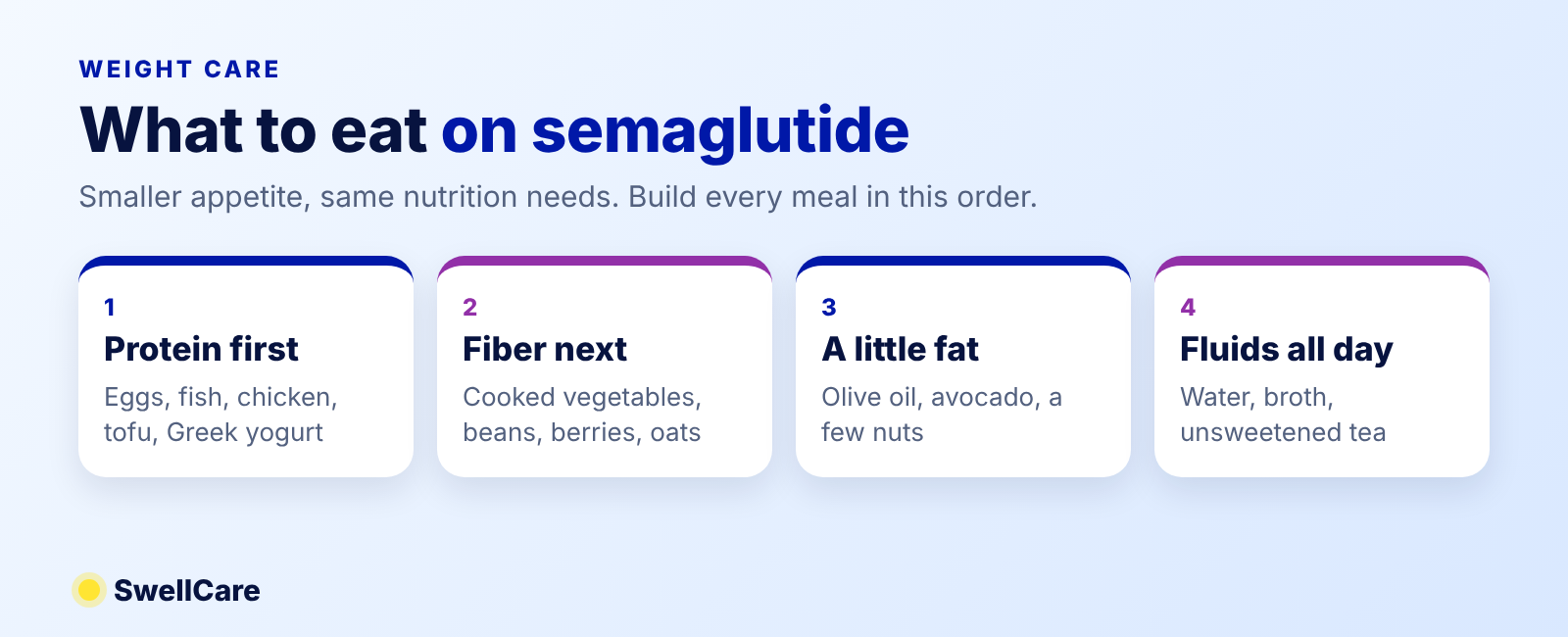
Put protein at every meal. Eggs, Greek yogurt, fish, chicken, tofu and beans all count. Add strength training two or three times a week, even if it’s just bands or bodyweight at home. Walk daily. Any exercise beats none, and everyday physical activity like stairs or chores adds up. Regular exercise and physical activity protect muscle and improve how you feel on the medication.
Fix the basics, too. Aim for a steady sleep schedule. Build your diet on whole foods, since a smaller appetite makes every bite count. Your diet doesn’t have to be perfect, just steady. Weigh yourself at the same time once or twice a week and track the trend, not the daily wobble.
What to do if the scale hasn’t moved
Don’t panic. After the first month on the lowest step, a flat scale is common, and it doesn’t mean the medication isn’t working. A flat week isn’t failed weight loss. Lifestyle changes are still working even when the scale is quiet. Hunger may ease and your clothes may fit differently before the number shifts.
Check the simple things first. Are you taking your injection on schedule, and eating enough at each meal? Has your diet drifted? Have you slept badly lately? If you’re still stuck after the next step up, a plateau is worth a conversation with your provider. Never raise your own dose or double up to speed things along. Dose changes belong to your clinician.
Safety, compounded versions and when to call a doctor
Semaglutide isn’t right for everyone. The Wegovy label carries a boxed warning about thyroid C-cell tumors seen in rodents. It’s contraindicated if you or a close family member has had medullary thyroid carcinoma, or if you have multiple endocrine neoplasia syndrome type 2. The label also notes acute pancreatitis and gallbladder disease, and advises stopping at least two months before a planned pregnancy.
Be careful with compounded semaglutide. The FDA says compounded drugs aren’t FDA-approved and don’t get reviewed for safety, effectiveness or quality before they’re sold. It had received 990 reports about compounded semaglutide as of May 31, 2026, including problems tied to dosing errors. Fill prescriptions at a state-licensed pharmacy, and be wary of “same as” claims or deep discounts.
Call a doctor promptly if you have severe stomach pain that won’t ease, repeated vomiting, signs of dehydration, a lump or swelling in your neck, trouble swallowing, or an allergic reaction.
Ready to start? What to do next
If you want to know how much weight you can lose on semaglutide in a month, and in the months after, the next step is a conversation with a licensed clinician, not a guess. The label’s approved use is for adults with obesity, or overweight plus at least one weight-related condition, so your BMI and health history matter.
At Swell, you can talk to a clinician online about whether a GLP-1 medication fits your goals, your history and your budget, and whether semaglutide or tirzepatide is the better match. Medication works best alongside lifestyle habits you can sustain. A consultation can also set a realistic first-month weight loss target so you aren’t judging yourself against a social media post.
Questions people ask about semaglutide weight loss
Can I lose 20 pounds in a month on semaglutide?
Very unlikely. Four weeks at a steady 2 pounds a week is 8 pounds, and a starter dose usually produces less. Losing 20 pounds in a month would be far faster than the CDC’s steady pace and isn’t what the trials show. The same math applies whether your prescription is Wegovy or Ozempic. Ask your provider about a realistic weight loss plan.
How long will it take to lose 30 pounds with semaglutide?
It depends on your starting weight and dose. For example, a person who weighs 250 pounds and matches the STEP 1 average loss of 14.9% of body weight would lose about 37 pounds over 68 weeks. Plan on many months, not weeks, and expect your pace to vary. Tirzepatide trials report different numbers, so don’t borrow them.
What are the first signs semaglutide is working?
Appetite changes show up first. You feel full sooner, think about food less and eat smaller portions without trying. Weight loss on the scale often lags behind those shifts by a few weeks, so don’t judge the medication by week one.
Is it normal to feel less hungry but not lose weight?
Yes. In month one you’re on your starting step, and your body is still adjusting. Reduced hunger is a sign the medication is active, even before weight loss shows. If the scale stays flat after a couple of steps up, review your meals, sleep and injection timing with your provider.
Will I gain the weight back if I stop?
Weight regain is common after stopping, which is why clinicians treat semaglutide as long-term care alongside lifestyle changes. Talk with your provider before stopping, and ask how to limit weight regain, plus about a maintenance dose and a plan for keeping the weight loss results.
Trusted references
Public-health, research, and medical-society resources related to this guide.