Your appetite has gone quiet, and now a bowl of soup feels like a banquet. That’s the drug doing its job. It’s also the moment when most people start eating badly without noticing.
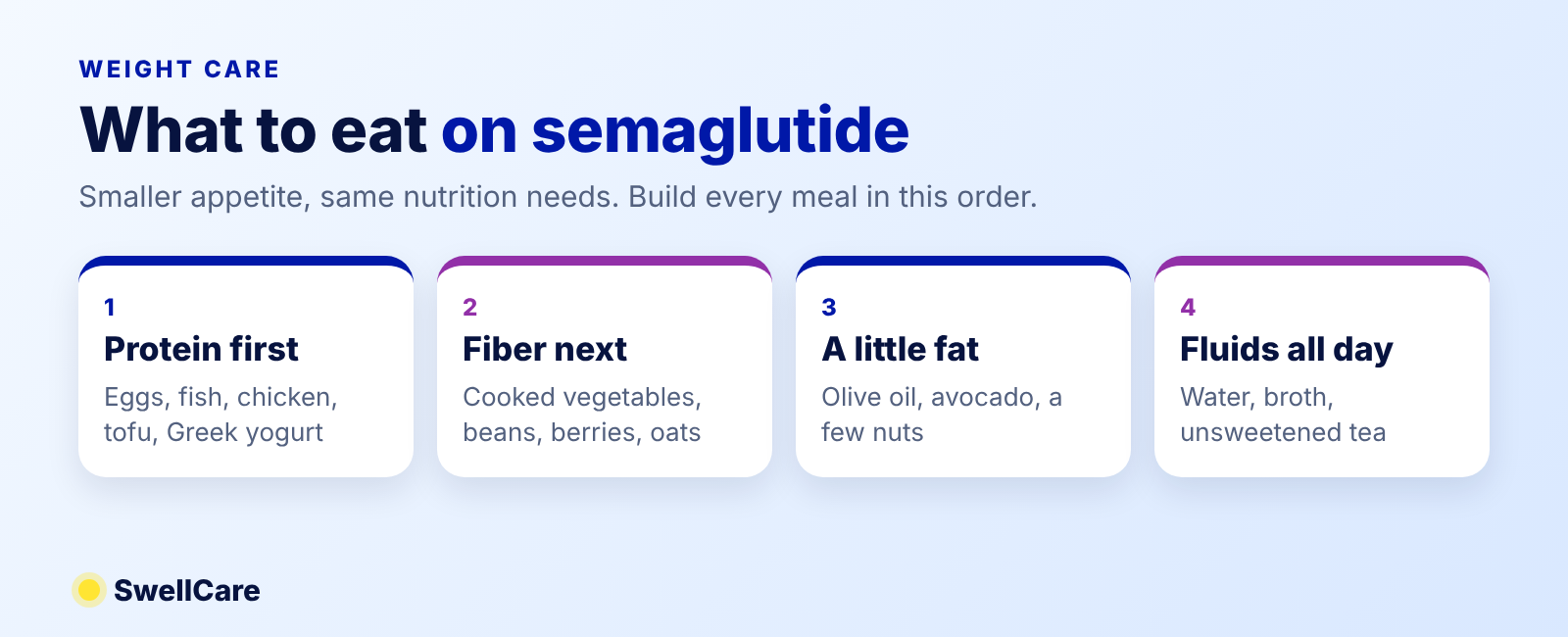
Here’s the short answer on what to eat on semaglutide: build every meal around protein, add fiber from vegetables, beans and whole grains, keep fats small, and drink fluids all day. Skip greasy, fried and sugary foods, and go easy on alcohol. The rest of this guide explains why, shows you a real day of eating, and tells you when a symptom needs a call to your doctor.
Why your plate has to change on semaglutide
Semaglutide is a GLP-1 medicine. It mimics a gut hormone that tells your brain you’re full, and it slows gastric emptying, the speed at which your stomach clears its contents. Appetite drops. Food sits longer. For weight loss, that’s the point, and it’s why GLP-1 users feel full on so little.
But a smaller appetite doesn’t mean you need less nutrition. You still need protein to protect your muscle, fiber to keep digestion moving, and enough fluid to stay out of trouble. Good habits now also make weight loss easier to keep. When you eat much less, every bite has to carry more.
Food also changes how you feel on a GLP-1 drug. In the FDA label for Wegovy, nausea showed up in 44% of adults taking the 2.4 mg dose, against 16% on placebo, and vomiting in 24% against 6%, according to the FDA prescribing information. Constipation hit 24%. Most of those side effects are worse after a heavy, greasy meal and easier after a small, bland one.
Food won’t make the medicine work better by magic. It does decide whether you feel decent while it works, and whether your weight loss is mostly fat or a mix of fat and muscle.
Best foods to eat on semaglutide
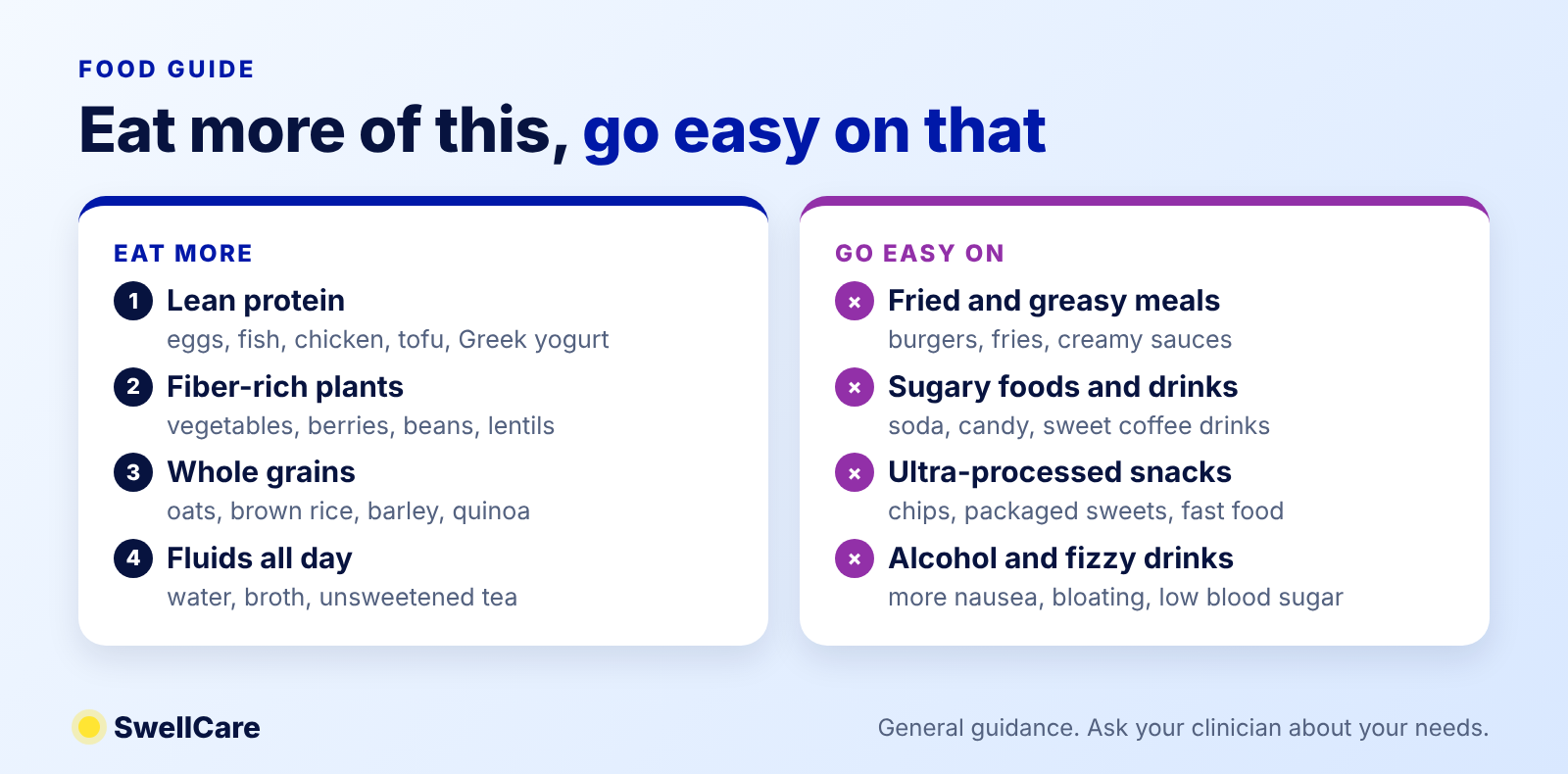
Here’s what to eat on semaglutide, in four jobs: protein, fiber, a little fat, and fluids. If a meal covers the first two, you’re most of the way there.
Protein comes first
Eat the lean protein on your plate before anything else. When you’re full after four bites, you want those four bites to count.
The 2025 joint advisory on nutrition for GLP-1 therapy, published in Obesity, suggests about 1.2 to 1.6 grams of protein per kilogram of body weight each day during active weight loss, or roughly 80 to 120 grams a day. Your needs depend on your size, kidneys and health, so treat that as a conversation starter with your clinician.
Lean protein that digestion handles easily includes eggs, Greek yogurt, cottage cheese, skinless chicken or turkey, fish, tofu and lentils. Soft and moist beats dry and chewy when your stomach is sluggish. Muscle is the tissue people lose faster than they expect during weight loss.
Fiber and slow carbs
Fiber supports digestion and blunts blood sugar swings, which helps steady your weight loss. Good picks are cooked vegetables, berries, oats, beans, and whole grains like brown rice, barley and quinoa.
Go slowly. Fiber that jumps from 10 grams to 35 in a week can leave you with bloating, and semaglutide already slows your gut. Add one new food every few days and drink more water as you do.
Refined carbs, like white bread and sweet pastries, spike blood sugar and then leave you hungry again. Most people feel steadier on whole grains and carbs that come with fiber.
Healthy fats, in small amounts
Healthy fats aren’t the enemy, but fat is the slowest thing to digest, and slow is a problem here. A quarter of an avocado, a spoonful of olive oil or a small handful of nuts is plenty. A pile of fries is not.
Fluids and electrolytes
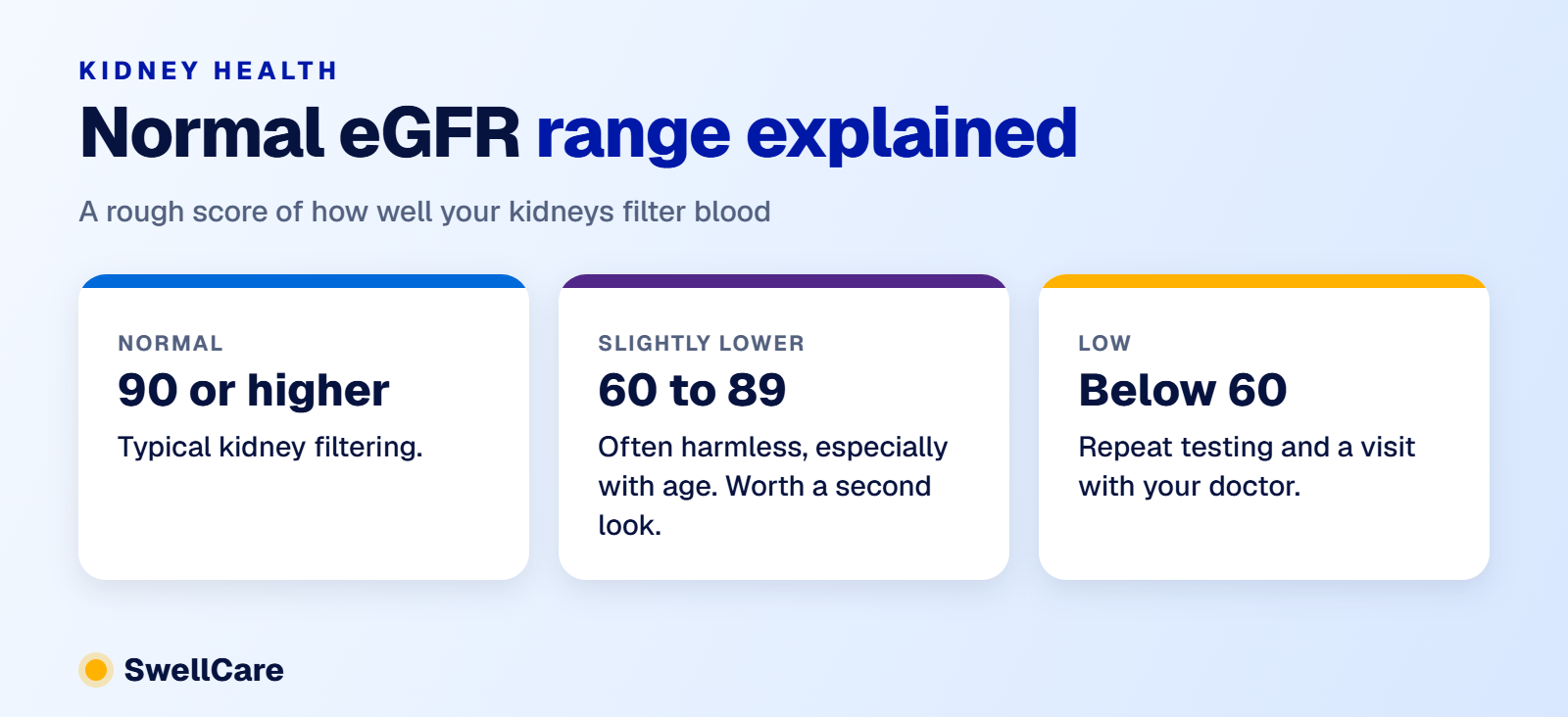
You may not feel thirsty, yet hydration matters more now. Vomiting, diarrhea or just not drinking can lead to dehydration, and the FDA label links dehydration on this drug with acute kidney injury in some patients.
Sip water through the day. Broth, unsweetened tea and sugar-free electrolyte drinks all help your hydration. A rough check: pale yellow urine is a good sign, dark amber isn’t.
Foods to avoid or limit on semaglutide
You don’t need a banned list. You need a short “go easy” list, because these foods hit harder on a slowed stomach.
| Food | Why it causes trouble | Easier swap |
|---|---|---|
| Fried food, burgers, creamy sauces | High fat sits in the stomach and triggers nausea and reflux | Grilled fish or chicken, tomato-based sauces |
| Sweets, soda, sweet coffee drinks | Sugar and empty calories without protein | Fruit with Greek yogurt, sparkling water with lime |
| Chips, packaged snacks, fast food | Ultra-processed, easy to over-eat, little fiber | Roasted chickpeas, nuts, cheese and fruit |
| Alcohol | Low blood sugar, dehydration, more nausea | Skip it, or one small drink with food |
Greasy, fried and very rich meals
This is the one people regret fastest. A pizza night that used to be fine can mean hours of fullness, burping and queasiness. If you want something rich, have a few bites of it, not a plate of it, and not on an empty stomach.
Sugary and ultra-processed foods
Sugar isn’t forbidden. But when you can only eat a little, spending your appetite on candy or soda crowds out the protein you need. The joint advisory also recommends limiting sugar-sweetened drinks, refined carbohydrates and ultra-processed snacks. They add calories with nothing to show for it.
Alcohol and fizzy drinks
Alcohol hits faster and harder on semaglutide. It can drop blood sugar, dry you out and make nausea worse. Carbonated drinks add gas to a gut that is already slow, so bloating is common. If you drink, keep it small and eat first.
What to eat when you’re not hungry
This is one of the most common questions, and the answer feels backwards: eat anyway, but smaller. Skipping meals for days invites fatigue and muscle loss.
Try this instead. Set a phone reminder every three to four hours, which matches the advisory’s advice on small, regular meals. Eat three or four bites of something protein-dense at each one: a boiled egg, a cheese stick, a few spoonfuls of cottage cheese, a protein shake with at least 20 grams of protein. Liquid calories often go down easier than solid food when hunger is gone.
Don’t wait to feel hungry. On this medicine, hunger signals may never show up on schedule. Good picks: hummus with vegetables, a small handful of almonds, or turkey roll-ups.
A sample day of eating on semaglutide
Portions here are small on purpose. Adjust them to your appetite and ask your clinician or dietitian about calorie and protein targets.
| Meal | What to eat | Why it works |
|---|---|---|
| Breakfast | Two eggs, a slice of whole-grain toast, berries | About 15 grams of protein plus fiber |
| Mid-morning snack | Greek yogurt with a few walnuts | Easy protein, gentle on the stomach |
| Lunch | Grilled chicken, roasted vegetables, half a cup of brown rice | Lean protein, fiber, slow carbs |
| Afternoon snack | Cottage cheese and sliced cucumber | Protein, fluid, small portion |
| Dinner | Baked salmon, steamed broccoli, a small sweet potato | Protein, healthy fat, fiber |
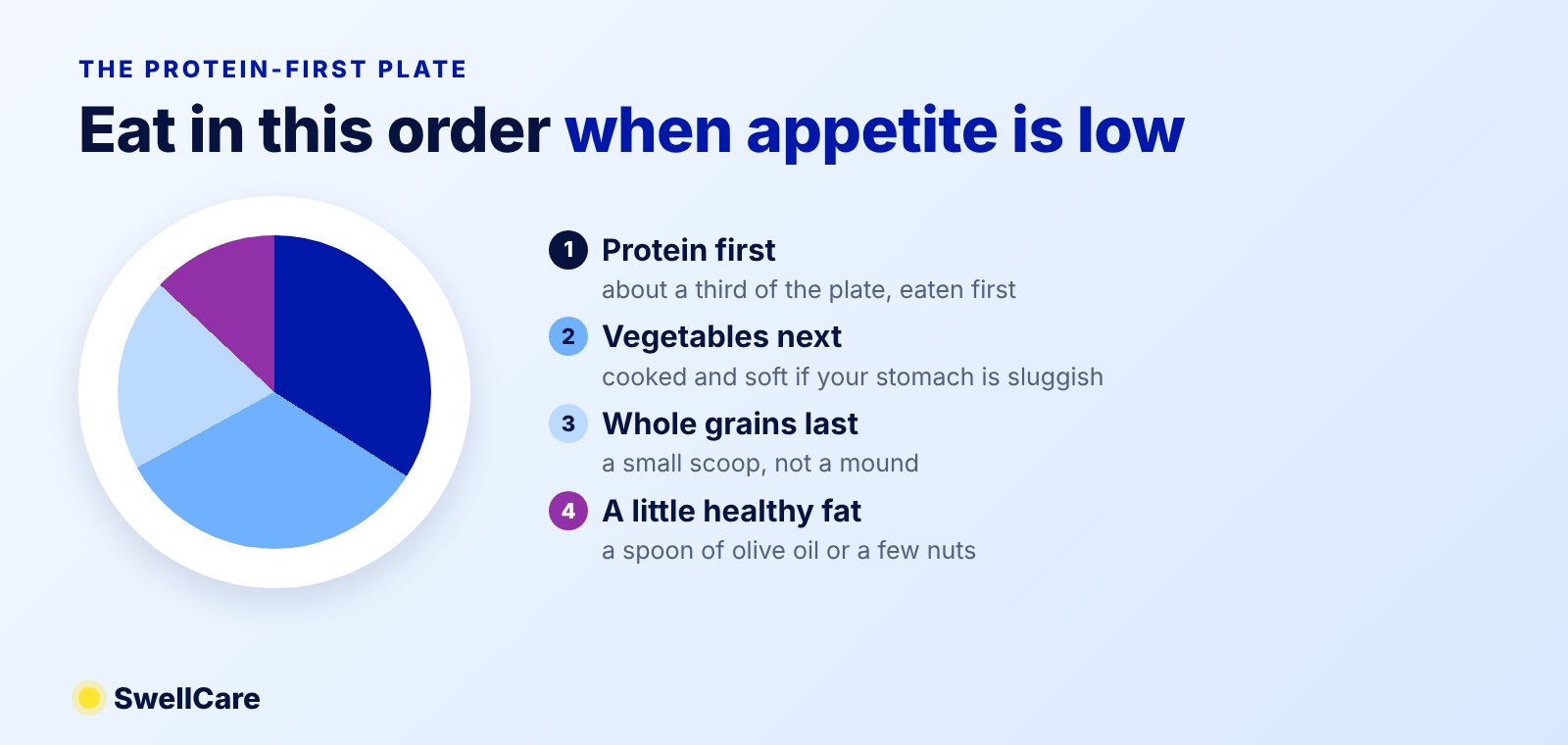
Vegetarian? Swap in tofu scramble, lentil soup or edamame. The pattern stays the same: protein first, vegetables second, starch last. Want a full meal plan? Use this day as your template and repeat it with new foods.
Using food to ease side effects
Most side effects fade as your body adjusts, and the FDA label says a dose increase can be delayed if you don’t tolerate it. Food choices can take the edge off in the meantime.
For nausea, eat small, bland, cold or room-temperature foods like crackers, toast, rice, banana or applesauce, and stop when you feel full. Ginger tea helps some people. Lying down right after eating makes it worse.
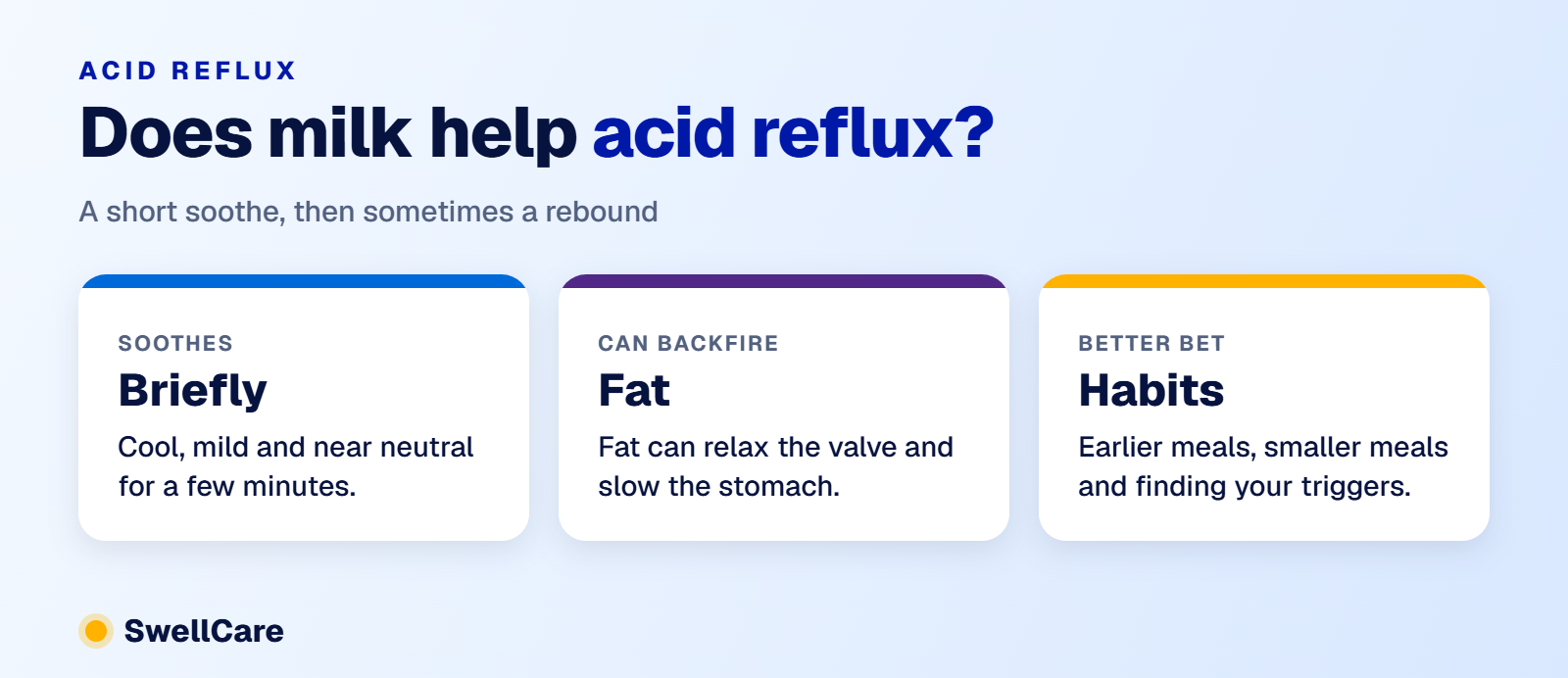
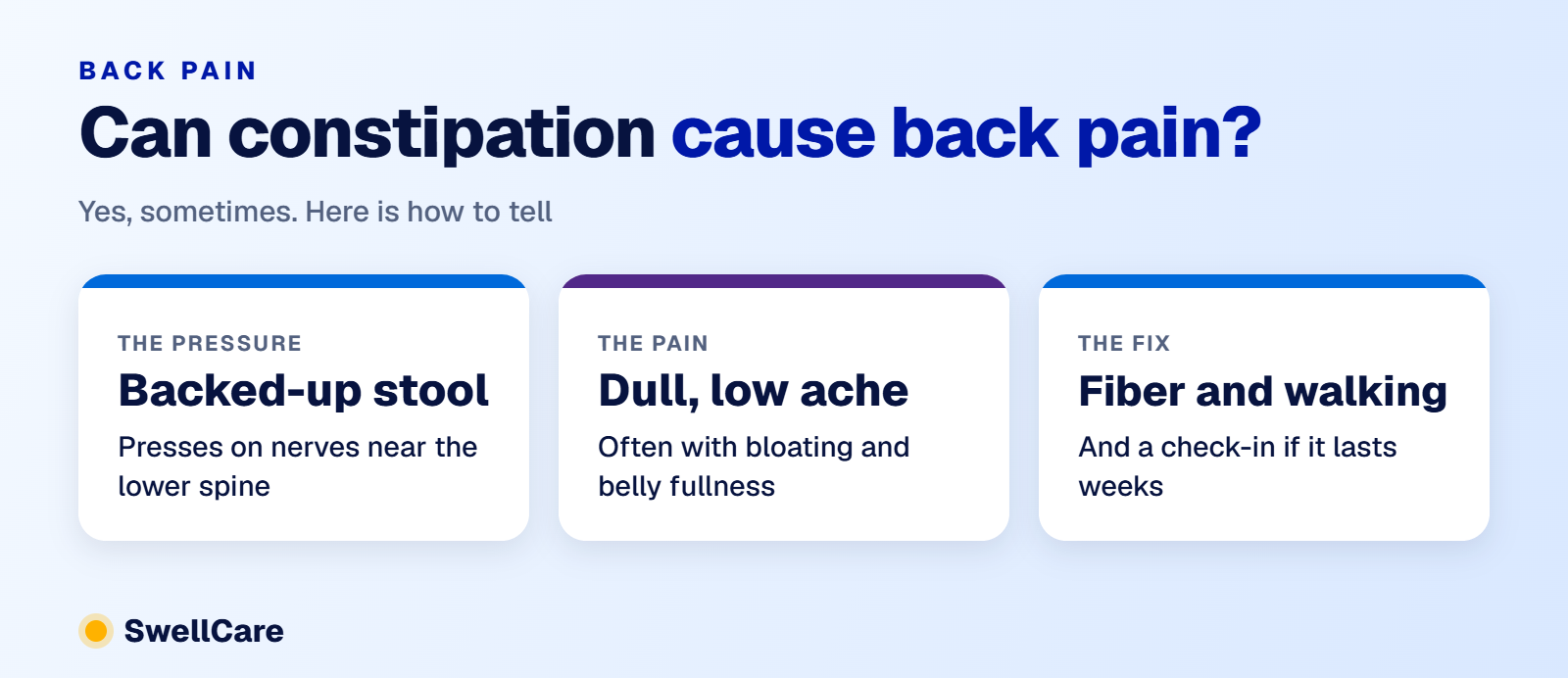
For constipation, add fiber slowly, drink more fluids, and keep moving. Oats, berries and prunes help. If constipation comes with back pain, see can constipation cause back pain. A probiotic yogurt may help some people too. For diarrhea, go easy on greasy, spicy and very sugary foods and stay on fluids and simple starches until it settles. For reflux and heartburn, eat smaller meals (more in does milk help acid reflux), avoid late-night eating and cut back on coffee, tomato and fried foods.
Side effects that don’t ease are a reason to talk to your prescriber. You shouldn’t have to white-knuckle it.
When to call your doctor
Food advice has limits. Call your healthcare provider right away for severe or lasting stomach pain, especially pain that moves to your back, since it can signal pancreatitis. Also call for yellow skin or eyes, fever or clay-colored stools, which can point to gallbladder problems; repeated vomiting or diarrhea; very little urine; dizziness or fainting; or a lump in your neck, per the MedlinePlus drug information for semaglutide.
If you take insulin or a sulfonylurea, ask how to avoid low blood sugar when you eat less. And if you can’t keep fluids down, don’t wait it out. Dehydration can hurt your kidneys quickly.
Get guidance that fits your body
A general list can’t know your kidneys, your medications or your food allergies. If you’re not sure how much protein is right for you, a registered dietitian can build a plan around your weight loss goals, and your clinician can check your labs.
Swell’s clinician-guided weight care is built for people who want real answers instead of a miracle promise. You can start online, talk to a licensed clinician, and get clear next steps, and labs with follow-up help look at the full picture. Not sure where to begin? Read how Swell works and ask what to eat on semaglutide for your own body.
Questions people ask about eating on semaglutide
What are good snacks to eat while on semaglutide?
Pick snacks with protein and a little fiber, in small portions. Greek yogurt with berries, hummus and vegetables, a boiled egg, cottage cheese or edamame all work. Skip chips, candy and pastries, which fill you up without feeding you.
What should I eat when I’m not hungry on semaglutide?
Eat small amounts on a schedule rather than waiting for hunger. Aim for something every three to four hours: a protein shake, eggs, or a few bites of lean meat. Liquid protein is often easier when your appetite is low.
What are some good meal ideas when taking semaglutide?
Keep meals simple: grilled fish with roasted vegetables, an egg scramble, chicken and brown rice, or lentil soup. Put protein first, then vegetables, then a small portion of whole grains. Use the sample day above as a template for what to eat on semaglutide week after week.
Can I drink alcohol on semaglutide?
You can, but it’s wise to limit it. Alcohol can drop blood sugar, worsen nausea and dry you out, and many people feel its effects faster. If you do drink, keep it to a small amount with food and drink water alongside it. Ask your clinician if it’s safe for you.
How much protein do I need on semaglutide?
It depends on your size and health. The 2025 joint advisory suggests roughly 1.2 to 1.6 grams per kilogram of body weight a day during active weight loss, or about 80 to 120 grams. Strength training matters just as much. Ask your clinician for a target that fits your kidneys and goals.
Trusted references
Public-health, research, and medical-society resources related to this guide.