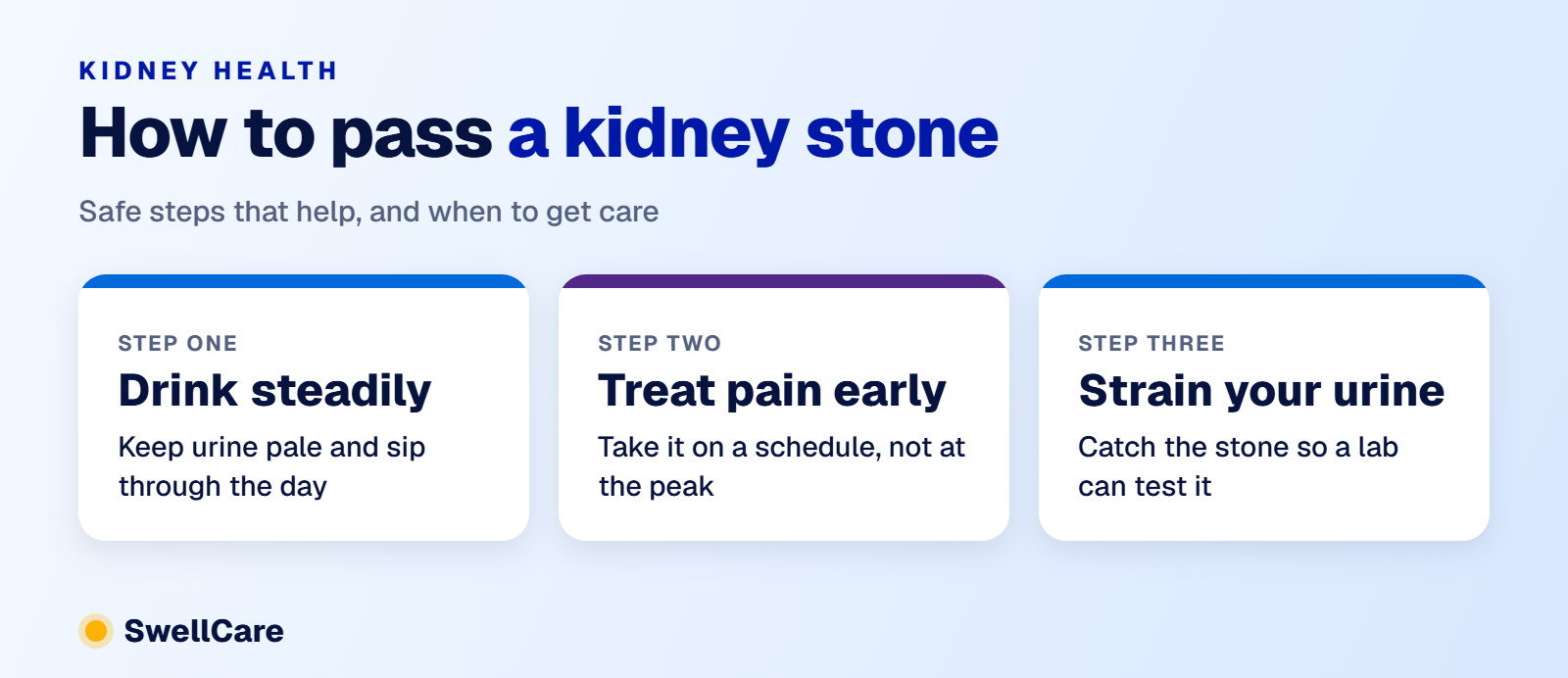
It usually starts at 2 a.m. A cramp low in your back, then a wave that drops you onto the bathroom floor. If that’s you, here’s the short version of how to pass a kidney stone at home: drink steadily, treat the pain early, keep moving, strain your urine and watch for red flags.
How to pass a kidney stone: the short answer
Most small kidney stones do pass on their own. Your job is to make the wait bearable and safe. That means steady fluids, pain medication taken on time and a clear idea of when waiting stops being smart. We’ll cover each one below, plus the myths that waste your night.
One more thing before the details. A kidney stone that comes with chills, constant vomiting or almost no urine isn’t a home-care problem. Skip ahead to the emergency section if that sounds like you.
What’s happening inside you when a stone moves
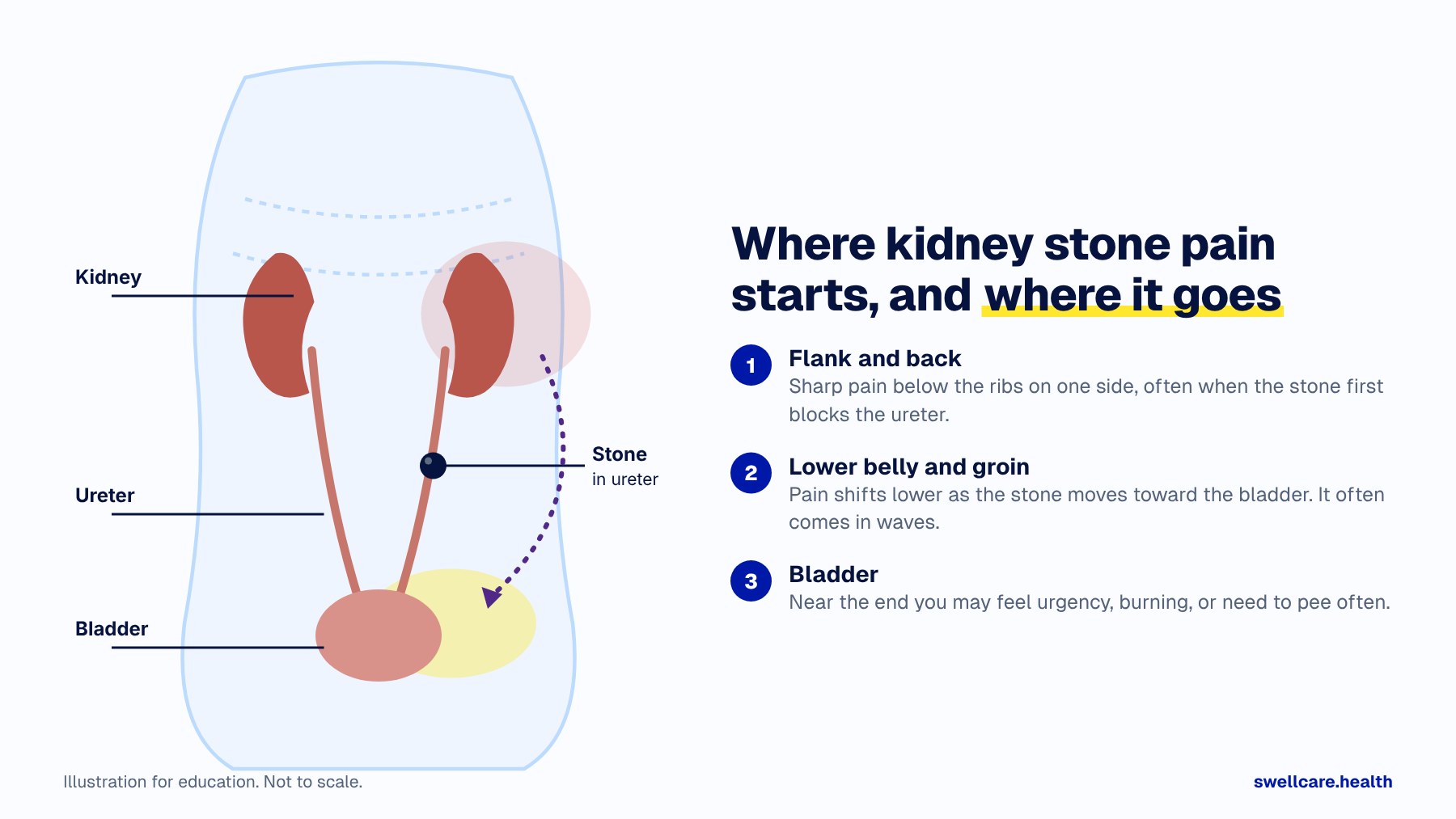
A kidney stone is a hard lump of minerals, most often calcium, that forms when your urine carries more waste than it can dilute. It can sit in the kidney for years without a word. The symptoms start when it slides into the ureter, the narrow tube that carries urine down to your bladder.
That tube squeezes to push the stone along, and the squeezing is what hurts. It comes in waves. You can feel fine at 3:10 and miserable at 3:14.
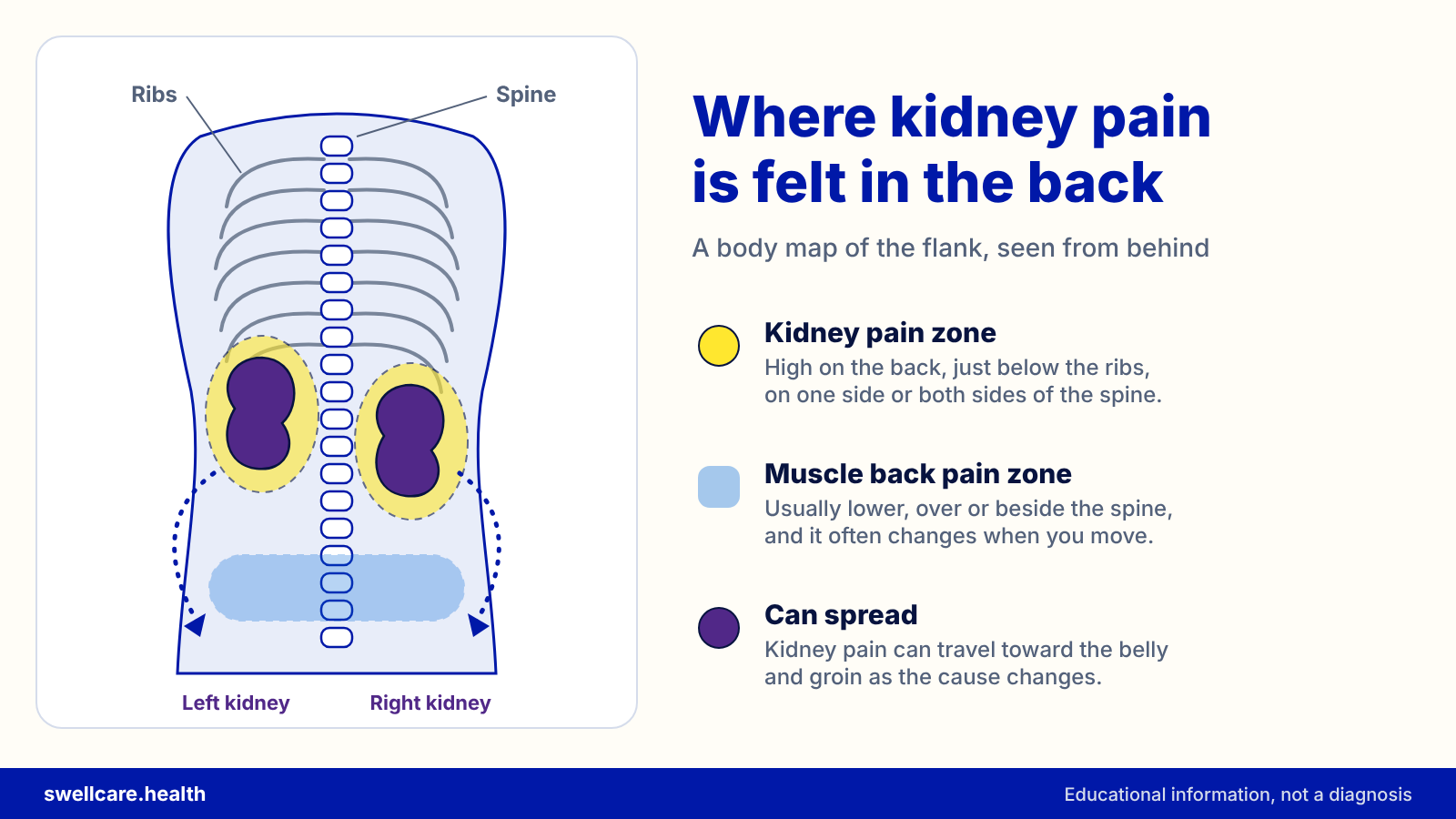
Mayo Clinic’s symptom list is a good checklist: sharp pain in the side and back below the ribs that may travel toward the groin, burning when you urinate, pink or brown urine, cloudy or foul-smelling urine, and nausea or vomiting. Fever and chills suggest an infection somewhere in the urinary tract. That changes the plan. Not sure the pain is a stone? See our guide to the first signs of kidney stones.
How long a kidney stone takes to pass
Size is the biggest factor. A review summarized by Medical News Today puts stones under 4 mm at about an 80% chance of passing, usually within a month, and 4 to 6 mm stones at about 60%, closer to six weeks. Past 6 mm, the odds drop hard. Location counts too, since stones near the bladder pass more often than stones still up by the kidney.
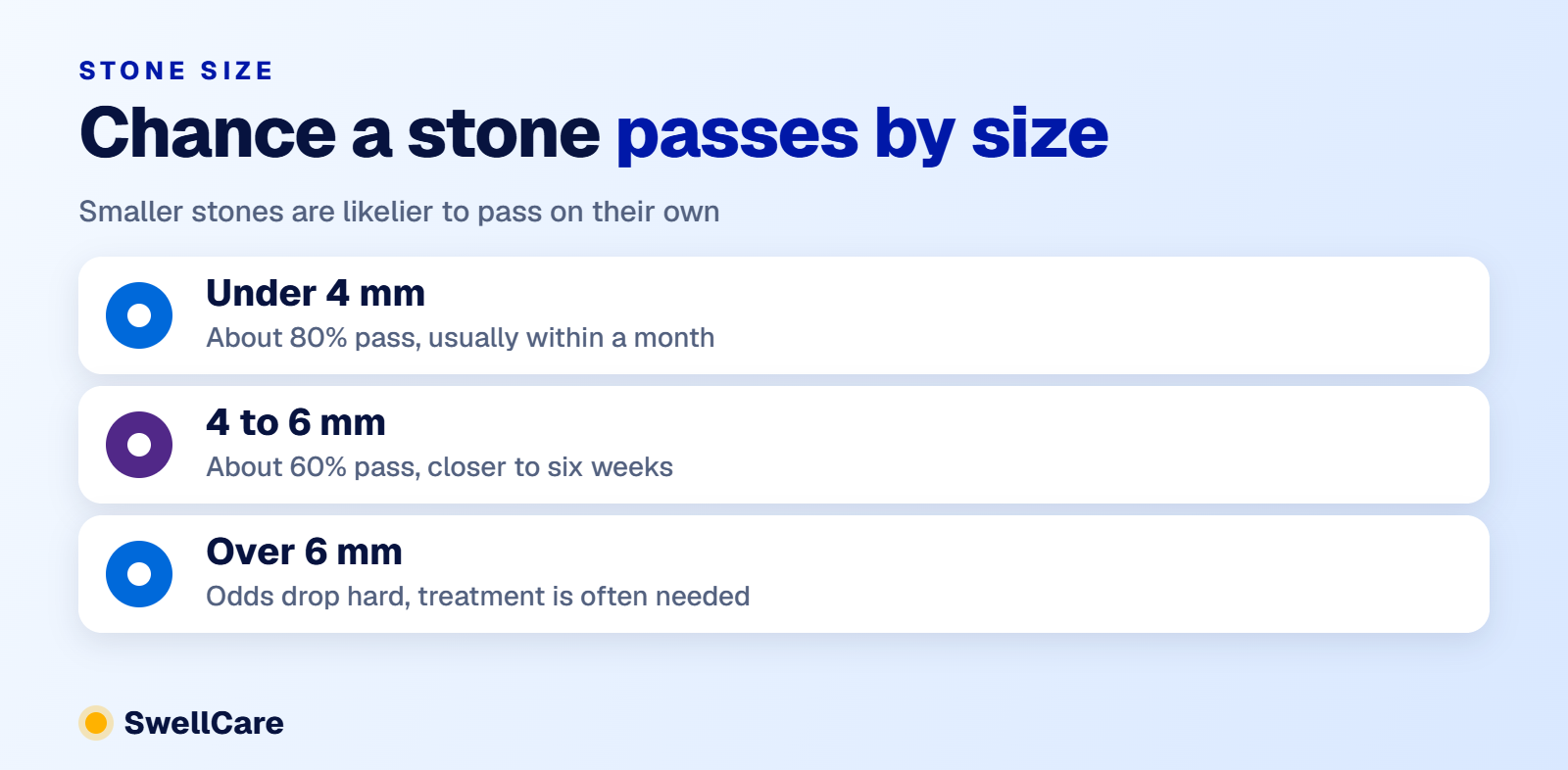
Urologists commonly allow four to six weeks for a stable stone to move before they discuss a procedure. Comfort, the risk of complications and your general health can shorten that wait.
Seven steps that help a stone pass at home
These steps suit a small stone and a person who’s otherwise stable. Run them past your doctor first if you have kidney disease, are pregnant or take blood thinners.
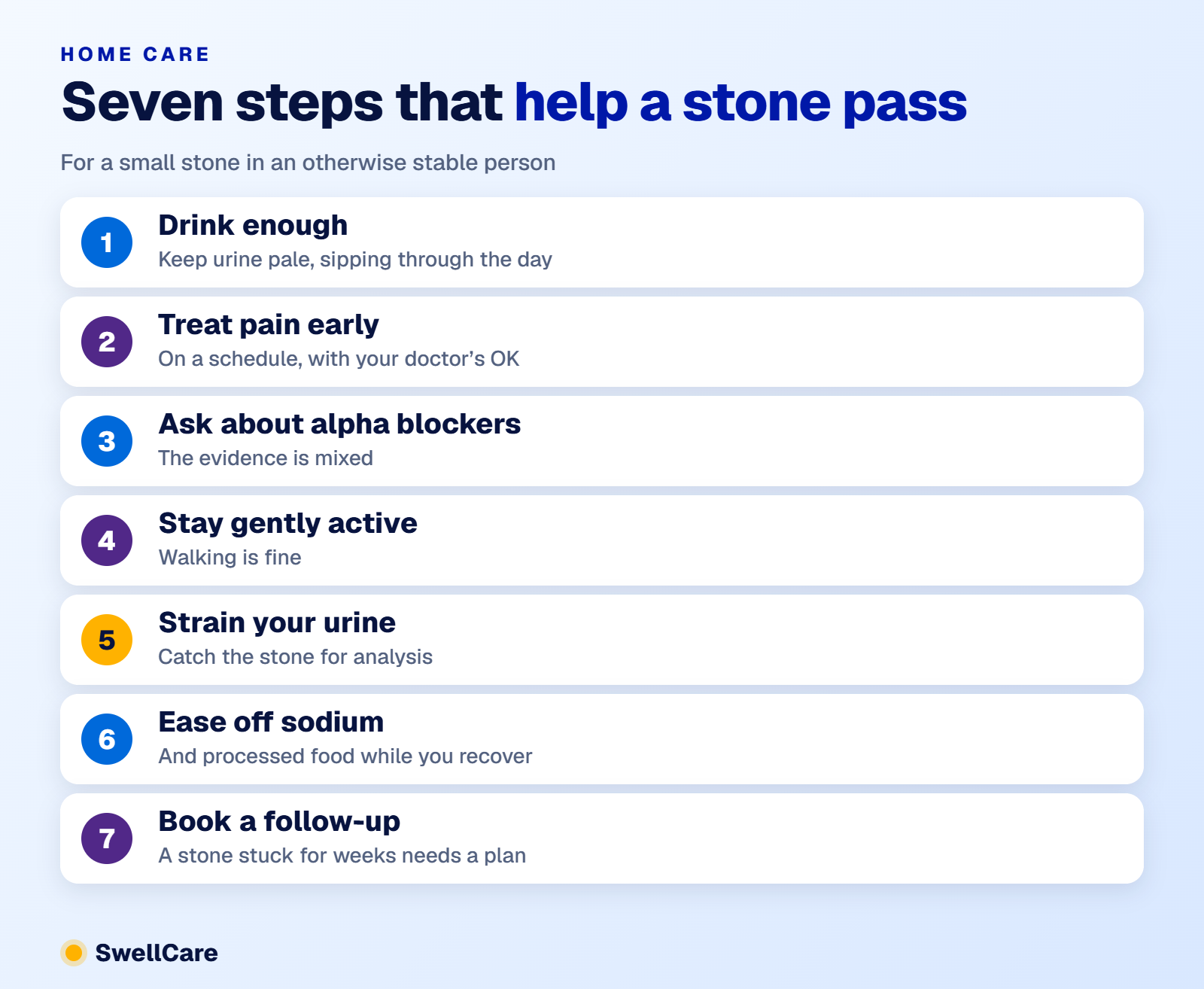
Drink enough to keep urine pale
Water comes first. Aim for urine the color of light lemonade. The NHS says you may be advised to drink up to 3 litres a day while a stone is passing, and tea and coffee count toward the total. Sip through the day. Chugging a liter at once just fills your bladder and can make the cramping worse.
If you can’t keep fluids down, call someone. Dehydration makes every other symptom louder.
Treat the pain early
Don’t be a hero. Pain medication works best before the wave peaks. An NSAID such as ibuprofen is the usual first pick, and the NHS notes a GP may also suggest anti-sickness medicine for nausea. Check with your doctor or pharmacist first if you have stomach ulcers or kidney problems. A heating pad on your flank helps some people too.
Take it on a schedule instead of waiting until it’s screaming.
Do medicines like tamsulosin help?
You’ve probably heard that an alpha blocker such as tamsulosin (Flomax) relaxes the ureter and helps a stone slide out. The honest answer is that the evidence is mixed. An ACEP Now review describes a small benefit at best, limited to larger stones in the upper ureter. Some doctors still prescribe alpha blockers, and some people do well on them. It’s a conversation to have, not a promise to chase.
The rest of the plan is plain. Stay as active as the pain allows, because gentle walking is fine. Strain your urine through a fine mesh strainer or coffee filter so you can catch the stone, since a lab can tell you what it’s made of, whether that’s calcium, uric acid or something else. Tweak your diet while you recover and ease off sodium and processed food. Then book a follow-up. A stone that hasn’t moved in a few weeks needs a treatment plan.
Myths about citrus, apple cider vinegar and flushing
Lemon juice isn’t useless. Citrus contains citrate, which helps keep calcium from clumping, and the NHS says lemon juice in water may help. But it’s a habit that helps prevent stones, not a way to dissolve one.
Apple cider vinegar? There’s no solid proof it dissolves a stone or speeds one along, and the acid can upset your stomach. As for “flush it out,” steady fluids help, while panic-chugging doesn’t push a lodged stone through. No amount of water replaces a doctor when a stone is stuck.
When passing a kidney stone becomes an emergency
Most stones are miserable, not dangerous. A few are dangerous. Mayo Clinic says to get checked right away for these symptoms: pain so severe you can’t sit still, pain with nausea and vomiting, pain with fever or chills, blood in urine, or trouble passing urine.
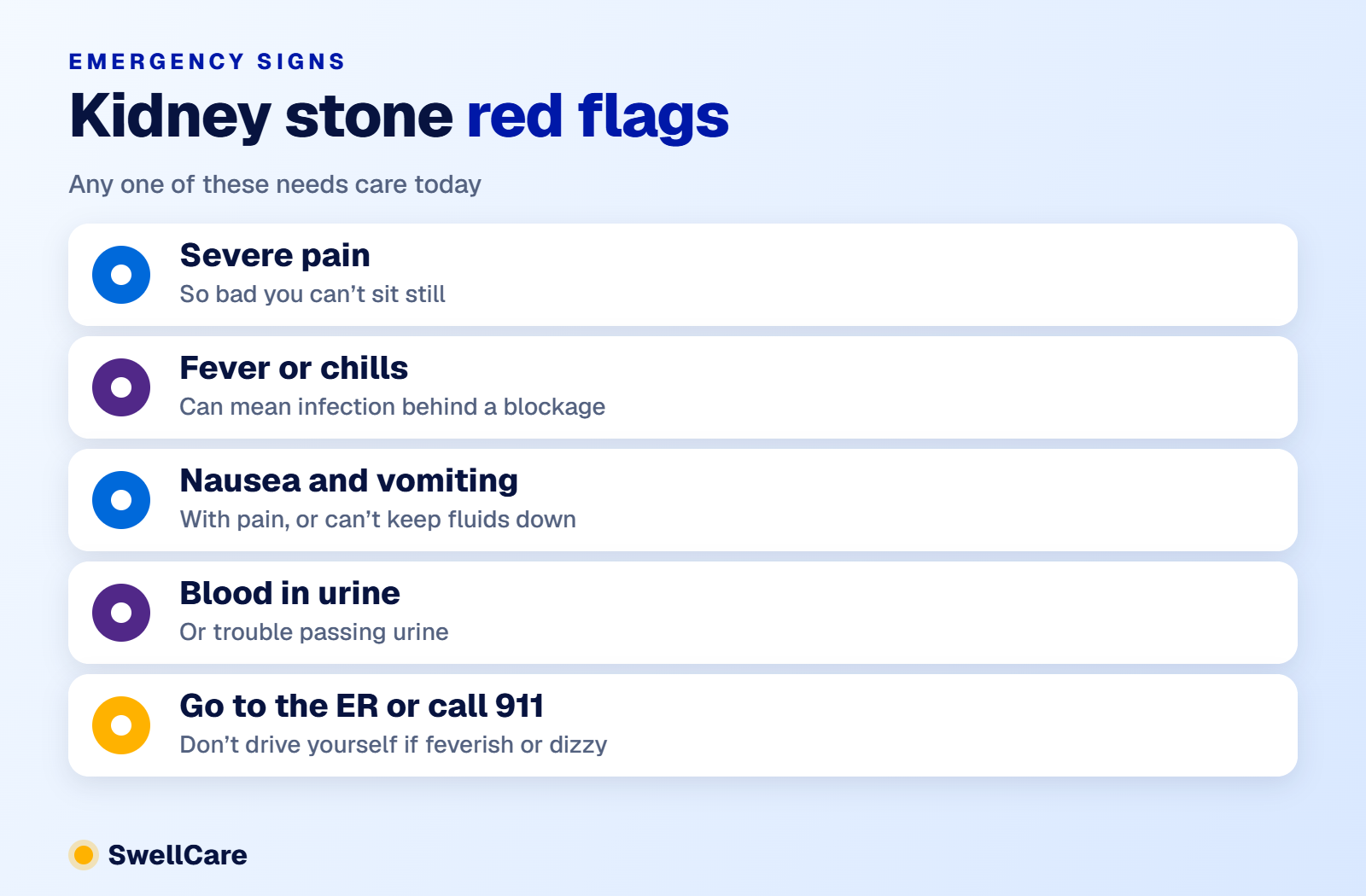
A blockage in the urinary tract plus an infection can injure the kidney fast. Call 911 or go to the emergency room. Don’t drive yourself if you’re feverish, dizzy or in severe pain. Our guide on when kidney stones mean a trip to the ER goes into more detail.
If the stone won’t pass: what treatment looks like
Big stones, a blocked ureter and discomfort you can’t control move you from waiting to treatment. NIDDK describes three main options. Shock wave lithotripsy uses sound waves to break the stone into pieces you can pass, usually as an outpatient. Ureteroscopy threads a thin scope up through the bladder to remove or break the stone, and most people go home the same day. For large kidney stones, percutaneous nephrolithotomy goes in through a small cut in the back and may mean a few days in the hospital.
A urologist picks based on size, location and your health. Surgery sounds scary, but big surgery is rare now and most of these are minimally invasive. Even after surgery for a large stone, recovery is usually measured in days.
How to keep another stone from forming
Getting one kidney stone is bad luck. Getting a second is often something you can prevent. If you’ve had a stone, doctors commonly aim for about 2 liters of urine a day, so keep up the fluids after you recover to prevent crystals from forming. Change your diet in small ways: cut back on sodium. Keep eating calcium-rich foods, because dietary calcium doesn’t seem to raise risk, while some calcium supplements do.
Your stone analysis matters here, because it shows how to prevent the next one. Uric acid stones call for a different diet than calcium stones, and a clinician can match the plan to yours.
Get stone symptoms checked with SwellCare
SwellCare online urgent care offers clinician-led, non-emergency care by video or chat. It can’t scan your kidneys or treat an emergency. It can help you sort out whether your symptoms fit a stone, talk through pain medication options and tell you plainly whether you need the emergency room. Prescriptions are never guaranteed, and SwellCare is not for emergencies.
Questions people ask about passing a kidney stone
How long does it take to pass a kidney stone?
It depends on size and position. Small stones under 4 mm often pass within about a month, while 4 to 6 mm stones can take six weeks or more. Stones larger than 6 mm usually need treatment, so ask your doctor or a urologist for a timeline based on your imaging.
What is the best position to pass a kidney stone?
No position is proven to move a stone along. Walking and changing positions often ease cramping, and a warm bath or heating pad helps some people. Pick whatever lets you breathe through the waves, and never let comfort delay care if red flags show up.
Can you pass a kidney stone without seeing a doctor?
Small stones sometimes pass at home, but you shouldn’t guess. A first-time stone deserves a check to confirm the size and rule out infection or blockage. Get care the same day for symptoms like chills, a high temperature or severe pain.
Does lemon juice or apple cider vinegar dissolve kidney stones?
Neither has solid proof behind it. Citrus adds citrate, which helps prevent new stones. Vinegar hasn’t been shown to dissolve one. Water and a doctor’s plan do far more.
How do you know when a kidney stone has passed?
Symptoms often ease, and you may notice a tiny grain in the strainer. But discomfort can fade while a stone is still on the move, so confirm with your doctor. Imaging or a lab analysis of the caught stone gives a clear answer, including whether it’s calcium or uric acid.
Trusted references
Public-health, research, and medical-society resources related to this guide.